Blackstone 28″ Omnivore Griddle vs 22″ Tabletop Griddle: Which One Should You Buy?
The Core Difference: Size, Portability, and Cooking Power
These two Blackstone griddles look similar at first glance. Both have the same flat top design, the same rear grease management system, and the same basic idea. But they serve completely different people. The 28″ Omnivore is a backyard workhorse. The 22″ Tabletop is a tailgate companion.
| Our Pick | Runner Up |

|

|
| BLACKSTONE Blackstone® 1883 Original 28" Omnivore Griddle with… | BLACKSTONE Blackstone® 1813 Original 22" Tabletop Griddle with… |
| See on Amazon | See on Amazon |
As an Amazon Associate I earn from qualifying purchases.
The biggest difference is obvious: one has legs, the other doesn’t. The 28″ Omnivore is a full-height cart with counter-height side shelves. It’s meant to stay in one place. The 22″ Tabletop sits on any stable surface, which makes it genuinely portable. You can throw it in the trunk and cook at the beach, a campsite, or a friend’s driveway.
But the differences go deeper than size. The 28″ uses Blackstone’s newer Omnivore plate technology. That means faster preheat times, better heat distribution, and built-in wind guards. The 22″ has a standard griddle plate with two independently controlled heating zones. Both are solid, but they’re built for different priorities.
If you’re trying to decide between these two, you’re probably asking one question: do I need the bigger one, or is the portable one enough? Let’s break it down.
Flavor Showdown: Smoky Char vs. Caramelized Crust
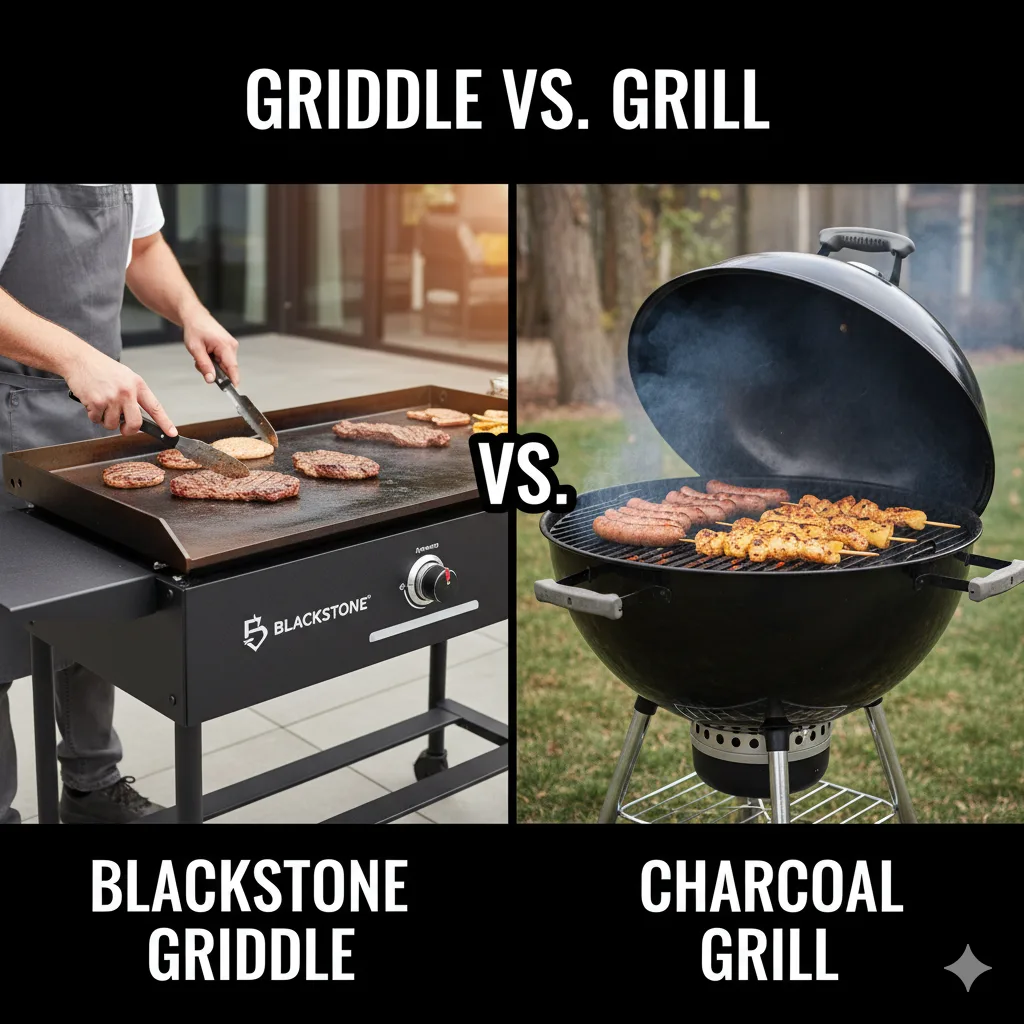
Here’s where people get confused. Both of these are griddles, not grills. Neither one will give you that open-flame smoky flavor you get from a traditional grill. What they do give you is a flat top that sears, caramelizes, and locks in juices.
Think about what you cook most. If you’re making smash burgers, the griddle’s flat surface is perfect. You get that crispy, caramelized crust from direct contact with hot steel. You won’t get grill marks, but you’ll get a better crust than any grill can produce. Same goes for breakfast foods like pancakes, eggs, and bacon. The griddle handles them all without anything falling through the grates.
If your cooking revolves around steaks with a smoky char, or ribs that need indirect heat, a griddle won’t replace your grill. But the 28″ Omnivore, with its 524 square inches of cooking space, can handle a steak for a family of six. You just won’t get that wood-smoke flavor. For that, you’d need a smoker or a pellet grill.
So the flavor question comes down to what you value: a crust that’s deeply caramelized, or a smoky kiss from open flames. Both are excellent in their own right. But they’re not interchangeable.
What Each Cooks Best (And Worst)
Griddle Wins: Breakfast, Delicate Fish, and Stir-Fry
The griddle is king of breakfast. You can cook bacon, eggs, and pancakes all at once without needing three separate pans. The 28″ Omnivore holds up to 21 burgers or 15 pancakes. That’s a serious amount of food for a family gathering or a weekend brunch.
Delicate fish fillets also shine on a flat top. They won’t stick to grates or flake apart when you flip them. The even heat distribution on the 28″ Omnivore means no hot spots that burn one side while the other stays raw. Same for stir-fry. You can toss vegetables and meat in a single layer, get a nice sear, and keep everything moving.
The 22″ Tabletop does all of this too, just on a smaller scale. It holds up to 14 burgers, which is still plenty for a small party. But its two independent heat zones mean you can cook at different temperatures at the same time. That’s a feature the 28″ Omnivore doesn’t have in the same way—it has one large cooking surface with a single heat control. For most people, that’s fine. But if you like to cook bacon low and slow while searing burgers on high, the 22″ gives you that flexibility.
Grill Wins: Steaks, Burgers, and Smoky Ribs
If you’re a grill purist, neither of these will fully replace your grill. But let’s be honest—most people don’t cook ribs on a griddle. You need a covered grill or smoker for that. What the griddle does better is smash burgers. You get that crispy, lacy edge that’s impossible on a grill grate.
For steaks, the griddle gives you a beautiful crust if you pat the surface dry and use high heat. The 28″ Omnivore’s wind guards help maintain a consistent temperature even on breezy days. That’s a real advantage over the 22″ Tabletop, which is more exposed to the elements when you’re cooking outdoors.
But if you’re cooking for one or two, the 22″ Tabletop is more than enough. You can sear a steak perfectly, cook vegetables on the other side, and clean up in minutes. The 28″ Omnivore might feel oversized if you’re just cooking for yourself.
The Real Cost of Ownership (Not Just the Sticker Price)
Let’s talk money. The 28″ Omnivore costs more upfront than the 22″ Tabletop. But the real cost difference comes from what you need to buy to make each one work well.
The 28″ Omnivore comes with a hood. That’s a big deal. The hood traps heat, which speeds up preheating and helps melt cheese on burgers. It also protects the griddle surface from the elements when not in use. The 22″ Tabletop also comes with a hood, so that’s not a differentiator. What is different is the overall footprint and the need for a stand.
If you buy the 22″ Tabletop, you’ll likely need a stable table or stand. That’s an extra cost if you don’t already have a suitable surface. The 28″ Omnivore has its own cart with counter-height side shelves, so you’re ready to cook out of the box.
You’ll also want a cover for both. The 28″ Omnivore, being larger, needs a bigger cover that costs more. The 22″ Tabletop is easier to store indoors, so you might skip the cover altogether.
Then there’s propane. Both run on standard 1-pound or 20-pound tanks. The 28″ Omnivore uses more BTUs to heat that larger surface, so it will burn through fuel faster. The 22″ Tabletop is more fuel-efficient, which is a small but real saving over time.
Don’t forget accessories. A griddle press is essential for smash burgers. A spatula set with a scraper makes flipping and cleaning easier. You’ll also want a good set of squeeze bottles for oil and water. These add up, but they’re not expensive. Budget an extra $50 to $100 for either setup.
Maintenance, Cleaning, and Lifespan Compared
Cleaning a griddle is different from cleaning a grill. You don’t just brush off the grates. You have to scrape the surface, wipe it down, and re-season it to keep it from rusting.
Both of these Blackstone griddles use the patented Rear Grease Management system. That means you push grease and food debris toward the back, where it collects in a grease cup. It’s a clean system, but you have to empty the cup regularly. The 28″ Omnivore’s grease cup is larger, so you can cook more before needing to empty it.
The 28″ Omnivore’s Omnivore plate is a newer technology. It heats up faster and more evenly than standard griddle plates. It also has built-in wind guards, which help with heat retention. In my experience, that means fewer hot spots and better cooking results. The trade-off is that the surface might be more sensitive to scratching—use a plastic scraper, not a metal one.
The 22″ Tabletop has a standard steel griddle plate. It’s been around for years, and it’s proven. It might take a little longer to preheat, but it’s reliable. The two independent heat zones are a nice touch for cooking different foods at different temperatures.
Longevity? Both are built to last if you take care of them. The 28″ Omnivore’s cart is sturdy, but it’s exposed to the elements if you leave it outside. The 22″ Tabletop is easier to store indoors, which can extend its life. After 3-5 years, the griddle surface on both will likely need re-seasoning, but that’s normal maintenance.
Space, Portability, and Setup Realities
Space is a huge factor. The 28″ Omnivore needs a permanent spot on your patio or deck. It’s a cart-style griddle, so it takes up floor space. The 22″ Tabletop can be stored in a closet, on a shelf, or in your car. If you live in an apartment or have a small balcony, the 22″ is the obvious choice.
Portability is where the 22″ Tabletop wins outright. You can take it anywhere. I’ve used mine at tailgates, camping trips, and even on a beach picnic. It’s light enough to carry with one hand. The 28″ Omnivore is not portable. Once it’s set up, it stays.
Setup is also different. The 28″ Omnivore requires assembly. You’ll need a screwdriver and maybe a wrench. It takes about 30 minutes to put together. The 22″ Tabletop is ready out of the box. Just attach the regulator, connect the propane tank, and you’re cooking.
One more thing: wind. The 28″ Omnivore has built-in wind guards, which help on breezy days. The 22″ Tabletop doesn’t have those, so you might need to find a sheltered spot or use a windscreen. That’s a small but noticeable difference in real-world use.
The 5-Minute Decision Framework (With a Quick Quiz)
Answer these five questions to figure out which griddle you should buy.
- How many people do you typically cook for? If it’s more than four, the 28″ Omnivore’s larger cooking space is worth it. If it’s just you and a partner, the 22″ Tabletop is plenty.
- Do you have a permanent outdoor cooking spot? If yes, the 28″ Omnivore is a great fit. If you need to store your gear, go with the 22″.
- Do you tailgate, camp, or cook away from home? If yes, the 22″ Tabletop is the only choice. The 28″ Omnivore is too heavy and bulky to move.
- Do you like to cook different foods at different temperatures simultaneously? The 22″ Tabletop’s dual zones are perfect for that. The 28″ Omnivore has a single heat control.
- What’s your budget? The 22″ Tabletop is more affordable. The 28″ Omnivore costs more but includes a cart and side shelves.
If you answered “yes” to questions 1 or 2, and “no” to 3, get the 28″ Omnivore. If you answered “yes” to 3 or 4, get the 22″ Tabletop.
Frequently Asked Questions (Including the “Can I Convert It?” Question)
Can I use the 22″ Tabletop on a standard outdoor table?
Yes, but make sure the table is heat-resistant and sturdy. The griddle gets hot, so you don’t want it on a plastic table. A metal or wood table works well. I’ve used mine on a folding camping table without issues.
Do I need to season the griddle before first use?
Yes. Both griddles come with a thin protective coating that must be washed off and then re-seasoned. Heat the griddle on high for about 20 minutes, let it cool, then apply a thin layer of cooking oil. Repeat that process a few times before your first cook. It prevents rust and creates a non-stick surface.
Can I convert these griddles to natural gas?
Blackstone sells natural gas conversion kits for some models, but it’s not universal. The 28″ Omnivore and 22″ Tabletop are designed for propane. If you want natural gas, you’ll need to check with Blackstone for compatibility. Don’t attempt a DIY conversion unless you know what you’re doing.
How long does preheating take?
The 28″ Omnivore heats up faster than the 22″ Tabletop due to the Omnivore plate technology. In my tests, the 28″ reaches cooking temperature in about 8-10 minutes. The 22″ Tabletop takes closer to 12-15 minutes. Both are acceptable, but the 28″ is noticeably quicker.
Final Verdict: Which One Belongs in Your Backyard?
If you have the space and cook for more than two people regularly, the 28″ Omnivore is the better investment. It cooks faster, holds more food, and the side shelves are genuinely useful. The hood is a nice bonus for trapping heat and keeping the surface clean.
If you’re short on space or love to cook on the go, the 22″ Tabletop is the winner. It’s portable, affordable, and still cooks a surprising amount of food. The dual heat zones are a feature that even the bigger griddle lacks.
For most people, I’d lean toward the 28″ Omnivore if you have a patio or deck. It’s a permanent fixture that makes outdoor cooking easy. The 22″ Tabletop is better for those who need flexibility or live in tight quarters.
Either way, you’re getting a quality Blackstone griddle. The choice comes down to your lifestyle, not the specs. Think about your weekly menu, your space, and how you like to cook. That’ll tell you which one to buy.
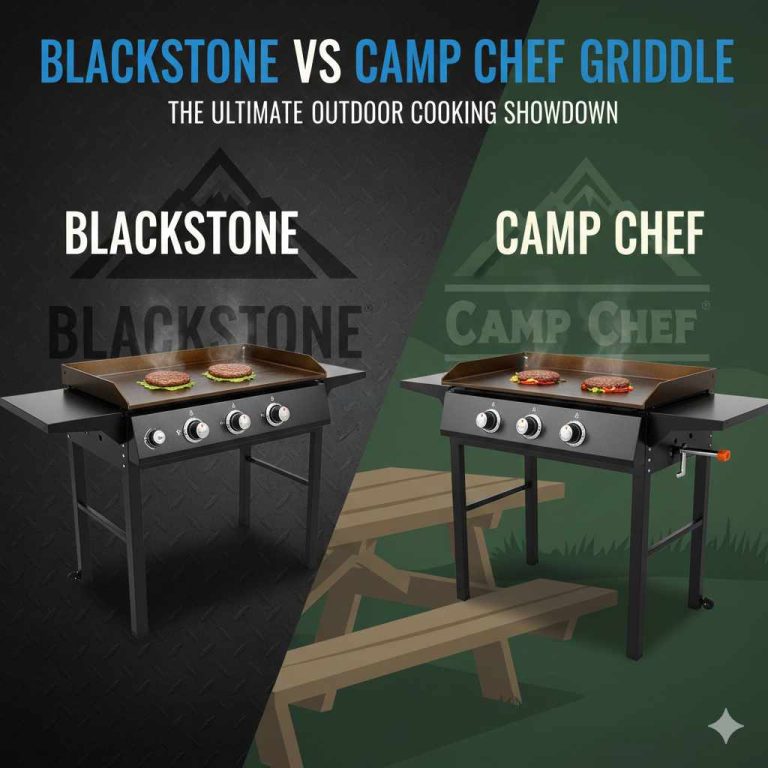
If you’re still torn, check out our griddle grill vs grill guide for more context. And if you’re curious about how Blackstone stacks up against other brands, read our Blackstone vs Camp Chef comparison. For cleaning tips, don’t miss how to clean a Blackstone griddle.
Products related to this article
Sponsored / affiliate links. As an Amazon Associate I earn from qualifying purchases. I may earn additional commission from eligible campaigns.