Blackstone vs Electric Griddle: Which Should You Buy?
When it comes to outdoor cooking, the choice between a Blackstone vs electric griddle often comes down to personal preference and cooking style. Both offer fantastic ways to prepare a wide variety of foods, from breakfast staples to grilled favorites, but they differ significantly in their design, capabilities, and overall experience. This guide will help you understand the key differences, advantages, and disadvantages of each, so you can make an informed decision for your backyard kitchen.
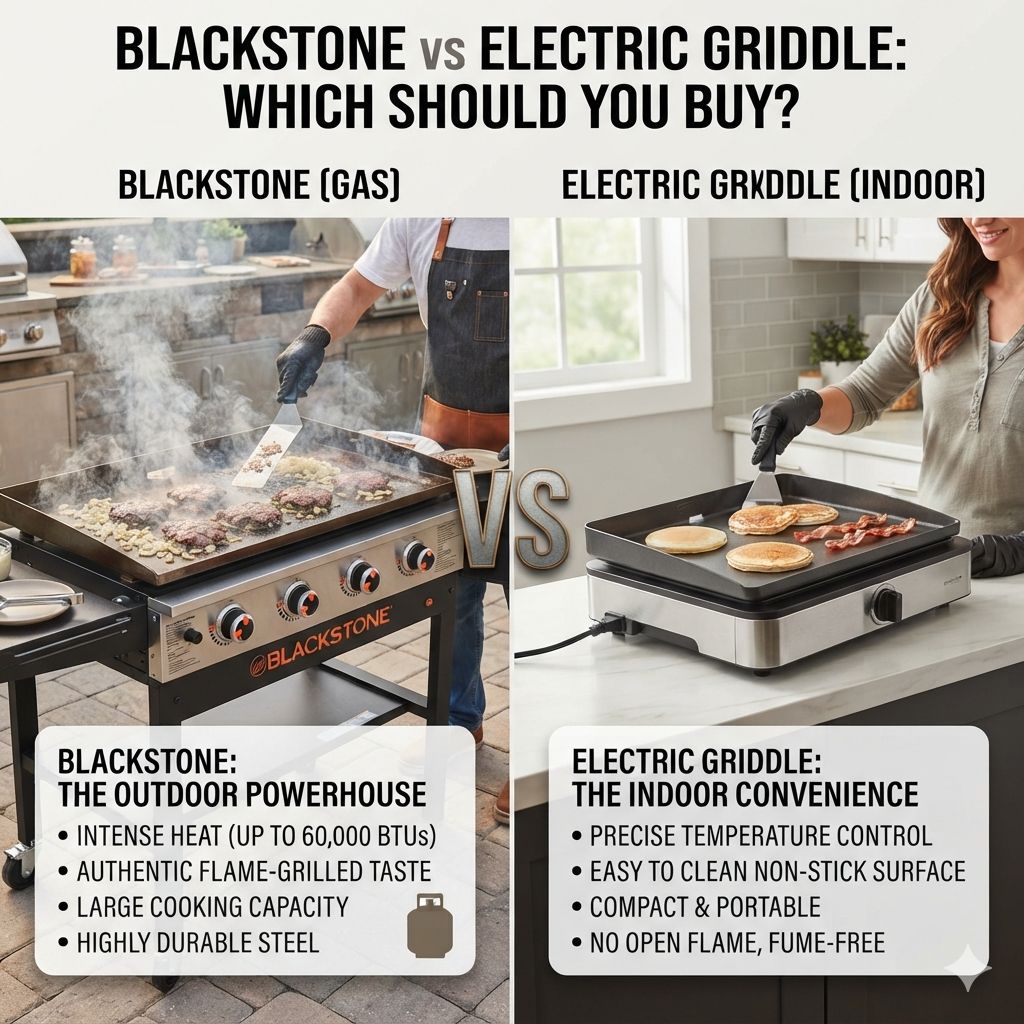
In short, a Blackstone offers a more authentic, versatile outdoor grilling experience with its large flat top and propane power, ideal for entertaining and diverse cooking. An electric griddle is more suited for indoor use, convenience, and precise temperature control for simpler meals.
Key Takeaways
- A Blackstone griddle provides a vast, open cooking surface powered by propane, perfect for high-volume cooking and diverse outdoor meals.
- Electric griddles are generally more compact, designed for indoor use, and offer precise temperature control, making them convenient for everyday cooking.
- Consider your cooking space, intended use (indoor vs. outdoor), and the types of meals you plan to prepare when choosing between a Blackstone vs electric griddle.
- Blackstone griddles offer superior searing and charring capabilities due to higher heat output, while electric griddles excel in consistent, gentle cooking.
What is a Blackstone Griddle?
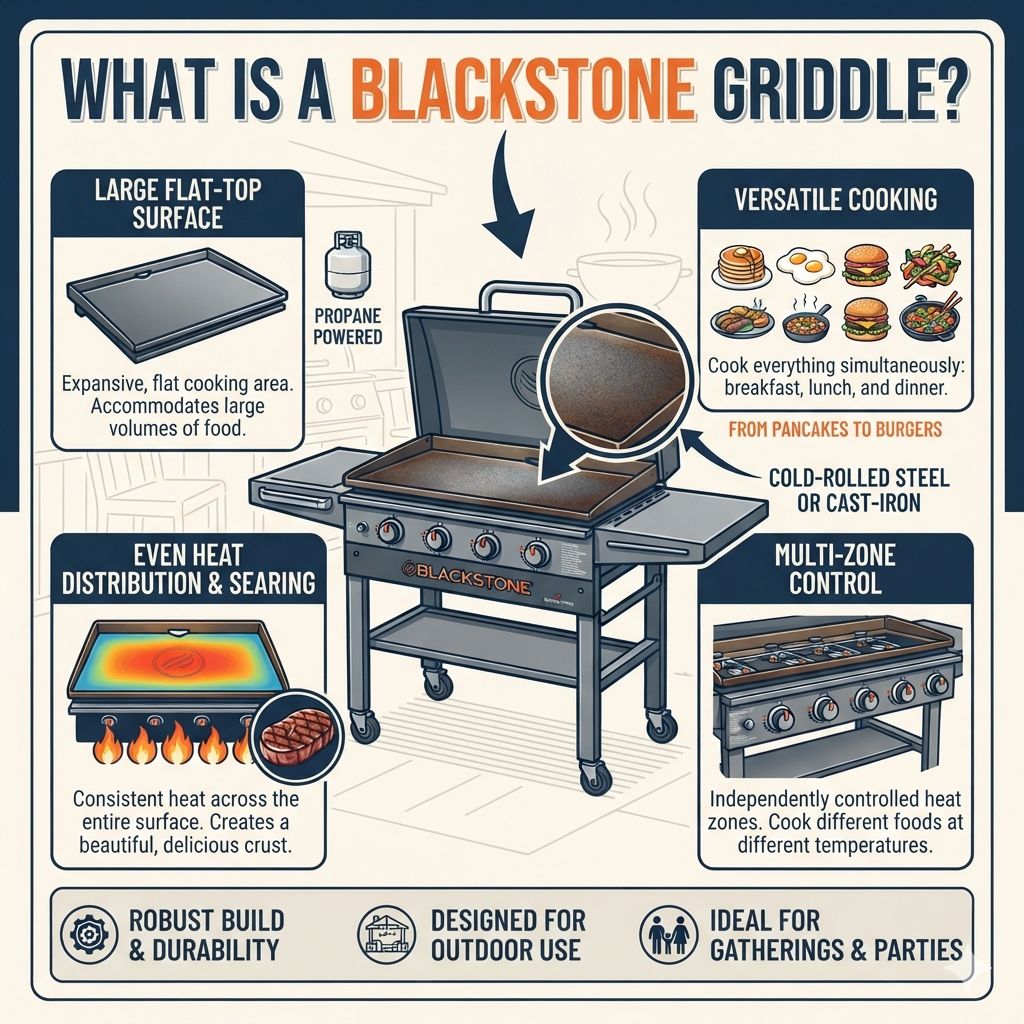
A Blackstone griddle is essentially a large, freestanding flat-top grill. These units are typically powered by propane, offering high heat output and a robust cooking experience designed for outdoor use. Their defining feature is the expansive, cold-rolled steel or cast-iron cooking surface that can accommodate a large volume of food, making them ideal for family gatherings and parties.
The sheer size and heat capacity allow for simultaneous cooking of multiple items, from pancakes and eggs to burgers and stir-fries.
Unlike traditional grills with grates, a flat top ensures that smaller items like vegetables or chopped meats don’t fall through. This design also promotes even heat distribution and incredible searing capabilities, giving food that desirable crust. Many Blackstone models come with multiple independently controlled heat zones, allowing you to cook different foods at different temperatures simultaneously, adding another layer of versatility to your outdoor culinary adventures.
They are built tough, designed to withstand various weather conditions and deliver consistent performance meal after meal.
Key Features of Blackstone Griddles
- Massive cooking surface (often 700+ square inches)
- Propane-powered for high heat and portability
- Durable cold-rolled steel or cast-iron surface
- Multiple independently controlled heat zones
- Grease management system for easy cleanup
- Sturdy construction for outdoor durability
- Optional accessories like side shelves and storage
Pros and Cons of Blackstone Griddles
| Pros | Cons |
|---|---|
| Exceptional searing and caramelization | Requires outdoor space and propane tank |
| Large cooking capacity for entertaining | Can be bulky and difficult to store |
| Versatile for breakfast, lunch, dinner, and more | Initial seasoning of the griddle surface is required |
| Easy to clean with the right methods | Can be a significant upfront investment |
When considering a Blackstone, remember the initial seasoning process is crucial for its non-stick properties and longevity.
Best For:
Outdoor cooking enthusiasts, large families, entertainers, and those who love the sizzle and char of griddle-cooked foods.
What is an Electric Griddle?
An electric griddle is a portable cooking appliance that uses electricity to heat a flat cooking surface. Unlike their propane-powered counterparts, electric griddles are typically designed for indoor use, although some can be used outdoors if an electrical outlet is available. They are known for their convenience, ease of use, and precise temperature control, making them a popular choice for kitchens where space is limited or for quick, simple meals.
The cooking surface of an electric griddle is usually non-stick, which not only aids in cooking but also makes cleanup remarkably simple. Temperature is regulated via a dial or digital controls, allowing users to set and maintain specific heat levels with accuracy. This is particularly beneficial for delicate items like eggs, crepes, or pancakes, ensuring they cook evenly without burning.
Their compact size and portability make them easy to store when not in use, fitting neatly into cabinets or pantries.
Key Features of Electric Griddles
- Electric-powered for indoor convenience
- Non-stick cooking surface
- Adjustable temperature control with indicator lights
- Drip tray or grease catcher for easy cleanup
- Compact and portable design
- Wide range of sizes, from personal to family-sized
Pros and Cons of Electric Griddles
| Pros | Cons |
|---|---|
| Easy to use and requires no setup | Lower maximum heat compared to Blackstone |
| Precise temperature control | Limited cooking capacity, not ideal for large crowds |
| Simple cleanup, often dishwasher-safe parts | Requires an electrical outlet, limiting outdoor use |
| Compact and easy to store | Surface might not achieve the same level of searing or char as a Blackstone |
Many electric griddles offer excellent non-stick surfaces, but using metal utensils can degrade their performance over time.
Best For:
Apartment dwellers, small kitchens, quick breakfasts, individuals or small families, and those seeking convenience and ease of use.
Blackstone vs Electric Griddle: A Detailed Comparison
The fundamental differences between a Blackstone vs electric griddle lie in their power source, intended environment, and cooking capabilities. Blackstone griddles, fueled by propane, offer significantly higher heat output. This translates to superior searing, achieving a professional-quality crust on meats and vegetables that electric griddles often struggle to match.
The large, open surface area of a Blackstone is designed for high-volume production, allowing you to cook for a crowd efficiently. Its robust construction is built for the rigors of outdoor cooking.
On the other hand, electric griddles shine in their convenience and precision. Powered by electricity, they plug into any standard outlet, making them perfect for indoor use in kitchens, dorm rooms, or even RVs. The adjustable temperature controls allow for very specific cooking, which is invaluable for delicate items.
While they may not reach the scorching temperatures of a Blackstone, their consistent heat is excellent for evenly cooking pancakes, eggs, and other breakfast favorites. Cleanup is typically a breeze thanks to non-stick surfaces and removable drip trays.
Power Source and Environment
| Feature | Blackstone Griddle | Electric Griddle |
|---|---|---|
| Power Source | Propane | Electricity |
| Primary Environment | Outdoor | Indoor (kitchen, dorms, RVs) |
| Heat Output | High, great for searing | Moderate, precise for even cooking |
| Portability | Moderate (requires propane tank) | High (lightweight, plugs in anywhere) |
The choice of power source dictates where and how you’ll use your griddle, influencing your cooking environment.
Cooking Surface and Capacity
The surface area is a major differentiator. Blackstone griddles typically boast a much larger cooking surface, often exceeding 700 square inches, allowing for simultaneous preparation of an entire meal. This makes them perfect for feeding a crowd or for elaborate cooking sessions like breakfast buffets or burger bar events.
The steel surface develops a natural non-stick patina over time with proper seasoning and maintenance, and it’s incredibly durable.
Electric griddles, while varying in size, generally offer a smaller cooking area, often ranging from 200 to 400 square inches. This is ample for daily use by individuals or small families. The non-stick coatings on electric griddles are convenient for immediate use and easy cleanup but can be more susceptible to scratching and wear over time compared to a seasoned steel surface.
Some larger electric models offer a decent capacity, but they rarely match the sheer scale of a typical Blackstone.
Temperature Control and Performance
When it comes to temperature, Blackstone griddles excel at high heat. Their propane burners can reach temperatures well over 500°F (260°C), which is crucial for achieving that perfect sear and smoky flavor. The ability to control multiple burners independently allows for different heat zones, enabling you to sear on one side and keep food warm on another.
This dynamic temperature management is key to professional-level griddle cooking.
Electric griddles, on the other hand, focus on precision. While they don’t typically reach the extreme temperatures of propane models, their thermostats offer accurate, consistent heat control. You can often set them to specific temperatures, such as 350°F (175°C) for pancakes or 400°F (205°C) for searing thinner meats.
This consistency is a significant advantage for bakers and for those who prioritize exact cooking parameters. The heating element is usually embedded, providing uniform warmth across the surface, though it may lack the intense “hot spots” that can be beneficial for certain cooking techniques.
Maintenance and Cleaning
Cleaning a Blackstone griddle involves a bit more effort initially but is straightforward once you get the hang of it. After cooking, you’ll typically scrape off food debris into the grease trap, then use oil and a scraper or paper towels to season the surface again, preventing rust and maintaining its non-stick properties. Regular seasoning is key to a well-performing Blackstone.
It’s important to note that Blackstone griddles are prone to rust if not properly maintained and dried after cleaning or exposure to moisture.
Electric griddles are generally much easier to clean. Most feature a non-stick surface that can be wiped clean with a damp cloth or sponge. Removable drip trays and sometimes dishwasher-safe plates further simplify the process.
The lack of exposed heating elements and the non-stick coating mean less concern about rust or the need for extensive re-seasoning. However, it’s crucial to avoid abrasive cleaners or utensils that can damage the non-stick coating, as this can compromise cooking performance and longevity.
Cost and Value
The cost of a Blackstone griddle can vary significantly based on size and features, but generally, they represent a more substantial upfront investment. Entry-level models might start around $150-$200, while larger, more feature-rich units can cost $400-$600 or more. This price reflects the robust construction, larger cooking surface, and propane infrastructure.
However, for those who frequently entertain or cook outdoors, the value proposition is high due to their versatility and durability.
Electric griddles are typically more budget-friendly. You can find a good quality electric griddle for anywhere from $30 to $100. This makes them an accessible option for almost any household.
The value here lies in their convenience, ease of use, and suitability for everyday cooking needs in smaller settings. While they may not offer the same outdoor cooking experience or sheer cooking capacity, their affordability and practicality are undeniable advantages.
Tips for Using Your Griddle
Whether you choose a Blackstone or an electric griddle, proper use and care will ensure the best results and longevity.
Blackstone Griddle Tips
- Seasoning is Key: Always follow the manufacturer’s instructions for seasoning your Blackstone griddle before its first use. Re-season periodically.
- Preheat Properly: Allow the griddle to preheat fully to achieve even cooking temperatures and a good sear.
- Use the Right Utensils: Metal spatulas and scrapers are essential for Blackstone griddles. They help maintain the seasoned surface.
- Manage Grease: Regularly empty the grease trap during cooking, especially when cooking fatty meats like bacon or burgers.
- Clean Immediately: Clean the griddle while it’s still warm (but not too hot) to make the process easier and prevent food from sticking.
- Protect from Rust: Always ensure the griddle surface is dry and lightly oiled after cleaning to prevent rust, especially if stored outdoors.
- Oil Management: Use high smoke point oils like avocado, grapeseed, or canola oil for cooking and seasoning.
Tip: For stubborn stuck-on bits on a Blackstone, pour a small amount of water onto the hot surface and scrape vigorously; the steam can help lift the debris.
Electric Griddle Tips
- Don’t Overheat: Avoid setting the temperature too high, especially on cheaper models, as this can lead to uneven cooking and damage the non-stick surface.
- Use the Right Utensils: While non-stick coatings are generally durable, it’s best to use silicone, nylon, or wooden utensils to avoid scratching.
- Preheat for Evenness: Always allow the griddle to preheat to the set temperature before adding food for consistent results.
- Don’t Crowd the Surface: Overcrowding can lower the griddle’s temperature and lead to steaming rather than searing. Cook in batches if necessary.
- Clean Gently: Wipe down the surface after each use with a damp cloth. If using soap, ensure it’s mild and rinse thoroughly.
- Dry Thoroughly: Even though it’s electric, ensure the surface and components are completely dry before storing to prevent any potential issues.
- Check Cord and Plug: Inspect the power cord and plug regularly for any signs of damage to ensure safe operation.
Warning: Never immerse an electric griddle in water or any other liquid. Ensure the electrical components are kept away from excess moisture.
What Are Common Mistakes to Avoid?
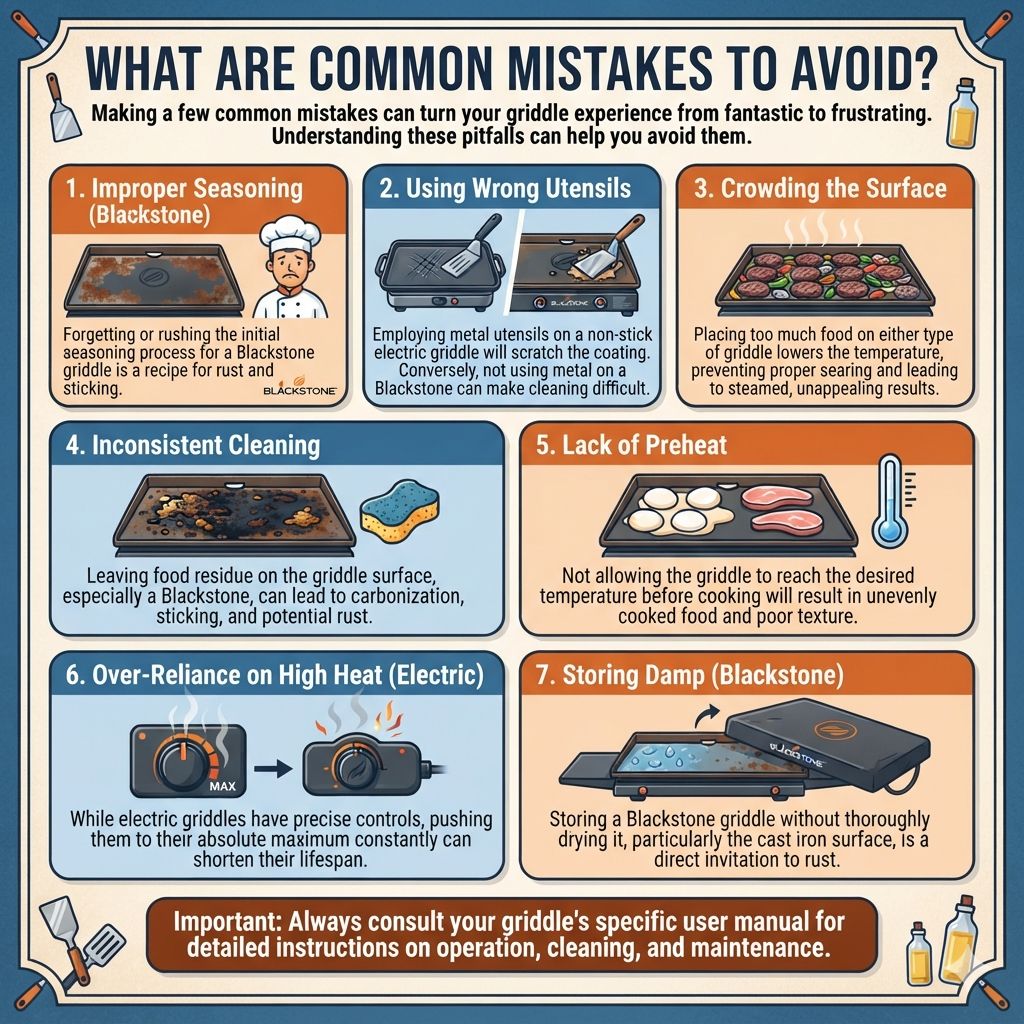
Making a few common mistakes can turn your griddle experience from fantastic to frustrating. Understanding these pitfalls can help you avoid them.
- Improper Seasoning (Blackstone): Forgetting or rushing the initial seasoning process for a Blackstone griddle is a recipe for rust and sticking.
- Using Wrong Utensils: Employing metal utensils on a non-stick electric griddle will scratch the coating, ruining its non-stick properties. Conversely, not using metal on a Blackstone can make cleaning difficult.
- Crowding the Surface: Placing too much food on either type of griddle lowers the temperature, preventing proper searing and leading to steamed, unappealing results.
- Inconsistent Cleaning: Leaving food residue on the griddle surface, especially a Blackstone, can lead to carbonization, sticking, and potential rust.
- Lack of Preheat: Not allowing the griddle to reach the desired temperature before cooking will result in unevenly cooked food and poor texture.
- Over-Reliance on High Heat (Electric): While electric griddles have precise controls, pushing them to their absolute maximum constantly can shorten their lifespan.
- Storing Damp (Blackstone): Storing a Blackstone griddle without thoroughly drying it, particularly the cast iron surface, is a direct invitation to rust.
Important: Always consult your griddle’s specific user manual for detailed instructions on operation, cleaning, and maintenance.
Frequently Asked Questions
What is the primary difference between a Blackstone and an electric griddle?
The primary difference lies in their power source and intended use. Blackstone griddles are propane-powered and designed for outdoor cooking, offering high heat for searing. Electric griddles use electricity, are typically used indoors, and focus on precise, consistent temperature control for everyday cooking.
Can I use a Blackstone griddle indoors?
No, it is not recommended to use a Blackstone griddle indoors. They run on propane, which produces carbon monoxide and other dangerous fumes, and they are designed for well-ventilated outdoor spaces only. Indoor use poses a significant fire and health hazard.
Are electric griddles good for searing meat?
Electric griddles can sear thinner cuts of meat adequately, but they generally do not reach the extreme high temperatures required for a deep, professional-quality sear on thicker steaks or burgers. A Blackstone griddle is far superior for this purpose.
How do I clean a Blackstone griddle?
After cooking, scrape off debris into the grease trap. Then, use oil and a scraper or paper towels to clean and re-season the surface to prevent rust and maintain its non-stick quality. Always ensure it’s dry before storing.
Which type of griddle is easier to store?
Electric griddles are generally much easier to store due to their more compact size and lighter weight. They can often fit into standard kitchen cabinets or pantries, while larger Blackstone units may require dedicated outdoor storage space.
Final Thoughts
Deciding between a Blackstone vs electric griddle hinges on your lifestyle and culinary goals. For robust outdoor cooking, entertaining large groups, and achieving superior searing, the Blackstone is an unparalleled choice. Conversely, for convenient indoor cooking, precise temperature control, and simple meal preparation, an electric griddle is an excellent, accessible option.
Both offer fantastic ways to expand your cooking repertoire, but understanding their core strengths will guide you to the right decision for your home.
Products related to this article
Sponsored / affiliate links. As an Amazon Associate I earn from qualifying purchases. I may earn additional commission from eligible campaigns.