How Tall Is A Sofa Table? Standard Height Explained
It’s a common moment of confusion. You’re setting up your living room, you’ve got the sofa just right, and then you look at the space behind it. You want something there, something useful and pretty.

SUPERJARE
SUPERJARE 78.8 inch Narrow Behind Couch Table…
- Note: Total Length: 78.8 inches — Made by combining two 39.4-inch sofa tables.
- 【Fill Small Sofa Gaps Perfectly】No more wasted space! This 5.7-inch narrow console table is designed to fill the awkward small gap…
- 【Flexible Charging Stations】Whether you’re lounging solo or hosting a gathering, this thin console table offers multiple charging…
As an Amazon Associate I earn from qualifying purchases.
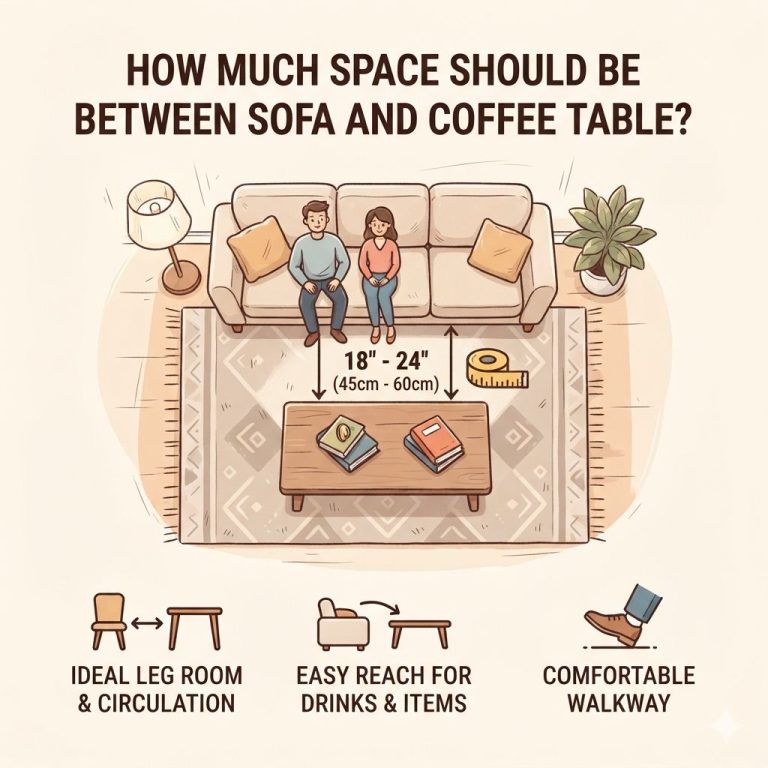
For another table or room-layout decision, How Much Space Should Be Between Sofa And Coffee Table? gives readers a useful follow-up.
For another table or room-layout decision, Small Chair and Table Set for Balcony: Buys gives readers a useful follow-up.
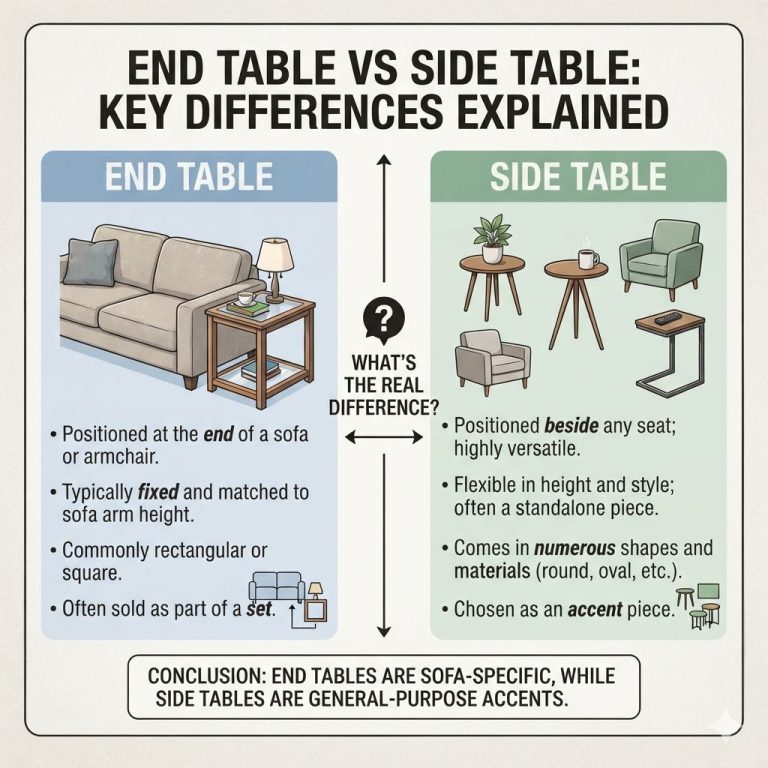
For another table or room-layout decision, End Table Height Compared to Sofa gives readers a useful follow-up.
A sofa table, maybe? But then the question pops into your head: how tall is a sofa table? It feels like a simple question, but getting it wrong can throw off your whole room’s vibe.
You’re not alone in this. So many people struggle with furniture dimensions. It’s not just about looks; it’s about how things work together.
Too tall, and it looks awkward. Too short, and it’s lost. We want that perfect fit, that seamless flow.
Let’s break down the standard sofa table height so you can feel confident in your choice.
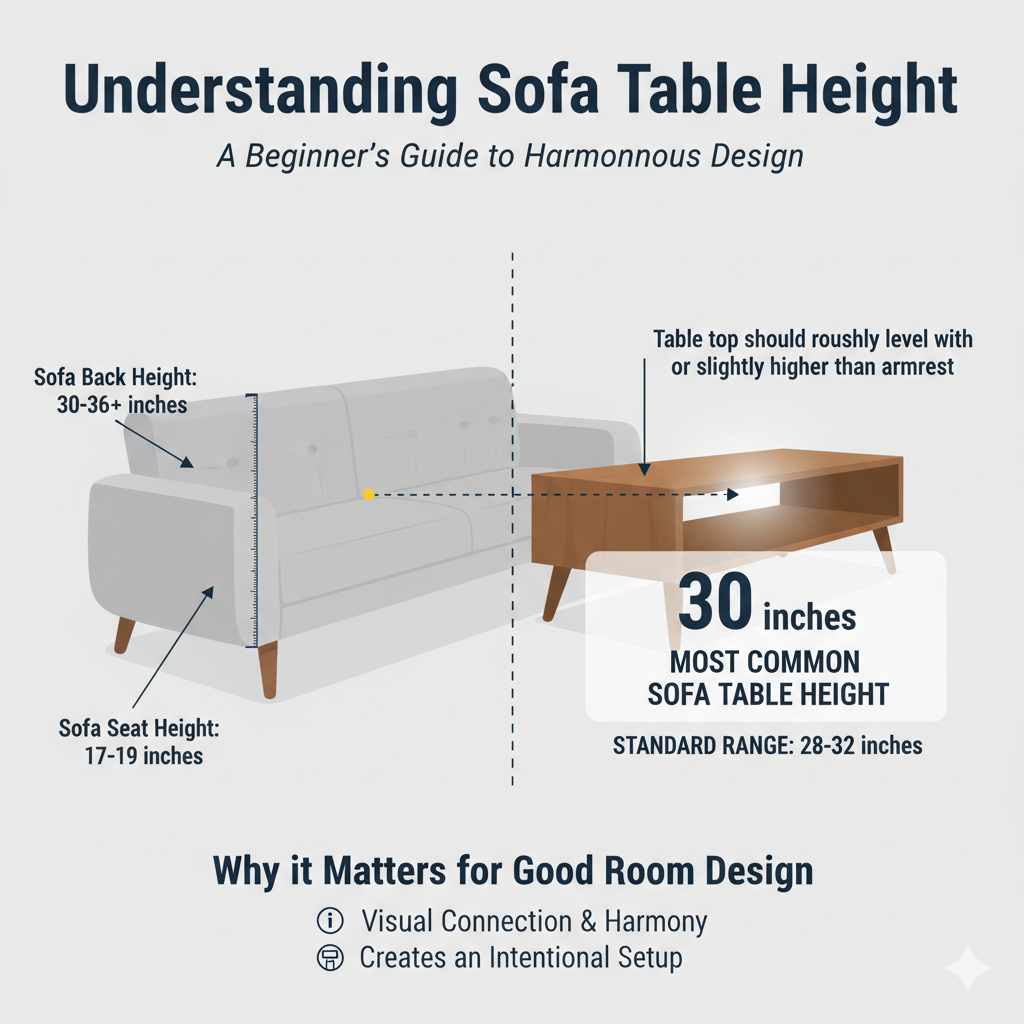
The standard height for a sofa table is typically between 28 to 32 inches. The most common height is around 30 inches. This range is designed to align with the height of most standard sofas, ensuring both functionality and visual balance in a living room setting.
Understanding Sofa Table Height
So, you’re wondering about the exact numbers. When we talk about a sofa table, we’re often talking about a console table that sits behind a sofa. Sometimes, it goes against a wall.
Other times, it helps divide a big open space. The goal is always to make it look good and work well.
The most common height for these tables is around 30 inches. This isn’t a strict rule, but it’s what most manufacturers aim for. Think of it as the sweet spot.
It’s high enough to be useful for lamps, drinks, or decor. It’s also not so high that it towers over your sofa.
You’ll also see tables that are a little shorter or taller. Some might be 28 inches. Others might go up to 32 inches.
This range, 28 to 32 inches, covers most standard sofa tables. It’s important to know this range because sofas themselves can vary in height.
A typical sofa seat height is about 17 to 19 inches. The sofa back can be much higher, maybe 30 to 36 inches or more. When you put a table behind it, you want the table’s top surface to be roughly level with the sofa’s armrests or slightly higher.
This creates a visual connection.
This alignment makes the whole setup feel intentional. It doesn’t look like separate pieces of furniture just shoved together. Instead, they seem to belong together.
This is key for good room design. It’s about creating harmony.
My Own Sofa Table Struggle
I remember when I first moved into my own apartment. It had this huge open living area. I loved it, but it felt a bit… empty.
I had this long, comfy couch that was the main feature. I knew I needed something behind it to define the space and add some function.
A sofa table seemed like the perfect answer. I went online, full of excitement. I saw so many beautiful tables.
They had drawers, shelves, and cool designs. I picked one I thought was gorgeous. It looked great in the photos.
I didn’t really check the height.
When it arrived, I was so eager to set it up. I pushed the sofa back a bit and slid the table into place. And then… it just looked wrong.
The table was way too tall. It practically went up to the top of the sofa cushions. It looked like a bar rather than a stylish accent piece.
I felt a wave of annoyance. All that anticipation, and it was a mismatch. It wasn’t functional either.
I couldn’t easily reach things on it without leaning over the sofa. And visually, it just chopped up the sofa’s nice lines. It felt clunky.
I learned a big lesson that day about measuring and understanding standard heights. It taught me that even a few inches can make a huge difference.
Sofa Table Height Factors
Standard Sofa Height: Most sofas have seat cushions that are 17-19 inches off the floor. Armrest heights often range from 22-25 inches.
Table Top Alignment: Ideally, the sofa table’s top surface should be at or slightly above the height of your sofa’s armrests.
Purpose of the Table: Will it hold a lamp? A decorative bowl? Serve drinks?
Its use affects how high it should be.
Why Height Matters for Your Sofa Table
The height of your sofa table is more than just a number. It’s about how the piece interacts with your main seating. Think of your sofa as the anchor of your living room.
The table behind it needs to complement it, not compete with it.
If a table is too high, it can make your sofa look smaller. It also makes it hard to reach things on the table. Imagine trying to grab your water glass when the table is at chest level.
It’s not practical. This is especially true if the table is also very deep.
On the flip side, if a table is too low, it can look lost. It might not be able to hold the items you want it to. A short table might be overwhelmed by a tall sofa.
It can also feel a bit unbalanced. The eye tends to go to the sofa, and if the table is much lower, it doesn’t draw attention in a good way.
The goal is a balanced look. A table that’s about the same height as the sofa’s armrests provides a sense of continuity. It creates a visual line.
This makes the whole seating area feel more cohesive. It’s like a visual handshake between your sofa and the table.
Consider the overall style of your room. A sleek, modern room might tolerate slightly different proportions than a cozy, traditional space. But even with different styles, the basic principle of visual harmony holds true.
The height is a key part of achieving this.
Matching Sofa Table to Sofa Type
Not all sofas are created equal. There are different styles, and they come with different dimensions. This is where knowing the standard heights gets really useful.
You need to think about your specific sofa.
Standard Sectional Sofas often have armrests that are around 24 inches high. This means a sofa table around 28 to 32 inches would work well. The table might sit behind a chaise portion or the main body of the sectional.
Low-Profile Sofas are popular right now. These sofas sit lower to the ground. Their armrests might be only 20 to 22 inches high.
For these, you might look for a sofa table on the shorter end of the spectrum, perhaps 27 to 29 inches. A standard 30-inch table might still work if the sofa’s back is quite tall, creating a different kind of balance.
Oversized or Deep Sofas can have higher armrests. Some might reach 25 inches or even more. In these cases, a taller sofa table, maybe 31 or 32 inches, could be a good fit.
You want to avoid a table that looks dwarfed by the sofa.
The key is to measure your sofa. Don’t guess. Get a tape measure and find the height of the armrests.
This is your best guide. Then, you can look for a sofa table that falls within that 28-32 inch range, or adjust slightly based on your sofa’s specific profile.
Key Measurement Points
1. Sofa Armrest Height: Measure from the floor to the top of the armrest. This is your primary reference point.
2. Sofa Seat Height: Measure from the floor to the top of the seat cushion. This helps understand the overall lower profile.
3. Sofa Back Height: Measure from the floor to the very top of the sofa back. This gives context to how tall the sofa is overall.
4. Desired Table Top Height: Think about how high you want the table surface to be. Aim for armrest height or slightly above.
Beyond Height: Other Sofa Table Dimensions
While height is crucial, it’s not the only dimension to consider. The depth and width of a sofa table also play a big role in how it fits and functions in your room.
Depth: Sofa tables are usually not very deep. This is because they often sit behind a sofa in a walkway or a main living area. A typical depth is between 10 to 18 inches.
A shallower table (10-12 inches) is great for tight spaces or if you just want a slim decorative surface. A deeper table (14-18 inches) offers more surface area for lamps, plants, and decor items.
If your sofa sits out in the middle of a room, a deeper table might make sense. It can create a more substantial visual block and serve as a functional divider. If the table is against a wall, a shallower one might be better to avoid blocking traffic.
Width: The width of the table should generally relate to the width of your sofa. You don’t want a table that’s significantly wider than the sofa. This would look unbalanced.
Ideally, the table’s width should be similar to the sofa’s width, or just a bit shorter. A common range is 40 to 60 inches wide. For a very long sectional, you might choose a wider table, but it’s good practice to ensure it doesn’t overpower the sofa.
Sometimes, people use two smaller sofa tables flanking a sofa, or one on either end of a sectional. In this case, you’d consider the width of those individual tables relative to the sofa section they are near.
These dimensions work together. A tall, narrow table can look awkward. A short, wide table might not offer enough vertical presence.
Aim for a balance in all three dimensions: height, depth, and width.
When a Sofa Table Isn’t the Answer
Sometimes, the idea of a sofa table is great, but the space just doesn’t allow for it. It’s important to recognize when something might not work, no matter how much you want it to. This is part of trusting your intuition and understanding room flow.
Tight Walkways: If there isn’t much space behind your sofa, adding a table might make the room feel cramped. If you can only fit a few inches for walking, a table, even a shallow one, could be a tripping hazard or just make movement difficult. In these cases, perhaps a small wall-mounted shelf or nothing at all is best.
Open Concept Flow Issues: In a very large open space, a sofa table might not be enough to anchor the seating area. It could look a bit lost. You might need a larger rug, or perhaps a different furniture arrangement altogether.
Or maybe a taller, more substantial piece of furniture that isn’t a traditional sofa table.
High-Traffic Areas: If the area behind your sofa is a main pathway for people entering or leaving a room, or going between different zones, a table can be an obstacle. You want clear, easy paths. A table with sharp corners could also be a concern if kids are running around.
Very Low Sofas: As mentioned, some sofas are extremely low. If your sofa is less than 17 inches high, a standard 28-inch sofa table might still feel too tall. You might need to search for more specialized, lower console tables, or reconsider if a table is the best choice visually.
It’s about looking at the whole picture. How does the furniture relate to the room’s layout? How do people move through the space?
Sometimes, the best design choice is to simplify. There’s beauty in a clear path and uncluttered space.
Quick Check: Is a Sofa Table Right for You?
Space Behind Sofa: At least 18-24 inches needed for comfortable placement and walking.
Traffic Flow: Is this a main walkway? If so, a table might hinder movement.
Sofa Style: Does your sofa have high arms that a table can relate to?
Room Purpose: Is the area behind the sofa functional or just decorative?
Quick Fixes & Tips for Sofa Table Placement
If you already have a sofa table or are looking to buy one, here are some practical tips to make sure it works in your space. These are simple things you can do right now.
Measure Twice, Buy Once: This old saying is gold. Before you buy any table, measure the space behind your sofa. Get the height of your sofa’s armrests.
Compare these numbers to the table’s dimensions. Don’t just trust the product photos.
Consider Scale: Think about the overall size of your room and your sofa. A massive table in a tiny room will feel overwhelming. A tiny table in a huge room will look lost.
The table should be in proportion to your furniture and the space.
Function Over Form (Sometimes): While looks are important, how will you use the table? If you need to put a large lamp on it, make sure it’s deep and stable enough. If it’s just for a few decorative items, you can be more flexible.
Add Layers: Don’t just plop the table down. Style it! Use a tray to group items.
Add a lamp for ambient light. A small plant can add life. Books or magazines add a touch of personality.
This makes the table feel like a deliberate part of the decor.
Visual Weight: Think about the table’s style. A heavy, dark wood table has more visual weight than a light, airy metal or glass table. This visual weight should balance with your sofa.
A very heavy table might not work with a delicate, modern sofa. Conversely, a very light table might disappear behind a bulky sofa.
Experiment: If you can, try different positions. Move the table closer or further from the sofa. Try different heights if you have adjustable options.
Sometimes, you need to play around to find what feels just right.
Styling Your Sofa Table
Group Items: Use trays or bowls to keep small items organized.
Add Light: A table lamp provides both illumination and ambiance.
Vary Heights: Mix taller items (like a vase or lamp) with shorter items (like books or coasters).
Personal Touches: Display photos, art, or collections that reflect your style.
Negative Space: Don’t fill every inch. Empty space allows the items to breathe and look intentional.
Common Sofa Table Height Misconceptions
It’s easy to fall into common traps when thinking about furniture sizes. Let’s clear up a few things about sofa table height that might be causing confusion.
Misconception 1: All sofas are the same height. This is simply not true. Sofas come in a huge variety of styles. From super low-profile modern designs to traditional, high-backed sofas, the seat and armrest heights can vary quite a bit.
Always measure your own sofa.
Misconception 2: A taller table always looks better behind a taller sofa. While generally true that proportions matter, sometimes a very tall sofa can be balanced by a slightly shorter table if the table has a substantial presence in terms of width or depth. It’s about the overall visual weight and relationship, not just absolute height.
Misconception 3: Sofa tables are just for lamps. While lamps are a popular item, sofa tables can serve many purposes. They can be a workspace for a laptop, a landing spot for keys and mail near an entryway, a place to serve drinks when entertaining, or simply a decorative surface. The intended use can influence the ideal height.
Misconception 4: Standard measurements are always the best. While 30 inches is a common standard, your unique sofa and room might call for something slightly outside this range. Don’t be afraid to look for tables that are 28 inches or 32 inches if they fit your specific needs better. Sometimes, custom or less common sizes are perfect.
Understanding these misconceptions helps you make a more informed decision. It’s about applying general guidelines to your specific situation.
When to Worry About Sofa Table Height
Most of the time, choosing a sofa table height within the standard range of 28-32 inches will work well. However, there are times when the height might cause issues or indicate a larger design problem.
Impeding Functionality: If the table is so tall that you can’t comfortably reach it to use it, or so short that it doesn’t serve its purpose (like holding a lamp without it looking wobbly or too high), then the height is a problem. This directly impacts how you live in your space.
Creating Visual Discord: If the table’s height creates a jarring visual break with your sofa, it’s a sign something is off. For example, a very low table behind a high-backed sofa can make the sofa look disconnected. Conversely, a table that is much higher than the sofa’s highest point might feel aggressive or out of place.
Blocking Views or Light: In some setups, a sofa table might be placed in front of a window. If the table is too tall, it could block natural light or obstruct the view outside. This is especially important in smaller rooms where maximizing light is key.
Tripping Hazard: While not strictly about height, a table that is too low and has sharp edges might become a hazard, especially if it’s in a pathway. Ensure the height doesn’t contribute to making it an obstacle.
If you notice any of these issues, it’s worth re-evaluating your table choice or its placement. Sometimes, a simple adjustment of the sofa’s position or the addition of a taller or shorter item on the table can help, but other times, you might need to consider a different table altogether.
Sofa Table Height Red Flags
Too High: Reaches above the top of the sofa back, making the sofa look shorter.
Too Low: Makes the sofa look top-heavy or the table seems insignificant.
Hard to Reach: Items placed on the table are difficult to access from the sofa.
Blocks Light: Significantly obstructs windows or natural light sources.
Visual Disconnect: Creates an awkward gap or clash with the sofa’s lines.
Choosing the Right Sofa Table Height for Your Home
Picking the right sofa table height really boils down to a few simple steps. It’s about being practical and a little bit of an observer of your own space.
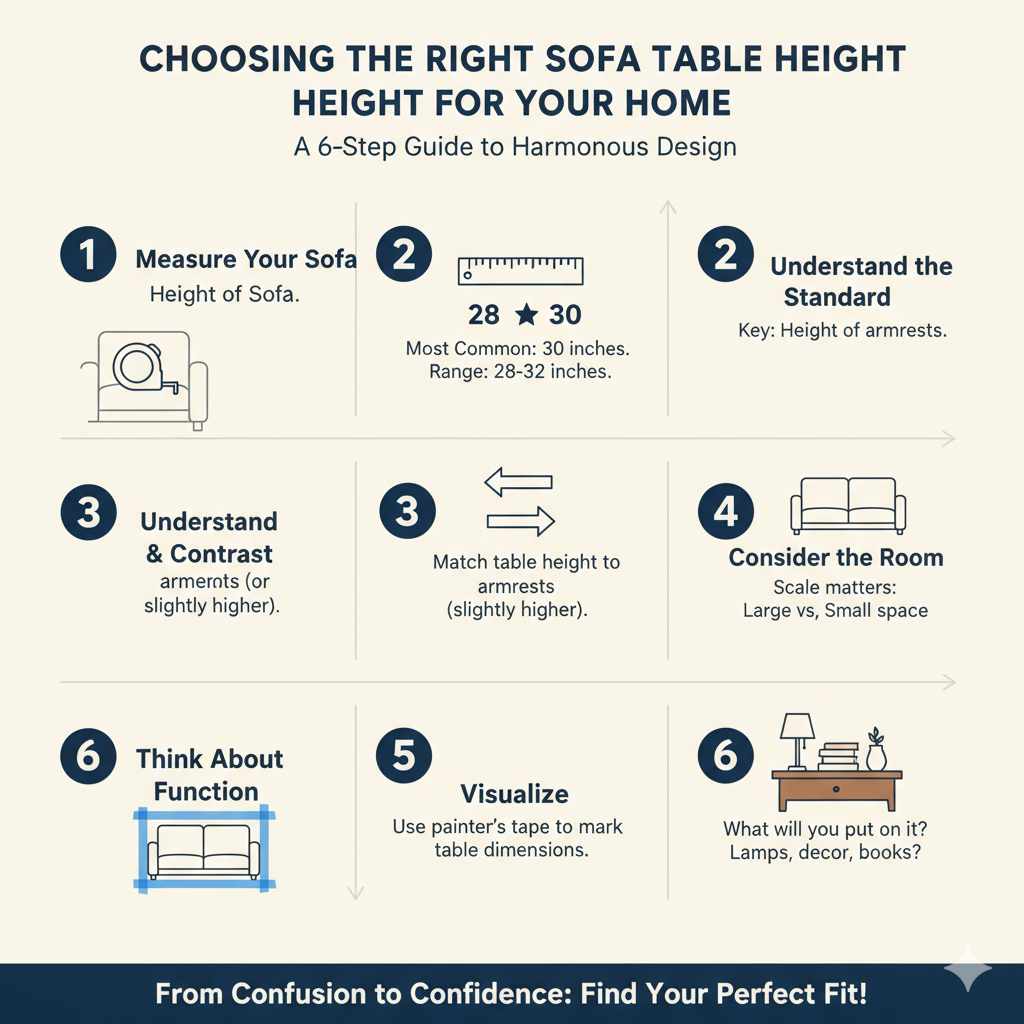
Step 1: Measure Your Sofa. This is non-negotiable. Measure the height of your sofa’s armrests. This is the most critical measurement.
Step 2: Understand the Standard. Remember the 28-32 inch range, with 30 inches being the most common for sofa tables. This gives you a benchmark.
Step 3: Compare and Contrast. Look for tables where the height measurement is close to your sofa’s armrest height. A little higher is often okay, especially if you want to place larger items on it. A little lower might work if your sofa’s back is very tall.
Step 4: Consider the Room. Think about the overall scale of your living room. Is it large or small? This can influence whether you lean towards a shallower or deeper table, and how its width relates to the sofa.
Step 5: Visualize. Imagine the table in place. Use painter’s tape on the floor to mark out the dimensions of a potential table. This helps you see how it will fit and feel in the space.
Step 6: Think About Function. What will you put on the table? Will it hold a substantial lamp, a stack of books, or just a few decorative pieces? This can impact whether you need more surface area or just a slim profile.
By following these steps, you can move from confusion to confidence. You’ll find a sofa table that not only looks good but also feels right in your home.
Frequently Asked Questions About Sofa Table Height
What is the standard height for a sofa table?
The standard height for a sofa table is typically between 28 and 32 inches. Many tables are around 30 inches tall, which is considered the most common and versatile height.
How high should a sofa table be relative to my sofa?
Ideally, the top surface of your sofa table should be at or slightly above the height of your sofa’s armrests. This creates a balanced and visually pleasing connection between the two pieces of furniture.
Can a sofa table be taller than my sofa’s back?
Generally, it’s best if the sofa table does not extend much higher than the back of your sofa, as this can make the sofa appear smaller or the table look out of place. However, the armrest height is a more critical reference point.
What if my sofa has very low armrests?
If your sofa has very low armrests (e.g., under 20 inches), a standard 30-inch sofa table might look too tall. In this case, you might look for shorter console tables, perhaps in the 24-28 inch range, or consider if a traditional sofa table is the best fit.
How deep should a sofa table be?
Sofa tables are typically between 10 to 18 inches deep. Shallow tables (10-12 inches) are good for tight spaces, while deeper tables (14-18 inches) offer more surface area for decor and function.
What is the best width for a sofa table?
The width of the sofa table should generally be proportional to the width of your sofa. It’s often best if the table is about two-thirds to three-quarters the width of the sofa, or at least not significantly wider.
Final Thoughts on Sofa Table Dimensions
Finding the right sofa table height isn’t complicated when you know what to look for. It’s about aligning the table with your sofa’s proportions. The standard height of 28-32 inches works for most situations.
But always measure your own sofa!
By paying attention to the height, depth, and width, you can choose a table that enhances your living space. It will add function and style without feeling awkward. Happy decorating!
Related pick: Check today's price on Amazon
Products related to this article
Sponsored / affiliate links. As an Amazon Associate I earn from qualifying purchases. I may earn additional commission from eligible campaigns.