Should A Coffee Table Be Lower Than A Sofa?
For ideal comfort and visual appeal, a coffee table should generally be the same height or slightly lower than your sofa’s seat. This makes it easy to reach for drinks or snacks and keeps the room balanced. Overly tall tables can feel clunky. Very low ones might be hard to use. Aim for a comfortable reach.
The Coffee Table vs. Sofa Height Dance
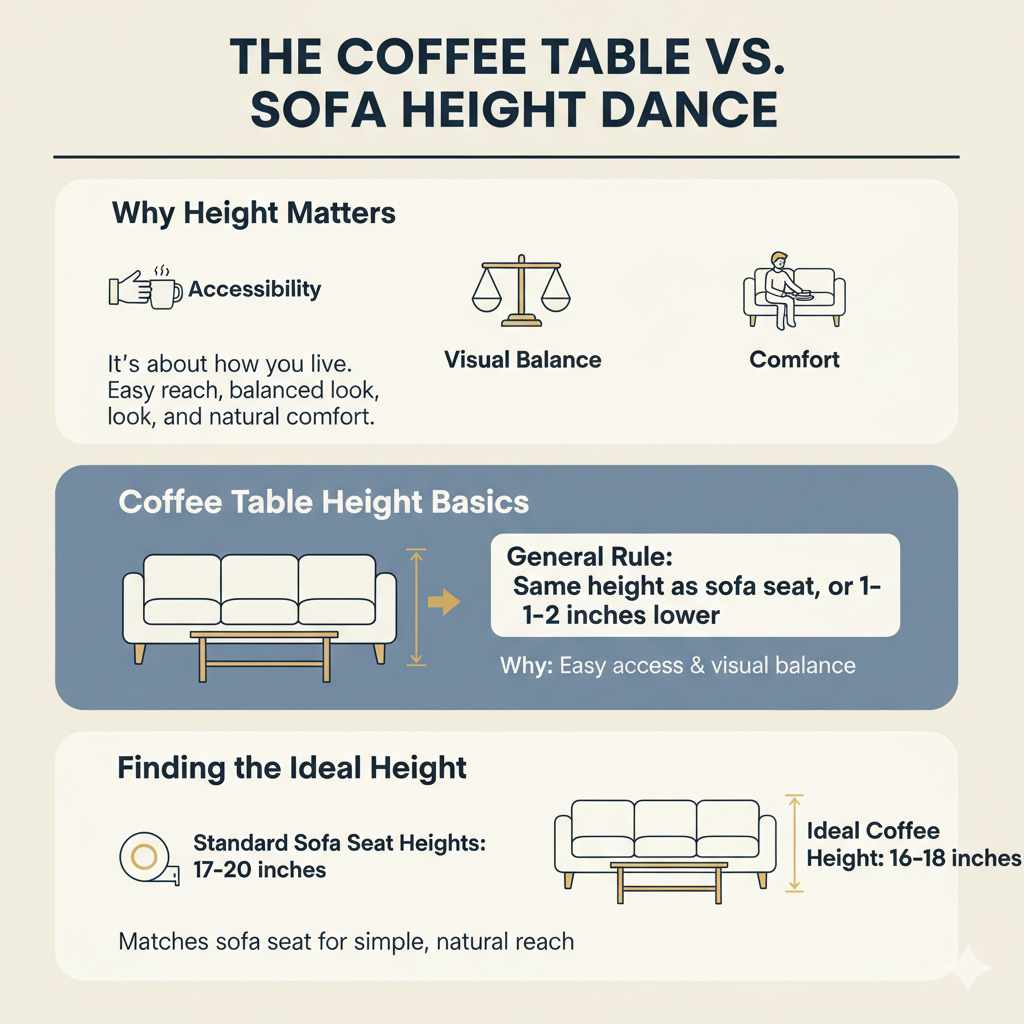
This isn’t just about looks. It’s about how you live in your space. Think about sitting on your sofa. You want to easily grab your remote, a book, or a mug. If the coffee table is too high, it’s an awkward stretch. If it’s too low, you might feel like you’re bending way down.
Why Height Matters
It all comes down to flow and function. The goal is a room that feels welcoming and works for you. The height of your coffee table plays a big part in that. It affects:
Accessibility: Can you easily reach items on the table?
Visual Balance: Does the room look good? Do the pieces fit together?
Comfort: Does sitting on the sofa feel natural?
Most design guides suggest a coffee table height that relates to the sofa’s seat height. This creates a harmonious look. It means your eye flows smoothly across the room. Nothing feels out of place.
Coffee Table Height Basics
General Rule: Aim for a coffee table that is the same height as your sofa’s seat. Or, it can be 1-2 inches lower.
Why this works: This height allows for easy access to items. It also creates a visually pleasing balance. Your eye travels smoothly between the sofa and the table.
Standard Sofa Seat Heights
Sofas come in many styles. This means their seat heights can vary a lot. Some are low and modern. Others are tall and traditional. Most standard sofa seat heights fall between 17 to 20 inches from the floor. This is a good range to keep in mind.
The Ideal Coffee Table Height
Based on standard sofa heights, a common coffee table height is around 16 to 18 inches. This range often matches sofa seat heights perfectly. It makes reaching for things simple and natural.
When to Break the Rules: Exploring Different Styles
While there’s a common guideline, your personal style matters most. Sometimes, a different height can work beautifully. Let’s look at why and when.
Low-Profile Sofas
If you have a very low sofa, like a sectional that sits close to the floor, a standard coffee table might look too tall. In this case, a lower coffee table, perhaps 12-14 inches high, could be a better fit. This maintains the visual connection. It makes the furniture feel like a cohesive set.
Style Spotlight: The Low-Slung Look
Perfect For:
- Modern, minimalist spaces
- Rooms with a relaxed, casual feel
- Homes with pets or young children (lower tables can be safer)
Considerations:
- Ensure the table is still usable for drinks or decor.
- Might require a longer, more rectangular table to balance a larger sofa.
Oversized or Tall Sofas
On the flip side, if you have a grand, tall sofa, a very low coffee table might feel lost. It could look like it’s sinking. For these sofas, a table that is the same height or even slightly taller than the seat could work well. This gives it presence. It helps anchor the larger sofa.
The “Floating” Effect
Sometimes, a coffee table that is a bit higher than the sofa seat can create an interesting visual. It might feel like it’s floating. This can add a modern touch. However, ensure it doesn’t make reaching difficult. It’s a delicate balance.
Other Factors to Consider for Coffee Table Placement
Height is a big deal, but it’s not the only thing. The table’s shape, size, and placement also affect how your room looks and feels.
Coffee Table Size and Proportion
A common mistake is choosing a coffee table that’s too big or too small for the sofa.
Too Big: It can make the seating area feel cramped. It might also block movement.
Too Small: It can look out of place. It might not be functional enough for your needs.
A good rule of thumb for length is for the coffee table to be about two-thirds the length of your sofa. For width, it should leave enough space to walk around.
Proportion Play: Finding the Right Fit
Table Length:
Should be roughly two-thirds the length of your sofa.
Table Width:
Leave 14-18 inches of space between the sofa and the table. This allows for easy walking.
Table Height:
As we discussed, aim for the same height or 1-2 inches lower than the sofa seat.
Placement and Spacing
Where you put the table matters too. It should be close enough to the sofa for convenience. But not so close that you bump into it. Leaving about 14 to 18 inches between the sofa and the coffee table is usually a good amount of space. This gives you legroom. It also makes it easy to step past.
The Shape Game
Coffee tables come in many shapes: rectangular, square, round, oval. The shape can influence the room’s feel.
Rectangular tables often fit well with larger sofas. They offer a lot of surface area.
Round or oval tables can soften a room. They are great for adding flow. They can also be safer in high-traffic areas. They have no sharp corners to bump into.
My Own Coffee Table Mishap
I remember when I first moved into my apartment. I was so excited to pick out a new coffee table. I found a beautiful, ornate wooden one that I absolutely loved. It had this gorgeous carved base. But when I brought it home, I realized something was off. It was a good 6 inches taller than my sofa’s seat!
Sitting down felt strange. I had to really reach to put my drink down. It looked a bit clunky, too. The visual line felt broken. I felt this slight annoyance every time I sat there. It wasn’t a huge problem, but it made the room feel less comfortable than it could have been.
After a few weeks, I couldn’t stand it. I sold the tall table and found a much simpler, lower one. It was the same height as my sofa’s seat. Suddenly, the whole living room clicked into place. It felt more balanced and inviting. I learned that day how much furniture height impacts the whole feel of a room. It was a lesson in proportion and function.
Experience Snapshot: The Taller Table Troubles
The Problem:
Coffee table was significantly higher than the sofa seat.
The Result:
- Awkward reaching for drinks or remotes.
- Visual imbalance in the room.
- Felt less comfortable for lounging.
The Solution:
When is a Higher Coffee Table Acceptable?
There are times when a coffee table might be taller than the sofa seat, and it still works. This usually happens when the table serves a dual purpose or has a specific design.
Multi-functional Tables
Some coffee tables have built-in storage or are designed to lift up. These can sometimes be taller. The lift-top feature means it can be raised for eating or working. When it’s in its lowered state, it might still be a bit higher than ideal for pure lounging. But its extra function justifies the height.
Console Tables as Coffee Tables
In some layouts, people use console tables behind a sofa or floating in the room as a coffee table. These are often taller. They might have a lamp or decor on them. While not ideal for snacking, they can work for styling.
Very Deep Sofas
If you have a very deep sofa, you might naturally sit further back. In this case, a slightly taller table might still be within easy reach. The depth of the sofa changes the user’s reach distance.
Height Exception: The Lift-Top Table
What it is:
A coffee table with a top that lifts up and forward.
Why it’s different:
Its primary function is workspace or dining. When down, it might sit higher than typical.
Best Use:
Ideal for small apartments or multi-use living areas. It offers practicality beyond just holding drinks.
Checking Your Own Space: Simple Tests
How can you tell if your current coffee table height is working? It’s easy to check.
The Armrest Test
Sit on your sofa. Rest your arm comfortably on the armrest. Your hand should naturally fall over the surface of the coffee table. If your hand hangs down too far, the table is too high. If you have to lift your hand up significantly, it’s too low.
The Sip Test
Place a drink on the coffee table. Now, sit back on your sofa. Can you pick up the drink without straining or having to lean forward too much? If it feels like a simple, natural movement, the height is likely good.
The Walk-By Test
Stand up from the sofa. Can you walk past the coffee table easily? Or do you feel like you might bump your knee or shin? There should be enough clearance. This ensures safety and ease of movement.
Quick Check Guide
1. Sit Down:
Relax on your sofa. How does it feel?
2. Reach Out:
Let your arm rest. Can you easily reach the table surface?
3. Place a Drink:
Try grabbing a glass. Is it a natural motion?
4. Stand Up:
Is there enough space to move around the table freely?
What if My Coffee Table is Too High or Too Low?
Don’t worry if your current coffee table isn’t the perfect height. There are often ways to adjust or find a new solution.
For a Table That’s Too High
If your table is just a little too high, you might be able to make it work. Sometimes, adding a softer rug underneath can slightly lower its perceived height. You could also consider removing any thick coasters or risers.
If it’s significantly too high, it might be time to look for a new one. Focus on tables that match your sofa’s seat height. Many furniture stores have options in various heights. Online retailers also offer detailed measurements.
For a Table That’s Too Low
If your table is too low, you can try adding risers. These are small blocks or feet that screw into the bottom of the table. They add a few inches of height. Look for ones that match the table’s style.
Alternatively, you could place a substantial, flat rug underneath the table. This can lift it a bit. Again, the best solution is often finding a table that’s the right height from the start.
Simple Adjustments
Too High?
- Consider thicker rug for slightly lower visual impact.
- Remove any unnecessary risers or platforms.
- Ultimately, a new table may be needed.
Too Low?
- Use furniture risers (check stability and style match).
- A substantial rug can add a small lift.
- Look for tables with appropriate leg height.
The Role of Style and Personal Preference
While guidelines are helpful, your personal style is key. A room should reflect you. If you love a very low coffee table, and it works for your lifestyle, go for it! If you prefer a slightly higher one for practical reasons, that’s fine too.
The most important thing is that your living room feels comfortable and functional for you. The “rules” are really just suggestions. They come from what generally looks good and works well in most homes.
Modern Trends vs. Timeless Design
Modern design often favors lower profiles. This can create a sleek, airy feel. Timeless design might lean towards more traditional proportions that have proven to be comfortable over time. Both can be beautiful.
Consider the overall style of your home. Do you have a minimalist apartment? Or a cozy, farmhouse-style house? Let that guide your choices.
When to Choose a Round or Oval Coffee Table
These shapes offer a different kind of flow. They can be excellent choices, especially in certain living room layouts.
For Safety and Flow
Round and oval tables are great if you have kids or pets. They eliminate sharp corners. This makes them safer. They also promote better movement around the seating area. People can walk around them more easily.
Shape Smarts: Round vs. Rectangular
Round Tables:
- Promote easy conversation and flow.
- Safer for homes with children or pets.
- Can make a smaller space feel more open.
Oval Tables:
Offer a softer look than rectangular tables. They still provide ample surface space. They are a good compromise.
For Conversation Areas
A round coffee table can be placed in the center of a seating arrangement. It makes it easy for everyone to reach it. This encourages interaction. It can make your living room feel more like a gathering space.
The Relationship Between Coffee Tables and Other Furniture
Your coffee table doesn’t exist in a vacuum. It works with your sofa, armchairs, and even your rug.
Rug Placement
The rug should ideally be large enough to anchor the seating area. The front legs of your sofa and coffee table should rest on the rug. This creates a unified look. If the rug is too small, the furniture can look like it’s floating adrift.
Armchair Proximity
If you have armchairs facing or next to the sofa, consider how the coffee table relates to them. Can someone sitting in an armchair easily reach the coffee table? It doesn’t need to be as accessible as from the sofa. But it shouldn’t feel miles away.
Common Misconceptions About Coffee Table Height
People often get caught up in specific numbers. They might think there’s only one “right” way. But reality is more flexible.
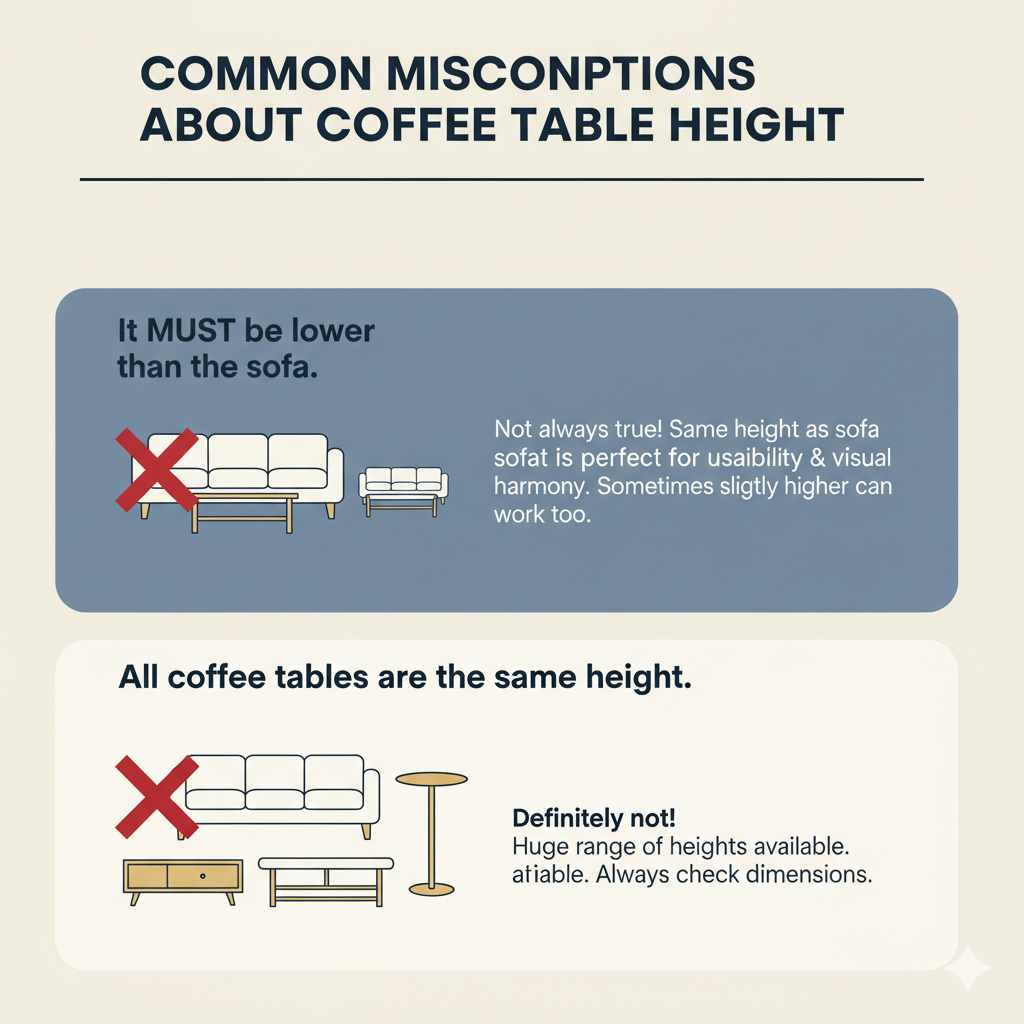
“It MUST be lower than the sofa.”
This is a common thought. But as we’ve seen, it’s not always true. A table the same height as the sofa seat is often perfect. And sometimes, slightly higher works. The key is usability and visual harmony.
“All coffee tables are the same height.”
This is definitely not true! The market has a huge range of heights. From super low mid-century modern styles to taller, more substantial pieces. Always check the dimensions.
Myth vs. Reality
Myth:
Coffee tables must always be lower than sofa seats.
Reality:
Ideally, they are the same height or 1-2 inches lower. But exceptions exist for style and function.
Myth:
All coffee tables are built to the same height standards.
Reality:
Heights vary greatly by style, era, and intended use. Always check measurements.
Frequently Asked Questions
What is the standard height for a coffee table?
The standard height for a coffee table is usually between 16 to 18 inches. This often matches the seat height of a typical sofa.
Can a coffee table be taller than a sofa?
Yes, a coffee table can be taller than a sofa, but it’s less common for optimal comfort and balance. If your sofa is very deep, or if the table has a functional purpose like a lift-top, a slightly taller table might work.
How much space should be between a sofa and a coffee table?
You should leave about 14 to 18 inches of space between the sofa and the coffee table. This allows for easy movement and legroom.
What if my coffee table is too low for my sofa?
If your coffee table is too low, you can use furniture risers to add height. Placing it on a thicker, substantial rug can also help lift it slightly.
Does the shape of the coffee table affect its height?
The shape of the coffee table itself doesn’t directly dictate its height. However, round or oval tables can sometimes feel less imposing than rectangular ones, even at similar heights, due to their lack of sharp corners and softer lines.
What is the main purpose of a coffee table’s height relative to the sofa?
The main purpose is to ensure easy access to items placed on the table from the sofa. It also contributes to the overall visual harmony and balance of the seating area.
Conclusion: Finding Your Perfect Coffee Table Height
So, should a coffee table be lower than a sofa? Generally, yes, or the same height. This creates the most comfortable and visually balanced living room. But remember, these are guidelines, not strict laws. Your unique space and style are the ultimate deciders.
By considering sofa seat height, table dimensions, and how you use your room, you can make the best choice. Trust your instincts. Test things out. Your perfect coffee table height is the one that makes your living room feel just right for you.
Products related to this article
Sponsored / affiliate links. As an Amazon Associate I earn from qualifying purchases. I may earn additional commission from eligible campaigns.