Where To Put A Console Table For Best Style
Let’s be honest, we all want our homes to look good. We want them to feel welcoming. We want them to be practical too.
A well-placed console table can do wonders for all of these things. It can be a focal point. It can add storage.
It can guide the eye through your space. But if it’s in the wrong spot, it can do the opposite. It might block a walkway.
It might just look odd.
So, how do you unlock the true potential of your console table? We’re going to dive deep into the best places to put one. We’ll look at why these spots work so well.
We’ll cover different rooms and different needs. By the end, you’ll feel confident. You’ll know exactly where to place your console table to make your home shine.
The best places to put a console table are typically entryways, hallways, living room walls, and behind sofas. These locations leverage the table’s slim profile to add function and style without taking up much space. They serve as welcoming spots, display areas, or useful surfaces for everyday items.
What Makes a Good Console Table Spot?
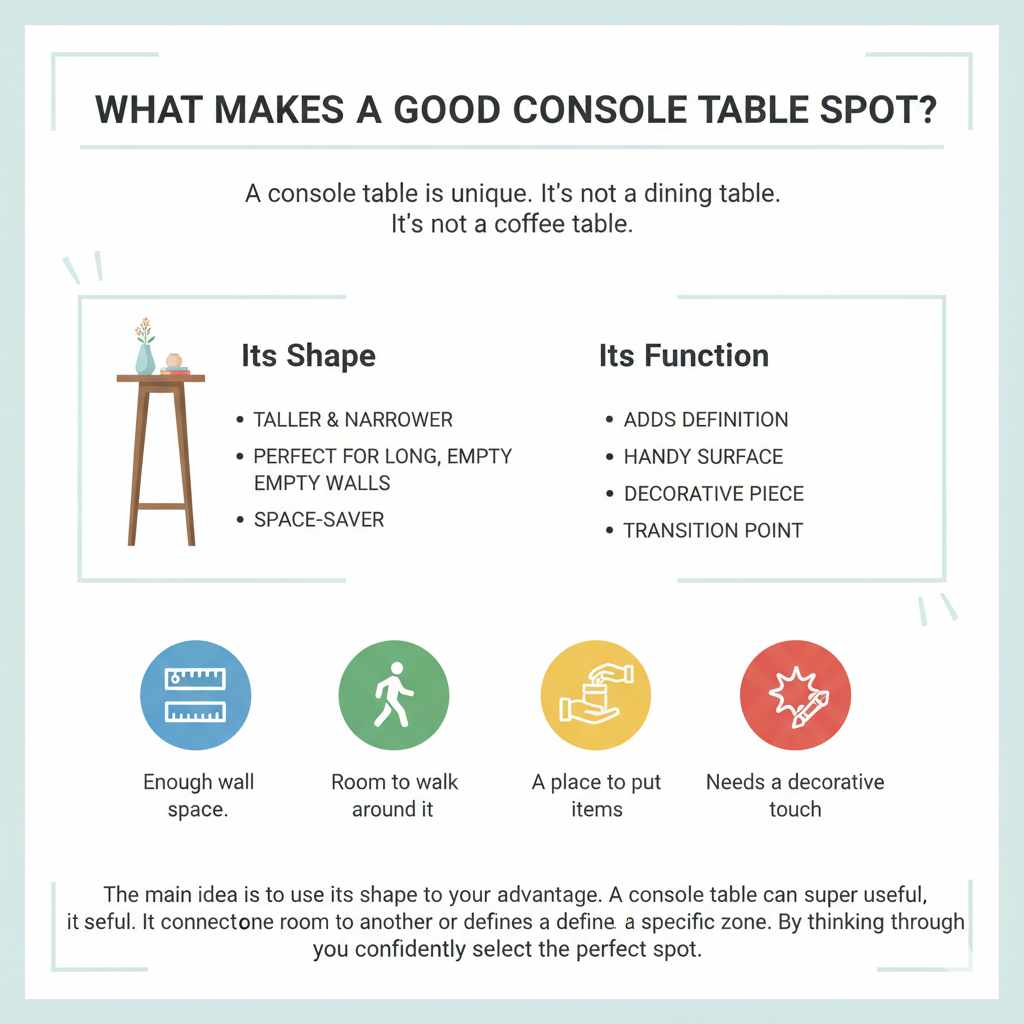
A console table is unique. It’s not a dining table. It’s not a coffee table.
It’s usually taller and much narrower. This shape makes it perfect for specific places. Think about where you have long, empty walls.
Consider spaces that need a bit of definition. Think about areas where you need a handy surface. These are the sweet spots for a console table.
The main idea is to use its shape to your advantage. A console table is a space-saver. It can be a decorative piece.
It can also be super useful. It often acts as a transition point in a home. It connects one room to another.
Or it can define a specific zone within a larger room.
Key things to look for in a spot include:
- Enough wall space.
- Room to walk around it.
- A place where it feels natural to place items.
- A spot that needs a decorative touch.
Your Entryway’s New Best Friend
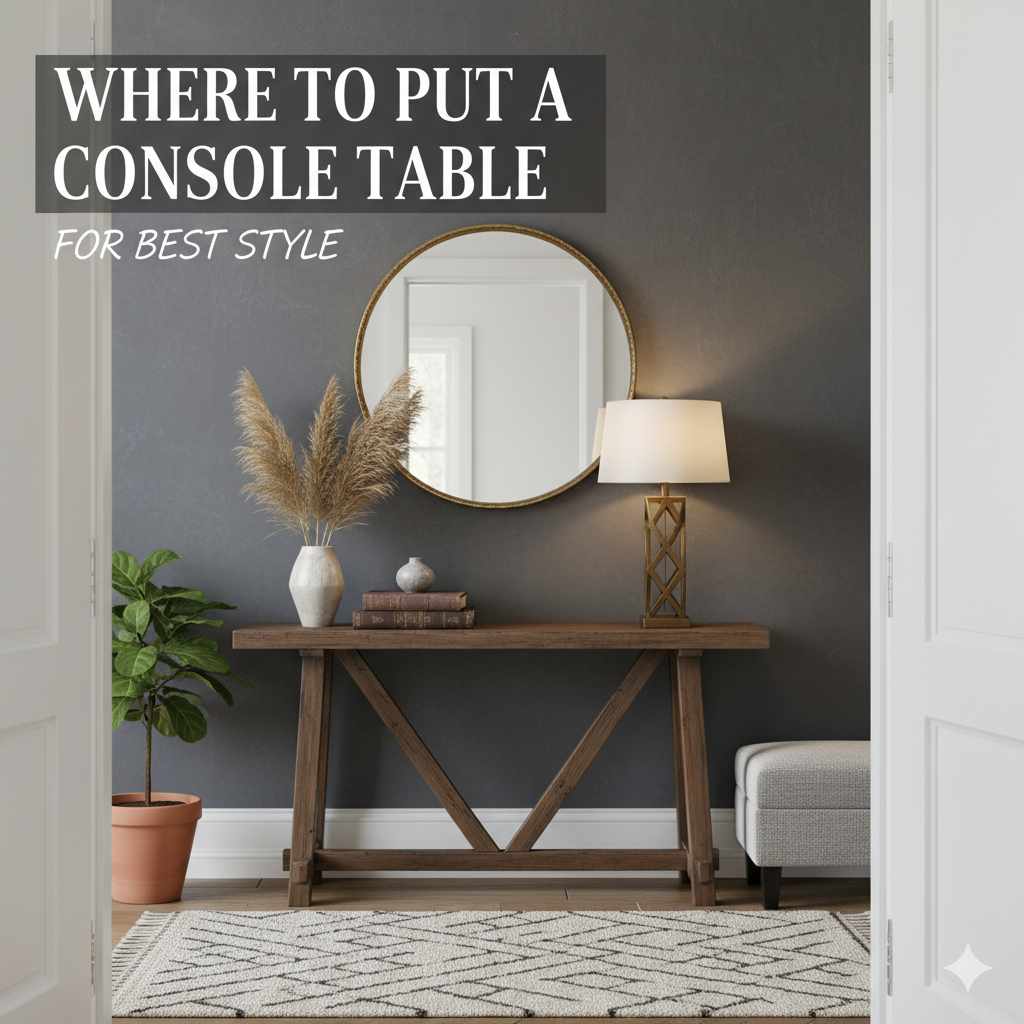
The entryway is often the first impression of your home. What do guests see when they first walk in? This is your chance to make a statement.
A console table is perfect here. It can greet people warmly. It can also offer practical help right at the door.
Imagine walking into your home after a long day. You need a place to drop your keys. You need a spot for your mail.
You might want to set down a bag. A console table right by the door is a lifesaver. It keeps these things tidy.
It prevents clutter from spreading into your main living areas.
Entryway Essentials:
- Keys and mail holder.
- A small decorative bowl for loose change.
- A place to set down shopping bags.
- A small bench or stool tucked underneath for putting on shoes.
On the table itself, you can add some decor. A mirror hung above it is very popular. It’s practical for a last-minute check before you leave.
It also makes the space feel bigger. Add a small lamp for soft lighting. Some fresh flowers or a plant can bring life into the space.
A piece of art can also add personality.
Tip: Ensure there’s enough room to open your front door comfortably. Also, make sure people can walk past the table without bumping into it. Measure your space carefully before buying your table.
Hallway Hero: Adding Style and Function
Hallways can often feel like forgotten spaces. They are usually long and narrow. They often just connect rooms.
But they can be so much more! A console table can transform a dull hallway into something special. It can make the hallway feel intentional and well-designed.
Placing a console table along one of the walls in a longer hallway is a smart move. It breaks up the long expanse. It adds visual interest.
It provides a surface for decorative items. Think about displaying framed photos. You could put a collection of small sculptures or vases there.
A runner rug leading to the console table can also draw the eye.
In a shorter, wider hallway, a console table can act as a landing spot. It can hold a basket for scarves or hats. It can be a place to rest a delivered package.
The key here is scale. Choose a table that fits the width of the hallway. You don’t want it to make the space feel cramped.
Hallway Decor Ideas:
- A gallery wall of framed art or photos above it.
- A tall, slender vase with a single statement flower or branch.
- A pair of matching table lamps for symmetrical appeal.
- A stack of beautiful coffee table books.
I remember walking into a friend’s home once. Their hallway was long and a bit dark. They had placed a slim console table against the wall.
On it, they had a beautiful ceramic bowl and a single large plant. Above it, a large, antique mirror. It totally changed the feel of the hallway.
It felt intentional and elegant. It made you want to keep walking down the hall.
It’s about making that space work for you. Even if it’s just a pass-through area. A console table makes it feel like a destination, not just a corridor.
Hallway Console Table Tips
Placement: Along a long wall to break up the space. Or at the end of a shorter hall to draw the eye.
Lighting: A wall sconce above or a slim table lamp. Good lighting prevents the hallway from feeling gloomy.
Traffic Flow: Ensure there’s enough space to walk past comfortably. At least 3 feet is ideal.
Scale: Match the table’s size to the hallway’s dimensions. Don’t overwhelm the space.
Living Room Anchor: Wall Statement
The living room is often the heart of the home. It’s where you relax, entertain, and live. Console tables can serve many purposes here.
Placing one against a main wall is a popular choice. It can anchor a seating area. It can provide a surface for decorative items.
It can even hide cords for electronics.
Think about the wall opposite your sofa. Or the wall that the TV is on. A console table here can add a layer of style.
It can be a place for your TV, if it’s a low console. If not, it can hold decorative lamps. You can display artwork on the wall above it.
Or you can place a collection of photos.
This placement is great for adding depth to your room. It also gives you a place to style. You can arrange books, candles, and small plants.
This personalizes the space. It makes the room feel more lived-in and cozy.
Living Room Wall Styling:
- A large piece of art or a gallery wall.
- A pair of table lamps for balanced lighting.
- A decorative tray to group smaller items.
- A few coffee table books, stacked artfully.
Consider the height of your wall and the table. If you have high ceilings, a taller table might look better. Or you can balance it with taller decor on top.
If your sofa is against this wall, the console table sits behind it. This creates a distinct zone. It separates the sofa area from another part of the room.
I once helped a client with a large, somewhat empty living room. The main wall had a big blank space. We chose a long, elegant console table.
We hung a large abstract painting above it. On the table, we placed two slim lamps and a modern sculpture. It completely transformed the wall.
It became a focal point that drew your eye and made the room feel complete.
Behind the Sofa: Defining Zones
This is a fantastic use for a console table, especially in open-plan living spaces. If your sofa doesn’t back onto a wall, it can float in the middle of the room. Placing a console table behind it creates a natural division.
It defines the living area from a dining area or a walkway.
This placement is also super practical. It gives you a surface right behind the sofa. You can place drinks on it.
You can put lamps on it for reading. It’s a convenient spot for remotes and coasters. It keeps them within easy reach without cluttering the sofa itself.
The style of the console table matters here. You want it to look good from both sides. So, choose a table that is finished on the back, or one where the back is just as attractive as the front.
You can also use the space behind the sofa to display items. Think about books, plants, or decorative objects. This adds visual interest to the back of the sofa.
Behind-Sofa Setup:
- Table lamps for ambient light.
- Small plants for a touch of green.
- Decorative objects that complement your decor.
- A basket for blankets or magazines.
It’s important to consider the scale again. The console table shouldn’t be much higher than the back of your sofa. This keeps the lines clean.
It doesn’t block the view or make the space feel chopped up. Aim for a height that is roughly two-thirds the height of your sofa back.
What’s great about this is that it adds function to a part of the room that might otherwise be unused. It turns a dead space into a practical and stylish feature. It’s a simple trick that can make a big difference in an open-plan layout.
Open Plan Living: Console Table as Divider
Function: Creates a visual separation between areas like living and dining.
Practicality: Offers a surface for lamps, drinks, and everyday items accessible from the sofa.
Aesthetics: Adds a decorative element that complements both sides of the sofa.
Scale: Ensure the table’s height is proportionate to the sofa’s back for a balanced look.
Dining Room Definition
While not as common as an entryway or living room placement, a console table can also work in a dining room. If you have a large dining room, a console table can serve as a buffet or a place to display serving dishes. It adds another layer of functionality to the space.
Place it against a wall. It can hold a collection of decorative plates. It can be a landing spot for drinks during a dinner party.
You can also use it for storage. Some console tables have drawers or shelves. These are perfect for keeping linens, silverware, or candles.
A mirror or artwork above the table can make it a focal point. This is especially useful if your dining room is long. It breaks up the wall space and adds visual interest.
Think of it as a more streamlined alternative to a full buffet cabinet.
Dining Room Uses:
- Displaying decorative items like vases or candles.
- Holding serving dishes when entertaining.
- Storing dining linens or extra cutlery.
- A drop zone for keys or mail if it’s near the entrance to the room.
The key is to ensure it doesn’t block traffic flow. Especially if people need to move around the dining table. It should feel integrated into the room’s layout.
Not like an afterthought.
Bedroom Accent Piece
In larger bedrooms, a console table can be a lovely addition. It can serve as a vanity area. Or it can act as a bedside table if placed next to the bed.
It can also simply be a decorative element against a wall.
If you use it as a vanity, a mirror above it is essential. Add a comfortable stool. You can then store makeup or hair products in the drawers or on shelves.
It’s a stylish way to keep these items organized and out of sight.
As a bedside table, it offers more surface area than a traditional nightstand. This is great if you have a lot of books, a water glass, or a larger bedside lamp. Its slim profile means it won’t feel bulky in the room.
Bedroom Console Table Ideas:
- A slim table with a mirror for a vanity.
- A place for a reading lamp and books next to the bed.
- A decorative display with a small plant and framed photos.
- Storage for accessories like jewelry or scarves in its drawers.
I saw a bedroom once where the homeowner had placed a narrow console table against the wall opposite the bed. They had styled it with a collection of ceramic pieces and a small stack of vintage books. It was a beautiful, quiet vignette.
It added character without overwhelming the serene feel of the bedroom.
Bedroom Console Table Considerations
Function: Vanity area, bedside table, or decorative accent.
Space: Best for larger bedrooms where it won’t feel crowded.
Mirror: Essential for vanity use; adds light and depth.
Storage: Drawers or shelves are useful for keeping items tidy.
What This Means for Your Home
Understanding where to put a console table is about more than just aesthetics. It’s about making your home work better for you. It’s about maximizing the space you have.
A console table is a versatile piece. It can solve problems you didn’t even realize you had.
In an entryway, it reduces clutter. It makes coming home more pleasant. In a hallway, it adds personality to a pass-through zone.
In a living room, it can define areas or add a decorative layer. Behind a sofa, it’s a masterclass in space division.
So, when you look at your home, think about these areas. Are there long blank walls? Are there transitional spaces that feel unfinished?
Is your open-plan living area lacking definition? These are all clues. They are hints that a console table might be the perfect solution.
When it’s a good idea:
- You need a landing spot near an entrance.
- You have a long, empty wall that needs interest.
- Your sofa floats in the middle of a room.
- You want to add decorative elements without taking up too much floor space.
It’s about using furniture to create both beauty and function. A console table is a champion at doing both. Don’t let yours just sit around.
Give it a purpose. Give it a prime spot.
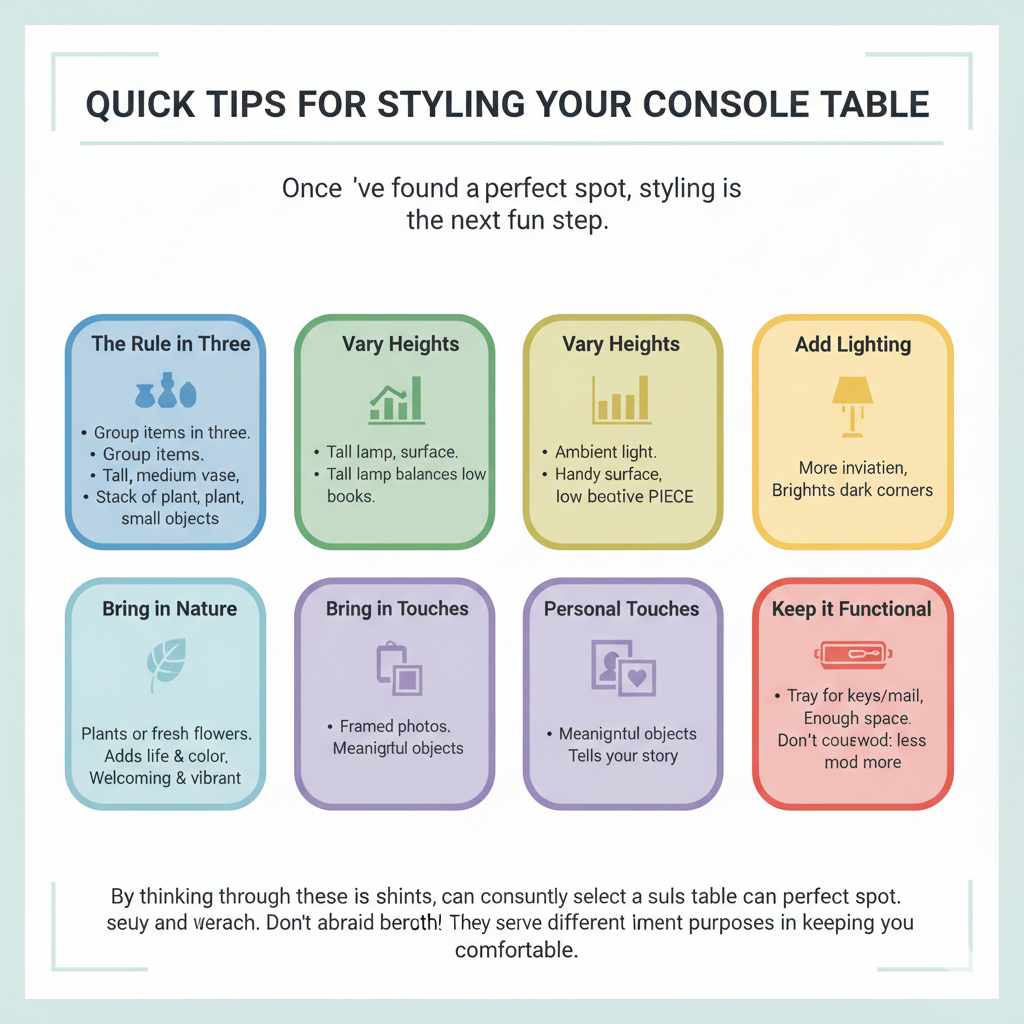
Quick Tips for Styling Your Console Table
Once you’ve found the perfect spot, styling your console table is the next fun step. It’s where you add your personal touch. It’s how you make the space truly yours.
Here are some simple guidelines to get you started.
The Rule of Three: Grouping items in threes often looks pleasing to the eye. Try a tall lamp, a medium-sized vase, and a small decorative object. Or a stack of books, a plant, and a candle.
Vary Heights: Use items of different heights to create visual interest. A tall lamp or vase can be balanced by lower items like books or trays.
Add Lighting: A table lamp on a console table provides ambient light. It makes the area feel more inviting. It also helps if the table is in a darker corner.
Bring in Nature: Plants or fresh flowers add life and color. They can make a space feel more welcoming and vibrant.
Personal Touches: Framed photos or meaningful objects tell your story. They make the space feel uniquely yours.
Keep it Functional: Don’t forget the practical side. Have a tray or bowl for keys and mail. Ensure there’s enough space to actually place things down.
Don’t Overcrowd: Less is often more. A few well-chosen items look better than a cluttered surface. Leave some empty space.
Console Table Styling Steps
Step 1: Anchor Piece: Start with a larger item like a lamp or a vase.
Step 2: Mid-Size Item: Add something like a stack of books or a decorative box.
Step 3: Small Accent: Finish with a smaller object, like a candle or a small sculpture.
Step 4: Add Greenery: Place a small plant or a bunch of flowers.
Step 5: Personal Touch: Include a framed photo or a meaningful keepsake.
Common Questions About Console Tables
Can a console table be used as a desk?
Yes, a slim console table can work as a small desk. It’s ideal for quick tasks like paying bills or checking email. Choose one with enough depth for a laptop.
You might also need a slim chair that can tuck underneath.
Can a console table be used as a desk?
Yes, a slim console table can work as a small desk. It’s ideal for quick tasks like paying bills or checking email. Choose one with enough depth for a laptop.
You might also need a slim chair that can tuck underneath.
How deep should a console table be?
Console tables are typically narrow. Common depths range from 12 to 18 inches. Deeper tables (18+ inches) offer more surface space but need more room.
For hallways or tight entryways, aim for 12-14 inches deep.
How deep should a console table be?
Console tables are typically narrow. Common depths range from 12 to 18 inches. Deeper tables (18+ inches) offer more surface space but need more room.
For hallways or tight entryways, aim for 12-14 inches deep.
What height is standard for a console table?
Standard console table heights are usually between 28 and 32 inches. This height works well behind a sofa, as it’s slightly lower than most sofa backs. It also aligns nicely with standard chair seat heights if used as a desk.
What height is standard for a console table?
Standard console table heights are usually between 28 and 32 inches. This height works well behind a sofa, as it’s slightly lower than most sofa backs. It also aligns nicely with standard chair seat heights if used as a desk.
Can you put a console table behind a floating sofa?
Absolutely! This is one of the best uses for a console table in an open-plan living space. It acts as a beautiful divider.
It adds a practical surface. Ensure it complements the sofa and the rest of the room’s decor.
Can you put a console table behind a floating sofa?
Absolutely! This is one of the best uses for a console table in an open-plan living space. It acts as a beautiful divider.
It adds a practical surface. Ensure it complements the sofa and the rest of the room’s decor.
Should a console table match my other furniture?
Not necessarily. While matching can work, it’s often more stylish to choose a console table that complements rather than matches. Consider materials, colors, and styles that work together.
A contrasting piece can add visual interest.
Should a console table match my other furniture?
Not necessarily. While matching can work, it’s often more stylish to choose a console table that complements rather than matches. Consider materials, colors, and styles that work together.
A contrasting piece can add visual interest.
How much space should be around a console table?
In an entryway, allow at least 3 feet of clearance for comfortable passage. In a living room behind a sofa, the table usually sits close to it. If it’s along a wall, ensure you can still walk past it without feeling cramped.
How much space should be around a console table?
In an entryway, allow at least 3 feet of clearance for comfortable passage. In a living room behind a sofa, the table usually sits close to it. If it’s along a wall, ensure you can still walk past it without feeling cramped.
What kind of mirror works best above a console table?
The best mirror depends on your style. A large round mirror can soften a long table. A rectangular mirror can emphasize the table’s lines.
An ornate frame adds a vintage feel. A simple modern frame suits contemporary spaces. Make sure its size is proportionate to the table and wall space.
What kind of mirror works best above a console table?
The best mirror depends on your style. A large round mirror can soften a long table. A rectangular mirror can emphasize the table’s lines.
An ornate frame adds a vintage feel. A simple modern frame suits contemporary spaces. Make sure its size is proportionate to the table and wall space.
Final Thoughts on Placement
Finding the right spot for your console table is about seeing potential. It’s about understanding how this piece can enhance your home. Whether it’s greeting guests, defining spaces, or just adding a touch of style, the placement is key.
Think about flow, function, and feeling. The best spots are often the ones that solve a problem or add something special. So go ahead, experiment, and give your console table the spotlight it deserves!
Products related to this article
Sponsored / affiliate links. As an Amazon Associate I earn from qualifying purchases. I may earn additional commission from eligible campaigns.