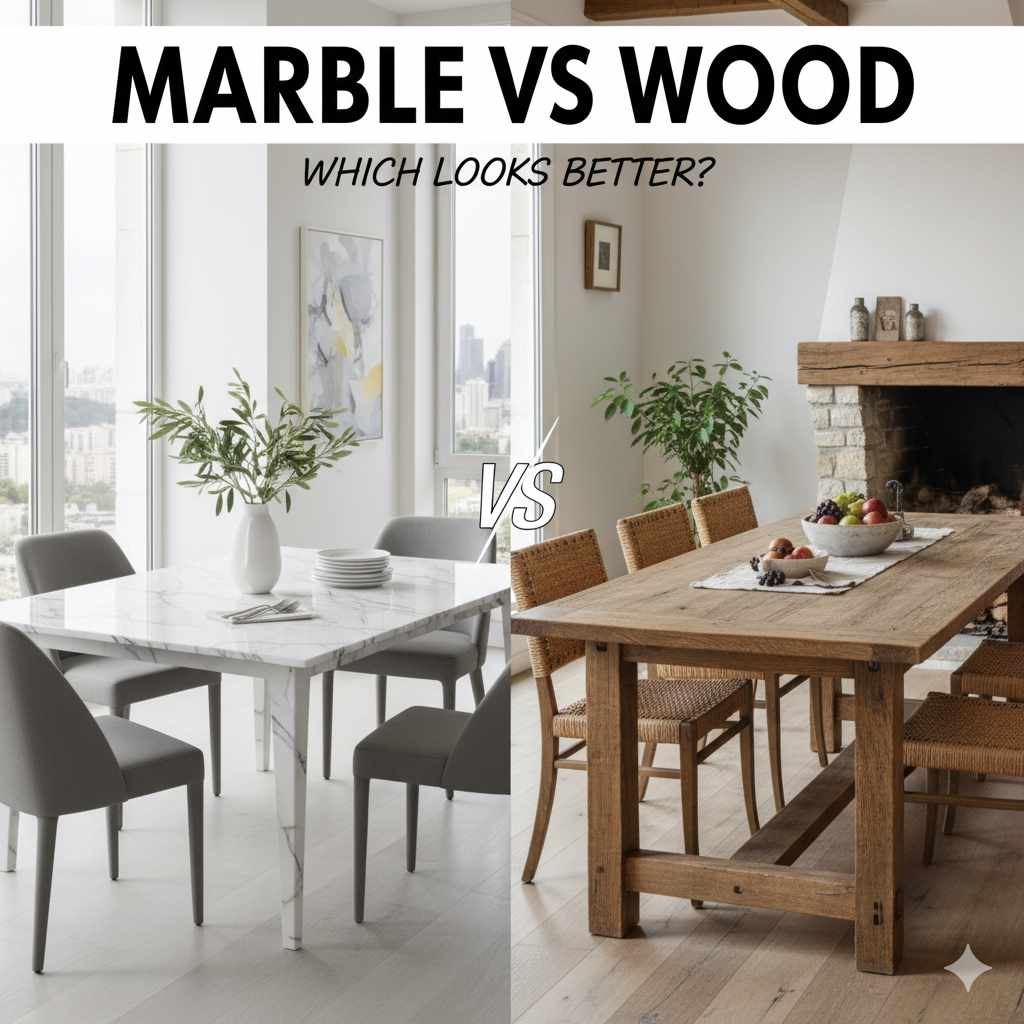
Marble Vs Wood Dining Table: Which Looks Better?
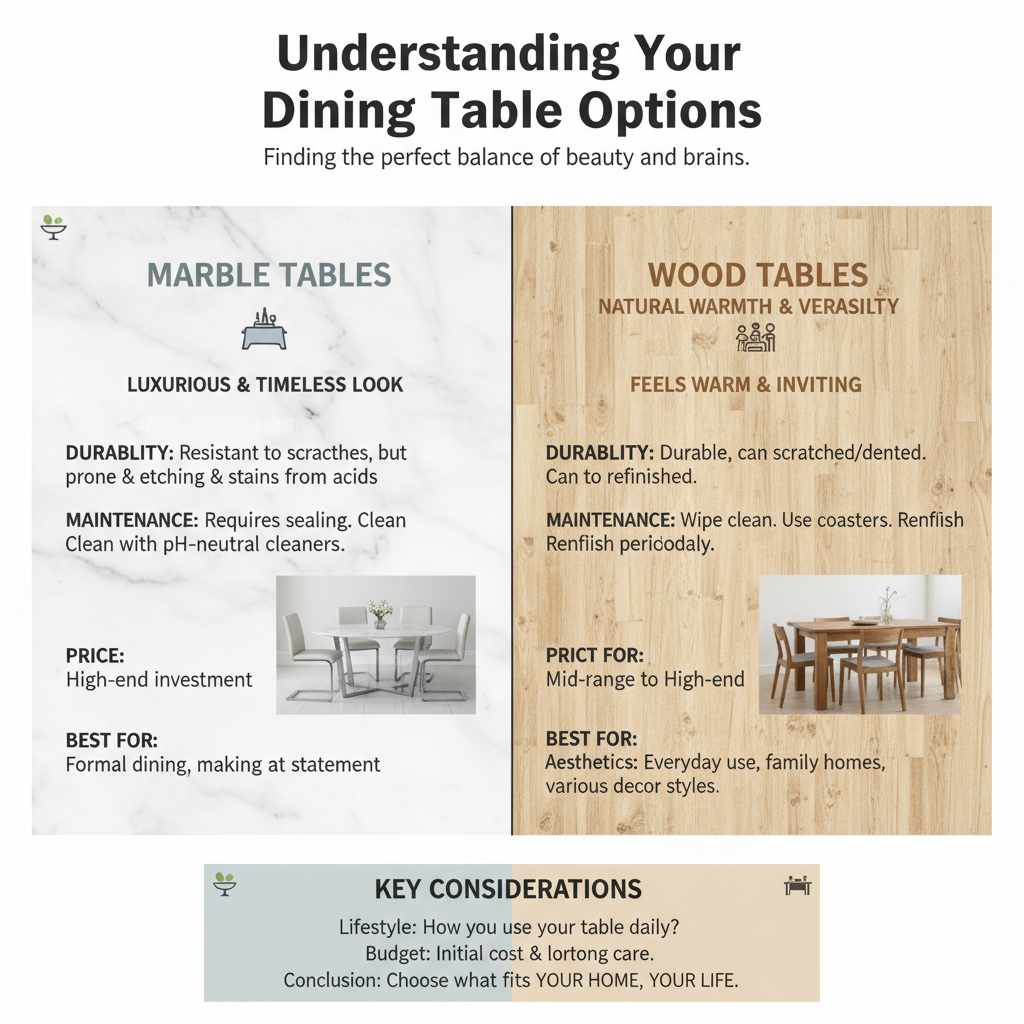
Understanding Your Dining Table Options
Your dining table is more than just a surface. It’s where meals are shared. It’s where homework gets done.

Roundhill Furniture
Roundhill Furniture Cavira Modern Faux Marble Dining…
- Modern Statement Piece – Bold faux marble design with veining adds luxury to any dining space.
- Durable Construction – Made with high-quality MDF finished with a replicated marble pattern laminate, a protective polyester topco…
- Refined Presence – Double pedestal base enhances visual balance and architectural appeal.
As an Amazon Associate I earn from qualifying purchases.
For another table or room-layout decision, Pedestal Vs Table Fan: Which Cools Better? gives readers a useful follow-up.
For another table or room-layout decision, Worx Pegasus Vs Keter Table: Which Is Better? gives readers a useful follow-up.
It’s where stories are told. So, picking the right material matters a lot. Wood has been a favorite for ages.
It feels warm and inviting. Marble, on the other hand, brings a touch of luxury. It feels cool and sophisticated.
But how do they really stack up?
We’ll look at how they hold up to daily life. We’ll talk about how to clean them. We’ll even touch on how much they might cost.
By the end, you’ll have a clearer picture. This will help you pick the table that fits your home and your life best. It’s about finding that perfect balance of beauty and brains.
Marble is often seen as a statement piece, offering a luxurious and timeless look. Wood, however, provides natural warmth and versatility, fitting into various decor styles. The choice depends on your lifestyle, aesthetic preferences, and budget. Consider how you use your dining space daily when making this decision.
The Beauty and Function of Marble Dining Tables
Marble dining tables are stunning. They bring a touch of high-end design into your home. Think of grand hotels or fancy restaurants.
Marble often sets that mood. It has a natural beauty that’s hard to match. Every piece of marble is unique.
It has its own patterns and swirls. This means your table will be one of a kind.
Marble feels cool to the touch. This can be nice, especially on warm days. It reflects light well.
This can make your dining area feel brighter and more open. Many people love the sophisticated look it offers. It can elevate the whole room.
It makes the space feel more formal, yet still welcoming.
The most common types of marble used for tables are Carrara and Calacatta. Carrara marble is usually white or bluish-grey. It has softer, grey veining.
Calacatta marble is whiter. It has bolder, often warmer veining. Both are beautiful choices.
They add a sense of natural art to your home.
Marble’s Unique Characteristics
Marble is a natural stone. It’s formed over millions of years. This gives it a strength that’s impressive.
However, it’s also a softer stone than granite. This means it can scratch or chip more easily. It’s porous too.
This means it can absorb liquids. Things like wine or juice can stain it if not wiped up quickly.
Acidic foods and drinks are marble’s enemy. Lemon juice, vinegar, and even some tomato sauces can etch the surface. Etching means it dulls the shine.
It looks like a faint water spot. This is different from a stain. Stains darken the stone.
Etching changes its surface. Caring for marble means being a bit more mindful. You need to act fast to keep it looking its best.
Sealing the marble helps a lot. A good sealant creates a barrier. It makes it harder for liquids to soak in.
Most high-quality marble tables come pre-sealed. But you’ll need to reseal them from time to time. This keeps them protected.
It helps maintain that beautiful finish for years to come. It’s an important part of owning a marble table.
The Appeal of Natural Stone
There’s something special about using natural materials. Marble connects us to the earth. It has a history embedded in its structure.
The patterns tell a story. They are formed by pressure and heat deep underground. This natural artistry is why marble is so prized.
When you choose marble, you’re choosing a piece of art. It’s not mass-produced. Each slab is different.
This individuality is a big part of its charm. It adds character to your home. It’s a conversation starter.
Guests often admire the unique look of marble.
The cool, smooth surface is also a tactile pleasure. Running your hand over a polished marble table feels luxurious. It adds a sensory dimension to your dining experience.
It’s a material that engages more than just the eyes. It offers a full sensory appreciation of quality.
The Enduring Charm of Wood Dining Tables
Wood dining tables are a classic choice. They have been used in homes for centuries. This is for good reason.
Wood offers a warmth that feels natural and inviting. It makes a dining room feel cozy. It feels like the heart of the home.
Different types of wood offer different looks. Oak can be sturdy and traditional. Walnut is often darker and more modern.
Maple is lighter and can be very clean.
Wood is versatile. It fits into many decor styles. Whether you have a rustic farmhouse, a modern minimalist home, or something in between, there’s a wood table for you.
It can be stained dark or light. It can be painted. It can be left natural.
This adaptability is a huge advantage.
Wood also has a nice feel to it. It’s not as cold as marble. It has a pleasant texture.
It can be shaped in many ways. You can have a solid wood slab table. You can have one with legs.
You can have a round table or a rectangular one. The options are nearly endless.
Wood’s Natural Qualities
Wood is a natural material. It breathes. It has grain patterns.
These patterns add visual interest. They make each piece of wood unique. Solid wood tables are very durable.
They can last for generations. With proper care, they can be refinished. This means scratches or damage can often be repaired.
Wood can be affected by humidity. Extreme dryness can cause it to shrink. Too much moisture can cause it to swell.
This is why it’s important to maintain a stable environment. Most good quality wood tables are built to handle normal changes. But very drastic shifts can cause issues over time.
Wood can be scratched or dented. These marks are part of its character for some people. They tell the story of the table’s life.
Others prefer to keep it looking pristine. Regular cleaning and using coasters can help prevent damage. A good finish on the wood also provides protection.
Caring for Your Wood Table
Caring for a wood table is generally straightforward. You’ll want to dust it regularly. Use a soft, dry cloth.
For spills, wipe them up immediately. Use a slightly damp cloth. Then, dry the area well.
Avoid using harsh chemicals or abrasive cleaners. These can damage the finish.
Use coasters for drinks. Use placemats for hot dishes. This protects the surface from rings and heat marks.
If your table gets scratched, you might be able to fix it. For minor scratches, wood polish or a touch-up crayon can work. For deeper scratches, you might need to sand and refinish.
This is a job for a professional or a dedicated DIYer.
Most wood tables have a protective finish. This could be lacquer, polyurethane, or oil. Each offers different levels of protection and a different look.
Knowing your table’s finish can help you choose the right cleaning products. It’s all about gentle, consistent care. This keeps your wood table looking its best.
Comparing Durability and Maintenance
When we talk about durability, both marble and wood have their strengths and weaknesses. Marble is very hard. It can resist scratches from everyday objects like keys or coins.
However, it’s also brittle. A sharp, heavy impact could chip or crack it. It’s also susceptible to etching from acids.
This means spills like red wine or lemon juice need immediate attention.
Wood is softer than marble. It can scratch and dent more easily. These marks can become part of its charm.
But if you want a perfect surface, wood requires more caution. Hot pans or dishes can leave marks. Water left sitting can cause damage.
However, wood is forgiving. Minor scratches can often be repaired or buffed out. It can also be sanded and refinished.
Maintenance is key for both. Marble needs regular sealing to prevent stains. You need to be quick to wipe up spills.
Wood needs regular dusting and protection from heat and moisture. Both benefit from coasters and placemats. The type of care differs.
Marble needs more careful handling of spills. Wood needs more protection from physical damage.
Daily Life with Marble
Living with a marble table means embracing a certain level of care. You learn to be organized. Coasters are always within reach.
Placemats are part of the daily setup. You develop a habit of wiping up spills right away. It becomes second nature.
You might even find yourself a bit more conscious when cooking in the kitchen before bringing food to the table.
Kids can be a challenge with marble. A dropped glass could chip it. A crayon could leave a mark.
You might worry less about perfection and more about the moment. Or, you might decide marble is best for a dining room that’s used less often. Perhaps for formal dinners or adult spaces.
In my own home, I noticed that when we switched to a marble-topped coffee table, the fear of permanent stains made us more mindful. We used coasters religiously. It actually improved our habits around drinks.
Sealing is a task that needs to be done. If you’re not comfortable with DIY, you’ll need to hire someone. This adds to the ongoing cost.
But a well-sealed table is much easier to live with. It gives you a bit more breathing room for those little accidents. It’s about finding the right balance for your family’s needs.
Daily Life with Wood
A wood dining table can feel more relaxed. It’s often seen as more family-friendly. Life happens around a wood table.
Kids draw on it, sometimes with a bit too much pressure. Plates are slid across it. Drinks might be placed down without a coaster.
These actions can leave their mark. But often, these marks are not the end of the world.
I remember my grandmother’s oak dining table. It was covered in nicks and scratches. Each one told a story of a family meal, a child’s craft project, or a holiday gathering.
It wasn’t perfect, but it was beautiful. It had character. It felt loved.
This is the kind of patina many people appreciate in wood.
If you do want to keep it looking newer, it requires consistent, gentle care. Wiping up spills is still important. Using placemats is a good idea.
But the fear of a permanent stain or etch mark is often less intense than with marble. And if damage does occur, there are often simpler ways to fix it. Refinishing a wood table can bring it back to life.
Marble vs. Wood: A Quick Look
Marble Pros:
- Luxurious and elegant look
- Unique patterns
- Cool, smooth surface
- Durable surface (resists scratches from light objects)
Marble Cons:
- Prone to staining
- Etches from acids
- Brittle, can chip
- Requires regular sealing
- Can be very heavy
Wood Pros:
- Warm and inviting feel
- Versatile styles
- Can be repaired and refinished
- Generally more forgiving of wear and tear
- Lighter options available
Wood Cons:
- Can scratch and dent easily
- Susceptible to heat and water damage
- Can be affected by humidity
- Requires protective finishes
Cost and Value Considerations
The cost of dining tables varies greatly. This depends on the material, size, craftsmanship, and brand. Generally, high-quality marble tables can be quite expensive.
This is due to the cost of the stone itself. It’s also due to the skill needed to quarry, cut, and polish it. Transporting heavy marble slabs also adds to the price.
Wood dining tables also have a wide price range. A table made from a less expensive wood like pine might be more affordable. A table made from solid hardwoods like oak, walnut, or mahogany will cost more.
The complexity of the design and the finish also play a role. Handcrafted wood tables will also command higher prices.
When thinking about value, consider longevity. A well-made marble table can last a lifetime if cared for. A well-made wood table can also last for generations.
Refinishing a wood table can give it new life. Marble can be polished to restore its shine, but major repairs are harder.
The Investment in Marble
Choosing a marble dining table is often an investment in style. You are buying a statement piece. The initial cost can be high.
You might pay $2,000 to $10,000 or more for a good marble table. The price depends on the type of marble, the size, and the base. Marble bases are common and add to the weight and cost.
The ongoing costs for marble are mainly related to maintenance. This includes sealing products and potentially professional cleaning. If you chip or scratch the marble badly, repair can be costly.
Sometimes, it might be impossible to perfectly match the veining. This is why prevention is so important. It helps protect your investment.
Despite the cost, many people feel marble offers great value. Its timeless beauty doesn’t go out of style. It adds a sense of luxury that can enhance a home’s appeal.
If you appreciate fine materials and are willing to put in the effort, marble can be a worthwhile choice.
The Investment in Wood
Wood dining tables can be more budget-friendly upfront. You can find beautiful solid wood tables for $500 to $3,000. Higher-end designer pieces or tables made from rare woods can go much higher.
The type of wood is a big factor. Pine is less expensive than cherry. The joinery and finish quality also affect the price.
A well-built table with a durable finish will cost more.
The value of a wood table is in its durability and repairability. A solid wood table can be passed down. It can be sanded and refinished multiple times.
This means a minor incident doesn’t ruin the table. It can be restored. This adds to its long-term value.
If you have a large family with young children, a wood table might offer better value. It can withstand more general wear and tear. You can focus on enjoying meals rather than constant worry.
The ability to repair it means it can stay with your family for years. It becomes a piece with memories attached.
Cost Comparison at a Glance
| Feature | Marble Dining Table | Wood Dining Table |
|---|---|---|
| Initial Cost | Higher ($2,000 – $10,000+) | Variable ($500 – $3,000+ for solid wood) |
| Ongoing Care Costs | Sealing, professional cleaning | Polishes, occasional refinishing |
| Repair Costs | Can be high, difficult to match | Generally lower, often repairable |
| Longevity Value | Timeless style, potentially lifetime | Generational, can be refinished |
Style and Aesthetics: Finding Your Fit
The look of your dining table is a major factor. Marble dining tables offer a dramatic, sophisticated flair. They can make a dining room feel like a showroom.
The natural veining creates a unique visual. It adds depth and interest. This look pairs well with modern, minimalist, or glamorous decor styles.
Think clean lines, metallic accents, and plush seating.
Wood dining tables are incredibly adaptable. A rustic farm table made of reclaimed wood fits a country or industrial style. A sleek, dark wood table with simple legs works for a modern or mid-century modern home.
A lighter wood table can make a space feel more casual and airy. The finish and the leg design really change the table’s personality.
Consider the overall mood you want to create. Do you want a room that feels grand and polished? Marble might be your answer.
Do you want a room that feels warm, lived-in, and welcoming? Wood is likely the better fit. Think about the other furniture in the room.
What colors are your walls? What kind of flooring do you have?
Marble’s Impact on Ambiance
A marble table can instantly elevate a room. It gives a sense of luxury. It can make a dining area feel more formal.
This is great if you enjoy hosting dinner parties. The cool, smooth surface also adds to the sophisticated feel. It’s a material that feels special.
The unique patterns in marble mean no two tables are alike. This is a huge plus for those who value individuality. You get a piece that is truly yours.
The way light bounces off a polished marble surface can also be very beautiful. It adds a subtle glow to the room.
However, marble can also feel a bit cold or stark if not balanced with other elements. Warm-toned woods, soft textiles, and plants can help soften the look. It’s about creating a harmonious space.
Marble is a strong statement, so make sure it fits the overall design vision.
Wood’s Versatility in Design
Wood’s strength is its incredible versatility. It can be rustic, modern, traditional, or casual. A table made from distressed, knotty pine might be perfect for a cozy cabin.
A dark, polished walnut table with a live edge could be the centerpiece of a modern loft.
Consider a live-edge wood table. This style showcases the natural shape of the tree. It brings a strong connection to nature into your home.
Or, opt for a table with clean, geometric lines. This would suit a contemporary setting. The wood grain itself adds texture and interest.
Wood is also very adaptable to different colors. You can stain it almost any color. You can paint it.
This allows you to match it to your existing decor. Or, it can be the piece that introduces a new color palette to your room. It’s a material that works with almost anything.
Design Styles by Material
Marble is often associated with:
- Modern
- Glamorous
- Minimalist
- Art Deco
- Luxury
Wood is often associated with:
- Farmhouse
- Rustic
- Mid-Century Modern
- Traditional
- Scandinavian
- Industrial
Real-World Scenarios and Use Cases
Let’s imagine some typical household situations. Think about a busy family with young children. Meals are often messy.
Spills are common. Playtime happens around the table. A wood table might be a more practical choice here.
You can wipe it down easily. If it gets a scratch, it’s often not a disaster. It can even add character.
Now, consider a couple who loves to entertain. They host formal dinner parties a few times a year. Their dining room is used mainly for these occasions.
They want a sophisticated and elegant space. A marble table would be a stunning centerpiece. They can ensure it’s well-protected for those special events.
What about a single person or a young professional? They might value style and low maintenance. A wood table with a durable finish could be perfect.
It’s easy to clean after a quick meal. It also looks good when friends come over. Or, they might opt for a marble table if they are very careful and love the aesthetic.
The Family with Young Kids
For families with young children, durability and ease of cleaning are top priorities. Kids are prone to spills, drops, and general wear and tear. A wood table is often favored.
Stains can sometimes be wiped away. Dents and scratches are part of the table’s history. You can get table pads to protect the surface during meals.
These are easy to clean and add a layer of safety.
I’ve seen parents get so stressed about their kids marking up a nice table. It takes away from the joy of family time. With wood, there’s often less of that stress.
You can teach kids to be careful, but accidents happen. A wood table can handle a bit more roughhousing. It becomes a more relaxed gathering spot.
Even with wood, it’s wise to use placemats and coasters. This helps preserve the finish. But the overall level of anxiety is usually lower compared to a delicate material like marble.
You can let the kids be kids at a wood table.
The Entertainer’s Choice
If hosting elegant dinner parties is your passion, a marble table can be the ultimate showstopper. It creates an atmosphere of luxury. The cool, smooth surface feels refined.
It’s a material that guests often comment on positively.
The key here is careful preparation and protection. Use beautiful placemats and chargers for each guest. Have decorative trivets ready for serving dishes.
Wine spills are a concern, so quick action is essential. Many people with marble tables opt for a sealant that offers a high level of protection. They might also choose a marble with less busy veining, making minor marks less noticeable.
This type of user often appreciates the beauty over the practicality of everyday use. The table is treated with respect. It’s used for its intended purpose: to host and impress.
The ongoing care is seen as part of the privilege of owning such a beautiful piece.
Scenario Comparison
Scenario: Busy Family with Young Kids
Best Fit: Wood Dining Table
Why: More forgiving of wear, easier to repair, less worry about minor damage, often more budget-friendly.
Scenario: Frequent Dinner Party Host
Best Fit: Marble Dining Table
Why: Creates a luxurious atmosphere, unique statement piece, perfect for formal occasions.
Scenario: Style-Conscious Individual with Careful Habits
Best Fit: Either, depending on desired aesthetic and tolerance for maintenance.
What This Means for You: Making the Decision
So, how do you choose? It really comes down to your lifestyle and your priorities. If you have kids and pets, and your dining room is the hub of daily activity, a wood table is likely a more practical and less stressful choice.
You can find beautiful wood tables that fit any style. They offer warmth and durability.
If you dream of a sophisticated, elegant dining space and don’t mind putting in a little extra effort to maintain it, marble can be a fantastic option. It brings a touch of luxury that few other materials can match. Think about how you use your dining room most often.
Be honest about your tolerance for wear and tear.
Consider your budget not just for the initial purchase, but also for ongoing care and potential repairs. Both materials can last a lifetime if treated well. But the type of care needed is quite different.
Think about the overall aesthetic you want to achieve. Your dining table sets the tone for the room.
When is Wood the Clear Winner?
Wood is often the clear winner for busy households. If your dining table serves as a craft station, homework desk, and general play area, wood is your friend. It can handle crayon marks (sometimes!) and spilled juice (with quick wiping).
It has a forgiving nature that is hard to beat.
Also, if you are on a tighter budget but still want a quality table, wood often offers more options. You can find solid wood tables at a range of price points. They are also easier to find used and restore.
The natural warmth of wood is also something many people prefer over the cool feel of stone.
If you love the idea of a table that tells a story through its imperfections, then wood is perfect. Those little dents and scratches can become cherished memories. It’s a material that embraces life.
When is Marble the Clear Winner?
Marble shines when elegance and luxury are the top priorities. If your dining room is a more formal space, used for special occasions, marble makes a bold and beautiful statement. It has a timeless appeal that can make a room feel instantly more upscale.
It’s also a good choice if you are a very tidy person. You don’t mind using coasters and placemats religiously. You are quick to clean up any spills.
You enjoy the process of caring for fine materials. The unique beauty of each marble slab is also a strong draw for those who appreciate natural art.
If you are looking for a table that feels substantial and cool to the touch, marble delivers. It has a unique sensory quality. It can make your dining experience feel more refined and special.
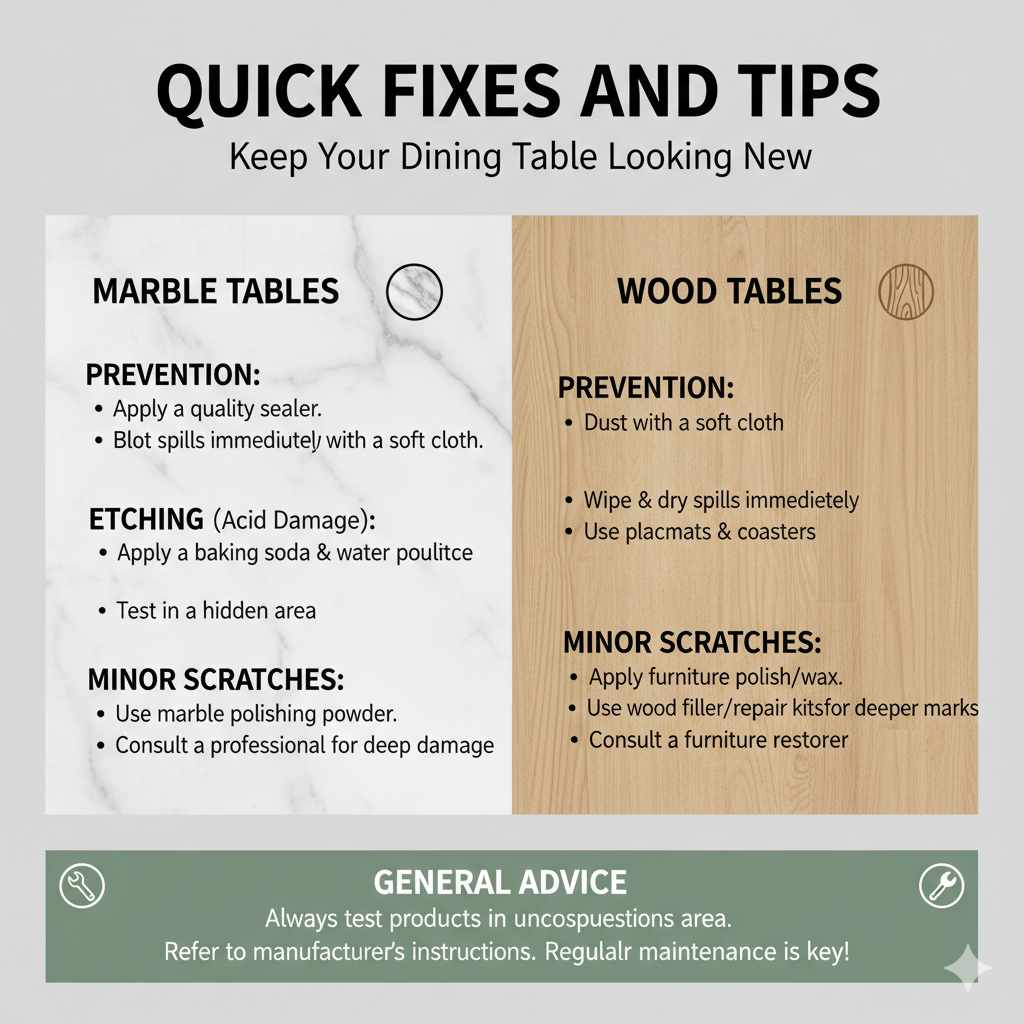
Quick Fixes and Tips
For marble tables, a good quality sealer is your best friend. Apply it according to the manufacturer’s instructions. For spills, blot them immediately with a soft cloth.
For etching, a poultice made from baking soda and water can sometimes help. For minor scratches, you might try a marble polishing powder. Always test in an inconspicuous area first.
For wood tables, use a soft cloth for dusting. For spills, wipe them up immediately and dry the area. Use placemats and coasters to protect the surface from heat and moisture.
For minor scratches, furniture polish or wax can often help. For deeper scratches, wood filler or repair kits are available. You can also consult a furniture restorer.
Care Cheat Sheet
Marble:
- Seal regularly: Protects from stains.
- Wipe spills immediately: Prevent stains and etching.
- Use coasters/trivets: Avoid rings and heat marks.
- Clean gently: Mild soap and water. Avoid harsh chemicals.
- Poultices for stains: Baking soda and water paste.
Wood:
- Dust often: With a soft, dry cloth.
- Wipe spills promptly: Prevent water rings.
- Use placemats/coasters: Protect from heat and moisture.
- Avoid direct sunlight: Can fade or dry out wood.
- Consider furniture polish/wax: For minor scuffs and shine.
Frequently Asked Questions
Is marble or wood better for a dining table?
Neither is definitively “better.” The best choice depends on your lifestyle, budget, and aesthetic preferences. Wood offers warmth and durability for busy families, while marble provides luxury and elegance for more formal settings.
Can marble dining tables be scratched?
Yes, while marble is hard, it can be scratched by sharp objects or abrasive materials. It’s also prone to etching from acidic substances, which dulls the finish.
How do I clean a marble dining table?
Clean marble with mild soap and warm water. Wipe up spills immediately. Avoid acidic cleaners or abrasive pads, which can damage the surface.
Will a wood dining table warp easily?
Wood can warp if exposed to extreme humidity changes or prolonged moisture. Proper sealing and maintaining a stable environment help prevent this. Most quality tables are built to withstand normal household conditions.
Which material is more family-friendly, marble or wood?
Wood is generally considered more family-friendly. It’s more forgiving of spills, scratches, and dents, and often easier to repair. Marble requires more careful handling to prevent stains and etching.
Can I put hot pans directly on a wood dining table?
No, it’s not recommended to place hot pans directly on a wood dining table. The heat can damage the finish or leave marks. Always use trivets or pot holders.
Is marble or wood more expensive for a dining table?
High-quality marble dining tables are typically more expensive upfront than solid wood tables. However, prices vary greatly for both materials based on quality, size, and design.
Conclusion
Choosing between a marble and wood dining table is a personal journey. It’s about finding the material that best suits how you live. Both offer unique beauty and value.
Consider your daily routine and your style goals. This will guide you to the table that will be the heart of your home for years to come.
Related pick: Check today's price on Amazon
Products related to this article
Sponsored / affiliate links. As an Amazon Associate I earn from qualifying purchases. I may earn additional commission from eligible campaigns.