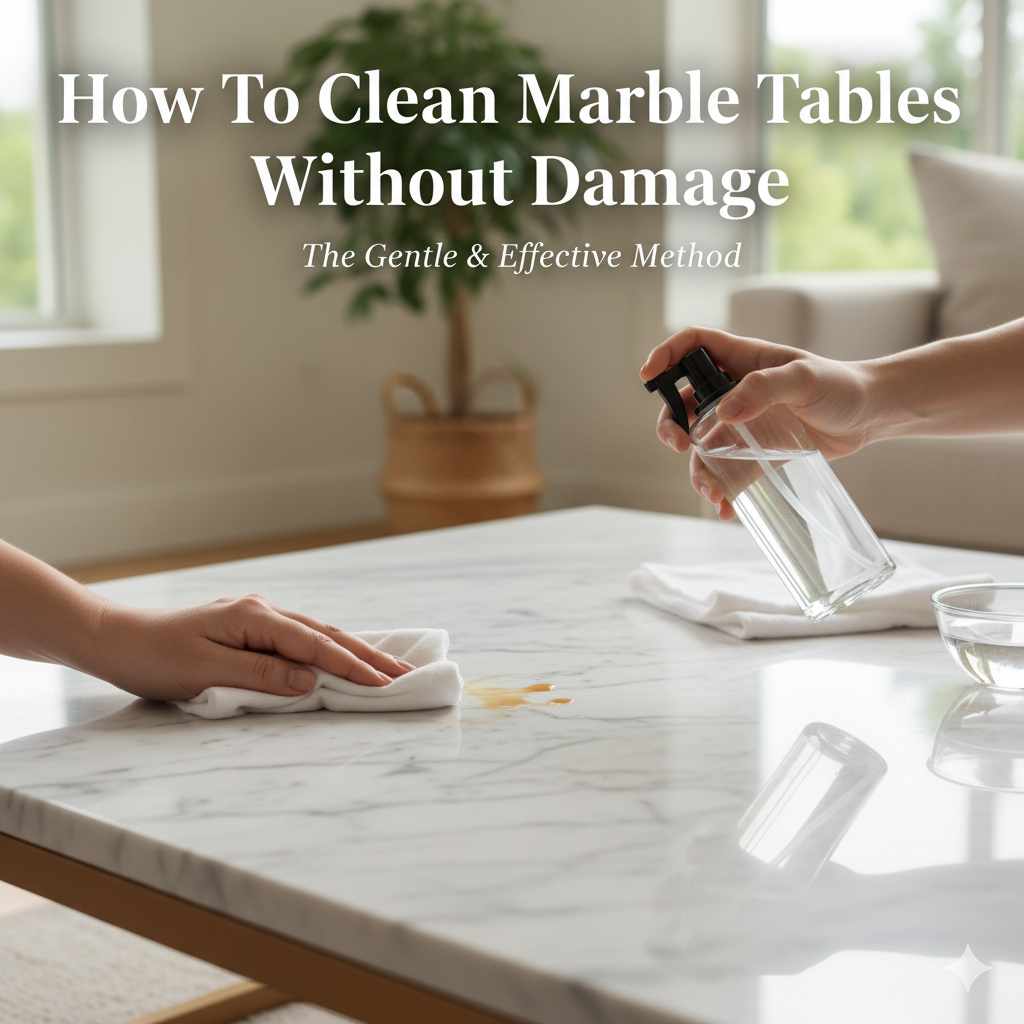
How To Clean Marble Tables Without Damage
Marble tables are beautiful. They add a touch of elegance to any room. But cleaning them can feel scary.
You worry about scratching the surface. You don’t want to dull its shine. Many common cleaners can harm marble.
This guide will show you the best ways. You’ll learn how to keep your marble table looking new. We will cover what to do and what to avoid.
To clean marble tables without damage, use only pH-neutral cleaners or plain water. Wipe up spills immediately with a soft cloth. Avoid acidic or abrasive products.
For tougher spots, create a poultice. Always test cleaners in an inconspicuous area first.
Understanding Your Marble Table
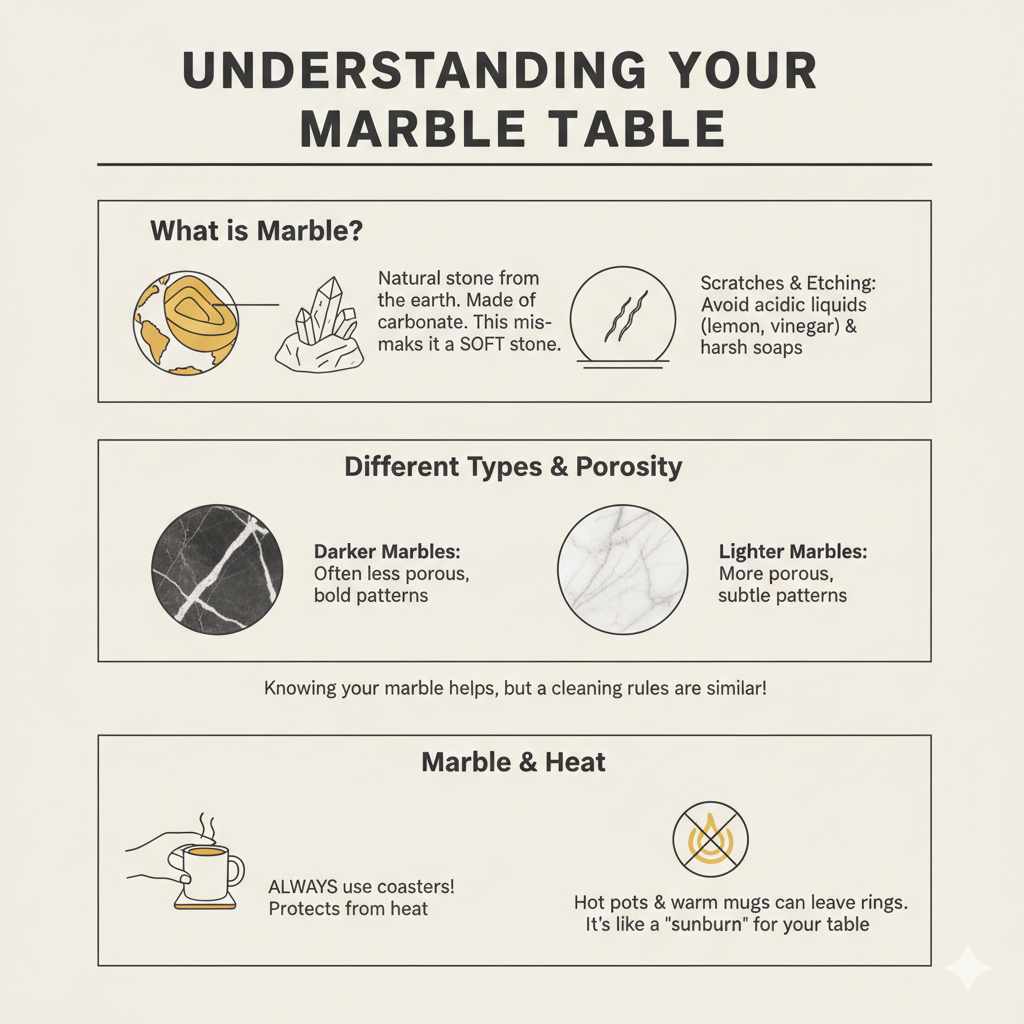
Marble is a natural stone. It comes from deep inside the earth. It’s made mostly of calcium carbonate.
This makes it a soft stone. It can scratch easily. It can also etch easily.
Etching looks like a dull spot. It happens when acidic things touch the marble. Things like lemon juice or vinegar cause this.
Even some soaps can be too harsh. This is why gentle cleaning is key.
Different types of marble exist. Some are more porous than others. This means they can soak up liquids faster.
Darker marbles often have natural veining. Lighter marbles might have more subtle patterns. Knowing your marble helps you care for it better.
But the cleaning rules stay pretty much the same. Protect that natural beauty!
Marble also reacts to heat. You should always use coasters. Hot pots or pans can leave a mark.
Even a warm mug can leave a ring. It’s like a sunburn for your table. This is why we need special care.
The Dangers of Common Cleaning Products
Many household cleaners are too strong for marble. This is a big problem for many people. They reach for the usual spray bottle.
But that bottle often holds danger for marble. What works for your kitchen counter might ruin your table.
Acids are a big no-no. Think of things like:
- Vinegar
- Lemon juice
- Orange juice
- Window cleaners with ammonia
- Bathroom cleaners
These can etch the surface. Etching looks dull. It changes the stone’s appearance.
It’s hard to fix once it happens. It’s like scratching paint off a car.
Abrasives are also bad. These include:
- Scrub brushes
- Steel wool
- Powdered cleansers
- Rough sponges
These can scratch the marble. The scratches might be tiny at first. But over time, they build up.
They dull the shine. They make the surface feel rough.
Even some dish soaps can be too alkaline. This means they have a high pH. Marble prefers a neutral pH.
A high pH can also dull the shine over time. It’s better to be safe than sorry.
The Best Way to Clean Your Marble Table Daily
Most days, your marble table just needs a simple clean. This keeps dust and light grime away. It also stops small spills from setting in.
You’ll need just a few things:
- Soft microfiber cloths (get a few!)
- Warm water
That’s it for daily cleaning. Grab a clean microfiber cloth. Dampen it with warm water.
Wring it out well. You don’t want it dripping wet. Gently wipe down the entire surface of the table.
Pay attention to any spots or marks. Work in sections. Then, use a dry, soft microfiber cloth to buff it dry.
This helps prevent water spots. It leaves a nice shine.
This method is safe and effective. It uses no harsh chemicals. It respects the natural stone.
It’s quick and easy to do every day. It prevents bigger problems later.
Quick Daily Marble Care Checklist
What to do:
1. Wipe spills immediately.
2. Use a damp, soft cloth.
3. Buff dry with another soft cloth.
4. Use coasters for drinks.
What to avoid:
1. Acidic liquids.
2. Abrasive scrubbers.
3. Harsh chemical cleaners.
Dealing With Spills: Act Fast!
Marble is porous. This means it can absorb liquids. The longer a spill sits, the more likely it is to stain.
Or worse, etch. So, speed is your best friend here.
If something spills on your marble table, grab a cloth right away. Use a soft, absorbent cloth. Blot the spill gently.
Don’t rub it. Rubbing can spread the spill. It can also push it deeper into the stone.
Just dab the liquid up. Then, wipe the area with a damp cloth. Finally, dry it with a soft, dry cloth.
Even water can leave a mark if left too long. Darker marbles might show water spots more. Lighter marbles might develop a shadow.
So, even water needs prompt attention.
Think of it like this: Your marble is a thirsty sponge. The quicker you get the liquid off, the less it soaks in. This one habit saves a lot of headaches.
When Daily Cleaning Isn’t Enough: Deeper Cleaning
Sometimes, you’ll have a sticky spot. Or maybe a food stain has appeared. Daily wiping might not cut it.
This is when you need a bit more. But still, gentle is the name of the game.
For tougher grime, you can use a pH-neutral cleaner. These are specially made for stone. You can find them at home improvement stores or online.
Always check the label. It should say “safe for natural stone” or “pH-neutral.”
If you don’t have a stone cleaner, you can make a mild soap solution. Use a tiny amount of mild dish soap. Make sure it’s not one with added degreasers or bleach.
Mix it with warm water. Use just a drop or two of soap. Too much soap can leave a residue.
Wipe the area with this solution. Then, rinse the cloth very well with clean water. Wipe the table again to remove all soap.
Dry it thoroughly with a soft cloth.
Always test any new cleaner. Use a small, hidden spot first. Wait to see if it changes the marble’s look.
This is very important. It could be under the table or on an edge.
Choosing the Right Cleaner
Safe Options:
- Warm water
- pH-neutral stone cleaner
- Mild dish soap (very diluted)
Avoid These:
- Vinegar
- Lemon juice
- All-purpose cleaners
- Glass cleaners (unless specifically stone-safe)
- Bleach
- Abrasive powders or pastes
What About Stains? The Poultice Power
Stains on marble can be tricky. They happen when a colored liquid soaks into the stone. Things like red wine, coffee, or oil can stain.
A poultice is a paste. It can draw the stain out of the stone. It’s a bit like a magic eraser for marble.
To make a poultice, you need an absorbent material and a liquid. Common absorbent materials include:
- Baking soda
- Diatomaceous earth
- Kaolin clay (china clay)
- White paper towels (torn into pulp)
The liquid depends on the type of stain:
- For organic stains (coffee, tea, food): Use hydrogen peroxide.
- For oil-based stains (grease, cooking oil): Use a strong detergent or acetone.
- For water spots: Sometimes just repolishing works. If not, a poultice with baking soda and water can help.
Here’s how to make and use a poultice:
- Mix your absorbent material with the chosen liquid.
- You want a thick paste. It should be like peanut butter.
- Apply the paste to the stain. Make it about 1/4 to 1/2 inch thick.
- Cover the poultice with plastic wrap. Tape down the edges.
- Poke a few small holes in the plastic wrap. This lets the poultice dry slowly.
- Let it sit for at least 24 hours.
- Remove the plastic wrap. Let the poultice dry completely.
- Gently scrape off the dried paste with a plastic scraper.
- Wipe the area with a damp cloth.
- Dry with a soft cloth.
You might need to repeat this process. Some stubborn stains take more than one try. Always test in a small area first.
This method can be very effective.
Poultice Power: Stain Removal Guide
Step 1: Make the Paste
Mix an absorbent (baking soda, clay) with a liquid (hydrogen peroxide for organic, acetone for oil).
Step 2: Apply and Cover
Spread paste 1/4-1/2 inch thick. Cover with plastic wrap, taping edges. Poke holes.
Step 3: Wait and Dry
Leave for 24+ hours. Let it dry out completely.
Step 4: Remove and Clean
Scrape off gently. Wipe with a damp cloth. Buff dry.
My Own Marble Table Scare
I remember the first time I saw a dull spot on my new marble coffee table. It was right in the middle. I’d just hosted a brunch.
Someone had put a glass of orange juice down. They didn’t use a coaster. At the time, I didn’t know much about marble care.
I thought, “Oh, I’ll just wipe it up.” I grabbed my usual all-purpose cleaner. I gave the spot a good scrub. Nothing happened.
The dullness remained. Panic set in. I thought I’d ruined my beautiful table.
I felt sick. I spent the rest of the afternoon searching online. I learned about etching.
I learned about pH-neutral cleaners. I learned about poultices. It was a big lesson.
From then on, I was extra careful. I bought specific marble cleaners. I made sure everyone knew the rules.
It was a scary moment, but it taught me respect for natural stone.
Protecting Your Marble from Etching
Etching is different from staining. Stains are something absorbed by the stone. Etching is damage to the surface itself.
It happens when acids react with the calcium carbonate. It can also happen with harsh alkaline cleaners.
The best way to prevent etching is simple: avoid acids and harsh alkalis. Always use coasters. Clean up spills immediately.
Even something like a greasy handprint left for a long time could start to affect the polish. Wipe it off with a soft, damp cloth.
If you do notice a light etch mark, it might be fixable. Sometimes, buffing the area with a soft, dry cloth can help. If it’s a bit more serious, you might need a marble polishing powder.
Follow the product instructions carefully. For deep etches, you’ll need professional help.
I learned to be super vigilant. Now, when guests come over, I have a basket of coasters ready. I’ll even gently remind people.
Most people are happy to use them. They understand. It’s about protecting something beautiful.
Etching vs. Staining: What’s the Difference?
Etching:
Cause: Acidic or highly alkaline substances reacting with the stone surface.
Appearance: Dull, matte spots or rings. Looks like the shine is gone.
Fix: Buffing, marble polishing powder, or professional restoration.
Staining:
Cause: Colored liquids or substances soaking into the porous stone.
Appearance: Colored marks or shadows.
Fix: Poultices are often effective.
Sealing Your Marble Table
Sealing your marble table is a great protective measure. It doesn’t make it stain-proof. But it helps resist stains for longer.
It gives you a little more time to wipe up spills.
Marble sealers are usually impregnators. They soak into the pores of the stone. They create a barrier.
This barrier repels liquids. It stops them from sinking in too quickly.
How often do you need to seal? It depends on the sealer used and how much wear the table gets. A good rule of thumb is every 6-12 months.
You can test if it needs sealing.
Water Test: Sprinkle a small amount of water on the table surface. If the water beads up, the seal is still good. If it soaks in and darkens the marble, it’s time to reseal.
When you apply a sealer, follow the product instructions precisely. Usually, you’ll clean the table thoroughly. Then apply the sealer with a soft cloth or applicator.
Let it penetrate. Wipe off any excess before it dries. Allow the sealer to cure completely before using the table.
I recommend using a high-quality impregnating sealer. Avoid topical sealers that sit on the surface. They can wear off easily.
They might also change the look of the marble.
Marble Sealing: The Basics
What it does: Helps resist stains by repelling liquids.
Frequency: Every 6-12 months, or when the water test fails.
How to test: Sprinkle water. If it beads up, it’s sealed. If it soaks in, reseal.
Type to use: Impregnating sealer (penetrates the stone).
Application: Clean table, apply sealer, wipe excess, let cure.
When to Call a Professional
Sometimes, cleaning at home isn’t enough. Marble is a beautiful but delicate material. For very serious issues, you need an expert.
Here are times to call a professional stone restorer:
- Deep Etching: If the etch marks are very deep and dull.
- Severe Staining: If poultices don’t work and the stain is permanent.
- Chips or Cracks: Any physical damage to the stone.
- Loss of Polish: If the entire surface has lost its shine and buffing doesn’t help.
- Very Old or Valuable Tables: If you’re unsure and want to ensure perfect care.
Professionals have specialized tools and knowledge. They can hone, polish, and repair marble. They know how to bring back the original luster.
It might cost more. But it can save your table in the long run. It’s an investment in preserving its beauty.
I once had a beautiful antique marble table. A heavy book fell on its edge and chipped it. I was devastated.
I tried a DIY repair kit. It looked terrible. Then I found a local stone restoration company.
They came and fixed the chip. You honestly couldn’t even see where it happened. It was worth every penny.
Avoiding Scratches: Simple Habits
Marble is softer than granite or quartz. This makes it more prone to scratches. Preventing them is key to maintaining its look.
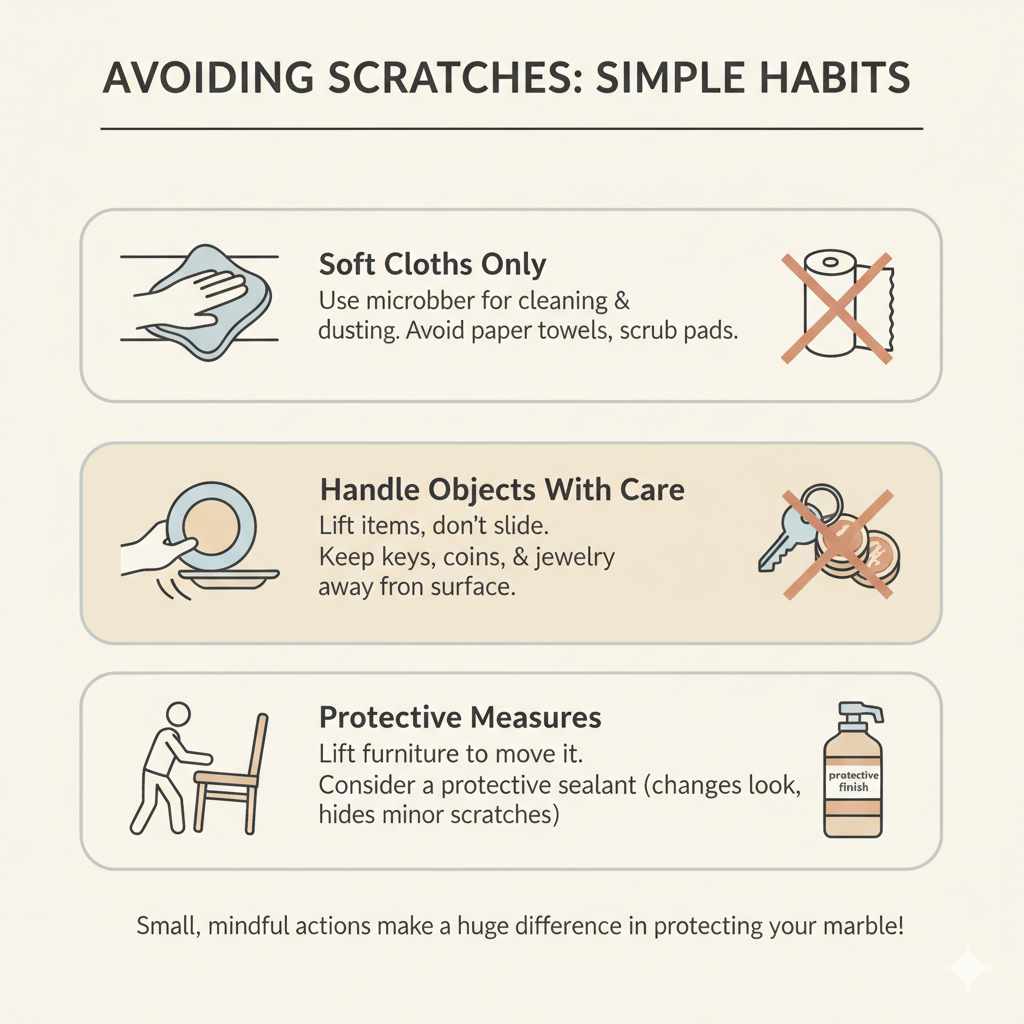
Use soft cloths only. Paper towels can be slightly abrasive. Avoid abrasive sponges or scrub pads. Always use microfiber cloths for cleaning.
For dusting, a soft duster is fine.
Be careful with objects. Don’t slide heavy items across the surface. Lift them instead. This applies to dishes, decorative items, and even laptops.
The legs of chairs or other furniture can also scratch. If you move furniture, lift it.
Keep keys and coins away. Small, hard objects like keys, coins, or jewelry can easily scratch the surface. Don’t place them directly on the table.
Consider a protective finish. Some people opt for a matte finish or a satin sealant. These can sometimes hide minor scratches better than a high gloss. However, this changes the look of the marble.
I’ve seen tables with many tiny scratches. They look cloudy. It’s sad to see.
But it’s usually from small, everyday actions. Being mindful of these things makes a huge difference.
Frequently Asked Questions About Marble Table Care
How often should I clean my marble table?
Click to reveal answer
You should clean your marble table daily with a soft, damp cloth and warm water. Wipe up spills immediately. For deeper cleaning, use a pH-neutral stone cleaner as needed, perhaps weekly or bi-weekly depending on use.
Can I use Windex on my marble table?
Click to reveal answer
No, generally you should not use Windex or other common glass cleaners on marble. Many contain ammonia or other chemicals that can etch or dull the surface. Always check the label to ensure a cleaner is specifically safe for natural stone.
What is the best way to remove oil stains from marble?
Click to reveal answer
For oil-based stains, the best method is a poultice. Mix an absorbent material like baking soda or kaolin clay with a strong detergent or acetone to form a paste. Apply it to the stain, cover with plastic wrap, and let it dry for at least 24 hours.
Then, scrape it off and clean the area.
Is it okay to put hot pans on a marble table?
Click to reveal answer
No, it is not recommended to place hot pans directly on a marble table. Extreme heat can cause thermal shock, leading to cracks or discoloration. Always use trivets or hot pads to protect the surface from heat.
How do I know if my marble table needs to be sealed?
Click to reveal answer
You can perform a water test. Sprinkle a small amount of water on the marble surface. If the water beads up and stays on top, your sealer is still effective.
If the water soaks into the stone and darkens it, it’s time to reseal the table.
Can I polish my marble table myself?
Click to reveal answer
For minor dullness or light etch marks, you can try using a marble polishing powder designed for home use. Follow the product instructions carefully. However, for deep scratches, severe etching, or significant loss of shine, it’s best to hire a professional stone restorer.
My marble table looks dull. What can I do?
Click to reveal answer
A dull appearance on marble can be due to etching, residue buildup, or a loss of polish. First, try cleaning it with a pH-neutral cleaner and buffing it dry. If that doesn’t work, a marble polishing powder might help restore the shine on minor dull spots.
For widespread dullness, professional honing and polishing may be needed.
Final Thoughts on Marble Care
Caring for your marble table doesn’t have to be difficult. It’s all about understanding the stone. It’s about using the right tools and techniques.
Gentle, consistent care will keep your marble looking beautiful. Avoid harsh chemicals and abrasive tools. Act fast on spills.
Use coasters and trivets. And don’t be afraid to seek professional help when needed. Your stunning marble table will thank you for it.
Products related to this article
Sponsored / affiliate links. As an Amazon Associate I earn from qualifying purchases. I may earn additional commission from eligible campaigns.
 Diatomaceous Earth Coasters Set of 8, Fast Water Absorbent Quick Dry Stone Drink Coasters, Heat Resistant Non Slip Coasters for Coffee Mugs Wine Glasses Tabletop Protection Home Kitchen Bar Decor
 MECCANIXITY 24pcs Felt Furniture Pads, 1 Inch Round Small Felt Chair Leg Floor Protectors Prevent Scratches for Furniture Hard Floor, Khaki