How Much Space Should Be Between Sofa And Coffee Table?
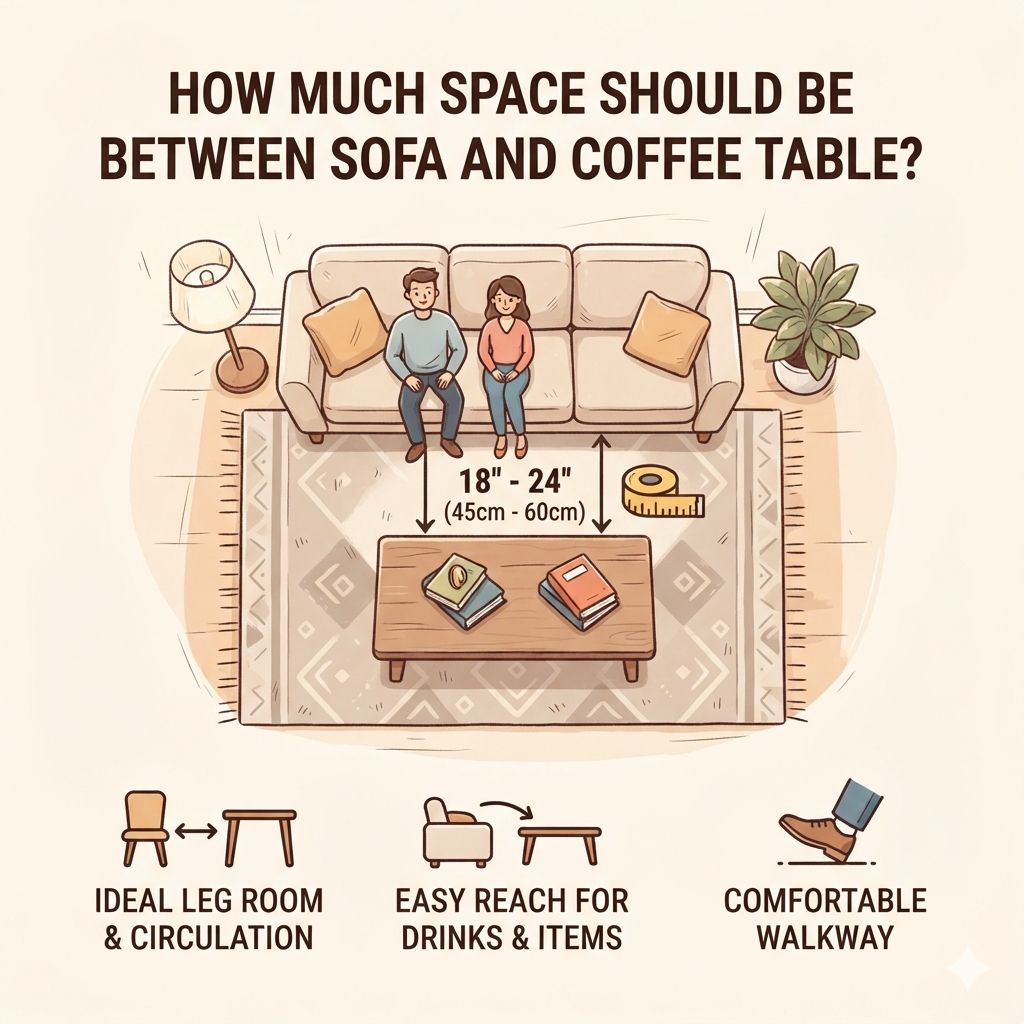
Getting the space between your sofa and coffee table just right is key for a cozy, functional living room. Aim for about 14 to 18 inches. This lets you stretch your legs, reach for a drink, and walk around easily. It feels balanced, not too cramped and not too spread out.
The Perfect Distance: What’s the Magic Number?
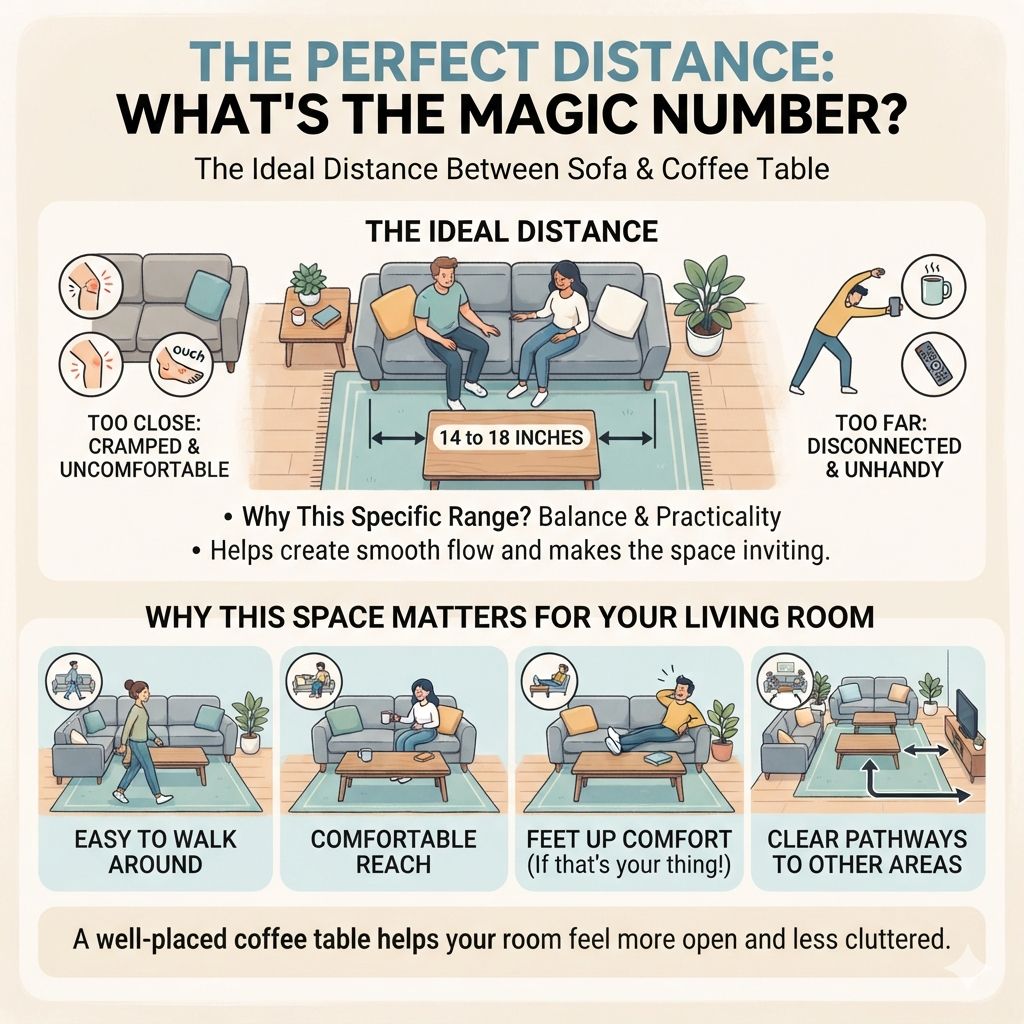
So, what’s the sweet spot? Most interior designers and smart homeowners agree that the ideal distance between the front edge of your sofa and the edge of your coffee table is usually 14 to 18 inches. This range is pretty universal.
Why this specific range? It’s all about balance and practicality.
Think about it this way. If the table is too close to the sofa, your knees might bump into it. It can also feel cramped. You might even stub your toe.
On the other hand, if the table is too far away, you’ll be stretching to reach your mug or the TV remote. That’s not comfortable. Plus, it makes the room feel a bit disconnected.
This 14-to-18-inch rule is a great starting point. It helps create a smooth flow in your room. It also makes the space feel inviting and easy to use.
Why This Space Matters for Your Living Room
This distance isn’t just about looks. It affects how you use your living room every day.
When the space is right, you can easily:
- Walk around the coffee table.
- Reach for things on the table from the sofa.
- Put your feet up on the table (if that’s your thing!).
- Have clear pathways to other parts of the room.
It helps your room feel more open and less cluttered. A well-placed coffee table makes everything else fall into place.
My Own Coffee Table Dilemma
I remember wrestling with this in my first apartment. I had this big, beautiful sectional sofa. I loved it. Then came the coffee table. I bought one that looked great in the store. It was a nice, solid wood piece. But when I put it in my living room, something felt off.
It was too close to the sofa. My shins were constantly hitting the edge. Guests would awkwardly shuffle around it. It made the whole area feel smaller. I felt a bit frustrated. I’d spent good money on the table and now it was causing problems.
I tried pushing it further away. Then it was too far. I couldn’t easily grab my book or my water glass without leaning way forward. It was annoying. For weeks, I kept nudging it back and forth, trying to find that “just right” spot. It felt like a constant small battle.
One evening, I looked at it and just thought, “There has to be a standard for this.” I started measuring. I looked at photos online. That’s when I discovered the 14-to-18-inch guideline. It was a revelation. I measured again and adjusted.
Suddenly, the room felt so much better. It was easy to walk. It was easy to reach. The whole space just opened up and felt more welcoming. It was a simple fix, but it made a huge difference. This little detail really unlocked the comfort of my living room.
Factors That Can Tweak the Ideal Space
While 14 to 18 inches is the golden rule, a few things can make you adjust it a bit. Your room is unique, and so are your furniture choices.
Coffee Table Style & Your Space
Shape Matters: Round or oval coffee tables can feel more forgiving. They don’t have sharp corners to bump into. You might get away with slightly less space with these.
Rectangular tables often need that buffer zone more.
Size of Table: A really large coffee table might need more space around it to avoid overwhelming the sofa. A smaller, more delicate table might need less.
Height: The height of your coffee table relative to your sofa also plays a role. A very tall table might feel closer than a very low one.
Your Sofa’s Style
The type of sofa you have can influence the distance.
- Deep-Seated Sofas: If your sofa has very deep seats, you might want the coffee table a little further away. This gives you more legroom in front of you.
- Standard Sofas: For most standard sofas, the 14-to-18-inch rule works well.
- Sectionals: With L-shaped sectionals, pay attention to the distance from the main seating area.
Your Room’s Layout
Think about the overall flow of your room.
- High-Traffic Areas: If people often walk past your sofa and coffee table area to get to another part of the house, you’ll need more space. Aim for 18 inches or even a bit more.
- Smaller Rooms: In a compact living room, you might lean towards the lower end of the range (14 inches) to maximize floor space.
- Larger Rooms: In a big room, you might have more flexibility. You could even use a slightly larger coffee table or keep it a little further back for a more open feel.
Your Personal Needs
How do you use your living room?
- Families with Young Kids: More space can mean fewer bumped heads or toys rolling under the table. It also makes it easier to clean around.
- Entertaining Often: If you host a lot, good walkways are super important. Guests need to move freely.
- Relaxation Zone: If it’s just for you and maybe one other person, you might prioritize legroom and reachability.
Understanding Different Coffee Table Types
Not all coffee tables are the same. Their design can affect how much space they need.
Common Coffee Table Shapes
Rectangular: The most common. Needs about 14-18 inches from the sofa’s edge.
Square: Similar needs to rectangular. Works well with square or round sofas.
Round/Oval: Often feel more open. Can be placed slightly closer, maybe 12-16 inches, but still keep that easy reach.
Nesting Tables: These are flexible! You can pull them out as needed. Keep the main one within the ideal range.
Materials and Visual Weight
The material of your coffee table can also make it feel heavier or lighter.
- A heavy, solid wood table might feel like it takes up more visual space. You might want it slightly further away.
- A glass or acrylic table feels lighter. It can seem to disappear more. This might allow you to bring it a tiny bit closer.
It’s always good to consider the overall visual balance in your room.
How to Measure and Test the Distance
Measuring is simple, but testing is where you really feel the difference.
The Simple Tape Measure Method
1. Identify the Sofa Edge: Find the front edge of your sofa where your legs would naturally fall.
2. Identify the Table Edge: Find the front edge of your coffee table.
3. Measure: Use a tape measure. Measure the distance between these two edges.
4. Adjust: If it’s less than 14 inches, move the table back. If it’s more than 18 inches, move it closer.
Quick Check: The “Knee Bump” Test
Sit on your sofa. Extend your legs comfortably. Can you rest your feet on the coffee table without having to lean forward too much?
Is there enough room so your knees don’t hit the table?
Now, stand up. Can you walk between the sofa and the coffee table easily? Can you reach across the table to grab something without straining?
The “Walk-Through” Test
This is crucial, especially if your living room is a pass-through space.
- Imagine walking from the doorway to another area.
- Does the space between the sofa and table feel like a natural pathway?
- Are there any awkward moments where you have to squeeze or turn sharply?
If it feels tight, you need more space. This is super important for safety and comfort.
When More Space Might Be Better
Sometimes, more than 18 inches is the right call.
- Open Concept Layouts: In a large, open room, you might want to create zones. A bit more space can help define the seating area.
- Large Sectionals: If you have a massive sectional, you might need a larger coffee table placed further away to balance it out.
- Children’s Play Area: If the floor space in front of the sofa is also a play area for kids, more clearance is good.
- Need for Ample Walking Room: If your living room is a main walkway in your home, prioritize clear paths.
I’ve seen homes where the coffee table was pushed almost 24 inches away. It looked great because the room was huge and the sofa was massive. It created a very airy feel.
When Less Space Might Be Necessary (With Caution)
In very small living rooms, you might be tempted to push the coffee table closer.
- Tiny Apartments: Sometimes, you have to make compromises. Aim for the lower end of the range (around 14 inches).
- Very Small Coffee Tables: If you have a small, low-profile table, it might feel okay a bit closer.
- Limited Foot Traffic: If the sofa area is not a main pathway, you can get away with slightly less space.
The key here is caution. Even in small spaces, avoid going below 12 inches. That’s usually too close for comfort and safety. It’s better to opt for a smaller table or a side table instead.
Coffee Table vs. Ottoman: Different Rules?
Ottomans: Often softer and more forgiving. You can often place an ottoman a tiny bit closer than a hard coffee table. Still, keep that 14-inch minimum for legroom.
Trays: If you use a tray on an ottoman, make sure it’s stable and easy to reach. The tray brings the surface closer.
Adjusting for Different Furniture Arrangements
The placement of your sofa and coffee table is tied to your whole room.
What About Sectionals?
Sectionals can be tricky.
- Distance from the Main Seat: Focus on the distance from the main seating part of the sectional.
- Corner Pieces: Don’t place the coffee table so it blocks access to the corner seating.
- Overall Flow: Make sure the coffee table doesn’t impede the natural path around the sectional.
For a large sectional, you might even consider two smaller tables or a larger table.
Multiple Seating Areas
If you have more than one sofa or chairs, the coffee table’s position becomes even more critical.
- Central Hub: The coffee table should be accessible from the primary seating.
- Avoid Obstructions: It shouldn’t block paths to other seats or seating groups.
The goal is to make the entire seating arrangement feel cohesive and usable.
Tips for Making the Space Work
Beyond just measuring, think about how you use the space.
Consider the Coffee Table’s Function
What do you do with your coffee table?
- Holding Drinks: You need to be able to place a drink down without reaching too far.
- Display Items: Books, magazines, or decorative items should be accessible.
- Putting Your Feet Up: If this is its main job, ensure there’s enough room.
- Kids’ Activities: Sometimes it’s a drawing surface or a place for games.
The space should support these activities comfortably.
Think About the Overall Room Layout
Don’t place the coffee table in isolation.
- Pathway Clearance: Always ensure you have at least 30 inches for main walkways. The space between sofa and table might be part of this.
- Balance: Does the coffee table feel balanced with the sofa and other furniture?
- Visual Appeal: Does the arrangement look pleasing?
It’s about creating a harmonious living space.
Quick Scan: Ideal Spacing Checklist
Sofa to Table Edge: 14-18 inches
Walkway Clearance: Minimum 30 inches (if it’s a main path)
Reachability: Easy to grab items from sofa
Legroom: No knee bumping
Visual Balance: Table size suits sofa
When It’s Okay to Deviate from the Rule
Rules are made to be broken, sometimes.
- Very Specific Furniture: If you have an antique set or custom pieces, they might have their own logic.
- Artistic Intent: Sometimes an intentional “off” placement creates a unique look, but this is rare.
- Extreme Room Shapes: Awkwardly shaped rooms might force unusual layouts.
Even when deviating, always test for comfort and usability. Does it feel right? Does it work?
The Importance of Testing in Your Own Home
Every home is different. What works for a magazine is not always what works for your life.
- Live with it: Try moving your table. Live with it for a few days.
- Get Feedback: Ask family or friends how it feels.
- Trust Your Gut: If it feels awkward, it probably is.
Don’t be afraid to move things around until it feels perfect for you.
What This Means for Your Living Room
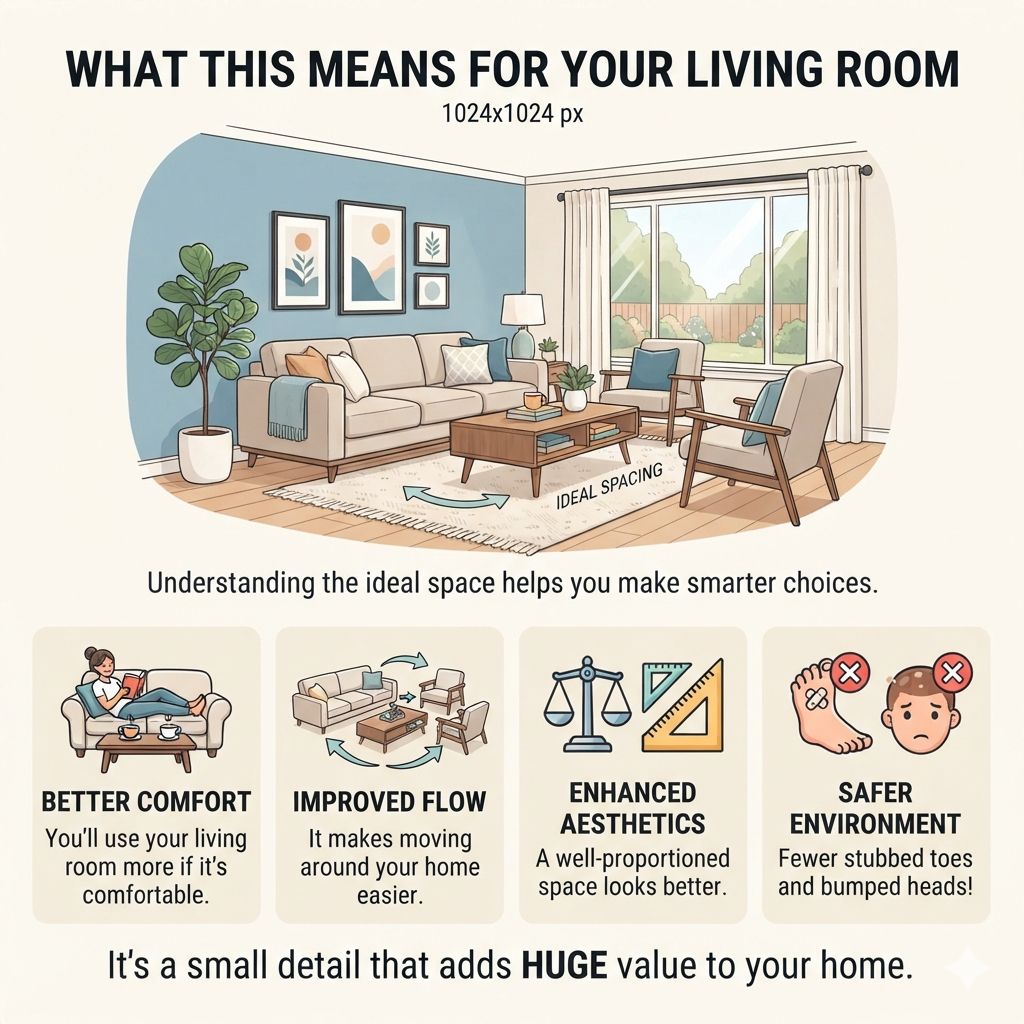
Understanding the ideal space helps you make smarter choices.
- Better Comfort: You’ll use your living room more if it’s comfortable.
- Improved Flow: It makes moving around your home easier.
- Enhanced Aesthetics: A well-proportioned space looks better.
- Safer Environment: Fewer stubbed toes and bumped heads!
It’s a small detail that adds up to a big improvement in your daily life.
Common Questions People Ask
Can my coffee table be too far from the sofa?
Click to expand
Yes, if your coffee table is too far from the sofa, it can be difficult to reach items like drinks or remotes. It can also make the seating area feel disconnected. Aim to keep it within 14 to 18 inches for easy access.
What if I have a small living room?
Click to expand
In a small living room, you might place the coffee table closer to the sofa, around 14 inches away. Consider a smaller table or nesting tables that you can adjust. Prioritize clear walkways.
Should the coffee table be the same height as the sofa?
Click to expand
Ideally, a coffee table should be about the same height or slightly lower than the seat of your sofa. This makes it easy to reach and visually pleasing. If it’s much taller, it can feel imposing.
How do I arrange furniture in a long, narrow living room?
Click to expand
In a long, narrow room, you might break it into zones. Place the sofa facing the longer wall with a coffee table in front. Ensure there’s enough space to walk behind the sofa if needed.
Keep pathways clear.
Is it okay to use multiple small tables instead of one coffee table?
Click to expand
Yes, absolutely! Using two smaller side tables or nesting tables can be a great solution, especially in smaller spaces or for more flexible arrangements. They can be pulled closer when needed and offer convenient surface areas.
What is the standard depth of a sofa?
Click to expand
Sofa depths can vary, but a standard sofa might have a seat depth of around 21 to 24 inches. This is why the 14 to 18 inches of space in front of it is important for legroom and reach.
Conclusion
Getting the distance between your sofa and coffee table right is a simple but impactful step. Aim for that 14-to-18-inch sweet spot. Consider your room, your furniture, and how you live. This thoughtful spacing creates a more comfortable, functional, and beautiful living space for everyone to enjoy.
Products related to this article
Sponsored / affiliate links. As an Amazon Associate I earn from qualifying purchases. I may earn additional commission from eligible campaigns.