How To Get Wrinkles Out Of A Plastic Table Cover Fast?
Getting wrinkles out of a plastic table cover involves using gentle heat or tension. Common methods include using a hairdryer on a low setting, laying the cover flat in the sun, or carefully steaming it. Another simple trick is to spread it out and use weights to hold it flat.
Understanding Plastic Table Cover Wrinkles
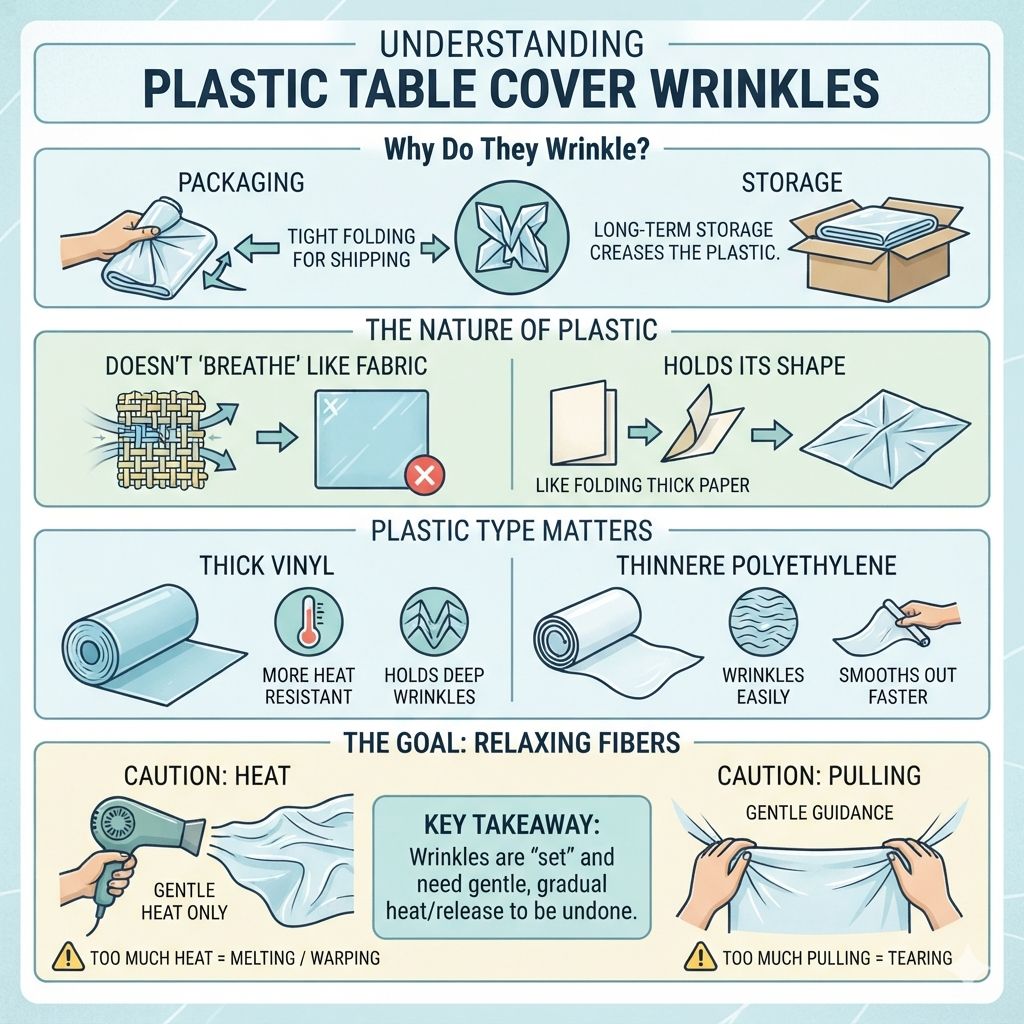
Plastic table covers, often made from materials like vinyl or polyethylene, are fantastic for protecting your furniture. They are easy to clean and come in many styles. However, they also tend to wrinkle easily.
This happens mostly because of how they are packaged and stored. When folded tightly for shipping, the plastic gets permanently creased. These folds are not just surface-level; they go deep into the material.
Because plastic doesn’t “breathe” or spring back like fabric, these creases can be tough to remove. The material itself is somewhat flexible but also holds its shape. Think of it like folding a piece of thick paper and trying to make it perfectly flat again.
It’s never quite the same.
The type of plastic also matters. Thicker vinyl covers might hold wrinkles longer but can also be more resilient to heat. Thinner polyethylene covers might wrinkle more easily but can sometimes be smoothed out faster.
The goal is to relax the plastic fibers just enough to let the wrinkles fall out. This needs to be done carefully. Too much heat can melt or warp the plastic.
Too much pulling can tear it. So, understanding that these wrinkles are “set” from folding is key to knowing why they need a gentle approach to be undone.
My Own Wrinkle Battle: A Kitchen Table Tale
I remember one Saturday morning vividly. We were hosting a casual brunch for friends, and I had just bought a beautiful new, clear plastic protector for my wooden dining table. I wanted to shield it from spills, especially from my niece who was just learning to drink from a cup.
I unfolded the cover, and my heart sank. It was a mess of deep creases from being rolled up tight in its packaging. It looked terrible, like an old, used shower curtain.
I felt a rush of annoyance. This was supposed to make my table look nice, not worse! I tried just smoothing it with my hands, but the wrinkles just shifted around.
I even tried pulling it tightly across the table, hoping the tension would help. It just made the edges look odd and the wrinkles were still very much there. I felt a bit defeated, wondering if I’d have to just live with it and hope people wouldn’t notice.
It was a small thing, but it took away from the feeling of a perfectly set-up space. I knew I had to find a better way, something quick and effective before my guests arrived.
That’s when I remembered reading about using gentle heat. I grabbed a hairdryer, set it to the lowest heat and speed setting, and tentatively started waving it over the wrinkles from a distance. I was so scared of melting the plastic!
But slowly, I saw them start to relax. It took some time and patience, moving the dryer back and forth, but gradually, the surface became smooth and clear. It was a small victory, but it made a huge difference in how the table looked and how I felt about hosting.
It taught me that with the right gentle approach, even stubborn plastic wrinkles can be conquered.
The ‘Sunbathing’ Method for Smoothness
Concept: Use natural sunlight and warmth.
How it works: The sun’s gentle heat helps relax the plastic fibers. Think of it like warming up dough to make it more pliable. Laying the cover flat outside on a warm, sunny day is the best way to do this.
Steps:
- Find a clean, flat outdoor space.
- Spread the plastic table cover out completely flat.
- Smooth out any obvious folds by hand as much as possible.
- Let it sit in direct sunlight for a few hours.
- Periodically check and smooth again.
Best for: Mild to moderate wrinkles on most types of plastic covers. It’s a very safe method.
Using Gentle Heat: The Hairdryer Technique
The hairdryer is a surprisingly effective tool for tackling those persistent wrinkles. The key here is gentle heat. You do not want to melt or warp your table cover.
So, always start with the lowest heat and speed setting on your hairdryer. Hold the dryer at least 6 to 8 inches away from the plastic surface. Wave it back and forth constantly over the wrinkled area.
Do not hold it in one spot for too long. You are trying to warm the plastic enough to make it more flexible, not cook it.
As you warm the area, gently smooth out the wrinkle with your hand or a soft cloth. The heat relaxes the plastic, and the smoothing action helps it settle flat. Work in small sections.
Go over a wrinkled area, smooth it, then move to the next. It might take a few passes for really stubborn creases. This method is great because it’s quick and you have a lot of control.
It’s ideal for when you need a fast fix before guests arrive or if you only have a few specific wrinkles to deal with.
Always test on a small, inconspicuous area first if you’re unsure. This is especially true for colored or patterned plastic covers, as extreme heat could potentially affect the color. For most clear or white plastic covers, this method is very safe and reliable when done with care.
The ‘Weighty’ Approach: Flattening Power
What it is: Using gravity and pressure to flatten wrinkles.
How it works: This method relies on time and steady pressure. When you lay something heavy and flat on top of the wrinkled plastic, it gradually pushes the creases out. It’s a slow but very effective way to get a smooth finish.
Steps:
- Spread the plastic cover flat on a clean, hard surface.
- Place heavy, flat objects on top. Good options include large books, smooth planks of wood, or even clean, heavy tiles.
- Ensure the objects cover the entire wrinkled area.
- Let it sit for at least 24 hours, or even longer for very deep wrinkles.
- Check the results and repeat if needed.
Best for: Deep wrinkles and when you have plenty of time. It’s a completely hands-off method once set up.
Steaming for a Wrinkle-Free Finish
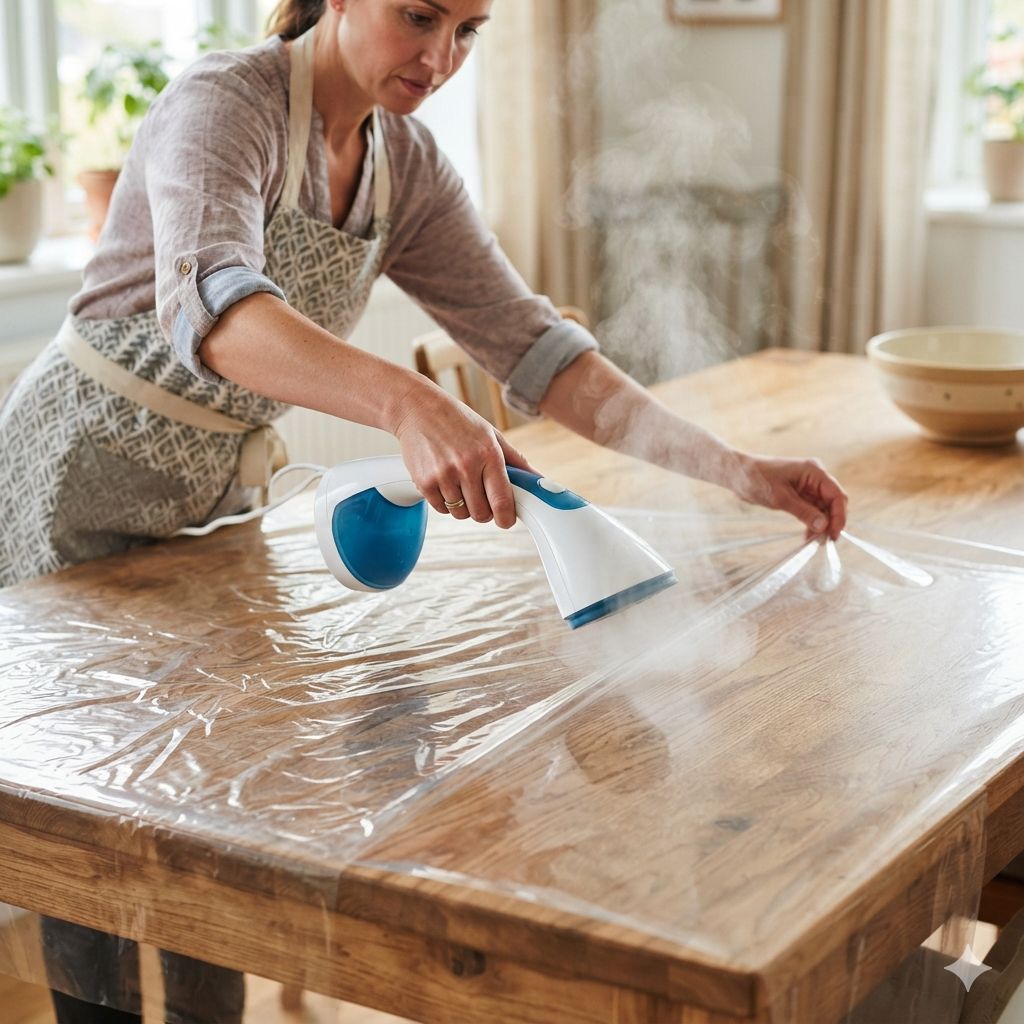
Using steam is another excellent way to get wrinkles out of plastic table covers. Steam adds moisture and heat, which helps to relax the plastic fibers without direct contact. A handheld garment steamer works wonders here.
If you don’t have one, you can even use the steam setting on your iron, but you must be extremely careful not to touch the plastic directly.
Using a Garment Steamer:
- Hang the plastic table cover or spread it out as flat as possible.
- Hold the steamer a few inches away from the wrinkled area.
- Move the steamer slowly and steadily over the wrinkles.
- As the steam hits the plastic, the wrinkles should start to fall out.
- You might need to gently tug or smooth the plastic as it steams to help it along.
Using an Iron (with extreme caution):
- Set your iron to its lowest heat setting, with NO steam function.
- Place a thick towel or a sheet over the wrinkled area of the plastic.
- Hover the iron above the towel, never touching the plastic directly.
- Move the iron constantly. The heat radiating through the towel will warm the plastic.
- Alternatively, iron on the reverse side of the plastic if it has a fabric backing. Do this very carefully on the lowest setting.
Steam is particularly good for large areas of wrinkling. It’s a more even way to apply heat and moisture. Just remember, water and electricity are a combination to be cautious with, so ensure your steamer or iron is in good working order and you follow safety guidelines.
The ‘Cool Down’ Method: Post-Heat Strategy
What it is: Letting the plastic cool and settle after heat treatment.
How it works: After using gentle heat (like a hairdryer or steamer), the plastic is more pliable. If you can hold it flat as it cools, the wrinkles are less likely to reappear. It’s like setting a hairstyle with hairspray.
Steps:
- After applying gentle heat, immediately smooth the plastic flat.
- You can use your hands, a smooth roller, or even place a flat, heavy object (like a book) on the area as it cools.
- Ensure the plastic remains flat while it returns to room temperature.
- This helps the plastic “remember” its smooth state.
Best for: Reinforcing the effects of heat methods and preventing wrinkles from returning quickly.
Ironing Board Trick: A Gentle Touch
If you have a few really stubborn wrinkles, an ironing board can be your friend, but you need to use it wisely. Never iron directly on the plastic. Instead, think of the ironing board as a smooth, stable surface.
First, lay the plastic table cover flat on the ironing board. Try to smooth out as many wrinkles as you can by hand. Then, use your hairdryer on a low setting, directing the warm air onto the wrinkles while keeping the dryer moving.
You can also place a thin cloth, like a cotton sheet, over the wrinkled area on the ironing board. Then, use your iron on its absolute lowest setting. You are not pressing down hard; you are just allowing the gentle, radiant heat to pass through the cloth to the plastic.
Keep the iron moving constantly. The idea is to warm the plastic and let it relax. This is a more hands-on approach than the hairdryer-only method but can be very effective for targeted wrinkles.
The smooth, firm surface of the ironing board helps you get a really flat finish. It prevents the plastic from bunching up as you try to smooth it. Remember, patience is key.
Going slow and using minimal heat is far better than rushing and potentially damaging your table cover. Always check the plastic frequently to ensure it’s not getting too hot.
The ‘Clean Slate’ Principle
What it is: Ensuring the surface is clean before starting.
How it works: Dirt, dust, or food particles on the plastic can get heated and baked into the surface. They can also create friction or unevenness that makes smoothing harder. Starting with a clean cover ensures the best results.
Steps:
- Wipe down the entire plastic table cover with a damp cloth and mild soap.
- Rinse thoroughly with a clean, damp cloth to remove soap residue.
- Dry the cover completely with a soft, lint-free towel.
- Once dry and clean, proceed with your chosen wrinkle-removal method.
Best for: All methods, especially those involving heat. A clean surface is a happy surface.
Dealing with Different Plastic Types
Not all plastic table covers are created equal. The material and thickness will affect how you should tackle wrinkles. Thicker vinyl covers, often used for outdoor furniture or heavy-duty dining tables, are usually more durable.
They can often withstand a bit more heat or pressure. For these, the sunbathing method or even the careful ironing board trick with a cloth might be very effective. They hold their shape well, so once a wrinkle is out, it tends to stay out.
Thinner plastic covers, like those made from polyethylene or PVC, might be more prone to tearing or melting. These require a gentler approach. The hairdryer on its lowest setting, held further away, is often the safest bet.
The “weighty” flattening method is also excellent for these as it uses no heat at all. If using steam, be extra cautious and hold the steamer further away. Always check the manufacturer’s instructions if available, as they might offer specific care advice for their product.
Understanding your specific table cover’s material helps you choose the safest and most effective wrinkle-removal strategy.
Contrast Matrix: Myth vs. Reality
| Myth | Reality |
| You can iron plastic table covers like fabric. | Direct ironing on plastic can melt or damage it. Use extreme caution and low heat if ironing indirectly. |
| Wrinkles are impossible to remove completely. | With the right methods and patience, most wrinkles can be significantly reduced or eliminated. |
| Hot water will smooth out plastic. | Very hot water can warp plastic. Gentle warmth from a hairdryer or steamer is safer. |
Preventing Future Wrinkles
The best way to deal with wrinkles is to prevent them in the first place. When you buy a new plastic table cover, consider how it’s packaged. If it’s tightly rolled, you might be able to loosen it slightly before storing.
If it’s folded, try to store it flat. You can lay it out on a table and place a few books on it, or roll it loosely around a cardboard tube. This is similar to how posters are stored.
When you’re not using the table cover, avoid folding it tightly again. If you must fold it, try to make the folds as loose as possible. Some people find that using a large plastic storage bin to store their covers, laying them flat inside, works well.
Another tip is to spread the cover out on the table and let it air out for a day or two before you need it. This allows any packaging creases to naturally relax. Small habits like these can save you a lot of time and frustration down the road.
Quick-Scan Table: Best Methods for Wrinkle Removal
| Method | Ease | Speed | Best For |
| Hairdryer (Low Heat) | Easy | Fast | Quick touch-ups, targeted wrinkles. |
| Sunbathing | Very Easy | Slow | Mild to moderate wrinkles, large areas. |
| Steaming | Moderate | Moderate | Deep wrinkles, large areas, even smoothing. |
| Weighting/Flattening | Very Easy | Very Slow | Deep wrinkles, when time is not an issue. |
When to Consider Replacement
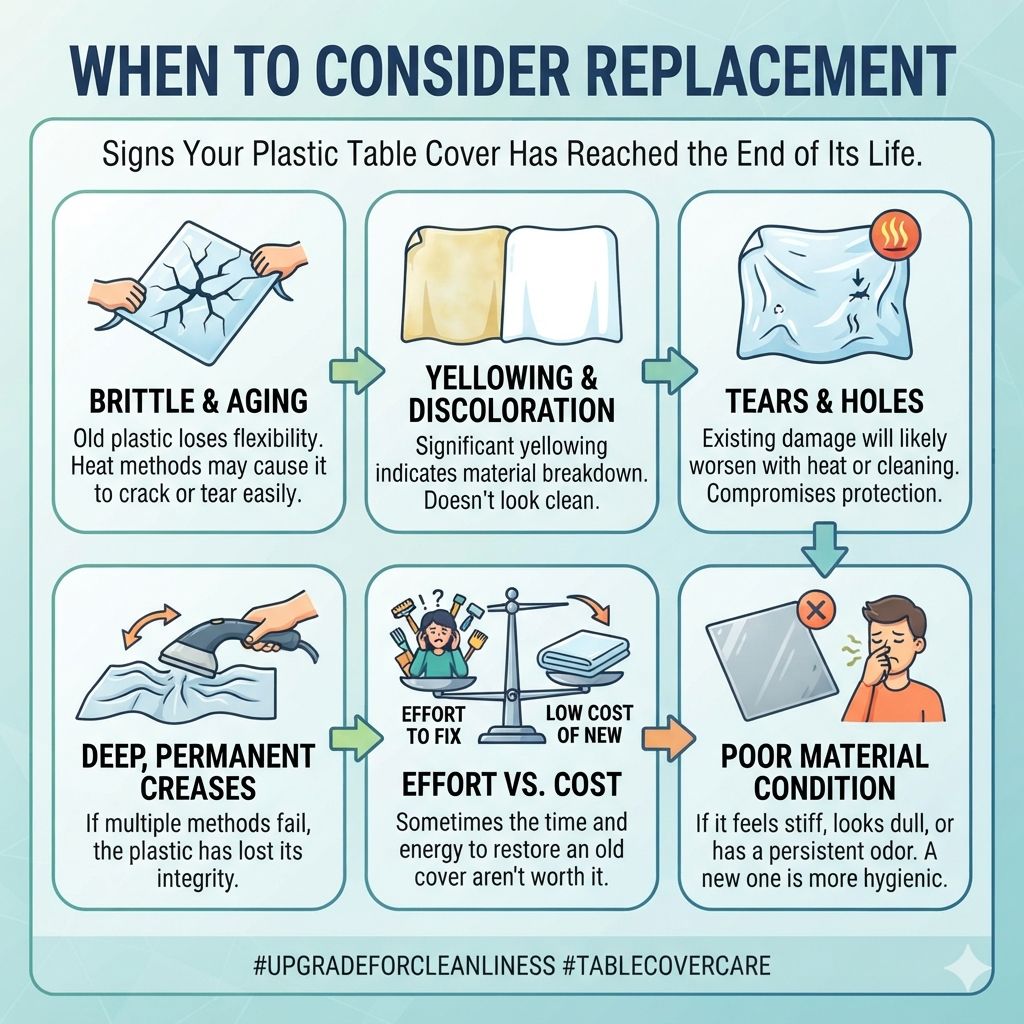
While most plastic table covers can be de-wrinkled with a little effort, there comes a time when replacement might be the best option. If your table cover is very old and has become brittle, heat methods might cause it to crack or tear easily. If the plastic has yellowed significantly, or if there are small tears and holes that heat might worsen, it’s probably time for a new one.
Deep, permanent creases that simply won’t budge after trying multiple methods could also be a sign that the plastic has lost its integrity. Sometimes, the effort to fix an old, heavily wrinkled cover outweighs the cost of a new one. A new table cover will look fresh, be free of creases, and give your space a cleaner appearance.
Think about the condition of the material itself. If it feels stiff, looks dull, or has a persistent odor, a new cover is likely a better investment for both looks and hygiene.
Frequently Asked Questions
Can I use a regular iron on my plastic table cover?
It’s highly discouraged. Direct heat from a hot iron can melt, warp, or even set permanent damage into plastic. If you must use an iron, set it to the absolute lowest heat, place a thick towel or sheet between the iron and the plastic, and hover the iron above, never letting it touch the plastic directly.
Keep the iron moving constantly.
How long does it take to get wrinkles out?
The time varies greatly depending on the method and the severity of the wrinkles. Gentle heat methods like a hairdryer or steamer can work in minutes for light wrinkles. Sunbathing might take a few hours.
The weighting method can take 24 hours or even longer for very stubborn creases. Patience is key.
Will wrinkles come back after I remove them?
Sometimes, especially if the plastic is older or the wrinkles were very deep. However, using methods that cool the plastic while it’s flat (like the “Cool Down” method) can help make the smoothness last longer. Proper storage, by rolling loosely or storing flat, also prevents new wrinkles from forming.
Can I use baby powder or cornstarch on the plastic?
While baby powder or cornstarch can help prevent static cling and make a plastic cover easier to handle, they don’t directly remove wrinkles. They can be applied after wrinkles are removed to keep the cover smooth and prevent it from sticking to itself or the table.
Is it safe to use my plastic table cover outside?
Many plastic table covers are designed for outdoor use. However, prolonged exposure to direct sunlight can cause some plastics to fade, become brittle, or develop cracks over time. Check the product’s recommendations.
If using outside, the sunbathing method for de-wrinkling is a natural fit!
What’s the best way to store a plastic table cover to avoid wrinkles?
The best way is to store it flat or loosely rolled. Avoid tight folding. You can roll it around a cardboard tube (like from a paper towel roll or wrapping paper) and secure it with a rubber band, or lay it flat in a large bin.
This helps maintain its shape and prevent new creases from forming.
Conclusion
Dealing with wrinkles on a plastic table cover can be a common annoyance, but as we’ve seen, there are many simple and effective ways to smooth them out. From gentle heat and steam to the power of the sun and simple gravity, you have options. Understanding your plastic type and using a bit of patience can make all the difference.
With these tips, you can easily achieve a neat, polished look for your table, making your space more welcoming and enjoyable. Don’t let wrinkles get you down!
Products related to this article
Sponsored / affiliate links. As an Amazon Associate I earn from qualifying purchases. I may earn additional commission from eligible campaigns.