Console Table Vs Side Table: What’S The Difference?
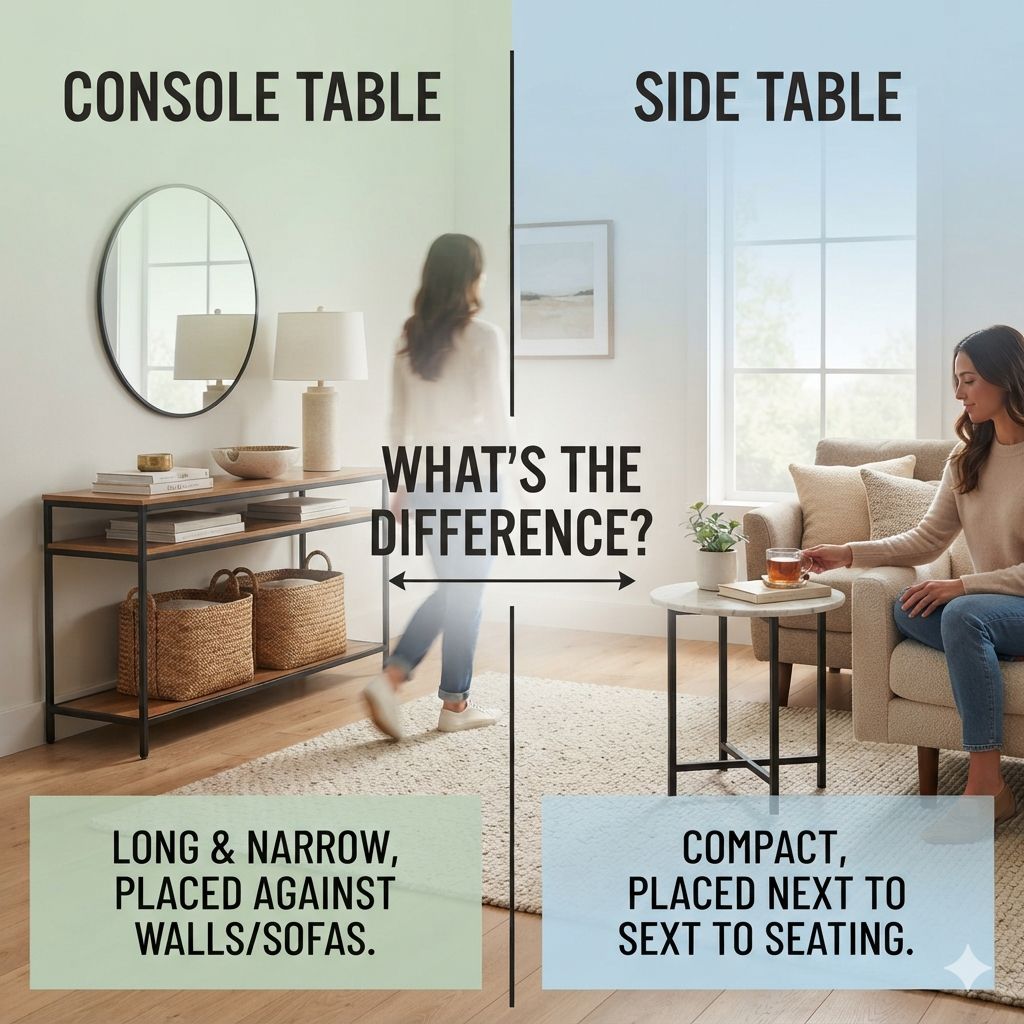
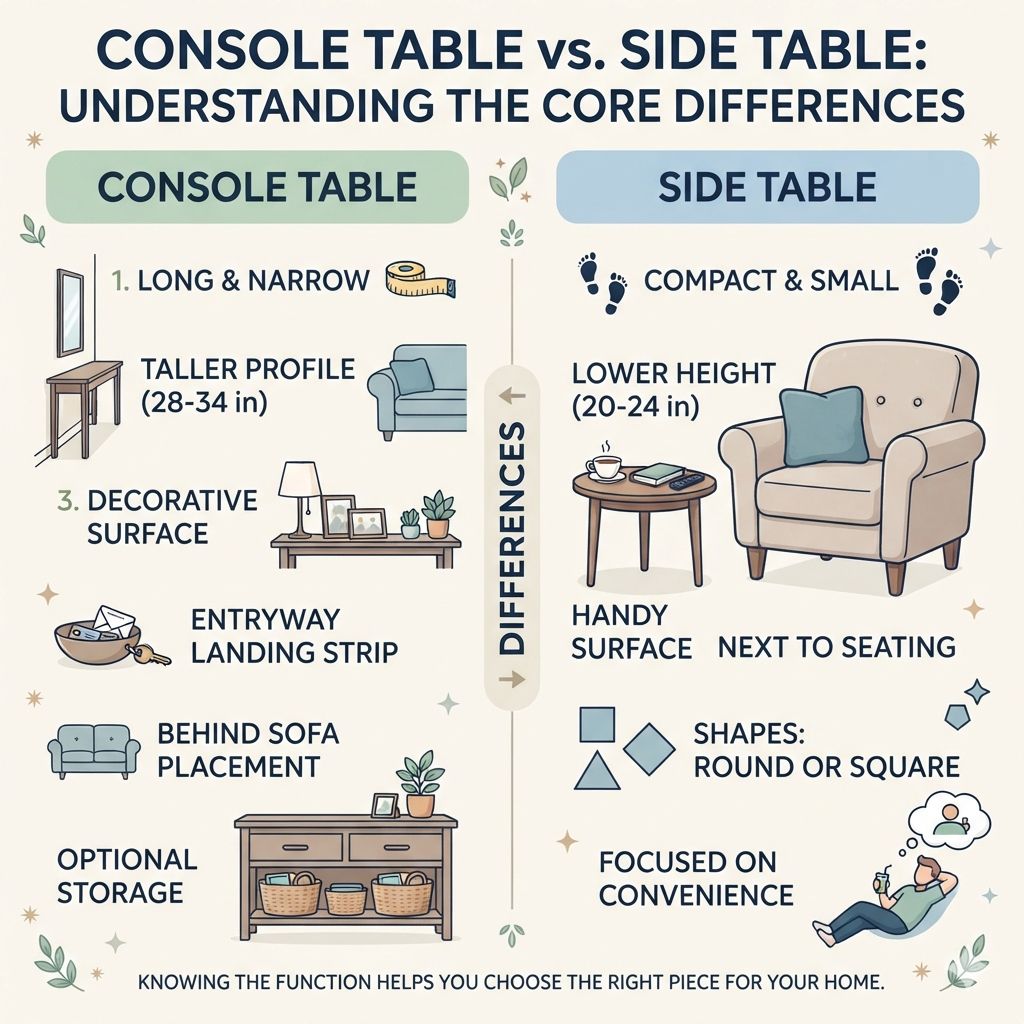
The main difference lies in their typical placement and shape. Console tables are usually longer and narrower, often used behind a sofa or in an entryway. Side tables are smaller, typically square or round, and placed next to seating like sofas or chairs. Both offer surfaces for lamps, decor, or drinks.
Console Table vs. Side Table: Understanding the Core Differences
Let’s dive into what really separates these two types of tables. It’s not just about size, but also how and where we use them in our homes. Think about the shape, the height, and the main job each table is meant to do.
What is a Console Table?
A console table is often a long, narrow table. It’s usually taller than a coffee table. Think of it as a piece that adds a touch of style without taking up too much visual space.
Its shape makes it perfect for tight spots. It’s not usually a main gathering spot.
These tables often have a distinct look. Many are designed to be slim. This lets them hug a wall.
They might also be placed behind a sofa. This can divide a room. Or they can sit in a hallway.
They serve as a landing strip for keys and mail.
Console tables can have drawers. They might also have shelves. This adds useful storage.
But their main purpose is often decorative. They also offer a surface. You can place a lamp there.
Or maybe some framed photos. Even a plant can look nice.
The height of a console table matters. It’s often around 28 to 34 inches tall. This means it’s usually about the same height as a sofa arm.
This makes it look good behind a sofa. It doesn’t block the view too much. It feels like a natural extension.
Console tables are great for entryways. They give you a place to set things down. They welcome guests.
They can also hold a decorative mirror. Or a small piece of art. This sets the tone for your home.
What is a Side Table?
A side table, sometimes called an end table, is typically smaller. It’s often square or round. Its main job is to sit next to a chair or sofa.
It’s right within easy reach. You can set your drink on it. Or your book.
Or the TV remote.
These tables are designed for convenience. They fill the gap next to your seating. They make your living space more functional.
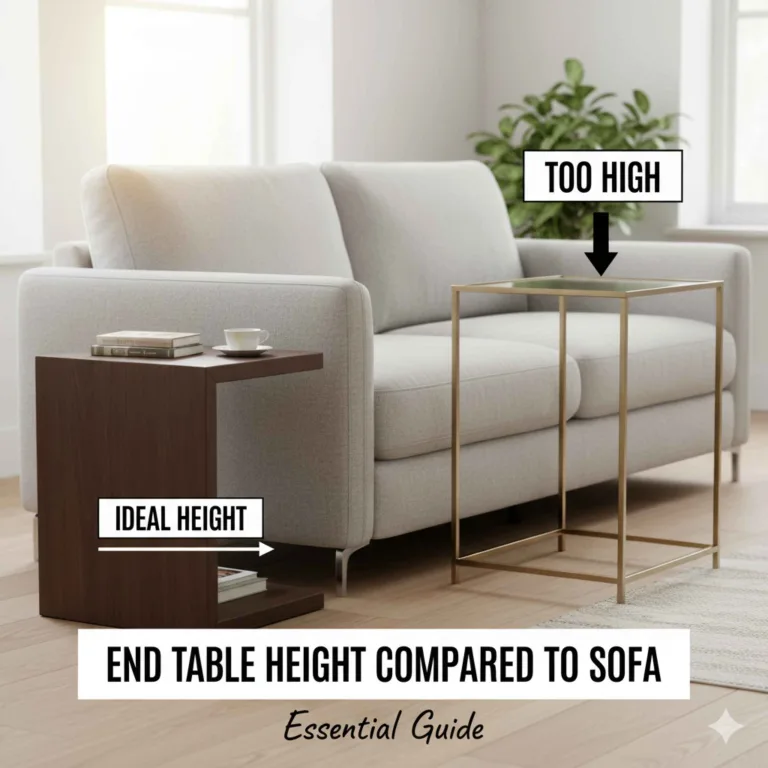
They are usually lower in height. Often around 20 to 24 inches tall. This matches the height of sofa arms.
Side tables come in many styles. You can find them in wood, metal, or glass. They can be simple.
Or they can have intricate designs. Some have a single shelf. Others have drawers.
But they are usually less about storage. They are more about handy surface space.
The shape is a big clue. While some are square, many are round. Round tables can be nice.
They soften the edges of a room. They also offer a smooth surface. No sharp corners to bump into.
Think of the last time you were relaxing on the couch. You had a cup of tea. You needed a place for it.
That’s where your side table comes in. It’s the silent helper. Always there when you need it.
My Own “Oh No” Moment with Table Placement
I remember when I first moved into my little apartment. I had this beautiful long table. I thought it would be perfect for my living room.
I pictured it behind my couch. Like a fancy bar. I put it there and it looked… okay.
But then I got a comfy armchair. And I had nowhere to put my coffee.
I’d end up balancing my mug on the armrest. Or putting it on the floor. This led to a few near spills.
One time, my cat decided to investigate. The mug wobbled. I lunged.
Thankfully, no damage. But it was a wake-up call.
That long table was clearly a console table. It was too tall for beside the chair. It felt out of place there.
I realized I needed something smaller. Something lower. Something that could tuck neatly next to my armchair.
That’s when I went shopping for a side table. And it changed everything.
The little round side table I found fit perfectly. It held my drinks. It held my book.
It even held a small plant. It made the whole seating area feel more complete. And much safer for my beverages.
It was a simple fix. But it made a huge difference.
Console Table vs. Side Table: A Quick Look
Console Table:
- Shape: Usually long and narrow.
- Height: Taller, around 28-34 inches.
- Placement: Behind sofas, in entryways, hallways, or against a wall.
- Purpose: Decorative, landing strip, display surface.
Side Table:
- Shape: Often square or round.
- Height: Shorter, around 20-24 inches.
- Placement: Next to sofas, chairs, or beds.
- Purpose: Functional surface for drinks, remotes, lamps.
Where Do These Tables Typically Live in a Home?
Understanding where each table usually goes can help you decide which one you need. It’s about how they fit into the flow of your house. And what practical job they do.
The Entryway: A Console Table’s Prime Spot
The entryway is a classic home for a console table. As soon as you walk in, you need a place to put your things. Keys, wallet, purse, mail.
A console table acts as a command center. It keeps these items organized.
It also sets the tone. You can decorate it to show off your style. A vase of flowers.
A nice tray. A piece of art above it. It makes that first impression.
It tells guests what to expect.
Some console tables have drawers. This is super handy for hiding clutter. Like sunglasses or gloves.
Others have open shelves. You can display books or decorative baskets. It’s about making the space both pretty and useful.
The slim profile is key here. Entryways can be narrow. A deep table would block the path.
A console table fits well. It offers surface space without getting in the way.
Behind the Sofa: Another Console Table Role
Have a large living room? A sofa floating in the middle? A console table can define that space.
Placing one behind the sofa can create a nice visual break. It makes the sofa look more grounded.
It also gives you a place for a table lamp. This adds ambient lighting. It can make the room feel cozier.
You can also place decorative items here. Like sculptures or small plants. It adds depth to the room.
This placement is especially useful. If you want to separate your living area from a dining area. The console table acts as a subtle divider.
It looks nice from both sides.
Entryway Table Checklist
Does it need to hold keys and mail? Yes, opt for surface or drawers.
Is the entryway narrow? Yes, choose a slim, long console table.
Do you want to make a style statement? Yes, focus on decorative designs and accessories.
Living Rooms: The Side Table’s Domain
The living room is where side tables truly shine. They are the best friends of sofas and armchairs. They are placed right next to your favorite spot to sit.
Need a place for your cup of tea? A side table. Want to put down your book?
A side table. Need to charge your phone? You might plug the charger into a lamp on the side table.
Their height is important. They should be roughly the same height as the arm of the furniture they sit next to. This makes them easy to reach.
No awkward stretching needed.
You might have one on each side of a sofa. Or one next to an armchair. Having two side tables creates balance.
It makes the room feel symmetrical. And more comfortable.
They can also add a pop of style. A metallic side table can add sparkle. A wooden one can add warmth.
They are functional but also decorative pieces.
Bedrooms: Side Tables as Nightstands
In the bedroom, side tables become nightstands. They sit next to your bed. They hold your alarm clock.
Your phone. A glass of water. A book you’re reading before sleep.
Nightstands often have drawers. This is great for storing bedside essentials. Like reading glasses or medication.
They help keep your sleep space tidy.
The height here is also critical. You don’t want to be reaching too high or too low from bed. It should be comfortable to grab things.
Or turn off your alarm.
You might have matching nightstands on each side of the bed. This creates a calm, organized feel. Or you could mix and match for a more eclectic look.
It’s all about what feels right for your room.
Bedside Table Essentials
Lamp: For reading or soft evening light.
Alarm Clock/Phone: To wake you up.
Water Glass: For thirst.
Book/Reading Material: For winding down.
Medication/Vitamins: If needed.
Shape and Size: Key Distinctions
Let’s talk more about the physical traits. How the shape and size give clues. It’s often the easiest way to tell them apart.
Console Tables: Long and Lean
The defining feature of many console tables is their length. They are often two to three times longer than they are deep. Think of a long rectangle.
This shape is no accident. It makes them fit against walls perfectly.
They are designed to be shallow. This means they don’t stick out too far into a room. This is crucial for hallways.
Or tight entryways. Or behind a sofa where you still need to walk past.
While length is common, some console tables can be quite narrow. They might be only 10-12 inches deep. This makes them ideal for very tight spaces.
They offer a surface without taking up much floor area.
Height is another factor. They are typically taller than side tables. This makes them suitable for standing displays.
Or for placing items that need to be higher up.
Side Tables: Compact and Versatile
Side tables are the opposite. They are more compact. Their width and depth are often similar.
This is why they are often square. Or round. They don’t need to be long.
Their size is meant to fit next to furniture. They are meant to be reached easily from a seated position. A large, bulky table would just get in the way.
Round side tables are popular. They offer a smooth surface. And they don’t have sharp corners.
This can be a safety plus. Especially if you have kids or pets.
Square side tables also work well. They can tuck neatly into corners. Or sit snugly beside a sofa arm.
The height is generally lower. This matches the height of most seating. It creates a comfortable setup.
You don’t have to raise your arm too high. Or bend down too far.
Table Shape Quick Guide
Long & Narrow: Likely a Console Table.
Square or Round: Likely a Side Table.
Taller than Sofa Arm: Likely a Console Table.
Same Height as Sofa Arm: Likely a Side Table.
Materials and Styles: Making Your Choice
Both console and side tables come in a huge variety of materials and styles. This is where you can really show off your personal taste.
Console Table Styles: From Modern to Rustic
Console tables can be very statement pieces. They can be sleek and modern. With clean lines and metal frames.
They can also be rustic. With reclaimed wood and a sturdy build.
Some have a very minimalist design. Just a simple top and legs. Others are more ornate.
With decorative carvings or details. They can be painted in bold colors. Or kept natural with a wood finish.
Think about the overall style of your room. Do you have a modern, chic vibe? Look for glass or chrome.
Is your home cozy and rustic? Wood tones will fit in well.
Consider the finish too. A high-gloss finish can feel very contemporary. A matte finish can feel more subdued.
Side Table Styles: Small but Mighty
Side tables are incredibly versatile. They can be simple and functional. Or they can be decorative accents.
You’ll find them in wood, metal, glass, marble, and even acrylic. This variety means you can find one to match any decor.
A small metal side table can add a touch of industrial chic. A carved wooden one can add warmth. A mirrored side table can make a small space feel bigger.
They can have interesting leg designs. Like hairpin legs, or pedestal bases. Or traditional turned legs.
Don’t forget about the top surface. Some have a simple flat top. Others have a raised edge.
This lip can be helpful. It stops drinks from sliding off. Especially on round tables.
Material Matchmaking
Wood: Warm, natural, versatile. Good for rustic, modern, traditional.
Metal: Sleek, industrial, modern. Can be delicate or sturdy.
Glass: Light, airy, modern. Can make a space feel larger.
Marble/Stone: Luxurious, elegant, heavy. Adds a touch of class.
Functionality: What Can They Hold?
Beyond just looking good, these tables have specific jobs they do well.
Console Table Functions: Display and Landing
The primary function of a console table is often display. You can style it with art. Or plants.
Or decorative bowls.
It’s also a prime landing spot. Especially in an entryway. This is where keys, mail, and bags might go.
This is why some have drawers. To hide these everyday items.
Some console tables are built with a shelf. This adds more surface area. You can put shoes there.
Or storage baskets.
They can also serve as a base for tech. Like a router. Or a small printer if space is tight.
Though this is less common for decorative consoles.
Side Table Functions: Accessibility and Support
Side tables are all about immediate access. They are there to support your relaxation.
Think of the essentials: A drink, a snack, a phone, a book, the TV remote. These are the things you want within arm’s reach.
A table lamp on a side table is also very common. It provides task lighting. Or ambient light.
Making your seating area more inviting.
Some side tables are designed with a specific purpose in mind. Like a C-table. This has a base that slides under a sofa.
And a top that extends over the seat. Perfect for eating a snack or working on a laptop while on the couch.
What Can You Fit?
Console Table: Large decorative items, mail, keys, bags, a few books, a lamp, plants.
Side Table: One or two drinks, a snack plate, a book, a remote control, a phone, a small lamp, a coaster.
When to Use Which: Practical Scenarios
Let’s walk through some common home situations. And decide which table fits best.
Scenario 1: The Narrow Hallway
You have a long, narrow hallway. You want to add some interest. But you don’t want to block the path.
A console table is the clear winner here. Choose one that is very slim. It will add style without crowding the space.
Scenario 2: Beside Your Favorite Reading Chair
You have a comfy armchair in the corner. You love to read there. You need a place for your lamp.
And your current book. And your mug of tea. A side table is perfect.
Make sure it’s the right height.
Scenario 3: Behind Your Sofa in an Open Space
Your sofa sits in the middle of your living room. You want to give it some definition. And add a surface for a lamp.
A console table is ideal. It creates a visual boundary. And offers a stylish display area.
Scenario 4: Next to Your Bed
You need a place for your alarm clock. And a book. And maybe a glass of water.
A side table, acting as a nightstand, is what you need. It keeps your essentials close by.
Scenario 5: A Small Corner in Your Living Room
You have a small empty corner. You want to add a decorative touch. Maybe display a plant or a few photos.
A small, compact side table could work. Or a very narrow console table if the corner is long.
Placement Puzzle
Hallway: Slim Console Table
Next to Sofa: Side Table
Behind Sofa: Console Table
Beside Bed: Side Table (Nightstand)
What This Means For Your Home Decor
Choosing between a console table and a side table isn’t just about function. It’s also about how they contribute to your home’s look and feel.
Console Tables: Creating a Statement
A console table can be a focal point. Especially in an entryway. It’s often the first thing people see.
You can use it to showcase your personality.
Think of it as a blank canvas. You can change the decor seasonally. Add festive touches.
Or keep it elegant year-round.
They can also break up a large wall. If you have a long, blank wall, a console table with art above it can make it much more interesting.
Side Tables: Enhancing Comfort and Flow
Side tables are more about enhancing the existing space. They make seating areas more comfortable and usable.
They add balance. By placing them on either side of a sofa, they create a sense of order.
They can also introduce different textures or materials. If your sofa is fabric, a metal or glass side table can add contrast.
When a Table Might Be Both or Neither
Sometimes, the lines can blur. You might find a table that could serve as either. Or a piece that isn’t quite a traditional console or side table.
The Overlapping Zone
A very narrow, tall table might technically be a console. But if it’s small enough, it could work next to a chair. Or a small, square table could work in an entryway if space is very limited.
Ultimately, the best table is the one that serves your needs. And fits your space. Don’t get too caught up in the strict labels.
Beyond the Basics: Other Table Types
There are other tables too. Like coffee tables. They are much lower and longer.
Placed in front of a sofa. And accent tables. This is a broad category.
It can include many unique pieces.
An accent table might be a small pedestal. Or a uniquely shaped table. It’s often chosen for its visual appeal.
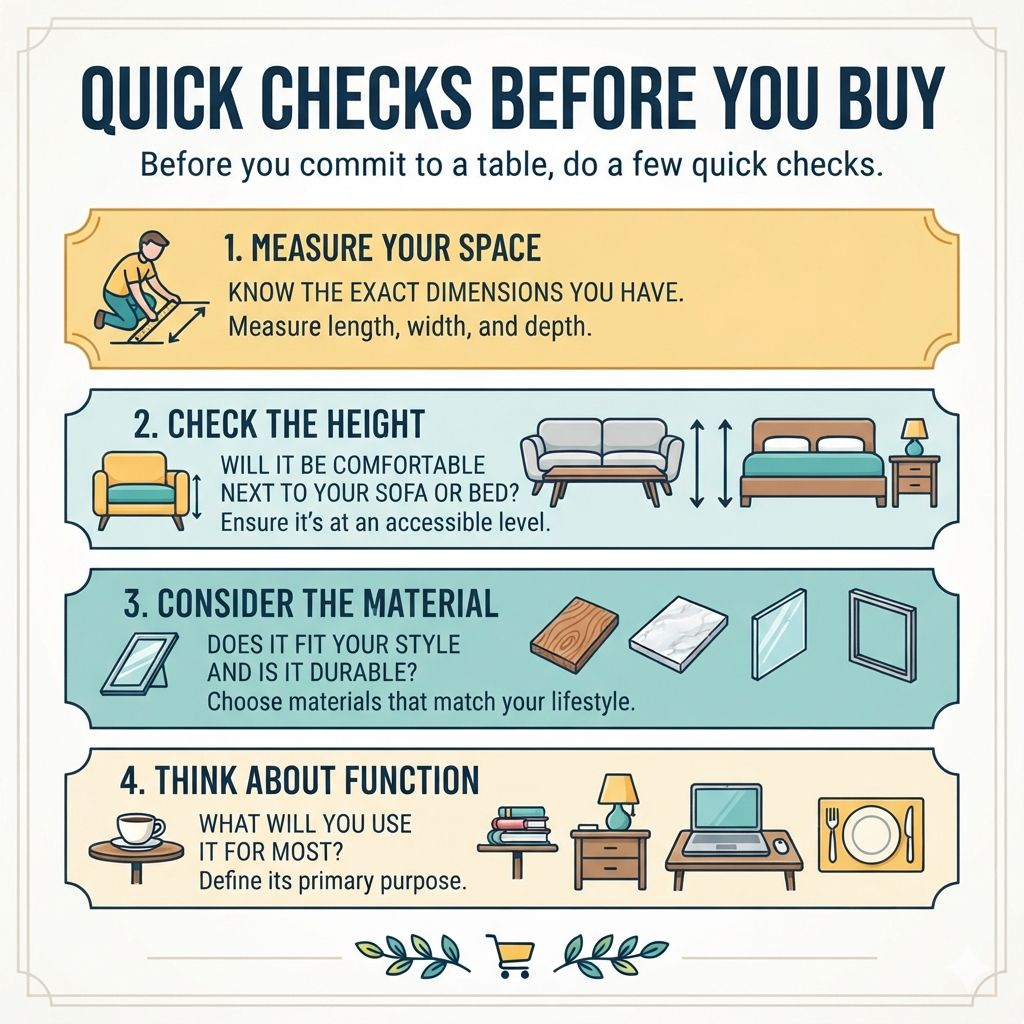
Quick Checks Before You Buy
Before you commit to a table, do a few quick checks.
Buying Checklist
Measure your space: Know the exact dimensions you have.
Check the height: Will it be comfortable next to your sofa or bed?
Consider the material: Does it fit your style and is it durable?
Think about function: What will you use it for most?
Frequently Asked Questions About Console and Side Tables
Can I use a side table as a console table?
Yes, if your space is small, a compact side table can work as a console table in an entryway or behind a sofa. However, it won’t offer the same length or visual impact as a traditional console table.
Can a console table be too tall for a sofa?
A console table is typically placed behind a sofa, so its height relative to the sofa arm is less critical than for a side table. However, it should ideally not be significantly higher than the sofa back. Standard console table height usually works well.
What is the standard height for a side table?
The standard height for a side table is usually between 20 and 24 inches. This height typically matches the arm of most sofas and chairs, making it easy to reach items.
Do I need both a console table and side tables?
Not necessarily. Many homes only need one or the other, depending on their layout and needs. If you have an entryway that needs a landing spot, a console table is great.
If you have ample seating that needs surfaces, side tables are key.
What’s the difference between an end table and a side table?
End table and side table are often used interchangeably. They both refer to smaller tables placed next to seating furniture. The terms describe the same type of table.
Can I use a console table in my bedroom?
Yes, a console table can work in a bedroom, especially if you have a larger room. It can be placed against a wall for decorative purposes, to hold a vanity mirror, or as a surface for books and accessories.
Final Thoughts: Finding Your Perfect Match
So, there you have it. While they share the “table” name, console tables and side tables have distinct roles. One is about defining spaces and making a statement.
The other is about handy support right where you need it.
By looking at shape, size, and typical placement, you can easily pick the right one for your home. Focus on what you need it to do. And where it will live.
That’s the best way to find your perfect table.
Products related to this article
Sponsored / affiliate links. As an Amazon Associate I earn from qualifying purchases. I may earn additional commission from eligible campaigns.