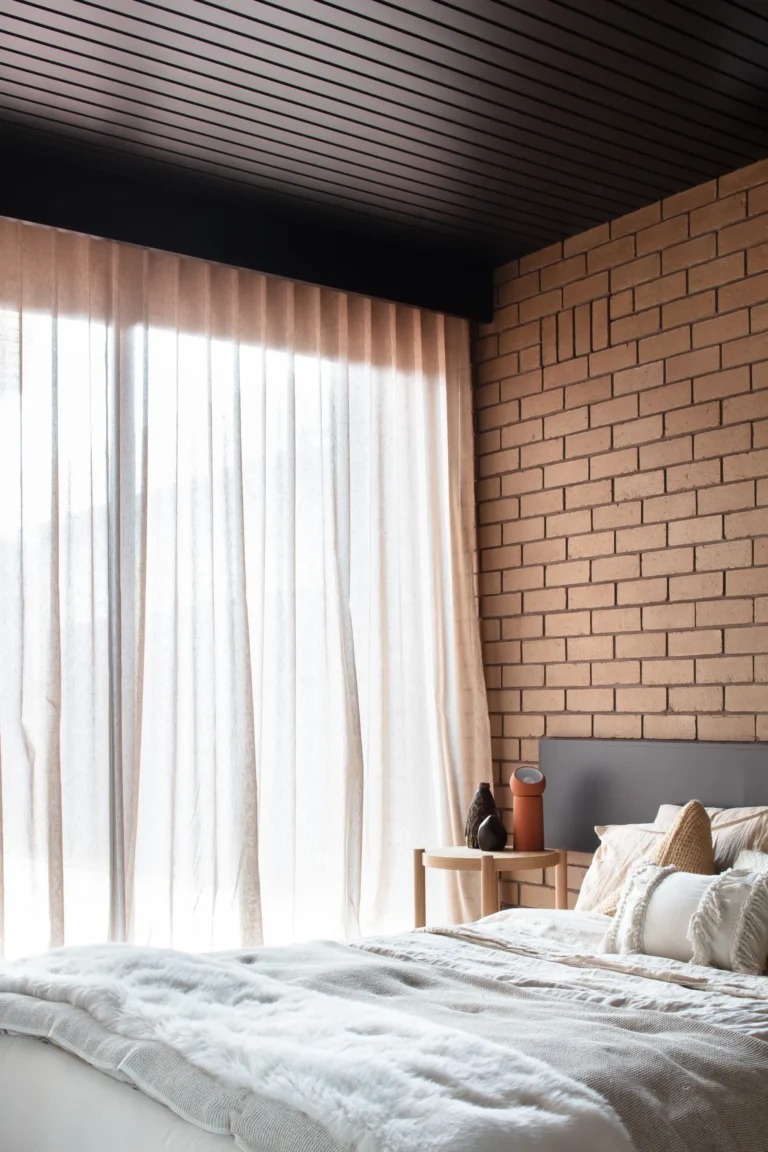
End Table vs Nightstand: Height and Storage Compared
End tables and nightstands differ in height, storage, and placement: nightstands run taller to match mattress height and add a drawer, while end tables sit 22-30 inches and stay open for easy reach from a sofa. Pick the wrong one and a nightstand can tower over a low sofa arm, or an end table can leave a phone charger with nowhere to hide at bedtime. This guide covers height, storage, styling, and when either piece doubles for the other.
For a related decorating choice, 80+ Unique Boho Bedroom Ideas can help readers compare style and placement. For a closely related home or decor topic, What To Put On A Nightstand gives readers a useful next step, and How Wide Is A Nightstand adds another practical detail to check.
End Table vs. Nightstand: The Essential Difference You Need to Know
As a home decor enthusiast, I’ve seen countless beautiful pieces of furniture, and I know how tempting it is to use them interchangeably. However, understanding the specific role each piece plays will elevate your space from simply decorated to thoughtfully designed. Think of it this way: a nightstand is a specialized tool for your bedroom sanctuary, while an end table is a more general-purpose helper for your living areas. Let’s dive into what makes each distinct and how you can use them best.
What Exactly is an End Table?
An end table, also commonly known as a side table, is a small table typically placed at the end of a sofa or next to an armchair. Its primary purpose is to provide a convenient surface for items you might need while relaxing in your living room or sitting area. This could include a lamp to read by, a drink, a remote control, a coaster, or decorative items like a vase or picture frame. End tables come in a vast array of styles, sizes, and materials to complement any decor, from modern minimalist to rustic farmhouse.
Key Characteristics of an End Table:
- Versatile Placement: Found in living rooms, family rooms, dens, and even hallways.
- Functional Surface: Designed to hold everyday items like drinks, remotes, books, and lamps.
- Decorative Element: Often chosen to complement the existing furniture and style of the room.
- Varied Heights: Generally designed to be a comfortable height next to seating, often aligning with or slightly below the armrest of a sofa or chair.
- Diverse Styles: Available in countless designs, materials (wood, metal, glass, stone), and shapes (square, round, rectangular).
- Storage Options: Some end tables feature drawers or shelves for added storage, but this isn’t their defining characteristic.
What Exactly is a Nightstand?
A nightstand, or bedside table, is a piece of furniture specifically designed to be placed next to a bed. Its name says it all – it’s meant to hold things you need “at night.” This usually includes items like an alarm clock, a bedside lamp for reading before sleep, your phone, a book, a glass of water, and perhaps a drawer for personal items like medication or tissues. The key distinction for a nightstand is its bedroom-specific function and its proximity to the sleeping area.
Key Characteristics of a Nightstand:
- Specific Placement: Almost exclusively found in bedrooms, beside the bed on one or both sides.
- Essential Bedroom Items: Holds items needed for sleep and waking, such as alarms, lamps, books, and personal essentials.
- Height Considerations: Typically designed to be at a comfortable height to reach from a lying position, often aligning with the top of the mattress or slightly above.
- Storage Focus: Often includes at least one drawer or shelf for keeping bedroom clutter out of sight.
- Cohesive Bedroom Aesthetic: Usually chosen to match or complement the bed frame or other bedroom furniture for a unified look.
- Durability & Functionality: Prioritizes practical use and sturdiness for daily activity.

End Table vs. Nightstand: A Comparative Look
While both are small tables that offer a handy surface, their intended use dictates their design and placement. Let’s break down the key differences side-by-side. This comparison table highlights the distinct features that define each piece of furniture.
| Feature | End Table | Nightstand |
|---|---|---|
| Primary Location | Living rooms, family rooms, beside sofas/chairs. | Bedrooms, beside the bed. |
| Main Function | Convenient surface for living room items, decor, and accent. | Practical storage and surface for nighttime essentials. |
| Typical Height | Often aligns with sofa armrests or slightly lower. | Usually aligns with mattress height. |
| Design Focus | Aesthetic, variety of styles to match living area decor. | Functionality, practicality, and often coordinated with bedroom sets. |
| Storage Importance | Varies; some have storage, but it’s not always a priority. | Often includes drawers or shelves for discreet storage. |
| Material Variety | Extensive (wood, metal, glass, stone, acrylic, etc.). | Commonly wood, but also metal, MDF; often part of a furniture set. |
| Style Versatility | Highly versatile, fits many decor themes. | Can be versatile, but often more traditional or bedroom-specific. |
Choosing the Right Table: Practical Considerations
When you’re deciding whether to pick up a piece for your living room or your bedroom, let these guiding questions help you make the best choice:
- Where will it live? This is the most crucial question. If it’s next to your sofa, it’s an end table. If it’s beside your bed, it’s a nightstand.
- What will you put on it? Think about the daily essentials. If it’s for your coffee mug and a book in the living room, an end table works perfectly. If it’s for your phone charger, alarm clock, and a glass of water by your bed, a nightstand is the way to go.
- What height do you need? Measure the height of your sofa armrests or your bed mattress. Match the table height to these dimensions for comfortable reach and a visually balanced look. For example, some online guides suggest that the ideal height for an end table is about the same as your sofa’s armrest, according to Houzz.
- What style are you going for? End tables offer a broader range of styles to enhance your living room’s aesthetic. Nightstands often aim for a cohesive bedroom look, though they can also be standalone statement pieces.
- Do you need storage? If you need to tuck away clutter, look for nightstands with drawers or shelves. Some end tables also offer this, but it’s a more common feature in nightstands.
Can You Use an End Table as a Nightstand (or Vice Versa)?
Absolutely! While they have distinct designated roles, the lines can often be blurred, especially in smaller homes or apartments where space is a premium. Here’s when and how you might swap them:
Using an End Table as a Nightstand:
This is quite common! If you find a stylish end table that’s the correct height and has a drawer or shelf you like, it can make a charming nightstand. The key is ensuring it fits well beside your bed and serves your nighttime needs. You might find a particularly unique or vintage end table that perfectly captures the bedroom vibe you’re after. Just make sure it’s not too tall or too short. Aiming for a height that’s comfortable to reach from your bed is paramount. A good rule of thumb is to have the top surface of your nightstand be at the same height or slightly above your mattress, as recommended by many interior designers.
Using a Nightstand as an End Table:
This also works, especially if you love the functionality of a nightstand’s drawers or shelves for your living room. A nightstand can be ideal for storing remotes, coasters, or other living room essentials out of sight. The main consideration here is height and style. A nightstand might be taller than a typical end table, so ensure it doesn’t block views or feel overwhelming. Also, consider if its bedroom-centric style fits the living room aesthetic. A sleek, modern nightstand could easily moonlight as a chic end table.
Best Dual-Purpose Table Pick
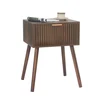
Mid Century Modern Nightstand Small End Table – $35.99
Sold as a dual-purpose piece for either room, which fits the guide above: the same compact frame works as a bedside nightstand or a living room end table.
- Best for: Buyers who want one table style to work in either role
- Why we picked it: Compact enough to sit flush against a mattress, open enough to double as sofa-side storage
- Main drawback: No drawer, open shelf storage only
Compare more nightstands and end tables
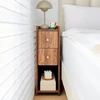 Option 1 Narrow Nightstand Set of 2 Wooden 2 Drawer – $67.99
|
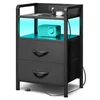 Option 2 Lazzanto Nightstand with Rear Charging Station – $39.99
|
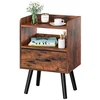 Option 3 Yoobure Night Stand with Fabric Drawer – $39.99
|
As an Amazon Associate we earn from qualifying purchases.
Styling Your Tables: Tips for Both End Tables and Nightstands
Once you’ve chosen the right table for its spot, the fun part begins: styling it! Whether it’s an end table or a nightstand, you can create a look that’s both beautiful and functional.
For Your End Table:
- Layering is Key: Start with a base like a coaster or a small decorative tray. Add a table lamp for ambient light, and then layer in smaller items like a stack of books, a potted plant, or a scented candle.
- Consider the Flow: Place items that you’ll use frequently within easy reach. Remote controls, your phone, or magazines should be accessible.
- Add a Personal Touch: Display a favorite photograph, a piece of art, or a sentimental object.
- Don’t Overcrowd: Negative space is important! Leave room so the table doesn’t look cluttered.
- Height Variation: Use items of different heights to create visual interest. A tall lamp balanced by a shorter stack of books, for example.
For Your Nightstand:
- Nighttime Essentials First: Your alarm clock, phone charger, and a glass of water are priorities.
- Lighting for Reading: A good bedside lamp is crucial. Consider one with an adjustable arm for reading in bed.
- Bookish Bliss: Stack a couple of current reads or a favorite novel.
- Keep it Tidy: A small drawer or bin can hide less sightly items like medications or charging cables.
- Calming Decor: A small plant, a framed photo, or a soothing candle can add a touch of tranquility to your personal space. The U.S. Environmental Protection Agency even notes how plants can contribute to a healthier indoor environment, potentially adding to a sense of calm.
- Drawer Organization: Use drawer dividers to keep small items like lip balm, hand lotion, or earplugs neatly organized.
Common Pitfalls to Avoid
Even with clear definitions, it’s easy to make a few missteps. Here are some common mistakes to sidestep:
- Ignoring Height: Placing an end table that’s too tall next to a low sofa can look awkward. Similarly, a nightstand that’s too short might make reaching your alarm difficult from bed. Always measure!
- Over-Styling: It’s tempting to fill every inch, but an over-cluttered table looks messy and diminishes its functionality. Less is often more.
- Forgetting Function: While aesthetics are important, don’t sacrifice practicality. Your end table needs to hold your drink, and your nightstand needs easy access to your phone.
- Style Clash: Ensure the table’s style complements the room it’s in. A very modern, sleek end table might look out of place in a rustic living room.
- Skipping Storage: Especially for nightstands, a lack of storage can lead to clutter on the surface, defeating the purpose of a tidy bedside.

Frequently Asked Questions (FAQs)
Here are some common questions about the difference between end tables and nightstands, answered simply for you!
Q1: Can I use a tall end table as a nightstand if it looks nice?
A: Yes, but be mindful of the height. It should be easily reachable from your bed, ideally around mattress height. If it’s too tall, it can be uncomfortable to use.
Q2: What should I prioritize when buying an end table for my living room?
A: For an end table, focus on its look and how well it fits with your sofa and chairs, its stability, and whether it provides the surface space you need for lamps, drinks, and decor.
Q3: Is there a specific size for a nightstand?
A: Not a strict rule, but a common size is around 18-24 inches wide and 15-20 inches deep. The most important factor is that it fits the space beside your bed and is at the right height.
Q4: Can I buy an end table and a nightstand that are part of the same furniture set?
A: Yes! Many bedroom furniture sets include matching nightstands and sometimes even complementary end tables designed for a coordinated look throughout your bedroom or even into a connecting living space.
Q5: What are some good materials for an end table that are easy to maintain?
A: For easy maintenance, consider materials like glass, metal, or sealed solid wood. These can usually be wiped clean with a damp cloth. Avoid porous materials like unfinished wood or certain types of stone if spills are a major concern.
Q6: If I have a very small bedroom, what kind of nightstand should I choose?
A: Look for a slim or narrow nightstand, or consider a floating shelf that mounts to the wall. A nightstand with drawers or shelves will maximize storage without taking up much floor space.
Conclusion
Understanding the subtle yet important difference between an end table and a nightstand is all about function and placement. While an end table is a versatile companion for your living spaces, offering convenience and style next to sofas and chairs, a nightstand is a dedicated bedside partner, designed to hold your nighttime essentials and aid in restful slumber. Both are invaluable pieces that contribute to the comfort, beauty, and practicality of your home. By considering where each table will live and what its primary job will be, you can confidently select the perfect piece to enhance any room. With these insights, you’re now equipped to make informed decorating choices that will make your home feel even more inviting and perfectly tailored to your lifestyle. Happy decorating!
Products related to this article
Sponsored / affiliate links. As an Amazon Associate I earn from qualifying purchases. I may earn additional commission from eligible campaigns.
 FLEXMAN H8 Router Table Insert Plate, Precision Aluminum Alloy Wood Milling Flip Board Set, 9.5 X 7.9 Multifunctional Woodworking Router Plate for Carving Milling
 Acovy 40 Inch Floating Shelves, 12" Deep Floating Shelf Wall Mounted, 40" Wall Shelves, Rustic Deep Bookshelf, Extra Deeper & Thicker Display Shelves for Bedroom, Living Room, Oak, Set of 2