How to Organize Bedroom Storage
Start by emptying each bedroom storage zone, sorting items by how often you use them, and keeping daily items in the easiest reach, seasonal items higher up, and seldom-used items elsewhere. Poor storage wastes time, hides useful items, and turns closets, drawers, and under-bed space into catch-alls. This guide gives you a step-by-step triage system, storage choices for each bedroom zone, and rules for avoiding purchases that add clutter.
Start with decluttering and measuring
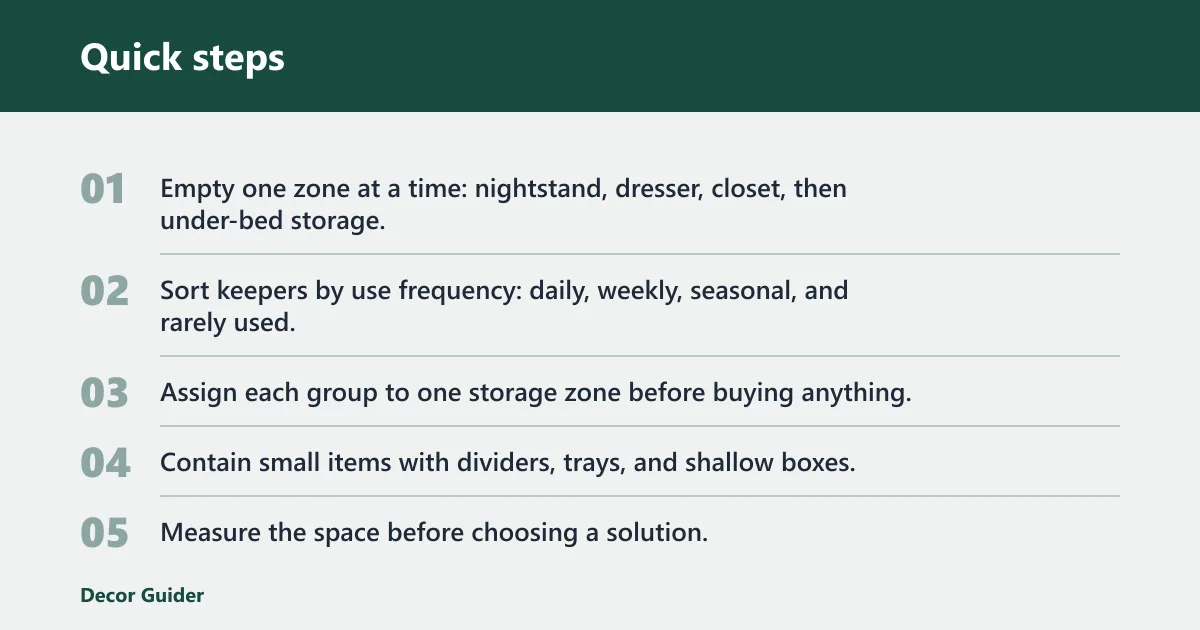


- Empty one zone at a time: nightstand, dresser, closet, then under-bed storage. Group every item into keep, relocate, or store so you can see what is actually competing for space.
- Sort keepers by use frequency: daily, weekly, seasonal, and rarely used. Daily items stay within arm’s reach. Seasonal items move higher or lower. Rarely used items leave prime space.
- Assign each group to one storage zone before buying anything. Lifehacker’s rule is simple: every item should have a designated storage space.
- Contain small items with dividers, trays, and shallow boxes. Drawer organizers work best when each section has one job, such as chargers, jewelry, socks, or watch bands.
- Measure the space before choosing a solution. Check width, depth, and height, then leave clearance for lids, drawer slides, or a bed frame rail. If the item cannot move in and out without friction, it is the wrong fit.
- Add only the amount of storage the room can support. A common first-timer mistake is filling every spare corner, then creating new clutter in the process. Add one bin, one shelf, or one organizer, then recheck what is left loose.
What you’ll need
- Tape measure
- Labels or masking tape and marker
- Storage bins and baskets
- Drawer dividers or small boxes
- Two or three sorting bags or boxes for keep, relocate, and store
- Optional renter-safe hooks, shelf risers, or over-the-door organizers
- Optional wall anchors only if drilling is allowed
How do you sort bedroom items first?
Sort by frequency first, then by season, then by visual priority. Daily-use items belong in the easiest reach, weekly-use items can sit a little higher or lower, and seasonal or sentimental pieces can move to less visible storage. That order keeps prime space open for items you reach for often.
Separate daily, weekly, and seasonal items
Keep daily items close to where you use them: phone charger, glasses, sleepwear, and current accessories. Weekly items can live in dresser drawers or closet shelves. Seasonal items such as off-season clothes, extra bedding, and spare pillows should move to under-bed storage, upper shelves, or labeled bins.
Suppose a 9-by-11-foot bedroom has one small closet and a dresser. Put current sweaters and underwear in the dresser, shoes in the closet floor zone, and winter bedding in a labeled under-bed bin. That keeps the fastest-access space for the items you actually reach for each week.
Set aside items that need better containment
Loose chargers, tangled belts, jewelry, and small grooming items need subdivision before they go back into drawers. Drawer organizers and reused boxes can do the job cheaply. The goal is not to hide everything. It is to stop small items from becoming one mixed pile.
How should each storage zone be used?
Match the item to the zone, not the other way around. Nightstands should hold only nightly essentials, dresser drawers should handle folded clothing, closet space should handle hanging clothes and shoes, and under-bed storage should hold bulky or out-of-season items. That keeps each zone predictable and easier to maintain.
Use nightstands for nightly essentials
A nightstand with multiple drawers and compartments gives you a place for glasses, lip balm, a book, and charging cables without leaving them on the top. A storage mirror can hide small items too. Keep the top surface nearly clear so it does not turn into a landing pad.
Use dresser drawers for folded clothing
Folded T-shirts, sleepwear, and undergarments work best in shallow or medium-depth drawers with dividers. Drawer organizers separate categories so one section does not spill into another. If a dresser drawer is too deep, use bins or dividers to stop items from stacking into one hard-to-manage pile.
Use closet zones for hanging, shoes, and accessories
Closet storage systems should be matched to the item type. Hanging organizers suit scarves and folded knits. Shoe storage keeps pairs visible. Cube shelves and over-the-door units work well for accessories, bags, or small baskets. Vertical hanging storage helps when the closet is narrow or shared.
Use under-bed space for bulky or off-season items
Under-bed storage is best for out-of-season items and bulky bedding. Use bins, drawers, or storage bags that stay hidden but still accessible. This zone should not become a dead zone. If you have to move the bed frame every time you need something, the system is failing.
Bedroom storage triage table
Use this table to match common items to the right bedroom zone before you buy containers. The best choice depends on how often you need the item, how much space it takes, and whether you rent or own.
| Item type | Best storage zone | Renter-safe option | Permanent option | Minimum space needed | Common mistake |
|---|---|---|---|---|---|
| Sweaters | Dresser drawer or shelf | Folded bin on shelf | Built-in shelf cube | 12 in. depth | Hanging knits and stretching them |
| Shoes | Closet floor or over-the-door unit | Stackable shoe rack | Built-in shoe cubby | 10-12 in. per pair | Leaving pairs loose on the floor |
| Bags | Closet shelf or hook zone | Basket on shelf | Wall-mounted cubby | 14-16 in. width | Crushing bags under clothing |
| Bedding | Under-bed storage | Flat storage bag | Built-in bed drawer | 6-10 in. height clearance | Overfilling a soft bag so it will not slide |
| Jewelry | Nightstand drawer | Small tray or box divider | Drawer insert with sections | 3-4 in. drawer depth | Mixing jewelry with chargers |
| Chargers | Nightstand drawer | Cord box or small bin | Built-in charging drawer | 6 in. width | Letting cords tangle in open air |
| Off-season clothes | Under-bed storage or top closet shelf | Labeled bin or bag | Upper cabinet | 8-10 in. height | Storing them in the easiest drawer |
| Blankets | Under-bed storage or basket | Woven basket | Built-in bench storage | 16 in. width | Stuffing them into a tight drawer |
| Pillows | Under-bed or top shelf | Fabric storage bag | Deep overhead cabinet | 18 in. cubic space | Compressing them without access |
| Books | Nightstand, shelf, or floating bookshelf | Small stack basket | Built-in shelf | 10 in. shelf depth | Stacking too many beside the bed |
| Sleepwear | Top dresser drawer | Shallow divider tray | Drawer insert | 4-6 in. drawer height | Mixing it with workout gear |
| Workout clothes | Dresser drawer or closet bin | Folded basket | Built-in cubby | 8 in. width | Putting sweaty items near clean linens |
| Belts and scarves | Closet organizer | Hanging organizer | Custom closet rod insert | 6 in. rod access | Winding them around hooks with no categories |
| Seasonal decor | Top closet shelf or under-bed | Labelled storage bin | Built-in cabinet | 12-14 in. shelf height | Leaving it in prime drawer space |
| Small electronics | Nightstand drawer | Divider box | Charging drawer | 6 in. width | Keeping spare cords loose and visible |
How do you add storage without crowding the room?
Use vertical storage first, then choose furniture that does double duty, then consider storage beds. That order protects floor area, which matters most in small rooms. Real Homes points to a floating bookshelf for an unused nook, and Woman & Home recommends wall space above the bed.
Choose vertical storage before extra floor pieces
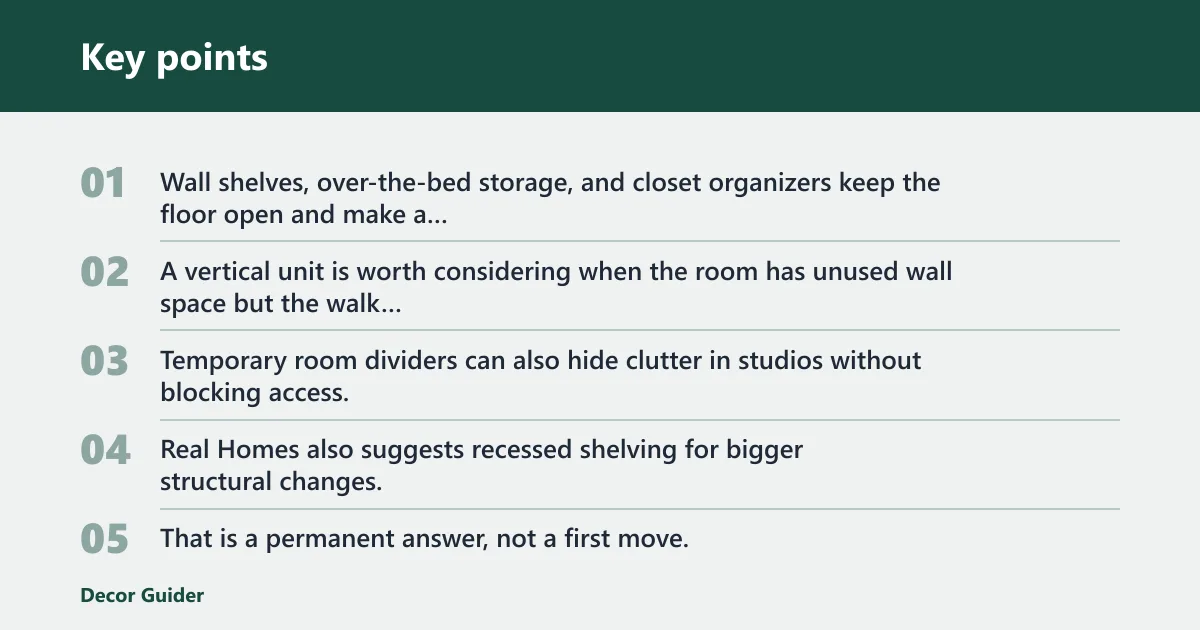
Wall shelves, over-the-bed storage, and closet organizers keep the floor open and make a small room feel less packed. A vertical unit is worth considering when the room has unused wall space but the walk path is narrow. Temporary room dividers can also hide clutter in studios without blocking access.
Real Homes also suggests recessed shelving for bigger structural changes. That is a permanent answer, not a first move. Start with no-drill shelves or hanging organizers when you rent.
Use storage beds only when the frame footprint fits
Storage beds make sense when the bed already dominates the room and you need hidden storage without adding another cabinet. They may include built-in drawers or compartments. Use them for compact bedrooms and small apartments only if the drawers can open fully and the frame still allows circulation.
Pick multi-functional furniture with built-in storage
Storage benches, storage mirrors, and nightstands with drawers reduce the number of separate pieces in the room. Homes & Gardens notes that bedside tables with drawers maximize hidden storage, while Lifehacker recommends a storage mirror that hides small items. That works best when the item also has a clear daily job.
Say your room has a 30-inch-wide gap beside the bed. A narrow nightstand with drawers can replace a tiny table and a separate basket, which leaves the path clearer and the top surface less crowded.
Common mistakes
Most bedroom storage problems come from poor placement, not a lack of containers. Fix the placement first, then the container. If storage is hard to reach or too full, it becomes clutter again.
Overstuffed bins and bags
Bins should hold like items, not every leftover item in the room. If the lid bows or the bag has to be compressed to fit, the bin is too full. Choose a container one size larger or split the contents into two labeled groups.
Hard-to-reach under-bed storage
Under-bed storage works only when you can slide it out without moving furniture. Low-clearance bins with handles are easier to access than deep bags with no structure. Keep the contents seasonal or bulky, not daily-use items you need each week.
Drawer clutter that migrates back
When a drawer has no dividers, items spread until the drawer becomes a single pile. Use inserts for chargers, jewelry, socks, and grooming tools. Lifehacker’s point about designated storage space matters here: if every item has a home, it stops drifting onto the nearest flat surface.
Prevention: keep a one-in, one-out rule for bulky bedroom storage. If you add a new basket or bin, clear the same amount of shelf or drawer space so the room does not slowly refill.
Frequently asked questions
How do I organize bedroom storage without buying a lot of new furniture?
Start with drawer dividers, baskets you already own, and one measurement pass. Reassign existing furniture by use frequency, then add only no-drill pieces such as over-the-door organizers or under-bed bins. Real Homes and Lifehacker both support container-based fixes before larger purchases.
What is the best way to organize under-bed storage?
Use flat, labeled bins or bags for out-of-season items and bulky bedding. Keep them short enough to slide out without lifting the bed. If the container cannot move with one hand, it is too tall or too full for regular use.
How do I organize a small bedroom with limited closet space?
Push storage upward and outward: wall shelves above the bed, over-the-door organizers, and vertical closet inserts. Keep daily items in drawers near the bed, and move off-season clothes to under-bed storage. In small rooms, each item should have one clear zone.
How do I stop my nightstand and dresser from becoming clutter magnets?
Give each drawer a category and keep the top surface nearly empty. A nightstand with drawers works well for chargers and small items, while a dresser should hold folded clothing only. If an item does not belong there, relocate it immediately instead of setting it down for later.
What bedroom storage ideas work for clothes, shoes, and bedding?
Use dresser drawers for folded clothes, closet systems for hanging items and shoes, and under-bed storage for bedding. Baskets help group blankets or pillows, and cube shelves work well for shoes or accessories. Match the container to the item’s shape and access frequency.
How do I organize drawer storage in a bedroom?
Measure the drawer interior, then divide it into sections with inserts or reused boxes. Put the most-used items at the front or top drawer, and give each section one category. That keeps socks, jewelry, chargers, and sleepwear from turning into one mixed pile.
How can I use vertical space to add more bedroom storage?
Use wall shelves, hanging organizers, and storage above the bed before adding another floor piece. Vertical storage works best for books, decor, baskets, and items you do not need every day. Woman & Home specifically recommends wall space above the bed for smaller rooms.
What storage furniture works best in a small bedroom?
Choose furniture that hides storage inside the piece you already need: a storage bed, a nightstand with drawers, or a storage bench. Homes & Gardens notes that bedside tables with drawers increase hidden storage. Use one strong piece rather than several small ones that crowd the floor.
How to organize storage bed
Use the drawers or lift compartment for bulky or out-of-season items, and reserve the reachable sections for bedding you change often. Label each side if the bed has split drawers. If the drawers block walking space, the bed is too large for the room.
Products related to this article
Sponsored / affiliate links. As an Amazon Associate I earn from qualifying purchases. I may earn additional commission from eligible campaigns.