Best Bedroom Curtains for Privacy (2026): based on specs and reviews
For most bedrooms, I start with double-layer curtains: blackout or room-darkening panels for sleep, plus sheers or lighter drapes only when daylight and daytime privacy matter. Bad curtain choices can leave you awake too early, visible from outside at night, or stuck with a room that feels harsh and unfinished. This guide breaks down the best bedroom curtain ideas by privacy need, light control, and room style.
This guide is part of our Bedroom design ideas series.
Best overall: layered blackout curtains for most bedrooms
Layered blackout curtains are the strongest default for most bedrooms because they handle the real job first: privacy after dark, then softer light during the day. The blackout layer deals with sleep and street visibility. The lighter layer keeps the room from feeling boxed in when the sun is up.
I reach for this setup on street-facing windows, ground-floor rooms, and bedrooms that get early sun. It also lets you tune the room without changing hardware later. The main tradeoff is bulk; the stack takes more wall space and needs enough rod width or a track with decent return.
Skip the full layered setup if the room is very small, the window is high and narrow, or the space gets almost no daylight. In those cases, a lighter lined drape or a single room-darkening panel may feel better, as long as privacy still holds after dark.
According to Sheer Curtains — One sheer curtain product is made from 100% European Flax Linen.
Quick comparison
| Product | Badge | Best for | Price | ||
|---|---|---|---|---|---|
 |
NICETOWN Grey Blackout Curtains for Bedroom 84 Inches Long,NICETOWN | Our pick | 52×84 inches · Grey · 2 Panels | $15.98
Price as of 29 Sep 2026
|
View |
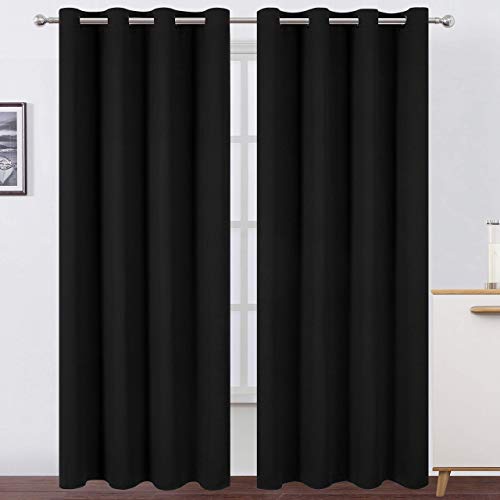 |
LEMOMO Blackout Curtains 52 x 84 inches Long Black CurtainsLEMOMO | Budget pick | 52×84 inches · Black · 2 Panels | $17.59
Price as of 29 Sep 2026
|
View |
 |
DWCN White Sheer Curtains Linen Look Semi Transparent VoileDWCN | Also great | 52×84 inches · White · Linen Look | $11.35
Price as of 29 Sep 2026
|
View |
 |
IFELS Heavy Duty Curtain Rods for Windows 48 to 84 Inch, 1IFELS | Pair with it | 30-90 inch · Bronze · Metal Rod | $20.69
Price as of 29 Sep 2026
|
View |
Use this table as a shortcut when the bedroom setup is already clear. The best choice changes when privacy pressure, sun exposure, or installation limits change.
The goal is not the prettiest fabric on a hanger. It is the right mix of privacy, sleep comfort, and mounting method for the room.
| Bedroom scenario | Recommended curtain type | Lining | Mount | Privacy level |
|---|---|---|---|---|
| Street-facing bedroom | Layered blackout curtains | Blackout or room-darkening lining | Ceiling mount or high wall mount | High at night, adjustable by day |
| Shared room | Blackout panel with optional sheer overlay | Blackout lining | Wall mount with wide stack-back | High, especially after dark |
| Rental | Curtain plus blinds, or ready-made blackout panels | Room-darkening lining | No-drill rod or tension solution | Medium to high, depending on blinds |
| Low-light room | Lined drapes in a light color | Light lining, not full blackout | High wall mount | Medium at night, softer in daytime |
| Sunny room | Blackout or layered curtains | Blackout lining | Wall or ceiling mount | High, with strong light blocking |
| Small room | Sheer plus slim blackout or lined drape | Room-darkening lining | Ceiling mount if possible | Medium to high, with lighter visual bulk |
How we chose
The filter was privacy after dark, not daytime appearance alone. A curtain that looks soft at noon can fail badly once the room lights come on inside.
Light control and sleep comfort came next. The best bedroom curtain setup cuts glare, blocks early sunrise when needed, and does not leave hard light leaks at the sides.
Mounting flexibility mattered for both homeowners and renters. No-drill hardware, ceiling-track options, and a rod with enough projection can make a better setup possible without remodeling.
Fabric weight, lining, and drape quality also mattered. Lightweight cloth hangs differently from heavyweight cloth, and that changes both privacy and the feel of the room.
Window orientation was part of the decision. Low-light rooms need a different answer from street-facing rooms or bedrooms that get direct sunrise.
Blackout curtains: best for all-night privacy
Blackout curtains are best for bedrooms where privacy and sleep are the main goals. They suit street-facing windows, ground-floor bedrooms, shift workers, and anyone dealing with early sun. Based on the spec sheet and owner feedback, NICETOWN’s grey pair is a practical choice for blocking light while keeping the room calm.
What stands out is the advertised 85-99% light blocking and thermal insulation, which matters in rooms that heat up in the afternoon or feel too bright before sunrise. The silver grommets also keep the look simple and modern. The drawback is the usual one with blackout panels: edges can still leak light if the rod sits too low or the panel width is too narrow.
Blackout curtains work best when the lining is dense and the panels are wide enough to overlap the window frame. A good blackout panel also helps the room feel cooler in summer and less drafty in winter, which is one reason many people prefer it over a decorative, unlined drape.
Lining options and light-blocking level
Blackout curtains can come with attached blackout backing, sewn-in lining, or a room-darkening treatment. Full blackout is strongest for night privacy, but even a good room-darkening curtain can be enough if the rest of the room is dim and the window is not directly exposed.
Look at edge leakage, top gaps, and width first. A curtain that is technically blackout can still fail if it floats away from the wall or stops short of the window edges.
What to watch for at the edges and top
The top of the window is where many blackout setups fail. A rod mounted too close to the frame leaves a light strip above the panels, and a shallow return can expose the side edges. Ceiling mounts or a higher rod help when the goal is sleep-first privacy.
Are sheer curtains private enough for a bedroom?
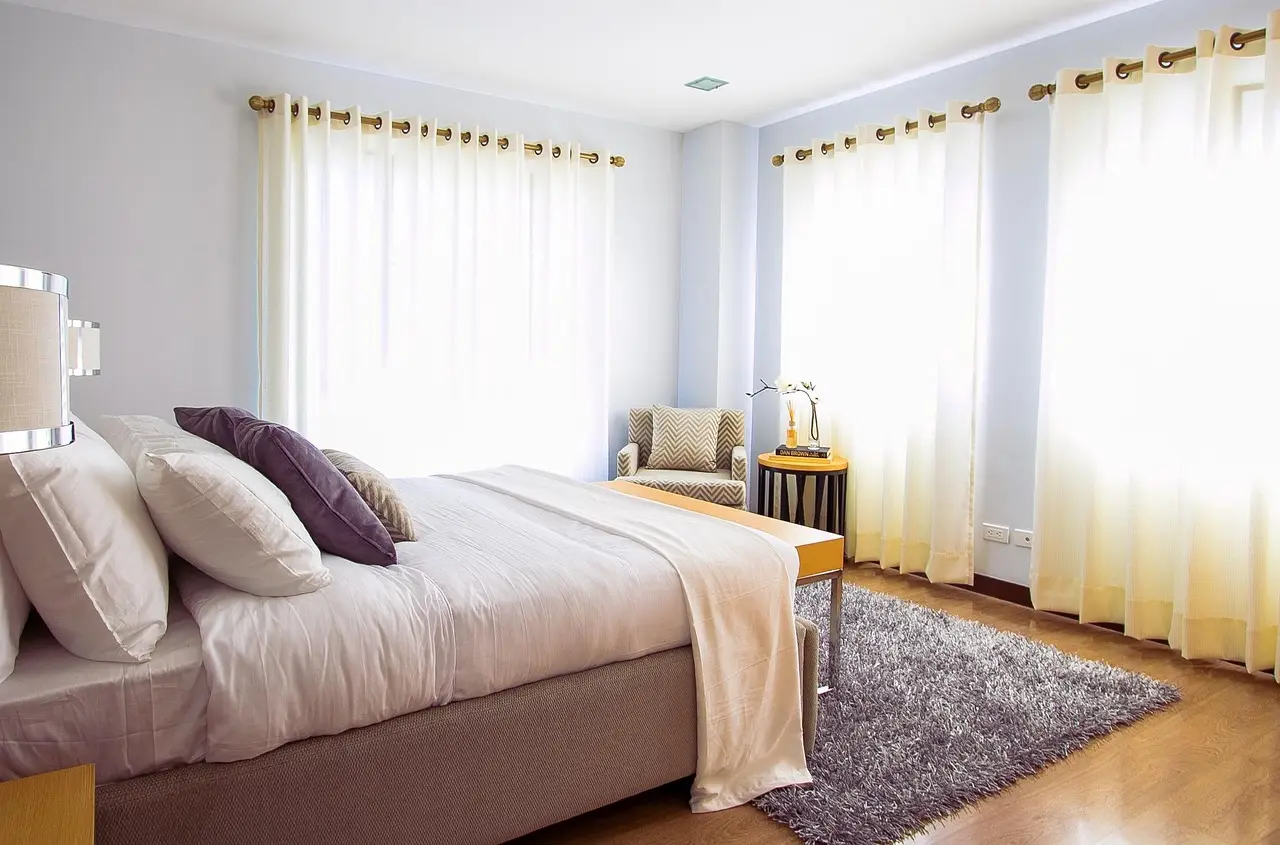
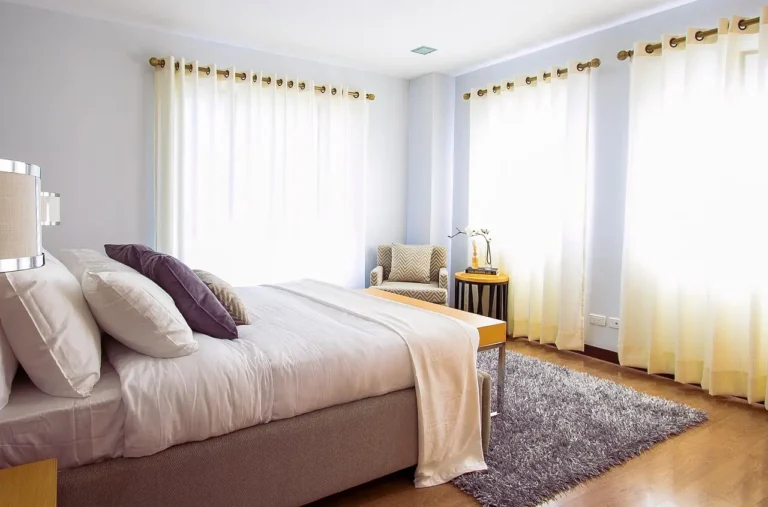
Usually no, not for night privacy. Sheer curtains soften sunlight, and they can look private in daytime photos, but they often become see-through once the room lights are on after dark. They work better as a soft layer than as the only privacy barrier.
Sheers are still useful in bedrooms that do not face the street, or in rooms where privacy is already handled by blinds. They are also good for filtering harsh daylight without turning the room into a cave. The limit is simple: if someone can see a lit room from outside, sheers alone are not enough.
Daytime privacy limits
During the day, sheers can blur views from outside, especially on upper floors or in low-traffic settings. At night, the balance flips. Interior lighting makes the room visible, and the fabric opacity is usually too low to hide movement or silhouettes.
That is why sheers are a daytime layer, not the final answer for bedroom privacy.
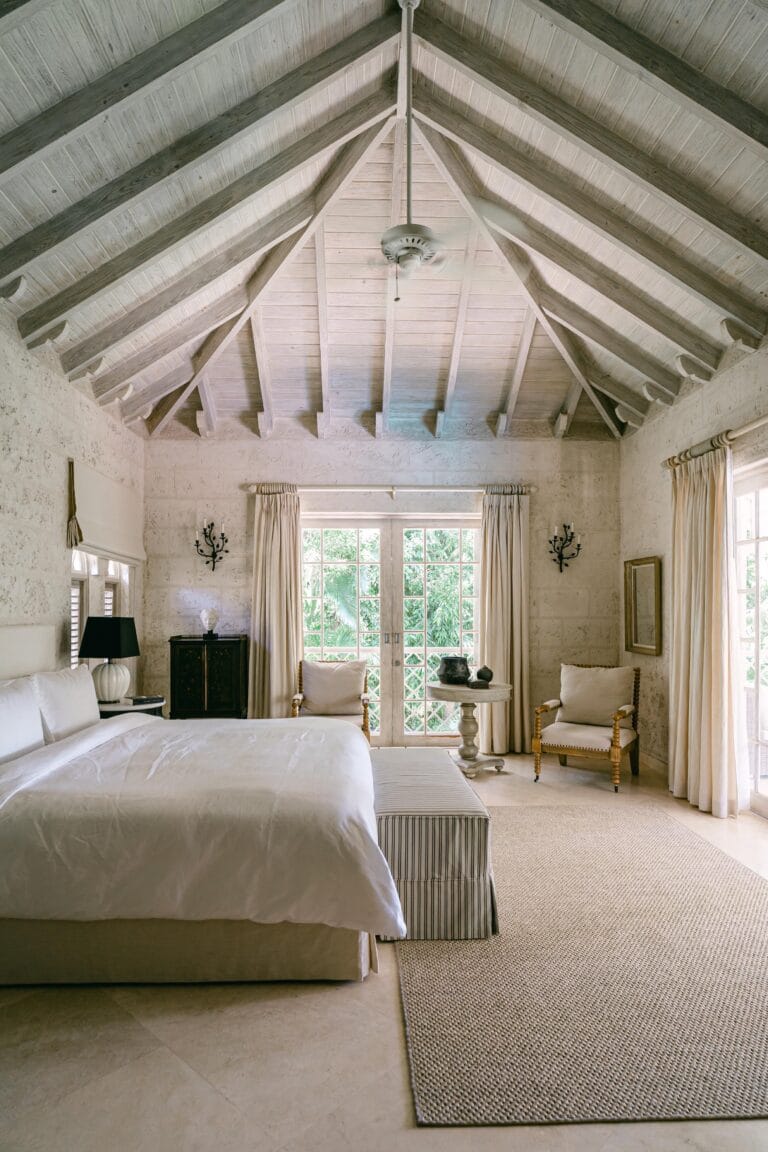
Where sheers work well: layering, low-traffic rooms, filtered light
Sheers work well behind blackout panels, under lined drapes, or in bedrooms where the window faces a backyard rather than a street. They are also useful when filtered light is wanted for reading or dressing without full glare.
The DWCN white sheer option is a good example of this use case. Its faux linen texture gives a casual feel, and the semi-transparent voile softens sunlight. The drawback is obvious: it is not meant to stand alone in a bedroom after dark.
Lined drapes: best for insulation with a softer look
Lined drapes sit between sheers and full blackout panels. They improve privacy, add insulation, and still feel softer than a technical blackout curtain. For bedrooms where the goal is comfort without a heavy visual block, lined drapes are often the cleaner choice.
Unlined drapes usually hang more lightly and let more light through. Lined versions feel more complete at the window and are better at holding a shape. The tradeoff is that they can look more formal, depending on the fabric and header style.
Lined vs unlined performance
Lined drapes usually do a better job at privacy, drape quality, and temperature control. Unlined drapes can be fine in a guest room or low-risk bedroom, but they rarely solve glare and night visibility as well as a lined pair.
If the room gets direct sun, lining matters more than most buyers expect. Without it, the fabric can fade faster and the room can heat up more quickly.
Formal or casual, depending on fabric and header style
Header style changes the mood fast. Pleated and pencil pleat headings read more tailored, while a soft top or ripple fold can feel cleaner and less stiff. Fabric weight also matters: heavyweight cloth tends to look more composed, while lightweight cloth feels relaxed.
A ripple-fold option can support ceiling and wall mounting, which is helpful when a bedroom needs a neat line from top to bottom.
Curtain plus blinds: best for renters and awkward windows
Blinds plus curtains are the most flexible answer for renters and for windows that need both privacy and day/night control. The blinds handle the hard privacy layer. The curtain adds softness, color, and a finished look without carrying all the performance on its own.
This is often the safest route when you cannot drill heavily into the wall. No-drill rods, tension hardware, and ceiling-track alternatives can keep damage low while still giving real privacy. The drawback is added complexity; two layers mean more measuring and more stack-back space.
No-drill and low-damage installation options
For rentals, look for tension rods in light windows, adhesive solutions where appropriate, or adjustable brackets that reduce wall damage. A ceiling-track alternative can also work where a wall rod would block furniture or interfere with an awkward trim layout.
Hardware visibility matters too. A track hides more of the mechanism, while a rod keeps the look more decorative and more exposed.
Day/night control without heavy fabric
Blinds give a direct privacy layer at night and let the curtain stay lighter. This is useful when a room needs daylight privacy, but a full blackout curtain would feel too heavy in the daytime.
It is also the best fix for sheers that look nice but fail after dark. Keep the sheer for softness, then let the blind do the real work.
Which one should you buy?
Buy layered blackout curtains if the bedroom faces the street, sits on the ground floor, or gets early light. That is the safest all-around answer for privacy and sleep. Add sheers only if you want day softness and can afford the extra width and hardware.
For shared bedrooms and guest rooms, prioritize room-darkening or blackout panels with enough overlap. Privacy matters more here than a delicate drape. If the room is low-light, choose lined drapes in a lighter color so the space does not feel shut down all day.
For sunny bedrooms with early sunrise, full blackout is usually worth it. For small bedrooms, a ceiling mount or high wall mount helps the room look taller, and slimmer fabric keeps the window from feeling crowded. If you rent, start with curtain plus blinds or a no-drill rod before buying heavy hardware.
Fabric weight should match the job. Lightweight fabrics read softer and use less visual space, but heavyweight fabrics block more light and hang more steadily. For color, choose a shade that stays close to the wall color if the room is tight, or a deeper neutral if the goal is sleep-first privacy.
The biggest buying mistake is choosing by style photo alone. Buy by scenario first, then by color, header, and length. A bedroom curtain only works when the privacy level, mount type, and stack-back space all fit the room.
What type of curtains are best for bedroom privacy?
Blackout curtains are the best single option for bedroom privacy, especially at night. They block more light than sheers or unlined drapes and work well in street-facing or ground-floor rooms. If the room also needs daytime softness, layer them with a sheer or light drape.
Should bedroom curtains be blackout, lined, or layered?
Layered is best for most bedrooms because it handles both day and night well. Blackout works best when privacy and sleep are the main concerns. Lined drapes are a good middle ground when the room needs a softer look and less total light blocking.
How high should bedroom curtains hang?
Hang curtains as high as the hardware allows without looking awkward. A higher mount makes the window feel taller and can help the ceiling feel farther away. In small rooms, that vertical line matters more than a decorative header near the frame.
What curtain fabric is best for a cozy bedroom?
Medium- to heavyweight fabrics usually feel cozier because they hang with more body and block glare better. Linen-look sheers can feel relaxed, but they need a privacy layer behind them. For the softest daytime feel, choose a lined fabric rather than a thin unlined panel.
How do I choose curtain color for a bedroom?
Choose color based on how much visual weight the room can handle. Light neutrals keep a small bedroom open, while deeper neutrals can help a bright room feel calmer. If the goal is privacy first, color matters less than opacity and lining.
Can I layer curtains with blinds in a bedroom?
Yes, and for many bedrooms it is the smartest setup. Blinds handle direct privacy and light control, while curtains add softness and cover the hardware. This pairing is especially useful in rentals, in awkward windows, or anywhere a single curtain cannot do both jobs well.
What curtain style makes a small bedroom look bigger?
A ceiling-mounted or high-mounted curtain in a light color usually makes a small bedroom feel taller and less cramped. A ripple fold or soft top can keep the line clean, while floor-kissing length avoids the chopped look that short curtains create.
Products related to this article
Sponsored / affiliate links. As an Amazon Associate I earn from qualifying purchases. I may earn additional commission from eligible campaigns.