5 Best Wall Art Ideas for Blank Bedrooms (2026): research shows
This quick chart is meant to steer you toward the right format before you shop. The best choice depends less on style and more on wall width, bed width, light, and whether you need removable hardware.
If your wall is wide and bare, start with one large piece. If the wall is awkwardly shaped or you want flexibility, use a mixed-frame layout or lighter materials such as canvas or fabric.
For a blank bedroom wall, a single large piece, a 2-piece pair, or a 3-piece set often works well when it is sized to roughly two-thirds to three-quarters of the wall or furniture width. If the scale is off, the wall can look underfilled, cramped, or lopsided. This guide covers how to choose art size, layout, placement height, and mood for different bedroom wall shapes and furniture setups.
Quick comparison
| Product | Badge | Best for | Price | ||
|---|---|---|---|---|---|
 |
Framed Sage Green Abstract Landscape Canvas Wall Artmxart | Our pick | 16×24 Inch · Framed Sage Canvas | $76.94
Price as of 9 Oct 2026
|
View |
 |
wondever Boho Flower Wall Decals Wildflower Floral Grasswondever | Budget pick | PVC Stickers · 2 Sheets | $12.99
Price as of 9 Oct 2026
|
View |
 |
An&He 12×12 Picture Frames Set of 6, Displays 8×8 with MatAn&He | Pair with it | 12×12 Frames · Set of 6 | $32.99
Price as of 9 Oct 2026
|
View |
 |
Achart Macrame Wall Hanging Large- Boho Wall Decor- largeAchart | Also great | 43" Macrame · Wooden Bead Rod | $35.99
Price as of 9 Oct 2026
|
View |
 |
36 Inch Round Bathroom Mirror – Wall Mounted Circle MirrorEasly | Upgrade pick | 36 Inch · Gold Aluminum Frame | $119.99
Price as of 9 Oct 2026
|
View |
How we chose
These picks and formats are ranked by fit, not by trend. The main filters were size fit, light level, renter status, ease of hanging, and budget range.
That matters because a good bedroom wall solution should solve the wall first. Style comes after the proportions work.
- Size fit: art should relate to the bed, headboard, and wall width.
- Light level: bright rooms can handle glass and mirrors; dim rooms often need softer, lighter finishes.
- Renter status: removable hardware and low-weight formats matter when you cannot patch many holes.
- Ease of hanging: level lines, lighter panels, and simple layouts reduce mistakes.
- Budget range: standard sizes and swap-friendly formats usually cost less to buy and replace.
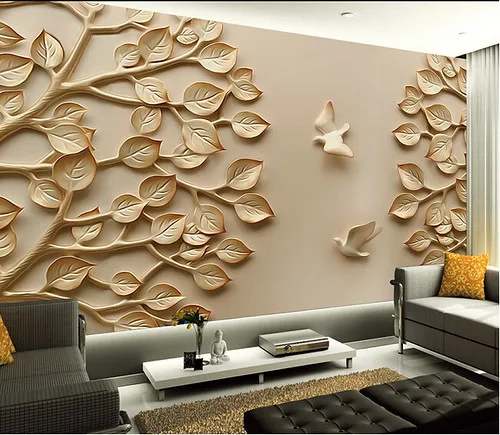
Bedroom wall art decision table
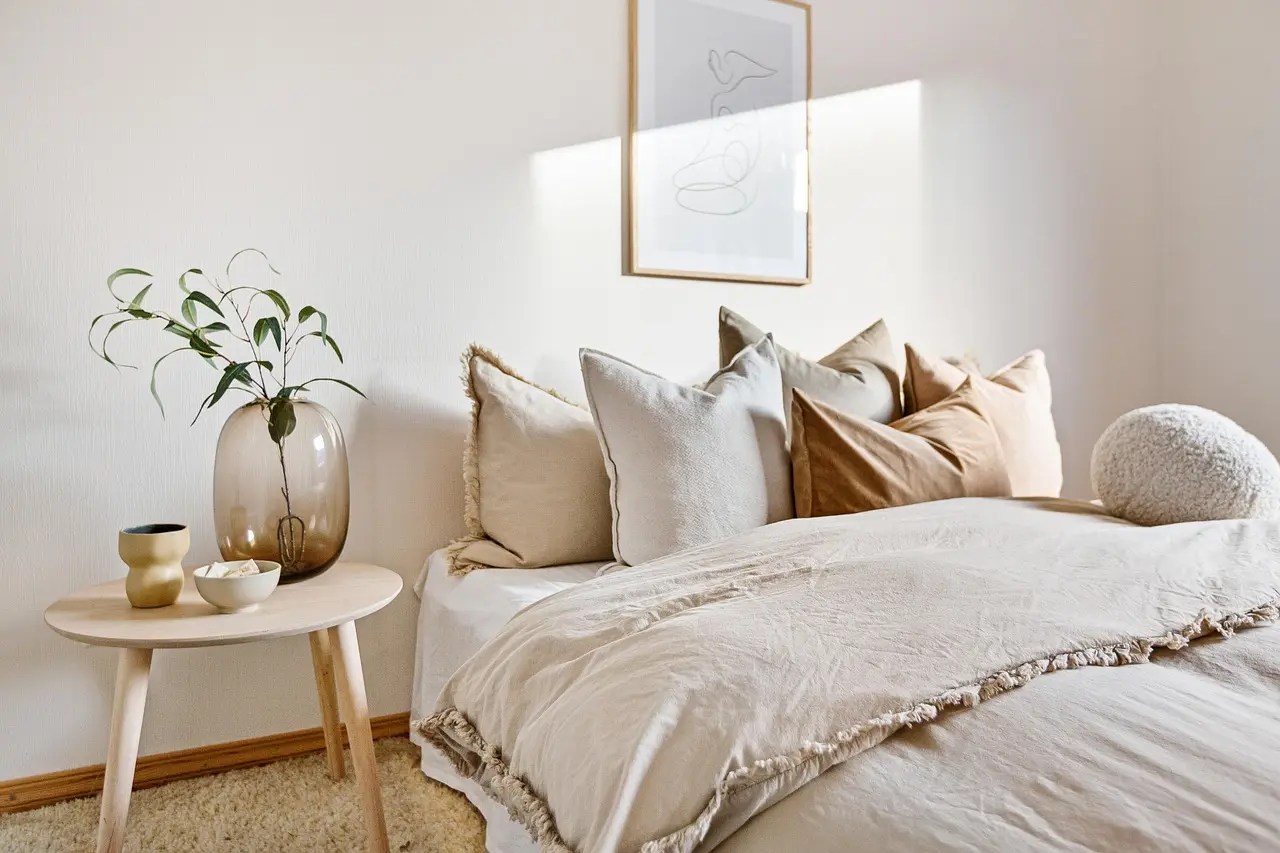
| Wall width | Bed width | Ceiling height | Light level | Renter status | Best art format | Recommended size range | Hanging method |
|---|---|---|---|---|---|---|---|
| 60-72 in. | Twin or full | 8 ft. | Any | Renter or owner | Framed prints or one canvas | 24×36 in. to 30×40 in. | Command strips for light pieces; anchors for heavier frames |
| 72-96 in. | Full or queen | 8-9 ft. | Low to medium | Renter-friendly preferred | 2-piece pair or textile wall hanging | Each piece 18×24 in. to 24×36 in. | Removable strips for fabric; wall plugs or anchors for framed sets |
| 96-120 in. | Queen or king | 9 ft. or higher | Medium to bright | Owner or light renter setup | Oversized art or 3-piece gallery wall | Single piece 40×60 in. to 48×72 in.; gallery spans 60-80% of bed width | Anchors or picture hooks; use a level and measured spacing |
| Wide wall over 120 in. | King or low platform bed | 9 ft. or higher | Bright room | Owner | Oversized art plus sculptural accent or a planned gallery wall | Art width about 48-72 in. or grouped span up to 80% of furniture width | Heavy-duty anchors, wall plugs, or professional hanging for large frames |
| Any width with little natural light | Any bed | 8-9 ft. | Low | Renter-friendly | Mirror or light canvas | Mirror 24-36 in. round or rectangular equivalent | Stud placement if possible; use rated hardware and avoid direct lamp glare |
How do you choose wall art size above a bed?
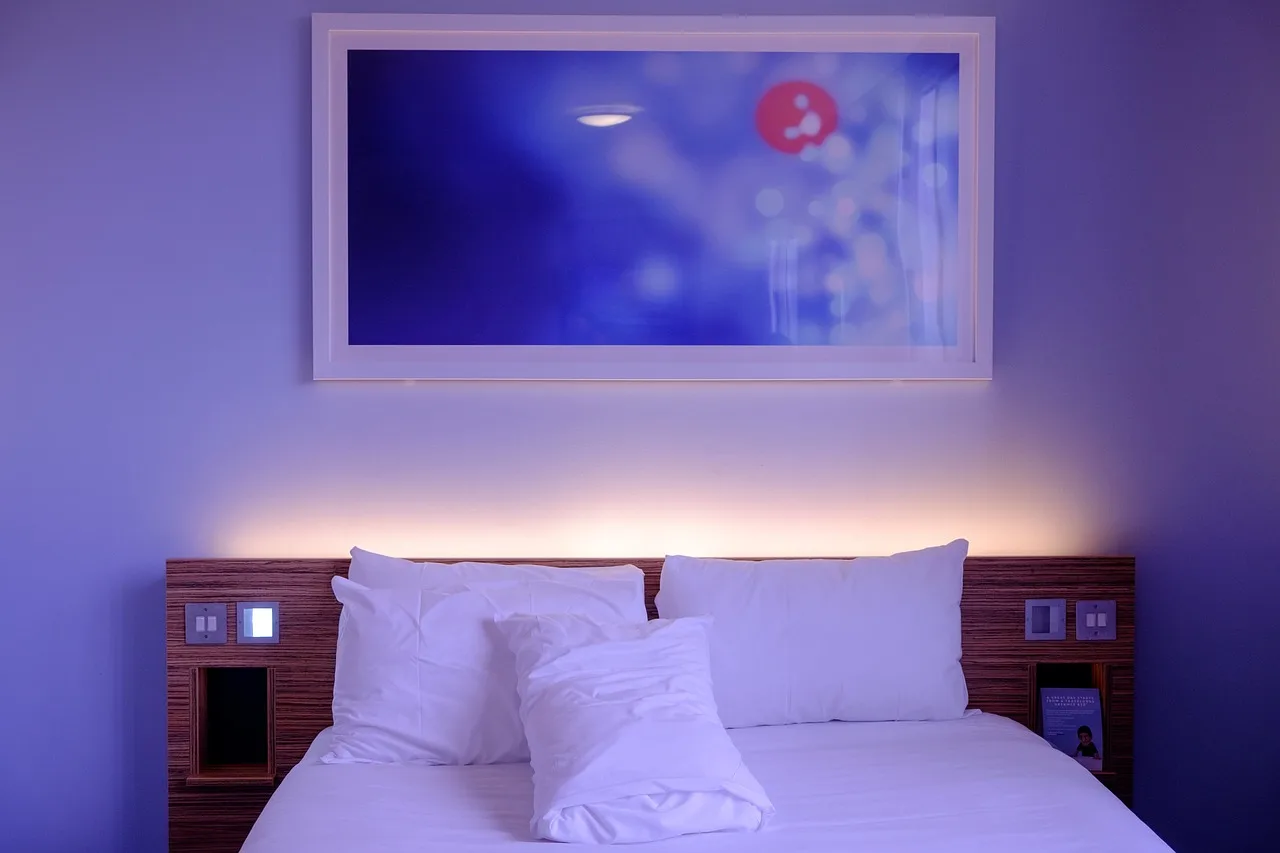
Choose wall art above a bed by starting with bed width, then checking wall width and ceiling height. A common rule of thumb is to use art that is roughly two-thirds to three-quarters the width of the bed or headboard, with enough side clearance to avoid crowding the furniture.
That ratio helps the art connect to the bed instead of floating on its own. It also makes the wall feel planned rather than underfilled.
Use the bed width as your first measurement
For a queen bed, art in roughly the 40- to 60-inch range often reads well. For a king bed, larger pieces or grouped layouts often work better because a single small frame can look lost over the mattress.
Headboard width matters too. If the headboard is narrow, art can extend a little wider than the bed. If the headboard is tall or wide, keep the art closer to that footprint so the whole zone feels balanced.
Leave enough side clearance for balance
Art that is too narrow creates empty space at the edges and makes the bed area feel unfinished. A piece that is too wide can make the wall feel heavy, especially in a small room.
When in doubt, measure the headboard first. Then aim for art that leaves visible breathing room on both sides.
Adjust for low ceilings and tall headboards
Low ceilings usually favor horizontal formats with moderate height, such as a wide canvas or a two-panel pair. Tall headboards can take more vertical scale, but the art still needs to sit in the same visual zone rather than climbing too high.
In a room with a standard ceiling and a king headboard, a medium-large canvas or two framed prints side by side will often feel steadier than a narrow vertical print hung high.
Oversized art: best for wide blank walls
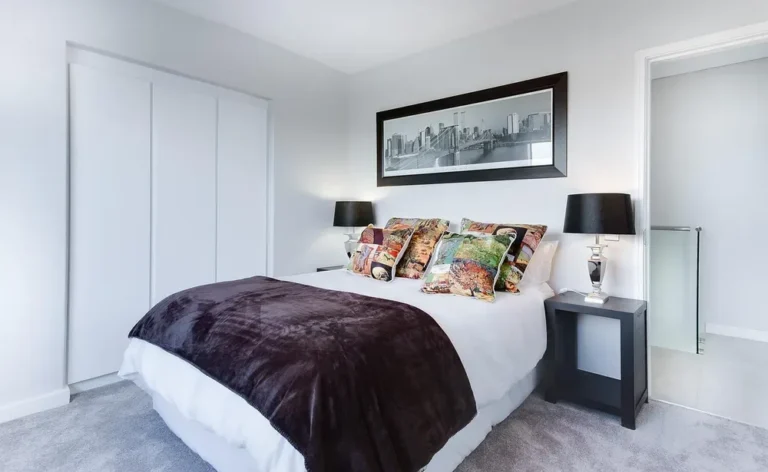
Oversized art is the best default for most wide blank bedroom walls because one large piece solves scale fast. It anchors the room, cuts visual clutter, and gives the bed a clear focal point without requiring a complex layout.
This is often the cleanest answer when the wall is long and the furniture below it is simple.
When a single piece should anchor the room
Use one large piece when the wall is wider than the bed by a noticeable margin, or when the bed area feels too scattered. Oversized art works well above a low headboard, on a broad wall opposite windows, or on any surface that needs a strong center point.
It is also a good choice if you want fewer holes in the wall. One frame means less measuring and less chance of alignment errors.
How to keep it proportional to the bed
A large piece should still feel tied to the bed. Keep the width near the bed width, or slightly wider, rather than choosing something tiny just because the room is large.
High ceilings can take more vertical height, but the bottom edge should still sit in the bedroom’s main sightline, not near the ceiling.
Gallery wall: best for mixed frames and flexible layouts
A gallery wall works best when you want variety, but it needs planning. Mixed frame sizes can add interest, yet the whole arrangement should still read as one unit through a unifying color palette and measured spacing.
This is a layout choice, not a random collection of frames.
Choose a unifying color palette
Pick one linking element, such as black frames, warm wood, soft neutrals, or a repeated color drawn from bedding or a rug. Without that link, mixed frames can look scattered rather than curated.
Calm bedrooms usually benefit from lower contrast. If the room already has strong bedding patterns, keep the wall art quieter.
Plan spacing before you hang anything
Lay the arrangement on the floor or map it with paper first. Keep gaps between frames consistent so the eye reads the layout as a single composition.
A gallery wall fails most often when the pieces are individually fine but too far apart, too high, or centered without regard to the bed below.
Framed prints: best for budget-friendly swaps
Framed prints are a practical choice because they come in standard sizes and are easy to swap seasonally. They usually cost less than originals and let you change color, subject, or mood without replacing the entire wall plan.
That makes them especially useful when the bedroom palette may shift over time.
Why standard sizes make planning easier
Common sizes such as 8×10, 11×14, 16×20, 18×24, and 24×36 often fit many ready-made frames. That lowers cost and makes replacement simpler if you rearrange the room later.
Standard sizing also helps with symmetry above the bed. You can repeat the same frame width on both sides of a focal point and keep the line clean.
When to use glass versus lighter frame materials
Glass-framed prints work well in rooms with controlled light and a secure hanging surface. In very bright rooms, glass can catch reflections from windows or lamps.
For renters or for walls that should feel lighter, choose slimmer frames or acrylic fronts when available. They reduce weight and are easier to hang with less hardware.
Canvas art: best for minimalist and modern bedrooms
Canvas art suits minimalist and modern bedrooms because the frameless look keeps the wall lighter. It avoids the visual weight of glass and a thick frame, which can matter in smaller rooms or on walls that already have a strong architectural line.
It is a straightforward way to get a large surface without adding extra visual edges.
Where canvas works better than glass-framed art
Canvas is often the better choice above the bed when glare would be a problem or when you want a softer read. It also works well on wide walls where a framed piece might feel too formal.
If the room is compact, a single canvas can give scale without making the wall feel busy.
How to pair canvas with bedroom decor
Use canvas art that echoes bedding tones, wood furniture, or rug color. Low-contrast imagery calms the wall, while stronger contrast can make the bed area feel more deliberate and graphic.
A common first-timer mistake is choosing a canvas that is visually strong but physically too small. The image may be attractive, yet it still gets swallowed by the wall.
Textile wall hanging: best for softness and renter-friendly rooms
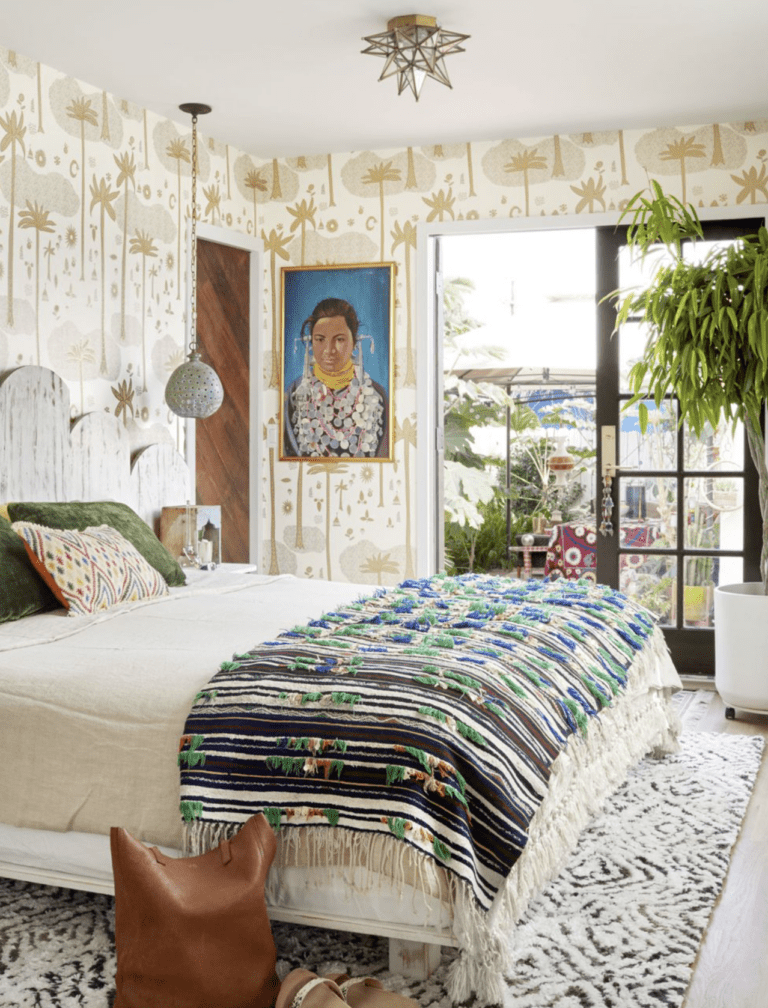
Textile wall hanging adds softness and texture without hard edges, which makes it useful in boho, cozy, and renter-friendly bedrooms. It can also reduce the visual contrast of a hard wall, especially when the rest of the room already has straight lines and smooth finishes.
Fabric changes the feel of the wall more gently than glass or metal.
How fabric adds texture without hard edges
Macrame, woven panels, and textile hangings create depth through material rather than frame shape. That makes them useful when the bedroom needs warmth more than another sharp rectangle.
Because they are lighter than many framed pieces, they can also be easier to hang with removable hardware.
Where it works best above the bed or on a side wall
Above the bed, textile art should still respect the bed width and not crowd the headboard. On a side wall, it can soften a blank stretch without competing with the main focal zone.
If the room is already busy, use textile art as the only soft-edged element so the wall does not start to feel cluttered.
Mirror wall decor: best for small or low-light bedrooms
Mirror wall decor is useful when a bedroom needs more bounce from natural or artificial light, or when the room feels visually tight. Mirrors can make a small room read larger because they reflect the space back to the eye.
The tradeoff is placement. A mirror placed badly can throw glare from a window or lamp right into the bed area.
How mirrors bounce light and open up the room
A mirror can brighten a dim corner and extend the sense of depth. Round mirrors soften a room with many right angles, while rectangular mirrors can echo the shape of headboards or dressers.
For low-light rooms, place the mirror where it can catch daylight without facing a direct hotspot.
How to place them without glare
Do not hang a mirror straight across from a strong window if it will reflect harsh sun. Also avoid positions that bounce a bedside lamp directly into your line of sight.
If the room has a narrow bed wall, a single mirror can act as the focal point. If the wall is broad, a mirror may need help from art or furniture so it does not feel isolated.
Sculptural wall decor: best for adding depth as an accent
Sculptural wall decor adds dimension beyond flat art. Metal, wood, and ceramic forms can break up a plain wall, but they work best as accents rather than as the entire plan for a large bedroom wall.
Too many objects can make the wall feel crowded very quickly.
Metal, wood, and ceramic options
Metal pieces add crisp shape and often fit modern rooms. Wood brings warmth and can bridge the gap between furniture and wall. Ceramic or mixed-material pieces add depth, but they need space so the forms are readable.
Choose one material family and repeat it sparingly if you want the wall to stay calm.
Why this works best in small doses
Sculptural decor is strongest when it punctuates a larger arrangement, such as a single piece over the bed or a narrow section beside a mirror. It is less effective when used to cover every open inch.
Think accent, not filling strategy.
How do you make bedroom wall art look cohesive with your decor?
Make bedroom wall art feel cohesive by tying it to one or two existing room colors, usually from the bedding, rug, or headboard. Calm bedrooms usually work best with low-contrast palettes, while higher-contrast art creates a stronger focal point and more visual energy.
Style matters, but color logic matters first.
Match the art to bedding or rug tones
If the bedding is pale and the rug has warm neutrals, choose art that repeats those tones. If the room uses deep colors, echo one of them rather than introducing a totally separate palette.
This simple link keeps the wall from feeling disconnected from the rest of the room.
Use contrast on purpose
High-contrast art can be the right move if the bed wall feels bland. It draws attention to the sleeping area and gives the room a clear center.
For a calmer result, let the wall art sit close to the room’s main color family instead of fighting it.
How high should bedroom wall art hang?
Bedroom wall art should usually hang low enough to relate to the headboard, not so high that it drifts toward the ceiling. A common rule of thumb is to leave about 6 to 8 inches between the top of the headboard and the bottom of the art.
That spacing keeps the bed and art reading as one composition.
Follow the headboard, not the ceiling
The ceiling should not be your main guide unless the wall is very tall and the bed is low. Headboard-adjacent styling works best when the art sits close enough to feel attached to the bed zone.
If there is no headboard, use the top of the mattress area as your visual base and keep the art centered above that line.
Avoid the two most common height mistakes
Art hung too high looks detached and can make the bed wall feel unfinished. Art hung too low can crowd the pillow zone and make the wall feel heavy.
Picture the wall as one vertical field. The art should live in the same zone as the bed, not fight it.
How can you decorate a bedroom wall on a budget?
Budget-friendly bedroom wall decor usually comes from standard sizes, lighter materials, and layouts that do not require many large pieces. Framed prints, canvas, and removable decals are often the easiest ways to cover a blank wall without overspending.
Budget does not have to mean generic. It means choosing formats that are easy to size and easy to replace.
Choose formats that reduce framing costs
Standard-size framed prints lower the cost of both art and frame selection. Canvas can also be economical because it does not need glass or a second matting layer.
Removable decals work best for renters or temporary setups, especially when you want color or pattern without committing to a full wall system.
Use one strong piece instead of many small ones
One well-sized piece often costs less than building a full gallery wall, and it usually looks cleaner. That is especially true on very wide walls where small items would need too much repetition to fill the space.
If the budget is tight, start with one focal piece and add only if the wall still feels sparse.
Which one should you buy?
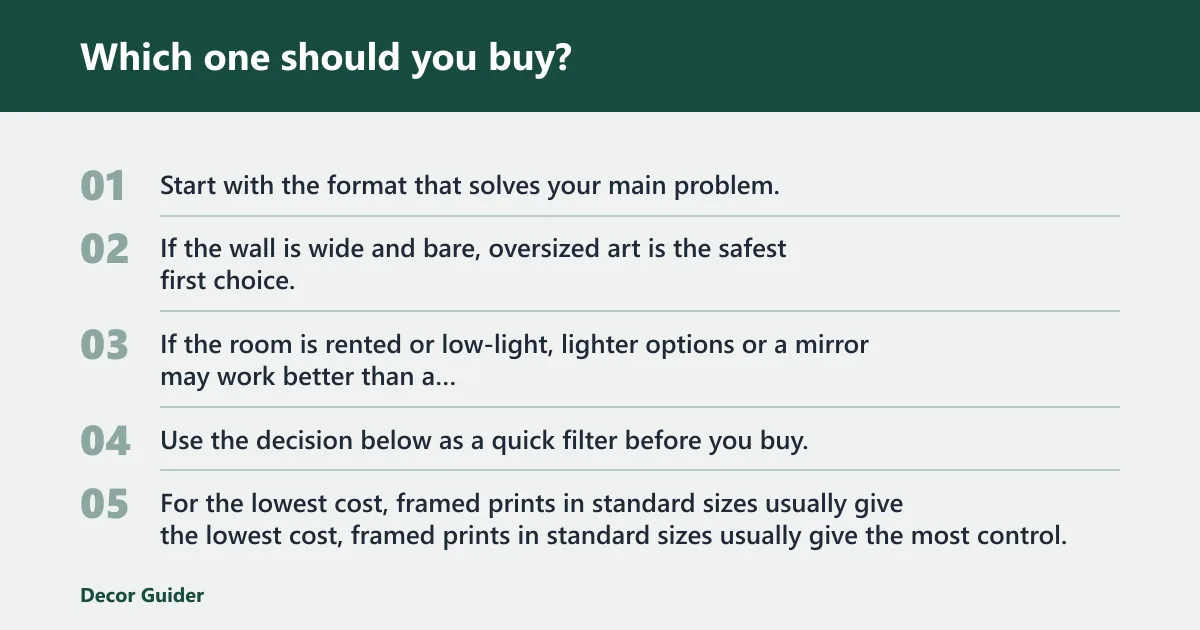
Start with the format that solves your main problem. If the wall is wide and bare, oversized art is the safest first choice. If the room is rented or low-light, lighter options or a mirror may work better than a heavy framed piece.
Use the decision below as a quick filter before you buy.
Best choice by budget
For the lowest cost, framed prints in standard sizes usually give the most control. If you want a temporary solution, the wondever boho flower wall decals are the cheapest route, but they work more like wall pattern than true focal art.
If you want a single finished look without a lot of planning, a canvas or textile piece is often the simpler midrange option.
Best choice for renters
For renters, the safest choices are lightweight canvas, textile wall hanging, removable decals, or a lighter frame with command strips if the weight allows it. The Achart macrame wall hanging fits this use well because it adds texture and keeps the wall soft.
Heavier frames and mirrors need more care, and some walls will still require anchors or approved hardware.
Best choice for calm bedrooms
For a calm bedroom, choose low-contrast art that echoes bedding, rug, or headboard tones. The mxart framed sage green abstract print is a strong fit if you want color without a loud jump in contrast.
Quiet rooms usually read best when the wall art feels connected to the rest of the palette.
Best choice for wide empty walls
For a wide empty wall, oversized art is still the cleanest solution. If you need a lighter-scale layout with more flexibility, a planned gallery wall can work, but it should stay unified and should not spread too loosely across the wall.
A single large piece usually fixes scale faster than multiple small ones.
Best choice for low-light rooms
For low-light rooms, a mirror can help bounce available light, and a light canvas can keep the wall from feeling heavy. The Easly 36-inch round mirror is useful here if you can place it to avoid lamp glare and direct window reflection.
If glare is already a problem, skip glass-heavy art and choose matte surfaces instead.
Frequently asked questions
What are the best bedroom wall art ideas for a blank wall?
The strongest ideas are oversized art, a planned gallery wall, framed prints, canvas, textile hangings, mirrors, and sculptural accents. The best choice depends on wall width, bed width, light, and whether you need renter-friendly hanging. Scale matters more than style. A good format should fill the wall without swallowing the bed.
How do I choose wall art size above a bed?
Use the bed or headboard width as your starting point, then aim for art that is roughly two-thirds to three-quarters that width. Keep the piece tied to the furniture below it and leave visible side clearance. Low ceilings favor wider, lower compositions. Tall headboards can handle more vertical presence, but not a high float near the ceiling.
What can I put on a large blank bedroom wall besides framed art?
Use a textile wall hanging, mirror, sculptural decor, removable decals, or a large canvas if framed glass feels too heavy. These options help when the wall needs softness, light bounce, or a less formal look. They also work well when you want to keep the room from feeling overloaded with rectangles and reflective surfaces.
How high should bedroom wall art hang?
Most bedroom art should hang about 6 to 8 inches above the headboard, or in the same visual zone if there is no headboard. That spacing keeps the wall art connected to the bed instead of floating too high. Too much height makes the room feel disjointed. Too little makes the bed area feel cramped.
How do I make bedroom wall art look cohesive with my decor?
Repeat a color from your bedding, rug, or headboard so the wall art feels connected to the rest of the room. Calm bedrooms usually do better with low-contrast palettes, while stronger contrast creates a clearer focal point. Frame color, material, and finish matter too. Keep the wall art in the same mood as the room, not just the same color family.
How can I decorate a bedroom wall on a budget?
Pick standard-size framed prints, lightweight canvas, or removable decals instead of custom work. Those formats are easier to source and easier to replace later. If the wall is large, one properly sized piece often looks better than many cheap small pieces. Budget decorating works best when you spend on scale first, then add detail only if the wall still feels sparse.
Products related to this article
Sponsored / affiliate links. As an Amazon Associate I earn from qualifying purchases. I may earn additional commission from eligible campaigns.