Bedroom Accent Wall Problems / Troubleshooting
Fix a bedroom accent wall by finding the main fault first, whether that is color imbalance, scale mismatch, placement, or surface damage, then make the smallest correction that solves that one problem. Leave the issue alone, and the wall can make the whole room feel cramped, unfinished, or cheap. This guide helps you diagnose common accent-wall problems and choose the least invasive fix for each one.
Why the accent wall looks wrong


A bedroom accent wall usually looks wrong for one of three reasons: it sits on the wrong wall, it fights the room’s sightline, or its scale clashes with the bed and other furniture. The fix is rarely to add more color or pattern. Start by checking where your eye lands first, then check whether the wall has enough visual support from the rest of the room.
Wrong wall placement and sightline issues
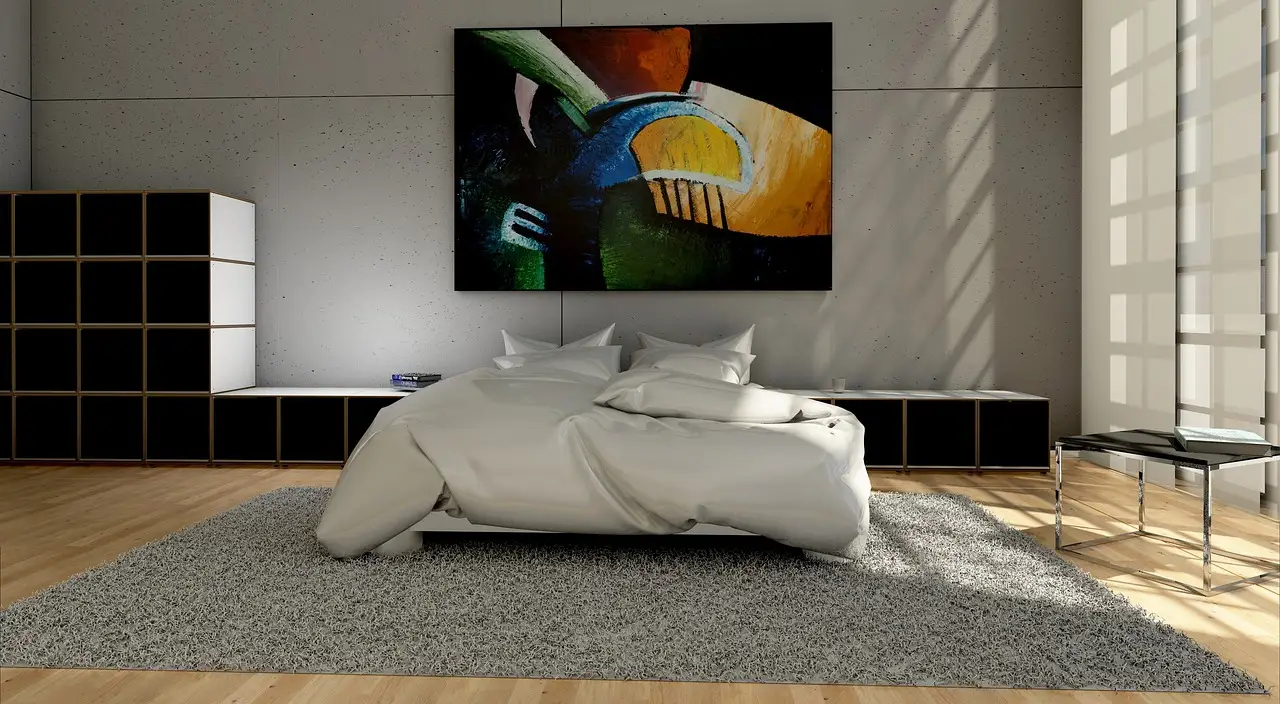
The best bedroom accent wall is often behind the bed because that wall usually reads as the room’s main focal point and gives the bed a clear anchor. If the chosen wall sits off to the side, gets blocked by the door, or competes with a window wall, it can feel accidental instead of intentional.
The wall opposite the doorway can work well when it is the first surface you see on entry. Partial accent walls and nook-based options also make sense in awkward rooms, especially if the full wall is interrupted by closets or built-ins. The wall should match the room’s natural line of sight, not fight it.
Low light, ceiling height, and room size
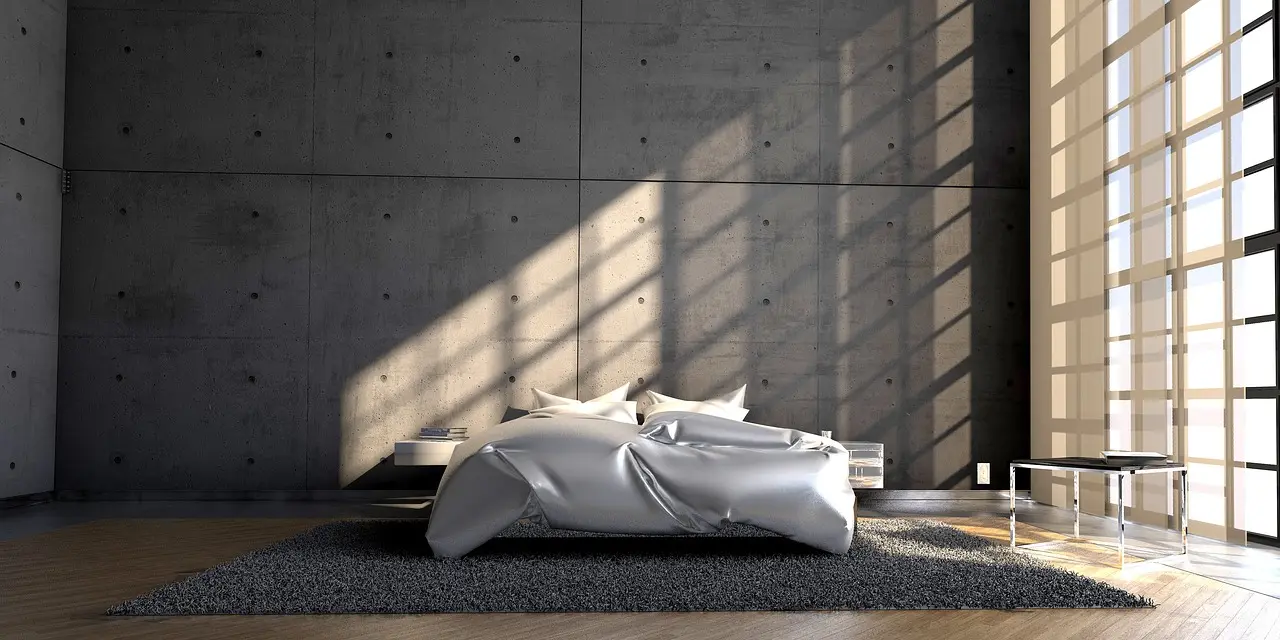
Dark paint, heavy wallpaper, and dense paneling can feel like more than a bedroom can support when the room has little natural light or a low ceiling. In a small room, a dark accent wall can pull the eye inward and make the space feel smaller or the ceiling feel lower. If the wall is already close to the bed, the effect gets stronger.
Light changes the result more than most people expect. A moody color that looks calm in daylight can look much heavier at night under warm bulbs, so the wall may need brighter lamps, a lighter ceiling, or a softer finish rather than a full redo.
Furniture scale and architectural conflicts
Oversized headboards, tall wardrobes, and bulky nightstands can crowd an accent wall until the color block loses shape. Architectural features matter too. A fireplace, radiator, alcove, or sloped ceiling can cut the wall into pieces and make the design read as unresolved.
If the wall must hold too many visual jobs, reduce its complexity. A simpler color, a smaller painted zone, or a wallcovering with less contrast often fixes the issue faster than a new design.
Bedroom accent wall placement
Pick the wall that best matches the bed, the doorway, and the room’s sightline. Behind the bed is the most common choice because it tends to anchor the room cleanly, but it is not the only valid one. Opposite the doorway, a partial wall, or a niche can work better when the bedroom layout is irregular.
How to choose the best wall
- Stand at the doorway. Note which wall your eye lands on first and which surfaces are broken by windows, closets, or built-ins. The best candidate usually reads as one clear plane with the least interruption.
- Check the bed relationship. If the bed floats elsewhere, the wall behind it still usually makes the cleanest focal point. If the bed is under a window or off-center, the opposite wall may be the better anchor.
- Test the room’s balance. Imagine how the headboard, curtains, rug, and nightstands will sit against the color or pattern. Choose the wall that lets the rest of the room stay quiet.
Say your room has a queen bed centered on the long wall, but a closet door cuts into the opposite wall and a dresser sits under a window. The wall behind the bed is still the cleanest option because it gives you one uninterrupted surface and avoids awkward break points.
If the bed has to sit on a short wall because the room is narrow, a partial accent wall that extends just wider than the headboard can feel more balanced than painting the entire short wall and making the room feel compressed. That approach can also help with small-room compression when the room needs a focal point without adding more visual width.
Bedroom accent wall problems matrix
Use this matrix to identify the failure first, then choose the smallest fix that solves it. That order matters. Many accent walls do not need removal; they need a better boundary, a softer color, a repair to the surface itself, or a cleaner placement decision.
| Symptom | Likely cause | Fastest fix | Permanent fix | When to replace |
|---|---|---|---|---|
| Wall feels too dark | Paint or wallpaper absorbs too much light, or the finish is too matte for the room’s lighting | Add brighter bulbs, lighter bedding, and a lighter rug; aim light at the wall instead of only the ceiling | Repaint in a mid-tone with more reflection, or use a softer sheen that bounces more light | Replace if the room has no usable natural light and the wall still reads heavy after lighting and textiles are adjusted |
| Wall makes the room feel smaller | High-contrast color on a short wall, low ceiling, or wall that is too visually dominant for the room | Soften with trim color, mirrors, or lighter nearby textiles; reduce contrast around the bed | Shift to a lighter or lower-contrast accent wall, or narrow the painted zone to match the bed | Replace if the wall is the only strong visual element and the room still feels compressed |
| Accent wall looks off-center | Wrong wall chosen relative to doorway, bed, or other focal points | Recenter the bed and align art or lighting to the wall you already have | Move the accent to the wall behind the bed or the sightline wall that reads first on entry | Replace if the placement cannot be corrected without major furniture changes |
| Wallpaper bubbles | Trapped air, poor paste coverage, or uneven prep on the drywall or primer layer | Press flat with a smoothing tool and re-adhere lifted edges; keep the repair localized | Reinstall with proper wall prep, seam rolling, and cleaner panel alignment | Replace if bubbles keep returning after repair or the surface is failing in multiple places |
| Wallpaper peels at seams | Weak adhesive, dusty wall surface, or seams that were not pressed tightly enough | Re-glue seams and clean the wall edge before pressing it back down | Strip, prep, and reinstall with better adhesion and cleaner edge work | Replace if the backing has stretched, the seams will not stay closed, or the peel is spreading |
| Visible wallpaper seams | Pattern misalignment, poor trimming, or mismatch in the repeat across panels | Accept the seam line in a lower-traffic area or shift decor away from it | Rehang with careful pattern matching and a clearer starting point | Replace if the seam breaks the main sightline or interrupts the pattern across the bed wall |
| Wall clashes with headboard | Competing shapes, colors, finishes, or undertones | Swap bedding or add a neutral headboard layer to bridge the contrast | Change the wall color to a better match or simplify the wall finish | Replace if the headboard and wall still fight after the soft furnishings are adjusted |
| Pattern feels too busy | Scale is too small for the room, or the repeat is too active from bed level | Use plain bedding and minimal art so the wall is not competing with everything else | Choose a larger-scale or calmer pattern with more open space between elements | Replace if the pattern still feels restless when viewed from the bed and doorway |
| Paint looks patchy | Uneven primer, thin coats, roller overlap, or color mismatch | Add a full second coat after drying, keeping the direction and overlap consistent | Sand, prime, and repaint uniformly so the finish reads as one surface | Replace if the surface has been overworked and still flashes or shows uneven absorption |
| Paneling looks awkward | Spacing, height, or proportion does not fit the wall dimensions | Paint the paneling the same tone as the wall so the seams recede | Rebuild the layout to fit the wall dimensions and the bed placement | Replace if the pattern makes the wall look chopped up or emphasizes the wrong proportions |
| Clutter makes the wall feel crowded | Too many decor items, mixed finishes, or competing shapes around a strong feature wall | Remove extra art, shelves, or mixed finishes; keep the surrounding surfaces quieter | Keep the wall and simplify everything around it so the focal point can breathe | Replace if the wall only works when the room is nearly empty |
| Wall detail hides badly lit corners | Texture or color turns dim areas into visual dead space | Add directional lighting or lighter trim to pull the corner back into the room | Switch to a softer finish or lighter material that reads more evenly in day and night light | Replace if the corner remains visually dead even after the lighting and trim are corrected |
Why does the color feel too dark or too bold?
Deep paint colors can work well, but they need enough light and enough balance around them. If the wall feels too dark or too bold, the issue is usually not the hue alone. It is the combination of wall placement, lighting, and how much visual weight the rest of the room carries.
Deep paint colors and room balance
Black, red, green, blue, and purple can all create strong impact on an accent wall, especially when the surrounding neutrals stay balanced. A dark wall is easier to read when the bedding, curtains, and rug stay lighter or quieter. If every large surface competes, the room can feel heavy.
A two-tone or color-blocking treatment can reduce that effect. Even a simple horizontal break can make a bold color feel more controlled, especially when it lines up with the top of the headboard or another clear visual edge.
How lighting changes the result
Lighting changes both color and depth. One bulb can sometimes make a moody wall feel muddy; two lamps placed at different heights can make the same wall feel deliberate. If the room is dim, aim light across the wall rather than only at the ceiling.
A common first-timer mistake is choosing a deep blue in a north-facing bedroom and then judging it only at night. The wall may look nearly black after sunset. In that case, the best fix may be brighter bulbs, a softer finish, or a repaint to a lighter value rather than a new layout.
Softening the wall without repainting everything
- Add lighter textiles. Use bedding, curtains, or a rug with more light value so the wall has something to balance against. Keep the rest of the palette coordinated with one or two tones from the wall.
- Reduce nearby contrast. Remove high-contrast art, black frames, or dark side tables that make the wall feel even heavier. Fewer competing dark objects can change the room quickly.
- Use reflective accents. A mirror, glass lamp base, or a slightly glossier finish can bounce more light toward the wall. This works best when the accent wall is otherwise sound and only needs softening.
Why is the wallpaper bubbling, peeling, or showing seams?
Wallpaper problems usually point to adhesion, prep, or alignment issues rather than the pattern itself. If the wall bubbles, peels, or shows seams, fix the substrate first. A smoother wall and better edge work often solve more than a new roll of paper.
Adhesion and surface prep problems
Bubbling often comes from trapped air or paste that never bonded fully to the wall. Peeling usually points to dust, residue, or poor edge prep. If the wall was painted recently, the finish may also be too slick for the adhesive to hold.
Repair what is loose, then let the area dry fully before you judge it again. Peel-and-stick wallpaper usually needs the lifted section pressed back down on a clean, smooth wall. Paste-the-wall paper may need edge adhesive or a careful re-smoothing of the lifted seam. Traditional pasted paper often needs the loose area re-pasted before it can be pressed flat again. For renter-safe projects, temporary wallpaper can work well when the wall is smooth and the seams are carefully pressed.
Pattern scale and alignment mistakes
Large repeats can overwhelm a small bedroom, while tiny patterns can look busy from bed level. If the pattern scale is wrong, the wall may feel crowded even when the paper is perfectly installed. Alignment errors make that problem worse because the eye keeps catching on the mismatch.
When the pattern is the issue, choose one with more open space or less contrast. That change often matters more than switching from wallpaper to paint.
When to repair versus replace
Repair is worth trying when the problem is limited to one seam, one bubble, or one corner. Replace the wallcovering if the adhesive has failed across multiple panels, the paper has stretched, or the pattern is impossible to realign cleanly. A patch that never blends will keep drawing attention.
How do you fix clashes with the bed and decor?
Clashes usually happen when the wall is doing one visual job and the furniture is doing another. The quickest fix is to make the headboard, bedding, curtains, and rug feel like they belong to the same room. You do not need perfect matching. You do need related values and finishes.
Headboard and bedding mismatch
If the headboard is ornate and the wall is patterned, the room may feel busy before you add anything else. If the headboard is dark and the wall is dark too, the bed can disappear. Use bedding to bridge the gap with a color pulled from the wall or a neutral that softens it.
For bold walls, keep the headboard shape simple and the bedding mostly calm. For quieter walls, a more detailed headboard can carry some of the visual interest.
Curtains, rug, and finish coordination
Match or coordinate the large soft surfaces first. Curtains should not fight the wall color, and the rug should either echo the wall’s undertone or stay neutral enough to step back. If the wall is textured, keep nearby finishes less shiny so the room does not feel fragmented.
Lighting also matters here. Directional lamps can pull out the texture of wood, paneling, or stone, while a washed-out ceiling light can flatten everything. Paneling can also cover uneven walls, which makes it useful when the wall itself needs a practical correction rather than a purely decorative one.
Keeping the rest of the room visually calm
A bold accent wall usually needs fewer competing objects. That does not mean the room should feel empty. It means the other surfaces should stop shouting. One or two framed pieces, simple nightstands, and a controlled palette usually work better than many small accessories.
Materials that create texture without more clutter
Some accent walls fail because they add pattern without adding structure. Texture can solve that, especially when the room needs warmth, disguise, or a better surface. Paneling can cover uneven walls, and stone can add a durable finish that works well when the room needs stronger texture without extra clutter.
Painted blocks, two-tone walls, and stencils
Paint is the simplest method, and it is also the easiest to correct. Solid color blocks, two-tone bands, geometric masking with FrogTape, hand-painted shapes, and ombré effects all let you adjust the visual weight without rebuilding the wall. They work best when the edge lines are clean and tied to furniture height.
Wallpaper, murals, and textured wallcoverings
Wallpaper adds pattern and personality, but it should be chosen for the room scale and installation quality. Patterned wallpaper, mural-style wallpaper, and textured wallcovering all work behind the bed when the room can support them. If the wall is already busy, choose a design with more breathing room between elements.
Wood paneling, shiplap, brick, and stone
Wood paneling and shiplap add architectural interest and warmth. Exposed brick gives strong texture, while marble, terracotta, and slate bring a different stone character. These options help when you need to cover uneven walls, add durability, or create a stronger focal point than paint alone.
Paneling can cover uneven walls. Stone can transform a bedroom when the room needs stronger texture without extra clutter.
When to remove or change a bedroom accent wall
Change or remove the wall when the problem is structural, not cosmetic. If the wall keeps reading as dark, misplaced, broken up, or out of sync with the room after small fixes, the design is working against the space. A good accent wall should clarify the bedroom, not force you to keep compensating for it.
Decision checklist
- Persistent darkness: The wall still feels heavy after better lighting, lighter textiles, and a softer finish.
- Wrong focal wall: The wall is not the first surface your eye lands on, or the bed belongs on a different wall.
- Repeated wallpaper failure: Bubbles, peeling, or seam issues keep returning after repair.
- Layout conflict: Doors, windows, closets, or sloped ceilings keep breaking the wall into awkward sections.
- Decor incompatibility: The wall only works when the room is stripped down or when the bed, curtains, and rug are replaced around it.
- Maintenance burden: The material is harder to keep clean or repaired than the room needs.
Smallest-change options before removal
Before you tear anything out, reduce contrast, soften the surrounding finishes, or narrow the accent area to the headboard width. If the material is the issue, repair only the failed sections. If the placement is the issue, shift the focal point instead of adding more decor to cover the mistake.
Frequently asked questions
Why does my bedroom accent wall look wrong?
It usually looks wrong because the wall choice, color value, or scale does not match the room’s sightline and furniture. A wall can be technically well painted and still feel off if it sits behind the wrong piece, fights the doorway, or overwhelms low light.
How do I fix an accent wall that makes the room feel smaller?
Use a lighter or lower-contrast color, reduce nearby clutter, and strengthen the room’s other large surfaces with calmer textiles. If the wall is very dark, raising the light level and simplifying the decor often helps more than changing every item in the room.
What wall should be the accent wall in a bedroom?
The wall behind the bed is the most common choice because it usually reads as the main focal point. If that wall is broken by doors or windows, the wall opposite the doorway or a partial niche can work better.
Should a bedroom accent wall go behind the bed?
Often, yes. It is usually the cleanest choice because the bed gives the wall a built-in anchor. Still, the best placement depends on the room layout, especially in narrow bedrooms, rooms with sloped ceilings, or spaces with awkward built-ins.
How do I stop an accent wall from looking too dark?
Add more light to the wall, not just the ceiling, and balance it with lighter bedding, curtains, or a rug. If the room is very dim, a softer color or more reflective finish may be necessary. Some deep hues simply need more surrounding light.
Can I fix an accent wall without repainting the whole room?
Yes. You can soften the wall with bedding, lighting, mirrors, or a lighter rug, and you can repair wallpaper seams or small paint flaws without starting over. Temporary wallpaper and other renter-safe options also allow correction without full repainting where permitted.
Products related to this article
Sponsored / affiliate links. As an Amazon Associate I earn from qualifying purchases. I may earn additional commission from eligible campaigns.