Bedroom Furniture Sizing Problems: Troubleshooting
Bedroom furniture sizing problems usually come from missing clearances: keep a practical walkway of about 24 inches where you just need to pass through, and aim for 36 inches where doors or drawers need to open fully. The 36-inch figure aligns with accessibility guidance for an unobstructed route from the U.S. Access Board and ADA standards for accessible routes. If those numbers do not work, the room will feel cramped and everyday access will suffer.
Bedroom sizing diagnostic table

Use this table first. It ties the symptom to the most likely sizing failure, then points you to a quick check and a practical fix.
| Problem symptom | Likely cause | Quick measurement to check | Acceptable target range | Recommended fix |
|---|---|---|---|---|
| Bed blocks the room or sits too close to walls | Bed frame is too large for the room or placed off-center | Measure walk paths on both sides and at the foot of the bed | At least 24 inches for main walkways; 36 inches where doors or drawers open fully, consistent with accessible-route guidance from the U.S. Access Board and ADA standards | Swap to a smaller bed size, pull the bed away from one wall, or remove a secondary piece |
| Nightstand feels too tall or too low | Mismatched height relative to the mattress | Measure from floor to mattress top and compare to the table top | Nightstand top should land roughly level with the mattress top or within a few inches | Raise, lower, or replace the stand; use a floating shelf if floor space is tight |
| Nightstand feels cramped beside the bed | Width is too large for the bedside gap | Measure the clear space between bed frame and wall or adjacent furniture | Enough room to walk, reach outlets, and open any drawer on the stand without clipping the bed frame | Choose a narrower stand, switch to one drawer, or use wall-mounted storage |
| Dresser blocks circulation or door swing | Dresser depth or width is too large for the room | Measure from dresser face to the nearest traffic path, door, or closet | Keep about 24 inches for circulation and 36 inches where a door or drawer must open fully; compare against accessible-route guidance from the U.S. Access Board and the ADA | Move the dresser to a longer wall, lower the width, or replace it with a chest |
| Bed wall looks empty while dresser dominates | The dresser is visually heavier than the bed support pieces | Compare the bed’s apparent mass with the dresser’s width and height | The bed should remain the room’s clearest focal point, with secondary pieces staying lighter and simpler | Reduce dresser bulk, add a larger headboard, or shift decorative weight to the bed wall |
| Bench jams the foot of the bed | Bench is too deep for the remaining clearance | Measure from bed foot to the next obstruction | Keep enough room for safe passage and easy linen changes | Use a narrower bench, an open-frame seat, or remove it entirely |
| Room feels crowded after adding storage | Too many secondary pieces compete with the bed | Count the number of large furniture masses in view from the doorway | Bed and built-ins should dominate; secondary pieces should stay visually lighter than the main sleeping zone | Remove one storage piece, simplify the bedside setup, or choose lighter finishes |
How do you know if furniture is too big?
Furniture is too big when it causes a clearance failure, a proportion problem, or both. If you cannot move freely, open drawers, or reach the bed without turning sideways, the room fit is wrong even if the furniture seems to match the style.
Visual crowding versus true fit problems
Visual crowding means the room feels heavy because one piece takes too much attention. True fit problems happen when the bed, dresser, or bench breaks circulation, blocks outlets, or interferes with doors and drawers. A room can look busy for purely visual reasons, but the fix changes if the furniture also fails the tape measure.
The bed is the main furniture piece. A queen or king frame often reads larger because it has more physical presence, especially with a wide headboard or thick base. A twin can still feel oversized if it sits wall-to-wall in a narrow room or leaves no bedside access.
When one oversized piece is the real issue
Sometimes only one item needs to change. If your king bed fits the room but a deep dresser leaves too little passage at the foot of the bed, keep the bed and replace the dresser. The dresser is the actual bottleneck, so that is the first piece to troubleshoot.
- Measure the room’s main walk paths first.
- Check whether doors, drawers, and closet fronts can open fully.
- Identify the piece that breaks the route, not the one that merely looks large.
- Replace or relocate that item before changing the whole room.
What size should nightstands be?
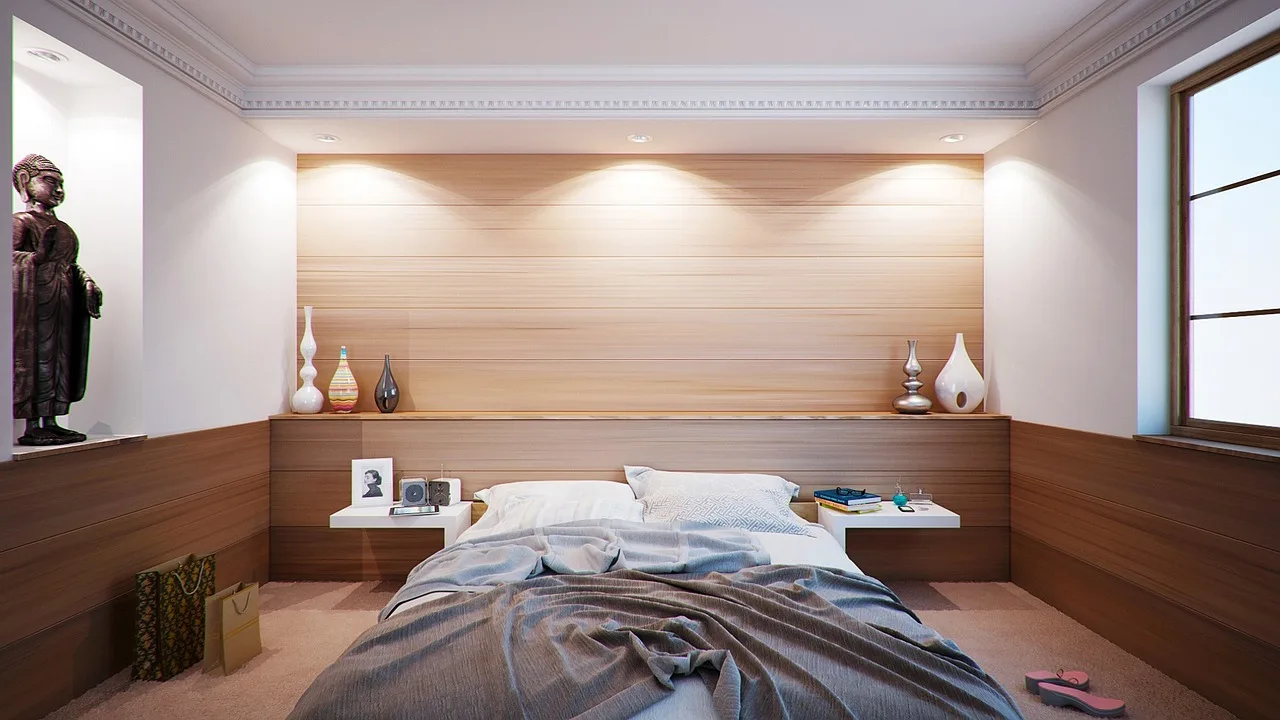
Nightstands should relate to the mattress, not compete with it. Start with height, then width, then storage. Aim for a tabletop that lands roughly level with the mattress top or a few inches above or below it, with enough width for a lamp, a book, and bedside access without crowding the bed opening.
Height relative to the mattress
Nightstand height should be close to mattress height, usually within a few inches. That keeps the top within easy reach for a lamp, water, or phone while you are in bed. If the table is much lower, it feels awkward to use. If it is much higher, it can be uncomfortable and visually out of step with the bed.
Width clearance beside the bed
Width matters as much as height. A wide nightstand can squeeze the room beside the bed, especially in small bedrooms where the bed sits close to a wall. Leave enough room to walk, reach outlets, and open any drawer on the stand. For tighter rooms, choose a narrower case piece or a wall shelf.
Paired stands do not have to match exactly. Mismatched sizing can work if the larger piece is on the more open side of the room and the smaller piece sits where clearance is tight. A floating shelf or wall-mounted ledge is often the best answer when floor space is the main problem.
Storage capacity versus visual bulk
Use storage only where you need it. One drawer and an open shelf often solve bedside clutter without adding much mass. If the room already feels heavy, a bulky cabinet-style nightstand can make the bed wall feel compressed. Slimmer tops and simpler fronts usually help.
Picture a bedroom with a queen bed and two nightstands that are nearly as deep as the mattress is thick. The bed may still fit, but the side access disappears. Swapping both stands for slimmer pieces restores circulation without changing the bed size.
Bed and headboard proportions
The bed should anchor the room, and the headboard should support that role. A queen, king, or twin frame changes how much presence the bed carries, while the headboard height changes how strongly the bed reads as the focal point. Wall placement matters too.
Queen, king, and twin visual weight
Instead of chasing a ratio, check whether the bed is still the dominant sleeping zone in the room. A king frame usually needs fewer bulky companions to stay visually clear, while a twin can look undersized in a large room unless the headboard, bedding, or adjacent furniture adds enough presence. The same bed size can feel right or wrong depending on wall length and ceiling height.
Headboard height in low-ceiling rooms
Headboard height is easiest to judge by the wall around it. In low-ceiling rooms, a lower or medium-height headboard usually avoids crowding the vertical space, while a very tall one can make the room feel compressed. In rooms with sloped walls, keep the tallest point where the ceiling has the most headroom.
Upholstered headboards usually read softer and fuller. Frame-style headboards feel lighter and can suit small rooms better when the wall already carries a lot of visual weight. If the ceiling is low, avoid a headboard that rises so high it competes with the room’s vertical space.
Wall placement and focal point balance
The bed should usually sit on the longest uninterrupted wall, with enough room on both sides if possible. Centering the bed helps the room read as intentional. If one side must sit close to a wall or alcove, balance the room with a lighter nightstand or a wall sconce on the open side.
How much clearance does a bedroom need?

Clearance is the first thing to check when a room feels tight. A bedroom can have beautiful furniture and still fail if you cannot move through it without squeezing past edges, drawers, or door swings. Measure the route, not just the furniture footprint. For accessibility references, the U.S. Access Board and ADA standards use 36 inches for an accessible route and 60 inches for a turning space where needed.
Walking space around the bed
Keep at least 24 inches for main walkways in everyday bedroom use, and aim for 36 inches where the path also serves a door, drawer, or closet front. The 36-inch figure aligns with the accessible-route guidance used by the ADA and the U.S. Access Board. If the room cannot reach those numbers, reduce furniture depth, shift the bed slightly, or remove one side table.
Door swing and drawer pull clearance
Measure how far the bedroom door opens and whether dresser drawers can extend fully without striking the bed, a wall, or another piece. A dresser that works on paper can fail in real use if the drawer fronts hit the bed frame before they are fully open. If needed, compare the layout to the ADA’s 60-inch turning-space standard and 36-inch route guidance for tighter circulation areas.
Also check outlet access. A bedside table that blocks the plug or makes cords cross a walkway creates a daily nuisance, even when the furniture technically fits. Move the bed a few inches or switch to a narrower nightstand if the outlet becomes hard to reach.
Small-room minimums that matter most
In a small room, choose where you need the clearance most. The side you use every day should get the better access. The less-used side can accept a tighter fit, a wall shelf, or no table at all. That tradeoff often solves the room faster than replacing every piece.
A common first-timer mistake is adding a bench at the foot of the bed because the room feels empty. If that bench leaves too little pass-through, it creates a new problem. Remove it before it starts blocking linen changes and morning movement.
Dresser size and balance
A dresser should support storage without taking over the room. Width, drawer count, and depth all affect how it reads. Too narrow, and it may look undersized beside a king bed. Too wide, and it can overwhelm the wall and choke traffic flow. A practical dresser rule is to compare it against the wall length and the needed clearance first, not against a fixed ratio.
Should a dresser be wider than the bed?
There is no universal width ratio that fits every bedroom. A dresser can be wider than the bed on a long wall, but only if it does not crowd circulation or overpower the bed’s role. The safer check is whether the dresser fits the wall cleanly, leaves the required clearance, and still lets the bedroom read as a sleeping space first.
If the dresser is placed opposite the bed, visual balance matters more than raw width. A tall dresser with fewer drawers can feel heavier than a low, wide piece with the same storage. Finish color and leg style also affect how much mass the dresser appears to have.
Drawer count and traffic clearance
More drawers can mean more storage, but they also tend to increase the dresser’s visual mass. If drawer space is the issue, test whether a smaller chest plus under-bed storage would solve the same need. That keeps the wall from becoming storage-dominant.
Move the dresser only after checking the opening path of every drawer. A wall that looks wide enough may still fail if a drawer needs opening room and the bed sits too close.
Visual balance and symmetry
Symmetry helps when the room is formal or narrow. Asymmetry works when one side of the room needs a lighter piece or when a window, closet, or alcove breaks the wall plane. The goal is not perfect matching. The goal is a stable mass distribution that makes the bed feel supported instead of crowded.
What furniture proportions make a bedroom look balanced?
Balanced bedrooms use proportion, not sameness. The bed should remain the main mass, the dresser and nightstands should support it, and accent pieces should stay small enough to keep the room from feeling overloaded. Ratio checks are useful only when they help diagnose a specific problem.
Golden ratio and ratio-based sizing
Use ratios cautiously. The golden ratio can be a rough design reference, but it is not a reliable rule for bedroom troubleshooting because room shape, furniture depth, and clearance usually matter more. If a piece does not fit the wall, the path, or the use case, the ratio does not fix the problem.
A better check is functional hierarchy. The bed should be the clearest sleeping zone, the dresser should stay secondary, and bedside pieces should support access rather than dominate the wall.
Symmetry versus asymmetry
Two matching nightstands create a calm, symmetrical read. One nightstand and one wall shelf create asymmetry, which can work better in tight rooms or under sloped ceilings. Use symmetry when the wall is generous and the bed is centered. Use asymmetry when clearance is the bigger issue.
Bench and seating proportions
Bench sizing is easiest to judge by clearance, not by a formula. If a bench at the foot of the bed blocks the route to the closet or reduces pass-through below a comfortable level, it is too large for that room. In a bedroom, function comes before decorative placement.
Floor lamps beside beds should not overpower the nightstand or crowd the walkway. Choose a lamp height that lets the shade sit comfortably above the tabletop and below the ceiling line, then confirm that the base does not intrude into the path. In low-ceiling rooms, a shorter lamp often works better than a tall sculptural one.
How do I fix a bedroom that feels crowded after adding furniture?
Start by removing the newest obstruction, not the most expensive piece. Crowding usually comes from too many large masses sharing the same sightline. Fix the circulation first, then reduce visual weight, then decide whether any piece needs to be resized.
Resize, relocate, remove, or swap
- Check circulation around the bed, dresser, and doors.
- Identify the one piece that blocks walking space, drawer access, or outlet reach.
- Try relocating that piece to a longer or less-used wall.
- If relocation fails, replace it with a slimmer version or remove it.
Suppose a bench at the bed foot leaves only a narrow lane to the closet. Removing the bench may solve the room more cleanly than replacing the bed. If the bed is the only piece that truly fits, adapt the surrounding pieces to it instead of forcing a full set.
Small-space bedroom furniture that works best
Small-space bedroom furniture works best when it has slim profiles, multifunctional roles, and scaled-down storage. A narrow chest can substitute for a wide dresser. A wall-mounted shelf can replace a bulky nightstand. under-bed storage ideas for tight clearances can reduce the need for a second large cabinet.
Choose pieces with visible floor beneath them when possible. Open legs make furniture feel lighter. This is useful in rooms with low ceilings or awkward alcoves, where heavy bases can make the room feel compressed.
Frequently asked questions
How do I know if my bedroom furniture is too big?
If the room feels hard to move through, doors or drawers hit furniture, or you cannot reach the bed and outlets comfortably, the pieces are too big for the room. Check clearance first, then compare the bed, dresser, and nightstands to the room’s walking routes and wall lengths.
What size nightstands should I use with my bed?
Start with height. Nightstand top should sit roughly level with the mattress top or within a few inches. Then check width against the bedside gap. A wider stand can work beside a king bed in a larger room, while a narrow or wall-mounted option usually fits better in smaller bedrooms.
How much space should be left around a bed?
Keep about 24 inches for everyday walkways and 36 inches where a door or drawer needs full opening room. If a room cannot reach those targets on every side, prioritize the side you use most and reduce the depth of the other furniture pieces.
What bedroom furniture works best for small spaces?
Choose slim profiles, multifunctional pieces, and scaled-down storage. Narrow nightstands, compact chests, wall shelves, and under-bed storage ideas for tight clearances usually work better than heavy matching sets. Keep the bed clear of bulky benches unless the room still has easy passage after they are added.
Sources
- U.S. Access Board: Accessible Route
- ADA Standards for Accessible Design
- U.S. Access Board: Turning Space
Products related to this article
Sponsored / affiliate links. As an Amazon Associate I earn from qualifying purchases. I may earn additional commission from eligible campaigns.