How to Make a Small Bedroom Feel Bigger
Use the biggest visual fixes first: choose a low bed, keep about 2 to 3 feet of clear walking space where possible, use one light color palette, hang curtains high, and remove bulky floor clutter. Standard interior circulation guidance commonly places main walkways around 36 inches, with tighter secondary paths sometimes working closer to 30 inches, which is why the room feels easier to use when the floor stays open. Skip these moves, and a small bedroom quickly reads cramped, darker, and harder to furnish. This guide ranks the fastest low-cost fixes first, then gives a simple decision tree for renters and homeowners.
What you’ll need


- Paint samples in soft white, pale blue, pale green, beige, or another muted tone
- A roller, brush, and painter’s tape
- One large mirror or mirrored doors
- A tape measure
- Under-bed bins or lidded boxes
- A wall sconce plan or a plug-in lamp plan
- Sheer curtains or curtain clips
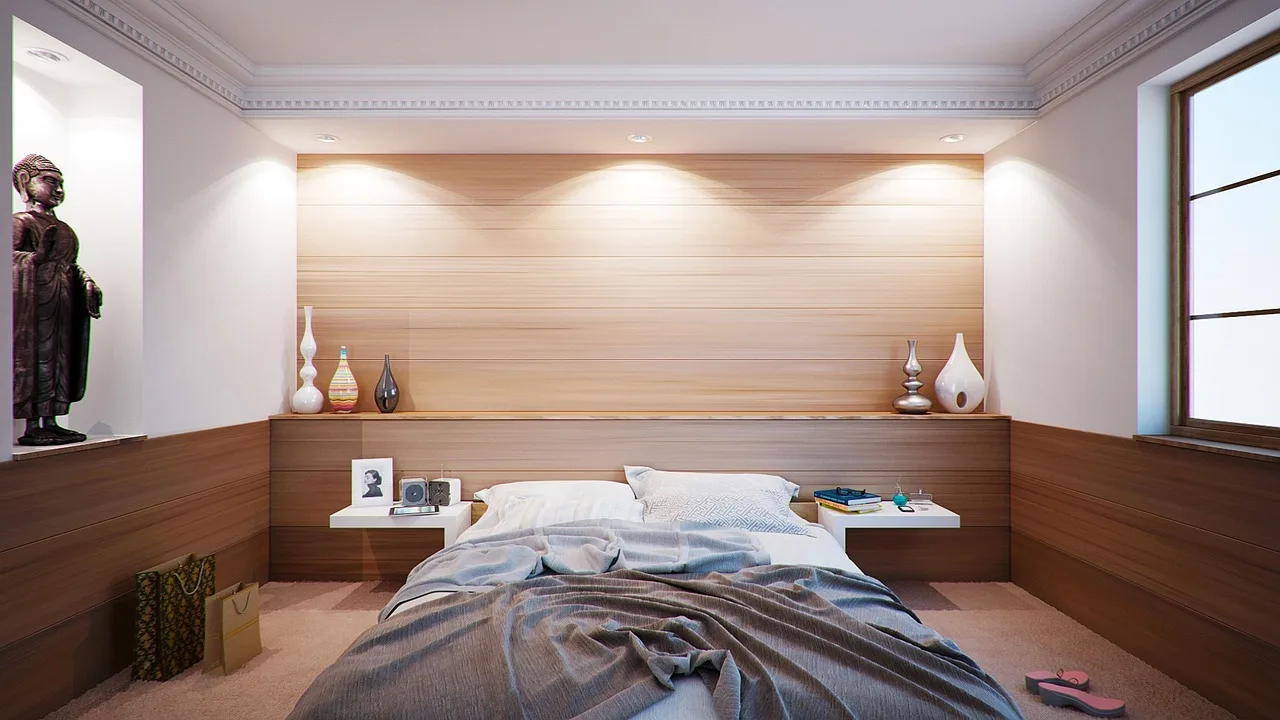
Start with sightlines and light. Move the largest pieces against walls, keep the line from the doorway to the far wall open, and choose paint and window treatment changes that boost reflected light before you buy more furniture. Avoid vague “maximize space” lists that treat every room the same; the fastest gains come from clearing the view, brightening the surfaces, and cutting floor-level bulk.
Step 1: Clear the doorway view
- Move the bed, dresser, and chair so the main walkway stays open from the door to the far wall.
- Keep the biggest pieces tight to walls; do not let them cut across the room center.
- Remove floor decor that interrupts the path, including extra baskets and a second bench.
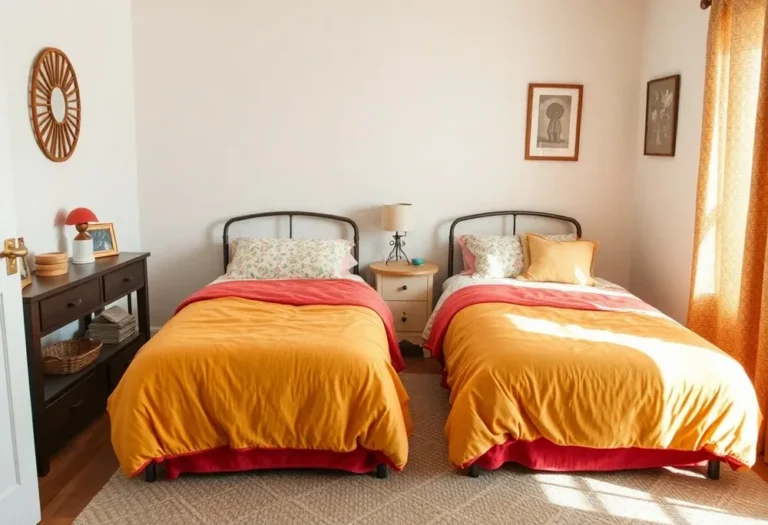
Picture a 9-by-10-foot room with the bed jutting into the opening. Moving the bed flush to the longest wall changes the first impression immediately because the floor reads as one continuous plane. For small spaces, the visual goal is not zero furniture; it is cleaner circulation and fewer interruptions in the sightline.
Step 2: Use light and paint to push walls back
- Choose soft whites, pale blues, greens, beige, or muted tones for the main wall color.
- Test samples beside the window and on the darkest wall before you commit.
- Use a lighter ceiling if the room feels boxed in; keep stronger contrast for one controlled surface only.
Light walls bounce more light around the room, while darker colors take light in and make edges feel closer. Paint colors with higher light reflectance values help rooms read brighter because they send more light back into the space, which is why pale finishes usually make the wall edges recede visually. The same principle is reflected in guidance from paint manufacturers and design resources on light-reflective finishes, including Sherwin-Williams’ explanation of light reflectance value and RoomSketcher’s note that lighter colors visually expand a space.
Step 3: Add one mirror with a job
- Place one large mirror near a window to help bounce daylight deeper into the room.
- Use mirrored doors if you need storage and reflection at the same time.
- Angle the mirror toward a focal point, such as a window or clean wall, to create perceived depth.
Mirrors work best when they spread daylight farther, not when they repeat a crowded corner. Interior design guidance from sources such as House Beautiful and HGTV consistently recommends positioning mirrors to capture and redirect natural light rather than reflecting clutter or glare. Avoid placing a mirror where it throws glare across the bed or reflects a busy opposite wall.
Step 4: Cut visual bulk at floor level
- Switch to a low-profile bed frame or storage bed.
- Replace a table lamp with a wall sconce where wiring or lease rules allow.
- Use one wall-mounted or fold-down piece instead of two separate pieces.
Floating furniture can shrink the visible footprint of the room where it matters most. A floating nightstand, wall-mounted desk, or sconce keeps sightlines open and makes the floor look less crowded. When possible, keep the heaviest furniture visually “quiet” by reducing legs, shadows, and bulky bases.
How do you make a small room feel bigger with furniture?
Use furniture that does more than one job, and keep it scaled to the room. A storage bed, fold-down desk, storage ottoman, or dual-use vanity/workspace gives you function without adding another bulky object to the floor. Furniture that is too wide or too tall makes the room feel smaller faster than a single dark wall, especially when the room already has a narrow entry path.
Use furniture as a layout tool
- Measure the main walkway and keep about 2 feet clear where possible, with about 3 feet preferred in tighter passage areas.
- Place tall pieces where they do not block the door view.
- Choose one larger anchor piece rather than several small pieces that break up the floor.
Use a simple furniture scale checklist before you buy: make sure the bed leaves room for opening doors and drawers, nightstands do not crowd the mattress edge, dresser depth matches the wall, and any chair can slide back without blocking the path. In a very small primary bedroom, a storage bed plus one wall-mounted shelf usually frees more visual space than adding a second nightstand and a freestanding chest. If you need more hidden storage, look for storage bed options for small bedrooms rather than forcing a larger frame into the room.
Scale the bed, not just the decor
- Choose the smallest bed size that still fits your sleeping needs and allows usable side access.
- Prefer a platform or low footboard design over a tall upholstered base if the ceiling is low.
- Keep the headboard simple when the room already has a lot of pattern or trim.
A bed often dominates the room more than any other object, so start there before shopping for decor. If the mattress and frame consume too much width, every other piece looks cramped by comparison. Low, simple frames help the room feel wider because they keep the horizon line lower and the visual mass quieter.
How do you make a small bedroom feel bigger with paint?

Paint works fast because it changes how far the walls seem to sit from you. Soft whites, pale blues, greens, beige, and muted tones usually help most because higher light reflectance makes walls recede visually. Keep one darker color only if the room still gets enough light and you are using it on a single surface. In rooms with limited daylight, the goal is not dramatic contrast; it is a softer envelope that reflects light evenly.
Paint the room for brightness, not contrast
- Paint the ceiling lighter than the walls if the room feels compressed.
- Use the darkest wall as the test wall only if the window light is strong enough to balance it.
- Save bold contrast for a headboard wall, one mural, or a narrow panel section.
Homes & Gardens frames its advice around 16 expert tips, and it specifically notes that vertical panels can exaggerate ceiling height. That can help a low room, but only when the paneling or stripe direction matches the room shape. Vertical stripes, narrow paneling, and same-color walls and ceiling can work in a low room because they pull the eye upward and smooth the transition between surfaces; they can backfire when the room is already narrow, busy, or badly lit, because the added lines or color blocks make the walls feel closer instead of calmer.
Use the right finish and color placement
- Keep the finish consistent across most walls so light reflects evenly.
- Use one feature wall only if the room has a clear focal point.
- Match trim and ceiling strategies to the room’s natural light level, not to trends.
Same-color walls and ceiling can help in a boxy room because they blur the edge where the wall meets the ceiling, which makes the room feel less chopped up. That same move can backfire if the color is too dark or the room is underlit, since the ceiling may feel lower and the space more enclosed. When in doubt, go lighter overhead and slightly warmer on the walls.
Small bedroom fix priority matrix
| Scenario | Top 3 moves | Estimated cost band | Effort level | Visual payoff |
|---|---|---|---|---|
| Dark room | Sheer curtains; one large mirror near the window; soft white or pale wall color | Low to medium | Low to medium | High, because the room reads brighter and wider at once |
| Cluttered room | Under-bed bins; hidden storage; minimal floor decor and fewer small pieces | Low | Low | High, because the floor plane opens up quickly |
| Awkward layout | Reposition the bed against the longest wall; open the doorway sightline; use floating furniture | Low to medium | Medium | Very high, because circulation improves immediately |
| Renter-friendly room | Clip-on drapes; plug-in wall sconces; removable mirror and storage bed or slim frame | Low to medium | Low | Medium to high, with little or no permanent change |
Decision tree for the most common room problems
If you are stuck, choose the branch that matches the room’s biggest constraint and work in order. The first move should solve the main visual problem, the second move should support it, and the third move should avoid making the room more crowded or more rigid than it already is.
- Dark room: First move, use sheer curtains and a lighter wall color; second move, place one mirror to bounce daylight; what to avoid, heavy drapes, dark trim everywhere, and mirrors aimed at clutter.
- Awkward layout: First move, shift the bed to the longest wall; second move, keep the main path open; what to avoid, placing furniture diagonally just to fill corners.
- Low ceiling: First move, lower the visual weight with a simple bed frame; second move, use vertical paneling or stripes only if the room is otherwise quiet; what to avoid, heavy canopy beds and dark ceiling color.
- No closet: First move, add hidden storage such as under-bed bins; second move, use one tall narrow wardrobe or shelf unit; what to avoid, scattered open storage that makes the whole room feel busier.
- Renter: First move, choose removable lighting and clip-on window treatments; second move, use a mirror and furniture swap instead of paint if needed; what to avoid, anything that requires permanent wall repair or changes lease terms.
- Small primary bedroom: First move, select the smallest bed that still works for daily use; second move, simplify the nightstand setup; what to avoid, oversized storage pieces that block access on both sides of the bed.
If that didn’t work, try this next
If the room still feels cramped after the biggest changes, move to the next constraint instead of adding more decor. A common first-timer mistake is fixing light while leaving the floor crowded, or fixing storage while the bed still blocks the main path. The sequence matters: solve layout first, then brightness, then storage density.
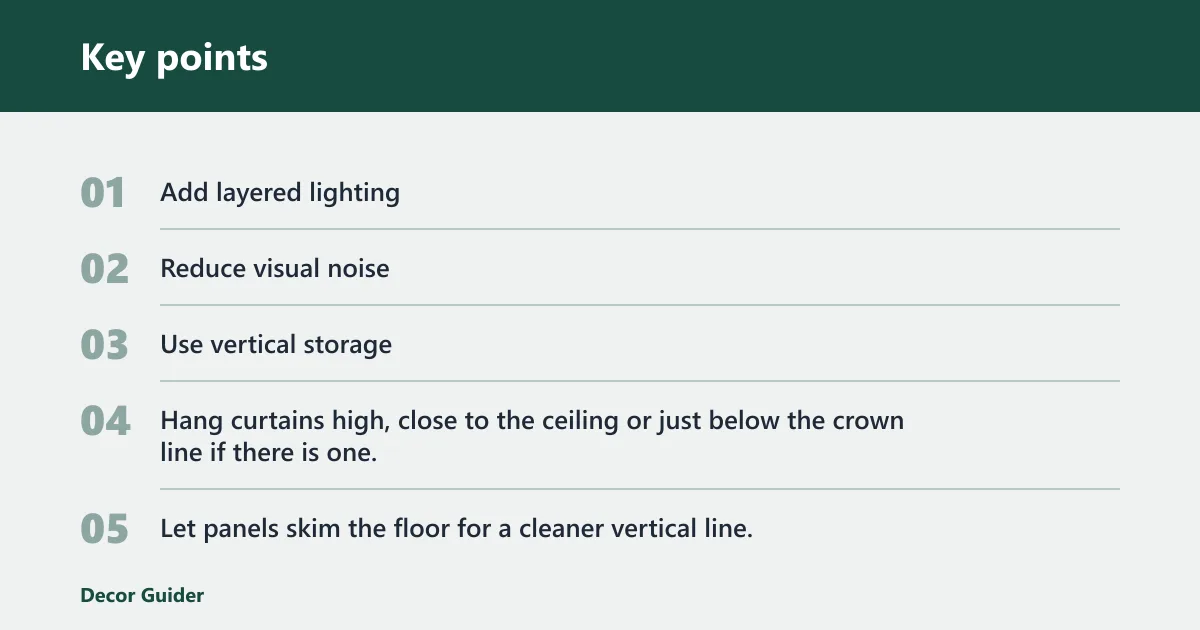
- Add layered lighting: Use natural light first, then a wall sconce, then a ceiling lamp or desk lamp so the room reads bright at night too.
- Reduce visual noise: Clear surface tops, remove extra throws and floor baskets, and keep only the items you use daily.
- Use vertical storage: Add tall narrow shelving, over-bed shelving, or ceiling-height storage to keep the walkway open.
Layered lighting is one of the most reliable ways to make a room feel larger because it prevents dark corners and gives the eye more depth cues. Good bedroom lighting usually combines ambient light, task light, and a softer accent source so the room works both day and night. Woman & Home frames the topic as 12 clever tips, and that broader range matters in very small rooms. When the room is dark, storage-heavy, or oddly shaped, light alone will not fix the feeling of crowding.
When curtains and rods matter most
- Hang curtains high, close to the ceiling or just below the crown line if there is one.
- Let panels skim the floor for a cleaner vertical line.
- Use full-width rods so the stack-back does not block glass when the curtains are open.
Longer-looking windows make a room feel taller because the eye follows the vertical drop instead of stopping at the top of the frame. Short curtains, low rods, and panels that hover above the floor can make the room feel chopped up. In a compact bedroom, curtain placement is not just decorative; it changes how much wall and window height the room appears to have.
Common mistakes
These are the moves that often make a compact room feel tighter instead of larger.
- Using too many small pieces, which breaks the room into fragments.
- Blocking windows with heavy drapes or bulky furniture.
- Adding mirrors without checking for glare from a window or lamp.
- Leaving surfaces visually busy with too many frames, trays, and decor items.
Suppose you hang a mirror directly opposite a bright window in a narrow room. If glare lands on the bed or reflects a dark closet door, the mirror can feel distracting instead of helpful. Move it a few feet and aim it toward a clean focal point instead. The same rule applies to curtains: if the rod sits too low or the panels are too short, the room can look shorter even when the fabric itself is light.
Frequently asked questions
How do I make a small room feel bigger?
Start with the largest visual interruptions: open the floor path, use one light wall color, and replace bulky pieces with slimmer or floating versions. Then add one mirror near daylight and keep window treatments light so the room reads brighter from the doorway inward. The fastest wins come from layout, light, and fewer objects competing for attention.
How do I make a small bedroom seem bigger?
Choose a low bed, keep the line of sight open from the door, and reduce the number of objects on the floor. A single large mirror, pale walls, and curtains hung high usually do more than several small decorative changes. If the room has a low ceiling, keep the top half of the room visually quiet.
What colors make a small bedroom feel bigger?
Soft whites, pale blues, greens, beige, and other muted tones usually work best because they reflect more light and let walls recede visually. If you want contrast, keep it to one surface, such as a headboard wall or a narrow panel section. A very dark room usually benefits from the lightest version of the color you actually want to live with.
How do I make a small bedroom look bigger without remodeling?
Use paint, curtains, lighting, and layout before you touch anything structural. A large mirror near the window, sheer curtains, hidden storage, and a lower-profile bed can change the room’s scale without permanent work. If you rent, start with removable changes that improve light and circulation before you consider anything more involved.
What furniture makes a small bedroom look bigger?
Floating nightstands, wall-mounted desks, storage beds, and fold-down desks usually read lighter than full-size freestanding pieces. In compact rooms, furniture that keeps the floor visible has a bigger impact than furniture with a lot of visual mass. Look for pieces that solve storage, surface space, and access in one move instead of three separate buys.
Products related to this article
Sponsored / affiliate links. As an Amazon Associate I earn from qualifying purchases. I may earn additional commission from eligible campaigns.