How to Decorate a Bedroom on a Budget
Decorate a bedroom on a budget by putting about 70% of your money into the bed wall, bedding, and lighting first; those three changes usually make the biggest visual difference for the least spend. Skipping that order leaves the room unfinished, crowded, and more expensive to fix later. This guide shows what to buy first, what to skip, and how to adjust the plan for renters, small rooms, guest rooms, and primary bedrooms.
What you’ll need


- Measuring tape
- Phone flashlight
- Picture hooks, removable strips, or screw fixings as appropriate for the wall
- Warm white bulbs at 2700K
- One bedside lamp or one floor lamp beside the bed
- Bed linen in a coordinated color pair
- Duvet or comforter, plus one throw
- Two to four pillows, depending on bed size
- Floor-length curtains
- One large framed print, a set of digital prints, or a gallery wall mix
- Full-length or large framed mirror
- Rug sized for the bed
- Low-light plant, such as snake plant, pothos, or ZZ plant
- Replacement handles or knobs in brass or matte black
- Thrifted frames, existing art, or repurposed decor
Bedroom budget playbook
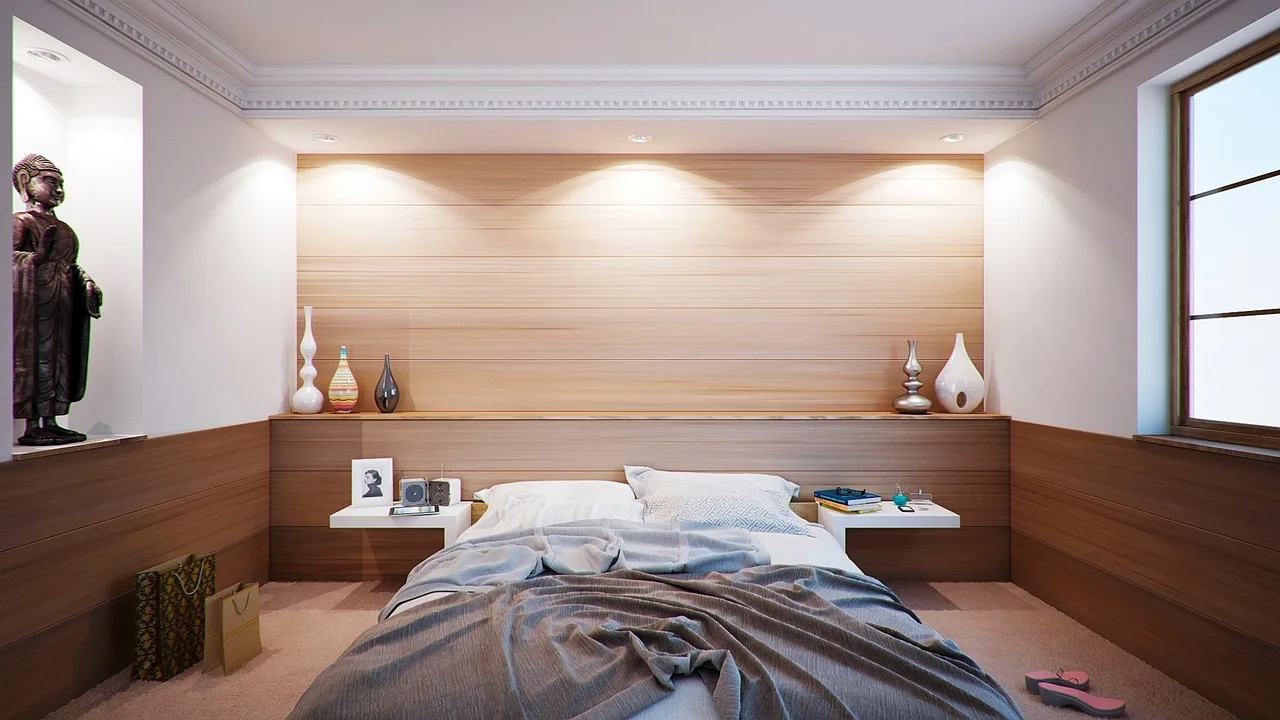
Four free changes come first: clear the room, shift furniture around, reuse what you already own, and check the room in daylight before buying anything. The biggest bedroom upgrades can cost under £100, and the strongest visual return usually comes from the bed wall, lighting, and window treatment rather than from buying more decor.
| Spend band | Exact shopping priority | Expected visual impact | What not to buy |
|---|---|---|---|
| $0 | Declutter surfaces, center the bed on the longest wall if possible, reuse existing art, and swap furniture positions before shopping. | Immediate calm and more floor space; the room usually feels larger and less crowded. | Do not buy tiny decor items, extra cushions, or small accent pieces that read as clutter. |
| Under $50 | Choose one visible fix: warm bulbs, a thrifted frame, a single digital print, or replacement hardware. | One clear focal improvement; best for a room that already has a workable layout. | Do not spread the money across many small objects or a mismatched set of accessories. |
| $50–150 | Upgrade bedding, add one lamp, and buy either curtains or a rug if the bed wall already feels settled. | Strong jump in finish and comfort; the room starts to look planned, not pieced together. | Do not skip bulb color or buy the wrong rug size just because the price is low. |
| $150–300 | Cover the bed wall, lighting, and window treatment in one pass: bedding, curtains, lamp, and a larger art piece or mirror. | Most cohesive result; the room can look much more complete without replacing furniture. | Do not spend the whole budget on a new dresser, bed frame, or oversized decor set. |
What should you fix first?
Start with the free changes: clear surfaces, remove clutter, and reuse what you already have. Then place the bed on the longest wall when possible and balance both sides with similar lamps, tables, or open surface space. Only shop after the layout stops fighting the room.
- Clear every visible surface, then keep only the items you use daily.
- Move the bed to the longest wall if the door, window, and radiator layout allow it.
- Balance both sides of the bed with matching or visually similar pieces.
- Pull in existing art, frames, baskets, and storage before buying anything new.
If a bedroom of about that size feels crowded even with modest furniture, move the bed away from the shortest wall and remove one extra chair. That often frees more visual space than buying another storage piece.
How do you spend under $50?
Pick one visible upgrade and do it well. The smartest choices are warm bulbs at 2700K, a thrifted frame for existing art, or replacement handles on a dresser or wardrobe. That gives a clearer before-and-after than buying several cheap accents that disappear into the room.
- Replace cool white bulbs with warm white bulbs at 2700K.
- Swap hardware on one dresser or wardrobe for brass or matte black handles.
- Use one large existing print, or print digital art for £2–15 and frame it.
- Skip extra cushions and tabletop decor until the room has one strong focal point.
A common first-timer mistake is spending $40 on three small objects. The room still reads busy. One better choice is a single framed print above the bed, because one larger focal point usually carries more visual weight than several tiny pieces.
How do you make a small bedroom feel bigger?
Use light, height, and scale. Hang curtains 15–20cm higher than the window frame, keep them floor length, choose a rug that extends at least 60cm either side of the bed, and add one large mirror to reflect light. Small rooms shrink fast when every item is undersized.
Mirror and window placement
A full-length or large framed mirror helps the room feel brighter and more open. Lean it against the wall if you cannot drill. Place curtains high and avoid stopping panels above the floor, because short curtains make the room look lower.
Bed and rug scale
Planner5D advises an 8×10 rug minimum for queen beds. That gives the bed proper grounding and avoids the common failure case where a small rug floats under the middle of the bed. If the rug only touches one side, it is too small.
Keep the number of objects low and the scale deliberate. In a small room, one large print beats several tiny ones, one rug in the correct size beats a scatter of mats, and one mirror can do more than a shelf full of decor. Avoid overfurnishing at every step.
Use snake plant, pothos, or ZZ plant if you want a plant with low-light tolerance. Put it where it does not block a walkway. One plant is enough in most small rooms; more than that can start to crowd the floor or windowsill.
How can renters decorate cheaply?
Use nonpermanent changes first: bedding, lamps, curtains on existing fixtures where possible, lean art, and a leaning mirror. Renters usually get the fastest payoff from changes that do not require drilling, repainting, or new furniture. Keep the plan reversible and avoid overbuying storage decor.
- Use removable hooks or leaning placement for art and mirrors.
- Choose curtains that fit the current rod, then hang them higher if the mounting allows it.
- Focus on bedding, a lamp, and one focal piece before adding accessories.
- Buy thrifted frames or reuse existing ones for digital prints and posters.
For a rental guest room, a coordinated duvet, one bedside lamp, and a single large print often make the room feel finished without permanent changes. For a rental primary bedroom, prioritize black-out or floor-length curtains before adding more decor.
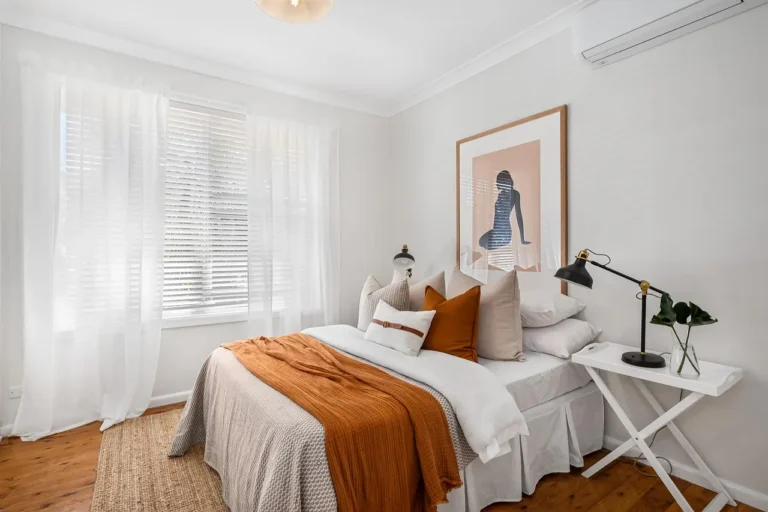
For a primary bedroom, aim for a more finished bed wall and better layering. Start with bedding, then curtains, then lighting, then one large art piece or mirror. A master bedroom usually needs the most restraint, because too many small upgrades can make it feel busy instead of calmer.
Use coordinated colors, a duvet or comforter, and a throw with only a few pillows. A pair of matching bedside lamps, listed at £30–80, often gives the room a more deliberate look than scattered tabletop decor.
Bedroom styling steps
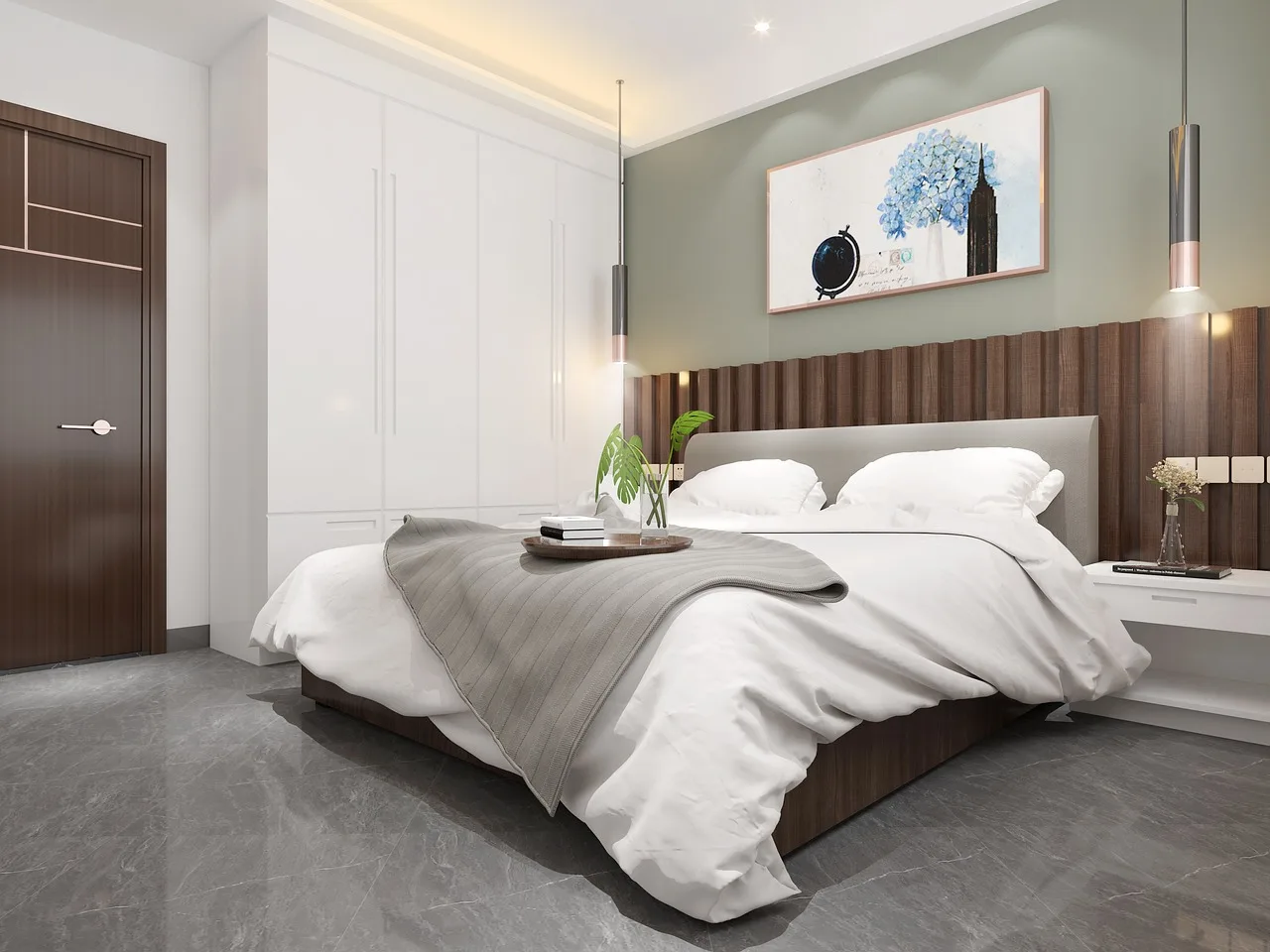
Use this order so the money goes where it changes the room most. Woman & Home frames the topic as 11 interior design tips, and the room can be upgraded in a few hours when you follow the right sequence instead of buying piece by piece.
- Clear surfaces and remove clutter so the room feels calmer and larger.
- Center the bed on the longest wall, then rebalance both sides.
- Upgrade bulbs to warm white 2700K and add bedside or floor lighting.
- Add bedding next: coordinated colors, linen or cotton, pillows, a throw, and a duvet or comforter.
- Hang curtains higher than the window frame and use floor-length panels.
- Add wall art above the bed: one large print, a gallery wall, posters, canvases, or maps.
- Place a rug under the bed so it extends beyond the bed sides.
- Finish with a mirror, a low-light plant, or hardware swaps.
Where the biggest visual return appears
The biggest return comes from changes that affect large surfaces: the bed wall, the window, and the floor. Bedding covers a wide area. Curtains change the room’s proportions. Lighting affects every corner. Small decor items matter only after those pieces are settled.
How to decorate a guest bedroom on a budget
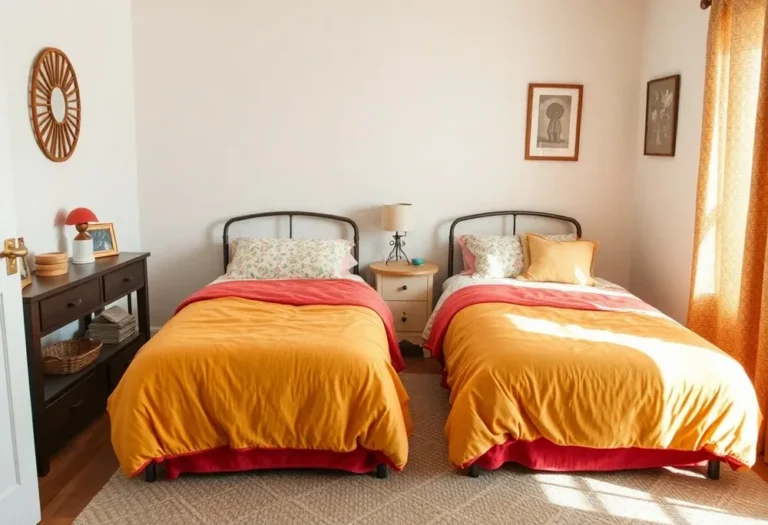
Guest rooms work best when they look clean, simple, and easy to use. Put the money into bedding, one lamp, and a clear place for luggage. Skip heavy personalization. If the room may sit unused for long stretches, choose durable pieces that hold up without frequent styling.
Use reused art, a framed map, or a digital print instead of an expensive statement piece. A guest room does not need the same level of layering as a primary bedroom, but it does need visible order and decent lighting.
Common mistakes
Too many pillows make a bed feel crowded. A wrong rug size makes the whole room feel off balance. Tiny art above a large bed looks accidental. Harsh bulbs at 4000K+ flatten the room and make it feel less comfortable. Overfurnished layouts leave no visual pause.
Fix the mistake, then pause before buying more. If the bed wall still looks empty after bedding and lighting, add one larger piece rather than several small ones. If the room feels cramped, remove one item before you purchase another.
Failure cases to avoid
- Too many pillows on the bed
- Rug that stops under only part of the bed
- Harsh bulbs at 4000K+
- Tiny art above a large bed
- Overfurnished room with no clear focal point
Frequently asked questions
How to decorate a room on a budget
Use the same order as a bedroom: clear clutter, fix the layout, then spend on the largest visible surfaces first. Bedding, lighting, curtains, and one focal piece usually change the room more than a basket of small decor or another throw pillow.
How to decorate a bedroom for cheap
Spend first on the bed wall, then on light, then on the window. Cheap changes work best when they are large enough to read from across the room: a duvet cover, a lamp, a print, or a hardware swap. Tiny objects rarely carry the room.
Products related to this article
Sponsored / affiliate links. As an Amazon Associate I earn from qualifying purchases. I may earn additional commission from eligible campaigns.