Does a Bedroom Need a Rug?
A bedroom does not need a rug, but many rooms feel better with one if it fits under the lower two-thirds of the bed or leaves enough bare floor to look deliberate. Skip it when the room is too small, cleaning is a problem, or the rug would crowd doors and furniture. This guide explains when a rug is worth adding, how to size it, and when a bare floor is the smarter choice.
Quick answer: does a bedroom need a rug?



When a rug is worth it
A bedroom rug gives your feet a softer landing, especially over tile, marble, or hardwood. It can also quiet footsteps a bit and help the bed feel anchored in the room. That matters most on hard floors, where bare surfaces feel colder and sound travels more.
When skipping the rug makes sense
Leave the floor bare when the room is tight, the bed has storage drawers that need clearance, or you want the simplest cleaning routine. A rug that blocks a door swing, bunches under drawer fronts, or shrinks the walking path is the wrong solution, even if the room could use softness.
The short version for hard floors and carpeted rooms
Hard flooring usually benefits more from a rug than carpeted rooms do. On carpet, a rug can still work as a design layer or to define the bed area, but the comfort gain is smaller. On cool hard floors, a rug can create a hotel feeling and give your feet a warmer landing point in the morning.
Bedroom rug decision matrix

Use this table to decide whether the room needs a full-size rug, runners, a small bedside rug, or no rug. Score each factor from 0 to 2, then total the points. Higher totals favor a larger rug; lower totals point to a smaller rug or none.
| Factor | 0 points | 1 point | 2 points |
|---|---|---|---|
| Hard floor | Carpeted floor | Mixed surfaces | Tile, marble, or hardwood |
| Climate | Warm most of the year | Mild or variable | Cool bedroom or cold mornings |
| Room size and bed clearance | Tight room, blocked doors, or drawer conflicts | Moderate clearance | Room can hold a rug with clear walking paths |
| Cleaning tolerance | Low tolerance or allergy concerns | Moderate tolerance | Comfortable with regular vacuuming and rotation |
| Bed clearance | Little or no visible floor around bed | Some space, but limited | Enough space for rug edges to extend past the bed |
| Total score | Best fit | Yes/no checklist | One-line rationale |
|---|---|---|---|
| 8-10 | Full-size rug | Yes to hard floor, yes to clearance, yes to upkeep | The room can support a rug that anchors the bed without crowding the layout. |
| 5-7 | Runners | Some softness needed, but space is tighter | Runners add warmth and footing without taking over the room. |
| 3-4 | Small bedside rug | Only a small comfort zone is practical | A compact rug gives feet a soft landing without blocking traffic or drawers. |
| 0-2 | No rug | No clear benefit or too many tradeoffs | Skipping the rug keeps the room easier to move through and easier to clean. |
Suppose a bedroom has hardwood floors, a cool draft near the bed, and enough space for the rug to extend past the foot and both sides. That room usually scores high enough for a full-size rug. Now change only one thing: add drawer storage that needs floor clearance. The better answer may shift to runners or no rug.
Should your bedroom have a rug?
A bedroom should have a rug when it solves a real layout or comfort problem. The best cases are hard floors, a bed that needs visual anchoring, or a room that feels noisy and bare. It is less useful when the room already has carpet, the floor plan is tight, or upkeep would be annoying.
Hardwood, tile, and marble rooms
Hard flooring such as tile, marble, and hardwood often benefits from a rug because it can add softness, warmth, and a quieter step. Bedroom rugs can also help dampen noise, which matters in apartments or rooms with echo. On cool hard floors, the rug can be the difference between a room that feels spare and one that feels finished.
Bedrooms with warm or mild climates
If the room stays warm year-round, a rug is optional rather than expected. In those cases, the main reason to add one is comfort underfoot or better room definition. If the floor is already comfortable and the room is small, a rug may be extra clutter rather than a benefit.
Rooms with storage drawers or tight clearances
Storage drawers change the decision fast. Low-pile or flatwoven rugs are the better choice when drawers need to open over the floor edge, because thick piles can bunch or stop the drawer short. If a rug would block drawer fronts, door swings, or a narrow path, skipping it is usually cleaner.
What rug size works best in a bedroom?
The right size depends on bed size and clearance around it. For queen beds, an 8×10 rug is a common minimum, and 9×12 works better in larger rooms. For king beds, 9×12 or 10×14 is the common recommendation, especially when you want enough rug visible to step onto from the bed.
Queen bed rug sizing
A queen-size bedroom often works best with an 8×10 rug, and a 9×12 rug is better when the room is larger or you want a more generous layout. A common rule is to let the rug extend 18 to 24 inches beyond the bed sides and foot. That gives feet a landing zone instead of a small framed patch.
King bed rug sizing
A king bed often works well with a rug around 9×12 or 10×14 to help the room look balanced. Full under-bed placement works best when the room is large enough to leave visible rug around the bed and enough clearance to step onto it from both sides. If the room is tight, a smaller layout can look crowded fast.
Small bedrooms and narrow rooms
Small bedrooms do not always need a large rug. In narrow rooms, runners often work better because they give softness without forcing the bed onto a rug that reaches into every walkway. A smaller option of about 80×150 cm can be useful when you only need a modest bedside landing zone.
How much rug should show around the bed?
A rug should not disappear under the bed. The bed should sit on it with enough edge showing to define the sleeping area, and the rug should help feet land comfortably when stepping out of bed. A full-under-bed rug can create a room-within-a-room effect, but only if the room can spare the space.
Bedroom rug placement options

Bedroom rug placement changes how the room feels and how easy it is to move around. The main choices are full under-bed placement, two-thirds under-bed placement, runners on each side, and foot-of-bed placement. The right one depends on bed size, room shape, and how much floor you want to leave open.
Full under-bed placement
This is the most complete look. The rug sits under most or all of the bed and extends beyond the sides and foot, which helps anchor the furniture and makes the room feel more deliberate. It works best in medium and large bedrooms where the rug will not crowd the walls or doors.
Two-thirds under-bed placement
The two-thirds placement rule is often the most practical option. It gives you the look of a larger rug without requiring the entire bed and nightstands to sit fully on it. This is a smart compromise when you want warmth and visual balance, but do not have room for a very large piece.
Runners on each side
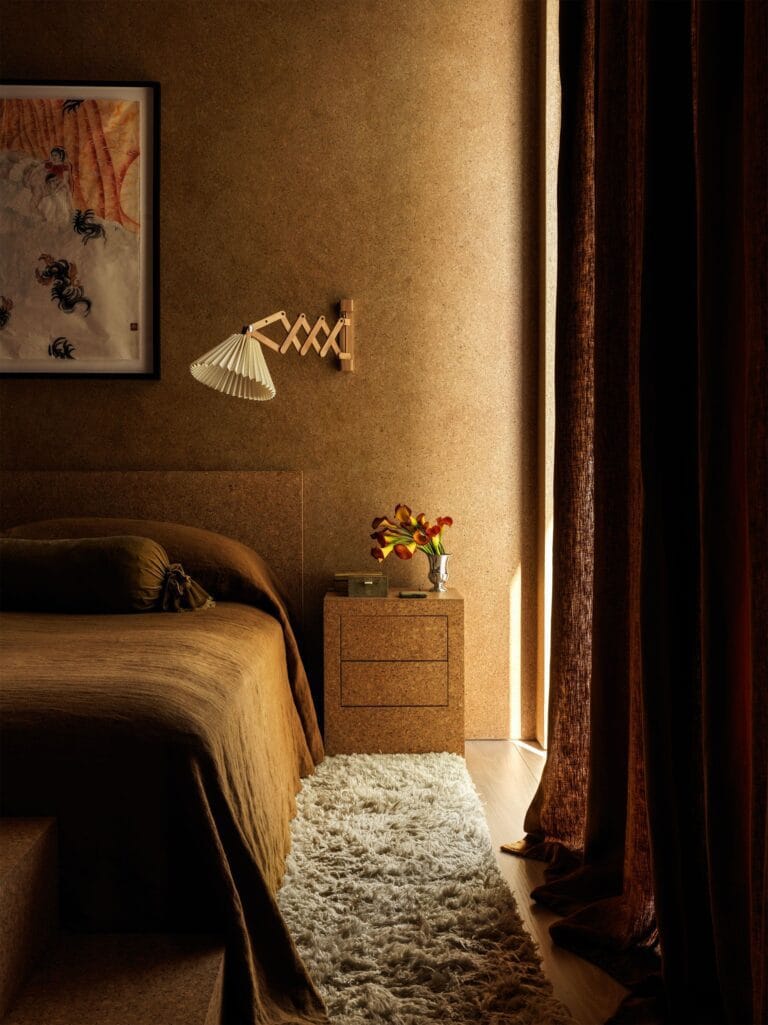
Runners are a better option when the room is narrow, the bed has drawers, or you want to keep the center floor open. They provide softness where your feet land and can be easier to vacuum and move around. They also cost less than a large rug, which matters when budget is a factor.
Foot-of-bed placement
A rug at the foot of the bed works when you want a small visual anchor without covering most of the floor. It is a cleaner choice in compact rooms, but it gives less warmth when you first get out of bed. Use it when the room needs definition more than full coverage.
-
Measure the room first.
Note bed width, nightstand depth, and the open floor on each side. Then check whether a rug can extend 18 to 24 inches beyond the bed sides and foot without touching walls or blocking a path.
-
Check all moving parts.
Open the bedroom door fully and pull out every drawer near the bed. If a rug would catch the door swing or bunch under storage drawers, reduce the size or switch to runners.
-
Choose the placement method.
Use full under-bed placement for larger rooms, two-thirds placement for the most practical fit, runners for narrow rooms, and foot-of-bed placement when you only need a small anchor. The placement should match the room, not fight it.
Rug material and pile height choices
Pile height changes comfort and upkeep. High-pile rugs feel softer under bare feet, but they collect more debris and are harder to clean. Low-pile or flatwoven rugs are easier to maintain, and they are the better choice when the bed has storage drawers or the room gets heavy use.
High-pile for a softer feel
Choose high-pile if softness is your main goal and the room does not see much drawer movement or frequent vacuuming. It can make a cool bedroom feel cozier, especially on hard floors. The tradeoff is maintenance, because deeper pile holds more dust and can show traffic sooner.
Low-pile and flatwoven for easier cleaning
Low-pile and flatwoven rugs are the safer pick when you want fewer care issues. They are easier to vacuum, less likely to snag on moving furniture, and less likely to get in the way of drawers. If cleaning tolerance is low, start here.
Best choices for beds with storage drawers
Low-pile is recommended with storage drawers because it reduces bunching and friction. A rug pad still matters, since it helps keep the rug from creeping as drawers open and close. A thicker rug may feel nicer, but it can create the exact clearance problem you are trying to avoid.
A common first-timer mistake is buying a rug that fits the bed on paper but fails at the door. Picture a 9×12 rug in a small room where the closet door swings across the corner. If the rug blocks that swing, the size is wrong even if the measurements look impressive.
Practical checks before you buy
These checks keep you from buying the wrong size. They also help you decide when a rug is worth the cost and when skipping it is smarter. A bedroom rug should fit the room first and the decor second.
-
Map the walking path.
Stand at the door and trace the route to the bed, closet, and dresser. Leave enough bare floor that you can move without stepping on corners or catching a toe on the edge.
-
Check nightstand clearance.
Make sure the rug will not sit so far under the nightstands that it looks cramped, and do not place it where drawer fronts need to slide over thick pile. A rug that interferes with daily use is too large for the room.
-
Add a rug pad.
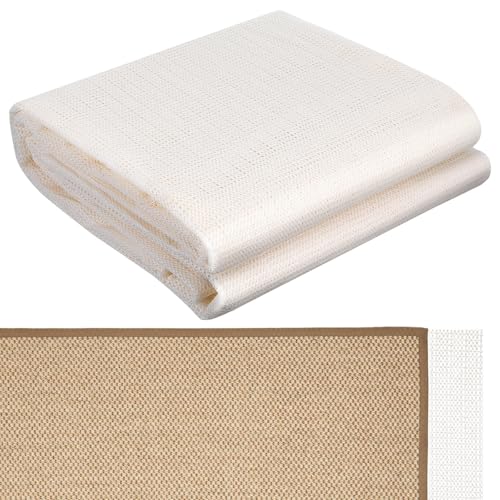
Use a rug pad for slip resistance, added cushioning, and stability. It helps keep the rug in place, which matters more on smooth floors and under beds that shift slightly when you get in and out.
Frequently asked questions
Does a bedroom need a rug?
No. A bedroom does not need a rug in every case. It is most useful on hard floors, in cooler rooms, or when the bed needs a clearer visual anchor. If the room is tight, hard to clean, or blocked by doors and drawers, bare floor can be the better choice.
Should a bedroom have a rug?
It should if the rug adds comfort, warmth, or better room balance without getting in the way. On hardwood, tile, or marble, the case is stronger. On carpet or in a cramped room, the gain is smaller, so the decision depends more on layout than style.
Does my bedroom need a rug?
Ask three questions: is the floor hard, is the room big enough for proper clearance, and will you keep up with cleaning? If the answer is yes to most of those, a rug is probably worth it. If not, the room may work better without one.
Does every bedroom need a rug?
No. Bedrooms with carpet, tight clearances, storage drawers, or awkward door swings often work better without one. A rug is a useful tool, not a requirement. The right choice is the one that improves comfort without creating a traffic or upkeep problem.
Does a bedroom with hardwood floors need a rug?
Hardwood floors are one of the strongest cases for a rug because they benefit from added softness, warmth, and noise control. That does not make a rug mandatory. If the room is small or you dislike extra cleaning, runners or a small bedside rug may be enough.
Products related to this article
Sponsored / affiliate links. As an Amazon Associate I earn from qualifying purchases. I may earn additional commission from eligible campaigns.