
How to Make Your Home Smell Cozy in Winter
Use one light scent source per small room, about two in medium rooms, and ventilate after about 30 to 60 minutes; choose low-strength formats like reed diffusers or simmer pots over heavy sprays. Too much fragrance can trigger headaches, clash room to room, and make a home smell flat instead of cozy. This guide explains how to match scent strength, room size, and format so winter fragrance stays warm, controlled, and noticeable.
How do you keep winter scent cozy, not strong?



Why winter scent feels stronger in smaller rooms
Small rooms hold scent longer because there is less air volume to dilute it. Humidity can also make fragrance feel heavier, while warm air can push scent upward and around the room faster.
That means a bedroom can smell full with a light release, while an open-plan main floor may need a steadier format to read at all. The fix is not automatically more fragrance; it is a better match between room size, airflow, and delivery method.
How airflow and drafts change what you smell
Drafts can pull fragrance toward vents, doors, and hallways, which makes one corner smell strong and another corner smell almost empty. Direct airflow can also make a diffuser or candle seem weaker than it is, because the scent disperses before it settles.
Place fragrance away from supply vents, open windows, and ceiling fans when you want a stable background scent. In a room with steady cross-breeze, start lower than you think and adjust after the air has had time to settle.
How to tell the difference between cozy and overdone
Cozy scent feels present for a few minutes, then fades into the background. Overdone scent keeps announcing itself each time you enter the room, and it may flatten into a sweet or sharp note that lingers on fabric and hair.
Homes & Gardens warns that fragrance can become too strong and overwhelm guests. If you notice nose fatigue, a scratchy feeling, or scent bleeding into the next room, the dose is too high or the placement is too close to the traffic path.
Which winter scent notes feel warm without going sweet?
Vanilla, amber, and musk work well as soft base notes, while cedar and sandalwood keep the profile from turning sugary. Coffee, chocolate, and cinnamon can read cozy in winter, but they need restraint in small rooms or they can smell dense and dessert-like.
Vanilla, amber, and musk as soft base notes
These notes help fragrance feel rounded instead of thin or sharp. Vanilla gives warmth, amber adds a soft glow, and musk can smooth edges so the scent feels lived-in rather than perfumed.
Use them as the base of a room scent, not the whole story. Too much sweet base can make a room feel heavy, especially if the space already traps heat or has little ventilation.
Wood notes like cedar and sandalwood
Cedar and sandalwood are useful when you want winter comfort without sugar. They balance sweeter notes and read clean in many homes, especially near entryways, living rooms, and shared spaces.
These woods also pair well with reed diffusers and candles because they hold steady over time. In a smaller room, they can do more work than floral notes, which often feel louder and less settled in winter.
Where cinnamon, coffee, and chocolate fit
Cinnamon, coffee, and chocolate belong in the accent role. They can make a room feel inviting, but they are easy to overuse, especially when layered with vanilla or sweet linen scents.
Use them in brief bursts, or in rooms where people spend less continuous time, such as an entryway or powder room. If the room already smells sweet after a few minutes, switch to cedar, sandalwood, or a cleaner base note.
Winter scent strength planner
This planner gives you a starting point, not a fixed formula. Adjust downward first if the room is small, closed off, or already warm; adjust upward only if the scent fades too quickly in open air.
| Room type | Square footage band | Recommended format | Starting dosage | Top notes | Stop/adjust signals |
|---|---|---|---|---|---|
| Small bedroom | Under 150 sq ft | Reed diffuser or linen spray | 2 reeds; 1 light linen mist on bedding | Vanilla, cedar, musk | Headache, scent on pillows all day, smell noticeable from the doorway |
| Standard living room | 150 to 300 sq ft | Ultrasonic diffuser or candle warmer | Low setting or one low-to-medium throw candle | Sandalwood, amber, soft cinnamon | Smell carries into hallways, guests comment on scent before sitting down |
| Open-plan main floor | 300 sq ft and up | Nebulizer or multiple light zones | Short cycle in one zone, then pause | Cedar, sandalwood, coffee, clean musk | Scent pools near vents, different areas smell different, fragrance lingers after airing out |
How do you choose the right fragrance format for each room?
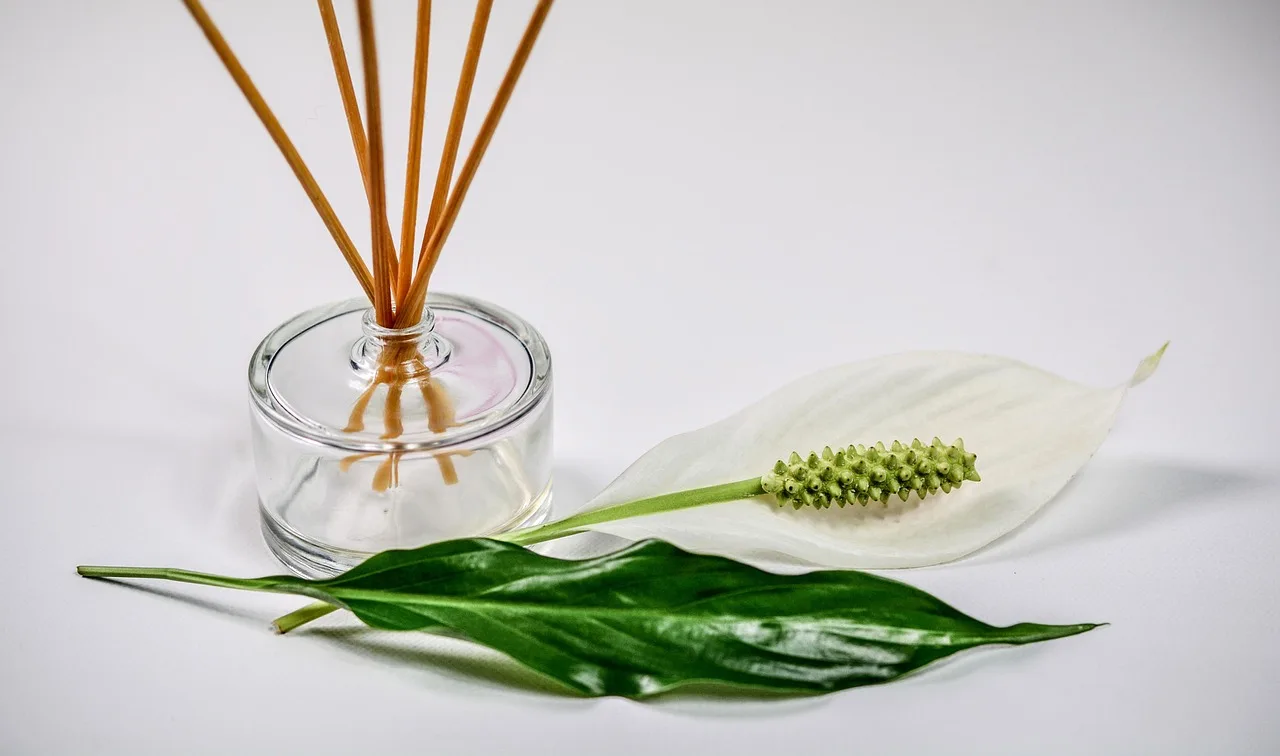
Match the format to the room’s size and use. Diffusers give steady background scent, room spray gives quick control, candles add warmth and glow, and linen spray gives the lightest fabric-safe layer.
Diffusers for steady background scent
Reed diffusers, ultrasonic diffusers, nebulizer diffusers, and liquidless diffusers each work differently. Reed diffusers release slowly by wick action, ultrasonic models use water and oil, nebulizers disperse oil without water, and liquidless diffusers release scent from a solid or cartridge-style medium.
Look for scent intensity control when you want more precision. Many reed and liquidless models also let you adjust output by turning reeds, reducing reeds, or using a weaker refill cadence; that matters more than choosing a stronger scent from the start.
Placement matters. Put diffusers away from direct drafts, because vents and open windows can push scent unevenly and make the room smell inconsistent.
Examples of common price points show how wide the format range can be: Vitruvi’s stone diffuser is priced at $119, Saje’s ultrasonic diffuser is priced at $190, Le Labo’s nebulizer diffuser is priced at $597, Nest Fragrances’ liquidless diffuser costs $60, and Lafco’s reed diffuser is priced at $115.
Room spray for quick bursts
Room spray gives an instant scent boost and works well when you want control, not constant output. Start with about 2 to 4 spritzes, then wait a few minutes before adding more.
Use it in entryways, bathrooms, and on textiles only when the label says the fabric is safe. It fades faster than a diffuser, which makes it useful for guests or for correcting a room that smells closed up.
Those examples fit the category, but the method still matters more than the price tag.
Candle and candle warmer use by room type
Candles add warmth, a soft glow, and a clear winter mood. They also need safe supervision, since open flame brings soot and tunneling risk and the burn time can vary widely by wax, wick trim, and room airflow.
Marie Claire lists LAFCO New York Feu de Bois Candle with a 90-hour burn time and describes it with sandalwood, leather, and frankincense notes. That kind of profile suits a living room better than a tiny bedroom.
A candle warmer gives you a no-open-flame option and works best with low-to-medium throw candles. It releases scent more softly than a burning candle, which can help in spaces where flame is not practical.
-
Start with the room size.
Choose the lightest format that can still reach the far side of the room. A small bedroom usually needs one diffuser or one short burst of spray, while an open main floor often needs a controlled source in one zone only.
-
Place it away from drafts.
Set diffusers, candles, or sprays away from vents, windows, and fan paths. This keeps the scent from collecting in one corner or disappearing before it can settle.
-
Wait before adding more.
Give the room time to show the true intensity. If the scent feels strong after about 10 to 15 minutes, stop there; if it fades too fast, adjust placement or switch formats rather than simply doubling the dose.
What is the best way to scent a home without candles?
Reed, ultrasonic, nebulizer, and liquidless diffusers are the best candle-free starting points because they let you control output without open flame. For short winter bursts, simmer pots, room spray, and linen spray add targeted scent without making the whole home smell heavy.
Reed, ultrasonic, nebulizer, and liquidless diffusers
Reed diffusers work best in smaller or medium rooms where you want quiet scent across the day. Ultrasonic diffusers add moisture and can be dialed by run time, while nebulizers give a stronger hit with less water-based dilution. Liquidless diffusers tend to be the simplest low-mess option for steady fragrance.
Choose the format based on how much control you want. If a room already traps heat, a softer reed or liquidless option often feels cleaner than a high-output nebulizer.
Simmer pots for short, supervised winter scent
A simmer pot gives a water-based stovetop fragrance and works well for short sessions. Winter notes such as citrus, cinnamon, vanilla, and clove fit the season without needing a constant device.
Keep it time-limited and supervised. Once the water level drops too low or the scent starts to smell cooked instead of fresh, turn it off and refresh the pot before using it again.
Say your entryway is about 70 square feet and guests notice a flat, closed-in smell after the door stays shut all day. One light simmer pot in the kitchen can help for a short arrival window, but a reed diffuser near the entry will be steadier and less likely to drift into the hall.
Room spray and linen spray for targeted control
Room spray is best when you need quick correction, not all-day scent. Linen spray is better for curtains, bedding, and throws because it gives a lighter, fabric-safe layer that sits closer to the body and feels softer than hard-surface fragrance.
Use linen spray to build depth without clashing. A light mist on a throw can support a diffuser in the room, but heavy spraying on every textile can create a sweet cloud that reads fake very quickly.
How do you layer fragrance without headaches or clashing notes?
Layering works best when each layer has a job. Choose one anchor scent family per floor, keep textiles lighter than hard-surface scent, and stop adding more once the room smells complete from the doorway.
Choose one anchor scent family per floor
Use woods, amber, or soft vanilla as the base across a floor so each room feels related. If one room leans cinnamon and another leans bright citrus, the transition can feel abrupt and the home may smell scattered.
A common first-timer mistake is using a sweet candle in the living room, a floral spray in the hallway, and a strong diffuser in the bedroom. That mix can create scent bleed and make each room compete with the next.
Keep textiles lighter than hard-surface scent
Textiles hold scent longer than hard surfaces, so they should usually carry the lightest layer. A linen spray on bedding or a throw should support the room, not become the main event.
If the fabric scent is stronger than the diffuser or candle, the room can start to smell stale. Keep the strongest note in the air, and let fabrics add softness instead of extra volume.
Use stop and adjust signals
Headaches, nose fatigue, and a lingering smell in the next room all mean you need less fragrance. Another warning sign is when a scent still feels loud after the room has aired for 30 to 60 minutes.
Open a window briefly, lower the diffuser output, or switch to a cleaner base note like cedar or sandalwood. Do not try to fix overload by adding a second strong format in the same space.
How do I make my house smell cozy in winter without it being too strong?
Start with one light source in small rooms and two controlled sources in larger ones, then stop before the scent becomes obvious from the hallway. Use warmer notes like vanilla, cedar, sandalwood, amber, or musk, and keep cinnamon or chocolate in the background rather than leading the room.
What scents smell cozy in winter but not overpowering?
Vanilla, sandalwood, cedar, amber, and musk usually read cozy without becoming sugary. Coffee and cinnamon can work too, but use them in smaller doses or in short-lived formats so they do not take over the room.
How many candles or diffusers should I use in one room?
One is enough in a small room, and two light sources are usually enough in a standard living room if the airflow is moderate. Add more only if the room is open-plan or drafty, and adjust placement before increasing output, since output and airflow matter more than quantity alone.
How do I keep a fragrance from smelling fake or too sweet?
Anchor the room with wood or musk notes, then add sweet notes sparingly. If vanilla, cinnamon, or chocolate dominates every surface, switch one layer to cedar, sandalwood, or a cleaner textile mist so the fragrance feels warmer and less candy-like.
Where should I place diffusers or room sprays for the best effect?
Put diffusers on a stable surface away from direct drafts, and place room spray where it can settle without hitting one fabric patch too hard. Entry tables, bathroom counters, and sideboards near the center of a room usually work better than vents, windows, or tight corners.
Are simmer pots better than candles for a subtle cozy smell?
Simmer pots are better when you want a short, gentle scent and do not need a lasting room fragrance. Candles give more glow and can last longer, but they also bring soot, tunneling risk, and supervision requirements that simmer pots avoid only by staying time-limited and watched.
Products related to this article
Sponsored / affiliate links. As an Amazon Associate I earn from qualifying purchases. I may earn additional commission from eligible campaigns.