How to Make Your Home Cozy for Winter
A common approach is to make your home cozy for winter in two steps: stop drafts and heat loss first, then add insulation, window coverings, rugs, and soft lighting room by room so comfort rises without cranking the thermostat. If you skip the leaks, you keep paying to heat outdoor air, and cold floors, chilly corners, and window condensation can still make the house feel uncomfortable. This guide covers doors, windows, drafts, insulation, and practical room-by-room layers that make a house feel warmer.
Start with the leaks, not the thermostat


Cold weather makes drafty doorways stand out fast, and that shifts what “warm enough” actually feels like. A room can hit the thermostat setting and still feel cold if air moves across your ankles, your chair sits beside cold glass, or heated air keeps slipping out through gaps.
The quickest comfort gains usually come from stopping air movement at the house shell. Seal first. Decor comes after. That order matters because rugs and blankets help in a seat or bed, but they do not stop heated indoor air from leaving through a leaky front door, a loose window frame, or an open fireplace damper.
The winter priority order
Start with exterior doors and thresholds first. A front or back door often leaks at several points in winter, and gaps around the frame let cold air in while heated air escapes. After doors, move to the draftiest windows, then the fireplace opening and damper, then look for attic-related clues such as a stubbornly cold top-floor room, recessed-can drafts, or icy ceiling edges. Last, tune interior doors that help separate warm and cool zones.
Quick checks that reveal the biggest problems
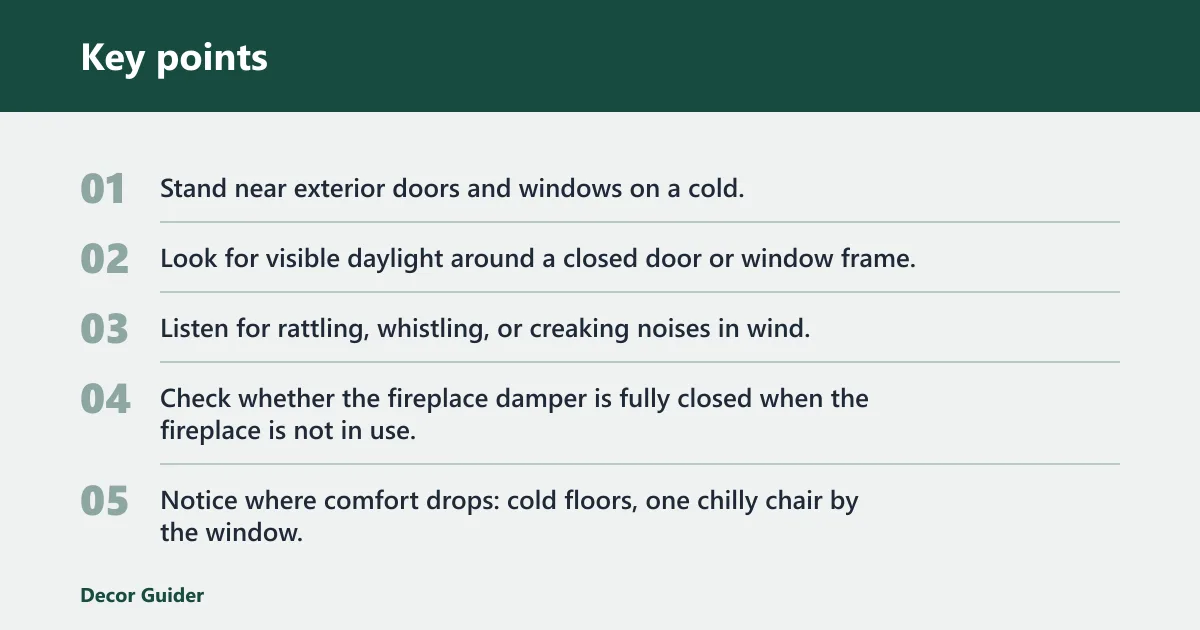
- Stand near exterior doors and windows on a cold, windy day and feel for moving air along edges, corners, and the threshold.
- Look for visible daylight around a closed door or window frame.
- Listen for rattling, whistling, or creaking noises in wind, which are common warning signs of leakage or poor fit.
- Check whether the fireplace damper is fully closed when the fireplace is not in use.
- Notice where comfort drops: cold floors, one chilly chair by the window, or a bedroom that feels cooler than the hall.
- Inspect weatherstripping for cracks, flattening, missing sections, or corners that no longer contact the frame.
What to use where
Weatherstripping belongs around operable doors and windows where parts move and still need to seal. It cuts air leakage at the sides and top of doors, around operable window sashes, and on meeting rails where the product is made for that location. Check it for wear and replace it when it is compressed, torn, or no longer touches evenly.
Caulk belongs at small, stationary gaps around window and door frames where the joint should not move. Use it where trim meets wall or where the exterior frame meets siding or masonry, if that assembly calls for caulk there. Do not caulk a door bottom, a window sash that must open, or any joint that needs seasonal movement.
Draft stoppers go at the bottom of doors to block under-door air. Fabric styles work well for bedrooms and interior doors. Rubber styles or sweep-style products are usually better for exterior doors because they stay put more reliably.
Why does your house feel drafty when the heat is on?
Your house can feel drafty with the heat running because comfort depends on more than air temperature. Warm air rises, pressure differences pull outdoor air through gaps, and cold windows, floors, or walls can make your body lose heat faster even when the thermostat says the room is fine.
Stack effect and pressure differences
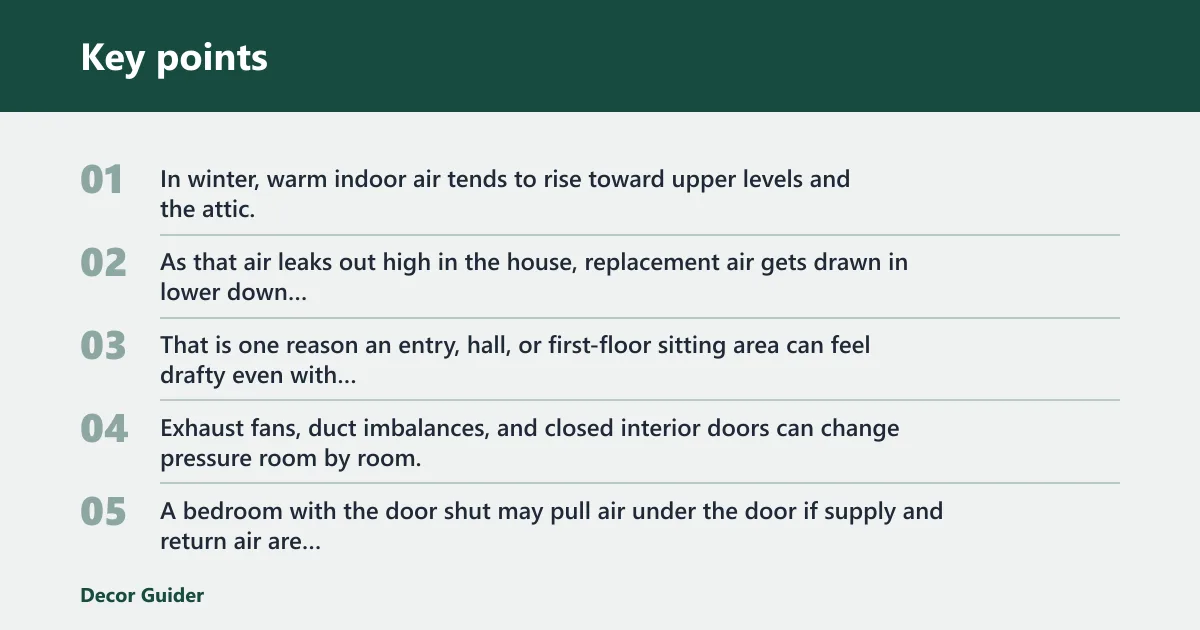
In winter, warm indoor air tends to rise toward upper levels and the attic. As that air leaks out high in the house, replacement air gets drawn in lower down through doors, windows, rim areas, and cracks. That is one reason an entry, hall, or first-floor sitting area can feel drafty even with the furnace running normally.
Exhaust fans, duct imbalances, and closed interior doors can change pressure room by room. A bedroom with the door shut may pull air under the door if supply and return air are out of balance. That under-door stream often feels like a “cold room” problem when the real issue is moving air plus a temperature difference between spaces.
Leaky frames and under-door gaps
Under-door gaps are easy to feel because the leak is low and direct. A leaky front door can cool the whole entry. A bedroom door can matter too, especially if it separates a warm room from a colder hall, stairwell, mudroom, or bonus room over a garage.
Windows create a different kind of discomfort. Even when air leakage is modest, cold glass lowers comfort nearby. That is why thermal curtains work best on drafty windows or in seating areas close to glass. Drapes can reduce radiant chill from cold glass and slow convective air movement at the window, especially when they hang close to the frame and stay closed after dark, but they work best after obvious leaks are fixed.
When insulation is the bigger issue
Sealing windows and doors can stop air leakage, but some homes still have cold rooms because the main heat-loss path is above, below, or inside the assembly. Clues include ceilings that feel cold near exterior walls, floors that stay cold across the whole room rather than near a single gap, and one upstairs room that is always harder to keep comfortable.
Attic insulation slows heat escaping through the ceiling plane, which often matters most in top-floor bedrooms and rooms with cold ceiling edges. Wall insulation cuts heat flow through exterior walls, which helps when the whole perimeter of a room feels cold. Floor insulation reduces heat loss to crawlspaces, garages, and slab edges, which matters when the entire floor stays cold underfoot. If sealing trims the draft but the room still feels cold on all sides, insulation is often the next move. That is especially true for rooms over unconditioned spaces, top-floor bedrooms under a thin attic layer, or older additions with sparse wall insulation.
What should you seal first in winter?
Seal exterior doors first, because they often leak at the threshold, latch side, and weatherstripped edges all at once. Next, seal the windows that create the strongest drafts or sit beside the places you use most, such as the sofa, bed, or desk. Then check fireplace openings and damper leaks. After those, look for attic-related clues and only then work on interior doors used as airflow barriers. That order usually gives the fastest comfort payoff because it targets the biggest and most obvious winter air paths first.
Exterior doors and thresholds
Front and back doors deserve first attention because they combine multiple leak points: side jambs, head jamb, latch side, threshold, and under-door gap. Use weatherstripping around the sides and top. If light shows at the bottom or cold air moves under the slab, add or adjust a sweep, threshold, or draft stopper depending on door type.
Check fit before adding more material. If the latch does not pull the door tight to the weatherstripping, sealing will stay uneven. Sticking or dragging doors are warning signs too, because a door that rubs at one corner may leave a gap at another.
Drafty windows and stationary frame gaps
After doors, seal the windows that affect comfort most: the ones beside the sofa, bed, desk, or dining seat. Use weatherstripping on operable parts if the window design accepts it. Use caulk at small stationary gaps around trim or frame joints where movement is not required.
Do not treat every crack the same. A sash that slides or cranks needs its movement path clear. A trim-to-wall gap is a caulk job. A worn compression seal at a casement or patio door is a weatherstripping job.
Fireplace openings and chimney loss
A fireplace opening should be sealed properly when not in use, because an open fireplace can let warm indoor air escape. Start by confirming the damper is closed. Then check the surround, hearth edge, and any visible joints where outside air may enter around the assembly.
If the room still feels cold near the fireplace when the damper is shut, the issue may be a poor damper seal, a chimney drafting problem, or gaps in the firebox surround. That is a good point to bring in a chimney or fireplace professional rather than stuffing improvised materials into the opening.
How do you stop drafts under doors?

Stop drafts under doors by matching the fix to the door type. A draft stopper can be enough for a bedroom or interior door, but exterior doors often need weatherstripping, a sweep, threshold adjustment, or latch correction so the whole perimeter seals instead of only blocking the bottom edge.
When a draft stopper is enough
Draft stoppers are best when the main leak is at the bottom edge and the door itself otherwise closes well. For a bedroom, office, or den, a fabric draft stopper is quick, low cost, and easy to move. For an exterior door, a rubber draft stopper or mounted sweep is usually more dependable than a loose fabric tube.
Suppose your bedroom door has a clear gap over hardwood and the room feels cooler only at night when the hall thermostat is set back. A fabric draft stopper can reduce that under-door air movement right away, while leaving the door and latch untouched.
Exterior doors need a full-perimeter seal
On an exterior door, the under-door gap is only part of the story. Add or replace weatherstripping at the sides and top, then inspect the threshold and sweep. If the bottom seal contacts the threshold only at the center or only at one corner, the issue may be door sag, hinge wear, or an uneven floor.
Use caulk only on small stationary gaps around the frame. Do not caulk the moving door slab, the sweep, or the threshold edge that needs adjustment.
Bedroom and interior doors as airflow control points
Interior doors matter when they separate a warm zone from a cooler one. That includes bedrooms at the end of a hall, doors to finished basements, mudrooms, and bonus rooms. Here, the goal is not weatherproofing the house shell but slowing uncomfortable air movement between zones.
A bedroom door often benefits from a draft stopper first, then hinge or latch tuning if the top or side edge leaks. If the room needs combustion air, return airflow, or transfer ventilation by design, do not over-seal without understanding the room’s air path.
Troubleshooting uneven sealing
If light shows only at one edge, the fix is not “more weatherstripping” by default. Start with alignment.
- Sticking or dragging door: check hinges, loose screws, swelling, and seasonal movement before adding thicker seals.
- Latch misalignment: if the latch barely catches, the slab may not compress the weatherstripping enough. Strike adjustment can matter as much as new seal material.
- Rattling in wind: the door may be closing but not held tightly against the stop. Compression weatherstripping or latch tuning often works better than a bottom-only fix.
- Uneven threshold gap: a sweep alone may drag on one side and miss the other. Check for door sag, worn hinges, or an out-of-level threshold.
Picture a front door that shows light only at the upper latch corner. Replacing the threshold will not fix that specific symptom. Adjusting the strike so the slab pulls tighter to the weatherstripping is the cleaner first move.
Winter comfort checklist table
| Area | Likely heat-loss issue | Fastest fix | Tool/material needed | Estimated cost band | When to call a pro |
|---|---|---|---|---|---|
| Front door | Air leaks at jambs, threshold, or latch side; cold air under slab | Replace worn weatherstripping, add or adjust sweep, tune latch pull | Weatherstripping, screwdriver, door sweep, draft stopper | Low to medium | If the frame is damaged, the door drags badly, or gaps stay uneven after adjustment |
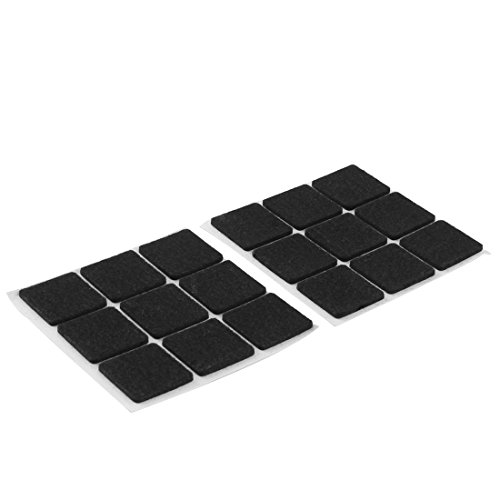
| Bedroom door | Under-door airflow from cooler hall or stairwell | Add a fabric draft stopper; check hinge and latch alignment if side leaks remain | Draft stopper, felt pads if needed, screwdriver | Low | If the door binds, will not latch, or is part of a planned return-air path that needs review |
| Living room windows | Cold glass, worn seals, small frame gaps, air leakage near seating area | Seal stationary frame gaps with caulk where appropriate; add thermal curtains and close them at night | Caulk, caulk gun, weatherstripping for operable sections, thermal curtains | Low to medium | If the sash is loose, the frame is rotten, or condensation and drafts persist after sealing |
| Hard floors | Cold underfoot comfort loss over wood, tile, laminate, or slab | Add an area rug with pad in seating and bed zones | Area rug, rug pad | Low to medium | If the whole floor stays very cold and the room is over an unconditioned space, pointing to insulation work |
| Fireplace area | Open damper, leaky surround, chimney pull removing indoor heat | Close damper when not in use; inspect surround for visible gaps | Flashlight, fireplace plug or panel only if approved for the setup | Low to medium | If the damper does not seal, smoke behavior is odd, or outside air still pours in when closed |
| Entry hall | Cold air carried inward every time the exterior door opens; bare floor feels chilly | Seal door perimeter first, then add a washable rug runner to the main walking path | Weatherstripping, runner rug, draft stopper if needed | Low to medium | If repeated moisture, warped trim, or a threshold leak suggests water entry too |
| Top-floor bedroom | Attic-related heat loss plus window discomfort | Seal window and door leaks, then evaluate attic insulation clues | Weatherstripping, caulk, thermal curtains, attic hatch gasket if applicable | Low to high | If sealing helps only a little and the ceiling or knee wall still feels cold |
How can you make each room feel warmer fast?
Make a room feel warmer fast by stopping active drafts first, then targeting the surfaces your body notices most: windows beside seating, hard floors underfoot, and cold air paths at doors. After that, use curtains, rugs, fan direction, and bedding to raise comfort where you actually sit, walk, and sleep.
Living room
In a living room, start with the windows near the sofa and the fireplace area if the room has one. Thermal curtains help cut heat loss through drafty windows. Open them in daytime for sun if the room gets useful winter light, then close them at night for comfort.
If the room has a high ceiling, set the ceiling fan to rotate clockwise on low speed in winter. That helps push warm air downward without creating a cooling breeze. Keep the speed low. High speed can feel drafty and cancel out the comfort gain.
Shift the comfort zone, not just the decor. Place seating away from the coldest glass if possible. Use an area rug to warm the floor in the seating zone, especially over wood, tile, or laminate.
Bedroom
Bedrooms often improve quickly with a door-bottom fix, better window covering, and bed placement that avoids direct cold air. If the room shares a wall with the outdoors and the bed sits under a drafty window, the person sleeping there will notice surface chill even if the room air is acceptable.
Close thermal curtains at night. If the bedroom door leaks to a colder hall, use a draft stopper. Add an area rug where bare feet first land in the morning. Blankets help personal comfort, but they work best after the room stops losing heat through the envelope.
Entry and hall
The entry is where small leaks feel large because the air path is direct and repeated. Focus on the front door fit, not just a decorative mat. Weatherstripping, threshold adjustment, and a bottom seal matter more than extra throw pillows in the next room.
For halls that connect warm and cool zones, use interior doors as control points. A basement door or mudroom door with a draft stopper can reduce the stream of cold air feeding the main floor.
Cold-floor rooms
Hard floors make rooms feel colder because your body notices contact temperature right away. An area rug is one of the fastest comfort layers for these rooms, and a pad underneath usually makes a bigger difference than looks alone. This is a comfort measure first, not a whole-house heat-retention strategy.
If the entire floor remains cold, especially over a crawlspace, garage, or slab edge, insulation may matter more than decor. In that case, floor or perimeter insulation is the fix that changes the room, while the rug simply softens the symptom.
Which living-room fixes raise comfort fastest?
If your living room still feels cold after the heat is on, the fastest wins usually come from blocking air leaks, covering windows, and adding soft floor layers. Those changes reduce heat loss first, so the room feels warmer without relying on a higher thermostat setting. The supporting guide on living room warmth explains which upgrades give the biggest comfort payoff first, from simple draft-stopping steps to decor that helps a space feel cozier.
That order matters because it helps you spend time and money where it makes the most difference, instead of chasing small improvements that barely change how the room feels.
How to choose winter colors for a cozier living room
If your living room feels cold even when it’s tidy and lit, the right color palette can make it feel warmer without changing the furniture. The supporting guide breaks down which warm neutrals work best, how to match paint undertones to your room’s light, and when darker or lighter shades make sense in winter spaces. It also covers accent colors that add comfort without making the room feel heavy. Use the winter color guide to narrow your choices before you paint, shop for pillows, or plan layered decor.
Do curtains, rugs, and blankets actually help?
Yes, but they help in different ways. Thermal curtains can reduce heat loss at drafty windows, rugs raise underfoot comfort on hard floors, and blankets warm the person using them. These layers work best after drafts are controlled, because soft goods cannot stop major air leakage by themselves.
Where thermal curtains do real work
Thermal curtains are most useful on drafty windows, large glass near seating, and bedrooms where nighttime comfort matters. Open them during sunny winter hours if the window gets direct sun. Close them at night to reduce radiant chill and help hold comfort near the glass.
Do not keep every curtain shut all day by default. That can make a room dim and stale when daylight would help. Balance warmth, light, and daily use.
Why rugs matter on hard floors
Rugs change what your body feels first. On tile, wood, laminate, and similar hard surfaces, an area rug plus pad can make a room feel warmer even though it is not the same as insulating the floor assembly. Use them where feet rest: beside the bed, under the coffee table, along a desk chair path, or in front of the sink.
How soft layers fit into the sequence
Soft layers are the second step, not the first. If weatherstripping is worn flat, the fireplace damper is open, and the latch side of the front door whistles in wind, throw blankets are comfort accessories, not heat-loss control. Once leaks are fixed, those soft layers start to work the way people expect.
Which winter fixes are low cost, and which need a pro?
Low-cost winter fixes include replacing worn weatherstripping, using caulk on small stationary frame gaps, adding draft stoppers, closing thermal curtains at night, and setting ceiling fans clockwise on low. Call a professional for damaged frames, chimney problems, persistent cold rooms, or insulation gaps that sealing alone does not solve.
Low-cost fixes with the best payoff
- Replace worn weatherstripping around doors and operable windows.
- Caulk small stationary gaps around frames and trim.
- Add a draft stopper to bedroom, mudroom, or basement-adjacent doors.
- Close the fireplace damper when the fireplace is not in use.
- Use thermal curtains on the draftiest windows.
- Put area rugs and pads on cold hard-floor zones.
- Set ceiling fans to clockwise rotation on low speed for winter.
Mid-level upgrades
If low-cost sealing helps but does not finish the job, move to hardware and fit. That includes replacing a worn door sweep, adjusting the strike so the latch compresses the seal properly, improving threshold contact, or upgrading weak window coverings in rooms where people sit close to glass.
Winter can be a good time for door upgrades when an old slab or frame is simply past adjustment. The point is not style first. It is predictable fit, full-perimeter sealing, and fewer cold-air paths.
When a professional is the better next step
Bring in a pro when the symptom points beyond simple sealing: warped doors, damaged frames, failed dampers, chimney drafting issues, widespread condensation, or one room that stays cold after obvious leaks are fixed. Persistent top-floor discomfort often points to attic air sealing or insulation work rather than another roll of weatherstripping.
Frequently asked questions
How do I make my home cozy for winter without raising the heat?
Start by sealing leaks at exterior doors, windows, and fireplace openings so warm air stops escaping. Then add thermal curtains, area rugs, bedding, and low-speed clockwise ceiling fan use where needed. This sequence improves comfort first, so rooms feel softer and less drafty without relying on a higher thermostat setting.
What are the best ways to stop drafts under doors in winter?
For interior doors, a fabric draft stopper is often the quickest fix. For exterior doors, use a full-perimeter approach: weatherstripping at the sides and top, plus a sweep or threshold adjustment at the bottom. If sealing is uneven, check for sticking, sagging, or latch misalignment before adding more material.
Why does my house feel drafty even when the heat is on?
Warm air can still leak out high in the house while cold air gets pulled in lower down through gaps. Under-door leaks, loose window frames, pressure differences, and cold surfaces all reduce comfort. Sometimes the deeper issue is attic, wall, or floor insulation rather than a thermostat problem.
What should I seal first: doors, windows, or fireplace openings?
Seal exterior doors first because they often leak at several points you can feel right away, especially the threshold, latch side, and weatherstripped jambs. Next, seal the worst windows, meaning the ones with obvious air movement or the ones beside beds, sofas, and desks where cold glass affects comfort most. Then check the fireplace damper and surround, since an open or poorly sealed fireplace can dump heated indoor air outdoors when not in use.
How can I tell if a door is losing heat in winter?
Look for daylight around the slab, feel for moving air at the threshold and latch side, and listen for rattling, whistling, or creaking in wind. Sticking or dragging can also point to poor fit. If one corner leaks more than the rest, alignment may be the problem rather than worn seals alone.
What are low-cost ways to make a bedroom cozier for winter?
Use a draft stopper at the bedroom door if colder hall air slips underneath, close thermal curtains at night, and add an area rug where your feet land beside the bed. These are inexpensive comfort moves. If the room still feels cold overall, inspect window seals and attic-related heat loss next.
Products related to this article
Sponsored / affiliate links. As an Amazon Associate I earn from qualifying purchases. I may earn additional commission from eligible campaigns.