How to Make a Living Room Feel Warmer Without Turning Up the Heat
Start with drafts, then window coverage, then soft floor layers. Blocking air leaks usually gives the biggest comfort gain per pound because cold air strips warmth fast. Skip these fixes and you often pay more for heat while the room still feels chilly. This guide ranks the quickest, cheapest living-room warmth upgrades by comfort per pound so you know what to do first.
This guide is part of our How to Make Your Home Cozy for Winter: Rooms, Doors, Drafts and Warmth series.
For temperature targets, the NHS says adults should keep occupied rooms at least 18C where possible, while the Energy Saving Trust notes that 18C to 21C is usually comfortable for living rooms and other occupied spaces. For radiators and TRVs, follow manufacturer guidance on bleeding, balancing, and leaving airflow clear around the unit.
Fastest warmth gains first



Best comfort-per-dollar ranking
- Seal obvious drafts — Cost band: free to low; Speed: same day; Impact: high. Best for doors, window edges, and hall-to-living-room leaks.
- Move furniture off radiators and vents — Cost band: free; Speed: immediate; Impact: high if heat is blocked. Best for compact rooms and sofas pushed against walls.
- Use a thick rug or rug pad — Cost band: low to medium; Speed: same day; Impact: high underfoot. Best for hard floors and north-facing rooms.
- Add lined or thermal curtains — Cost band: low to medium; Speed: same day; Impact: high near windows. Best for rooms that feel colder after dark.
- Switch to warm layered lighting — Cost band: low; Speed: same day; Impact: medium to high at night. Best for rooms that feel stark or unused in the evening.
- Improve radiator control and maintenance — Cost band: free to low; Speed: same day; Impact: medium to high. Best when one room lags behind the rest of the home.
- Add heavier textiles and throws — Cost band: low to medium; Speed: same day; Impact: medium. Best as a finishing layer after leaks are fixed.
What you’ll need
- Thick rug or rug pad
- Thermal or lined curtains
- Draught stoppers or draft tape
- Lamp bulbs with a warm color temperature
- A radiator key and a microfiber cloth
- Optional: throws, cushions, and heavier fabric covers
How do you stop heat loss first?
Seal obvious gaps first, because a room with cold air leaks can still feel uncomfortable even with rugs and throws. Door bottoms, window edges, and thin curtains are the quickest losses to fix. Energy Saving Trust guidance on draught-proofing supports this order, because stopping unwanted airflow is usually one of the cheapest comfort gains in a home.
- Fit a draught stopper at the main door and any door to a colder hall.
- Check window frames and sash gaps, then apply draft tape where the seal is weak.
- Close curtains fully after dark so the glass is covered edge to edge.
- Keep internal doors shut if heat is spilling into unused rooms.
- Recheck after one evening, then add more sealing only where you still feel cold air.
Say your living room is 4 m by 5 m and the sofa sits near a hallway door. If that doorway leaks, the room can still feel chilly at 21C because cold air reaches the sitting zone first. Sealing that single gap often beats buying another blanket.
What decor makes a living room feel warmer in winter?
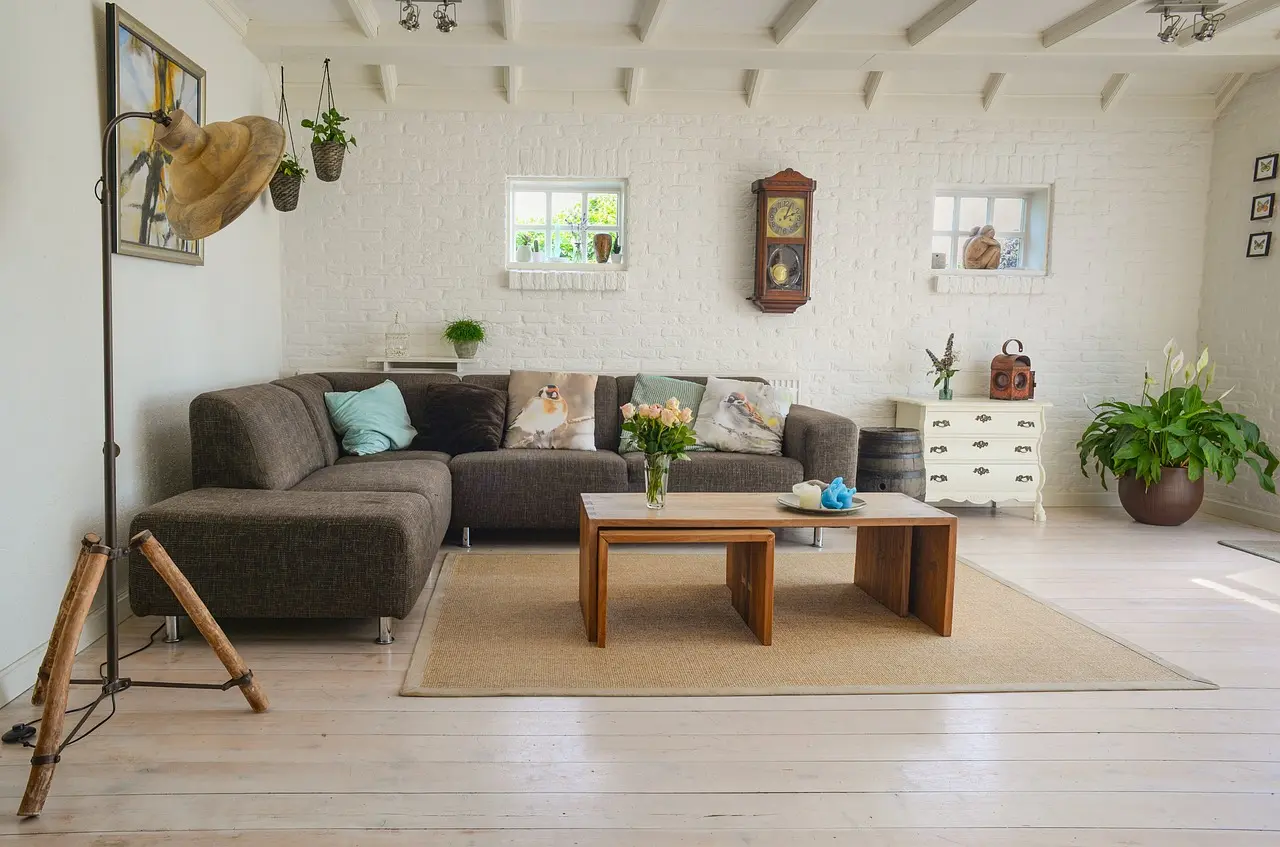
The strongest decor choices change both touch and heat retention. Rugs help from the ground up, heavy-weight fabrics soften hard surfaces, and warmer lighting changes how the room feels after dark. Start where you sit, not where the eye lands first.
Which textiles make a room feel warmer?
Choose rugs with thick or high-pile construction for underfoot insulation. Wool rugs are one of the best natural insulation materials, and they work well on tile, stone, or plain boards. Layering rugs can also build depth over a hard floor or even over carpet, especially in open-plan spaces.
Use heavy-weight fabrics such as lined linen, velvet, and textured upholstery or pillows to add tactile warmth. Heavy curtains and cushion covers help, but they work best when they are paired with floor coverage and draft control. Energy Saving Trust also notes that curtains can reduce heat loss through windows when they are closed after dark and fitted to cover the glazed area properly.
- Place the largest rug under the main seating zone.
- Add a second layer only where the floor still feels cold or visually sparse.
- Choose wool first if underfoot chill is the main complaint.
- Use throws and pillows on the seats people actually use.
Suppose a north-facing room has a pale sofa, a bare floor, and a single throw. Adding one thick rug and two heavier cushions changes the feel faster than adding more small accessories, because the eye and the body both register the extra texture.
What lighting makes a room feel cozier at night?
Warm lighting makes a room feel softer, especially when you replace one bright overhead source with lamps. Sitting rooms feel colder when people are inactive, so a cooler, harsher light can make the room seem less inviting even when the thermostat is steady. Warm white bulbs are a simple, low-cost way to shift the room’s mood without changing the heating.
How should you use light and furniture?
Use lamps instead of relying only on overhead lighting. Layer light at different heights so the room reads as calm rather than stark. Aim for warm, soft evening light rather than bright cool light, especially in a room used mainly after sunset.
Move sofas a bit away from radiators and vents so heat can circulate more freely. Keep large furniture from blocking heat output, because a blocked radiator can make one corner warm and the seating area still cold. Manufacturer guidance for thermostatic radiator valves and radiators generally advises leaving clear space around the unit so convection can do its job.
- Turn off the main ceiling light.
- Switch on about two or three lamps around the seating area.
- Move any sofa or sideboard that sits tight against a radiator.
- Leave a clear path for air to rise from the heat source.
What temperature should a living room be in winter?
A living room is generally recommended between 20C and 21C, and it is often treated as the warmest room in the house. The NHS says 18C is a practical minimum for healthy adults in the home, while the Energy Saving Trust says 18C to 21C is a common comfort range for occupied rooms. Sitting rooms can still feel cold when people stay still.
How should you read the number?
Treat the target as a comfort check, not a promise. A room at 20C can still feel chilly if the floor is hard, the windows leak, or the light is harsh. A room below that range may still feel fine for short periods if drafts are controlled and the seating zone is well layered.
Warmth upgrade priority by living room problem
| Problem | Best fix | Expected comfort impact | Cost band | Renter-friendliness | Common failure mode |
|---|---|---|---|---|---|
| Hard floor | Thick rug with a rug pad | High underfoot warmth and softer seating zone | Low to medium | High | Using a thin rug that still feels cold |
| Drafty windows | Thermal or lined curtains plus gap sealing | High near the window and at night | Low to medium | High | Curtains that do not cover the frame fully |
| Blocked radiator | Move furniture and clear the front | High if heat is trapped behind furniture | Free | High | Keeping a sofa tight to the radiator |
| Dim lighting | Two or more lamps with warm bulbs | Medium to high at night | Low | High | Keeping only a bright overhead light on |
| Sparse textiles | Wool throws, velvet cushions, lined linen | Medium for touch and visual softness | Low to medium | High | Adding small cushions without changing the main sitting zone |
| Open-plan heat spill | Close doors and zone the seating area with rugs | High where heated air is escaping | Free to medium | Medium | Heating the whole open space evenly |
| Cold sofa zone | Rug under feet plus throw at seating height | Medium to high | Low | High | Improving the room perimeter but not the sitting spot |
| North-facing room | Layered textiles and warmer lighting | Medium, especially after dark | Low to medium | High | Relying on decor alone while ignoring drafts |
Should I move furniture to keep a room warmer?
Yes, if the sofa or a cabinet is blocking a radiator or vent. Heat needs space to move, and furniture in front of the source can trap warm air where you do not sit. This is one of the cheapest fixes because it costs nothing.
- Check whether the sofa, TV unit, or bookcase sits directly in front of a radiator.
- Move the piece far enough away that air can rise and spread into the room.
- Keep curtains from covering the radiator during the day.
- Recheck the seating zone after the next heating cycle.
A common first-timer mistake is pushing a large sofa tight to a radiator in a small terrace living room. The radiator heats the back of the sofa instead of the room, and the sitting area still feels cold even though the system is running.
How can you stop heat escaping from your living room?
Use the order that tackles the biggest losses first: seal gaps, cover the glass, then reduce unused-room heating. Thermal curtains help reduce window heat loss, draught stoppers block cold air ingress at the doors, and TRVs let you control rooms separately so heat stays where people actually sit. That sequence matches standard Energy Saving Trust advice on keeping heated air where it is needed most.
How should you use TRVs and radiator care?
Thermostatic radiator valves give room-by-room control, which helps prevent heating unused rooms. They work best when the radiator itself is efficient. Bleed cold spots, clean dust and grime from the fins and cover, and do not block the radiator with furniture or curtain fabric. Manufacturer guidance for radiators and TRVs generally recommends regular checks for trapped air and obstructions.
- Set the living room TRV where the room is used most often.
- Lower the TRV in unused rooms so heat is not wasted there.
- Bleed the radiator if the top feels cold while the bottom is warm.
- Wipe dust and grime from the radiator surface.
What if that still feels cold?
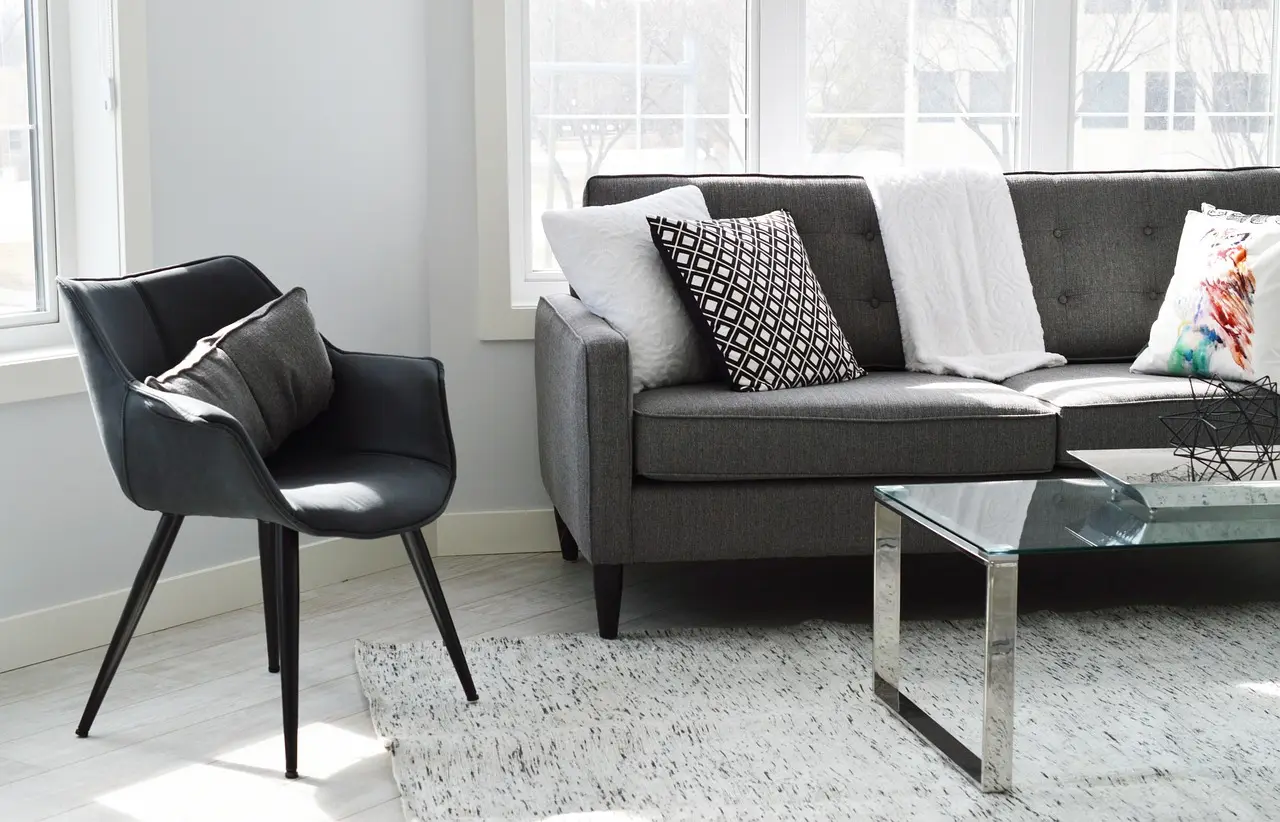
If the room still feels cold after drafts, curtains, rug layers, and lamp changes, the remaining problem is usually one of three things: airflow, window loss, or an unbalanced heating setup. In an open-plan room, heat can spill out faster; in a small north-facing room, the same setup may still need heavier textiles and better window coverage.
Escalation ladder
- Add a thicker rug pad under the main rug if the floor still feels cold.
- Replace thin curtains with lined or heavier curtains that cover the full window.
- Move the seating zone away from the coldest wall or glass area.
- Use the TRV to hold the living room near 20C to 21C during occupied hours.
Common mistakes
- Adding soft furnishings before fixing drafts: a room can still feel cold if air leaks stay open.
- Using a thin rug and expecting major insulation: thick or high-pile construction does more for underfoot comfort.
- Hanging curtains that do not cover the full window: gaps at the sides let cold air stay near the glass.
- Placing furniture in front of radiators: blocked heat output reduces comfort where people sit.
- Ignoring dusty radiators or cold spots: poor maintenance cuts output and leaves the room uneven.
- Choosing lighting that is bright but still feels cold: harsh overhead light can make the room feel less inviting at night.
Frequently asked questions
How can I make my living room feel warmer without turning up the heat?
Start with the losses you can feel: door gaps, window edges, hard floors, and blocked radiators. Then add a thick rug, lined curtains, and lamp-based lighting. That sequence usually gives more comfort per pound than buying extra cushions first.
Do rugs really make a living room warmer?
Yes, especially on tile or stone flooring, which is cold underfoot. A thick, high-pile rug with wool content adds warmth from the ground up, and layering rugs can help zone open-plan spaces. A thin rug softens a room, but it does less for insulation.
What fabrics make a cold living room feel warmer?
Heavy-weight fabrics work best, especially lined linen, velvet, and textured upholstery. Use them on curtains, cushions, and throws near the seating area. The goal is both tactile warmth and a fuller visual feel, not just more surface decoration.
How can I stop heat escaping from my living room?
Seal door and window gaps first, then use thermal curtains to cut window heat loss. Keep internal doors closed when heat is spilling into colder rooms, and check that radiators are not blocked. A TRV can also stop heat from being wasted elsewhere in the home.
Products related to this article
Sponsored / affiliate links. As an Amazon Associate I earn from qualifying purchases. I may earn additional commission from eligible campaigns.