Best Bedroom Lighting Ideas for Cozy Nights: we compared
A practical bedroom lighting plan often uses three layers: a dimmable ceiling light for general use, one focused reading light per side, and warm bedside or accent light in a similar low-color-temperature range for sleep-friendly evenings. I see the same pattern hold up again and again. A bad layout makes reading harder, wakes the room at night, and can leave you with glare or a space that feels cold. This guide breaks down the right fixture mix for sleeping, reading, and low-light mood, plus what to buy for each role.
This guide is part of our Bedroom design ideas series.
Best bedroom lighting ideas for cozy nights: top picks at a glance
The cleanest all-around setup is a layered mix: plug-in or hardwired bedside sconces plus a dimmable warm LED ceiling fixture.
For renters, a dimmable touch lamp with USB ports is the easiest low-commitment fix. For decorative mood, a smart LED strip can add a soft edge glow, but it should stay secondary to real ambient and task lighting.
Quick comparison
| Product | Badge | Best for | Price | ||
|---|---|---|---|---|---|
 |
Lutron Diva LED+ Dimmer Switch, Paddle Dimmer, SingleLutron | Our pick | Lutron Diva LED+ Paddle Dimmer | $31.99
Price as of 27 Sep 2026
|
View |
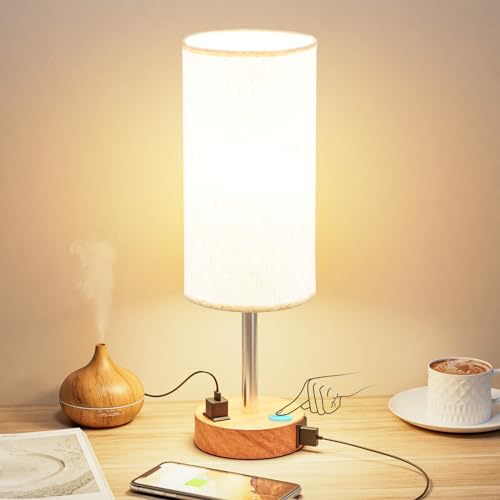 |
Fenmzee Bedside Table Lamp for Bedroom – Dimmable Touch,Fenmzee | Also great | Fenmzee Touch Bedside Lamp with USB | $23.99
Price as of 27 Sep 2026
|
View |
 |
Cync GE Smart LED Strip Light, Color Changing Room DecorCync | Pair with it | 16ft Cync GE Smart LED Strip | $13.79
Price as of 27 Sep 2026
|
View |
Small rooms usually do best with one strong task light and one dimmable ambient source. Shared rooms need two reading lights so one person’s book light does not wash over the other sleeper.
How we chose
Light quality came first: warm output, low glare, and brightness that suits nighttime use. A bedroom light that looks stylish but throws a hard beam onto pillows fails the main job.
Placement flexibility mattered too. The best options work beside the bed, overhead, or in a corner without forcing the whole room into one lighting mode.
Control was the third filter. Dimming, smart scenes, or simple touch control all matter more at bedtime than raw brightness.
Installation fit also counted. Renter-friendly products need to avoid hardwiring, while homeowners may want the cleaner look of a fixed ceiling or wall fixture.
Finally, value meant function added per dollar. A cheap decorative light is not useful if it cannot read a page or calm the room after lights-out.
Lutron Diva LED+ Dimmer Switch: best for smooth ceiling-light control
This is for homeowners who want to make an existing ceiling fixture feel less abrupt at night. Based on the spec sheet, owner feedback, and range experience, a good dimmer matters as much as the fixture itself because it lets one light handle daytime chores and low-light evening use.
What stands out is the fine control. Lutron’s LED+ design is known for smooth dimming and a trim lever that helps match the dim range to the bulb, which is useful when a bedroom ceiling fixture otherwise drops too dim too fast.
The drawback is installation. It is not a renter-friendly add-on unless the landlord allows electrical work, and it only helps if the connected bulbs are dimmable LED models that cooperate with the switch.
Fenmzee bedside table lamp: best for renter-friendly bedside light
This suits renters and anyone who wants a bedside lamp that does several jobs. It gives dimmable light for reading, adds USB-A, USB-C, and an AC outlet, and comes with a non-flicker E26 LED bulb, which reduces the need to buy separate parts right away.
The touch control is practical for late-night use. The form is easy to place on a nightstand, and the included bulb makes the lamp a simpler first buy for bedrooms that need a quick functional upgrade.
The drawback is that a table lamp still takes surface space. In a tight room, the lamp base and cords can crowd books, water, or a phone stand unless the nightstand is large enough.
Cync GE Smart LED Strip Light: best for soft accent glow
This is for people who want a subtle mood layer, not a main light source. The strip is Matter compatible, works with Alexa and Google Home, and offers millions of colors and white tones, so it can add a low-level edge glow behind a headboard or along a shelf.
What stands out is control. Scene changes, schedules, and app or voice control are useful when a room needs a gentle evening setting without walking across the bedroom to reach a switch.
The drawback is simple: it is decorative. A strip light does not replace bedside reading light, and if it is placed poorly it can look harsh or expose visible cord runs.
What is the best lighting for a cozy bedroom?
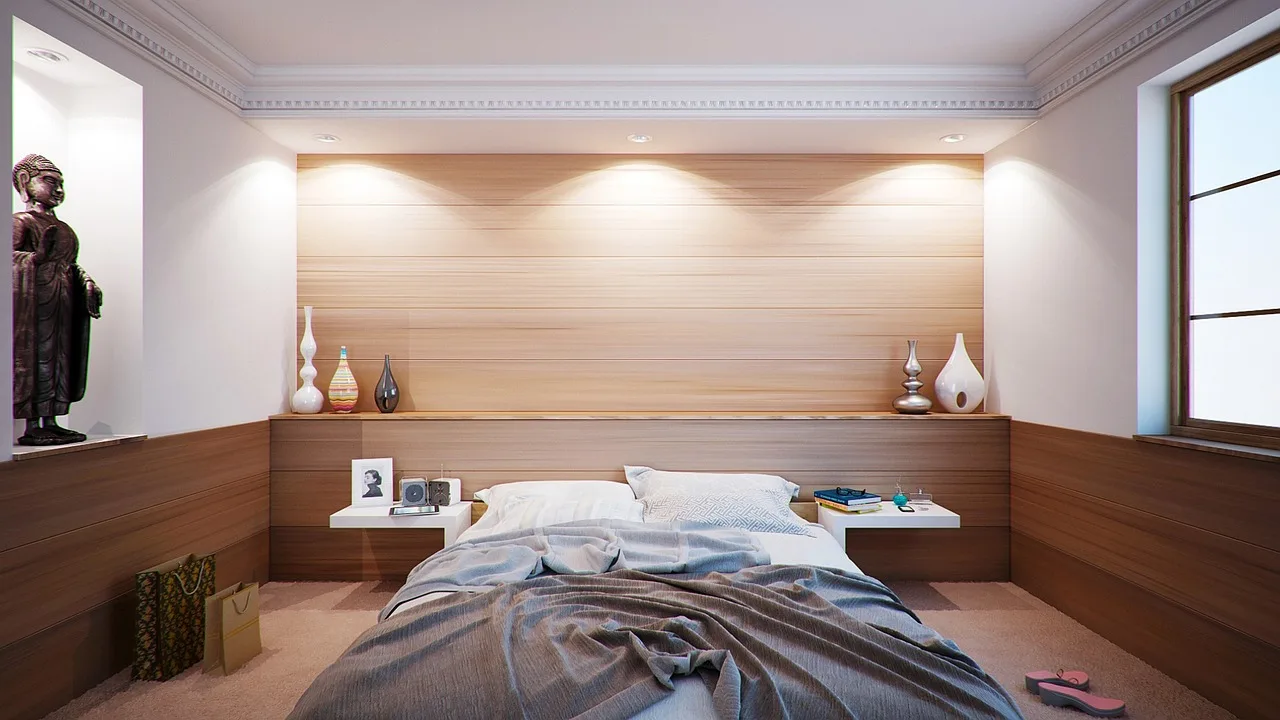
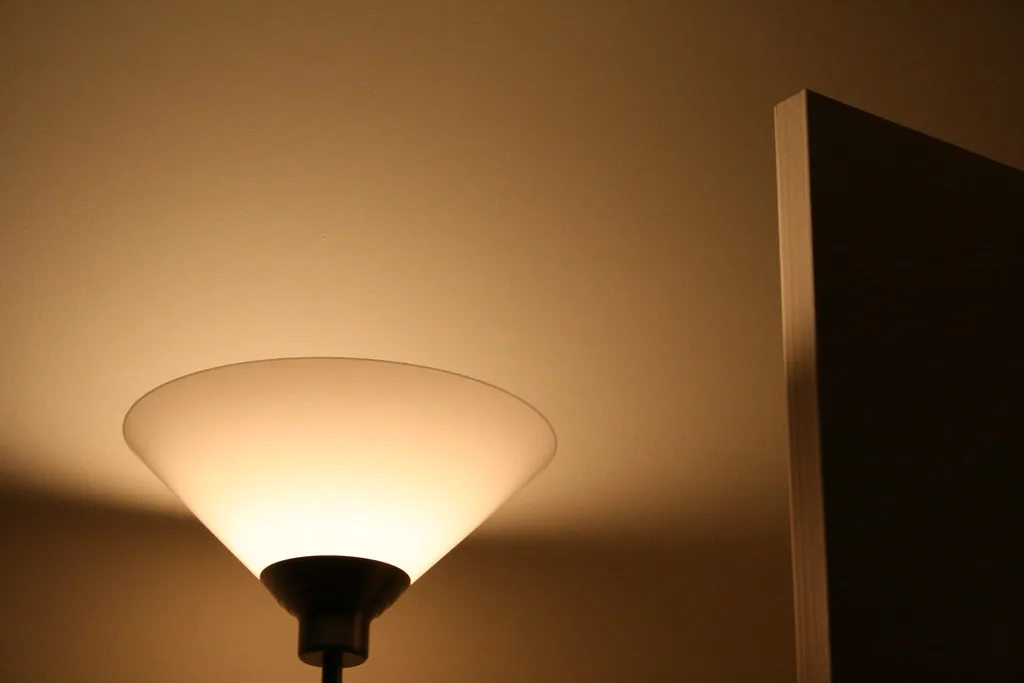
The best lighting for a cozy bedroom is a layered mix of warm ambient light, focused task light, and a small amount of accent light. That combination keeps the room usable for reading and changing clothes while still letting the space dim down for sleep.
A single ceiling fixture usually fails one of those jobs. It may light the whole room, but it often creates glare and feels flat at night; a bedside lamp alone can leave corners too dark and make the room uneven.
Why layered lighting beats a single fixture
Layered lighting separates jobs. Ambient light handles general visibility, task light helps with reading, and accent light softens the room’s edges so it feels calmer after the main lights are lowered.
That separation matters because bedtime needs change fast. A bedroom may need bright enough light for folding clothes, then much softer light for a book, and then just a faint glow for the walk to bed.
The best bedroom mix for most homes
The most dependable mix is a dimmable ceiling fixture plus one reading light per side of the bed. Add a small accent source only if the room still feels stark after the main lights are dimmed.
This is also the safest answer for shared bedrooms. Two bedside lights prevent one sleeper from blasting the other with a ceiling light in the middle of the night.
How to keep the room cozy without making it too dim
Cozy does not mean dark. Aim for enough light to move around safely, then reduce brightness at the edges and near eye level to avoid a bright, alerting feel.
If the room has blackout curtains, the bedroom can feel much darker after sunset, so the ambient layer often needs to do more work than it would in a room with thin drapes or light-colored sheers.
Bedside lamp ideas for cozy nights

Bedside lamps are still the easiest way to get useful reading light without turning the whole room bright. The key is placing them so the bulb sits low enough for easy reach but high enough to clear pillows and avoid glare.
Single lamp vs pair: when each works better
A single lamp works best in a small room or for one sleeper who reads in bed. A pair is better for couples, because each person gets local light without a shared beam crossing the mattress.
If only one side of the bed gets a lamp, the other person usually ends up using overhead light or a phone, both of which are worse for winding down.
How lamp height should sit relative to the mattress and pillows
For bedside use, the bottom of the shade should usually sit above pillow height and the bulb should not be directly visible from lying down. That keeps the lamp useful for reading without shining into the eyes when the head is on the pillow.
If a lamp is too low, the shade can block the page. If it is too high, the beam can spread too widely and spill onto the sleeping side of the bed.
Shade styles that cut glare while still giving enough reading light
Opaquer shades, lined drum shades, and softly diffused fabric shades reduce direct bulb glare. Clear glass looks attractive, but it usually throws more visible brightness at eye level and works better in a decorative role than as a bedtime reading fixture.
A shade with a wider opening at the top can help spread light upward and outward, which is useful in rooms that need a softer ambient lift.
Best bulb choices for bedside lamps
Use LED bulbs in roughly the 2200K to 3000K range, depending on how low the lamp is dimmed at night. Lower warm temperatures feel calmer near bedtime, while 2700K to 3000K can be easier for reading when the room is not fully lit.
Look for low-flicker or flicker-free bulbs where possible, especially if the lamp is used in dim mode. Cheap LEDs can flicker at lower settings, which is annoying for reading and can make a bedroom feel less restful.
Wall sconces: best for small bedrooms and cleaner nightstands
Wall sconces free up nightstand space and put the light where it is most useful. They are especially strong for small bedrooms where a table lamp would crowd the surface or block movement beside the bed.
Hardwired vs plug-in sconces
Hardwired sconces give the cleanest look and reduce visible cords. Plug-in sconces are the practical choice for renters or anyone who does not want to open the wall.
For a bedroom, plug-in models are often the smarter first step because they let the bed placement change without rewiring the room.
Ideal mounting height near the bed
A good starting point is to mount the sconce so the light source sits a little above pillow level and slightly behind the front edge of the mattress. That placement keeps the beam useful for reading while reducing glare in the eyes.
The exact height depends on bed height and mattress thickness, but the goal stays the same: light the book, not the face.
How to keep corded sconces tidy in rentals
Use cord clips, flat cord covers, or channel-style raceways to keep the cable from dangling beside the bed. A neat route to the outlet matters because visible cords can make an otherwise calm room feel busy.
In rentals, also check that the switch position is easy to reach from the bed. A beautiful sconce is frustrating if it requires reaching behind the dresser every night.
When sconces are better than table lamps
Sconces are better when the nightstand is small, when a couple wants separate reading lights, or when the room needs a cleaner visual line. They also work well in narrow rooms where a lamp would be easy to knock over.
A bedside lamp still wins if the room needs flexibility or frequent rearrangement. Sconces commit the light to one place.
Should you use a ceiling light in a bedroom?
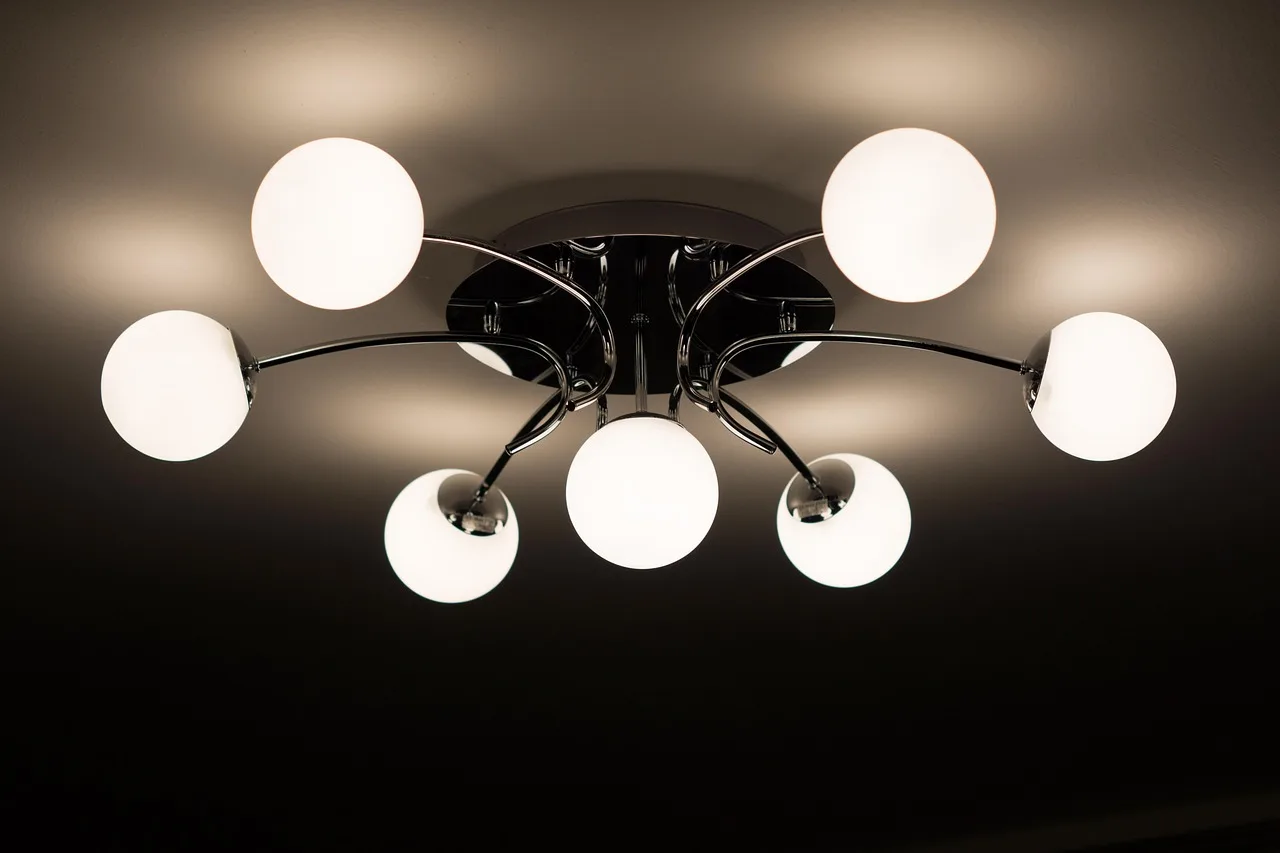
Yes, a ceiling light can be useful in a bedroom, but it should usually be dimmable and softened. Overhead light is good for dressing, cleaning, and general visibility, while bedtime comfort often needs much lower output.
In low ceilings or small rooms, the wrong ceiling fixture can feel harsh fast. The solution is usually a flatter profile, a diffuser, or a lighter bulb setting rather than more brightness.
When a ceiling fixture helps and when it feels harsh
Ceiling light helps when the room needs one central source for general use, especially in rooms with little natural light. It feels harsh when the bulb is too cool, the fixture is bare, or the ceiling is low enough that the light lands directly in the line of sight.
If the bed is directly under the fixture, glare tends to be more noticeable. That is one reason bedside layers matter so much.
Flush mount, semi-flush, pendant, and chandelier options
Flush mounts are the safest choice for low ceilings because they sit close to the surface and usually reduce headroom issues. Semi-flush fixtures can work in standard-height rooms where a little drop is acceptable.
Pendants and chandeliers are better in taller rooms, but only if they do not hang low enough to create glare or visual clutter above the bed.
How diffusers and frosted shades soften overhead light
Diffusers and frosted shades spread the light so a bulb does not point straight down like a spotlight. That matters in bedrooms, where hard light on bedding or white walls can feel much brighter than the wattage suggests.
A covered fixture often makes the room feel calmer even when the lumen count stays similar, because the eye sees less direct source brightness.
What to do in low ceilings and small rooms
Use a flush mount with a warm dimmable LED and add bedside lighting for the real bedtime work. In a compact room, one overhead source is usually enough for general use if the sides of the bed have their own softer lights.
Skip large hanging fixtures if they make the ceiling feel lower. The room will read more open when the light stays close to the ceiling plane.
How do I layer lighting in a small bedroom?
A small bedroom usually needs one ambient source, one task source, and one tiny accent source at most. The trick is to keep each layer compact so the room still feels open, not crowded by fixtures.
In tight rooms, the best lighting plan is often a dimmable flush mount overhead, a wall-mounted or compact bedside task light, and a very subtle accent source only if needed.
A simple three-light plan for tight rooms
Start with a warm dimmable ceiling fixture for general light. Add one bedside lamp or sconce on each side if the room is shared, or one on the main reading side if it is a single sleeper.
Use an accent light only if the room still feels flat after the main lights are lowered.
Where to place ambient, task, and accent sources
Ambient light belongs overhead or on a high wall. Task light should sit near shoulder height, next to the bed, so the beam lands on a book rather than the whole pillow area.
Accent light works best behind furniture, under a shelf, or along a wall where it can soften edges without becoming the brightest thing in the room.
How to avoid pillow glare and uneven light for two sleepers
Keep task lights angled away from the sleeping side and use shades that hide the bulb from direct view. For two sleepers, symmetry matters more than style because one bright lamp can disturb the person on the other side.
If only one side needs reading light, the other side should still have a low, simple lamp so the room does not feel lopsided.
Renter-friendly layering with plug-in and adhesive options
Plug-in sconces, touch lamps, and adhesive LED strips can build a good layer without wall work. Cable clips and flat cord covers help those lights look intentional rather than temporary.
Renter setups should prioritize removable parts and easy positioning. A bedroom that can be reconfigured without tools is far more practical over time.
Can dimmable lights help make a bedroom feel cozier?
Yes. Dimmable lights help a bedroom feel cozier because brightness can drop with the evening instead of staying fixed at daytime levels. They also make one fixture useful for both chores and wind-down time.
The real advantage is control. The room can stay bright enough for getting ready, then shift to a lower setting that feels calmer for reading or listening to music.
Brightness control for winding down and reading
A good dimmer lets the bedroom sit at different levels across the night. Higher light works for dressing or cleaning, while lower light is better for the last hour before sleep.
Reading usually needs more light than mood lighting, but less than full-room overhead brightness. Dimming makes that middle zone much easier to reach.
Compatibility requirements and LED dimming caveats
Not every LED bulb dims well. The bulb must be labeled dimmable, and the dimmer should be compatible with LED loads; otherwise the light may flicker, buzz, or cut out too early on the dim range.
Smart bulbs can also conflict with certain dimmer switches if both are trying to control brightness at the same time.
When smart lighting is worth it
Smart lighting is useful when the room needs repeatable scenes, sunrise-like morning settings, or remote control from bed. Tunable white bulbs can shift warmer at night and brighter during the day, which is handy for people who want one fixture to do more work.
The limitation is complexity. If the room only needs simple bedtime control, a good dimmer and one reliable LED bulb are often enough.
What color temperature is best for bedroom lighting?
The best color temperature for bedroom lighting is usually between 2200K and 3000K, with the warmer end feeling best at night. Lower temperatures reduce the cool, alert feel that many people associate with office or kitchen lighting.
Cool white tones can be useful for cleaning or dressing, but they often feel too active for a room meant to slow down after dark.
Warm white bulbs better for bedrooms?
Yes, warm white bulbs are usually better for bedrooms because they soften the visual contrast in the room and make surfaces look less stark. That warmer tone is easier on the eyes late in the evening than a bluish bulb.
The tradeoff is that very warm light can make reading text slightly less crisp, so a middle warm tone around 2700K is often the safest compromise for most bedside use.
When cool white feels too alerting
Cool white often feels too alerting in a bedroom when it is used overhead or at high brightness after sunset. It can make white bedding look brighter than intended and make the room feel more like a work space than a place to wind down.
That does not mean cool light is forbidden. It just belongs earlier in the evening or in task zones, not as the main bedtime source.
How do I make my bedroom lighting feel cozy without making it dark?
Make the room warm, not dim to the point of strain. The goal is enough light to walk, read, and place items safely, while reducing direct glare and lowering the overall brightness level near bedtime.
Use softer bulbs, dimmers, and shaded fixtures so the room feels calm without becoming inconvenient.
Keep paths and surfaces visible
Nightstands, floor paths, and closet access still need enough light to use safely. A small ambient source or a dimmed ceiling fixture can keep the room usable while bedside lights take care of reading and pre-sleep tasks.
When a room gets too dark, people usually compensate by turning on a harsher light or reaching for a phone screen.
Use warm light near the bed and softer output in the room
Warm light near the bed creates the feeling of calm, while a lower-output ambient source keeps the rest of the room from disappearing. That balance is what makes a bedroom feel restful instead of cave-like.
Blackout curtains can make this balance more important because they remove a lot of the remaining daylight and can leave the room dependent on artificial light for more of the evening.
Bedroom lighting decision chart: choose the right setup for your room
This chart maps room size, ceiling height, bedtime habits, and renter status to a practical fixture mix. The best choice is the one that solves the actual job list, not the one that simply looks good in a photo.
| Room profile | Best fixture mix | Bulb temperature | Dimming setup | Renter-friendly? |
|---|---|---|---|---|
| Small room, low ceiling, one sleeper | Flush-mount ceiling light + one bedside lamp or plug-in sconce | 2700K to 3000K | Dimmable ceiling fixture or dimmable bulb at the bedside | Yes, if the bedside light is plug-in |
| Small room, shared bed | Flush-mount ceiling light + two bedside sconces or lamps | 2700K | Separate bedside dimming on both sides | Yes, if using plug-in sconces or lamps |
| Medium room, standard ceiling, reading before sleep | Semi-flush ceiling light + pair of bedside reading lights | 2700K | Dimmable ceiling light plus dimmable bedside lights | Mixed |
| Large room, tall ceiling, mood-driven evenings | Overhead fixture + bedside sconces + small accent light | 2200K to 2700K at night | Scene-based dimming or smart presets | Sometimes, if accent light is plug-in |
| Renter, no wiring allowed | Touch lamp + plug-in sconce + adhesive accent light | 2200K to 2700K | Touch dimming, inline dimmer, or smart plug control | Yes |
| Blackout curtains, very dark at night | Dimmable ceiling light + strong bedside task light | 2700K to 3000K for reading, lower for wind-down | Separate controls for ambient and task zones | Yes, if fixtures are plug-in or existing |
How to read the chart
Small rooms need compact fixtures and careful placement because a bulky lamp can take more visual space than the light adds. Shared beds need two reading sources so one side can stay low while the other side reads.
Blackout curtains usually mean the room depends more on artificial light after dusk, so dimmable ambient light becomes more useful. A room with lots of evening daylight can lean more on accent and bedside layers later in the night.
What lighting works best for reading in bed?
The best reading light in bed is a focused bedside source placed beside or slightly behind the shoulder, with a warm bulb that is bright enough for text but shielded from direct eye contact. That keeps pages legible without lighting the entire room.
For shared bedrooms, two reading lights are better than one central lamp because they keep brightness local and reduce disturbance.
Which setup should you choose?
If the goal is the cheapest fix, a dimmable bedside lamp with a warm LED bulb is the easiest start. It solves reading light and bedtime mood without requiring wiring or major room changes.
If the room has a harsh ceiling fixture, fixing that overhead light with a compatible dimmer usually gives the biggest comfort gain. If the room is rented, plug-in sconces or a touch lamp deliver the most function with the least installation stress.
Which one should you buy
If the bedroom needs the most complete fix, buy the dimmer switch and add bedside lights. That is the cleanest path when the ceiling fixture is already in place but feels too bright at night.
If you share a bed and both read, choose two bedside lights or sconces before anything decorative. A matched pair solves the common problem of one person reading while the other is trying to sleep.
If you rent and cannot wire anything, the bedside lamp is the first buy. Add a plug-in sconce only if the nightstand is cramped or the lamp causes glare.
If the ceiling light feels too harsh in a low room, replace the bulb with a warm dimmable LED or switch the fixture to one with a diffuser. If you want set-and-forget control, smart scenes are useful, but they should still sit on top of a sensible layered plan.
Frequently asked questions
How many light sources should a bedroom have?
Most bedrooms work best with at least two light sources, and three is better when the room is used for reading. One source handles general light, another handles bedside tasks, and a third can create softer evening mood without forcing the whole room to stay bright.
Products related to this article
Sponsored / affiliate links. As an Amazon Associate I earn from qualifying purchases. I may earn additional commission from eligible campaigns.