Best Bedroom Ceiling Ideas for a Finished Look
The best bedroom ceiling idea is the one that fits your ceiling height and effort level: for lower ceilings or renter situations, paint or a simple treatment is often the easiest choice, while beams or trays are better suited to rooms with more height and budget. Pick the wrong one, and the room can feel lower, darker, or cost more to fix than the upgrade was worth. I use the same filter every time, room height first, style second. This guide compares ceiling options by bedroom type, height, budget, and DIY effort so you can pick a finished look that actually fits.
This guide is part of our Bedroom design ideas series.
How to choose a bedroom ceiling finish


Start with the room you have, not the idea you like on a mood board. Ceiling height, room shape, and whether you need to hide wiring or rough edges should decide the direction before style does. I always measure first and sketch later.
Match the ceiling to room height and shape
Low ceilings need flatter, lighter treatments that keep the eye moving. Taller rooms can carry deeper details like trays, beams, and coffered grids because there is enough vertical room for the structure to read clearly.
Sloped ceilings and awkward corners need cleaner transitions. A busy pattern on a tricky ceiling usually makes the shape feel more obvious, not more polished.
Choose based on budget and install effort
Cosmetic changes are the safest starting point. Paint, a ceiling medallion, or simple trim can finish a room fast. Construction-heavy upgrades such as a false ceiling, coffered framing, or real beams need more planning, more labor, and more tolerance for dust.
Decide whether the ceiling must hide wiring or edges
If the ceiling has ugly cable runs, uneven drywall edges, or patchwork around a fixture, finish work should solve that first. A partial false ceiling, boxed perimeter detail, or medallion can clean up the problem without turning the whole ceiling into a project.
Which bedroom ceiling ideas work best for your room?
The safest choice depends on bedroom type. Small rooms, low rooms, sloped rooms, and large primary bedrooms all need different ceiling moves. A treatment that looks refined in one room can feel crowded or underdone in another.
Best picks for small bedrooms
Small bedrooms usually do best with light ceiling paint, a simple medallion, or thin trim that cleans up the edges. These options finish the room without stealing visual space. Keep patterns quiet and fixtures compact so the ceiling does not start competing with the bed wall.
Best picks for low ceilings
Low ceilings often benefit from flat finishes, matte paint, and lighting that sits close to the surface. A tray ceiling can work best if the drop is modest and the perimeter stays light. Dark paint, thick beams, and deep coffers tend to make the room feel compressed.
Best picks for sloped or awkward ceilings
Sloped ceilings usually look best when the finish follows the shape cleanly. Paint, narrow planks, or a restrained false-ceiling edge can make the geometry feel intentional. Heavy grids and oversized medallions often fight the slope instead of settling it.
Best picks for primary bedrooms and larger rooms
Larger bedrooms can support stronger ceiling architecture. Tray ceilings, coffered layouts, exposed beams, and wood panels all read better when there is enough span for the detail to breathe. This is where the room can take on more structure without feeling busy.

Bedroom ceiling ideas that look finished without major construction
When the goal is a cleaner, more complete room rather than a full rebuild, small ceiling changes do a lot. Paint, a medallion, and crisp edge work can make an ordinary ceiling feel deliberate. I have fixed plenty of tired bedrooms with nothing more than those three moves.
Ceiling paint color and finish
Ceiling paint color changes perceived height immediately. Light colors open a room, dark colors bring the ceiling visually down, and an accent ceiling can work if the room has height and calm wall colors. Matte finishes cut glare and help the surface read smoother under bedroom lighting.
In small bedrooms, the safest move is usually a light ceiling that stays close to the wall color. That keeps transitions soft and avoids a chopped-up look.
Ceiling medallions around a pendant or chandelier
A ceiling medallion can be one of the easier ways to finish a simple ceiling. It frames a pendant or chandelier, hides rough fixture cuts, and gives the center of the room a deliberate focal point. A painted center feels quieter; a mirrored center adds more drama.
Simple trim, boxed details, and edge cleanup
Thin perimeter trim can clean up uneven ceiling edges and make an older room look more finished. Boxed details around a fan or fixture can also hide patch lines and awkward junctions. These are useful when the room needs polish, not a full design statement.
Wood, beams, and natural finishes for warmth

Wood works when the room needs warmth, texture, or a calmer feel overhead. The finish matters as much as the material. A ceiling can look intentional or heavy depending on how the wood tone relates to the walls, floor, and furniture.
Wood ceiling panels: slats, planks, and beadboard-style looks
Wood ceiling panels can be slatted, plank-based, or detailed like beadboard. They add warmth and surface detail, and they suit rustic, Scandinavian, and modern rustic bedrooms well. Natural wood planks are often used for organic warmth, while painted panels read cleaner and lighter.
The stain or finish should match the room tones. Warm floors and soft neutral walls usually work with medium wood; cooler rooms often look better with pale oak tones or painted wood that keeps the ceiling from feeling too heavy.
Exposed beams: faux versus real
Exposed beams, whether real or faux, usually suit higher ceilings better. They create directional visual interest and can make a long room feel more organized. Rustic versions can feel cozy, while straighter profiles work in contemporary rooms without looking farmhouse-heavy.
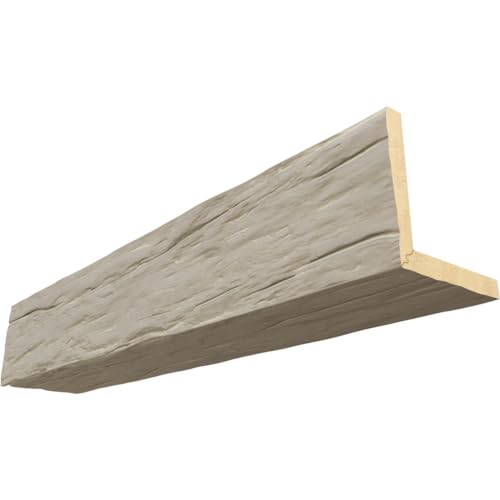
Real beams bring weight and cost. Faux beams are lighter, easier to install, and often the better option when structure is not the point.
How to choose stain or paint so the ceiling matches the room
Keep the ceiling one step lighter than the floor if you want calm balance. If the room already has a lot of wood, using another strong wood tone overhead can make the room feel crowded. Painted wood is often the safer choice in smaller bedrooms.
Are tray ceilings, coffered ceilings, and false ceilings worth it?
Yes, but only in the right room and for the right reason. Tray ceilings, coffered ceilings, and false ceilings are not interchangeable. Each solves a different problem, and each has a different install burden.
Tray ceiling: when the stepped edge helps a room feel taller
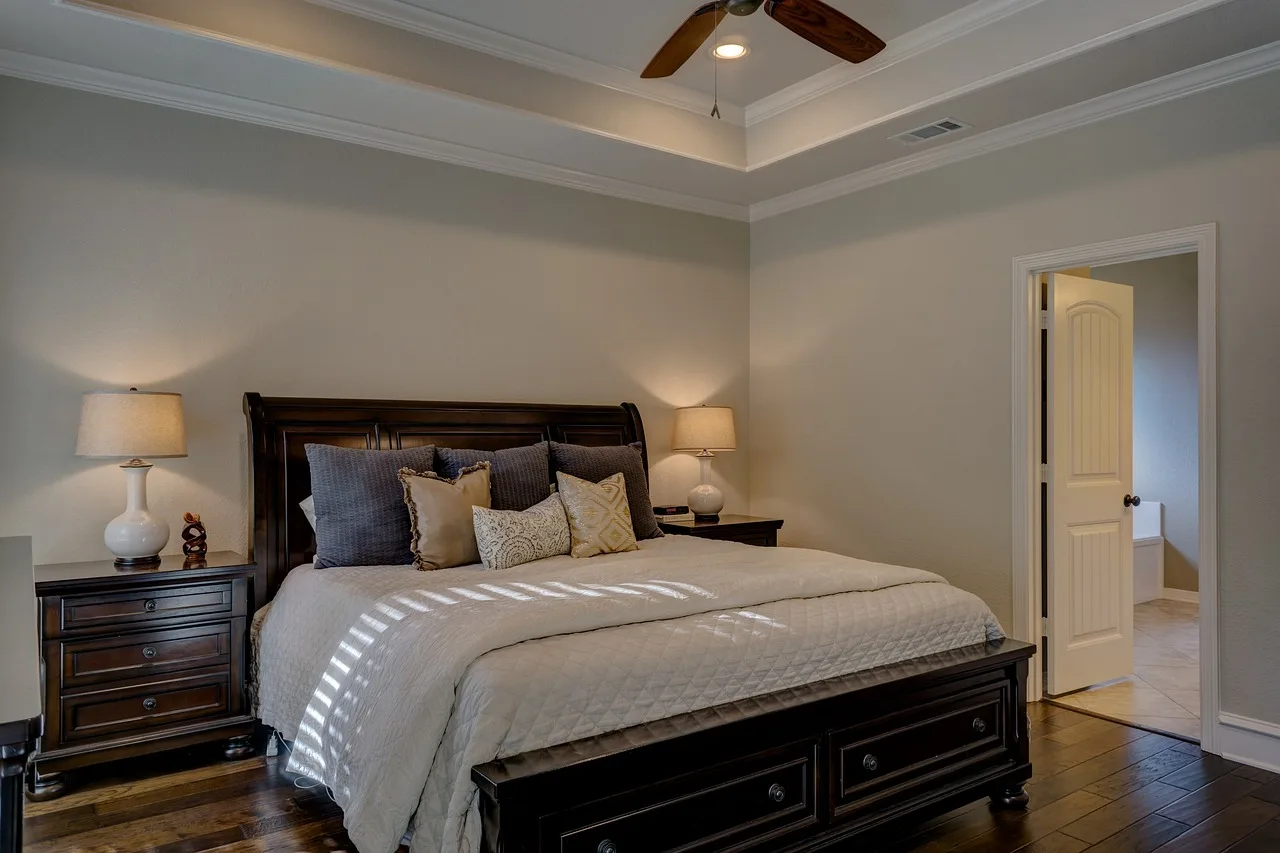
A tray ceiling typically has a recessed center with a stepped perimeter. That layered edge can make the middle feel higher, especially when the recess is painted lighter or lit with cove lighting. It works best in rooms that already have decent ceiling height and some budget for framing.
Coffered ceiling: where the grid adds structure
A coffered ceiling uses grid-like paneling to add depth and structure. It works in modern or classic bedrooms, and it pairs well with a chandelier or recessed lighting. A coffered ceiling example can even include tongue-and-groove detailing for a more crafted finish.
False ceiling: when you need wiring concealment or integrated light
A false ceiling is a secondary suspended ceiling. It can conceal electrical wiring, support integrated lighting, and sometimes help with insulation or noise control. It is useful when the original ceiling is messy or when the lighting plan needs a clean built-in look.
How to use lighting with your ceiling design
Lighting can make or ruin a ceiling finish. If the light is harsh, the ceiling detail looks busy. If the light is too dim, the room can feel flat and gloomy. Bedroom ceilings need light that is soft, controlled, and easy to dim.
Cove lighting and hidden LED strips
Cove lighting uses hidden LED strip placement to spread light across the ceiling without showing the source. That soft ambient light reduces harsh overhead glare and works especially well with false ceilings or tray ceilings. It is one of the cleanest ways to make a ceiling feel more finished at night.
Recessed lights, chandeliers, and pendants
Recessed lights are best when the ceiling needs even light without visual clutter. Chandeliers and pendants add focal weight, but they need enough ceiling height and the right scale. A ceiling medallion can help either fixture feel intentional rather than stuck on.
Color temperature, dimming, and glare control for bedrooms
Bedroom lighting should be soft enough for winding down. Dimming matters because a bright ceiling fixture can erase the effect of a carefully finished surface. Warm color temperature usually feels gentler for sleep, while glare control matters even more on low ceilings with reflective paint or glossy trim.
What is the cheapest way to upgrade a bedroom ceiling?

The cheapest upgrade is usually paint, followed by a medallion or minor trim repair. These changes improve the ceiling’s finish without opening the room up for major work. For renters, temporary fixtures and removable treatments are the safest route.
Here is the practical order I would use for low-cost upgrades:
- Patch and sand visible flaws near the fixture and perimeter.
- Paint the ceiling a light matte color that suits the wall tone.
- Replace a tired fixture with a cleaner pendant or flush mount.
- Add a ceiling medallion if the center needs more presence.
- Use narrow trim or a boxed detail only where edges look rough.
How do I hide ugly wiring or uneven ceiling edges in a bedroom?
The cleanest fix is to cover the problem with a detail that looks intentional. A false ceiling, boxed perimeter, medallion, or trim band can hide wiring and uneven edges better than trying to paint around them. The trick is matching the fix to how much ceiling height you can spare.
Best concealment methods
- Ceiling medallion: hides fixture cut lines around a pendant or chandelier.
- Boxed perimeter detail: cleans up rough edges and can conceal shallow wiring runs.
- Partial false ceiling: works when the wiring needs to disappear across a larger zone.
- Simple trim: helps when the edge problem is minor and localized.
Bedroom ceiling decision matrix: budget, difficulty, and renter-friendliness
This matrix scores a set of ceiling ideas from 1 to 5, with 5 being the most favorable for budget, ease, renter-friendliness, maintenance, or lighting fit. Use it to separate cosmetic upgrades from construction-heavy choices before you commit.
How to read the matrix for your bedroom
High budget scores mean lower cost. High difficulty scores mean easier installation. High renter-friendliness means the idea is more reversible. For maintenance, higher scores mean less dust, fewer repairs, and less ongoing attention.
| Ceiling idea | Budget | Install difficulty | Ceiling-height suitability | Renter-friendliness | Maintenance | Lighting compatibility |
|---|---|---|---|---|---|---|
| Ceiling paint color | 5 | 5 | 5 | 5 | 4 | 4 |
| Ceiling medallion | 4 | 4 | 4 | 4 | 4 | 5 |
| Simple trim or edge cleanup | 4 | 4 | 4 | 3 | 4 | 4 |
| Wood ceiling panels | 2 | 2 | 3 | 2 | 3 | 4 |
| Exposed beams | 2 | 2 | 2 | 2 | 3 | 4 |
| Tray ceiling | 2 | 2 | 3 | 1 | 3 | 5 |
| Coffered ceiling | 1 | 1 | 2 | 1 | 3 | 5 |
| False ceiling | 2 | 1 | 3 | 1 | 3 | 5 |
| Cove lighting with hidden LED strip | 3 | 2 | 4 | 2 | 4 | 5 |
| Decorative ceiling paint accent | 4 | 4 | 3 | 4 | 3 | 3 |
For rentals and quick refreshes, paint, a medallion, and lighting swaps are the safest choices. For owned homes with higher ceilings, trays, coffers, beams, and false ceilings bring more structural payoff, but they are harder to reverse and harder to keep dust-free.
What are the best bedroom ceiling ideas for a finished look?
The best finished-look ceiling ideas are paint, a ceiling medallion, wood panels, cove lighting, tray ceilings, coffered ceilings, exposed beams, and false ceilings. The right one depends on height, room size, and how much work the ceiling can take without making the bedroom feel lower or busier.
Bedroom ceiling ideas are often presented as the room’s fifth wall, but that idea only helps if it leads to a practical choice. The page features 25 ceiling ideas, including mirrored panels with gilded trim, bold pink and white stripes, geometric coffers with woven cane inserts, and a black coffered ceiling for bold contrast.
Some options are more about finish than architecture. Wood paneling is used to create warmth on the ceiling, vaulted ceilings with exposed beams are highlighted as a bedroom option, and starburst beams are used for a rustic look. Those examples work best when the room is large enough to carry them.
For a simple ceiling that still feels complete, use a light matte paint color, clean fixture placement, and one focal detail. That combination is usually safer than adding multiple decorative layers at once.
How do I make a bedroom ceiling look more expensive?
Focus on proportion, edge quality, and lighting before adding ornament. A ceiling looks more expensive when its lines are clean, its finish is controlled, and the fixture fits the room. A single well-scaled detail usually beats several small decorative moves.
Use a medallion around the main fixture, crisp trim at the perimeter, or a restrained tray with hidden light if the ceiling height allows it. Matte finishes, matched paint transitions, and properly dimmed lighting tend to read more polished than shiny surfaces or oversized patterns.
What ceiling ideas work best in a small bedroom?
Small bedrooms usually benefit from light paint, low-profile fixtures, and one quiet finishing detail. Keep the ceiling flat if possible, because deep framing and dark finishes can make the room feel tighter. A medallion or narrow trim is often enough to finish the ceiling without crowding it.
Should I use wood, paint, or a false ceiling in a bedroom?
Use paint when the room is small, low, or rented. Choose wood when you want warmth and surface detail and can handle the extra visual weight. Pick a false ceiling when you need to hide wiring, add integrated lighting, or clean up a ceiling that is visibly unfinished.
How do I choose bedroom ceiling lighting with the design?
Match the lighting to both ceiling height and surface finish. Recessed lights work when you want even light with little visual clutter, chandeliers need more vertical room, and hidden LEDs are best for soft ambient light. Always plan for dimming, especially in a bedroom.
Are tray ceilings, coffered ceilings, and beams worth it in a bedroom?
They are worth it when the room has enough height and the budget can cover the extra framing and finish work. Tray ceilings soften a room upward, coffers add structure, and beams add direction. In low rooms, though, these same details can feel heavy or crowded.
Products related to this article
Sponsored / affiliate links. As an Amazon Associate I earn from qualifying purchases. I may earn additional commission from eligible campaigns.