Bedroom Bench vs Storage Ottoman: Which Fits Best Today
Choose a bedroom bench if you want longer seating and easier day-to-day use, and pick a storage ottoman if hidden storage matters more. Leave about 2 feet of walking space in front of the bed. Pick the wrong piece and a small bedroom feels crowded fast, with the wrong items stuffed into the wrong cavity. This guide compares bed size, clearance, storage capacity, and everyday use so you can choose the better fit.
This guide is part of our Bedroom design ideas series.
Bedroom bench vs storage ottoman: the core trade-off



A bedroom bench is longer, better for shared sitting, and usually fits neatly at the foot of the bed. A storage ottoman is compact, softly upholstered, and a stronger pick when floor space is tight. Both hide clutter, but they solve different needs: one favors length and seating, the other favors a small footprint and footrest use.
| Decision factor | Bedroom Bench | Storage Ottoman | Winner |
|---|---|---|---|
| Footprint | Longer shape; often about 40 to 66 inches | Compact, often square | Storage Ottoman |
| Seating | Seats two or three people across | Usually one-seat footrest use | Bedroom Bench |
| Hidden storage volume | Wide cavity; better for bulkier loads like spare bedding and extra pillows | Smaller cavity; better for smaller items | Bedroom Bench |
| Best use in tight rooms | Can work, but needs more length | Best when floor space is tight | Storage Ottoman |
| Surface function | Mostly seating and storage | Can double as a coffee table with a tray | Storage Ottoman |
Footprint drives the first decision
The bench works best when the room can spare length. A storage bench spans about 40 to 66 inches, so it fits the foot of a queen or king bed more naturally than a wide ottoman does. A storage ottoman is the safer pick when you need to keep open floor area beside drawers or a closet.
Seating changes the use case
A bedroom bench is the better perch for pulling on shoes, setting down clothes, or giving two people a place to sit. A storage ottoman works best as a footrest or a quick solo seat. If you expect daily sit-and-stand use, the bench form usually feels more practical.
Storage depth is not the same as storage size
A wider bench cavity can handle bulkier loads, while an ottoman usually suits smaller, flatter items. That matters in bedrooms, where spare bedding, extra pillows, and seasonal textiles take real space. Decorative benches may look storage-ready but offer little usable interior volume, so check whether the top opens to a true cavity.
📊 A storage bench spans about 40 to 66 inches. Source: Storage Ottoman vs Storage Bench: Which Is Right? (2026).
How to measure the space at the foot of the bed
Measure the mattress width, the open floor in front of the bed, and the paths to drawers, closets, and nightstands. Keep at least 24 inches between the bed edge and the first obstacle, then make sure the piece does not block door swing or drawer pull space. Room fit matters more than style.
Use bed size as the first filter
For a twin room, the foot-of-bed zone is often too short for a long bench, so a compact ottoman or a narrow bench tends to work better. Full beds often allow more flexibility, while queen and king rooms may handle a storage bench if the end zone is deep enough. The bed size sets the usable width of the placement zone.
Protect circulation paths
Do not place a piece so close to the bed that you have to turn sideways to pass. If the bench or ottoman sits where you step out of bed, or if it crowds a dresser drawer, it is the wrong size. A small bedroom can feel cramped fast when the seating piece steals the walking lane.
Avoid blocking daily bedroom functions
Check closet doors, dresser drawers, and the path from the door to the bed. A storage ottoman may fit where a bench does not, especially beside an accent chair or near the end of a narrow bed frame. A storage bench can line a wall, which helps when the foot-of-bed zone is too tight.
Which works better at the foot of the bed?
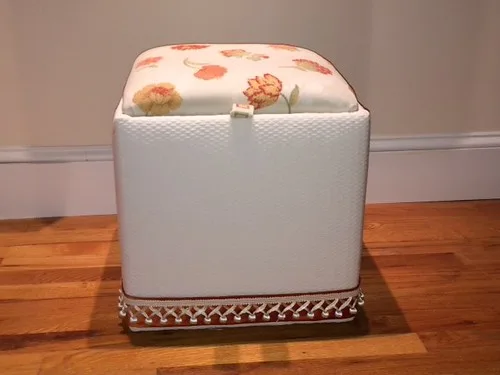
A storage bench usually works better at the foot of the bed when you have enough length for it to sit without blocking circulation. A storage ottoman wins in tighter rooms because it has a smaller footprint and can preserve more open floor space. The right choice depends on whether the bed end needs seating length or compact storage.
Foot of the bed fit by mattress width
A bench is ideal for the foot of a bed because the long shape echoes the mattress edge and creates a landing spot for clothes and shoes. That fit is easiest to manage with queen and king beds. On smaller beds, the bench can crowd the end zone unless the room is unusually deep.
When the ottoman fits better
A storage ottoman fits better when the bed is near a wall, the room is small, or the foot zone needs to stay open. It also works when you want a soft place to put your feet without introducing a long piece that spans the room. In a tight layout, compact wins.
When either piece is too much
If a bench blocks a dresser drawer or the ottoman forces a tight sidestep at the bed end, both are too large. That is the failure case many buyers miss, the furniture looks correct in isolation but breaks the room’s flow. Measure the usable floor, not just the wall width.
How much storage do you actually need?
A storage bench usually offers more usable interior volume because it has a wider cavity. A storage ottoman is better for smaller categories such as slippers, throws, chargers, or kids’ accessories. The right pick depends on whether you need bulk storage or quick-access storage.
Single cavity versus wider cavity
Storage benches often use wooden or metal frames and a hinged or lift-top access point, which makes the cavity feel more open and easier to load. Ottomans usually have a smaller internal cavity, so they are less useful for thick bedding. That tradeoff matters most if you want one piece to handle several bulky items.
What to store in each piece
Use a bench for spare bedding, extra pillows, seasonal blankets, or larger bedroom overflow. Use an ottoman for smaller items that need to stay close at hand, such as a throw, remote, or kid’s room toys. A bench is also more forgiving when the stored items are irregular in shape.
Why decorative benches can disappoint
Some benches are mainly decorative and have limited or no true interior storage. That means the room gets the footprint of a bench without the benefit of useful capacity. If storage is the reason you are buying, confirm that the seat opens to a real cavity and not just a fixed cushion top.
What matters most for seating and safety?
A storage bench usually supports two or three people across, while a storage ottoman is usually a one-seat footrest. Safety matters just as much as capacity: you want a sturdy frame, stable sit-and-stand behavior, and a lid that does not slam or pinch fingers. A pretty piece is not enough.
Weight capacity and frame stability
Daily bedroom seating needs a frame that does not wobble when you sit down or stand up. Storage benches often rely on wood or metal framing, which can feel steadier for repeated use. Ottomans can be comfortable, but the softer build is not always the best choice for frequent loading and unloading.
Safety hinges and pinch protection
For any lift-top storage piece, look for safety hinges or other lid support so the top stays open without dropping. That matters in a bedroom, where hands may be busy with laundry, bedding, or shoes. Pinch-finger risk is a real concern with daily-use storage furniture.
Comfort and upkeep matter too
Ottomans are softer, fully upholstered, and cushioned, which makes them friendlier as a footrest. For upkeep, stain resistance and easy-clean fabric matter in bedrooms with kids, pets, or heavy daily use. A fabric that wipes clean can matter more than a nice silhouette.
Can you use a bench as an ottoman?
Yes, but only if the bench is low enough, cushioned enough, and free of sharp edges that would make footrest use uncomfortable. An upholstered bench can act like an ottoman for occasional lounging, while a firmer bench is better for sitting than for propping up your feet. Shape and height decide the comfort.
When a bench works like a footrest
A bench can function as an ottoman when the top is padded and the frame is stable enough for relaxed use. That is helpful at the foot of the bed or beside a window seat. The best versions still need to support repeated sit-and-stand use without wobble.
When an ottoman can act like a bench
An ottoman can act like a bench if it has a flat top and enough surface area for a tray or for short-term seating. A tray can turn an ottoman into a surface, which helps in a bedroom used as a reading or lounging space. Still, it will rarely seat like a true bench.
Material and edge shape change comfort
Rounded or fully cushioned edges feel better under heels and calves than hard corners do. A firmer bench frame may be better for durability, but it is less forgiving if you plan to rest your legs on it. In practice, the piece that looks most like the other often performs as a compromise, not a full substitute.
Bedroom fit decision table: choose by room type and use case

Use the room type, bed size, and storage category together. A queen or king bedroom with open floor space can usually handle a bench, while a small room, kids’ room, or renter setup often points to a compact ottoman. The point is to fit the room you have, not the one you wish you had.
| Room type or use case | Best fit | Why it fits | Quick score checklist |
|---|---|---|---|
| Queen bedroom with clear end space | Bedroom Bench | Foot-of-bed seating, spare bedding storage, and a longer landing zone | Seating: yes; Storage: yes; Safety: check hinge support |
| King bedroom with open walkway | Bedroom Bench | Longer bed width can support a larger bench without crowding the room | Seating: yes; Storage: yes; Safety: check weight capacity |
| Small bedroom with tight floor space | Storage Ottoman | Compact footprint preserves circulation and can sit beside an accent chair | Seating: maybe; Storage: small items; Safety: check lid support |
| Twin room or narrow guest room | Storage Ottoman | A long bench can crowd the foot area and block access | Seating: solo; Storage: light; Safety: check wobble |
| Renter bedroom with frequent moves | Storage Ottoman | Smaller size is easier to place, move, and re-use in another room | Seating: light use; Storage: flexible; Safety: check construction |
| Kids’ room | Storage Ottoman | Soft top and compact form suit toys, blankets, and tighter floor plans | Seating: brief use; Storage: small items; Safety: pinch protection |
| Couple’s bedroom needing shared seating | Bedroom Bench | Two or three people can sit across more comfortably | Seating: strong; Storage: bulky items; Safety: stable frame |
Quick scoring checklist
- Seating: Pick the bench if you need two-to-three-person seating or a shared landing spot at the foot of the bed.
- Storage: Pick the ottoman if you only need small-item storage and want to save floor space.
- Safety: Pick the piece with the better lid support, stronger frame, and lower risk of pinched fingers.
- Clearance: Keep at least 24 inches of walkway in front of the bed and avoid blocking drawer or closet access.
- Fit: Match the piece to the bed size, especially in twin and full rooms where end-space is limited.
Say your queen bedroom has roughly 2 feet of open space at the foot of the bed and a dresser drawer that opens into that same lane. A storage bench may fit on paper, but the drawer conflict makes it the wrong buy. A compact ottoman is the safer choice because it preserves the path and still gives you some storage.
Suppose a king room has a wide open end zone and you want a place to stack extra bedding. A storage bench is usually the better answer because it can sit at the foot of the bed, hold bulkier loads, and serve as extra seating. In that layout, the ottoman wastes usable space.
What is the difference between a bedroom bench and a storage ottoman?
A bedroom bench is a longer seat, often about 40 to 66 inches, that works well at the foot of the bed and can seat two or three people. A storage ottoman is a compact, often square cushioned box you can put your feet on. The bench favors length; the ottoman favors compactness.
Which is better at the foot of the bed: a bench or an ottoman?
A bench is usually better at the foot of the bed when the room has enough clearance, because it creates a useful landing spot and can store bulkier items. An ottoman is better when the end of the bed area is tight or when you want softer footrest use. Room dimensions decide the winner.
Can you use a bench as an ottoman?
Yes, if the bench is cushioned, low enough, and sturdy enough for footrest use. A bench with hard edges or a tall seat height will feel awkward as a true ottoman replacement. The closer the bench is to fully upholstered seating, the easier it is to use that way.
Are ottoman storage beds good?
They can be good if you need a bed with built-in lift storage and want to free up floor space elsewhere. They are less helpful if you already struggle with heavy lifting, because the mattress base and stored items may be harder to reach. Safety hardware and access effort matter here.
What is an ottoman storage bed?
An ottoman storage bed is a bed base with a lift-up mattress platform and storage space underneath. It is a different product from a bedroom ottoman, because the storage is built into the bed frame rather than sitting as a separate piece at the foot of the bed. It works best in rooms that need hidden bulk storage.
Which holds more storage, a bench or an ottoman?
A storage bench usually holds more because it has a wider cavity compared with ottomans. That makes it better for spare bedding, extra pillows, and other bulkier items. A storage ottoman is still useful, but it is usually the smaller-capacity choice for bedroom overflow.
Which works better in a small bedroom?
A storage ottoman usually works better in a small bedroom because its compact footprint preserves walking space and fits beside other furniture more easily. A bench can still work if the room has enough end-of-bed clearance and the bed size allows it. In tight rooms, size wins over seating span.
How many people can sit on a storage bench versus an ottoman?
A storage bench typically seats two or three people across, while a storage ottoman is usually best for one person or for feet-up use. If you expect shared seating or frequent dressing-room use, the bench is the stronger choice. If you only need a quick perch, the ottoman is enough.
Frequently asked questions
What is the difference between a bedroom bench and a storage ottoman?
A bedroom bench is longer, more seat-like, and often intended for two or three people. A storage ottoman is compact, usually softer, and better as a footrest or a small-seat option. The bench usually stores bulkier items; the ottoman is better when space is limited.
Which is better at the foot of the bed: a bench or an ottoman?
A bench is often better at the foot of the bed because it lines up with the mattress edge and gives you a place to sit or set clothing. An ottoman is better if the foot-of-bed zone is tight or if the room needs a smaller visual footprint. Clearance should decide it.
Can you use a bench as an ottoman?
Yes, if the bench is low, cushioned, and comfortable enough for footrest use. A firmer bench still works for sitting, but it may not feel right as a footrest. Upholstery, height, and edge shape are the factors that determine whether the swap feels comfortable.
Are ottoman storage beds good?
They are good when you need hidden storage built into the bed itself and want to save floor space elsewhere. They are less ideal if the lift mechanism is hard to access or if you prefer separate furniture pieces. The decision is mostly about storage access and room planning.
What is an ottoman storage bed?
An ottoman storage bed is a bed with a lift-up base that reveals storage under the mattress. It is not the same thing as a storage ottoman used at the foot of the bed. Think of it as built-in bed storage, not a separate bedroom seat.
Which holds more storage, a bench or an ottoman?
A storage bench usually holds more because its cavity is wider and better suited to bulky bedding and extra pillows. An ottoman still offers hidden storage, but it is usually more limited in depth and overall volume. The better choice depends on what you need to hide away.
Which works better in a small bedroom?
A storage ottoman usually works better in a small bedroom because it takes up less floor space and can tuck beside other pieces more easily. A bench can still fit if the room has enough end-of-bed clearance. If the room feels crowded, choose the smaller footprint.
How many people can sit on a storage bench versus an ottoman?
A storage bench commonly seats two or three people across, while a storage ottoman is usually for one person at a time, or just for feet-up use. If the piece will handle regular dressing-room seating, the bench is the safer and more practical option. For solo use, the ottoman is enough.
Products related to this article
Sponsored / affiliate links. As an Amazon Associate I earn from qualifying purchases. I may earn additional commission from eligible campaigns.