Why Does My Door Not Latch in Cold Weather?
A door that won’t latch in cold weather may have ice at the edge, seasonal contraction, or a worn latch or strike. The quickest check is simple: does it close and latch after you warm the edge or clear the strike? Ignore it, and you risk a door that will not stay shut, extra wear on the hardware, and a repair that grows over time.
Why your door stops latching in cold weather
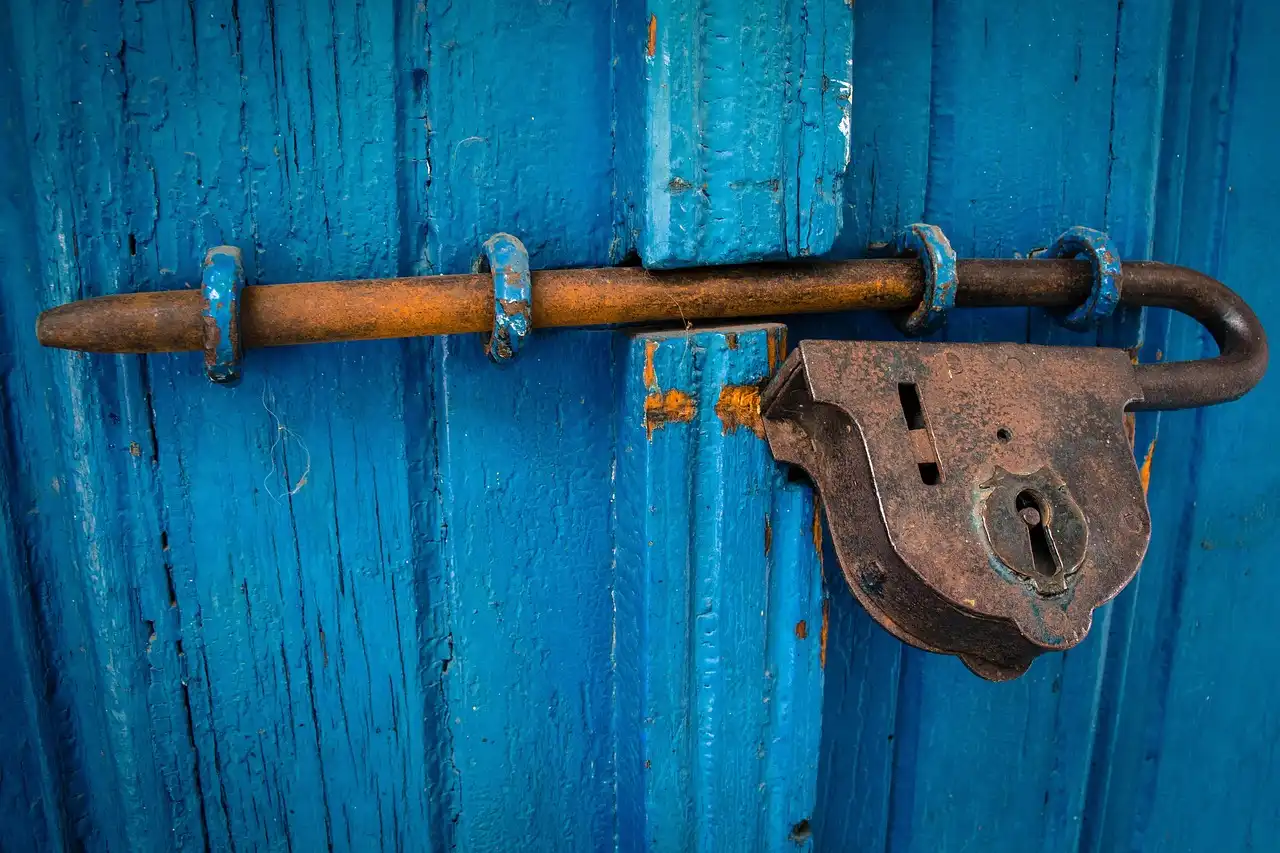


Cold weather changes clearances and friction. A latch assembly that worked in mild weather may bind when metal contracts, hinges stiffen, rollers drag, or ice and wet weatherstripping keep the door from reaching the striker. The same door can fail only in winter because a small fit issue becomes a real mismatch.
How cold changes the fit
Temperature-related contraction can shrink metal parts enough to change how the latch meets the striker. House settling and seasonal movement can do the same on a door frame or jamb. That matters most when the latch already sits near the edge of its adjustment range.
Picture a front door that closes with a firm push in October but bounces open in January. The latch may be fine; the strike may now sit a few millimeters out of line, or compressed weatherstripping may keep the bolt from reaching full throw.
Door latch diagnosis table
| Symptom | Likely cause | Quick check | Safest temporary fix | When to call a pro |
|---|---|---|---|---|
| Entry door closes but will not catch | Latch and striker misalignment, or cold contraction changing clearance | Look for rub marks on the strike and test whether the latch clicks if you lift the door slightly | Clear ice, warm the edge, and apply dry-film or silicone-style lubricant to the latch point and hinges | If the strike is loose, the latch is worn, or the door still will not stay shut |
| Interior door needs a push to stay closed | Settling, hinge sag, or a misaligned strike plate | Close the door slowly and note whether the latch hits below or above the strike opening | Tighten hinge screws if they are loose and clear paint, debris, or frost at the strike | If the latch face is chipped, the strike is bent, or the frame has shifted |
| Garage door reverses or stops short in cold weather | Ice on tracks or seals, dirty sensors, low power, or track/roller drag | Check for snow at the bottom seal, watch the photo-eye lights, and inspect the battery or power supply | Clear the tracks and bottom edge, clean the sensors, and use the opener’s manual release only if safe | If the door is heavy, a spring is damaged, the opener beeps repeatedly, or the sensors will not align |
| Door will not close fully after a freeze-thaw cycle | Frozen seal, swollen or compressed weatherstripping, or ice at the threshold | See whether the obstruction is at the edges rather than at the latch itself | Remove ice and dry the seal area before trying again | If the seal is cracked, torn, or still blocks closure after thawing |
Is it ice, weatherstripping, or a bad fit?
Start by separating a blocked door from a true latch failure. If the edge is frozen to the frame, the tracks have ice, or weatherstripping is swollen or compressed, the door may not reach the strike at all. If the door reaches the frame but will not catch, alignment or hardware is more likely.
Frozen seals and tracks
Snow, ice, and trapped moisture can block closure. That is common after freeze-thaw cycles. On garage doors, ice in the track or at the bottom seal can stop the door before the latch or opener logic matters. On exterior doors, a frozen threshold can do the same.
Winterizing helps lower heating costs and protect the home from cold, moisture, and damage, but winter protection is not the same as a mechanical fix. Weather stripping is meant to keep out cold air, snow, and moisture; if it is packed with ice, the door may feel like a latch problem when it is really blocked.
Compressed or cracked weatherstripping
Damaged weather stripping should be replaced completely. A flattened seal can hold the door out of the frame just enough to stop the latch from engaging, and a cracked seal can catch on the edge as temperatures drop. That is a fit problem, not a latch failure, even though the symptom looks the same.
Simple clearance checks before hardware work
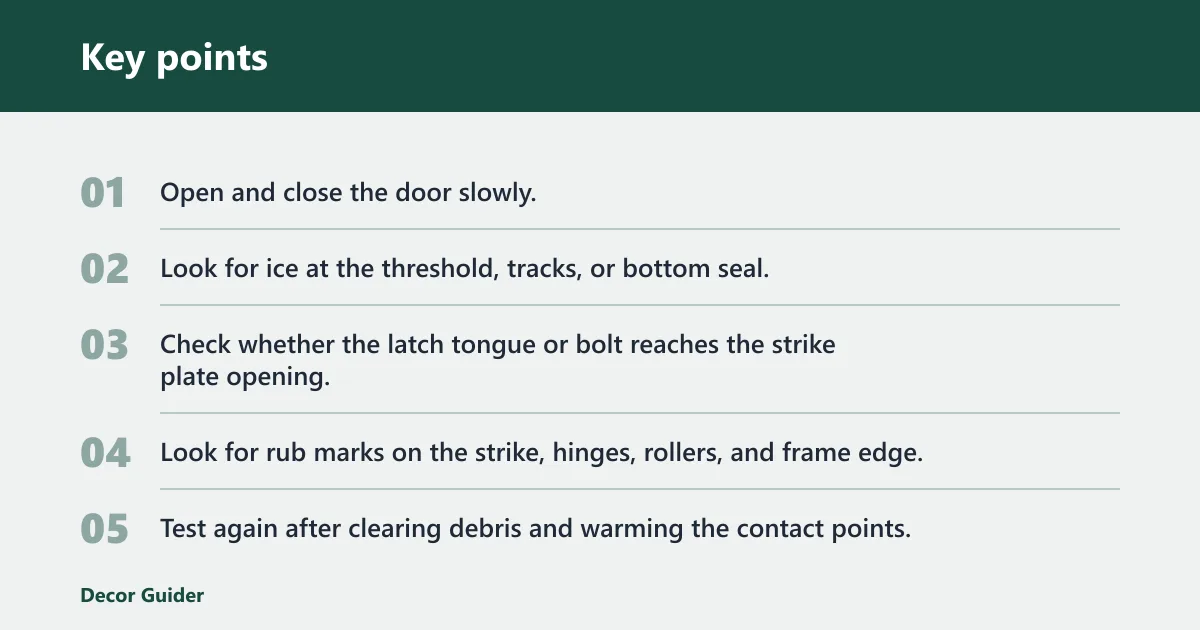
- Open and close the door slowly.
- Look for ice at the threshold, tracks, or bottom seal.
- Check whether the latch tongue or bolt reaches the strike plate opening.
- Look for rub marks on the strike, hinges, rollers, and frame edge.
- Test again after clearing debris and warming the contact points.
What parts fail first in cold weather

The first parts to show trouble are usually the latch assembly, the striker, and the moving supports around them. Hinges, rollers, and springs can stiffen in low temperatures. A small amount of wear that was harmless in mild weather may become enough to stop latching once the door shrinks or drags.
Latch assembly and striker alignment
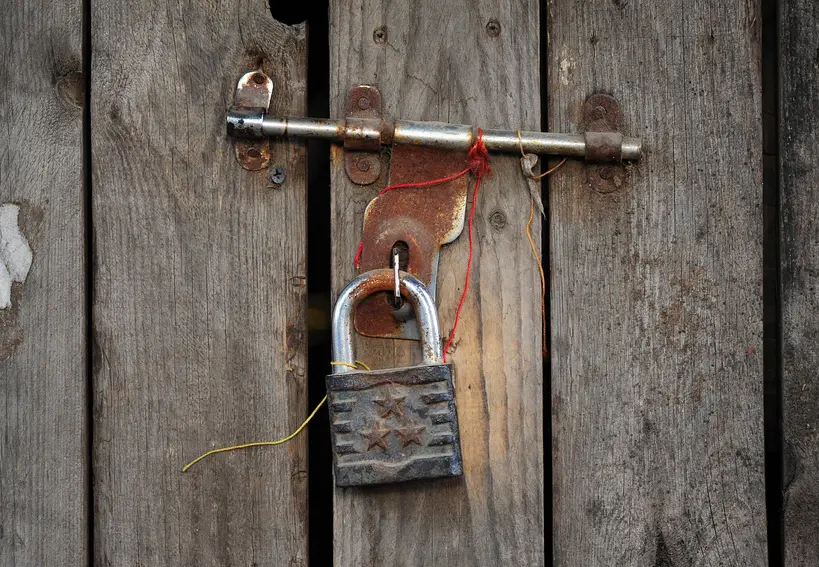
The door latch assembly is the mechanical catch that engages the striker. The door striker is the fixed metal loop or plate on the frame or jamb. They must line up precisely. If the striker is even slightly off, the latch may hit the edge, stick, or fail to release cleanly.
A common first-timer mistake is spraying lubricant on the strike and assuming the job is done. If the latch is striking too high or too low, lubricant will not move the metal back into place. It may only make the symptom quieter.
Hinges, rollers, and binding points
Door hinges and rollers can stiffen in low temperatures, and wear or rust can make them bind. Rollers should glide along tracks without sticking or squeaking. Hinges should be lubricated at each pivot point.
Use a dry-film or silicone-style lubricant for moving parts. That includes hinges, rollers, latch points. Avoid heavy grease or a product that gums up in cold weather, because it can attract grit and make the movement worse.
Cold-related contraction and settling
Metal components can contract in extreme cold. Doors also shift as houses settle, hinge screws loosen, or a frame moves slightly. That turns a near-miss into a no-latch problem. If the same door closes in warm weather but not in a deep freeze, alignment drift is a strong suspect.
What can you do right now to close the door?
Begin with the simplest safe checks. Clear snow, ice, and debris, then test the door again. Use the right lubricant only on moving parts that actually need it. On a garage door, also check sensors, battery, and power before you assume the opener or latch is broken.
Clear snow, ice, and debris
Remove ice from the threshold, track, bottom seal, and strike area. Dry the edge if moisture is refreezing. If a door is partially frozen shut, do not force it hard enough to bend the strike, damage the latch, or twist the track.
Use the right lubricant on moving parts
Apply lubricant to hinges, rollers, latch points. Do not flood the strike opening or coat the weatherstripping. If the door opens and closes after lubrication but still misses the strike, the underlying issue is likely alignment rather than friction.
Check garage-door sensors, power, and battery supply
Why does my garage door not close in cold weather? Because the problem is often electrical or safety-related, not the latch itself. Dirty or misaligned photo-eye sensors can stop closure. A low battery or weak power supply can mimic a mechanical fault. Repeated beeping or a door that reverses near the floor points to a sensor or power check first.
Heavy snow and ice can press on a garage door, so remove buildup before testing the opener again.
When does a latch problem need repair or replacement?
A cold-weather latch problem means repair or replacement when the latch or striker is visibly worn, bent, chipped, or loose, or when the door still misses the strike after ice, debris, and weatherstripping issues are ruled out. If the frame or hardware is out of line, adjustment may solve it; if the parts are worn, they will not hold reliably.
Signs the latch or striker is worn
Look for rounded latch edges, loose strike screws, bent strike plates, or a latch that does not spring back with enough force. If the door needs repeated slams to catch, the hardware may be worn enough that replacement is safer than another adjustment.
When alignment adjustment is the fix
If the latch reaches the strike but lands just off center, alignment is the likely fix. That may mean correcting hinge sag or resetting a door closer or roller path. The key point is that the parts still function; they just do not meet cleanly.
When a professional should inspect the door
Call a professional if the door binds hard, the frame is visibly shifted, the garage door spring looks damaged, or the opener reverses after sensor checks and power checks. A door that will not stay latched can become a security issue, and a garage door can be dangerous if balance or spring tension is wrong.
Cold weather fixes that help over time
Long-term fixes are about reducing the conditions that cause the failure. Replace damaged weatherstripping, keep moving parts serviced, and correct alignment before winter sets in. Adding insulation is suggested for harsh winter temperatures, but insulation helps most when cold exposure is making an existing problem worse.
Weatherstripping inspection and replacement
Inspect weatherstripping for cracks, compression, or ice damage before the first hard freeze. If it is damaged, replace it completely. Good sealing keeps out cold air, snow, and moisture, and it also reduces the chance that a seal will block the latch path.
Hardware maintenance before winter
Check hinges, rollers, latch points, springs, and strikes before temperatures drop. Tighten only the parts that matter: the latch, striker, hinges, rollers, sensors. That is more useful than a broad “tighten everything” approach, and it avoids moving a part that was already set correctly.
When insulation or weatherproofing helps and when it does not
Insulation and weatherproofing help when cold, moisture, or drafts are making the door work harder than it should. They do not fix a bent latch, a misaligned strike, or a failing opener. If the door still will not close after the weather issue is cleared, the hardware needs attention.
Frequently asked questions
Why does my door not latch in cold weather?
Cold weather can make a door miss the strike because metal contracts, hinges stiffen, or ice and weatherstripping stop full closure. If it still misses, alignment or worn hardware is likely.
Why my door won’t latch?
Why my door won’t latch usually comes down to one of four things: blockage, misalignment, wear, or a power issue on a garage door. If the door reaches the frame but will not catch, inspect the latch and striker. If it does not reach the frame, look at seals, ice, and alignment first.
Why does my door not close in winter?
Winter closure problems often come from ice at seals or tracks, compressed weatherstripping, or a fit that is only barely correct in warmer weather. If it still binds, the frame, hinges, rollers, or strike likely need adjustment.
Why won’t my garage door close in cold weather?
Why a garage door won’t close in cold weather is often a sensor, power, or track issue rather than a latch failure. Heavy snow and ice can add enough resistance to stop closure even when the opener itself is working.
Is the problem the latch, alignment, or freezing weather?
Use the symptom to separate them. If the door is blocked at the edge, think freezing weather or weatherstripping. If it reaches the frame but misses the catch, think alignment. If the latch feels sticky, rounded, or weak even after clearing ice, the latch itself may be worn.
What can I do right now to get the door closed?
Clear ice, snow, and debris from the edge, strike, threshold, or tracks. Then try a dry-film or silicone-style lubricant on the moving parts that bind, not on the seal. For a garage door, check sensors, power, and battery supply before forcing the opener to work harder.
Products related to this article
Sponsored / affiliate links. As an Amazon Associate I earn from qualifying purchases. I may earn additional commission from eligible campaigns.