Bedroom Wallpaper Peel and Stick Review: Is It Worth It?
Peel-and-stick wallpaper is worth it in a bedroom on a smooth accent wall, especially behind a bed. Skip textured, humid, or hot walls. If the install goes wrong, you can get bubbles, lifted seams, and replacement costs or paint repair at move-out. This guide breaks down cost, durability, removal risk, and the bedroom spots where it works best or fails.
Verdict

- Realistic distressed wood texture in gray-white tone
- Peel and stick install without grid lines
- Removes without damaging wall surfaces

For renters, the draw is deposit protection and a fast update without paste or water. For homeowners, the value depends on whether one wall changes the room enough to beat paint, art, or a better headboard. The safest recommendation is narrow: one accent wall, sound prep, and a wall with low heat and steady light.
Specs at a glance
| Attribute | Bedroom decision point |
|---|---|
| Product type | Peel and stick wallpaper, also called removable wallpaper |
| Installation method | No paste or water; apply directly to the wall surface |
| Typical use | Accent wall behind a bed or headboard |
| Best wall condition | Smooth, clean, fully cured paint |
| Preferred paint finish | Satin, eggshell, or semi-gloss |
| Prep warning | Paint should be cured at least 30 days |
| Known weak spots | Edge curl, seam visibility, bubbling, and variable adhesion |
| Heat and humidity | High-humidity spaces need extra care; vents can lift edges |
| Basic tools | Smoothing tool, sharp snap-off blades, hair dryer for stubborn edges |
WWD tested 13 removable wallpapers in 2026 and says removable wallpaper can install in minutes and come off without damaging the surface underneath. Artscape says textured surfaces can cause adhesion issues or visible imperfections, and Tempaper says its peel and stick wallpaper is designed for every room, including bedrooms.
Who it
Peel-and-stick wallpaper fits people who want a temporary update without committing to paste, steam, or a long install. It is a strong match for renters who want deposit protection and for homeowners who want a low-risk way to test a pattern on one wall before doing more.
Renters
Renters usually get the most value when the lease allows wall coverings and the wall is already in good shape. The goal is to leave the surface as close to original as possible, so the risk is not the wallpaper itself; it is weak paint, rushed prep, or removal on a wall that was not ready.
Homeowners
Homeowners have more flexibility, but the bar for quality should still be high. If the room is small, the wallpaper may make a bigger visual difference than paint alone, yet it still needs a wall that is smooth enough to avoid visible seams and edge lift over time.
Bedrooms that support one wall
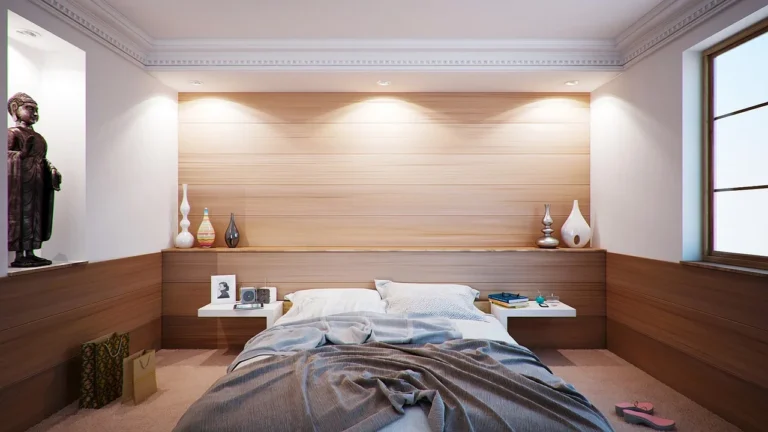
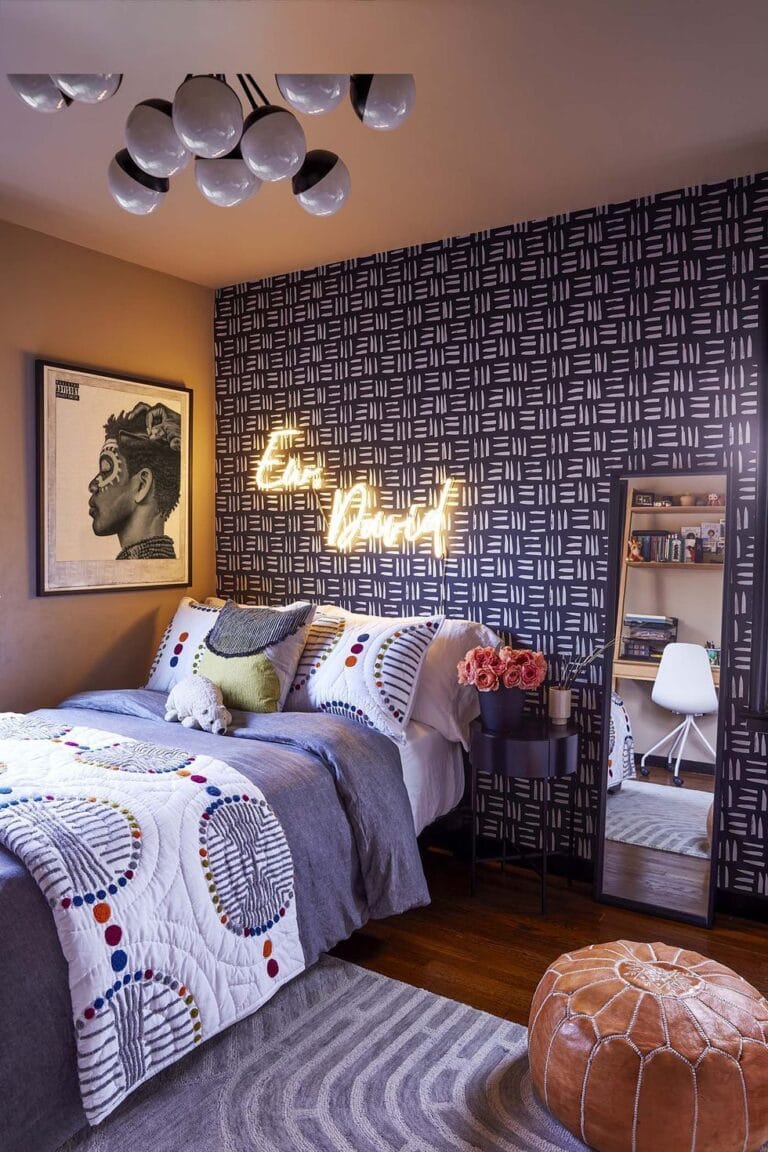
A bedroom usually works best as a single accent wall, most often behind the bed or headboard. That placement creates a clear focal point without wrapping the room in pattern, which can make a small room feel tighter or make a busy design feel overdone.
Say your bedroom is 12 by 13 feet with a standard bed centered on the longest wall. A full-room pattern might feel crowded, but one wall behind the headboard can add structure and depth without competing with bedside lamps or window treatments.
Bedroom wallpaper checklist
The smartest way to judge value is to compare wall condition, room size, and risk before you buy. The table below turns the choice into a quick check: if the wall fails prep or exposure tests, the project moves from “worth it” to “skip it.”
| Check | Renters | Homeowners | Pass / fail guidance |
|---|---|---|---|
| Wall type | Smooth drywall with solid paint | Smooth drywall or primed paneling | Pass if the surface is flat and sound; fail on damaged, dusty, or patched walls |
| Paint finish | Satin, eggshell, or semi-gloss | Satin, eggshell, or semi-gloss | Pass on the preferred finishes; fail if the finish is unknown and the wall feels chalky or soft |
| Curing time | At least 30 days | At least 30 days | Pass only after full cure; fail if paint is fresh or recently touched up |
| Wall texture | Minimal to none | Minimal to none | Pass on very smooth walls; fail on orange peel, knockdown, heavy texture, or rough patches |
| Sunlight and heat exposure | Low to moderate | Low to moderate | Pass if the wall is away from vents and strong sun; fail if a vent or window hits the same area daily |
| Estimated square footage | One wall, often 80 to 120 sq ft | One wall, often 80 to 120 sq ft | Pass for a single wall; fail if you are trying to cover a large, irregular room on a tight budget |
| Number of rolls needed | Usually 4 to 6 rolls for a standard accent wall | Usually 4 to 6 rolls for a standard accent wall | Pass if you can buy one extra roll for pattern matching and mistakes; fail if the pattern is close to a cutoff point |
| Tool budget | About $15 to $35 | About $15 to $35 | Pass if you can cover a smoothing tool, snap-off blades, and a hair dryer; fail if you plan to improvise with dull tools |
A common first-timer mistake is buying enough wallpaper for the wall and nothing else. If the paper has a large repeat or the wall has a tricky outlet cutout, a single extra roll can matter more than saving a few dollars on the initial order.
What works
Peel-and-stick wallpaper works best on smooth, clean walls with cured paint and a clear plan for placement. It fits a controlled bedroom wall better than one with texture, repeated heat, or shifting moisture from poor ventilation.
Best wall conditions
The same source says paint should be fully cured at least 30 days before installation, and satin, eggshell, or semi-gloss finishes are preferred. That matters because adhesion is only as good as the surface underneath. Dust, loose paint, and texture create the same failure point later.
Clean walls are not optional. They are the baseline. Even a small amount of residue near a light switch, baseboard, or outlet can keep the adhesive from sitting flat and can make seams show sooner.
Best bedroom placements
The strongest placement is usually behind the bed or headboard, where the wallpaper reads as a focal point instead of a full-room pattern. That is also the wall most likely to stay relatively calm, with less direct contact than a hallway wall or the wall opposite a window or vent.
Pattern scale matters. Larger patterns usually feel better in bedrooms because they reduce visual noise, while very small prints can make the wall seem busier than it looks online. If the room is compact, a high-contrast pattern can make the width feel narrower, so lighter backgrounds often work better.
Why one wall usually works best
One wall gives the pattern room to breathe. It also limits the number of seams and the amount of future removal work. That is especially useful in a bedroom, where a calm backdrop behind the bed often does more design work than covering every wall.
Bedrooms also have fixed furniture lines. A headboard, lamp, and nightstand already create structure, so one accent wall can finish the composition without fighting the rest of the room. More coverage is not always more impact.
What does not work?
It is a poor buy for textured walls, humid bedrooms, and rooms where heat or sunlight hits the same section every day. It is also a weak choice for very short-term staging if the prep is rushed, because the removal risk rises when the surface was never a good match.
Textured walls
The same source says textured surfaces can cause adhesion issues or visible imperfections. In practice, texture can telegraph through the paper, make seams stand out, and create tiny gaps where the adhesive cannot fully contact the wall. Heavy orange peel or knockdown texture is a warning sign.
Heat vents and strong sun
Heat vents can lift edges, and strong sunlight can stress adhesive over time. Bedroom wall failures often show up first near the top edge, around trim, or at seams closest to the warmest part of the room. Bedside lamps can also add localized warmth to a nearby section.
Suppose the wallpaper runs behind a bed and stops under a supply vent. If the top edge starts to curl after a few weeks, the issue is usually not the design; it is the combination of heat, airflow, and a finish that did not bond well enough at the edge.
High-humidity bedrooms
High-humidity spaces need extra care, and that applies to bedrooms too if the room runs damp, poorly ventilated, or close to a bath. Humidity can weaken adhesion, slow settling, and increase the chance of bubbling, especially on cheaper material or on walls that were not fully clean.
Short-term staging with weak prep
If the room only needs to look finished for a short period, peel-and-stick wallpaper may still be too much work if the wall is flawed. In that case, large-scale art or a clean paint refresh can be a better use of time and money, with less risk at removal.
Alternatives
When peel-and-stick wallpaper is a poor fit, the best alternatives are simpler surface changes that tolerate texture, heat, or humidity better. Paint remains the lowest-risk long-term choice, while art and wall panels can give a bedroom a focal point without the same adhesion concerns.
Paint
Paint is the better choice when the wall is textured, the room is humid, or the budget is tight. It does not create seam visibility, and it is less sensitive to edge lift near vents. For a bedroom, a single deep or muted color can still create strong mood without introducing removal risk.
Large-scale art
A large framed print or a pair of oversized pieces works well when you want a headboard-area focal point but cannot trust the wall finish. It changes the room without covering every square foot, and it can move with you if the bedroom is temporary.
Fabric or temporary wall panels
Fabric panels and temporary wall systems are better when the goal is staging or a soft look with less adhesive dependency. They are usually more work than wallpaper, but they can make sense when the wall is too uneven or the bedroom needs a reversible solution with less surface contact.
Should you buy it?
Buy peel-and-stick wallpaper if your bedroom wall is smooth, your paint is cured, and you want a clear focal point behind the bed. Do not buy it if the wall is textured, the room runs hot or damp, or the project depends on a flawless removal from a questionable surface.
Cost is easier to justify when one wall changes the whole room. If you are comparing a $45 to $70 luxury sample range from WWD’s examples against a cheaper collection such as Tempaper’s from $8.00 in some collections, the real question is whether the room needs a design statement or just a tidy finish. For many bedrooms, one good wall is enough.
Based on specs and reviews, the clearest buy case is renter or homeowner, one accent wall, smooth drywall, and moderate exposure. The clearest skip case is a textured wall with heat vents or a humid room where edge lift would be likely and removal would be messy.
Bedroom type recommendation
For renters, it is worth it when the lease is compatible and the wall is ready. For homeowners, it is worth it when the wall is a true focal point and the room will benefit from a patterned backdrop more than from paint alone. For both, the best result comes from restraint.
Frequently asked questions
Is peel and stick wallpaper worth it in a bedroom?
Yes, if you use it on a smooth accent wall and keep it away from strong heat, heavy texture, and damp conditions. It is most worth it behind a bed, where a single wall can change the room’s feel without the cost or commitment of wallpapering everything.
Does peel and stick wallpaper damage walls when removed?
It can come off without damaging the surface underneath, but that depends on wall prep, paint condition, and how long it has been up. Fresh paint, weak paint, or rough removal can still leave repairs behind, so slow removal matters as much as the product itself.
How long does peel and stick wallpaper last in a bedroom?
Longevity varies by material quality and room conditions. A smooth wall in a dry, temperate bedroom gives the best odds, while heat vents, sunlight, and humidity shorten performance. Edge curl and seam lift are usually the first signs that the wall is not a good match.
Will peel and stick wallpaper stick to textured walls?
Usually not well. The same source says textured surfaces can cause adhesion issues or visible imperfections, and that is the main reason to avoid them. Light texture may still hold, but if the wall has obvious orange peel, knockdown, or patchwork, the risk is high.
What tools do you need to install peel and stick wallpaper?
You need a smoothing tool, sharp snap-off blades, and a hair dryer for stubborn edges. A level and measuring tape also help, but the key tools are the ones that control bubbles, clean cuts, and edge adhesion. Dull blades create sloppy seams fast.
What should I check before putting wallpaper on bedroom walls?
Check the paint cure time, wall finish, texture, sunlight, heat vents, and humidity before you start. The wall should be clean, smooth, and painted for at least 30 days. Then estimate square footage, roll count, and whether the room can handle a single accent wall cleanly.
Products related to this article
Sponsored / affiliate links. As an Amazon Associate I earn from qualifying purchases. I may earn additional commission from eligible campaigns.