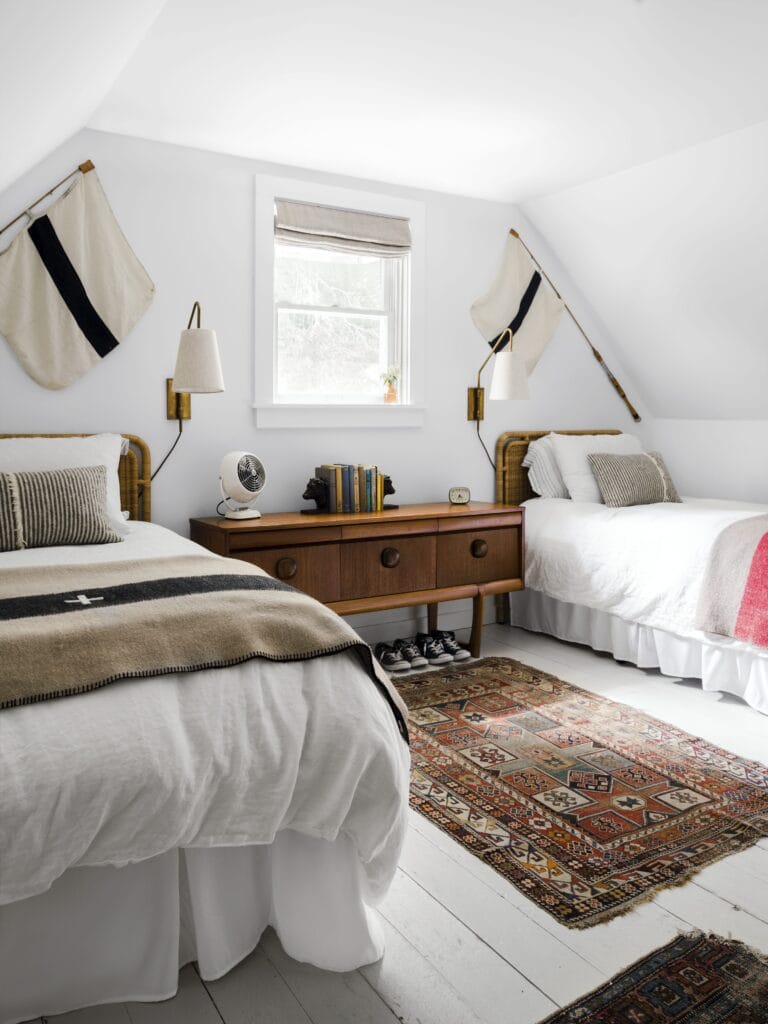
LED Strip Lights for Bedroom Review: Are They Worth It?
LED strip lights for a bedroom are worth buying if you want indirect accent light, need dimming, and can keep the LEDs out of your direct sightline. Skip them if you want the room’s main light source. Poor placement or overly bright strips can hurt sleep and make the room feel harsher. This guide weighs sleep-friendliness, visual payoff, and install risk so you can decide whether strips or a lamp makes more sense.
Verdict

Based on the manufacturer’s specs and published review coverage, Govee is the safer bedroom pick here because it combines smart control, music sync, and a shorter 16.4-foot format that suits accent use better than full-room lighting. That said, a lamp, plug-in dimmer, or smart bulb is often the better buy when you want lower risk, less visible hardware, or a plain white bedside light.
Pros
- Good for indirect light behind furniture, mirrors, or a headboard.
- App and voice control can make dimming easier than a wall switch.
- Color and scene modes give you more control than a basic lamp.
Cons
- Visible strip edges can look untidy in a clean bedroom.
- Adhesive backing can fail if the surface is dusty, curved, or textured.
- Bright or color-shifting light near the bed can work against sleep.
📊 This Old House says MINGER LED Lights include 150 lights. Source: Best LED Strip Lights (2026 Review).
Specs at a glance
| Product | Badge | Best for | Price | ||
|---|---|---|---|---|---|
|
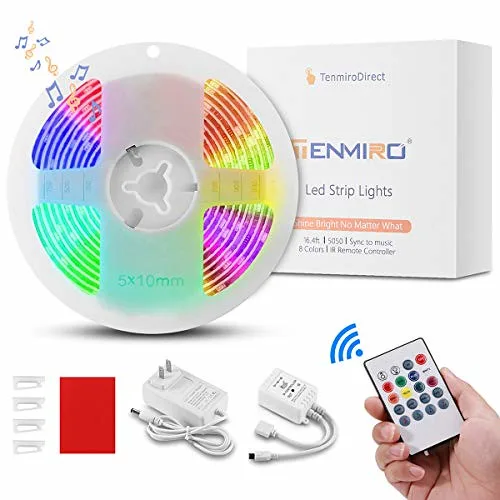
Govee Smart RGB LED Strip Lights 16.4ft, Work with Alexa,Govee | Our pick | 16.4ft · 150 LEDs · WiFi/voice · 64 scenes | $19.98
Price as of 17 Oct 2026
|
View |
 |
DAYBETTER Led Strip Lights 32.8ft Kit, Led Light StripsDAYBETTER | Budget pick | 32.8ft · 5050 chips · remote · 20 colors | $14.99
Price as of 17 Oct 2026
|
View |
| Feature | Govee LED Strip Lights | DAYBETTER LED Strip Lights |
|---|---|---|
| Length | 16.4ft | 32.8ft |
| Light count | 150 LEDs | Not listed in the provided product data |
| Control | WiFi, app, Alexa, Google Assistant | Remote control |
| Color and mode options | 16 million colors, DIY mode, 64 scene modes | 20 colors, DIY color memory |
| Music sync | Included | Not listed in the provided product data |
| Price in the supplied data | $19.98 | $14.99 |
LED strip lights are an energy-efficient way to add adjustable ambient lighting, and many bedroom models add remote or app control. Some include music sync, timers, and scene modes, while adhesive-backed installation remains the biggest weak spot. The fit matters more than the feature count.
LED lighting products can produce light up to 90% more efficiently than incandescent lighting. LEDs are directional light sources, so placement matters, and heat management plus lumen depreciation still affect long-term output. (Energystar)
Most bedroom strips are sold in lengths from about 16.4 feet to 200 feet, but room size is not the only number that matters. The lit area, the hiding space, and where you want the glow to stop are more important than total length alone.
Who it
LED strip lights fit you best if you want a soft glow behind furniture, a color backdrop for gaming, or a controllable accent layer that stays out of your direct line of sight. They are less useful if you need one main light for reading, dressing, or cleaning.
Say your bed sits in a 10-by-12-foot room and the wall behind the headboard is plain. A short strip hidden behind the frame can give you a low-profile glow without flooding the ceiling. Say the same room has no place to hide the power cord; a bedside lamp becomes the cleaner answer.
Renters and first-time DIYers should be cautious. The setup is simple on paper, but the strip still depends on prep, surface condition, and cable routing. If you do not want adhesive risk, a plug-in dimmer or smart bulb is usually easier to live with.
Bedroom LED decision table
| Use case | Cost | Effort | Brightness control | Sleep impact | Hideability | Worth it? |
|---|---|---|---|---|---|---|
| Cozy ambient lighting | Low to moderate | Moderate | Good if dimmable | Good only at low brightness and warm settings | Good if placed behind furniture or trim | Yes, if you want indirect mood light |
| Gaming backdrop | Moderate | Moderate | Very good with app control | Usually neutral to poor near bedtime | Good behind a desk, TV, or monitor | Yes, for screen-facing setups |
| Under-bed glow | Low | Low to moderate | Good if the strip is dimmable | Mixed; can help with night navigation if kept soft | Very good | Yes, if you want a subtle floor wash |
| Behind-headboard accent | Low to moderate | Moderate | Good | Good only if it stays dim and indirect | Good | Yes, if you want a calm glow |
| Renter-friendly install | Low | Low | Depends on the product | Varies | Fair to good, but adhesive risk remains | Maybe, if the surface is smooth and removable |
Are LED strip lights worth it for a bedroom?
Yes, but only for the right kind of bedroom lighting job. They are worth it when you want indirect accent light, a dimmable glow, or a backdrop behind furniture. They are less worth it when you need the room’s main light source, because lamps and smart bulbs usually do that job with less visual clutter.
Best-case bedroom uses
Strip lights make the most sense behind a headboard, under a bed frame, behind a dresser, or behind a TV where the source can stay hidden. Those placements let the light bounce off walls or flooring instead of shining into your eyes. That is the main reason they feel softer than exposed bulbs.
When value drops fast
Value drops when the strip sits where you can see individual diodes, when it lands too close to eye level, or when the brightness stays high at night. A common first-timer mistake is putting a color strip above the bed frame and leaving it at full output. The room looks busier, not calmer.
What works
Indirection is the strength here. A strip hidden behind a headboard, dresser, or mirror can add depth without turning the room into a display wall. That matters in bedrooms, where hard front-facing light often feels harsher than it does in a living room or a game space.
Control is another plus. Many models offer app control, Bluetooth or Wi-Fi pairing, timers, scheduling, and voice compatibility on some products. That gives you more ways to dim the room before sleep than a fixed lamp switch does.
Gaming and streaming setups are a different case from cozy bedroom lighting. A brighter, color-changing strip can work behind a monitor or TV because the goal is a backdrop, not relaxation. Simple Smart Home Guide also frames smart LED strips as useful for bedrooms and gaming rooms, which fits that split well.
Suppose your desk sits against one wall and your bed is on the other. A strip behind the monitor can make the screen wall feel finished, while the sleep side stays dark. That separation keeps the bedroom from feeling overlit.
What does not?
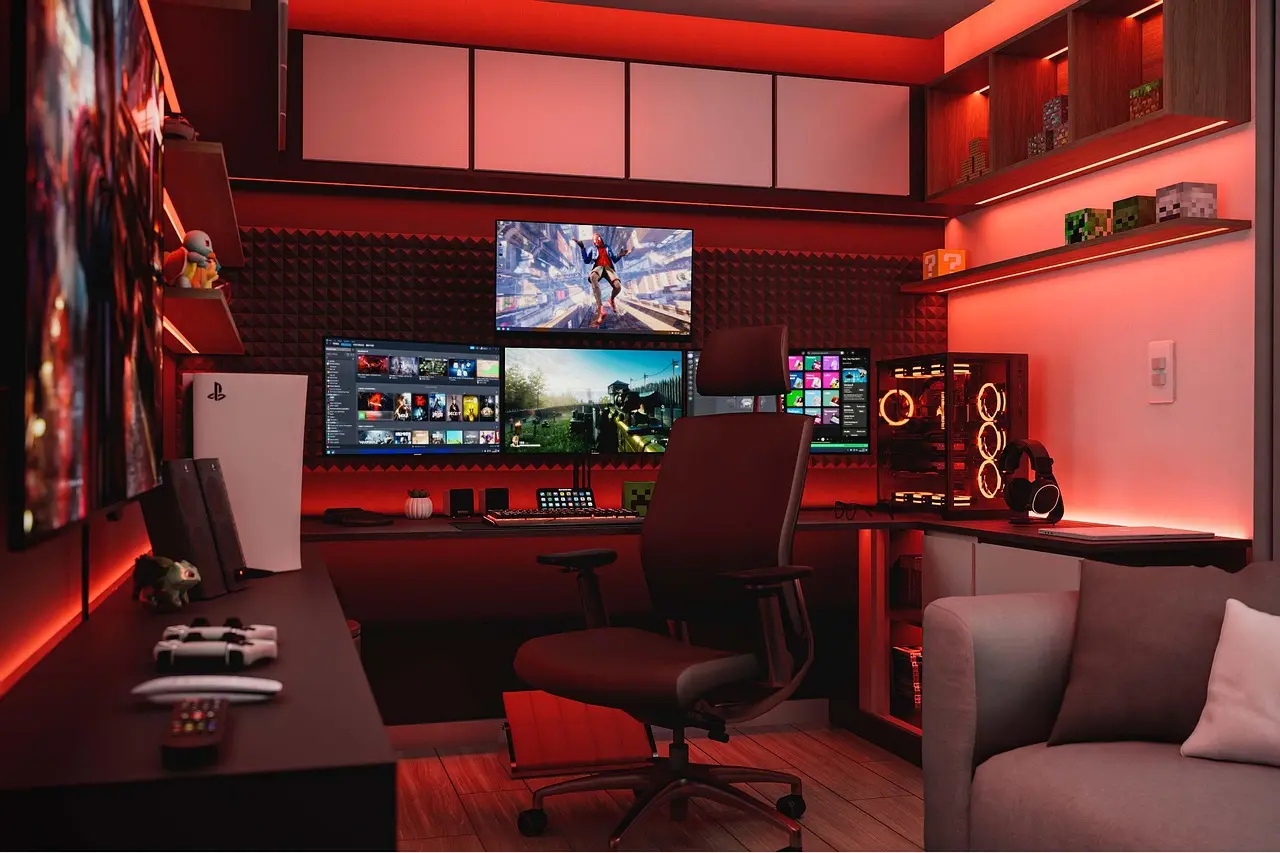
Visible hardware is the main failure case. If the strip edge shows from the doorway or the bed, the room can look unfinished. The effect gets worse when the room is small or when the strip sits on glossy furniture that reflects the diodes.
Adhesive failure is another problem. The backing can be inconsistent on painted walls, dusty trim, curved frames, or textured surfaces. Surface prep matters more than most product pages admit, and once the adhesive lets go, the strip often sags or peels at the corners.
Sleep impact is the other big risk. Bright white light close to the pillow zone can make the room feel alert instead of quiet, and color effects are not automatically calming. If the strip is visible from bed, keep expectations modest and use low output only.
What works and what does not
What works is hidden, indirect light that stays dim when you are winding down. What does not work is treating a strip like a bedroom’s main lamp. The closer the LEDs are to your eye line, the more likely they are to feel distracting rather than useful.
- Works: low glow behind furniture, dim scene lighting, night-path lighting under a bed.
- Does not work: bright strips over the bed, exposed adhesive lines, oversized runs you cannot hide.
How do you choose the right strip?
Start with the area you want lit, not with the longest reel you can buy. Bedrooms often need partial coverage, such as one wall edge or one piece of furniture. A shorter strip can be the better buy if the goal is accent lighting, not room-wide brightness.
Pick the right length
For a small accent behind a headboard or dresser, a shorter strip around the lower end of the market is usually enough. For a larger gaming wall or a long furniture run, you need more length, but only for the section you plan to light. Extra length is helpful only when it has a place to go.
The supplied product data indicates one short option at about 16.4 feet and one longer option at about 32.8 feet. The review coverage also includes much longer bedroom strips, including 65.6 feet and 200.0 feet, which shows how wide the range can be.
Choose smart or basic control
Smart control is worth paying for if you want timers, schedules, voice commands, or different scenes for bedtime versus gaming. Basic remote control is fine if you only need on, off, brightness, and a few colors. Do not pay for app control you will never use.
Check placement and hideability
Before buying, map the cord path, the power outlet, and the places where the strip will disappear from view. A strip that cannot be hidden well will look busy no matter how many modes it has. Hideability matters as much as brightness control in a bedroom.
How do you hide LED strip lights in a bedroom?
You hide strip lights by placing them where the glow is visible but the hardware is not. The best hiding spots are under a bed, behind a headboard, behind a dresser, behind a mirror, or along a shelf edge where the LEDs can bounce light off a surface without facing the room directly.
Under-bed and furniture placement
Under-bed placement is one of the easiest ways to keep the strip out of sight while still getting a low floor glow. Behind a dresser or TV works for the same reason: the furniture blocks the strip, and the light lands on the wall or floor instead of the room.
Behind a mirror can work too, but only if the frame and cord path let the strip stay hidden. If the mirror hangs flush with the wall and the strip peeks out, the effect looks less intentional.
Adhesive prep and cable cleanup
Clean the surface first, and let it dry before you press anything down. Dust and skin oils weaken the backing. On smooth surfaces, press the strip in short sections so the corners do not lift as fast.
- Measure the visible run, then choose the shortest length that covers it.
- Dry-fit the strip before peeling the adhesive.
- Wipe the surface clean and let it dry fully.
- Keep the controller and power brick behind furniture or out of view.
- Test brightness at night before you commit to the final placement.
Picture a renter who wants a glow behind a headboard but has a painted wall with light texture. A strip can still work if the hidden surface is the furniture, not the wall. That small change lowers the chance of peeling and makes removal easier later.
Alternatives to consider
Strip lights are not the only low-cost bedroom lighting option. A lamp, a plug-in dimmer, or a smart bulb may be cheaper in time and risk, especially if you only need one warm light source by the bed. Those options also avoid exposed tape lines.
Lamp and smart bulb options
A lamp is usually the simplest answer when you want light for reading, dressing, or general use. A smart bulb adds dimming and scheduling without adhesive risk. If the goal is sleep-friendlier lighting, these options often solve the problem with less setup.
When simpler lighting is better
Choose a simpler option when the strip would be visible, when the room is very small, or when you do not want to manage app settings. Strip lights are best for accent jobs. They are not the default answer for every bedroom.
Alternatives
DAYBETTER is the budget-leaning alternative here. Based on the supplied product details, the 32.8-foot length gives you more coverage than the shorter Govee option, and the 44-key remote plus DIY color memory may appeal if you want simple control. The drawback is that it lacks the bedroom-focused smart control and voice support listed on Govee.
Lepro LED Light Strips and HRDJ LED Lights also appear in comparison coverage, but the bedroom decision should still come back to use case. Longer strips can help if you need a long run, yet a longer reel is not automatically better for sleep or for a clean look. HRDJ is the kind of product to inspect closely if you need music sync and app control on a very long strip; Lepro is better treated as a comparison contender than a default buy when you want the simplest bedroom setup.
Should you buy it?
Buy bedroom LED strip lights if your main goal is hidden accent light, especially behind a bed frame, dresser, mirror, or TV. Skip them if you want a room’s main light source, or if your room layout leaves no clean path for hiding the strip and cord. In bedrooms, placement decides value more than color count.
If you want the safest bet, start with a shorter, dimmable strip and keep it away from the pillow zone. If you want a gaming backdrop or a more feature-heavy setup, a smart model makes more sense. If you only need plain bedtime lighting, a lamp or smart bulb is usually the better call.
Frequently asked questions
Are LED strip lights for a bedroom worth it?
They are worth it when you want indirect accent lighting, dimming, or a hidden glow behind furniture. They are not the best choice when you need one main light source for the whole room. The value depends on placement, brightness control, and whether the strip stays out of your direct sightline.
What are the best LED strip lights for a bedroom?
The best pick depends on your use case. Govee is the stronger bedroom-focused option in the supplied review coverage because it adds app control, voice compatibility, and music sync. If you only want a basic remote and more length for less money, DAYBETTER is the more budget-friendly alternative.
Do LED strip lights use a lot of electricity?
No. LED lighting is generally far more efficient than incandescent lighting, and ENERGY STAR says LED products can be up to 90% more efficient. They are directional light sources, so they put light where you need it instead of spreading it everywhere. That helps keep waste down.
How long do LED strip lights last?
Many manufacturers advertise lifespans in the 50,000 to 70,000 hour range, but that does not mean the light stays unchanged for all of those hours. ENERGY STAR defines LED lifetime around a 30 percent drop in light output. Output can fade before the strip stops working.
Can LED strip lights be controlled with an app?
Yes, on many smart models. App control can add brightness changes, color settings, timers, scheduling, and scene modes, and some products also add Bluetooth, Wi-Fi, and voice compatibility. Basic models may rely on a remote instead, which is fine if you only want simple control.
Products related to this article
Sponsored / affiliate links. As an Amazon Associate I earn from qualifying purchases. I may earn additional commission from eligible campaigns.