
How to Make Windows Feel Less Cold in Winter
Seal the frame gaps, add window film rated for low emissivity or use insulated curtains, and put shrink-film kits on single-pane windows; on drafty double-pane units, seal the leaks first, then add coverings. Cold windows waste heat, create drafts, and can leave rooms uncomfortable even with the thermostat raised. This guide helps you diagnose why windows feel cold, then match the fix to your window type, budget, and whether you rent or own.
Three main reasons your windows feel cold
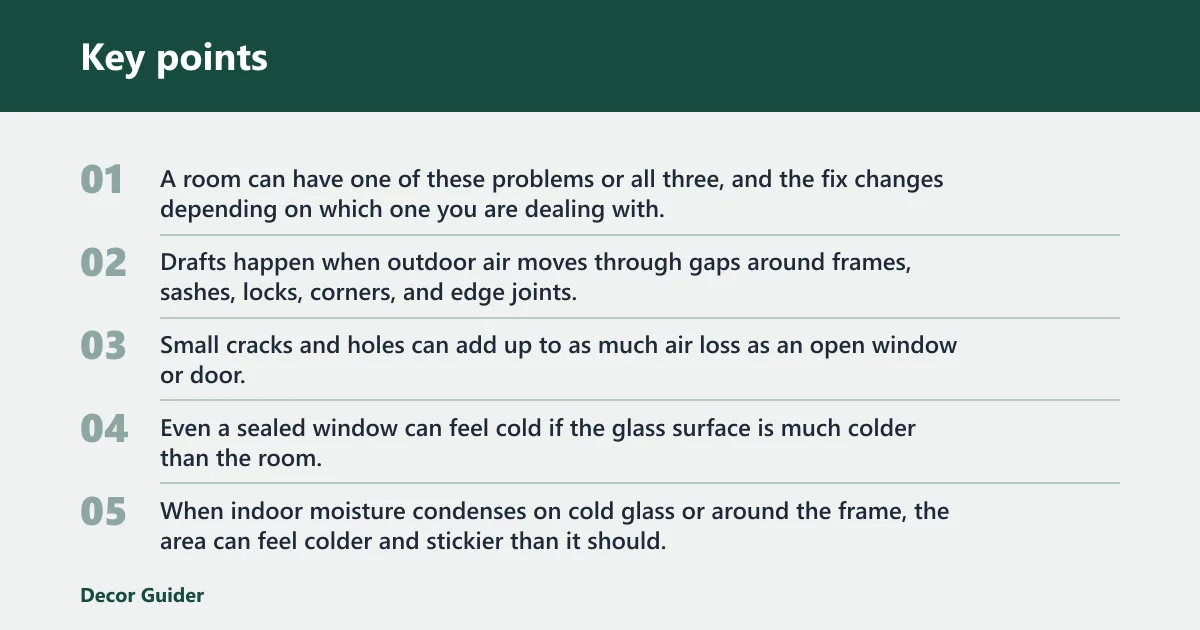


Windows usually feel cold for three different reasons: air leaking around the frame, the glass surface pulling heat from your skin, and moisture making the area feel damp and chilly. A room can have one of these problems or all three, and the fix changes depending on which one you are dealing with.
Air leaks around frames and sashes
Drafts happen when outdoor air moves through gaps around frames, sashes, locks, corners, and edge joints. That moving air creates a cold spot near the window, especially on older sash windows, loose casements, and rental units with worn seals.
A typical home loses more than 25% of its heat through windows, but the cold feeling often comes from small leaks and nearby hidden openings, not only the glass itself. Small cracks and holes can add up to as much air loss as an open window or door. (Energy)
Cold glass and radiant chill
Even a sealed window can feel cold if the glass surface is much colder than the room. Your body loses heat to that surface by radiation, so you may feel a chill while standing near the window even when there is no obvious draft.
This is where thermal curtains, interior film, and secondary glazing help. They slow heat transfer through the glass and make the room feel less sharp at night.
Condensation and damp air
When indoor moisture condenses on cold glass or around the frame, the area can feel colder and stickier than it should. That problem often points to poor ventilation, a very cold surface, or a window that needs repair before insulation materials can do much.
If you see regular condensation between panes, failed seals in double-pane units may be part of the problem. If the moisture is on the indoor face, the issue may be humidity, a cold surface, or both.
How to tell what problem you have
Start by separating draft leakage from cold-glass chill and moisture. If the air feels moving, you need sealing. If the air is still but the glass feels icy, you need insulation or coverings. If the window is wet, fix moisture and surface temperature together.
-
Check for moving air. Hold a thin tissue, incense smoke, or a lightweight strip near the frame edges, sash joints, and corners on a windy day. Movement points to leakage around the window rather than a glass-only problem.
-
Feel the nearby surface. Stand close to the pane for a few seconds. If the room feels fine away from the window but noticeably colder beside it, radiant chill from the glass is likely a major factor.
-
Look for moisture patterns. Check whether condensation forms on the indoor face, at the bottom edge, or between panes. Indoor condensation usually means the room air is too humid for the surface temperature, while between-pane fog often points to a failed seal in the unit.
-
Note the window type. Sash, casement, old timber, and rental windows fail in different places. A loose sash often leaks at meeting rails and balances; a casement often leaks where the sash presses against the frame; old timber may have gaps that need repair first.
Picture a 1930s sash window that does not rattle but still feels icy at the desk beside it. If the air is still and the glass is cold, film or curtains may help more than sealant alone. Now picture a casement with a paper strip fluttering at the latch. That one needs sealing before anything else.
Which winter window fix should you use?
The right fix depends on the problem, the window type, and whether you can make permanent changes. Use the table below to match the repair to the situation before buying materials that do not fit the job.
| Fix | Window type | Cost tier | Install difficulty | Reversibility | Warmth gain | Best use case |
|---|---|---|---|---|---|---|
| Window insulation film | Single-pane, leaky double-pane, rental units | Low | Easy | High | Moderate | Renters who want a temporary indoor barrier |
| Weatherstripping | Casement, awning, accessible movable sashes | Low to medium | Moderate | Medium | Moderate | Small, accessible gaps around moving parts |
| Rope caulk | Stationary gaps and non-moving joints | Low | Easy | High | Moderate | Temporary sealing around frames and trim |
| Thermal curtains | Any window with strong nighttime chill | Medium | Easy | High | Moderate | Reducing cold-glass radiation at night |
| Bubble wrap | Rental windows, utility spaces, low-priority rooms | Very low | Easy | High | Low to moderate | Cheap temporary insulation where appearance matters less |
| Storm windows | Older homes, historic timber windows | Medium to high | Moderate | Medium | High | Owners wanting a secondary glazing layer without replacement |
| Old window restoration | Older timber and heritage windows | Medium to high | Hard | Low | High | Repair-first approach where character matters |
| Energy audit with blower door | Whole-home diagnosis | Medium | Professional | High | Indirect but high-value | Finding the biggest leaks before spending on the wrong fix |
Quick renter-friendly fixes

If you rent, start with removable options that do not damage the frame or interfere with your lease. Temporary film, rope caulk, bubble wrap, and removable seals can help a lot, especially when the main problem is drafts or cold glass rather than a broken window assembly.
Temporary film and plastic barriers
Window insulation film is a clear plastic shrink layer applied indoors with double-sided tape. It works as a temporary winter barrier, especially on single-pane windows and drafty rooms where you want a quick change without hardware. (Wikipedia)
-
Clean the indoor frame. Wipe dust and grease from the trim so the tape bonds well. Poor surface prep is a common reason film peels early.
-
Apply the tape carefully. Place the double-sided tape around the indoor perimeter where the frame meets the wall or trim. Keep the strip continuous so air cannot slip through the corners.
-
Stretch the plastic flat. Attach the film, then warm and shrink it if the kit calls for heat. A smooth, tight sheet reduces drafts and stops the plastic from fluttering.
Film is worth it when the room feels drafty and the window does not need to be opened often. It can fail on very leaky windows, and it is a poor fit for windows you open for ventilation every day.
Bubble wrap and other low-cost options
Bubble wrap can help because it adds a layer of trapped air, and The Age describes it as the renter’s double glazing. It is cheap and removable, which is why it shows up in rental advice so often. Still, it can reduce visibility and is not a good choice for every room or view.
A common first-timer mistake is putting bubble wrap on a main living-room window and then regretting the cloudy look within a day. It is better for utility rooms, spare bedrooms, garages, and other places where light matters more than the view.
No-damage sealing around removable parts
A cheap door snake or rubber seal can help reduce drafts near the window opening if the problem extends to the nearby room edge. For the window itself, removable seals are best on accessible, movable parts with small gaps. They are less useful when the sash is warped or the frame is badly out of square.
The key is to fix only the places that actually move. Do not pack rope caulk into hinges, latches, or tracks that need to operate freely.
Sealing gaps without replacing windows

Sealing helps when the main problem is air leakage around frames, sashes, and edges. Rope caulk, weatherstripping, and other temporary materials can cut drafts without the cost of replacement, but they work best when the gaps are small and the parts still fit reasonably well.
Weatherstripping for movable parts
Weatherstripping is a compressible sealing material used around movable window parts. It suits casement windows, awning windows, and sash systems where the gap is narrow and the contact surface is accessible.
-
Measure the contact edge. Open the window and inspect the point where the moving part meets the frame. You want a strip that compresses without binding the window shut.
-
Choose the right profile. Use a type that matches the gap size and movement pattern. Foam is often easier to apply; denser strips tend to last better where the window closes firmly.
-
Test the closure. Close and lock the window after installation. It should close with normal effort and still seal tightly.
Rope caulk for stationary joints
Window caulk in rope form is a low-cost DIY option for stationary gaps and non-moving joints. It is useful along trim seams, upper frame edges, and other places that should not move during the season.
Leaky windows can be improved with rope caulk or film, and The Age recommends a window seal kit to help stop draft leakage. That advice fits best where the gap is visible and stable, not where a moving sash needs clearance.
Where caulk should not go
Do not use rope caulk on tracks, hinges, locks, balance systems, or any spot that needs frequent opening. It can interfere with operation and make an otherwise workable window annoying to use. If the joint moves, use weatherstripping instead.
Also avoid caulk as the only fix when the window is badly warped or so loose that you can feel a strong draft across the whole frame. In those cases, sealing helps, but it will not solve the underlying fit problem.
Do thermal curtains help?
Yes, thermal curtains help, especially with cold-glass radiation and nighttime chill. They are not a substitute for sealing a drafty window, but they do reduce the sensation of cold from the glass and can make a room feel more settled after dark.
How to use curtains with winter sunlight
During winter, south-facing curtains should be opened in the day and closed at night. That lets in passive solar gain during sunny hours, then traps more heat after sunset. This simple habit matters most on bright windows with little shading.
-
Open south-facing coverings early. Pull curtains or blinds fully back in the morning on sunny days. Let the glass collect warmth before the sun angle drops.
-
Close them before dark. Shut curtains at sunset or when the sun disappears behind shade. That helps slow heat loss and reduces the cold surface feeling near the window.
-
Keep fabric close-fitting. Hang the curtain so it covers the frame well and reaches low enough to block drafts from the bottom edge. The goal is to trap air between the fabric and glass.
Limits of curtains on very leaky windows
Thermal curtains help with comfort, but they do not seal frame leaks. If the window has strong air leakage, you still need rope caulk, weatherstripping, or film first. Otherwise the draft will move around or through the curtain edges.
They also help less in rooms with high condensation if the root issue is moisture, not temperature. In those rooms, improving ventilation and surface temperature matters as much as adding fabric.
When repair, storm windows, or restoration makes more sense
Some windows are worth repairing rather than replacing, especially older timber units with repairable parts. In older homes, storm windows and restoration can reduce air leakage and preserve character without forcing a full replacement project.
Older timber windows and restoration
CBC reports restoring old windows can improve efficiency without replacing them, and it says refurbishing windows reduced air leakage in a measured home test. That makes restoration worth considering when the frame is sound but the seals, glazing, or moving parts need work.
This is especially relevant for heritage windows or older timber frames that still fit the opening well. If the wood is stable and the sash can be repaired, restoration often makes more sense than a full swap.
Storm windows as a middle step
Storm windows add a secondary glazing layer and improve performance without full replacement. They are more permanent than film and usually make more sense for owners than for renters, especially on older homes with repeated winter chill.
They are a strong middle option when the main goal is comfort and energy control, but the original windows are still serviceable. They can also preserve the look of older windows better than a total replacement.
When replacement is the better option
Replacement belongs near the end of the decision tree, not the start. It becomes more sensible when frames are badly degraded, parts no longer close properly, or the windows are beyond practical repair. Replacing aging, inefficient windows with energy-saving models is also listed as an annual upgrade, but the upfront cost is high.
CBC quotes that replacing windows is very expensive to purchase and install. If the window is still structurally repairable, sealing, restoration, or storm windows often deliver a better balance of cost and comfort.
How can I make old windows feel warmer in winter without replacing them?
Start with the cause, then match the fix. Seal obvious leaks with rope caulk or weatherstripping, add window film that reduces heat loss where the glass feels cold, and use thermal curtains at night. For older timber windows, restoration or storm windows can be better than replacement if the frame is still sound.
What is the cheapest way to stop cold from windows in winter?
The cheapest fixes are usually rope caulk, bubble wrap, and simple weatherstripping on small accessible gaps. A cheap door snake or rubber seal can also help if the draft is coming from the surrounding opening. The right choice depends on whether the problem is leakage or cold glass.
Frequently asked questions
How do I tell if my windows are leaking air?
Use a tissue, incense smoke, or a light strip near the frame edges, sash joints, and corners. If it moves, air is leaking. Strong leakage often shows up on windy days, and the biggest air leaks are often not windows and doors, but other hidden openings nearby.
What can I do if I rent and cannot replace my windows?
Use low-damage, removable fixes: window insulation film, bubble wrap, rope caulk on non-moving gaps, and thermal curtains. These are the most renter-friendly choices because they can be removed later. Focus on the coldest room first, especially if the window is single-pane or visibly drafty.
Does bubble wrap on windows actually help?
Yes, bubble wrap can help by adding a layer of trapped air, especially in rental spaces or low-priority rooms. It is cheap and reversible, but it can block light and view. It is best where appearance matters less and the window problem is mild to moderate.
Is window film worth it for winter drafty windows?
Window film is worth it when the window leaks a little and the glass feels cold, especially on single-pane units. It is less effective on very leaky windows, and it can be inconvenient where the window needs frequent access. In those cases, sealing the gap first matters more.
Should I close curtains at night or keep them open in winter?
Close them at night to slow heat loss, and open south-facing curtains during sunny daytime hours. That pattern lets you use winter sunlight while it is available and keeps more warmth in after dark. Curtains help most when paired with sealing or film.
When is it worth repairing windows instead of replacing them?
Repair is often worth it when the frame is sound, the window still operates, and the problem is leakage, worn seals, or aging parts. Restoration can improve efficiency without replacing the unit. Replacement makes more sense when the window is badly degraded or no longer functions properly.
Products related to this article
Sponsored / affiliate links. As an Amazon Associate I earn from qualifying purchases. I may earn additional commission from eligible campaigns.