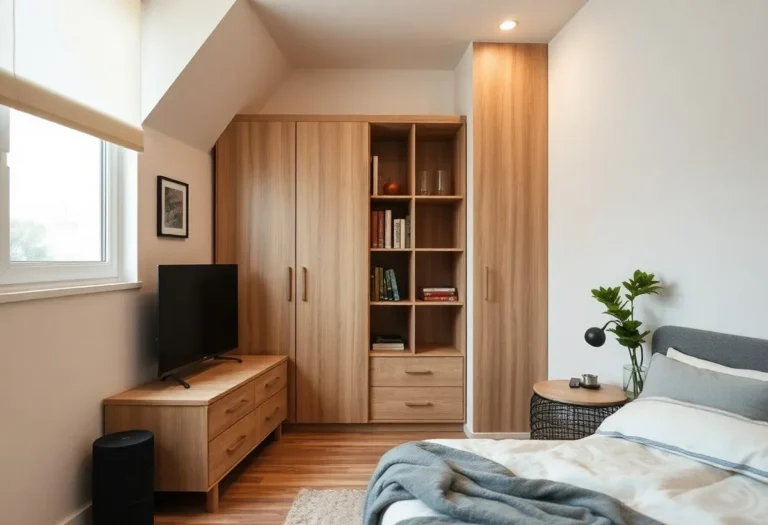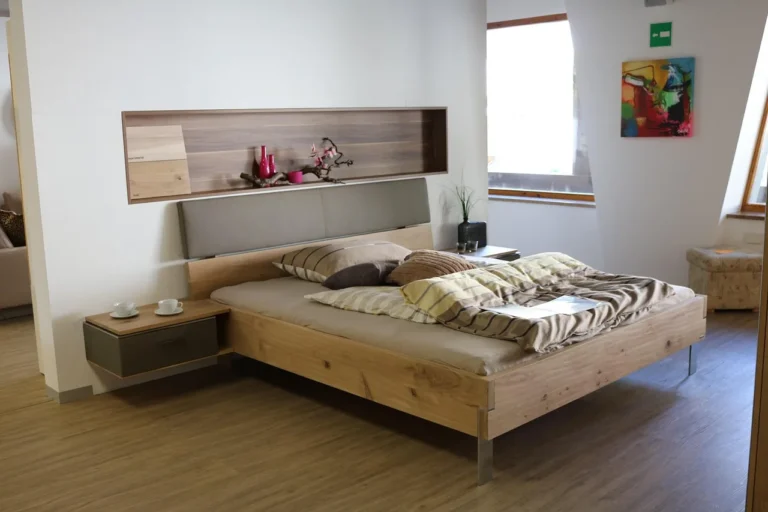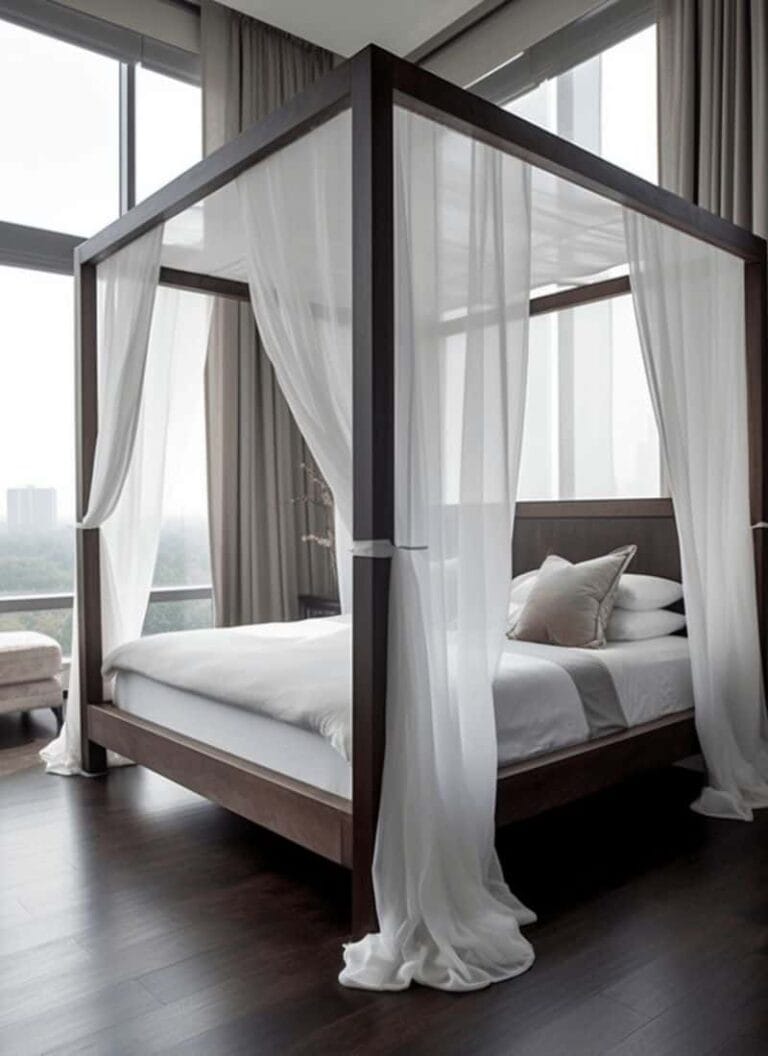
Why Does My Bedroom Feel Cluttered?
Your bedroom feels cluttered when too many visible items, oversized furniture, or poor traffic flow crowd the floor and walls; fix the biggest cause first, because clearing random objects rarely changes the room’s visual load. Left untreated, the room stays hard to relax in and harder to clean. This guide shows how to diagnose layout, scale, storage, and visual noise, then decide what to change first.
Why does my bedroom feel cluttered?



A bedroom can feel cluttered even when it is technically tidy. The reason is often visual clutter: open surfaces, mixed patterns, exposed cords, too many focal points, or furniture that reads as too large for the room. Those cues make the space feel smaller, busier, and harder to rest in.
Visual clutter versus physical clutter
Physical clutter means there are too many items in the room. Visual clutter is different. A room can be free of loose clothes and still feel crowded if the eye keeps landing on many objects, strong contrasts, tall furniture, or dense wall decor.
That distinction matters because the fix changes with the cause. If the issue is storage overflow, you need capacity. If the issue is visual load, you may need fewer visible objects, lighter furniture, or simpler placement.
How clutter changes room size perception
Visual clutter compresses the room in the viewer’s mind. Open shelves, crowded nightstands, too many colors, and blocked floor edges break up the room’s outline, so the walls seem closer and the bed looks larger than it is. The room can feel busy even when the square footage has not changed.
The fast causes
Use the checklist below to sort the problem fast. Score each bucket, then fix the highest score first. That keeps you from buying storage when the real issue is layout, or from restyling when the room needs better capacity.
Bedroom clutter diagnosis checklist
| Cause bucket | Yes/no prompts | Score rule | First fix if highest |
|---|---|---|---|
| Layout | Bed blocks a doorway; closet swing hits furniture; path to bed feels narrow | 1 point for each yes | Reposition furniture and clear walking lanes |
| Scale | Bed frame looks bulky; dresser dominates the wall; nightstands crowd the mattress | 1 point for each yes | Reduce visual weight and resize what you can |
| Storage | Nightstand spills over; dresser drawers are full; under-bed space is unused or stuffed | 1 point for each yes | Add closed storage and contain overflow |
| Styling | Too many colors in view; patterns compete; cords, lamps, and decor create a busy look | 1 point for each yes | Reduce visual noise and simplify surfaces |
- Does the bed leave a clear path to the door?
- Can the closet door open without hitting furniture?
- Is there at least some clearance on both sides of the bed, if the room allows it?
- Does the bed frame look larger than the mattress needs?
- Do the dresser and nightstands feel bulky for the room size?
- Are the nightstand and dresser top visibly crowded?
- Is under-bed storage missing or overflowing?
- Do you see more than three to four strong colors at once?
- Do bedding, curtains, and decor compete rather than coordinate?
- Are cords, lamps, and electronics visible from the bed?
- Do walls feel busy because of many frames or shelves?
- Is laundry or mixed-use gear collecting on the floor?
Score each “yes” as 1 point in its bucket. A score of 0-1 usually points to a small fix. A score of 2-3 in one bucket means that cause should be addressed first. If two buckets tie, start with layout or scale before storage or styling, since those changes can affect everything else.
Is the layout making the room feel crowded?

Yes. Poor layout can make a bedroom feel crowded even when there is not much in it. If traffic flow is blocked, if the bed steals the easiest wall, or if door and closet swings collide with furniture, the room reads as cramped before anyone notices the objects themselves.
Traffic flow and clearance around the bed
Walkways matter because the eye follows them. A bedroom feels calmer when you can move from the door to the bed, closet, and dresser without turning sideways. If the route narrows at the bed corner or gets pinched by a bench, the room feels smaller than it is.
Bed placement, door swing, and closet access
Check the swing zones first. A door that opens into the bed area or a closet door that bumps a nightstand creates a constant visual interruption. In small bedrooms, even a few inches can matter because fixed swings leave less room for furniture placement choices.
Symmetry, asymmetry, and visual balance
Symmetry can help a room feel ordered, especially around the bed. But forced symmetry can also waste space. If one side of the room must stay open for a closet or entry, a balanced look can come from matching lamp height, matching pillow scale, or mirrored storage size rather than identical furniture.
- Map the walking path. Trace the route from the door to the bed and closet. Keep a clear lane where possible, especially in narrow rooms, so movement reads as easy instead of cramped.
- Check the swing zones. Open the door and closet fully, then note where they land. If a panel hits a drawer pull, nightstand, or bench, shift the furniture or change the piece.
- Recenter the bed. Move the bed only if doing so restores clearer access or better wall balance. In a small room, a bed against one wall may be the better choice if it frees the main path.
Say your room is 9 by 11 feet and the closet door clips the corner of a nightstand every time it opens. The room may feel cluttered even with very few objects because the layout may be fighting the door swing. One move, such as swapping to a narrower nightstand, can relieve that pressure.
Why furniture scale can feel off
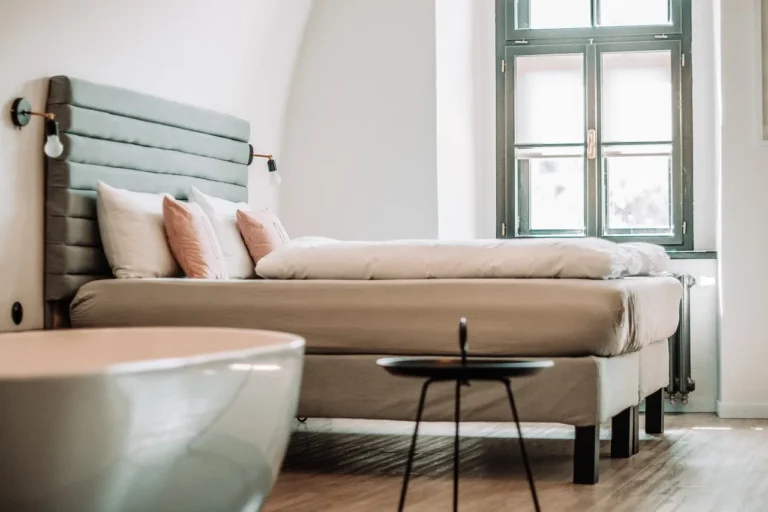
Furniture scale matters because large pieces carry visual weight. A bed with a tall headboard, thick frame, and bulky footboard can dominate the room, while oversized dressers and nightstands can make the walls feel closer. The room may seem crowded even when storage is adequate.
Oversized bed frames and bulky storage pieces
A large bed frame can read as heavier than the mattress itself. The same is true of dressers with thick tops, deep bases, or dark finishes. In a compact room, those pieces use more of the eye’s attention, so the room feels denser.
Visual weight, low-profile options, and proportion
Low-profile furniture often tends to feel lighter because it shows more floor and less mass. Slim legs, shorter headboards, and narrower nightstands give the room more breathing room. Proportion matters more than style label: a simple piece can still feel heavy if it is too large for the wall or ceiling height.
When scale is the real issue
Suppose the room is tidy, but the bed frame rises high enough to reach nearly half the wall behind it. The room may feel crowded before any clutter is visible. In that case, changing the frame or reducing the surrounding furniture size will do more than removing a few accessories.
Are storage gaps creating visible mess?
Often, yes. Storage gaps create overflow points, and those points are usually easy to spot: nightstands, dresser tops, chair seats, and the floor near the bed. Closed storage can hide items that would otherwise read as clutter, while open storage keeps everything in view.
Closed storage versus open storage
Closed storage hides categories that do not need to be seen. Open shelving works best for a small number of calm, coordinated items. If shelves, racks, or open bins are holding too many mixed objects, the room can feel busier than a closet with the same amount of stuff inside.
Under-bed storage, drawer count, and bin size
Under-bed storage helps most when the items are low-profile and grouped by category. Bin size matters: a bin that is too tall can look bulky and block the under-bed line, while a bin that is too small leaves wasted space. Drawer count also matters because too few drawers push items onto surfaces.
Nightstands, dressers, and overflow points
Nightstands and dressers are common overflow points because they are easy drop zones. A lamp, water glass, books, chargers, skincare, loose jewelry, and mail can crowd one flat top fast. The fix is not only “put things away”; it is deciding which categories belong in a drawer, a tray, or another room.
- Sort by category. Group daily-use items, spare linens, electronics, and personal items separately. Category-based storage reduces hunting and keeps mixed items from spreading across every surface.
- Assign closed storage. Put the least attractive or most fragmented items behind doors or in drawers. Use the nightstand for only what you reach for daily, and keep the rest contained.
- Set overflow limits. Pick one catchall tray or basket per surface, and stop there. If the basket fills quickly, that surface needs less on it or more storage elsewhere.
What adds visual clutter in a bedroom?
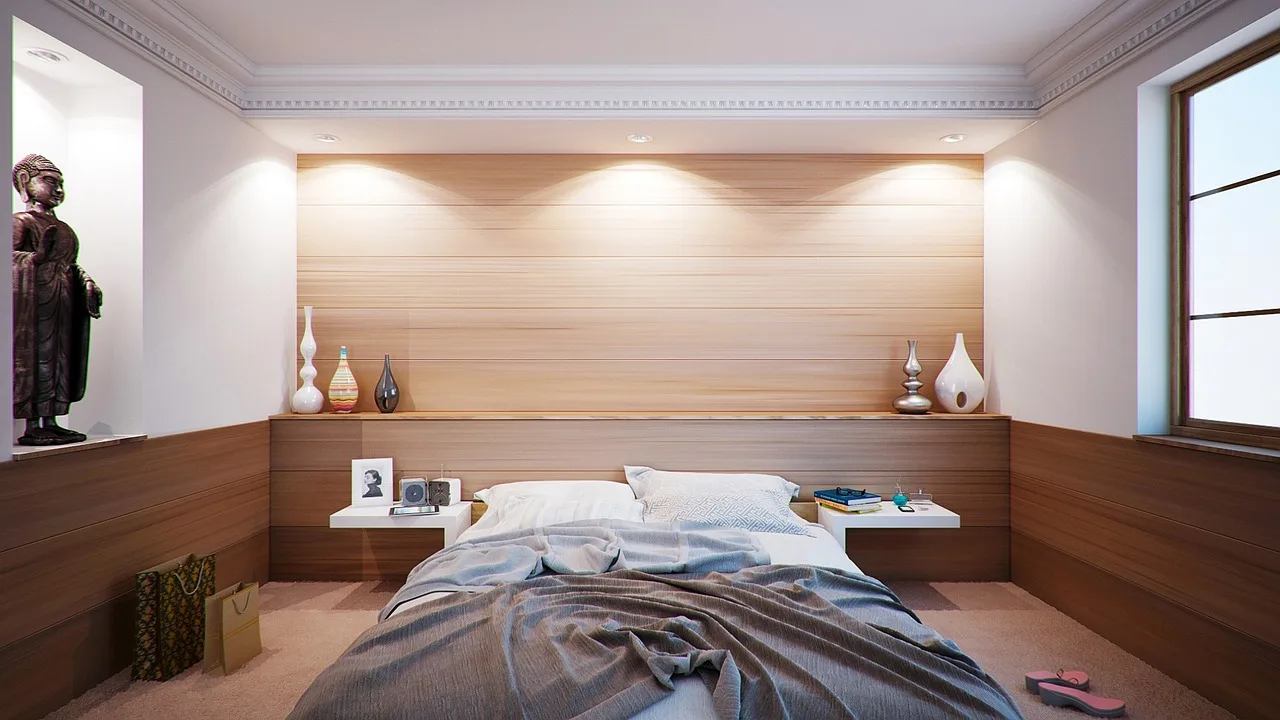
Visual clutter comes from what the eye sees at once. Too many colors, too much pattern, exposed cords, multiple light sources with harsh shadows, crowded wall decor, and items on the floor all add to that load. A room can look busy long before it looks dirty.
Nightstand and dresser top hotspots
Flat surfaces attract clutter because they invite temporary placement. If the nightstand holds a lamp, charger, books, lotion, water, and a dish for small items, the eye reads a dense cluster. The same is true of a dresser top with framed photos, perfumes, and loose accessories.
Color, pattern, and contrast in view
Bedrooms feel calmer when the palette is controlled. Too many colors, strong contrast, and several competing patterns can make the bed, curtains, and decor fight for attention. Coordinated bedding and curtains do not have to match exactly, but they should sit in the same visual range.
Lighting layers, shadows, and wall decor density
Lighting affects clutter more than many people expect. A single bright lamp can throw deep shadows into corners, making the room feel heavier. Good ambient lighting should fill the room, task lighting should stay focused where needed, and accent lighting should remain limited so it does not add more visual points than necessary.
Floor clutter, cords, and mixed-use items
Floor clutter is especially loud in a bedroom because it breaks the room’s clean outline. Laundry piles, exercise gear, work equipment, and visible cords all compete with the bed for attention. If the room doubles as an office or dressing area, the overlap needs a containment plan.
- Limit visible colors to a small, coordinated set.
- Reduce pattern mixing when the room already feels busy.
- Hide cords with a charging station or routed placement.
- Keep the floor near the bed clear except for intentional items.
- Use mirrors carefully so they reflect open space, not clutter.
Bedroom clutter fixes that target the cause
Start with the bucket that scored highest on the checklist. That gives the fastest improvement with the least effort. Layout changes fix crowding. Storage changes fix overflow. Scale changes fix oversized pieces. Styling changes fix visual noise.
Layout fixes
If the room feels crowded because of layout, move furniture before buying containers. Try shifting the bed off a blocked wall, keeping the closet swing clear, and opening a straight path from the door. In rented rooms with fixed furniture, even a chair or bench moved out of the walkway can change the feel.
Storage fixes
If storage is the issue, increase closed storage before adding more open bins. Use under-bed storage for low-profile items, add drawer dividers for small pieces, and give every loose category a home. For couples, separate shared and personal items so one side of the room does not become the catchall zone.
Scale fixes
If furniture scale is off, swap the largest visual pieces first. A bulky nightstand can be replaced with a slimmer one, and a heavy dresser can sometimes be balanced with lighter decor above it. In small bedrooms, low-profile furniture usually reads better than tall, dense pieces.
Styling fixes
If the room is tidy but still looks busy, cut visual load. Simplify bedding, reduce pattern mixing, keep wall decor spaced out, and use a single catchall tray instead of multiple small objects on every surface. The aim is not emptiness; it is clearer sightlines.
How to reduce visual clutter in a small room
- Clear the floor edges. Remove anything that interrupts the outline of the bed or walking path. A visible floor edge makes the room feel larger.
- Lower the number of focal points. Keep one main visual feature, such as the bed or art above it, and quiet the rest. Too many focal points make the eye bounce around.
- Use one contained catchall. Put daily small items in one tray or basket, then remove extras from the nightstand and dresser. Containment works better than spreading items across several surfaces.
- Balance light and shadow. Add room light where corners feel dark, and avoid placing bulky lamps where they crowd the surface. Better light reduces the heavy look of shadowed corners.
Frequently asked questions
Why does my room feel cluttered?
Your room can feel cluttered when layout, scale, storage, or visual noise overload the eye. Even tidy rooms can feel crowded if furniture blocks movement, surfaces stay busy, or too many colors and patterns compete. Fix the main cause first, not every object at once.
Why does my room always feel messy?
If a room always feels messy, the problem is often a weak system rather than one bad day. Common causes include a lack of closed storage, no daily reset habit, and too many places where items can land. When every surface becomes a drop zone, the room never visually settles.
Why does my bedroom feel cluttered even when it’s clean?
A clean bedroom can still feel cluttered if the room is visually crowded. Oversized furniture, many visible items, exposed cords, strong contrast, and dense wall decor can make the space feel full even after tidying. That usually means the room needs fewer visible cues, not just cleaner surfaces.
What makes a bedroom feel cluttered?
Common causes include too much furniture for the room, poor traffic flow, open storage packed with mixed items, crowded nightstands, and too many colors or patterns in view. Lighting can add to the problem if corners stay dark and the room looks heavy. The cause is often a mix, not one thing.
How do I make my bedroom feel less crowded?
Start with the highest-scoring diagnosis bucket. Clear the walking path, reduce oversized pieces if they dominate the room, and move loose items into closed storage or one catchall container. Then simplify what stays visible. That sequence usually changes the room’s feel faster than random decluttering.
Can furniture placement make a bedroom feel cluttered?
Yes. Furniture placement can make a room feel crowded even when the item count is low. Blocked door swings, tight bed clearance, and awkward closet access create constant visual friction. A better layout can make the same room feel open without removing many objects.
Products related to this article
Sponsored / affiliate links. As an Amazon Associate I earn from qualifying purchases. I may earn additional commission from eligible campaigns.