Do Rugs Make a Room Warmer in Winter?
Edited and reviewed for accuracy by a home-comfort editor with flooring and textiles experience. Yes, mostly by slowing heat loss through the floor and making the room feel warmer underfoot; a rug adds meaningful winter insulation only when it is thick, dense, and paired with a quality pad. In thermal-comfort terms, this matters because floor surface temperature affects how warm a room feels even when the air temperature does not change much, as noted in U.S. Department of Energy guidance on insulation and floor coverings and in ASHRAE comfort principles. Without that setup, you can still feel chilly, keep turning up the thermostat, and pay more for little comfort gain. This guide explains real insulation versus floor-level comfort and shows which rug materials, thicknesses, and placements matter most in winter.
How rugs trap heat


Mostly in feel, not in air temperature. Rugs slow heat transfer from your feet and from the room into the subfloor, so they act like a buffer over cold flooring. That can make a space feel noticeably cozier, but it usually does not raise the whole room’s air temperature much. This is why floor temperature matters so much in winter comfort: a colder surface increases heat flow away from your body, while a warmer surface reduces that loss.
Hard flooring such as hardwood, tile, laminate, and stone feels colder because it draws heat away more easily than carpeted surfaces. Rather than rely on a shaky percentage claim, it is more accurate to say that exposed hard floors can account for a substantial comfort penalty compared with covered floors, especially where the floor is uninsulated or over a cold crawlspace or slab.
Warmth underfoot versus warmer air
A rug changes the temperature at the surface you touch first. That matters a lot in winter, because cold feet change how warm a room feels overall. A well-sized rug can make the space feel more comfortable even when the thermostat stays the same. In practice, this is the same reason carpeted rooms often feel softer and warmer than rooms with bare hard flooring.
Small accent rugs do the opposite. They help at one landing spot, but they leave too much open floor for heat loss. If you want real comfort gains, coverage matters more than decoration.
How rugs reduce heat loss
Rugs slow conduction through the floor. Dense fibers trap air, and trapped air resists heat flow. That is why thicker rugs and rugs with a pad tend to feel warmer than thin, low-pile pieces on the same floor. Textile structure matters here: wool’s crimped fibers naturally hold more air than many smooth synthetics, which helps explain why wool often performs well in winter comfort use cases.
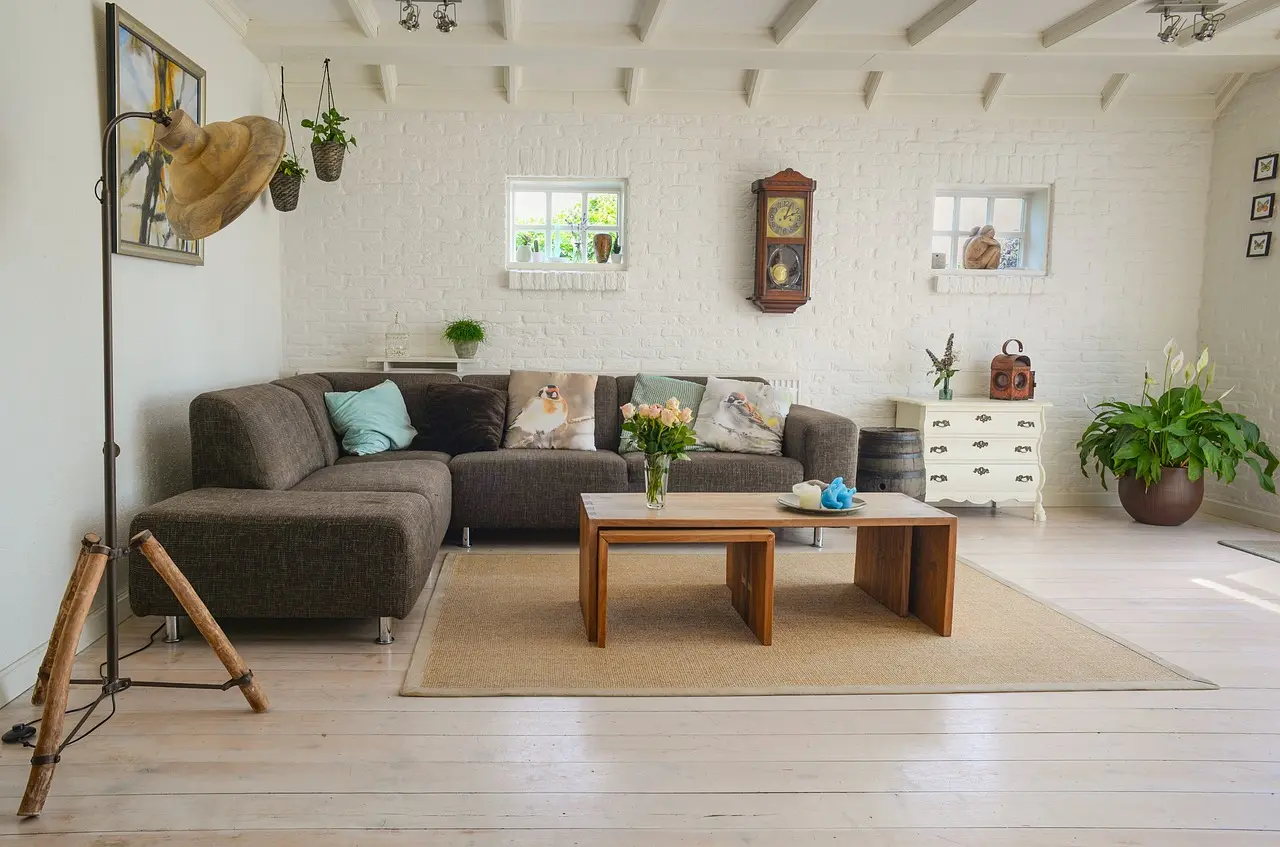
Say your living room has a 5-by-8-foot rug centered under a coffee table on tile. The seating area may feel less drafty at your feet, but the open perimeter still lets the floor pull heat away. A larger rug that reaches under the front legs of the sofa and chairs does more. For room-to-room comparisons, the most reliable read is not just “does it feel softer?” but “how much of the cold floor is actually covered?”
Which rug materials feel warmest?
Wool is the warmest common rug material and the best insulator among everyday choices. Its dense fibers trap air and have low thermal conductivity, which helps it resist heat loss better than many synthetics or flatweaves. For winter, wool is also a durable choice on hard floors. Textile references from the Woolmark Company and fiber-property data from standard materials texts both point to the same practical result: wool’s fiber crimp and loft help it hold insulating air space.
Shaggy rugs and other higher-pile styles often feel warm because their taller fibers can hold more air. Thin flatweaves can still look good, but they insulate less and usually feel cooler underfoot in winter.
Why wool leads common materials
Wool rugs are best for winter because they are durable and warm. They work especially well on hardwood or tile, where the floor itself feels cold. A thicker wool rug with a medium or high pile gives you both surface softness and better insulation. In practical room use, wool also tends to recover well from foot traffic, which helps preserve the loft that supports warmth.
If you want one material to prioritize for winter comfort, start with wool. It is the safest all-around choice when you want warmth without making the room feel heavy or overbuilt.
How synthetics compare
Many synthetic rugs can still help if they are dense and not too thin. But most lower-pile synthetics do less for insulation than wool, especially when the floor below is stone, tile, or laminate. In winter, construction matters as much as fiber type. A dense polyester or polypropylene rug can be perfectly serviceable, but it generally needs better pile or better padding to approach the comfort feel of wool.
A flat synthetic rug on a cold floor may soften the look of the room, yet it will not do much for warmth unless you pair it with a good underlay and decent coverage.
When flatweaves feel cooler
Flatweaves are easy to clean and often work well in busy rooms, but they are thinner by design. That means less trapped air, less thermal resistance, and less underfoot comfort on cold flooring. They can still be practical, just not the warmest choice. If you live with hard floors and winter drafts, a flatweave is usually a design-first choice rather than a warmth-first one.
What rug size and pile work best?

Size and pile both matter. Larger rugs cover more cold floor and help more than small accent rugs, while thicker pile height improves insulation by trapping more air. For winter, a roomy rug with moderate to high pile usually beats a tiny plush one. A useful way to think about it is: coverage first, pile second, material third.
Placement matters too. Living rooms benefit when the rug reaches under the main seating zone. Bedrooms benefit when the rug lands where your feet touch first in the morning, such as beside the bed. Hallways and entry paths also get a strong comfort payoff because they are high-contact zones.
Why coverage matters
Rug size affects how warm a room feels because it changes how much floor is exposed. Larger rugs are better at holding in warmth, especially in living rooms and bedrooms where people spend longer periods seated or standing in one area. This is also why a larger rug often feels “more finished” in winter: it is not just visual balance, it is thermal coverage.
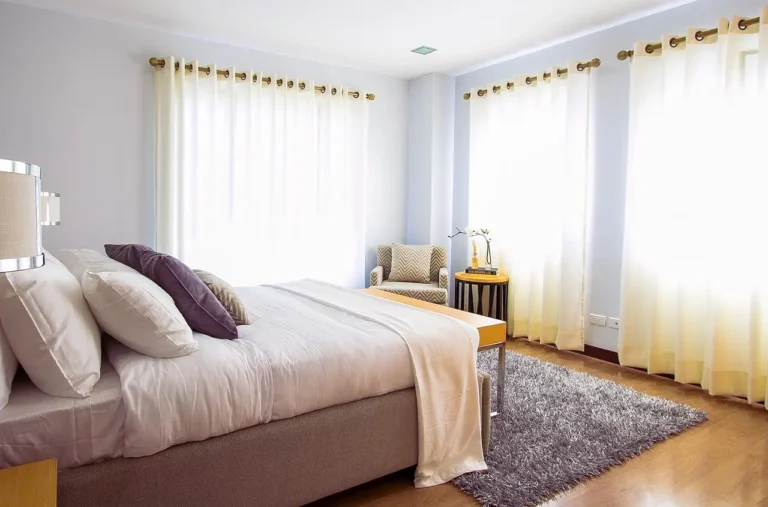
Picture a bedroom with cold laminate and only two small bedside rugs. Your feet may feel better for a second, but the open floor still dominates the room. A larger rug placed under the bed and extending beyond both sides creates a much warmer feel at the points that matter.
How pile height changes comfort
Thicker rugs feel warmer because the pile traps more air. Plush, shag, and other higher-pile rugs are among the warmest common styles. They tend to feel soft and insulating, though they may be harder to vacuum and may not suit every room. If you are comparing options in a real room, the difference is usually obvious on tile or stone and smaller on already-cushioned floors.
Thin low-pile rugs can still help in a drafty spot, but their warmth impact is limited. If winter comfort is the goal, pile height should be part of the decision, not an afterthought.
Best placements for living rooms and bedrooms
In living rooms, place the rug under the main seating zone rather than floating it in the center with empty floor around it. In bedrooms, let the rug extend beyond the bed so your feet land on it when you get up. Those placements give the best winter payoff. If you are weighing two similar rugs, the one that covers the larger cold zone usually wins on comfort.
Hallways and seating areas can also benefit because they see repeated foot contact. A rug in these spots improves perceived warmth quickly, even if the room air stays about the same.
Rug pads and underfloor heating

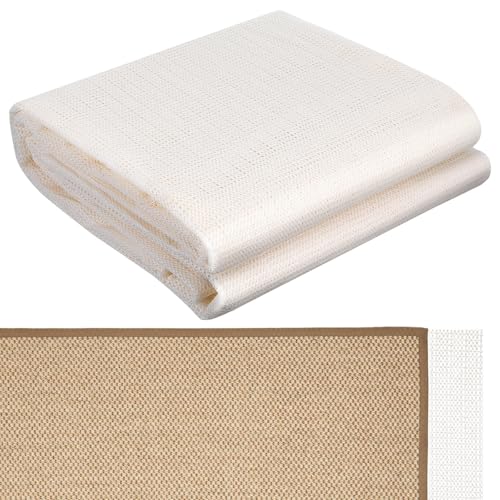
A rug pad adds a second insulating layer, helps block cold transfer from the floor, and reduces slipping. It also helps the rug lay flatter and feel more substantial. For winter, a pad is one of the simplest ways to improve comfort without buying a much thicker rug. On tile and hardwood in particular, the pad can meaningfully improve the “warm step” effect.
Use a pad that is slightly smaller than the rug so the edges do not peek out. That keeps the rug stable and avoids visible overhang. If the rug is already very thick, a thin pad may be enough; if the rug is flat, the pad matters more.
Why a pad helps in winter
Think of the pad as insulation plus grip. It creates a small air gap and slows cold transfer from the floor, which is helpful on hardwood, tile, and stone. It also reduces the chance that the rug shifts when you walk on it. That said, the pad is not magic; if the rug itself is too thin, the upgrade is helpful but modest.
Do I need a rug pad for extra insulation? In most winter setups, yes. It is one of the few upgrades that improves both comfort and safety at the same time.
How to choose a pad size
Choose a pad that sits just inside the rug edges. That keeps the layer invisible and prevents curling. If you are matching a pad to a larger area rug, trim it so the pad does not extend beyond the rug on any side.
For a small accent rug, the pad still helps, but it will not change the room much. The gain comes from combining pad, pile, and coverage.
What to check before using rugs over radiant heat
Underfloor heating often works best with breathable construction so warmth can move upward instead of getting trapped. Manufacturers of radiant-floor systems and flooring products generally recommend checking the rug’s thickness, backing, and thermal resistance before use. A moderate-thickness rug is usually safer than a very heavy, dense build, and a low-to-medium pile often gives the best balance of comfort and heat transfer.
Avoid very thick or non-breathable rugs over radiant systems unless the manufacturer says they are compatible. Wool can still work well, but the rug should not block heat so much that the floor becomes inefficient. If the rug feels unusually warm for long periods, the setup may be too insulating. When in doubt, confirm the rug and pad specifications against the radiant-floor manufacturer’s guidance rather than guessing.
Winter rug decision table
| Floor type | Room type | Rug material | Pile height | Rug size | Pad needed | Underfloor-heating safe | Expected warmth impact |
|---|---|---|---|---|---|---|---|
| Hardwood | Bedroom | Wool | Medium to high | Large, extends beyond bed sides | Yes | Usually, if breathable and not too thick | High underfoot comfort, moderate room impact |
| Tile | Living room | Wool | High | Large enough for seating zone | Yes | Sometimes, check thickness and material | High comfort gain, better heat retention than small rugs |
| Laminate | Hallway | Dense synthetic or wool blend | Medium | Runner with broad coverage | Yes | Usually, if the system allows rugs | Moderate warmth gain in a high-contact path |
| Stone | Entry or seating area | Wool | High | Large enough to cover most of the active zone | Yes | Sometimes, use a breathable build | High surface comfort, better than small rugs |
| Any hard floor | Room with radiant heat | Low- to medium-pile wool or compatible synthetic | Low to medium | Moderate, not wall to wall | Optional, if approved by the rug and floor maker | Yes, with caution | Moderate warmth without blocking too much heat |
| Any hard floor | Low-use guest room | Flatweave | Low | Small to medium | Helpful | Usually | Low warmth impact, mostly cosmetic |
When rugs will not help much
Rugs will underperform when they are very thin, very small, or placed where people rarely stand or sit. A tiny rug in the middle of a large hard-floored room changes little. The same is true if the floor is already well insulated and does not feel cold.
They also do less if the pad is missing on a hard surface, or if the rug is chosen for looks alone. In those cases, you may get a softer step but not much winter comfort.
Troubleshooting: If a room still feels cold after you add a rug, the problem may not be the floor covering at all. Common causes include air leaks around windows or exterior doors, poor subfloor or crawlspace insulation, and HVAC imbalance that leaves one room underheated. In those cases, sealing leaks, improving insulation, or balancing supply and return airflow will usually do more than buying a thicker rug.
- Check the floor: hardwood, tile, laminate, and stone benefit the most.
- Check the room: focus on bedrooms, living rooms, hallways, and seating zones.
- Check the rug: choose wool or another dense construction with a thicker pile.
- Check the size: make sure the rug covers the main cold zone, not just a corner.
- Check the pad: add one unless the rug system or floor maker says not to.
- Check radiant heat: use breathable materials and avoid overly thick rugs.
Frequently asked questions
Do rugs make a room warmer in winter?
Yes, but mostly by reducing heat loss through the floor and making the room feel warmer underfoot. Rugs usually change comfort more than air temperature. The biggest gains come from dense materials, larger sizes, and a rug pad on hard flooring.
Does an area rug make a room warmer?
An area rug can make a room feel warmer, especially on hardwood, tile, laminate, or stone. It does not usually heat the air itself. The effect is strongest when the rug is large enough to cover the main walking or seating zone.
Does carpet make a room warmer in the winter?
Yes, carpeted rooms are usually warmer than rooms with hard flooring because carpet adds insulation across the whole surface. That is different from a single area rug, which only covers part of the floor. A rug helps, but it does not act like wall-to-wall carpet.
Do rugs make rooms warmer or just feel warmer underfoot?
Mostly they feel warmer underfoot, with some reduction in heat loss through the floor. In most homes, that comfort gain is larger than any change in room air temperature. Thick rugs with pads do more than thin rugs, but they still are not a replacement for heating.
Are carpeted rooms warmer than rooms with hard flooring?
Usually yes. Carpet covers more surface area and slows heat transfer across the entire floor, while a rug only covers part of it. If your goal is winter comfort without changing the thermostat, the floor type is a major factor.
Which rug material is warmest for winter?
Wool is the warmest common rug material and the best insulator among standard choices. Dense wool fibers trap air well, and thicker or higher-pile wool rugs insulate better than thin versions. On cold floors, wool is the clearest winter-first option.
Products related to this article
Sponsored / affiliate links. As an Amazon Associate I earn from qualifying purchases. I may earn additional commission from eligible campaigns.