Curtains vs Blinds for Bedroom Windows: Which Wins for Sleep
For bedroom windows, blackout curtains usually beat blinds for sleep and privacy, while blinds work better in narrow rooms, damp rooms, and rentals that need a slimmer fit. Pick the wrong treatment, and dawn light, early wake-ups, and weak privacy can make the room harder to sleep in and less comfortable to use. This comparison breaks down which option fits different bedroom conditions, where each falls short, and how to choose based on sleep, upkeep, and style.
This guide is part of our Bedroom design ideas series.
| Decision factor | Curtains | Blinds for Bedroom Windows | Winner |
|---|---|---|---|
| Sleep darkness | Blackout curtains can block out light entirely when sized and hung well. | Room-darkening or blackout blinds reduce light, but slat gaps and edge spill are common. | Curtains |
| Night privacy | Full fabric coverage helps stop silhouettes and movement from street view. | Slats can be tilted closed, but angle and fit affect privacy. | Curtains |
| Cleaning effort | Fabric panels need washing or dry cleaning, plus dust control. | Movable slats are easier to dust or wipe. | Blinds |
| Rental-friendliness | Often needs a rod and brackets, which may mean drilling. | Lower-profile options can fit better where wall damage is limited. | Blinds |
| Thermal buffering | Helps keep rooms cool in summer and warm in winter. | Offers less buffering unless layered. | Curtains |
| Light control | Best for all-or-nothing darkening. | Fine-tuned control with adjustable slats. | Blinds |
Curtains vs blinds in bedroom



The trade-off in a bedroom is plain: curtains give more darkness, privacy, and a finished look, while blinds give sharper light control, easier dusting, and a smaller footprint. Since sleep is the main job here, the right answer usually depends on how much outside light, heat, and street exposure the room gets.
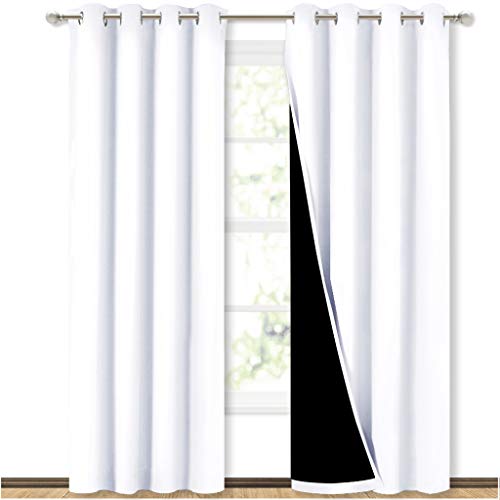
Curtains are fabric panels, and blackout curtains can block out light entirely when the fabric, lining, and fit are right. Blinds use movable slats, so they usually give finer control but leave more room for light leakage at the edges and between slats.
What each option does best in a bedroom
Curtains are the better choice when you want the room to feel dark, quiet, and visually finished at bedtime. Blinds work better when you want to tilt light away from the bed, keep the window profile slim, or avoid heavy fabric near a humid window.
Blinds suit kitchens and bathrooms as well as other rooms, which points to their durability in tighter, more moisture-prone spaces. Curtains fit many design styles, which makes them easier to match to a cozy or transitional bedroom.
Why sleep, privacy, and upkeep matter more than price alone
Upfront cost matters, but sleep performance matters more in a bedroom. A cheaper treatment that lets in dawn light, exposes silhouettes at night, or collects dust over the bed can be the wrong buy even if it costs less on day one.
Blinds are less expensive to buy and professionally install, yet curtains often give better sleep conditions. That is why many bedroom decisions end up being about function first, then budget, then style.
📊 Blinds can last 15 years or more. Source: Blinds vs. Curtains: Which Are Right for Your Home?.
Which blocks more light in a bedroom?

Blackout curtains usually block more light than blinds in a bedroom, especially when they are wide enough to cover the window opening beyond the frame. Blinds can reduce glare well, but slat gaps, side spill, and top clearance often leave more trace light than blackout drapes do.
Blackout curtains and where light still leaks in
Blackout curtains can block out light entirely, but only when the panel width, rod placement, and edge coverage are right. Light can still leak around the top, at the sides, and where the two curtain panels meet.
A common first-timer mistake is buying a curtain that matches the glass width instead of the full window plus extra overlap. That leaves a bright outline at dawn, which matters most in east-facing rooms and shift-worker bedrooms.
Room-darkening and blackout roller blinds compared with venetian slats
Roller blinds in room-darkening or blackout versions are the closest blind option to a dark bedroom, because they cover the opening with a flat panel. Venetian blinds are different: their adjustable slats give fine control, but the stacked slat structure usually allows more leakage than a closed blackout curtain or blackout roller blind.
For a guest room that only needs “dimmer,” blinds may be enough. For a light sleeper who wakes at the first glow of sunrise, blackout curtains or a blackout roller blind plus side coverage are usually safer.
How top gaps, side gaps, and fit change bedtime darkness
In bedroom darkness, fit matters as much as material. A blind mounted inside the recess can leave top and side gaps, while curtains mounted high and wide can reduce visible gaps if the rod and brackets are installed correctly and leveled.
Suppose a medium-sized bedroom window faces a nearby parking lot lamp. A blind may soften the glare, but a wide blackout curtain with overlap is more likely to remove the bright edges that keep the room from feeling fully dark.

How do privacy and light control differ at night?
At night, curtains usually give better privacy because they cover the whole opening and stop silhouettes more effectively. Blinds give finer light control, but the amount of privacy depends on how well the slats close and whether the window sits close to the street or another building.
Street-facing and city bedrooms
Street-facing bedrooms, especially in apartments, need privacy that holds up when indoor lights are on. Curtains are the safer default because they avoid the partial visibility that can happen with slats, tilt angle errors, or a poor fit around the frame.
In suburban rooms with more distance from neighbors, blinds can be enough if the main goal is shutting down direct view lines at night. In dense city settings, full fabric coverage is usually the better sleep-first choice.
Morning sun, glare, and partial-open control
Blinds win when you want partial-open control. You can tilt the slats to block direct sun while keeping some daylight, which is useful for waking gradually or reducing screen glare without making the room fully dark.
Curtains are more binary: open, partly open, or closed. That makes them less precise, but better when you want an unmistakable bedtime dark mode.
Why venetian blinds give finer adjustment while curtains give full coverage
Venetian blinds have adjustable slats, a tilt wand, and a lift cord, so they let you control angle and coverage separately. That precision is helpful in bedrooms used for reading, dressing, or working during the day.
Curtains do not offer that same graduated control. They are better when your main need is a predictable full-close option at night.
What works best for heat, cold, and noise?
Curtains usually perform better for thermal buffering because the fabric layer helps keep rooms cool in summer and warm in winter. Blinds can still help, but their open structure and smaller surface area make them less effective unless you layer them with drapes or use a room-darkening system.
Blackout curtain lining and thermal buffering
Blackout curtain lining does more than block light. It can add a buffer against summer heat and winter cold, and the added fabric mass can soften some outside noise, though it should not be treated like acoustic treatment.
That matters in bedrooms with drafty windows, thin glass, or direct afternoon sun. A lined curtain can make the room feel more stable from hour to hour.
Blinds versus curtains for winter heat loss and summer heat gain
Blinds give less insulation than curtains because slats do not seal the window opening the same way fabric can. Curtains are the stronger pick if your bedroom gets cold near the glass in winter or overheats in late afternoon.
Blinds still help with light and glare, but they usually need help from an added curtain layer if temperature control is a real problem.
What layering can do when the window itself is drafty
Layering works best when the window itself leaks heat or light. A blackout roller blind or Venetian blind inside the frame, plus blackout drapes outside it, can improve darkness and reduce drafts more than either treatment alone.
This is especially useful in older homes, top-floor rooms, and rentals where replacing the window is not realistic.
Which is easier to clean in a bedroom?
Blinds are usually easier to clean in a bedroom because the slats can be dusted or wiped, while curtains need washing, dry cleaning, or careful spot treatment. That matters because bedrooms collect skin dust, lint, and fabric dust even when the room looks clean.
Dust on slats versus fabric care
Blinds collect dust on each slat, but the cleaning job is straightforward if you keep up with it. Curtains hide dust better, yet they hold it in the fibers, so the problem can build up quietly until the fabric looks dull or smells stale.
For allergy-prone sleepers, the cleanability of the surface matters as much as the appearance. Less dust near the bed is usually better.
Washing, dry cleaning, and fade concerns for curtains
Curtain materials can cost from $20 to $300 per set, but the ongoing care can add more over time. Many bedroom curtains need washing or dry cleaning, and sun exposure can fade fabric faster if the window gets strong daylight.
Curtains usually require replacement within 10 years, which is worth considering if you want one long-running setup rather than periodic refreshes.
Mold risk in humid bedrooms and upkeep for roller blinds
Humidity changes the calculation. Fabric curtains near condensation-prone windows can hold moisture and invite mold if air circulation is poor. In that setting, roller blinds are often easier to keep dry and simple to wipe down.
A humid bedroom with a bathroom nearby usually favors lower-fabric solutions unless the window is well ventilated.
Bedroom decision matrix: 6 common scenarios
These six bedroom scenarios narrow the choice better than a generic pros-and-cons list. The best option changes with light exposure, rental rules, humidity, and how sensitive the sleeper is to early light.
| Bedroom scenario | Best choice | Why |
|---|---|---|
| Light sleeper in an east-facing room | Blackout curtains | Strongest bet for dawn darkness and reduced edge leakage. |
| Shift worker who sleeps in daytime | Blackout curtains or blackout roller blind plus curtains | Maximum light blocking matters more than fine daytime control. |
| Child’s room or guest room | Blinds or layered blackout setup | Room-darkening plus easy daytime adjustment can work well. |
| Street-facing city bedroom | Blackout curtains | Better privacy and better protection from streetlight spill. |
| Rental with drill limits | Blinds | Smaller profile and simpler mounting often fit rental rules better. |
| Humidity-prone room or older window | Blinds | Less fabric, less moisture retention, easier maintenance. |
Compact scorecard
| Criteria | Curtains | Blinds for Bedroom Windows |
|---|---|---|
| Darkness | 5/5 | 3/5 |
| Privacy | 5/5 | 3/5 |
| Insulation | 4/5 | 2/5 |
| Cleaning effort | 2/5 | 4/5 |
| Rental-friendliness | 3/5 | 4/5 |
| Style | 5/5 | 3/5 |
Choose Curtains if… / Choose Blinds for Bedroom Windows if…
Choose curtains if your top priority is darkness, softness, or insulation. They are the better call for light sleepers, east-facing rooms, street-facing windows, and bedrooms that need a more finished look. Blackout curtains are especially strong when the rod is mounted high and wide, with enough overlap to reduce edge spill.
Choose blinds for bedroom windows if you need precise light control, a smaller profile, or easier dusting. They make sense in rentals, humid rooms, and bedrooms where partial daylight matters during the day. A blackout roller blind is the strongest blind option for sleep; Venetian blinds are best when control matters more than full darkness.
The best hybrid setup is often a blackout roller blind or Venetian blind inside the frame, plus decorative curtains over it. That pairing covers the blind’s gaps, improves bedroom style, and gives you a daytime and nighttime mode in one window.
How much do curtains and blinds cost to set up in a bedroom?
Blinds are less expensive to buy and professionally install. Blinds installation can take 10 to 20 minutes, with blind installation cost ranging from $15 to $50 per window. Curtains usually ask for more hardware, more measuring, and more time at the rod and bracket stage.
Curtain materials can cost from $20 to $300 per set, and curtain installation can cost $35 to $100 per hour. Add the rod, brackets, and any ceiling mount or wall mount work, and the total often rises beyond the fabric price alone.
Curtain rod and brackets: what bedroom buyers should remember
For curtains, the hardware matters. A curtain rod and brackets need correct measurement, leveling, and a decision between wall mount and ceiling mount. Poor placement can create light gaps, sagging, or uneven drape length that looks off in a bedroom.
Blinds usually have a simpler profile, which is one reason they fit smaller bedrooms and rental setups more easily.
Can you layer curtains over blinds in a bedroom?
Yes. Layering curtains over blinds is one of the best bedroom solutions when you want better darkness, more privacy, and a more finished look than blinds alone can provide. Sheers plus blackout drapes also work well when you want daytime softness and nighttime sleep control.
When layering makes the most sense
Layering helps most when the window has gaps, the room faces a bright street, or the sleeper needs stronger daytime blackout. It also helps when you want blinds for daily tilt control and curtains for bedtime darkness.
If the room already has good natural privacy and little morning sun, a simple blind may be enough. Layering is strongest where the window is the problem.
Common hybrid setups
A blackout roller blind inside the frame plus full-length drapes outside it is the cleanest hybrid for many bedrooms. Venetian blinds plus curtains can also work, but they are usually better when you value daytime adjustment more than absolute darkness.
For a minimalist bedroom, the blind carries the function and the curtain adds softness. For a cozy or transitional room, the curtain becomes the main visual layer.
Frequently asked questions
what are the best blinds for bedroom windows
The best blinds for bedroom windows are usually blackout roller blinds when sleep darkness is the main goal. Venetian blinds are better when you want precise light control during the day, but they usually leave more light leakage than a blackout roller blind or blackout curtains.
are blinds or curtains better for bedroom
For most bedrooms, curtains are better if sleep, privacy, and insulation matter most. Blinds are better if you want easy dusting, a slimmer profile, or more control over how much daylight enters the room during the day.
do blackout curtains block more light than blinds
Yes, blackout curtains usually block more light than blinds. They cover the opening more fully and can reduce edge spill better than slatted blinds, though fit matters. A poorly sized curtain or a badly mounted rod can still leak light around the edges.
which is easier to clean in a bedroom, curtains or blinds
Blinds are usually easier to clean in a bedroom because you can dust or wipe the slats. Curtains need washing, dry cleaning, or spot care, and they can collect dust and hold moisture more easily, especially in humid rooms.
can you layer curtains over blinds in a bedroom
Yes. Layering curtains over blinds is common and often the best solution for bedrooms that need both darkness and style. The blind handles light control, while the curtain covers gaps, softens the look, and can add thermal buffering.
is curtains or blinds better for bedroom
Curtains are better for a bedroom when darkness, privacy, and warmth matter most. Blinds are better when you need precise light control, lower maintenance, or a tighter fit in a rental or humid space. The right answer depends on how the room is used at night.
Products related to this article
Sponsored / affiliate links. As an Amazon Associate I earn from qualifying purchases. I may earn additional commission from eligible campaigns.