Boho Bedroom vs Farmhouse Bedroom: Key Differences
Choose boho for a softer, collected bedroom and farmhouse for a cleaner, calmer one; in small rooms, farmhouse usually reads larger unless boho is tightly edited. Pick poorly, and the room can feel cluttered, flat, or harder to live in than it looks online. I use this guide to compare mood, materials, color control, and how each style handles visual clutter.
| Decision factor | Boho Bedroom | Farmhouse Bedroom | Winner |
|---|---|---|---|
| Mood | Layered, informal, expressive, and relaxed | Calmer, cleaner, cozy, and more orderly | Boho Bedroom for personality; Farmhouse Bedroom for calm |
| Visual order | Low tolerance for empty space; can read busy fast | Higher tolerance for open surfaces and simple layouts | Farmhouse Bedroom |
| Budget flexibility | Strong fit for thrifted pieces and mixed finds | Works with affordable basics, but themed buys add up | Boho Bedroom |
| Ease of sourcing | Thrift stores, resale sites, and one-off pieces | Retail basics are easy to source in matching sets | Tie |
| Small-room suitability | Best when edited hard and kept light | Usually reads larger and less busy | Farmhouse Bedroom |
| Texture and softness | High texture, patterned bedding, rugs, pillows, and mixed finishes | Soft bedding and wood warmth with fewer layers | Boho Bedroom |
Boho bedroom vs farmhouse bedroom: the core trade-off
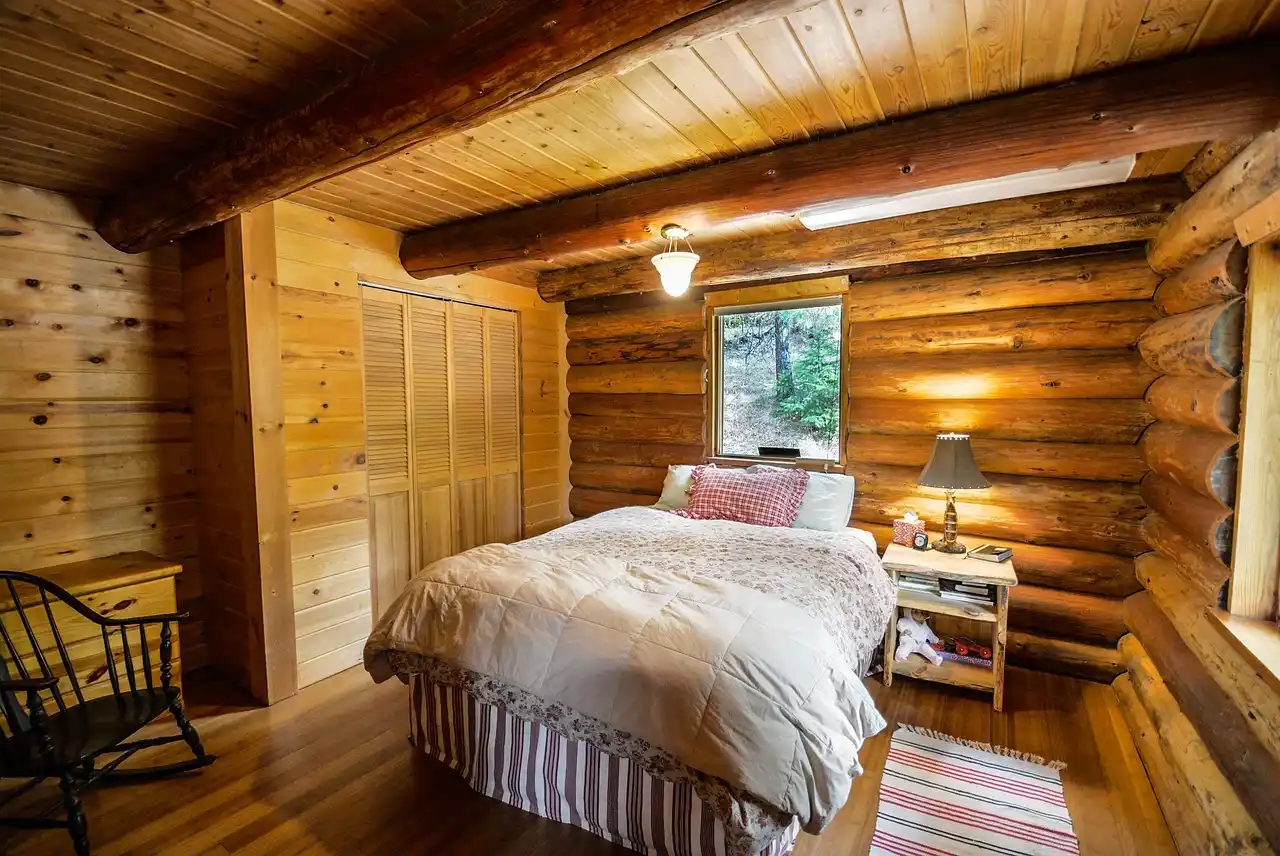

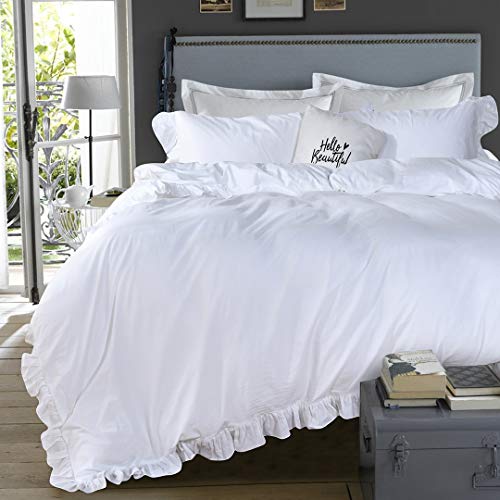

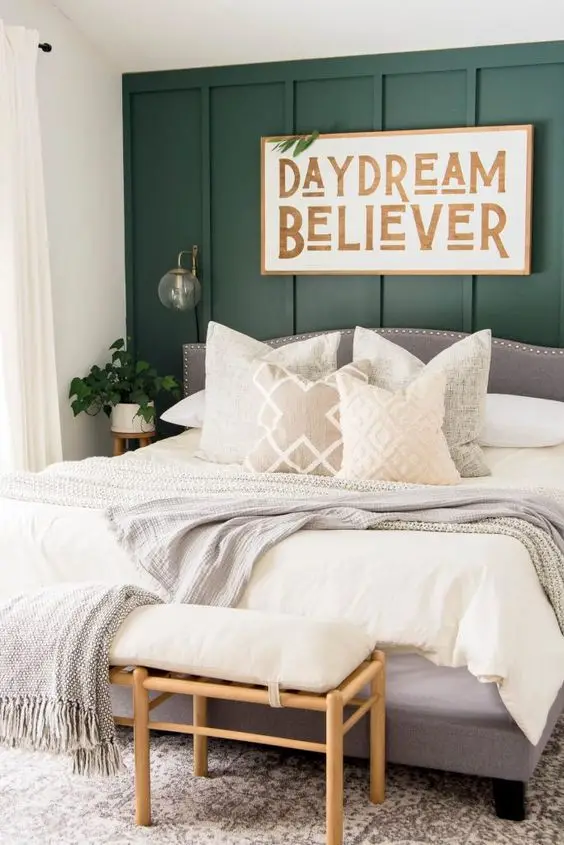
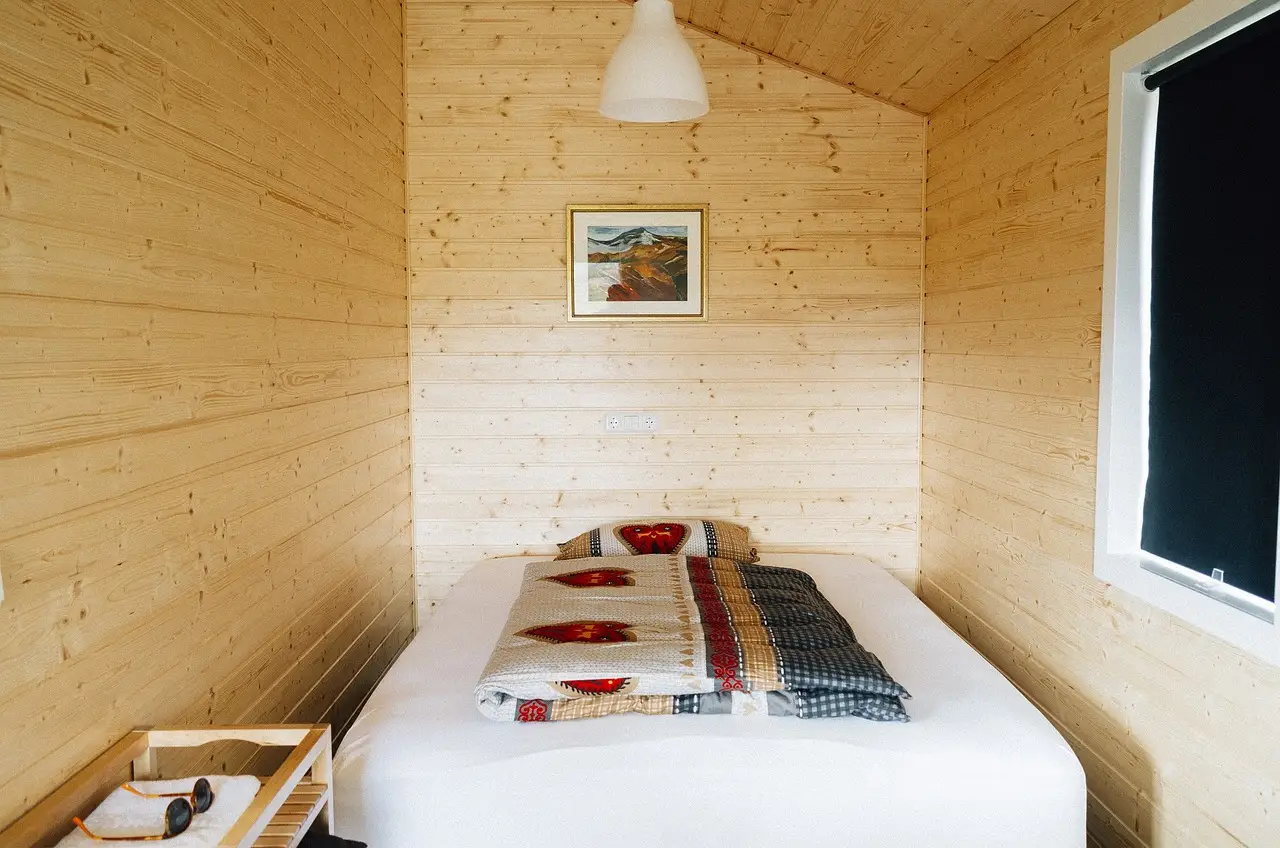
The main difference is simple: boho leans layered and expressive, while farmhouse leans calmer and more controlled. Boho design uses colors, prints, textures, and patterns in stacked layers, and it gives up strict order for a looser feel. Farmhouse bedrooms rely on a neutral palette, rustic wood finishes, and a simple lived-in look that keeps the room easier to read.
What changes most: color, order, texture, and sourcing
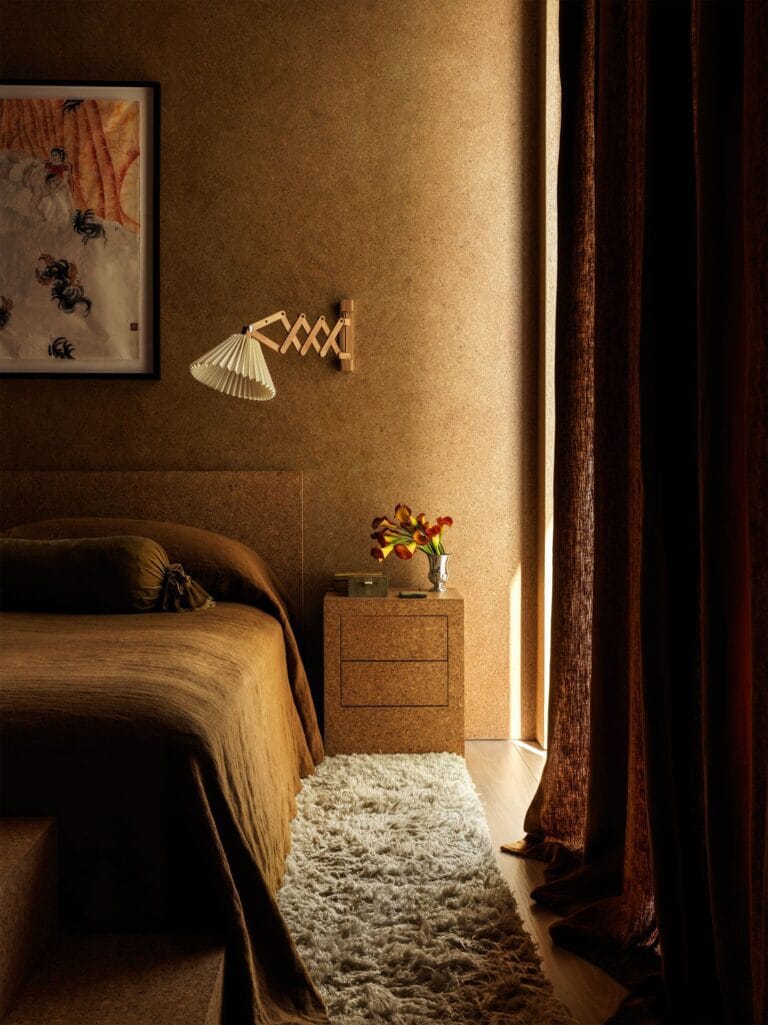
Color changes first. Boho often starts with greens and deep browns, then adds brighter accent colors for energy; farmhouse usually stays with white and cream neutrals, then brings in wood tones for warmth. Order changes next, because boho accepts visible layering while farmhouse prefers open surfaces and practical furniture.
Texture and sourcing matter too. Bohemian furniture is often sourced from thrift stores or online, which makes the room feel collected, while farmhouse pieces are usually simpler and more matched. Boho decor also follows a more-is-more approach, so the room fills faster than farmhouse if the plan is not edited.
Boho bedroom vs farmhouse bedroom comparison table
Use this as the quick filter before buying anything. If a room already has busy flooring, a bulky bed, or limited natural light, the more controlled option usually causes fewer problems. If the room is empty and needs personality fast, boho has more range.
Materials, finishes, and clutter tolerance
Boho bedrooms use natural materials like burlap and sisal, plus woven accents, floor pillows, throw rugs, and layered bedding. Farmhouse bedrooms rely more on rustic wood finishes, clean-lined frames, and soft bedding with less surface noise. That difference matters because boho can absorb more objects before it feels finished, while farmhouse reaches “enough” sooner.
Furniture, textiles, and decor accents
Boho furniture works best when it includes thrifted or vintage pieces with a unique statement. Farmhouse furniture fits when it is practical, simple, and often sleeker than people expect. On the textile side, boho welcomes pattern mixing, lace, crochet, plants, and metallic accents; farmhouse keeps the mix quieter and leans on texture through linen-like bedding and wood.
What makes a boho bedroom look boho?
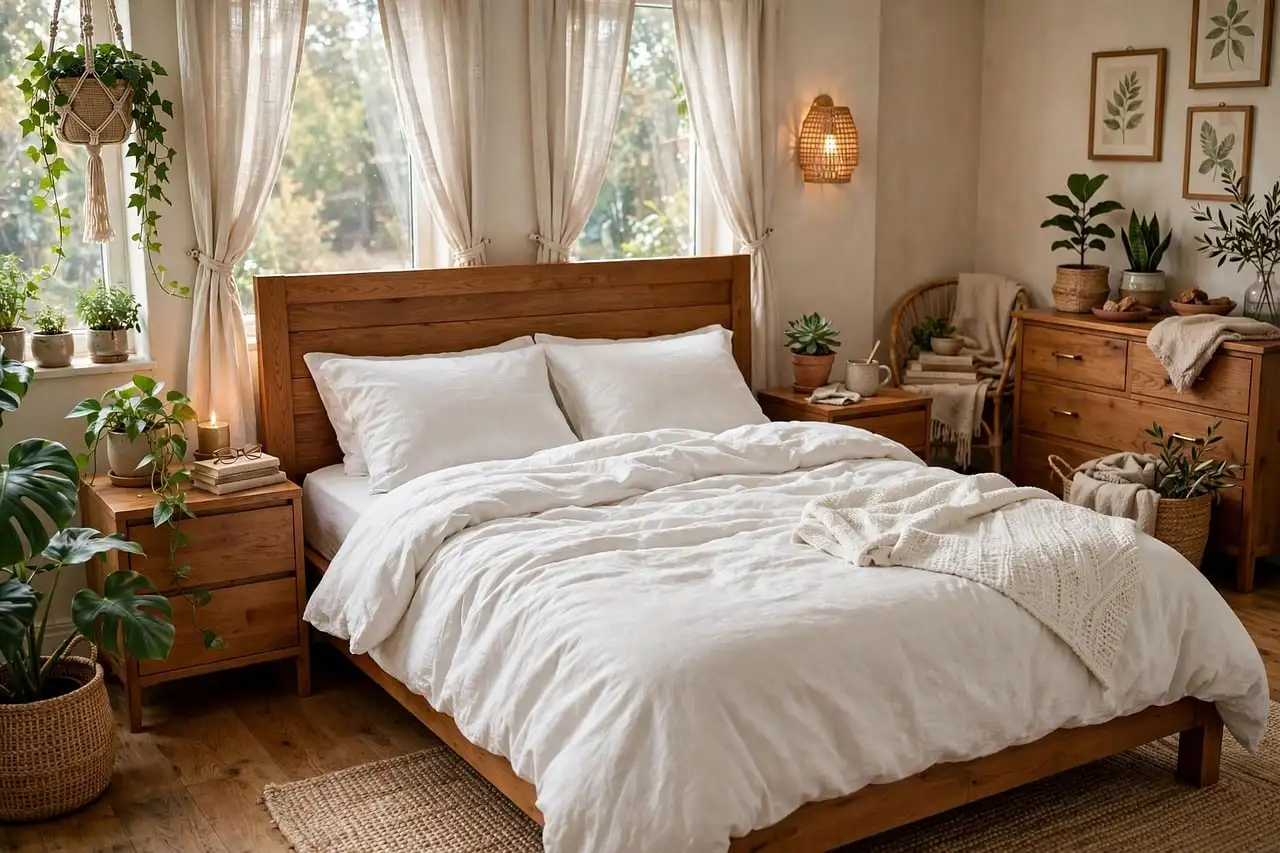
A boho bedroom looks boho when it layers color, pattern, and texture without trying to match too tightly. The style feels informal and carefree, but it still needs a clear point of view. Random clutter is not the goal; collected variety is.
Layered colors and mixed patterns
Boho rooms often start with earth tones such as greens and deep browns, then bring in purple, orange, or blue in smaller amounts. Pattern mixing works best when one pattern is larger and calmer while the other is smaller and busier. That keeps the room from turning noisy.
Natural materials, thrifted pieces, and statement finds
Natural materials like burlap and sisal fit the style well, especially when paired with vintage wood, rattan, or a worn-in bench. Thrifted furniture is useful here because it adds age and variety without needing a full matching set. A single statement piece, like a carved bedside table or painted chest, often does more than several small accessories.
Textural decor that reads relaxed, not random
Floor pillows and throw rugs help boho feel welcoming, and woven wall hangings can soften a blank wall. Plants and metallic accents can also break up heavier textiles. The trick is to repeat a few materials so the room feels intentional instead of pieced together at the last minute.
What makes a farmhouse bedroom look farmhouse?
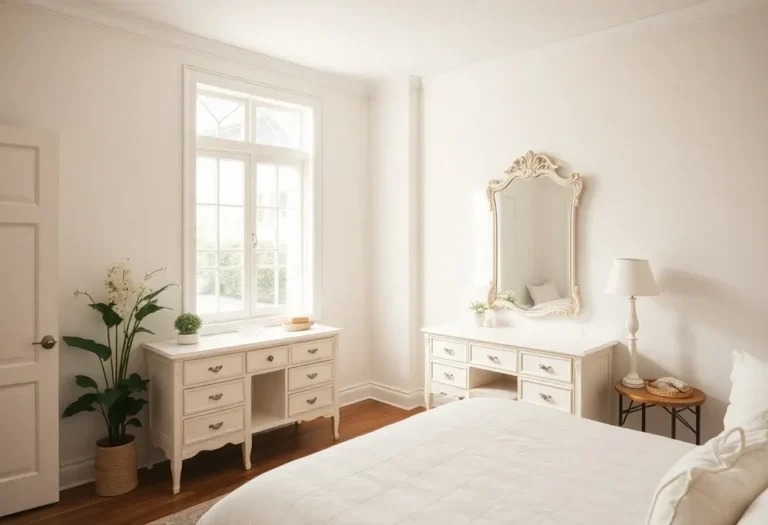
A farmhouse bedroom looks farmhouse when the room feels simple, lived-in, and practical. The palette stays mostly neutral, the furniture reads steady rather than showy, and the layout leaves enough visual air for the wood and bedding to do the work. Cozy matters here, but order matters more.
Neutral palette and rustic wood finishes
White and cream neutrals are the usual base because they keep the room bright and easy to pair with wood finishes. A farmhouse room can still use brown, green, or blue, but those colors usually sit back rather than lead. Rustic wood gives the room warmth without needing heavy pattern.
Practical furniture and simple lines
Farmhouse bedrooms do well with sturdy pieces that look useful: a simple bed frame, a plain dresser, and nightstands with clean lines. The furniture does not need to be expensive, but it should feel settled and durable. Too many decorative edges can make the room feel overworked.
Cozy but orderly styling
Soft bedding gives farmhouse its comfort, yet the styling stays lighter than boho. A few pillows, a folded throw, and restrained wall decor usually go far enough. When every surface carries a prop, the room starts to look themed instead of lived in.
Which style feels cozier, boho or farmhouse?
Both can feel cozy, but they do it in different ways. Boho creates warmth through texture, pattern, and visual softness, while farmhouse creates warmth through calm, tidy arrangement, and familiar materials. If clutter makes a room feel stressful, farmhouse usually feels cozier.
Warmth through texture versus warmth through calm
Boho warmth comes from layered bedding, rugs, pillows, and mixed natural materials. Farmhouse warmth comes from a quiet base of white or cream with wood accents that feel steady and comforting. The first feels fuller; the second feels easier to rest in.
When cozy starts to feel crowded
Boho tips into crowding when every wall, shelf, and bed layer carries a different texture or print. Farmhouse tips into dullness when it becomes too coordinated, too pale, or too dependent on one “farmhouse” motif. Cozy should support sleep, not compete with it.
What colors work best in each style?
Boho handles more color movement, while farmhouse needs more color control. Boho looks strongest when deep browns, greens, purple, orange, and blue are grounded by one or two quieter tones. Farmhouse looks strongest with white, cream, and muted wood tones, then a small amount of earthy color.
Boho color combinations that stay grounded
Start with greens and deep browns, then add one accent direction such as purple or electric blue. Flaming orange works best in smaller touches, like art or a pillow, because it can take over a compact room. If the room already has a lot of pattern, keep the palette tighter.
Farmhouse neutrals that avoid looking flat
White and cream are useful, but they need contrast from wood, woven texture, or a soft blue-gray accent. A little brown keeps the room from feeling washed out. If the room is dark, a warmer cream usually works better than a stark white.
When to use white, cream, brown, green, blue, orange, and purple
Use white and cream as the base in farmhouse and as breathing space in boho. Use brown and green to anchor boho, then bring blue, orange, or purple in as accent notes rather than full-room color stories. The more color-saturated the room, the more carefully the furniture and bedding should be edited.
Can you mix boho and farmhouse in one bedroom?
Yes, and the mix often works better than choosing one style too hard. The safest approach is farmhouse structure with boho texture: keep the bed, dresser, and major finishes simple, then layer in rugs, patterned pillows, plants, and one or two thrifted statement pieces. That gives the room warmth without losing order.
A simple mixing formula: farmhouse structure, boho texture
Use a neutral base, a practical bed frame, and one main wood finish. Then add a patterned throw, a vintage lamp, a woven basket, or a woven wall piece so the room has boho detail without excess visual weight. This formula also helps rentals, where permanent changes are limited.
What to keep consistent so the room does not fight itself
Keep one family of wood tone, one dominant metal finish, and one bedding base color. If the room mixes too many warm and cool notes, it can look accidental rather than designed. Consistency in the large pieces lets the smaller boho accents do the expressive work.
When mixing works better than choosing one style
Mixing works well when existing furniture already leans farmhouse but the room needs more personality. It also works when a person likes boho comfort but does not want the upkeep of a fully layered room. In those cases, a half-and-half approach is the most practical answer.
Choose boho bedroom if… / Choose farmhouse bedroom if…
Choose boho if the room needs personality, collected character, and thrift-friendly flexibility. Choose farmhouse if the room needs clarity, easier upkeep, and a calmer visual read. If the bedroom is small, heavily used, or already full of furniture, farmhouse is usually the safer starting point unless boho is kept very tight.
Choose boho bedroom if…
- You like thrifted pieces, vintage furniture, and one-off finds.
- You want layered bedding, rugs, plants, and mixed textures.
- You are comfortable editing color so the room stays lively, not chaotic.
- You want a room that feels collected rather than matched.
Choose farmhouse bedroom if…
- You want a calmer room with fewer objects to manage.
- You prefer white, cream, and wood over heavy pattern mixing.
- You need the room to feel larger or less visually busy.
- You want furniture that is practical and easy to replace.
Decision matrix: which style fits your room best?
This matrix turns the choice into a room-by-room call. A higher score is better for the condition named in the row, and the recommendation tells you which style usually causes fewer problems in actual use. The numbers are relative comparison scores, not measurements.
| Criteria | Boho Bedroom | Farmhouse Bedroom | One-line recommendation |
|---|---|---|---|
| Warmth | 9/10 | 8/10 | Boho wins if you want a room that feels layered and soft; farmhouse wins if you want warmth with less visual noise. |
| Visual order | 5/10 | 9/10 | Farmhouse wins if a tidy room matters more than a collected look. |
| Budget flexibility | 9/10 | 7/10 | Boho wins when thrifted and mixed pieces are part of the plan. |
| Ease of sourcing | 8/10 | 8/10 | Tie, because boho is easy to source secondhand and farmhouse is easy to source through basic retail. |
| Small-room suitability | 6/10 | 9/10 | Farmhouse wins for compact rooms unless boho is edited down to a few strong layers. |
Frequently asked questions
What is the difference between a boho bedroom and a farmhouse bedroom?
Boho bedrooms are layered, expressive, and relaxed, with mixed patterns, natural materials, and thrifted or vintage pieces. Farmhouse bedrooms are calmer, more orderly, and easier to scan, with neutral colors, rustic wood finishes, and practical furniture. The real difference is how much visual activity the room is allowed to hold.
Can you mix boho and farmhouse in one bedroom?
Yes. The cleanest version uses farmhouse structure in the big pieces and boho texture in the smaller ones. Keep the palette controlled, repeat one wood tone, and use only a few layered textiles so the room looks designed instead of split between two styles.
Which style feels cozier, boho or farmhouse?
Boho often feels softer because it uses more texture, while farmhouse often feels cozier because it is calmer and easier to live with. The better answer depends on whether clutter feels comforting or tiring. For many small bedrooms, farmhouse reads cozier because it feels less crowded.
What colors work best for a boho bedroom versus a farmhouse bedroom?
Boho works well with greens, deep browns, purple, orange, and blue, especially when grounded by earth tones. Farmhouse works best with white and cream neutrals, then a little brown or muted green to keep it from feeling flat. Too many bright colors can push farmhouse off course.
What furniture fits a boho bedroom compared with a farmhouse bedroom?
Boho fits thrifted pieces, vintage pieces, and unique statement finds that do not need to match perfectly. Farmhouse fits simpler, practical furniture with cleaner lines and less ornament. If a room already has sleek furniture, farmhouse is usually the easier match; boho needs more character in the large pieces.
How do you make a boho bedroom look less cluttered?
Limit the palette, repeat a few materials, and leave some surfaces clear. Choose one or two statement textiles instead of many competing ones, and stop adding decor once the room has a clear focal point. Boho looks best when it feels layered, not overloaded.
Products related to this article
Sponsored / affiliate links. As an Amazon Associate I earn from qualifying purchases. I may earn additional commission from eligible campaigns.