Tv Stand Vs Tv Console: Key Differences Explained
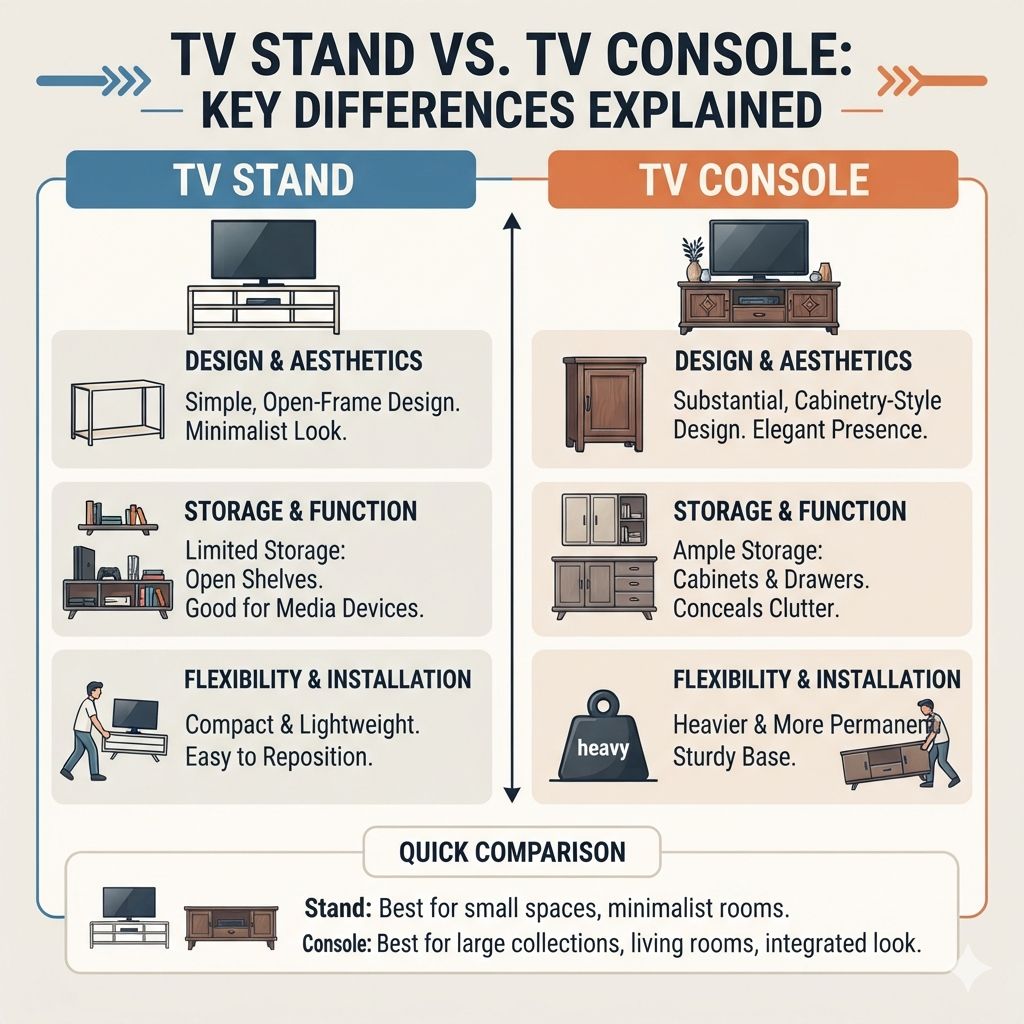
The main difference is function and form. A TV stand is typically simpler, often open, and mainly holds a TV. A TV console is usually larger, closed, and designed to hide electronics and offer more storage. Both can support a TV, but a console offers more integrated style and organization.

Generic
Catchall Tray Decorative Rustic Wood Organizer |…
- Simple Tabletop Accent Piece: This entryway key holder doubles as a console table clutter catcher and a decor for foyer, offering…
- Versatile Jewelry and Key Tray: This key holder tray serves as a catchall for rings, bracelets, keys, and small accessories, offer…
- Home Organization Must-Have: Use this key hanger as a dedicated storage tray for watches accessories and a wooden watch ring organ…
As an Amazon Associate I earn from qualifying purchases.
For another TV setup decision, What Size Tv Stand For A 65-Inch Tv? Size gives readers a related next step before choosing or installing furniture.
For another TV setup decision, TV Stand Vs Wall Mount: Showdown gives readers a related next step before choosing or installing furniture.
For another TV setup decision, Are Electric Fireplace TV Stands Safe? gives readers a related next step before choosing or installing furniture.

Understanding TV Stands and Consoles
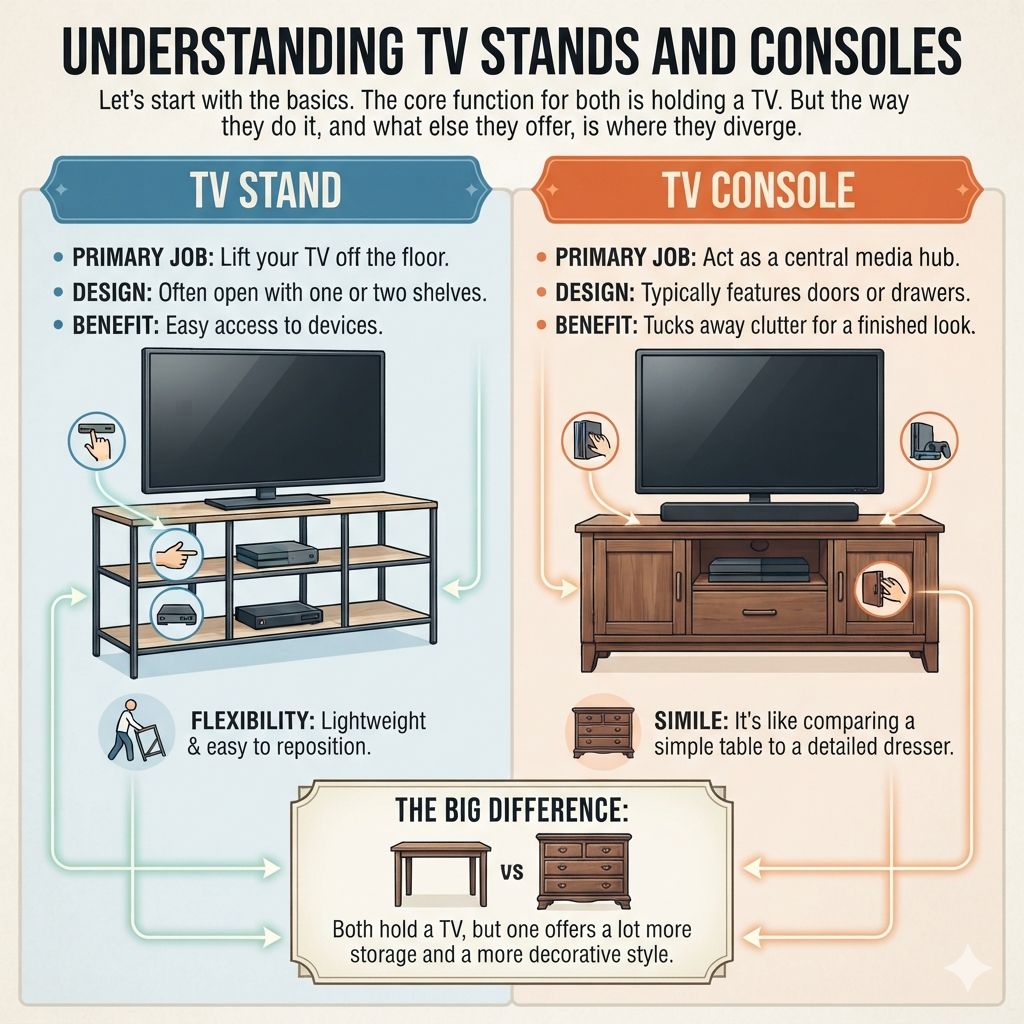
Let’s start with the basics. Think of a TV stand as the essential workhorse. Its primary job is to lift your television off the floor. Many stands are open designs. They might have a shelf or two. This is great if you want easy access to your devices.
A TV console is often a more substantial piece of furniture. It’s usually built to be a central hub. Consoles typically have doors or drawers. This lets you tuck away things like game consoles, cable boxes, and soundbars. They often have a more finished look.
The core function for both is holding a TV. But the way they do it, and what else they offer, is where they diverge. It’s like comparing a simple table to a detailed dresser. Both hold things, but one offers a lot more storage and a more decorative style.
My Own TV Furniture Fiasco
I remember when we first moved into our new apartment. The living room felt bare. We had this brand-new, giant flat-screen TV. My husband said, “Let’s just get a TV stand.” I pictured something simple, maybe a sleek metal frame. We ended up buying what the store called a “media console” online.
When it arrived, it was huge! It had all these shelves and little doors. It looked nice, but it was way more than we needed just to hold the TV. We had wires everywhere. We eventually realized we bought a console when we really just needed a stand. The sheer size of it made the room feel smaller too. It was a learning moment about furniture names and what they really mean for your space.
TV Stand vs. Console: Quick Snapshot
- TV Stand: Simpler design, often open, focuses on TV support.
- TV Console: Larger, often closed, hides electronics, offers more storage.
- Key Difference: Storage and concealment.
What Exactly is a TV Stand?
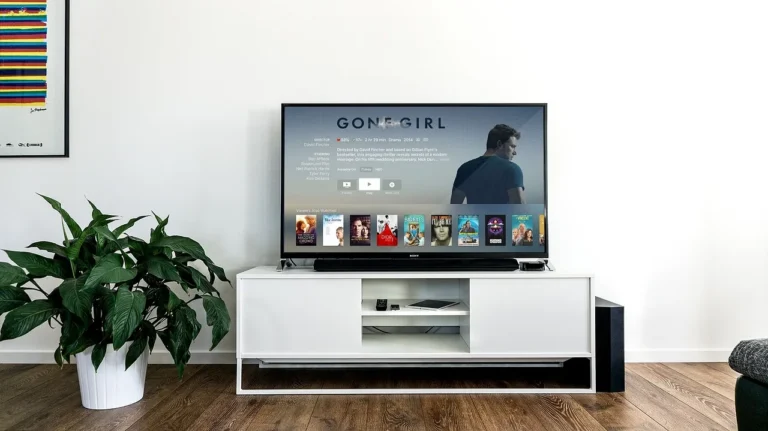
A TV stand is fundamentally about support. Its main job is to elevate your television to a comfortable viewing height. Many stands are pretty basic in design. They might be made of wood, metal, or glass. You often see them with open shelving.
Think of an open-shelf unit. It might have a wide, flat top surface. Underneath, there could be one or two shelves. These are perfect for a game console, a Blu-ray player, or a soundbar. Cables might be visible, but that’s part of the simpler design.
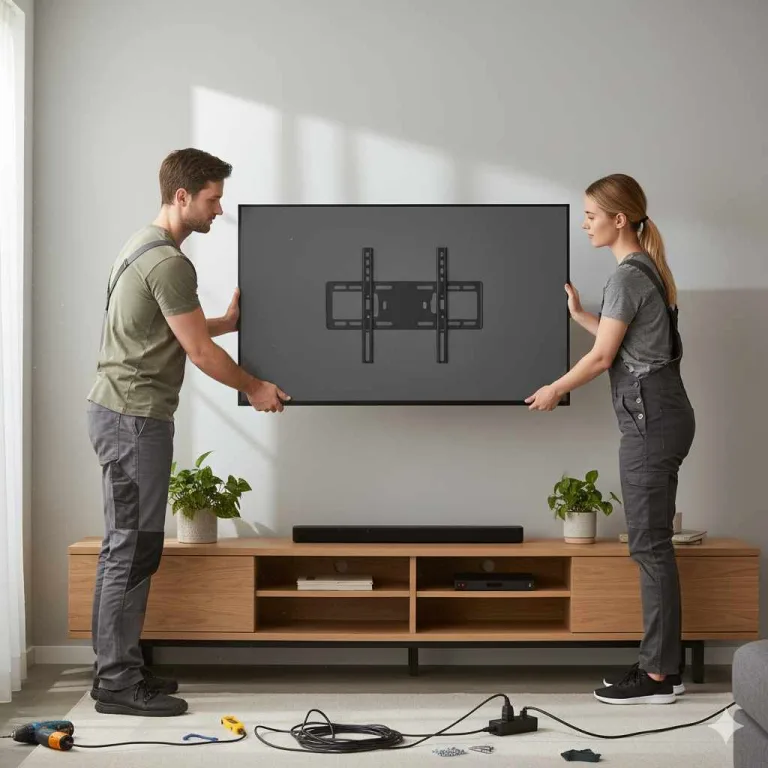
Some TV stands are very minimalist. They are just a sturdy platform. This is ideal if you have a wall-mounted TV but still want a surface below for small electronics. Others might have a more traditional look, with legs and a solid base.
The term “stand” suggests a piece that stands on its own. It’s usually less about hiding things and more about presenting the TV and a few essential devices. They are often lighter and easier to move than consoles.
Common TV Stand Styles
- Open Shelf Stand: Wide top, open shelves below for easy access.
- Corner Stand: Designed to fit neatly into a room corner.
- Floating Stand: Mounts to the wall, appearing to float.
- Pedestal Stand: A single central support, often with a swivel base.
The Role of a TV Console
Now, let’s talk about the TV console. This piece is designed for more than just holding the TV. It’s about creating a complete media center. Consoles are typically wider and deeper than stands. They often have a more furniture-like appearance.
A defining feature of a console is its storage. Most have doors, drawers, or cubbies. This is where you can hide all those unsightly wires, streaming devices, gaming consoles, and even your entire movie collection. It helps create a cleaner, more organized look in your living space.
Consoles often look more like a sideboard or a buffet. They can be made from solid wood and have decorative elements. Some have built-in features like cable management systems or even fireplaces. They are built to be a focal point in the room.
If you have a lot of media equipment or simply want to declutter your entertainment area, a console is usually the way to go. It offers a more integrated solution for your TV and all its accessories. The term “console” often implies a more robust, enclosed unit.
Console Storage Solutions
Doors:
Conceal equipment, dust protection.
Drawers:
Good for remotes, games, DVDs.
Open Shelves:
Display decor, easy access to soundbars.
Cable Management:
Holes or cutouts for wires.
Key Differences: Stand vs. Console
Let’s lay out the core differences side-by-side. It’s not about which is “better,” but which is “better for you.”
Contrast Matrix: TV Stand vs. TV Console
| Feature | TV Stand | TV Console |
|---|---|---|
| Primary Function | Support TV, basic storage | Support TV, extensive storage, concealment |
| Design | Often open, simpler structure | Often closed (doors/drawers), more furniture-like |
| Storage | Minimal (open shelves) | Maximized (doors, drawers, cabinets) |
| Cable Management | Less common, often exposed | Usually integrated (holes, grommets) |
| Size & Weight | Generally lighter and smaller | Generally heavier and larger |
| Cost | Often more affordable | Can be more expensive |
Why the Name Matters (and Sometimes Doesn’t)
It’s funny how furniture names work. Sometimes a “TV stand” is actually a small console. And a “console” might be quite open. Manufacturers can use these terms loosely. This is why understanding the features is more important than the label.
For example, you might see a piece called a “media stand” or “entertainment center.” These can be a hybrid. An entertainment center is usually a larger unit, sometimes with shelving for multiple components or even a hutch.
The main takeaway is to look at the pictures and read the description. Does it have the storage you need? Is it the right size for your TV and your room? These details are crucial, regardless of what the product is called.
My own confusion stemmed from assuming “console” meant “big and enclosed.” That’s often true, but not always. It’s more about the intention behind the design.
Navigating Product Names
Don’t get caught up in the name alone.
- Look at the features: Doors, shelves, drawers, size.
- Check dimensions: Will your TV fit? Will it fit your room?
- Read reviews: What do other buyers say about its storage or style?
Real-World Context: Choosing for Your Space
Let’s think about where and why you’d choose one over the other. The environment of your room plays a big role.
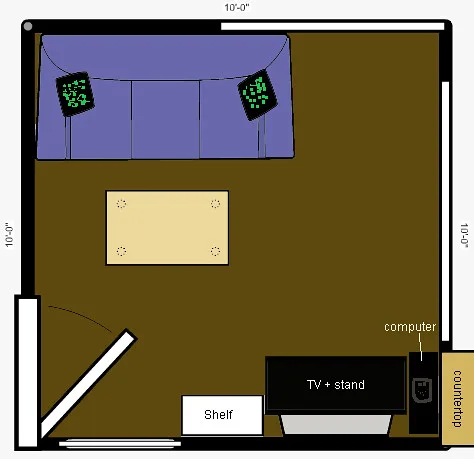
In a small apartment, a minimalist TV stand might be perfect. It keeps the floor space open. It won’t overwhelm the room. If you only have a TV and maybe a streaming stick, this is ideal. It serves the purpose without taking up too much visual or physical space.
However, if you have a larger family room or a dedicated media room, a TV console might be a better fit. Think about how many devices you need to house. Game consoles, soundbars, cable boxes, gaming controllers, DVDs, and remotes all add up. A console’s storage can keep all of this organized and out of sight.
Consider the style too. A sleek, modern console can be a statement piece. A rustic wood stand might fit better in a cozy cabin-like room. The materials and finishes are important for matching your decor.
User behavior is key. Do you like things tidy and hidden? You probably want a console. Do you prefer easy access and don’t mind seeing your devices? A stand might be fine. It’s about how you use your space and what makes you feel comfortable.
Scenario Examples
Small Apartment:
A slim, open TV stand. Keeps space open, holds essentials.
Family Media Room:
A wide TV console. Lots of storage for games, devices, and movies.
Minimalist Decor:
A sleek, floating TV stand. Clean lines, very modern look.
Lots of Gear:
A robust TV console with multiple compartments. Keeps everything tidy.
What This Means for You: Normal vs. Concerning
When you’re picking out your furniture, think about how it will function for your needs. It’s normal for a TV stand to be pretty simple. It holds the TV and maybe a couple of devices. You might see wires if it’s open.
It’s also normal for a TV console to have lots of storage. You can hide away all your gaming gear and streaming boxes. This keeps your living room looking neat. The doors might make it a bit trickier to access some items, but that’s a trade-off for the clean look.
What could be concerning? If you buy a stand that’s too small for your TV, that’s a safety issue. Make sure the width and depth are appropriate. The weight limit is also very important. A TV is heavy! Always check what the manufacturer says it can hold.
For a console, if you find you absolutely cannot fit all your devices inside, or if the cable management is impossible, then it might not be the right console for you. Or perhaps you have more equipment than you realized. It’s about matching the furniture’s capacity to your actual needs.
Also, consider stability. If a stand or console wobbles, that’s a red flag. It should feel solid and secure. Especially if you have kids or pets who might bump into it.
Quick Checks for Your Furniture
- Size: Is it wider than your TV?
- Weight Limit: Can it safely hold your TV model?
- Stability: Does it stand firm without wobbling?
- Storage Needs: Does it have space for your devices?
Tips for Making the Most of Your Choice
Once you’ve decided between a stand and a console, here are some tips to make your setup work best.
For TV Stands:
- Embrace the open look: If you have a nice-looking streamer or game console, let it be seen.
- Use decorative baskets: If you have open shelves, a stylish basket can hide remotes or small game accessories.
- Manage wires smartly: Use cable ties or sleeves to keep visible cords neat. They don’t have to be a tangled mess.
- Consider a riser: If the stand is a bit low, a TV riser can add a few inches and sometimes has extra storage.
For TV Consoles:
- Utilize all compartments: Assign specific shelves or drawers for different items.
- Invest in cable management: Even with closed doors, wires can build up. Use the built-in holes or add grommets.
- Don’t overstuff: While consoles offer storage, cramming them too full can hinder ventilation for electronics.
- Think about ventilation: Ensure there’s enough airflow for devices like gaming consoles that can get warm.
Both types of furniture can benefit from a little organization. It’s about making the piece work for you, not the other way around. A well-organized setup just feels better.
Frequently Asked Questions
Your Questions Answered
Can a TV stand hold a heavy TV?
Yes, most TV stands are designed to hold modern flat-screen TVs. Always check the product’s weight limit specification. Heavier TVs usually require wider and sturdier stands. Make sure the stand is rated for more than your TV’s weight for safety.
What is the difference between a TV console and a TV stand for a wall-mounted TV?
For a wall-mounted TV, a TV stand is often used as a surface below the TV. It’s usually simpler, perhaps just a few shelves, to hold devices like a soundbar or streaming box. A TV console, in this case, would still offer more storage and might be placed in front of or beside the mounted TV.
Do I need a special TV stand for a curved TV?
Not necessarily a special type of stand, but you do need to ensure the TV’s base fits securely on the stand’s surface. Some curved TVs have a wider stand footprint. Always measure your TV’s base and compare it to the stand’s top surface width and depth. Stability is key.
What are the benefits of cable management in a TV console?
Cable management systems in consoles help keep wires tidy and out of sight. This reduces visual clutter, makes your entertainment area look cleaner, and can prevent cords from becoming tangled or damaged. It also makes dusting and vacuuming around the furniture much easier.
How wide should my TV stand or console be?
A general rule of thumb is that the stand or console should be at least as wide as your TV, and ideally a few inches wider on each side. This provides a stable base and looks more balanced visually. For example, if you have a 55-inch TV, look for a stand that is 60-70 inches wide.
Can I use a regular bookshelf as a TV stand?
You can, but it’s generally not recommended for safety reasons. Standard bookshelves might not be designed to support the weight of a TV, and their shelves might not be deep or sturdy enough. Dedicated TV stands and consoles are built with stability and weight distribution in mind for your television.
Final Thoughts
So, the next time you’re looking for TV furniture, remember it’s not just about the name. It’s about what your TV needs and what you want your room to feel like. A TV stand is your simpler, open option. A TV console offers more storage and a cleaner look. Either way, choose wisely for a setup you’ll love.
Related pick: Check today's price on Amazon
Products related to this article
Sponsored / affiliate links. As an Amazon Associate I earn from qualifying purchases. I may earn additional commission from eligible campaigns.