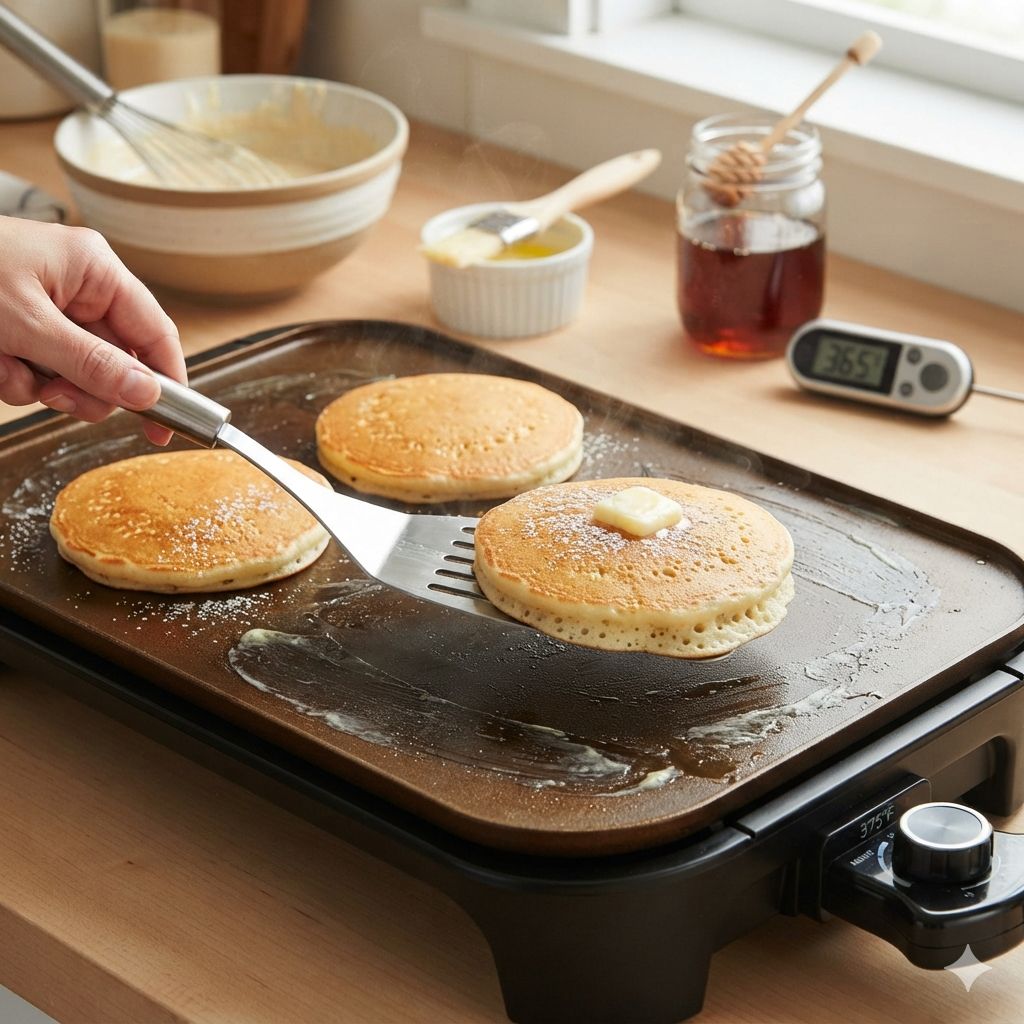
Simply put, the best griddle temperature for pancakes is typically between 350°F and 375°F (175°C to 190°C). This range allows pancakes to cook through evenly without burning on the outside or remaining raw in the middle, achieving a beautiful golden-brown color.
Key Takeaways
- The ideal griddle temperature for pancakes is between 350°F and 375°F (175°C to 190°C) for even cooking and a golden-brown finish.
- Preheating your griddle thoroughly is essential before adding any batter.
- Use the water drop test or a cooking thermometer to accurately gauge your griddle’s temperature.
- Adjust heat settings as needed during cooking to maintain consistent temperature.
- Cooking too hot leads to burnt exteriors and raw interiors; too cool results in pale, flat pancakes.
What is the Ideal Griddle Temperature for Pancakes?
When aiming for that perfect stack of fluffy, golden pancakes, the exact temperature of your cooking surface is paramount. Most culinary experts and seasoned home cooks agree that the sweet spot for griddle temperature for pancakes lies between 350°F and 375°F (175°C to 190°C). This medium-high heat ensures that the batter cooks through efficiently without scorching the bottom before the top has a chance to set.
A temperature too low will result in pale, flat pancakes that take an eternity to cook, often leading to a rubbery texture. Conversely, a griddle that’s too hot will create a situation where the outside of the pancake burns rapidly, leaving the inside disappointingly raw and undercooked. Finding this precise range is the first step towards breakfast mastery.
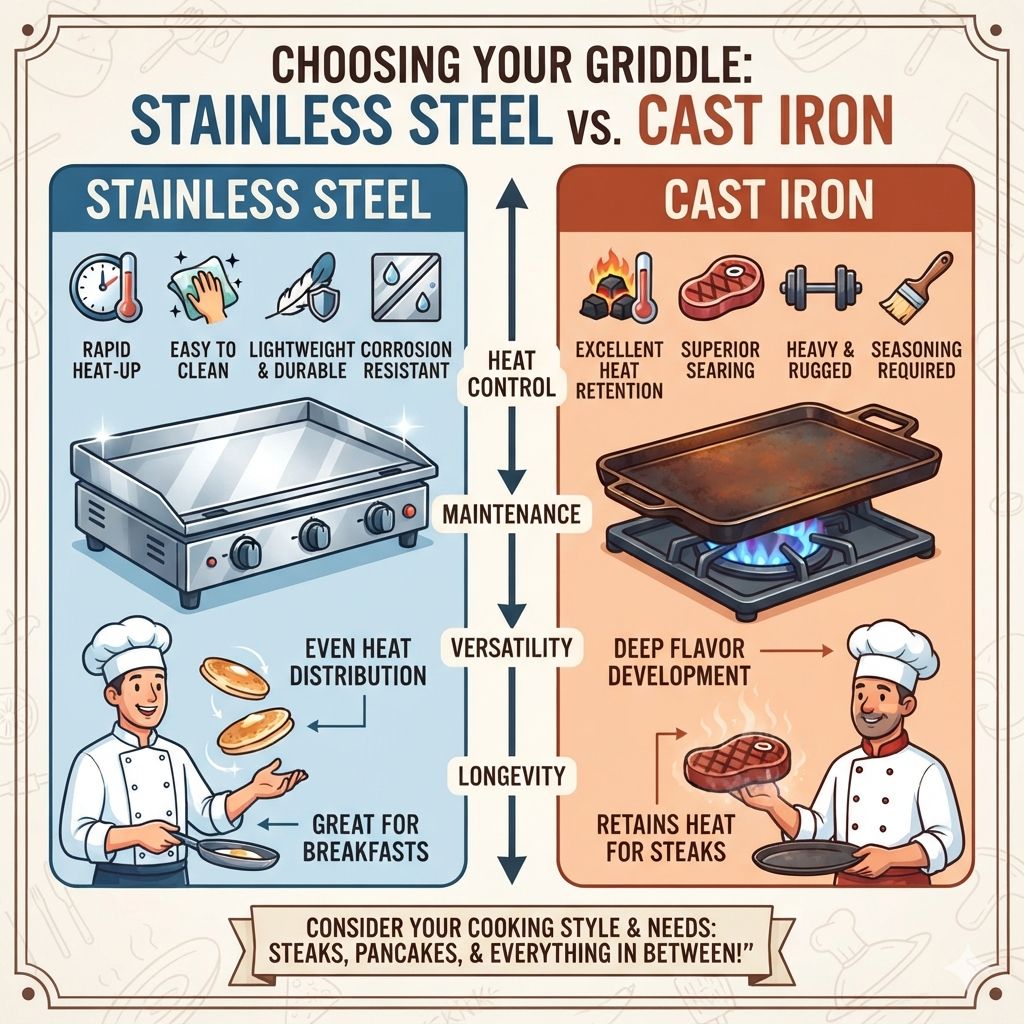
Different types of griddles and stoves can influence how heat is distributed and maintained. Electric griddles often offer more precise temperature control, while stovetop griddles, especially cast iron, require more attention to manage heat fluctuations. Regardless of your equipment, understanding these temperature guidelines provides a solid foundation.
- 350°F – 375°F (175°C – 190°C): The optimal range for achieving a beautiful golden-brown crust and fully cooked interior.
- Below 350°F (175°C): Pancakes will cook slowly, appearing pale and potentially having a dense or rubbery texture.
- Above 375°F (190°C): High risk of burning the exterior before the inside is cooked, leading to unevenly cooked, scorched pancakes.
- Fluctuating Temperatures: Inconsistent heat can lead to pancakes that are partially burnt and partially undercooked, or an inconsistent browning pattern.
| Temperature Range | Result for Pancakes |
|---|---|
| Below 350°F (175°C) | Pale, flat, slow-cooking, potentially rubbery texture. |
| 350°F – 375°F (175°C – 190°C) | Ideal golden-brown color, fluffy interior, even cooking. |
| Above 375°F (190°C) | Burnt exterior, undercooked interior, uneven cooking. |
This table highlights the critical role temperature plays in achieving delicious, well-cooked pancakes.

The Importance of Preheating Your Griddle
Before you even think about scooping batter, dedicating time to properly preheat your griddle is non-negotiable. Many home cooks overlook this crucial step, leading to frustratingly inconsistent results. A griddle that isn’t fully preheated will cook your pancakes unevenly; the parts that contact cooler metal will cook slower than areas over hotter spots.
This means you might end up with one side of your pancake cooked to perfection while the other remains pale and underdone, or worse, develop hot spots that burn certain pancakes while others remain untouched. Preheating ensures a consistent and even distribution of heat across the entire cooking surface, setting you up for success from the very first pancake.
For electric griddles, this usually means turning the dial to your desired temperature and waiting for the indicator light to signal that it’s ready. For stovetop griddles, especially cast iron or stainless steel, it involves placing the griddle on a medium-high heat setting for several minutes. The exact time will vary depending on the material and thickness of your griddle, but patience is key here.
- Electric Griddles: Allow the indicator light to turn off or signal readiness, typically 5-10 minutes.
- Cast Iron Griddles: Heat on medium-high for 5-10 minutes, ensuring the entire surface is hot to the touch (use caution!).
- Non-Stick Pans: Preheat on medium heat for 2-3 minutes; they heat up much faster.
- Stainless Steel Pans: Preheat on medium-high for 3-5 minutes until a drop of water sizzles and evaporates quickly.
Important: Always test your griddle’s temperature before adding batter. A poorly preheated griddle is a common culprit for pancake failures.
How to Accurately Test Griddle Temperature
So, you’ve set your griddle to the recommended 350-375°F, but how do you know if it’s truly ready? Relying solely on your appliance’s dial can be deceiving, as actual surface temperature can vary. Fortunately, there are several reliable methods to check your griddle’s heat before you start pouring batter, ensuring you hit that perfect griddle temperature for pancakes consistently.
The most classic and effective method is the water drop test. Sprinkle a few drops of water onto the preheated griddle. If the water drops skitter across the surface and evaporate almost instantly, your griddle is likely at the right temperature for pancakes.
If they sizzle aggressively and disappear immediately, it’s too hot. If the drops just sit there or evaporate slowly, it’s not hot enough.
For those who prefer a more scientific approach, an infrared thermometer or a probe-style cooking thermometer can provide a direct temperature reading of your griddle’s surface. This is especially useful for electric griddles where the surface is flat and easy to measure. Always check the temperature in a few different spots to ensure even heat distribution.
- Water Drop Test: Sprinkle a few drops of water.
– If they dance and evaporate quickly: Good to go!
– If they sizzle violently and vanish instantly: Too hot, reduce heat.
– If they sit and evaporate slowly: Too cool, increase heat. - Infrared Thermometer: Point the thermometer at the griddle surface from a safe distance. Aim for a reading between 350°F and 375°F (175°C – 190°C).
- Probe Thermometer: Carefully place the probe on the griddle surface (ensure it’s heat-safe). Wait for the reading to stabilize within the target range.
Warning: Be extremely cautious when testing the temperature of a hot griddle. Always use oven mitts or tongs and keep your hands and face away from the heat.
Adjusting Heat for Optimal Pancake Cooking
Even with careful preheating and testing, maintaining the perfect griddle temperature for pancakes throughout the cooking process can be a dynamic challenge. Heat sources can fluctuate, and the addition of cold batter can momentarily lower the griddle’s temperature. Therefore, being prepared to make minor adjustments is key to achieving consistently excellent results.
If you notice your pancakes browning too quickly, it’s a sign that your griddle might be running a bit too hot. Don’t hesitate to reduce the heat setting slightly. Similarly, if your pancakes are taking too long to cook and aren’t developing a nice golden hue, you’ll need to increase the heat.
The goal is to find a balance where each pancake cooks evenly in about 2-3 minutes per side.
Pay attention to the visual cues from your pancakes. The appearance of small bubbles breaking on the surface and the edges starting to look dry are indicators that it’s time to flip. If these signs appear prematurely or take an unusually long time to manifest, it’s a clear signal that your griddle temperature needs tweaking.
Practice makes perfect, and with each batch, you’ll become more attuned to your equipment’s behavior.
- Too Hot: Reduce heat immediately if pancakes burn quickly or smoke appears.
- Too Cool: Increase heat if pancakes are pale after 3 minutes per side or don’t bubble.
- Batch Adjustments: It’s common to need slight heat adjustments between batches as the griddle cools or heats up.
- Visual Cues: Watch for bubbles forming and edges looking set before flipping.
- Listen: A gentle sizzle is ideal; aggressive crackling means it’s too hot.
Common Griddle Temperature Mistakes
Many aspiring pancake chefs fall into the same traps when it comes to griddle temperature. These common errors can turn what should be a simple breakfast into a frustrating culinary ordeal. Understanding these pitfalls is half the battle in ensuring your pancakes are always a success.
One of the most frequent mistakes is not preheating the griddle long enough. As mentioned, this leads to uneven cooking. Another is setting the heat too high initially and then trying to compensate by cooking for a shorter time, which inevitably results in burnt outsides and gooey insides.
This is a recipe for disappointment.
Conversely, setting the temperature too low means pancakes spread out too much, cook slowly, and can end up pale, dense, and unappetizing. People often get impatient and increase the heat too drastically, swinging the pendulum from too cool to too hot. Finally, failing to account for temperature drops when cooking multiple batches can also lead to inconsistent results, with the first few pancakes being perfect and the last few being pale and undercooked.
| Mistake | Consequence | Solution |
|---|---|---|
| Insufficient Preheating | Uneven cooking, pale spots, burnt spots. | Allow ample time (5-10 mins) for the griddle to reach temperature. Use water test. |
| Heat Set Too High Initially | Burnt exterior, raw interior. | Start with medium-high heat and adjust down if needed. Never start at maximum. |
| Heat Set Too Low | Pale, flat, dense pancakes that cook slowly. | Increase heat gradually until water droplets dance and evaporate quickly. |
| Ignoring Temperature Drops Between Batches | Inconsistent browning and cooking. | Monitor and adjust heat as you cook subsequent batches. |
Avoiding these common errors will significantly improve your pancake-making success rate.
Griddle Temperature for Different Pancake Types
While the general rule of thumb for griddle temperature for pancakes is 350-375°F, some variations might be beneficial depending on the type of pancake you’re making. For instance, thicker, fluffier American-style pancakes benefit most from this medium-high heat, allowing them to puff up beautifully.
Thinner batters, like those used for crêpes, require a slightly lower temperature. A very hot griddle will cook the thin batter too quickly on the outside, leaving it undercooked in the center, or cause it to cook too fast into a tough texture. For crêpes, aim for closer to 325-350°F (160-175°C), allowing for even spreading and delicate cooking.
Blueberry pancakes or those with other add-ins might also need slight temperature adjustments. While the batter temperature itself is key, ensure your griddle is hot enough to set the pancake quickly after adding blueberries or chocolate chips, preventing them from sinking to the bottom. Generally, sticking to the 350-375°F range is a safe bet for most pancake recipes, but be mindful of your batter’s consistency and any added ingredients.
- American-Style Pancakes: 350°F – 375°F (175°C – 190°C) for fluffiness and browning.
- Crêpes: 325°F – 350°F (160°C – 175°C) for thin, even cooking.
- Pancakes with Add-ins (Blueberries, Chocolate Chips): Maintain 350°F – 375°F, ensuring quick setting of batter.
- Buckwheat Pancakes: Often benefit from slightly lower heat (around 350°F) to prevent burning due to their earthy nature.
- Protein-Rich Batters: May cook faster; monitor closely and adjust heat downward if necessary.
Tip: If your pancake batter contains sugar or honey, it might brown faster due to caramelization. Keep a close eye and be ready to reduce the heat if needed.
The Science Behind the Perfect Griddle Temperature
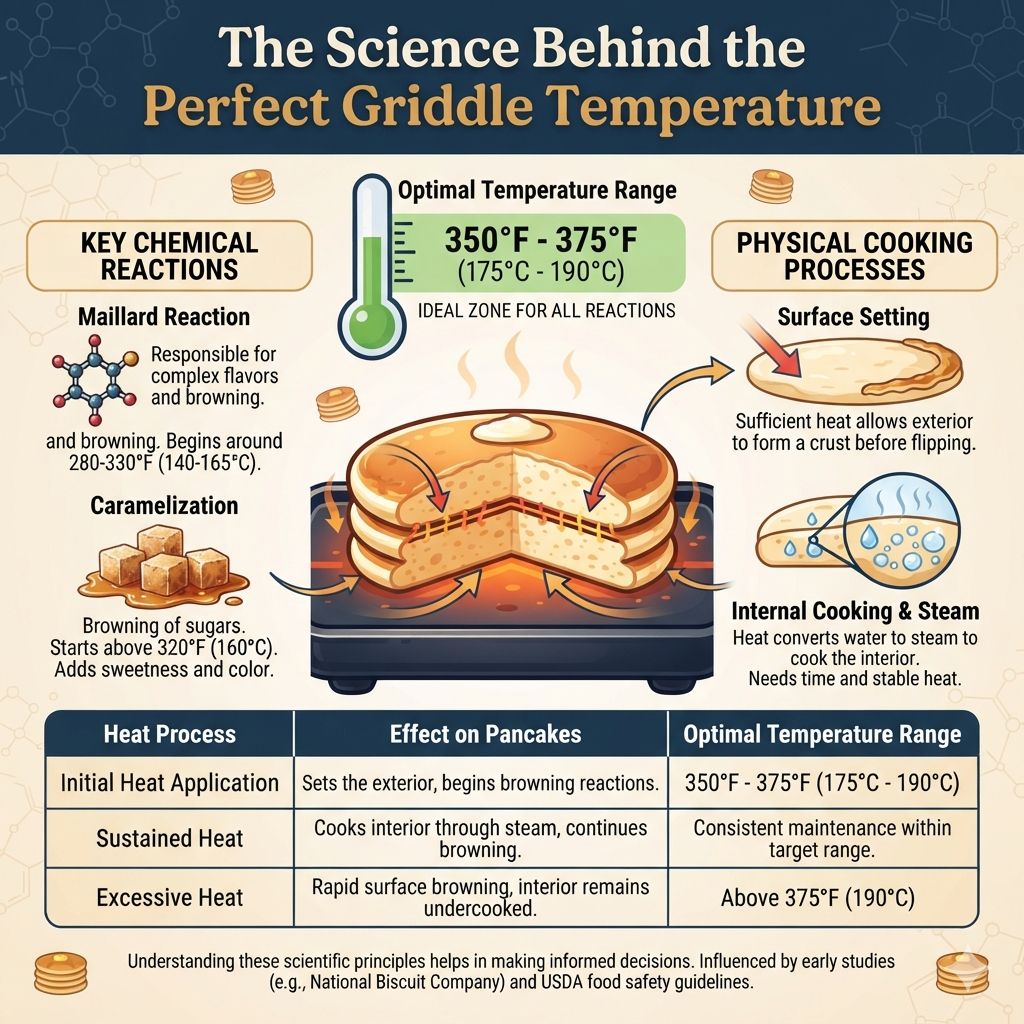
Understanding the ‘why’ behind the recommended griddle temperature for pancakes can demystify the process. Cooking is fundamentally a series of chemical reactions triggered by heat. For pancakes, we’re primarily concerned with the Maillard reaction and caramelization, which are responsible for browning and flavor development.
The Maillard reaction occurs between amino acids and reducing sugars when heated, creating hundreds of different flavor compounds and brown pigments. This reaction typically starts at temperatures around 280-330°F (140-165°C). Caramelization, on the other hand, is the browning of sugars at higher temperatures, usually above 320°F (160°C), which also contributes to color and flavor.
A temperature between 350°F and 375°F provides an ideal environment for both these reactions to occur efficiently and evenly. The heat needs to be high enough to initiate browning quickly but not so high that it overpowers the internal cooking process. The moisture in the batter also plays a role; it needs time to turn to steam and cook the interior of the pancake, which requires a stable, moderate heat that doesn’t evaporate all the moisture too rapidly from the surface.
- Maillard Reaction: Responsible for complex flavors and browning; begins around 280-330°F (140-165°C).
- Caramelization: Browning of sugars; starts above 320°F (160°C), adds sweetness and color.
- Moisture Evaporation: Heat converts water in batter to steam, cooking the interior.
- Surface Setting: Sufficient heat allows the exterior to form a crust before flipping.
- Internal Cooking: Heat penetrates to cook the center without burning the outside.
| Heat Process | Effect on Pancakes | Optimal Temperature Range |
|---|---|---|
| Initial Heat Application | Sets the exterior, begins browning reactions. | 350°F – 375°F (175°C – 190°C) |
| Sustained Heat | Cooks interior through steam, continues browning. | Consistent maintenance within target range. |
| Excessive Heat | Rapid surface browning, interior remains undercooked. | Above 375°F (190°C). |
Understanding these scientific principles helps in making informed decisions about griddle temperature. The National Biscuit Company (now Nabisco) conducted early studies on food science that influenced home cooking temperatures. The USDA’s Food Safety and Inspection Service also provides guidelines for safe cooking temperatures, indirectly informing ideal cooking ranges.
Frequently Asked Questions
What is the best temperature for an electric griddle for pancakes?
For most electric griddles, the ideal temperature for pancakes is between 350°F and 375°F (175°C to 190°C). Electric griddles often have precise temperature controls, so set it to medium-high and use a thermometer or water test to confirm the surface temperature.
How long should I preheat my griddle for pancakes?
Preheat your griddle for at least 5-10 minutes. For electric griddles, wait for the indicator light to signal readiness. For stovetop griddles, especially cast iron, allow ample time on medium-high heat for the entire surface to become uniformly hot.
What happens if my griddle is too hot for pancakes?
If your griddle is too hot, the outside of your pancakes will burn and turn dark brown or black very quickly, while the inside will remain raw and undercooked. This results in an unpleasant texture and flavor.
Can I use the same temperature for waffles and pancakes?
Generally, waffle makers often operate at slightly higher temperatures than griddles for pancakes. This is because waffle batter is typically thicker and designed to cook quickly to develop a crisp exterior. For pancakes, you want a gentler heat to ensure fluffiness and even cooking through.
Is butter or oil better for greasing the griddle for pancakes?
Both can work, but butter adds flavor while oil (like vegetable or canola) has a higher smoke point, reducing the chance of burning on the griddle. For achieving the best golden-brown color without burning, a light coating of oil or a combination of oil and a small amount of butter is often recommended.
Final Thoughts
Mastering the griddle temperature for pancakes is a simple yet profound skill that transforms breakfast from ordinary to extraordinary. Aiming for that sweet spot between 350°F and 375°F, combined with proper preheating and temperature testing, will ensure your pancakes are consistently golden, fluffy, and delicious. Don’t be afraid to adjust your heat as you cook; patience and observation are your best allies in the pursuit of pancake perfection.
Happy cooking!