Oblong Vs Oval Table: Which Shape Is Better?
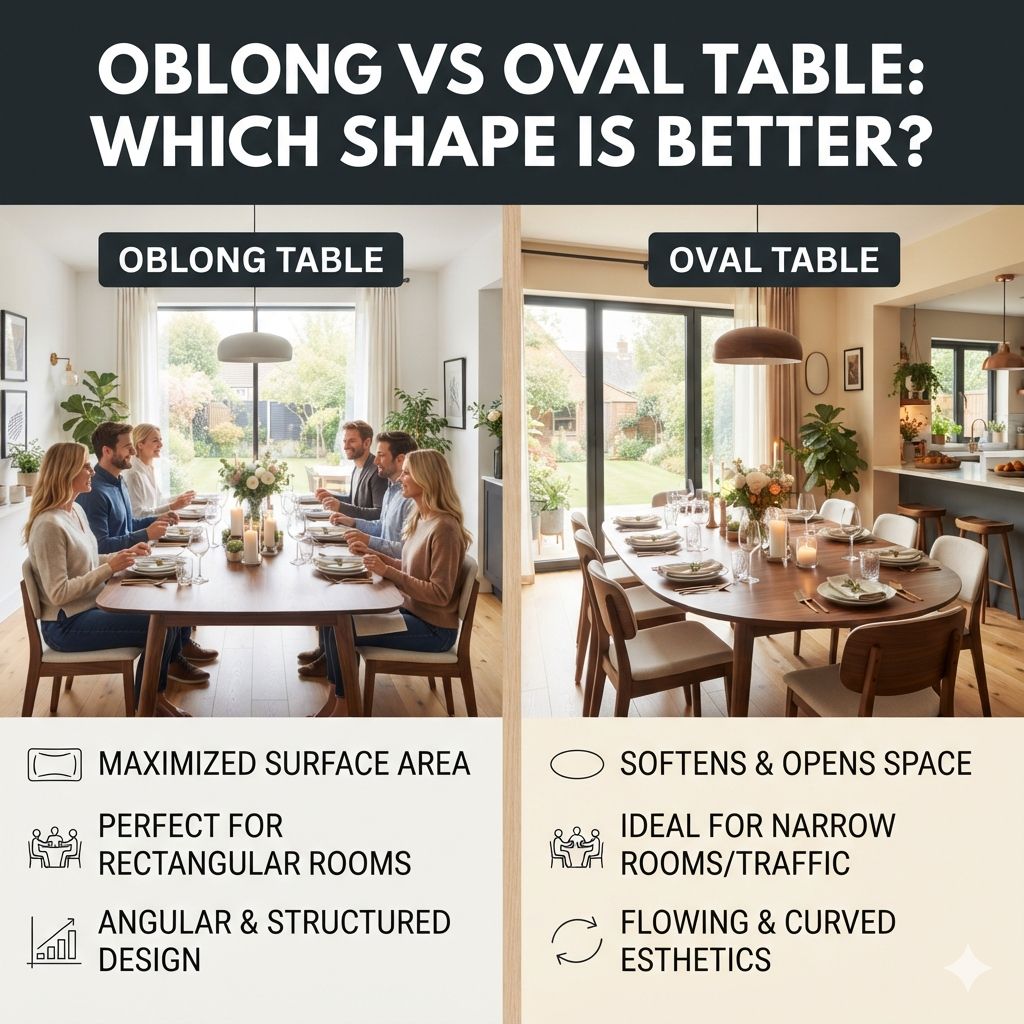
Oblong and oval tables both offer rounded edges for safety and better traffic flow. Oblong tables are longer than they are wide, with straight sides that end in curves. Oval tables have smooth, continuous curves all around, without any straight sections. The choice depends on your room size, seating needs, and overall style preference.
Understanding Oblong and Oval Tables
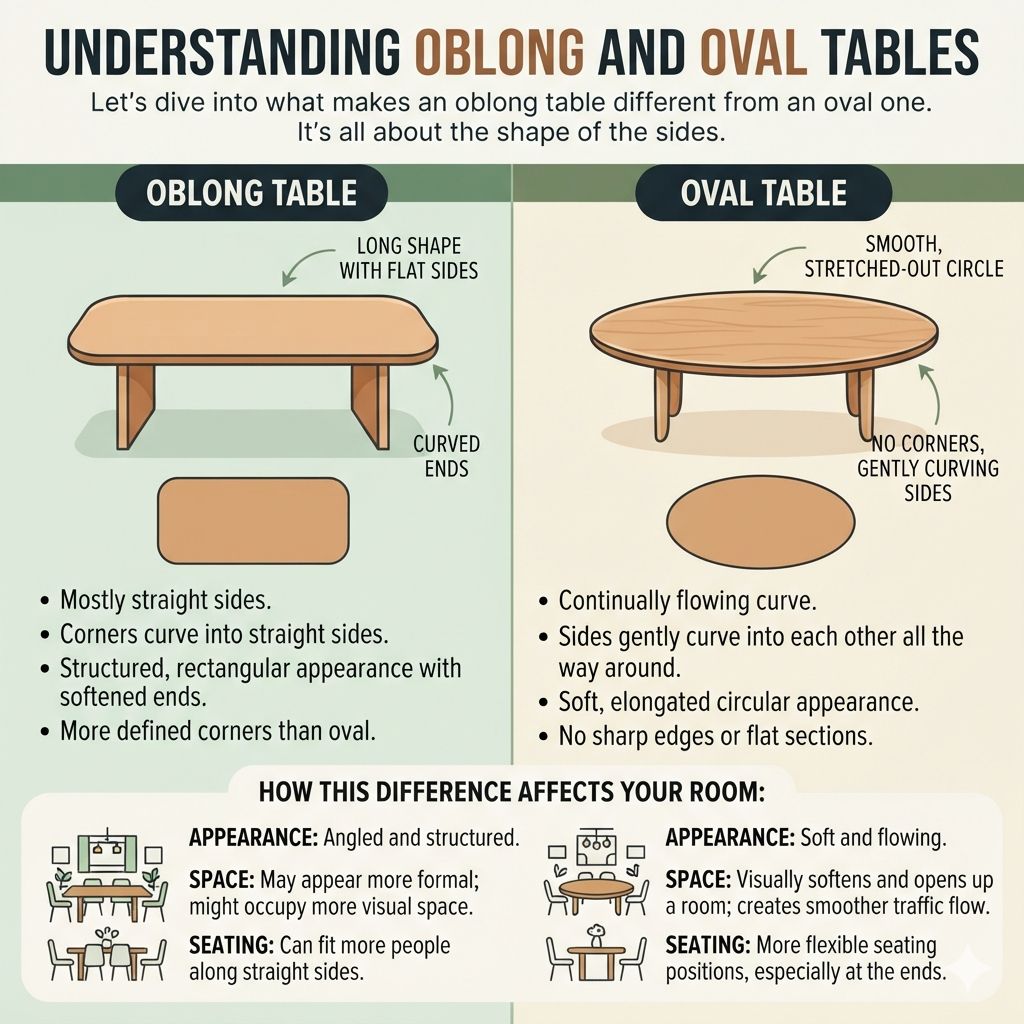
Let’s dive into what makes an oblong table different from an oval one. It’s all about the shape of the sides. Think of it like this: an oval is a smooth, stretched-out circle. It has no corners, and the sides gently curve into each other all the way around. An oblong table, however, has sides that are mostly straight. These straight sides then curve at the ends.
So, when you look at an oblong table, you see a longer shape with flat sides that lead to rounded ends. An oval table looks more like a soft, elongated circle. This difference might seem small, but it can change how a table looks and how well it fits into your room. It also affects how many people can sit around it comfortably.
The Beauty of the Oblong Shape
An oblong table brings a sense of structure and order to a space. Because it has those straight sides, it feels more defined. This shape is often great for longer rooms. It can make the room feel balanced. The straight sides also mean you can place chairs quite close together along the length.
People often choose oblong tables when they need to seat more people. The flat sides are easy to line up chairs against. This means you can often fit one or two extra chairs on an oblong table compared to an oval one of the same length. This makes them a smart choice for families or for homes where you often entertain guests.
Oblong Table: Key Traits
- Straight sides that lead to curved ends.
- Often seats more people than an oval table of the same size.
- Great for rectangular or longer rooms.
- Provides a more structured look.
- Easy to place chairs along the sides.
Think about your dining room. Is it long and narrow? An oblong table can help fill that space nicely. It stops the room from feeling too stretched out. The clean lines of an oblong table can also fit well with modern or traditional decor. It’s a shape that’s versatile and practical for many homes.
The Smooth Appeal of the Oval
On the other hand, an oval table offers a softer, more flowing look. Its continuous curves make it feel very inviting. There are no sharp corners, which is a big plus for safety, especially if you have young children or pets. Everyone around the table has a smoother experience.
An oval shape can make a room feel more open. This is because the curved edges don’t interrupt the flow of the space as much as straight lines might. In a square room, an oval table can soften the hard angles. It adds a gentle touch. The smooth shape encourages conversation because no one feels like they are at the “head” or “foot” of the table.
Oval Table: Key Traits
- Smooth, continuous curves all around.
- Softer, more flowing aesthetic.
- Excellent for safety with no sharp corners.
- Creates a more open and airy feel.
- Promotes a sense of equality among diners.
The continuous curve of an oval table means it can also be good for traffic. People can walk around it more easily than they might around a rectangular table with sharp corners. In a smaller dining area, the softer shape of an oval table can prevent it from feeling too dominant. It blends in more subtly.
When Oblong Wins: Practicality and Space
Let’s talk about when an oblong table really shines. For many families, the main goal is to fit everyone comfortably for meals. An oblong table often has an edge here. Its straight sides allow for more consistent seating along the length. This means you can often squeeze in an extra person or two compared to an oval table.
I remember helping a friend pick out a dining table for her busy family of six. Her dining room was long and a bit narrow. We looked at round tables, but they just didn’t fit the room’s shape. A square table felt too boxy. When we found a beautiful wood oblong table, it was perfect. It fit the length of the room well, and she loved that she could easily add two more chairs for guests by pulling them up to the sides.
Oblong Table in Action:
Room Type
Ideal for long, rectangular rooms.
Seating Capacity
Often accommodates more diners.
Style Impact
Adds a sense of order and definition.
Chair Placement
Chairs fit neatly along the straight sides.
Another reason oblong tables are popular is their visual stability. The straight sides create a strong visual line. This can anchor a dining area, especially in open-plan homes. If you prefer a look that is clearly defined and purposeful, the oblong shape is a solid choice. It’s a table that means business, but in a good, functional way.
When Oval Shines: Flow and Friendliness
Now, let’s look at the advantages of an oval table. The biggest draw for many is its welcoming, soft appearance. An oval table has no sharp edges. This makes it much safer in homes with active kids who might be running around. It’s also easier to walk around without bumping into anything.
I had a client who had a small, cozy dining nook. Her old rectangular table felt too harsh. It was always a bit of a squeeze to get past it. When we swapped it for a beautiful, light-colored oval table, the whole space changed. It felt bigger and more relaxed. The smooth curves of the table seemed to invite people to sit down and stay a while. It was a small change with a big impact on the room’s feel.
Oval Table in Action:
Room Type
Works well in square or round rooms.
Seating Capacity
Comfortable seating, promotes easy conversation.
Style Impact
Creates a soft, open, and friendly atmosphere.
Traffic Flow
Easy to navigate around the table.
The oval shape is also great for promoting a feeling of equality. With no distinct ends, everyone feels like they are part of the group. This can make meals more engaging and friendly. If you want a table that feels inclusive and encourages connection, an oval shape is a wonderful choice. It’s a shape that feels natural and harmonious.
Comparing Dimensions and Seating
Let’s get down to numbers. When comparing an oblong vs oval table of the same length, the oblong will usually seat more people. This is because its straight sides allow chairs to be placed closer together without feeling cramped. An oval table’s continuous curve might mean slightly less efficient use of space along the sides.
For example, a 60-inch oblong table might comfortably seat 6 people. The same 60-inch oval table might seat 5 people, or 6 if they are smaller chairs and people don’t mind being a bit closer. It really depends on the exact dimensions and how much elbow room you want.
Seating Guide: Oblong vs. Oval
| Table Length | Oblong Seating (Approx.) | Oval Seating (Approx.) |
|---|---|---|
| 48 inches | 4 | 4 |
| 60 inches | 6 | 5-6 |
| 72 inches | 6-8 | 6-7 |
| 84 inches | 8 | 7-8 |
Note: Seating numbers can vary based on chair width and desired comfort level.
When considering width, both shapes can vary. A wider table offers more surface space, but it also needs more room to walk around. Think about the space you have available. You need about 36-48 inches of clearance around the table for comfortable movement. This is an important measurement, no matter the table shape.
Impact on Room Aesthetics
The shape of your table has a big effect on the overall look and feel of your room. An oblong table tends to feel more grounded and formal. Its straight lines can help to define the dining area clearly. This is great if you want your dining space to have a distinct boundary.
If your room has a lot of straight lines, like in a modern home, an oblong table can complement this. It fits in well with sharp angles and clean designs. The edges might be rounded, but the overall impression is still one of structure. It’s a shape that feels intentional and solid.
An oval table, on the other hand, brings a sense of softness and fluidity. It can break up a room that feels too boxy or angular. In a space with many hard surfaces, the gentle curves of an oval table can add warmth and make it feel more inviting. It softens the edges of the room itself.
I’ve seen oval tables work wonders in making a small dining area feel less crowded. The lack of sharp corners means you don’t feel like you’re constantly going to bump into something. It creates a more relaxed and open atmosphere. This can be especially nice in a kitchen where you want a friendly, casual feel.
Style Match-Up:
Oblong Fits Best With:
Rectangular rooms, modern/traditional decor, structured spaces.
Oval Fits Best With:
Square rooms, open-plan living, creating a soft ambiance.
The material of the table also plays a role. A heavy, dark wood oblong table might feel very substantial. A lighter wood or glass oval table can feel much lighter and more airy. Consider the overall mood you want to create in your dining space when making your choice.
Which Shape for Your Room?
So, how do you decide? It really comes down to your specific room and how you plan to use the table. For a long, rectangular dining room, an oblong table is often the most practical choice. It fills the length of the room well and provides ample seating.
If your dining area is more square, or if you want to create a softer, more inviting atmosphere, an oval table might be better. The gentle curves can make the space feel more open and less confined. It’s also a great option if safety is a top concern due to young children.
Quick Room Selector:
My Room is:
Long and narrow.
Consider:
An Oblong Table
My Room is:
Square or small.
Consider:
An Oval Table
I Need to Seat:
Many people, often guests.
Consider:
An Oblong Table
I Want a Feel That is:
Soft, open, and friendly.
Consider:
An Oval Table
Measure your space carefully. Think about the flow of traffic around the table. Also, consider the number of people you typically need to seat. These practical factors will guide you to the shape that works best for your home. It’s not just about looks; it’s about how the table functions in your daily life.
Common Misconceptions
One common thought is that oblong and oval tables are pretty much the same. While they share rounded edges, the key difference lies in those straight sides versus continuous curves. This distinction matters for seating capacity and how the table visually impacts a room.
Another idea is that oval tables are always smaller. This isn’t true. You can find oval tables in very large sizes, just like oblong ones. The “oval” refers to the shape, not the scale. The same applies to oblong tables; they come in many lengths and widths.
Myth vs. Reality
Myth:
Oblong and oval tables are identical.
Reality:
Oblong has straight sides; oval has continuous curves.
Myth:
Oval tables are always smaller.
Reality:
Oval refers to shape, not size; large oval tables exist.
It’s also a misconception that one shape is inherently more formal than the other. Both oblong and oval tables can be dressed up or down with your choice of chairs and tabletop decorations. A sleek glass oval table can look very modern, while a rustic wood oblong table can feel quite casual.
Material and Style Considerations
The material of your table will influence its look and feel, regardless of whether it’s oblong vs oval. Wood is a classic choice, offering warmth and durability. Walnut, oak, and maple are popular options. For a modern look, consider glass or metal tables. These can make a space feel more open and light.
Laminate or engineered wood can be more budget-friendly. They often mimic the look of real wood. When choosing a material, think about maintenance. Some surfaces are easier to clean than others. For a busy family, a table that can withstand spills and daily use is key.
Material Spotlight:
Wood:
Warm, durable, classic. Various wood types offer different looks.
Glass:
Modern, airy, can make a space feel larger. Requires frequent cleaning.
Metal:
Industrial or sleek. Often paired with wood or glass tops.
Laminate/Engineered Wood:
Affordable, wide variety of finishes, easier to clean.
The style of the legs or base also plays a role. A pedestal base can create a very open feel, especially with an oval table. Legs at the corners might work well for an oblong table, providing stability. Think about the overall aesthetic you’re aiming for. Does it lean more towards traditional, modern, farmhouse, or something else?
Final Thoughts on Your Table Choice
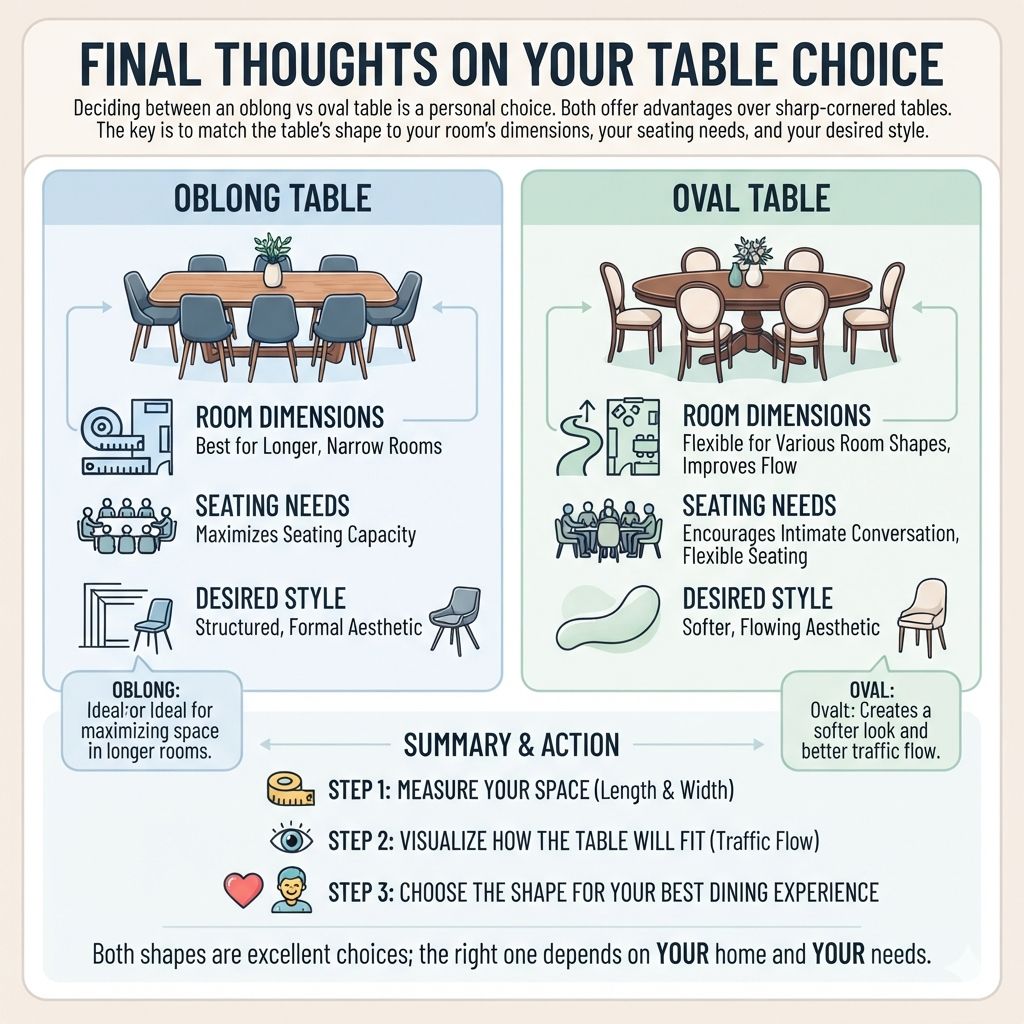
Deciding between an oblong vs oval table is a personal choice. Both offer advantages over sharp-cornered tables. The key is to match the table’s shape to your room’s dimensions, your seating needs, and your desired style.
If you need to seat more people and have a longer room, the oblong shape is likely your best bet. If you prefer a softer look, better traffic flow, and a more intimate feel, the oval shape may be the winner. Measure your space, visualize how the table will fit, and choose the one that makes your dining experience the best it can be.
Frequently Asked Questions About Oblong and Oval Tables
What is the main difference between an oblong and an oval table?
The main difference is the sides. An oblong table has straight sides that end in curves. An oval table has smooth, continuous curves all the way around, with no straight sections.
Which shape is better for seating more people?
An oblong table usually seats more people because its straight sides allow chairs to be placed closer together without feeling cramped. An oval table’s curves can sometimes mean slightly less seating capacity for the same length.
Are oval tables safer for children?
Yes, oval tables are generally considered safer for children because they have no sharp corners to bump into. This smooth, continuous curve makes them easier to navigate around safely.
Which shape is better for a square dining room?
An oval table often works best in a square dining room. Its soft curves can help to break up the hard angles of a square space, making it feel more open and inviting.
Which shape is better for a long, narrow dining room?
An oblong table is typically the better choice for a long, narrow dining room. It fits the proportions of the room well and can help to fill the space effectively while providing ample seating.
Do oblong and oval tables encourage more conversation?
Both shapes tend to encourage more conversation than a long rectangular table with distinct ends. Oval tables, in particular, promote a sense of equality as there’s no “head” of the table, making everyone feel more connected.
Can an oval table be as large as an oblong table?
Yes, absolutely. The shape describes the contour, not the size. You can find very large oval tables, just as you can find very large oblong tables. The size depends on the manufacturer and the specific model.
The Final Verdict on Table Shapes
Choosing between an oblong and an oval table is about finding the perfect fit for your life and your home. Both shapes offer softer edges and better flow than traditional rectangular tables. Think about your room’s layout and how you like to gather. This will guide you to the right choice. Happy decorating!
Products related to this article
Sponsored / affiliate links. As an Amazon Associate I earn from qualifying purchases. I may earn additional commission from eligible campaigns.