Oval Vs Rectangular Dining Table: Which Is Best?
This guide will help you choose. We will talk about how they look. We will also talk about how they feel in a room.

VICBARLEY
VICBARLEY Oval Rectangular Dining Table for 4-8…
- ✨ 【Space Focal Point】With wood grain texture and a minimalist design,this dining table becomes an eye-catching highlight in your h…
- 🏡【Safe Oval Design】Both the tabletop and base feature a smooth oval shape with finely polished edges to effectively prevent bumps…
- 💪【Sturdy & Durable Structure】The tabletop is made of selected 0.98-inch thick E1 grade chipboard,offering durability and strength…
As an Amazon Associate I earn from qualifying purchases.
You’ll learn about space needs. We’ll cover seating and flow. By the end, you’ll know which shape suits your dining area best.
Choosing between an oval and a rectangular dining table involves looking at room size, shape, and how you plan to use the space. Each offers unique benefits for seating, flow, and overall aesthetic in your home.
Understanding Dining Table Shapes
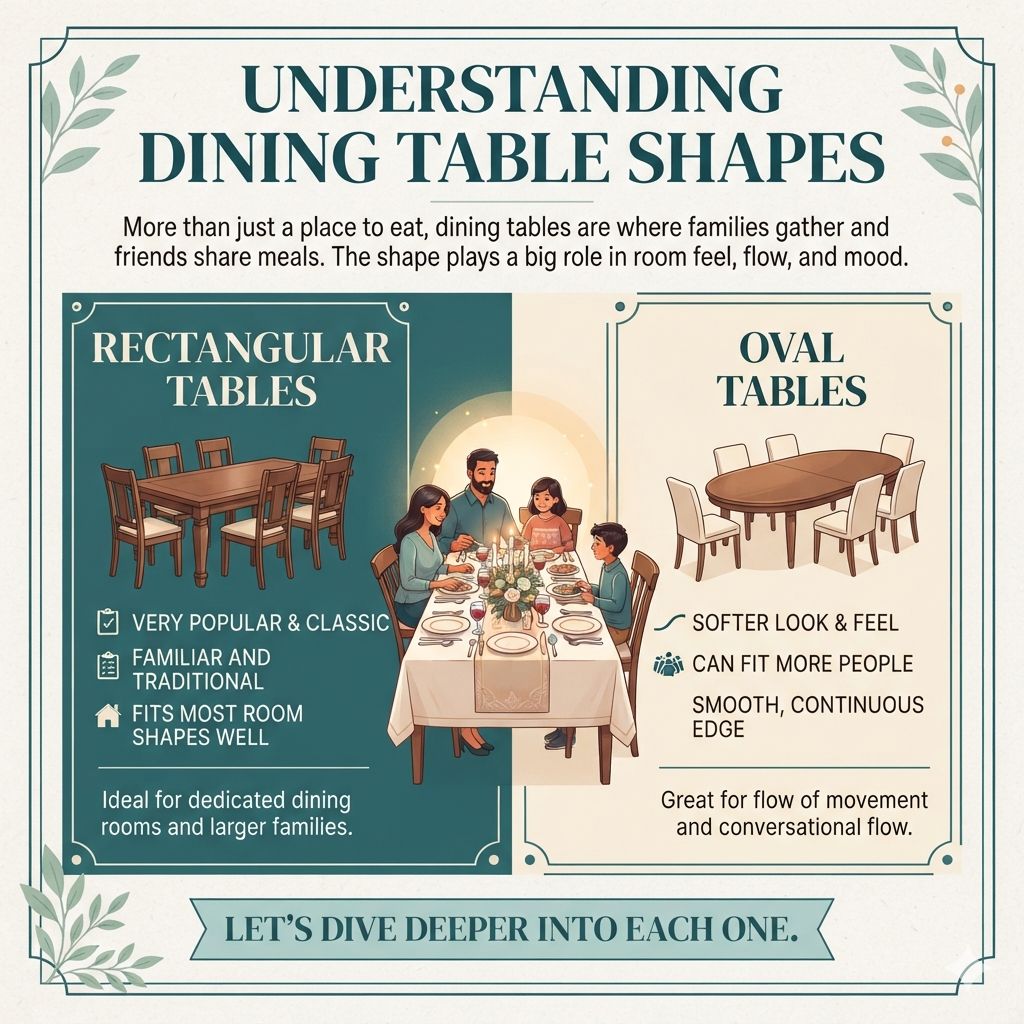
A dining table is more than just a place to eat. It’s often the heart of a home. It’s where families gather.
It’s where friends share meals and stories. The shape of your table plays a big role in how your dining room feels and works. It affects the mood and the flow of movement.
Rectangular tables are very popular. They are classic and familiar. They fit well in most room shapes.
Oval tables offer a softer look. They can sometimes fit more people. They also have a smooth, continuous edge.
Let’s dive deeper into each one.
The Rectangular Dining Table
Rectangular tables are a top choice for many homes. They are known for their clean lines. They also offer a strong sense of order.
This shape works well in many different dining spaces. It’s a shape that many people are used to.
Think about a long, narrow dining room. A rectangular table often fits this space perfectly. It uses the length of the room.
It creates a clear pathway on the sides. This makes it easy to walk around the table. It also makes it easy to serve food.
Rectangular tables come in many sizes. You can find small ones for cozy spots. You can also find very large ones for big families or parties.
The long sides are great for seating many people. You can often squeeze in an extra chair if needed, especially on the ends.
The straight edges of a rectangular table can make a room feel more structured. This can be a good thing. It adds a sense of formality.
It can also make a space feel more grounded. It’s a shape that many designers love for its versatility.
Pros of Rectangular Tables
- Fits most room shapes: They are especially good for rectangular rooms.
- Maximizes seating: Long sides allow for more chairs.
- Clear pathways: Easy to walk around and serve.
- Classic style: Always in fashion and versatile.
- Sense of order: Creates a structured feel.
Cons of Rectangular Tables
- Can feel harsh: Sharp corners might feel less friendly to some.
- Less ideal for square rooms: Can sometimes feel a bit like a runway.
- Corners can be bumping hazards: Especially in smaller spaces.
The Oval Dining Table
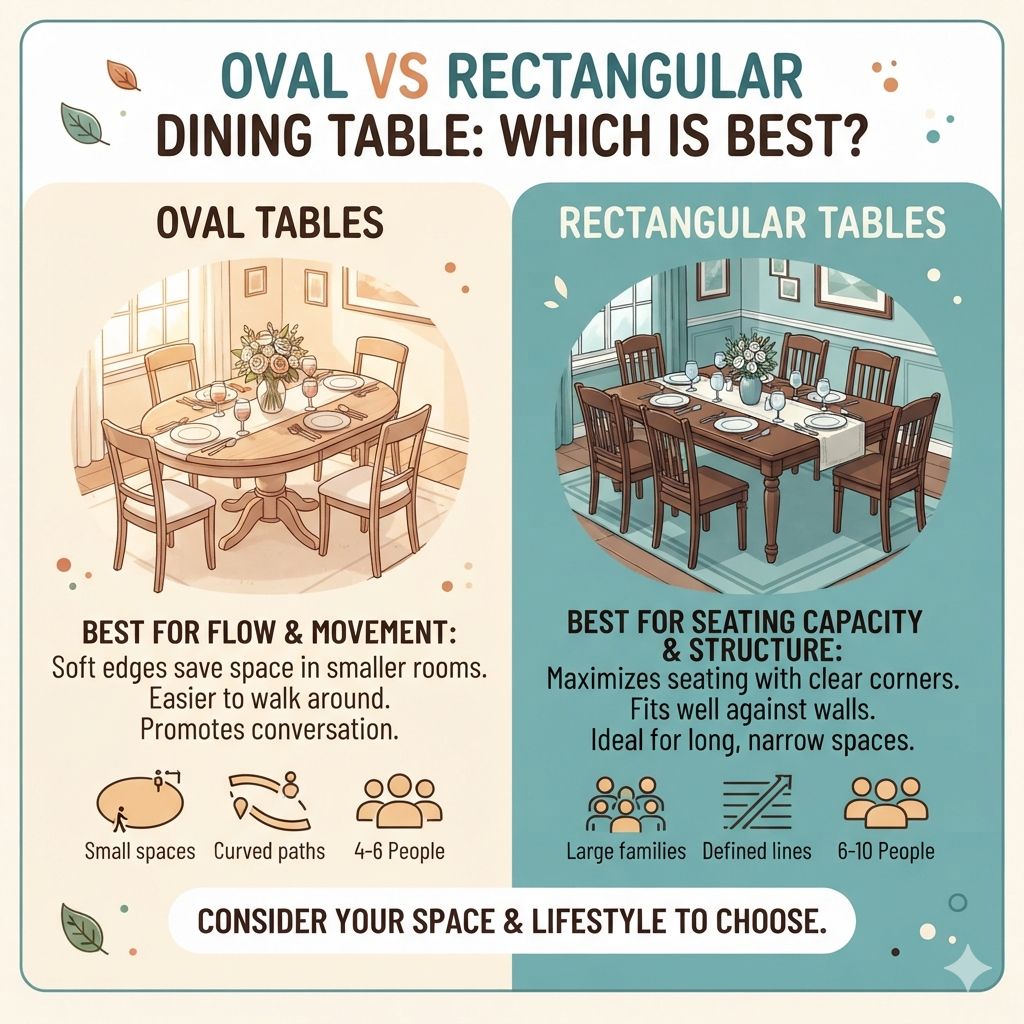
Oval tables offer a different feel. They have no sharp corners. This makes them feel softer and more inviting.
The smooth shape can make a room feel more relaxed. It brings a sense of flow.
Oval tables are great for breaking up straight lines. If you have a very rectangular room, an oval can add visual interest. It softens the edges.
It can also help with traffic flow. People can walk around the rounded ends more easily than sharp corners.
One of the big benefits of an oval table is seating. While the length might be similar to a rectangle, the absence of corners means you can often fit more people. This is because you can place chairs a bit closer together along the sides.
It feels less crowded.
Think about a room that isn’t perfectly rectangular. Maybe it’s a bit wider than it is long. An oval table can often adapt better than a rectangle.
It doesn’t dominate the space as much. It feels more natural and less boxy.
For homes with young children, the lack of sharp corners is a huge plus. It means fewer bumps and bruises. It makes the dining area feel safer.
This is a practical reason many families choose oval tables.
Pros of Oval Tables
- Softer look: No sharp corners make it feel more gentle.
- Good for traffic flow: Easy to walk around the curves.
- Can seat more: The shape often allows for extra guests.
- Safe for kids: No sharp corners to bump into.
- Works well in various room shapes: Especially good for square rooms.
- Creates a sense of movement: Adds visual interest.
Cons of Oval Tables
- Less formal feel: May not suit very traditional or formal dining rooms.
- Can be harder to find specific sizes: Selection might be smaller than rectangles.
- Doesn’t fill long, narrow rooms as well: Might leave dead space.
Measuring Your Space: The Key to a Good Fit
No matter which shape you lean towards, knowing your measurements is crucial. A table that’s too big makes a room feel cramped. One that’s too small can look lost.
It’s about balance.
First, measure your dining room. Note its length and width. Then, think about how much space you need around the table.
You need enough room to walk. You need room to pull out chairs. About 3 feet of clearance is ideal on all sides.
This clearance is for chairs pulled out. It’s also for people walking behind seated guests. If your room is tight, you might need to adjust.
Less clearance can work, but it can make the room feel crowded. Aim for at least 2 feet if 3 feet isn’t possible.
Consider your existing furniture. Where are the doors? Where are the windows?
These affect where the table can go. They also impact how much walking space you have. Draw a simple floor plan.
This can really help visualize the space.
For a rectangular room, a rectangular table is often the easiest fit. It mirrors the room’s shape. For a square room, an oval table can break up the boxiness.
It adds a nice visual contrast. A round table is also great for square rooms, but we are focusing on oval vs. rectangular today.
Seating Capacity: How Many Can You Fit?
The number of people you need to seat is a major factor. Think about your daily needs. Do you eat alone or with one other person most days?
Then think about when you entertain. Do you host large dinner parties? Do you have family gatherings?
Rectangular tables are straightforward for seating. A typical 6-foot rectangular table can seat six people comfortably. You can often fit eight if some are smaller chairs or if people don’t mind being a bit cozy.
The ends of the table can usually take one chair each.
Oval tables can sometimes surprise you. An oval table of the same length as a rectangular one might fit more people. This is because there are no sharp corners to get in the way.
You can place chairs more continuously around the sides. This is a big win for entertaining.
For example, a 72-inch oval table might seat six to eight people. A 72-inch rectangular table might seat six, possibly seven if they are slim chairs. It really depends on the chair width and how much space each person needs.
Always check the table’s dimensions. Look for a chart that shows seating capacity for that specific size and shape. This will give you a good idea.
Remember, comfortable seating is key. Don’t try to cram too many people in. It ruins the dining experience.
Seating Quick Guide
Standard Seating Estimates:
Rectangular Table:
- 4-6 ft: 4-6 people
- 6-8 ft: 6-8 people
- 8+ ft: 8-10+ people
Oval Table:
- 4-6 ft: 4-6 people
- 6-8 ft: 6-8 people
- 8+ ft: 8-10+ people (often one more than rectangular of same length)
Remember: These are estimates. Chair size and armrests matter. Space around the table also influences comfort.
Style and Aesthetics: What Fits Your Home?
The shape of your dining table has a big impact on your room’s style. It contributes to the overall feeling. Do you want a formal dining room?
Or a more casual, family-friendly space?
Rectangular tables often lend themselves to a more formal look. Their clean lines can match modern, minimalist, or traditional styles. They anchor a room.
They provide a strong visual center. A dark wood rectangular table can feel very elegant.
Oval tables often feel more casual and relaxed. Their curves are softer. They can make a room feel more intimate.
They blend well with farmhouse, coastal, or transitional styles. An oval table with a pedestal base can be a real showstopper.
Think about your existing decor. Are your other furniture pieces sharp-angled or curved? Matching the table shape to other elements can create a cohesive look.
Or, you can use the table shape to create contrast and visual interest.
Consider the visual weight. A thick, dark rectangular table can feel heavy. A lighter, thinner oval table might feel airy.
The material also plays a huge role. Wood, glass, metal – they all contribute to the table’s style.
I remember helping a friend pick a table. Her dining room was long and narrow. It had a lot of straight lines in the architecture.
We considered a rectangular table, but it felt a bit too much like a hallway. An oval table softened the space beautifully. It felt much more inviting.
Style Spotlight:
Rectangular Tables:
- Best for: Formal, modern, traditional, minimalist rooms.
- Vibe: Structured, elegant, classic, grounded.
Oval Tables:
- Best for: Casual, farmhouse, coastal, transitional, family-friendly rooms.
- Vibe: Soft, inviting, flowing, intimate.
Room Shape and Table Shape: A Practical Match
The shape of your dining room itself is a huge clue. It should guide your table choice. You want the table to complement, not fight, the room.
Rectangular Rooms: These are the easiest. A rectangular table often fits perfectly. It follows the lines of the room.
It can make a long room feel balanced. You can place it in the center. Or, you can place it closer to one end if you need more open space elsewhere.
However, a very long rectangular room can sometimes feel like a bowling alley with a long rectangular table. This is where an oval table can step in. It breaks up the long lines.
It adds a softer, more organic feel. It might feel more intimate.
Square Rooms: This is where oval tables shine. A rectangular table in a square room can sometimes look a bit awkward. It might feel like it’s swimming in the middle.
Or, it might push all the open space to the sides. An oval table, with its curves, often fits more pleasingly in a square space. It softens the square corners of the room.
Of course, a round table is also ideal for square rooms. But between oval and rectangular, oval usually wins for square spaces. It adds visual interest without being too angular.
Open Concept Spaces: In open-plan homes, the dining table helps define the dining zone. A rectangular table can create a strong visual boundary. It clearly separates the dining area from the living or kitchen space.
An oval table can feel more integrated. It doesn’t create as harsh a division. It allows the eye to flow more easily.
The choice here depends on how defined you want your zones to be. Do you want a clear separation? Go rectangular.
Do you want a softer transition? Consider oval.
Room Shape Match-Up:
Rectangular Room:
- Best Fit: Rectangular table (classic choice).
- Alternative: Oval table (softens lines, adds intimacy).
Square Room:
- Best Fit: Oval table (breaks up squareness, adds flow).
- Less Ideal: Rectangular table (can look out of place or dominate).
Open Concept:
- Define Zones: Rectangular table.
- Softer Transition: Oval table.
Traffic Flow and Practicality
Beyond how many people can sit, think about how you move. This is especially important in smaller homes or busy households. Good traffic flow makes a dining room functional and pleasant.
Rectangular Tables: Their straight sides are generally easy to navigate. You can walk along the length. The corners are the main challenge.
In a tight space, bumping into a corner is common. This is why leaving enough clearance is vital for rectangular tables.
Oval Tables: The curved edges are a big win for flow. There are no sharp corners to hit. People can walk around the table more easily.
This can make a small dining area feel more open. It’s also great for kids who might be running around. They are less likely to get hurt.
I once saw a tiny dining nook in a city apartment. It was barely big enough for a small table. A square table felt too clunky.
A rectangular one just seemed to box it in. The owners opted for a small oval table. It made a world of difference.
It felt so much more open and airy.
Consider the path to other rooms. Does the dining table block access to the kitchen? Does it make it hard to get to a hallway?
The shape that allows for easier passage is often the best choice for practicality.
Materials and Durability
The material of your dining table will affect its look, feel, and how well it holds up. Both oval and rectangular tables come in a vast range of materials.
Wood: This is a classic. Oak, maple, walnut – they all offer different looks and durability. Wood is warm and inviting.
It can be scratched or dented, though. A good finish helps protect it. For families with kids, a distressed wood finish can hide wear and tear better.
Glass: Glass tables, often oval, can make a small room feel larger. They reflect light and don’t block the view of your flooring. However, glass shows fingerprints and smudges easily.
It can also chip or break if not cared for. A tempered glass top is stronger.
Stone/Marble: These materials, often seen in oval tables, are luxurious. They are very durable. However, they are also very heavy and can be expensive.
Marble can stain if not sealed properly. Granite is generally more stain-resistant.
Metal: Metal bases are common for both shapes. A metal frame can offer a modern or industrial look. Metal tabletops are less common but can be very durable and easy to clean.
When choosing, think about your lifestyle. Are you rough on furniture? Do you need something super easy to clean?
Or are you careful with your belongings? The material should match your daily life.
Material Matters:
Wood: Warm, classic, natural. Can scratch. Good for most styles.
Needs care.
Glass: Light, airy, modern. Shows smudges. Can break.
Good for small spaces.
Stone/Marble: Luxurious, durable, heavy. Expensive. Can stain.
Metal: Modern, industrial, durable. Can feel cold.
What This Means For Your Home
So, what’s the final verdict? It’s not about one shape being better than the other. It’s about which shape is better for your specific situation.
Choose a Rectangular Table If:
- You have a long, rectangular dining room.
- You want to create a clear dining zone in an open-plan home.
- You prefer a more formal or structured look.
- You often host large groups and need maximum seating along the sides.
- You have ample space around the table for easy movement.
Choose an Oval Table If:
- You have a square dining room or an open-plan space where you want softer lines.
- You have young children and want to minimize corner hazards.
- You want to improve traffic flow in a smaller dining area.
- You prefer a more relaxed, intimate, or flowing aesthetic.
- You find that you can seat more people comfortably at an oval of similar length.
It’s worth visiting furniture stores. See the tables in person. Sit at them.
Imagine them in your home. Take photos of your dining room. Bring them with you.
This helps you visualize the scale and style.
Don’t forget to measure. Measure your room. Measure your doorways.
Measure your existing furniture. This prevents costly mistakes. A well-chosen table enhances your home.
It makes dining and entertaining a joy.
When Is It Normal? When To Worry?
Regarding dining table shapes, there isn’t really a “worry” situation. The shape itself doesn’t cause problems. The issue is usually about fit or function.
When it’s normal:
- A rectangular table in a rectangular room.
- An oval table in a square room.
- Either shape with enough space around it for comfortable movement.
- Seating capacity that meets your needs without feeling cramped.
When to check:
- If a rectangular table makes your long room feel like a tunnel.
- If an oval table seems too small or doesn’t fill your square room well.
- If chairs can’t be pulled out without hitting a wall or another chair.
- If you constantly bump into the corners of your table.
- If your chosen table shape clashes heavily with your room’s natural lines.
These aren’t “worrisome” issues. They are simply signs that the table might not be the best fit for the space. It’s an opportunity to reassess and make a change.
The goal is a functional and beautiful dining area.
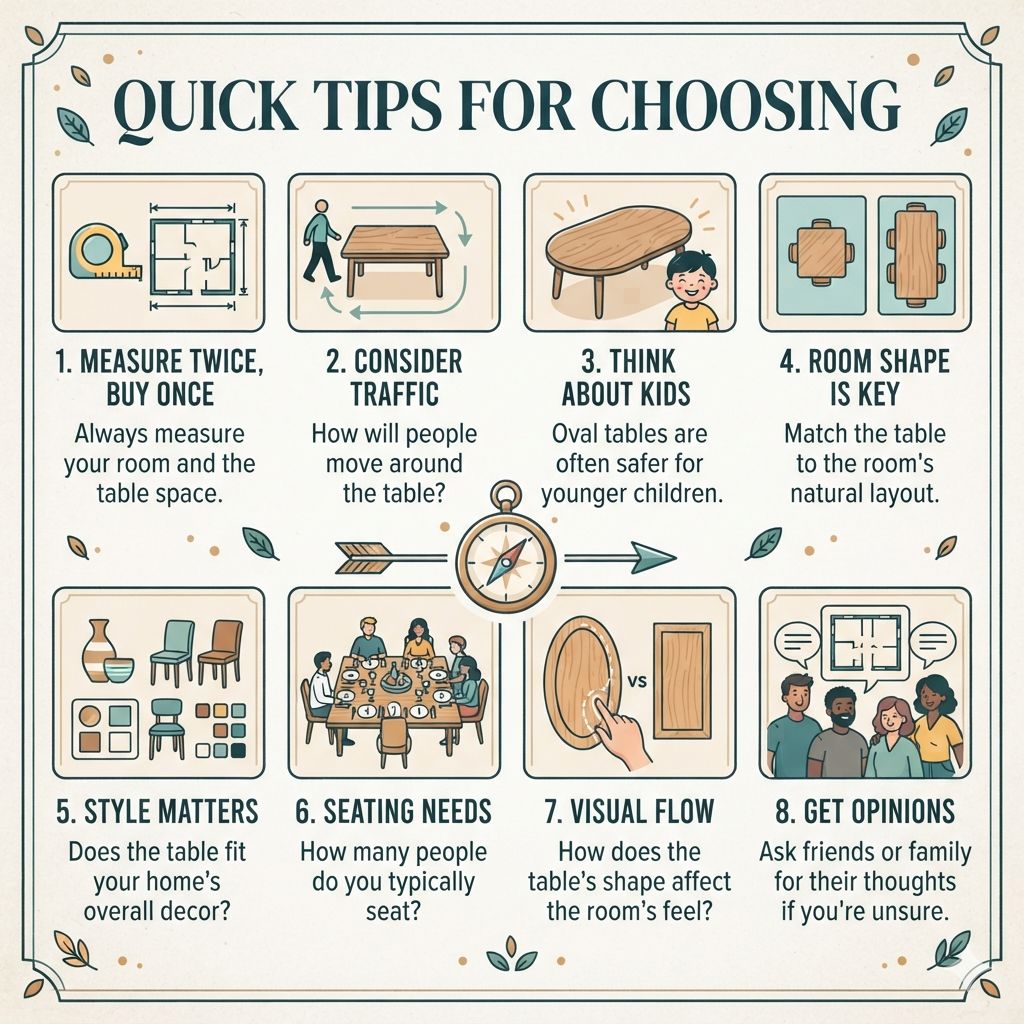
Quick Tips for Choosing
Here are some easy tips to keep in mind as you decide:
- Measure Twice, Buy Once: Always measure your room and the table space.
- Consider Traffic: How will people move around the table?
- Think About Kids: Oval tables are often safer for younger children.
- Room Shape is Key: Match the table to the room’s natural layout.
- Style Matters: Does the table fit your home’s overall decor?
- Seating Needs: How many people do you typically seat?
- Visual Flow: How does the table’s shape affect the room’s feel?
- Get Opinions: Ask friends or family for their thoughts if you’re unsure.
Frequently Asked Questions
Can an oval table fit in a small dining room?
Yes, an oval table can often be a great choice for small dining rooms. Its lack of sharp corners makes it easier to navigate. It can make the space feel more open and less cramped compared to a rectangular table of the same size.
The curved shape helps with traffic flow.
Which table shape is easier to clean around?
Generally, oval tables are easier to clean around. You can walk all the way around them without getting stopped by sharp corners. This makes vacuuming or sweeping the floor much simpler.
Rectangular tables require a bit more maneuvering around the corners.
Can I put an oval table in a formal dining room?
You absolutely can! While oval tables often lend themselves to a more casual feel, their elegance depends on the material and design. A sleek, dark wood oval table with a beautiful finish can look very sophisticated and formal.
It depends on the overall style you are trying to achieve.
Is a rectangular table always better for seating more people?
Not necessarily. While rectangular tables have long sides that are good for seating, an oval table of the same length can sometimes seat one or two more people. This is because there are no corners taking up space.
You can often place chairs more continuously around an oval.
What is the best clearance needed around a dining table?
The general recommendation for clearance around a dining table is about 3 feet (91 cm). This allows enough space for chairs to be pulled out and for people to walk behind seated guests comfortably. If space is tight, aim for at least 2 feet (61 cm).
Does the leg or base style affect the choice between oval and rectangular?
Yes, the base style can definitely influence your choice. Rectangular tables often have four legs, one at each corner, or a sturdy pedestal. Oval tables are frequently seen with a single pedestal base, which can enhance the flowing, open feel.
Both shapes can also have more elaborate leg designs. Consider how the base affects legroom and visual style.
Making Your Final Decision
Choosing between an oval and rectangular dining table comes down to your unique space and needs. Both are fantastic options. They each bring their own strengths to a dining area.
Consider your room’s shape. Think about how many people you need to seat. Reflect on the style you love.
Prioritize practical flow. By looking at these factors, you’ll find the table that makes your dining space perfect.
Related pick: Check today's price on Amazon
Products related to this article
Sponsored / affiliate links. As an Amazon Associate I earn from qualifying purchases. I may earn additional commission from eligible campaigns.