How To Arrange Books On A Bookshelf Like A Pro
Arranging books on a bookshelf like a pro involves balancing aesthetics and practicality. Mix vertical and horizontal stacking, incorporate decorative items, and vary the types of books displayed. Consider color, size, and theme for a visually pleasing and functional layout. Aim for a mix of order and personality. (Wondering whether you need one unit or a full set? See this guide on bookshelf vs bookshelves terminology first.)
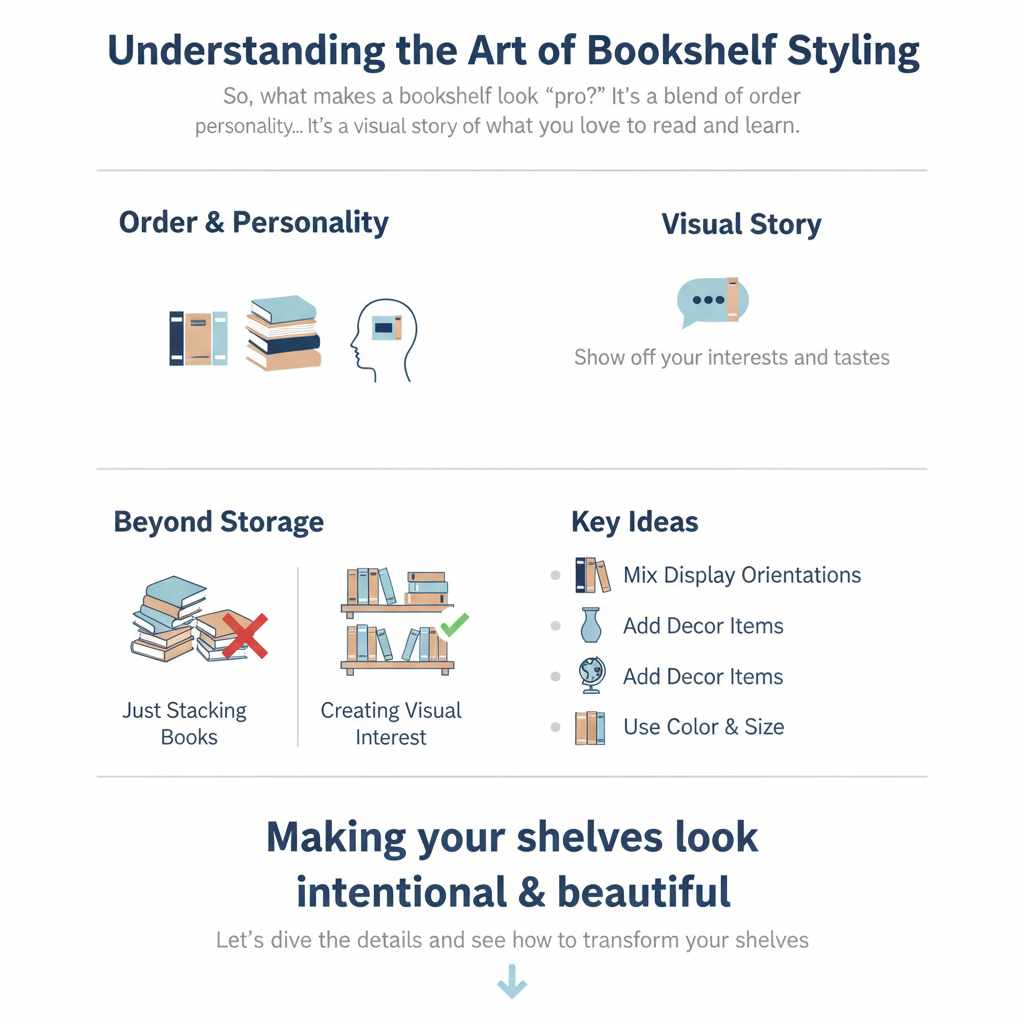
Understanding the Art of Bookshelf Styling
So, what makes a bookshelf look “pro”? It’s a blend of order and personality. Think of it like decorating any other part of your home. You want it to look good, but also feel like you. A well-arranged bookshelf can be a focal point. It can show off your interests and tastes. It’s a visual story of what you love to read and learn.
Many people just stack books. They fill up the space quickly. This is okay for storage. But it doesn’t usually create a pleasing look. The goal of professional bookshelf styling is to create visual interest. It also makes the books more accessible. You want people to not only see your books but to want to pick them up. This comes down to a few key ideas.
We’ll look at how to mix different ways of displaying your books. We’ll talk about adding other items. We’ll even touch on using color and size to your advantage. It’s about making your shelves look intentional and beautiful. Let’s dive into the details and see how to transform your shelves.
My Own Bookshelf Revelation
I remember one summer, I was trying to organize my living room. I’d bought a new sofa and was feeling inspired. My bookshelves were the last frontier. They were piled high with books. Some were stacked on their sides. Others were standing up, leaning precariously. It was a jumbled mess. I’d just shove books on whenever I finished them. It was functional, but ugly.
One evening, I stared at them. I felt a pang of annoyance. This space was supposed to be relaxing. But the shelves just added to my stress. I thought about all those perfect shelves I’d seen. Mine looked nothing like them. They felt so heavy and dark. I decided then and there to change it. I started by taking every single book off the shelves.
It was a huge job. Dust bunnies flew everywhere. But as I cleared them, I saw the potential. I wiped down the shelves. Then, I started putting books back. I didn’t just stack them. I tried standing some up. I laid others flat. I even grouped some by color. It took hours. But when I finally stepped back, I felt a huge sense of accomplishment. It looked so much better. It felt lighter and more like my home.
Key Principles for Beautiful Bookshelves
- Balance: Mix tall and short books, open and closed spaces.
- Variety: Use different stacking methods and add decor.
- Flow: Group items that look good together.
- Personal Touch: Include items that mean something to you.
Mixing It Up: Vertical and Horizontal Stacking
The first rule of arranging books like a pro is simple: don’t stack them all the same way. Most people just put books standing up. This fills shelves fast. But it can look a bit boring. It also makes the spines all the same height. This creates a very flat, uninteresting line.
The secret is to mix it up. Try stacking some books horizontally. Laying books flat creates visual breaks. It breaks up those long lines of spines. You can stack them in piles of two or three. This adds different heights. It also creates little platforms for small decorative items. Or, you can use a horizontal stack as a bookend for a group of vertical books.
Think about different sizes. You might stack larger coffee table books horizontally. Then, stand up smaller paperbacks next to them. This variation adds depth. It makes the shelves look more dynamic. It’s like a conversation between different shapes and sizes.
Don’t be afraid to experiment. Try a few horizontal stacks on one shelf. Then, do mostly vertical on the next. The goal is to create visual interest. This simple change makes a big difference. It stops the shelves from looking like a library wall. It makes them look more like curated displays.
Stacking Styles:
Vertical Stacks
The classic way. Great for most books.
Horizontal Stacks
Use for larger books or to create visual breaks.
Bookend Stacks
A horizontal stack can hold up a vertical group.
The Power of Decorative Objects
Books are great, but they aren’t the only thing that belongs on a bookshelf. To make your shelves look professional, you need to add decorative items. These objects break up the rows of books. They add personality and color. They create visual points of interest.
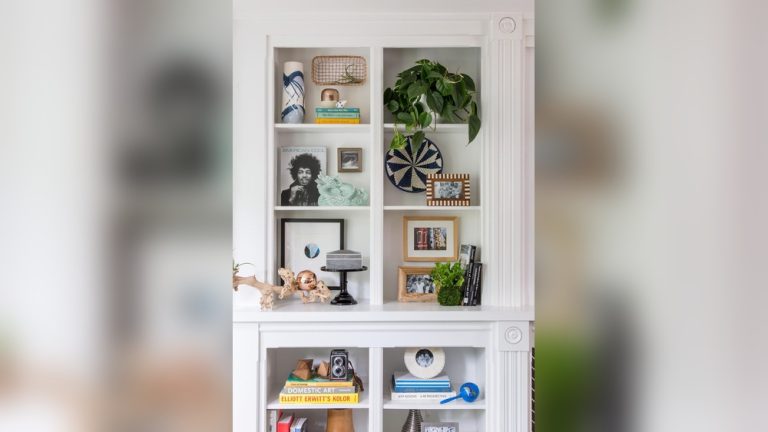
Think about what you have around your house. Small plants are wonderful. They add a touch of life and color. Picture frames with photos can make the shelves feel more personal. Small sculptures or art pieces work well. Even interesting bowls or vases can add texture and shape.
The key is not to overdo it. You don’t want to clutter the shelves. Too many objects will make them look messy again. Aim for a few well-chosen pieces. Place them strategically. A nice object can go on top of a horizontal book stack. It can fill a gap between vertical books. Or, it can sit on a shelf by itself.
Consider the scale of your objects. Don’t put tiny little things on a huge shelf. They will get lost. Likewise, a massive sculpture on a small shelf will overwhelm it. Try to balance the size of the objects with the size of the books and the shelf space.
Also, think about texture. If you have lots of smooth book covers, adding a rough ceramic piece can be nice. If your books are all matte, a shiny metallic object can add sparkle. It’s all about creating layers and interest.
Decorating Dos and Don’ts
DO
Use a few well-chosen items.
Vary sizes and textures.
Let objects complement books.
DON’T
Overcrowd shelves.
Use too many small items.
Let decor hide the books.
Color Coordination: A Visual Feast
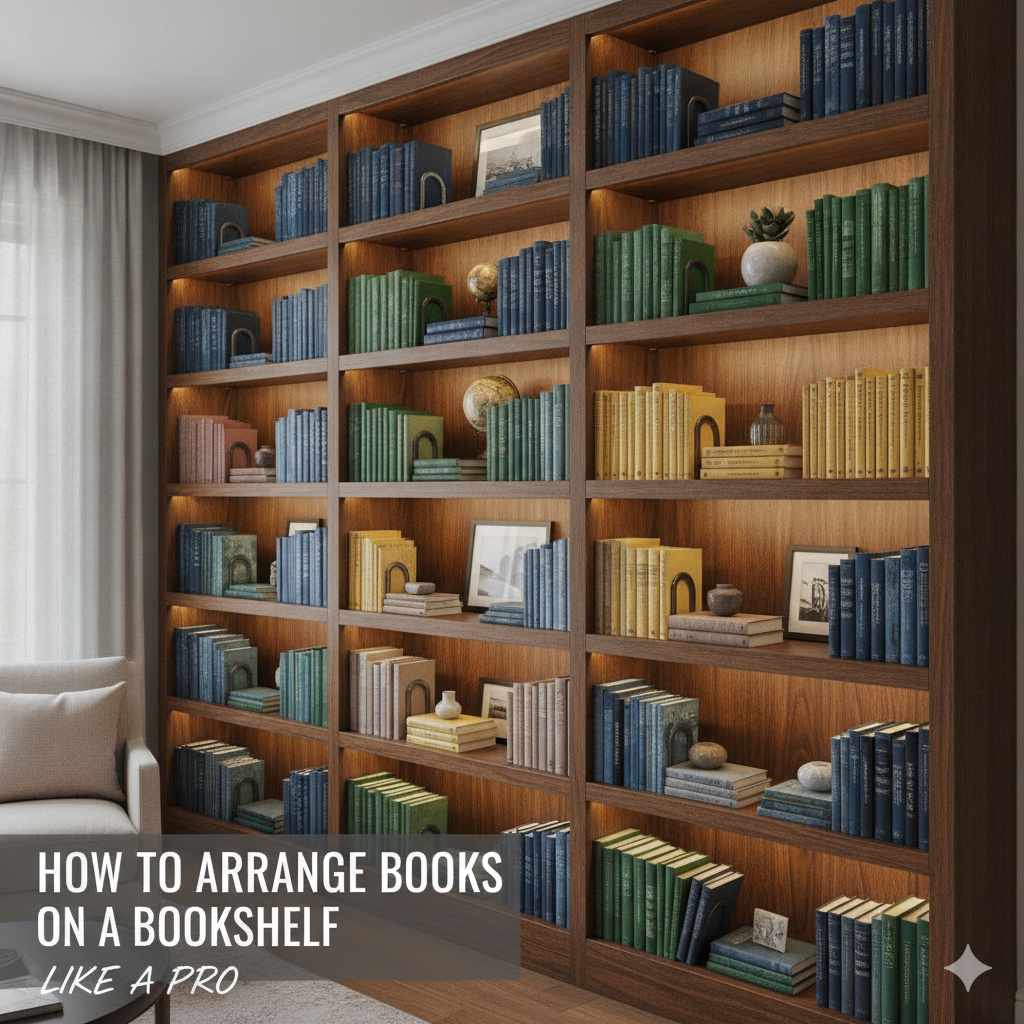
One of the most striking ways to make your bookshelves look like a pro did them is by using color. This can be done in a few ways. You can group books by color. Or you can use your decorative objects to add pops of color.
Grouping books by color can be really impactful. You can create rainbow effects. Or you can try monochromatic shelves, using only shades of one or two colors. This can create a very clean and modern look. It’s especially effective with spines that have a lot of variation in their design.
Some people love this. Others find it a bit too rigid. If you do this, consider what you read most. You don’t want to hide your favorite books behind a color scheme you don’t enjoy. Another option is to group books with similar spine colors together. This gives a sense of order without being too strict.
If grouping by color feels like too much, use your decor for color. Pick a few items that share a color. Place them on different shelves. This can tie the whole bookshelf together visually. For example, a blue vase on one shelf, a blue picture frame on another, and a book with a blue cover placed strategically.
When arranging by color, remember to still mix your stacking methods. A horizontal stack of blue books can look amazing. Standing up a group of red books next to it creates contrast. This combination of color and form makes for a truly stunning display.
Don’t forget the spine of the book! Many modern books have very plain spines. If you have a lot of these, consider displaying some books with the pages facing out. This shows off the raw edge of the paper. It can create a more neutral texture. Sometimes, this is a great way to add a subtle color or visual element when the spines don’t match your scheme.
Varying Heights and Sizes
Just like mixing stacking methods, varying the heights and sizes of your books is crucial. If all your books are the same height, the shelf will look like a solid block. This is not visually interesting.
Think about how your eye moves. It naturally follows lines and shapes. When you have a lot of the same height, the eye stops. When you have variation, it moves. This makes the bookshelf feel more alive.
Tall books can anchor a shelf. Shorter books can fill in spaces. Horizontal stacks create lower levels. You can place a small decorative item on top of these. This adds height in a different way. Use your larger, thicker books to create visual weight. Place them at the bottom or in the center of a shelf. Then, use smaller books to fill in around them.
Consider the overall composition of each shelf, and then the whole bookshelf. Are there too many tall books on one side? Does one shelf look too crowded with small books? Try to spread out the different sizes. This creates a more pleasing, balanced look.
This variation also helps with accessibility. When books are all crammed in at the same height, it can be hard to pull one out. Having different heights creates small gaps. It makes it easier to grab the book you want.
Creating Visual Flow and Balance
When you look at a beautifully arranged bookshelf, your eye doesn’t just stop. It moves around. It takes in different elements. This is what we mean by visual flow. Balance is about making sure no one part of the shelf looks too heavy or too empty.
Think about arranging items on a table. You don’t put everything on one side. You spread things out. The same applies to bookshelves. If you have a big, tall book on the left side of a shelf, balance it with something of similar visual weight on the right side. This doesn’t have to be another tall book. It could be a stack of smaller books, or a decorative object.
Consider the “rule of thirds.” Imagine dividing each shelf into three sections. Try to place your main visual elements in these sections. This helps avoid a cluttered or too-sparse look. It guides the eye naturally.
Also, think about the negative space. This is the empty space on the shelf. Too much empty space makes a shelf look bare. Too little makes it look cluttered. You want enough space so that each item can breathe. This allows the eye to appreciate each book and object.
When arranging, step back often. Look at the shelf from a distance. Does it feel balanced? Does your eye move around nicely? Make small adjustments as needed. It’s like composing a picture.
Balancing Act:
Visual Weight
Balance large items with other visual elements.
Negative Space
Allow room for items to stand out.
Rule of Thirds
Place key items in thirds for good composition.
Incorporating Books You Don’t Read (But Love to Look At)
Let’s be honest. Not all the books we own are ones we reread regularly. Some are beautiful editions. Others are reference books we seldom open. These can be fantastic assets for bookshelf styling!
These “display” books are perfect for strategic placement. Coffee table books are often large and visually stunning. Stack them horizontally. Their covers can be works of art. Place them where they can be seen. This adds color and sophistication.
Vintage books or books with unique bindings can add charm. Even if you don’t read the content, their aesthetic value is high. Consider displaying them with their spines out, or perhaps even with pages showing if the paper edge is interesting.
You can also use these special books to anchor sections. A large, beautiful art book can be placed prominently. Then, arrange smaller, more commonly read books around it. This draws the eye to the statement piece. It then leads the eye through the rest of the arrangement.
Don’t feel guilty about using books for looks. Homes are meant to be lived in and enjoyed. If a book adds beauty to your space, it’s serving a purpose. Just make sure you still have easy access to the books you actually read.
The “Bookend” Technique
Bookends are not just functional; they are styling tools. They help create neat sections on your shelves. They also add visual interest and can tie together different elements.
You can use traditional bookends. These can be metal, wood, ceramic, or stone. Choose ones that match your decor. Place a pair of bookends. Then, stack a few books horizontally between them. This creates a contained unit. You can then place decorative items on top of the horizontal books.
You can also create your own bookends. A stack of two or three horizontal books can act as a bookend. This is especially effective for holding up a group of vertical books. It looks very organic and built-in.
Consider using objects as bookends. A small statue on one side and a pot on the other can frame a collection of books. This adds personality and breaks away from the expected. The key is that these “bookends” should be sturdy enough to hold the books upright.
When using bookends, think about the space they create. They help define sections. This can be useful for organizing different genres or subjects. It also makes the shelf look more intentional and less haphazard.
Creative Bookend Ideas:
- Stylish metal or wooden bookends.
- A stack of horizontal books.
- Small sculptures or statues.
- Decorative boxes or containers.
- Even sturdy ceramic pots.
When to Consider Books Facing Out
Most of the time, books are displayed with their spines facing out. This is how we identify them. It’s how we know what they are. However, there are times when turning books around, so the pages face out, can be a great styling choice.
This is particularly effective when the book covers are visually busy or don’t fit your desired color scheme. The page edges can offer a neutral, textured look. This creates a softer, more muted aesthetic. It can make a shelf look very clean and minimalist.
It’s also a good option for books with plain, uninteresting spines. If all your books have white spines and you want a bit more visual depth, turning them around can create subtle variations in tone and texture. The edges of the pages can range from bright white to aged cream, adding a natural, organic feel.
When you display books this way, think about the page edges. Are they clean and crisp? Or are they yellowed and aged? This will affect the overall look. You can even arrange them so that some are bright white and others are more aged for a subtle contrast.
This technique works best when you use it sparingly. If you turn all your books around, you lose the ability to quickly identify them. It’s a styling choice. Use it for specific books or sections where you want a particular look. It can be a great way to add a subtle, sophisticated touch.
Organizing by Subject or Genre
Beyond aesthetics, many people want their bookshelves to be functional. Organizing by subject or genre is a fantastic way to do this. It makes it easier to find the book you’re looking for. It also creates a sense of order that is pleasing to the eye.
Start by thinking about the types of books you have. Do you have a lot of fiction? History books? Cookbooks? Art books? You can create dedicated sections for each. Within fiction, you might further divide by genre, like mystery, fantasy, or literary fiction.
When you group them, try to keep them together on the same shelf or section of shelves. This creates clear zones. For example, one shelf could be for all your cookbooks. Another could hold your history collection.
This type of organization can also work well with color. You might have a section of fiction books that are mostly blues and greens. Next to them, you could have your art books, which might be more colorful and varied. This combines practical organization with visual appeal.
Don’t forget to still apply styling principles. Within your genre sections, mix vertical and horizontal stacking. Add a small decorative item that fits the theme. For example, a small globe on a shelf of travel books. Or a tiny whisk on a cookbook shelf.
This method is great for large collections. It brings order to chaos. It makes your bookshelves a resource, not just a decoration. It shows you know your books and your interests.
Genre Grouping Ideas:
- Fiction (by sub-genre like Mystery, Sci-Fi, Romance)
- Non-Fiction (History, Science, Biography)
- Cookbooks & Lifestyle
- Art & Photography
- Travel Guides
Putting It All Together: A Step-by-Step Approach
Ready to tackle your own bookshelves? Here’s a simple way to get started. It combines all the ideas we’ve discussed.
Step 1: Empty the Shelves. Yes, all of them. This is the best way to see your space clearly. Wipe down the shelves to remove dust.
Step 2: Sort Your Books. Decide what you want to keep, what to donate, and what might be just for display. Group books you read often, books you rarely read, and decorative books.
Step 3: Plan Your Zones. Decide if you want to group by color, genre, or a mix. Think about where you want your statement books or decorative objects.
Step 4: Start Placing Books. Begin with larger books or sections you want to define. Mix vertical stacks with horizontal stacks. Create visual breaks.
Step 5: Add Decorative Objects. Place your chosen items strategically. Use them to fill gaps, add color, or create focal points. Remember balance. Don’t overdo it.
Step 6: Refine and Adjust. Step back and look. Does it flow well? Is it balanced? Make small changes. Move things around. This is the most important part of making it look professional.
Step 7: Add Finishing Touches. Maybe a small plant, a framed photo, or a unique bookend. These small details make a big difference.
Remember, this is your space. The goal is to make it look beautiful and reflect your personality. Have fun with it!
When Bookshelf Arrangements Go Wrong (And How to Fix Them)
Sometimes, even with the best intentions, a bookshelf can end up looking worse than before. This usually happens when a few key principles are missed. Let’s look at common problems and how to fix them.
Problem: The “Wall of Spines.” All books are standing upright, creating a monotonous line.
Fix: Introduce horizontal stacks. Break up the long lines. Use larger books to create visual anchors. Add decorative items.
Problem: Overcrowding. Shelves are packed so full books are hard to remove.
Fix: Take some books off. Rotate books seasonally if you have many. Be selective about what stays on display.
Problem: Too Much Clutter. Too many decorative objects. They compete with the books.
Fix: Remove half the objects. Choose a few statement pieces instead of many small items. Let the books be the stars.
Problem: Poor Balance. One side of the shelf looks heavy. The other looks empty.
Fix: Rearrange items. Move heavier objects to the lighter side. Distribute visual weight more evenly across the shelf.
Problem: Everything is the Same Size. No variation in height.
Fix: Use horizontal stacks to create lower levels. Stand up smaller books next to taller ones. Add decorative items of varying heights.
The key to fixing bookshelf problems is often simplicity. Less is often more. Take a step back and look with fresh eyes. What feels off? Usually, the solution involves removing items or rearranging them for better flow and balance.
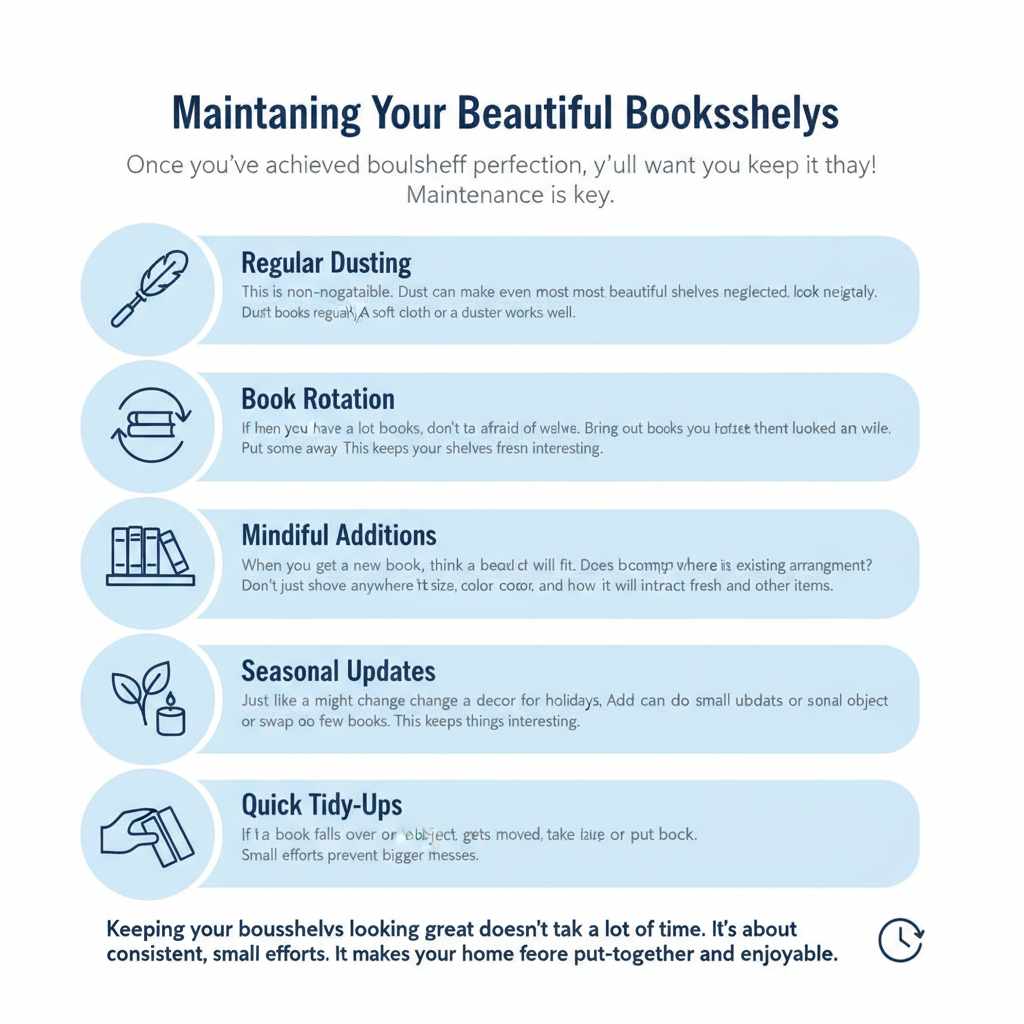
Maintaining Your Beautiful Bookshelves
Once you’ve achieved bookshelf perfection, you’ll want to keep it that way! Maintenance is key.
Regular Dusting: This is non-negotiable. Dust can make even the most beautiful shelves look neglected. Dust books and shelves regularly. A soft cloth or a duster works well.
Book Rotation: If you have a lot of books, don’t be afraid to rotate them. Bring out books you haven’t looked at in a while. Put some away temporarily. This keeps your shelves fresh and interesting.
Mindful Additions: When you get a new book, think about where it will fit. Does it complement the existing arrangement? Don’t just shove it anywhere. Consider its size, color, and how it will interact with other items.
Seasonal Updates: Just like you might change your decor for holidays, you can do small updates on your shelves. Add a seasonal object or swap out a few books. This keeps things interesting.
Quick Tidy-Ups: If a book falls over or an object gets moved, take a moment to put it back. Small efforts prevent bigger messes.
Keeping your bookshelves looking great doesn’t take a lot of time. It’s about consistent, small efforts. It makes your home feel more put-together and enjoyable.
Frequent Questions About Bookshelf Arrangement
Can I arrange books by height only?
While grouping by height can create a neat look, it’s best to mix it with other methods for more visual interest. Relying only on height can make shelves look flat and uninspired. Mixing heights with horizontal stacks and decorative items adds depth.
How many decorative objects should I use?
There’s no exact number. The goal is balance. Aim for about 20-30% of your shelf space to be decorative objects. You want them to complement your books, not overwhelm them. Less is often more.
What if I have a lot of very small books?
Small books can be tricky. You can group them together. Consider using a horizontal stack of larger books as a base. Or, use sturdy bookends to keep them from toppling. Smaller decorative items can also work well on shelves with smaller books.
Should I remove books from their dust jackets?
This depends on the book and your style. If the dust jacket is plain or damaged, consider removing it. If the cover art is beautiful, keep it on. Sometimes, removing the jacket reveals a stunning hardcover design underneath!
Is it okay to put books with their pages facing out?
Yes, absolutely! This is a great technique when the page edges offer a desired texture or color, or when the book covers are too busy. It creates a softer, more minimalist look.
How often should I rearrange my bookshelves?
There’s no set schedule. Some people like to refresh them every few months. Others do it annually. The most important thing is to do it when you feel your shelves need a refresh or when you get new books. Even small adjustments can make a big difference.
Final Thoughts on Your Bookshelf Masterpiece
Creating a beautifully arranged bookshelf is a journey, not a destination. It’s about making your space feel personal and inviting. Don’t be afraid to experiment. Your bookshelves should tell your story. They should bring you joy every time you look at them. Enjoy the process and let your creativity flow!
Sponsored / affiliate links. As an Amazon Associate I earn from qualifying purchases. I may earn additional commission from eligible campaigns.Products related to this article