Monitor Vs Bookshelf Speakers: Essential Showdown
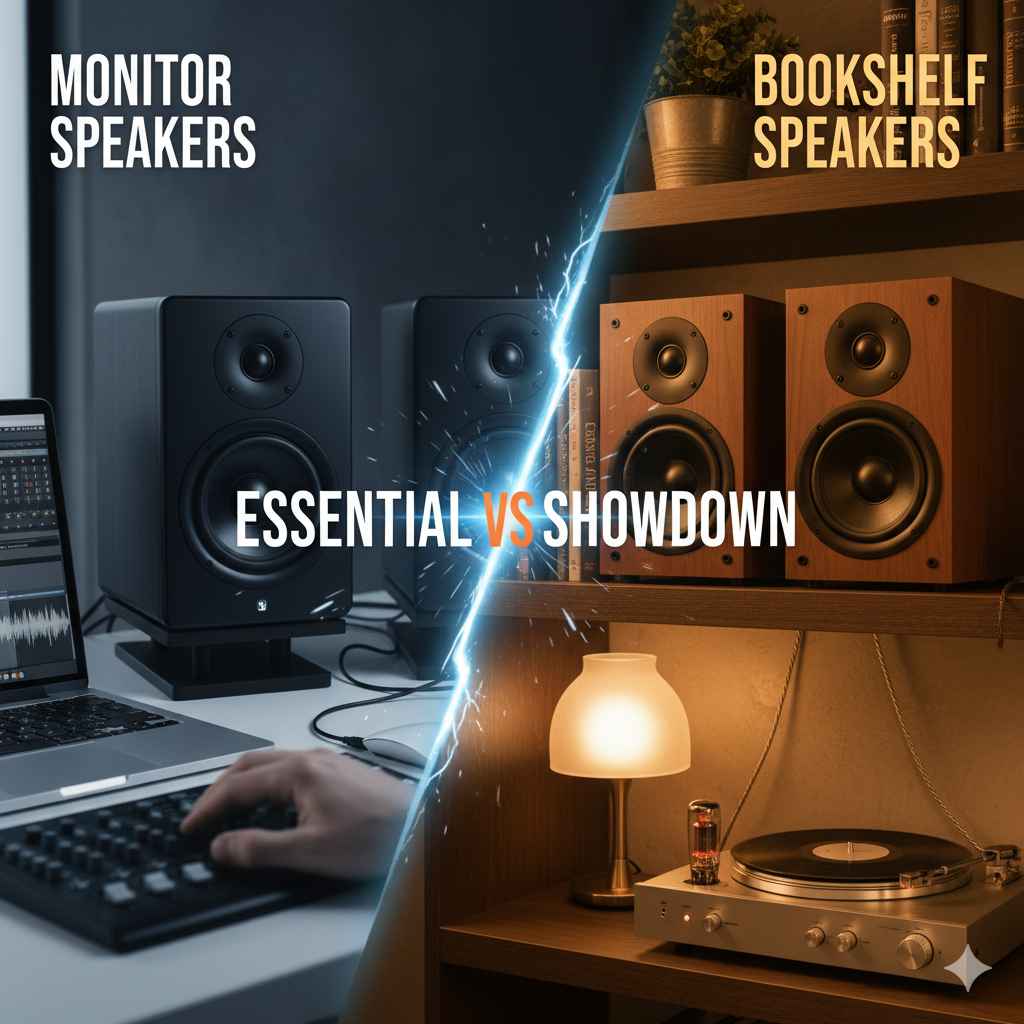
For critical listening and accurate sound reproduction, studio monitors are generally the right choice. If your goal is room-filling volume, musical enjoyment across different genres, or simple setup, well-regarded bookshelf speakers often provide better overall sonic depth for home use.
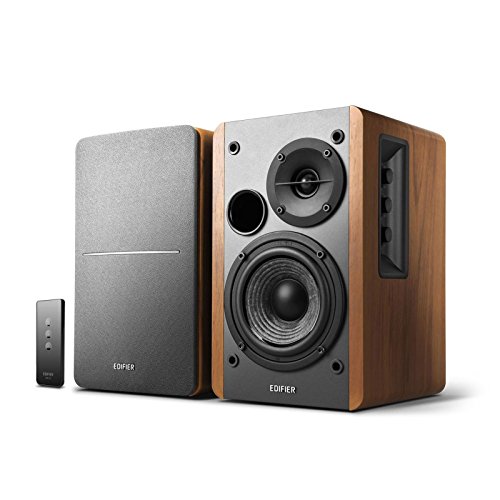
Edifier
Edifier R1280T Powered Bookshelf Speakers -2.0 Near…
- 2 x AUX INPUT - Convenient connection to any device that has a 3.5mm headphone output or dual RCA output. Connect to two devices v…
- STUDIO SOUND QUALITY - Natural sound reproduction from 13mm silk dome tweeter and 4 inch full range unit
- REMOTE CONTROL - Adjust volume at your figure tips. Bass and treble control located on the side of main speaker.
As an Amazon Associate I earn from qualifying purchases.
For a closely related home or decor topic, How To Store Books Without A Bookshelf Creatively gives readers a useful next step.
Choosing new speakers can feel like a confusing roadside repair puzzle. You see two common types everywhere: “monitors” and “bookshelf speakers.” Both sit nicely on a shelf, but they do very different jobs. Are they the same thing? Not quite! Picking the wrong one might mean your music doesn’t sound right, or your movie dialogue gets lost. Don’t worry, we’ll make this simple. We’re going to break down exactly what each speaker is built for, like checking the engine specs before a long drive. By the end, you’ll know which speaker fits your needs perfectly.
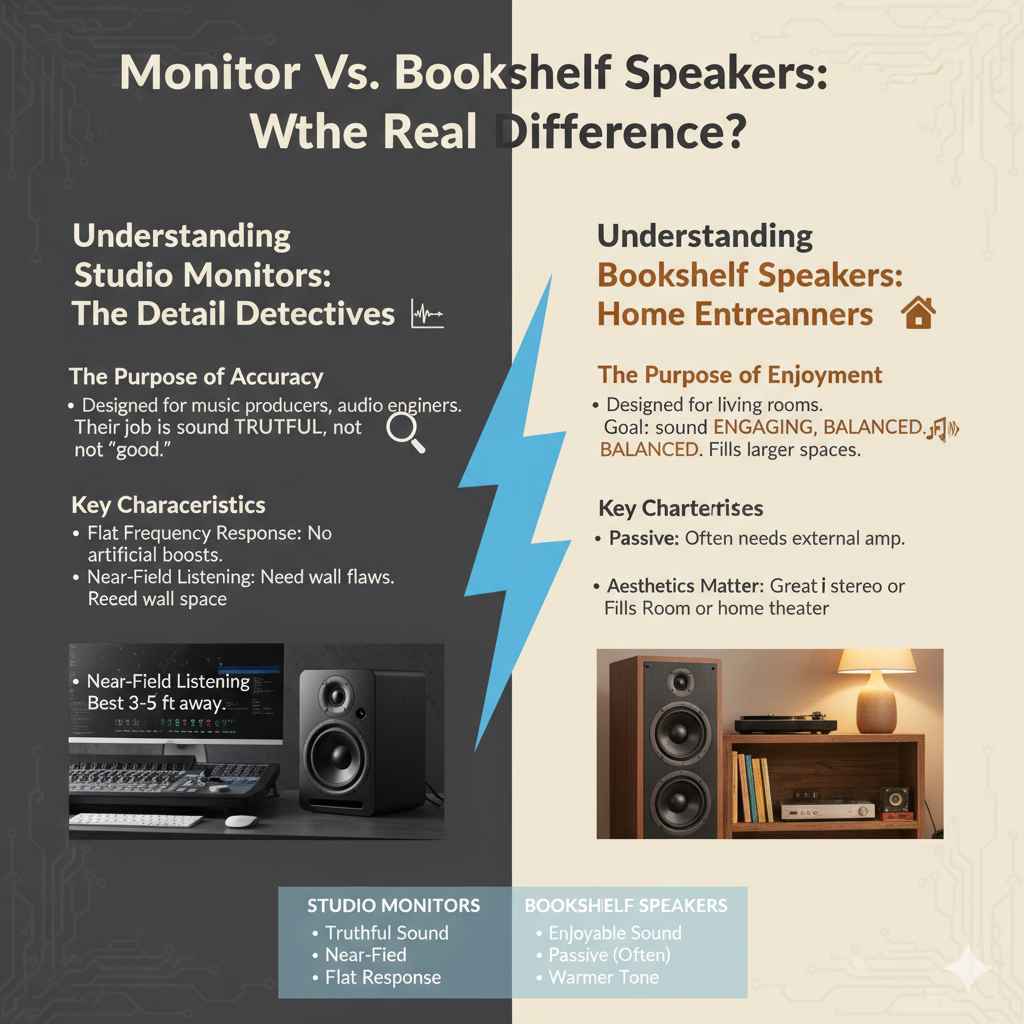
Monitor Vs Bookshelf Speakers: What’s the Real Difference?
When you look at a pair of studio monitors and a pair of high-quality bookshelf speakers sitting side-by-side, they can look very similar. Both are usually two-way designs (woofer and tweeter) and are relatively compact. However, their intended purpose changes how they are built, tuned, and what electronics they include.
Understanding Studio Monitors: The Detail Detectives
Think of a studio monitor as a highly accurate, honest mechanic. They are designed specifically for music producers, audio engineers, and serious hobbyists. Their main job is not necessarily to sound “good” in a traditional sense, but to sound truthful.
The Purpose of Accuracy
In a recording studio, engineers need to hear exactly what is being recorded—every tiny flaw, hiss, or bass issue. If the speakers color the sound (making the bass sound warmer or the treble brighter), the engineer will mix the song incorrectly, and it will sound bad everywhere else.
Monitors are engineered for a very flat frequency response. This means that if a song has zero extra bass mixed in, the monitor should output zero extra bass. They aim for minimal artistic interpretation.
Key Characteristics of Studio Monitors
- Flat Frequency Response: They reproduce sound without artificially boosting or cutting certain frequencies.
- Near-Field Listening: Most monitors are designed to sound best when you are sitting close to them (usually 3 to 5 feet away).
- Active vs. Passive: Most modern studio monitors are active, meaning the amplifier is built right into the speaker cabinet. This simplifies setup since you don’t need a separate receiver or amplifier—just plug them into your wall power and your audio source.
- Port Placement: Many monitors feature rear-firing bass ports, which means you need to be careful about how close you place them to a wall.
Understanding Bookshelf Speakers: The Home Entertainers
Bookshelf speakers are designed for the living room, office, or den. Their goal is to make music, movies, and TV shows sound engaging, balanced, and great within a typical room environment.
The Purpose of Enjoyment
Bookshelf speakers often have a slightly warmer or more “musical” sound signature than studio monitors. They might subtly lift the lower midrange or smooth out the very highest treble frequencies to make general listening more pleasant over long periods. They are designed to fill a larger space dynamically.
Key Characteristics of Bookshelf Speakers
- Tuned for the Room: They are often designed to cope better with reflections from walls and furniture common in homes.
- Passive Design (Often): Many traditional bookshelf speakers are passive. This means they require an external amplifier or A/V receiver to power them. This offers flexibility if you already own an amp, but adds another component to the setup.
- Aesthetics Matter: Bookshelf speakers usually come in various wood veneers or finishes designed to match your home décor.
- Versatility: They are great for stereo music listening but often integrate easily into 5.1 or home theater setups.
Monitor vs Bookshelf Speakers: Side-by-Side Comparison
To really nail down the differences, let’s look at them head-to-head across the critical factors an everyday driver (listener) cares about.
| Feature | Studio Monitors | Bookshelf Speakers |
|---|---|---|
| Primary Goal | Accurate, flat sound reproduction (truth). | Enjoyable, room-filling, musical sound (pleasure). |
| Amplification | Usually Active (Amp built-in). | Usually Passive (Requires external Amp/Receiver). |
| Frequency Response | Very flat; uncolored. | Slightly tailored or colored for listening enjoyment. |
| Ideal Listening Distance | Near-field (3–5 feet). | Mid-field (Your couch or desk). |
| Setup Complexity | Simple; just plug into power and source. | Medium; requires wiring to an external amplifier. |
| Typical Cost | Often higher per pair for equivalent quality due to built-in electronics. | Can be cheaper if reused with an existing receiver. |
When Should You Choose Studio Monitors?
If your primary use for these speakers involves detailed work or critical listening, the monitor is your champion. Think of this choice like needing precision tools versus general-purpose wrenches.
Scenarios Where Monitors Shine
- Home Recording or Podcasting: If you are cutting tracks, mixing vocals, or editing podcasts, you need to hear exactly what you record. A flat response ensures your edits translate well everywhere else.
- Critical Mixing/Mastering: Professionals rely on monitors to ensure the volume, EQ, and panning are perfectly balanced before release.
- Small Office or Desktop Setup: Because they are often active and designed for near-field listening, monitors are fantastic when placed right next to your computer screen on your desk, taking up minimal space.
- Testing Audio Files: If you are an audiophile who constantly compares different versions of the same track, the monitor shows you the cold, hard truth of the recording quality.
A Quick Word on Placement for Monitors
Placement is crucial for monitors to perform as designed. You want an equilateral triangle between your head and the two speaker cones. Also, investigate the acoustic properties of your room. For instance, organizations like the Association of Noise Control Engineering (ANCE) often share principles on mitigating unwanted room reflections, which directly impact monitor performance.
When Should You Choose Bookshelf Speakers?
If you are looking for awesome sound quality for casual listening, watching TV, or just filling your living room with rich music, bookshelf speakers usually offer the best overall value and experience for the average home user.
Scenarios Where Bookshelf Speakers Win
- General Music Listening: You want your favorite rock anthems to sound powerful and warm, not overly clinical.
- Home Theater Base: When paired with an A/V receiver, they form the backbone of a great surround sound system for movies and sports.
- Larger Rooms: Because they usually have larger enclosures and rely on external power, traditional passive bookshelf speakers can often be driven louder and fill a bigger space more convincingly than many smaller near-field monitors.
- Aesthetics and Simplicity: If you hate seeing extra boxes (built-in amplifiers) or need a speaker that looks great on a stand next to your favorite piece of furniture, the traditional bookshelf design often wins.
The Amplifier Connection (Passive Speakers)
Remember, if you go passive bookshelf, you need an amplifier. Don’t just plug them into the wall! You need an amp rated appropriately for the speaker’s power handling (measured in watts) and impedance (Ohms). Overloading a speaker can cause distortion or permanent damage—treat your amp respectfully, just like you keep your vehicle’s oil at the right level.
Understanding Power: Active vs. Passive
This is often the most confusing part for beginners when comparing monitor vs bookshelf speakers. Power management dictates everything: setup, cost, and sound quality.
Active Speakers (Usually Monitors)
Active speakers contain the amplifier circuits inside their own cabinet. They are ready to go right out of the box, provided you have a source (like a laptop or turntable with a phono preamp).
Pros of Active Speakers:
- Perfectly matched components (amp and speaker driver) from the factory.
- Fewer cables and less clutter on your desk or stand.
- Often include inputs like USB or Bluetooth integration.
Cons of Active Speakers:
- If the amplifier fails, you usually need to service the speaker unit itself.
- Less flexibility to upgrade or change amplifiers later.
Passive Speakers (Usually Bookshelf)
Passive speakers rely entirely on an external source of power—an amplifier or A/V receiver—to drive them. The signal comes from the receiver, through speaker wire, directly to the passive crossover network inside the speaker cabinet.
Pros of Passive Speakers:
- Greater flexibility to choose your amplifier (you can upgrade the power separately).
- Longer lifespan potential, as amplification failures often happen outside the speaker cabinet.
- Standard for complex home theater setups.
Cons of Passive Speakers:
- Added cost and complexity of buying a separate receiver/amp.
- Requires running speaker wire, which can be messy.
The Importance of Port Location
When installing any speaker, but especially monitors, knowing where the bass port (the hole that helps move air for low frequencies) is located matters hugely.
- Rear-Ported Speakers: These often rely on placing the speaker a specific distance away from the wall (usually 1 to 3 feet) to prevent the bass frequencies from sounding boomy or confusing.
- Front-Ported Speakers: These are more forgiving and can safely sit flush against a wall or bookshelf edge, making them slightly easier for tight spaces.
- Portless/Sealed Speakers: These do not have a port. They offer extremely tight, accurate, but sometimes less voluminous bass. They are great for small rooms where wall placement is difficult.
For desk-based setups, front-ported or sealed bookshelf/monitor designs often save you headaches regarding bass buildup.
Setting Up for Success: Simple Steps for Either Choice
Regardless of whether you choose the accuracy of a monitor or the musicality of a bookshelf speaker, setting them up correctly ensures you get the performance you paid for. Think of setup time as preventative maintenance for your ears!
Step-by-Step Placement Guide (General)
- Determine Listening Position: Sit where you normally listen (desk chair or sofa). Mark this spot. This is your “sweet spot.”
- Establish the Triangle: Imagine a triangle connecting your listening position and the two speakers. For the best soundstage, the distance between the speakers should roughly equal the distance from each speaker to your head.
- Height Check: The tweeter (the small driver for high notes) should ideally be at or very close to your ear level when you are seated. Speaker stands are often mandatory for achieving this, especially with larger bookshelf models.
- Distance from Walls: Pull the speakers out from the wall a reasonable distance (at least 1 foot, unless they are intentionally front-ported). If the bass sounds muddy or seems to boom too much, pulling them further out often fixes it immediately.
- Toe-In Adjustment: This means angling the speakers slightly inward (pointing them toward your head). Start with them pointing directly forward, then angle them in slightly until the center image (where the vocals seem to come from) locks in between the left and right speakers.
Budgeting for Your Audio Upgrade
When comparing costs, remember that active monitors include the amplifier budget, while passive bookshelf speakers require you to factor in a separate receiver or amp. Here is a simple comparison of expected costs for entry-level, quality gear.
| Component | Entry-Level Estimate (USD) | Notes |
|---|---|---|
| Pair of Active Monitors (5-inch) | $300 – $500 | Includes amps; ready to use. |
| Pair of Passive Bookshelf Speakers | $150 – $350 | Requires external amplification. |
| Entry-Level Stereo Amplifier (for Passive) | $200 – $400 | Needed to power passive speakers. |
| Speaker Wire & Cables | $30 – $50 | Necessary for passive setups. |
As you can see, the initial cost might look similar, but the active monitor package is much simpler. If you already have a receiver that works well, going passive bookshelf might save you money upfront.
Deciding Based on Your Primary Audio Source
Your existing gear heavily influences which speaker type makes the most sense. Compatibility is like making sure your new tire fits your existing wheel hub—if it doesn’t fit the system, it won’t work right.
If You Use a Computer or Laptop as Your Main Source
Desktop setups heavily favor active studio monitors. They often feature USB or RCA inputs that connect directly to your computer’s sound card or interface. They save desk space because you don’t need a bulky receiver hiding somewhere.
If You Use a Turntable or Existing Stereo Receiver
If you already own a great stereo receiver (maybe one you got from your parents or use for your TV), then passive bookshelf speakers are a natural fit. You connect the receiver to the speakers via speaker wire, and you leverage the power and processing already in your system.
If you have a turntable, make sure your receiver has a dedicated “Phono” input, or you will need to buy an external phono preamp before connecting to either system.
Can Bookshelf Speakers Act Like Monitors?
Yes, to an extent, but with caveats. Some very high-end bookshelf speakers are voiced so neutrally that they perform just as accurately as professional monitors, especially those designed for home theater calibration rather than pure studio work.
However, the biggest hurdle is amplification. If you pair a very musical, slightly bass-heavy bookshelf speaker with an already warm-sounding amplifier, you defeat the purpose of sonic neutrality. You get a system that sounds lovely but masks potential problems in a recording.
Can Monitors Act Like Bookshelf Speakers?
Yes, they can be used for home listening, but be prepared for a potentially different experience:
- The Sound Might Be “Too Honest”: If you play older, poorly recorded music through high-end monitors, you will hear every single flaw. It can be jarring if you are used to more forgiving speakers.
- Bass Limitations: Smaller near-field monitors might struggle to provide the deep, room-filling bass that larger bookshelf speakers can handle, especially when placed far away from the listener.
- Power Management: Since they are active, you are always relying on the built-in amp, which is optimized for close listening, not necessarily loud, distant background music.

Frequently Asked Questions (FAQ)
Q1: Which speakers are better for bass, monitors or bookshelf speakers?
Generally, larger high-quality bookshelf speakers designed for home use can produce deeper and more powerful bass because they often have larger cabinets and are paired with powerful external amplifiers. Monitors prioritize tight, accurate bass over sheer volume or depth.
Q2: Do I need a separate receiver if I buy studio monitors?
No. Most studio monitors sold today are “active,” meaning the amplifier is built into the speaker cabinet. You plug them into the wall for power and then connect them directly to your audio source (like a computer or preamp). This is a major setup advantage.
Q3: Are studio monitors too harsh for casual music listening?
They can sound harsh if you are expecting colored, bass-heavy sound. Monitors aim for flatness. If you listen to a lot of music that wasn’t perfectly produced, the monitors will reveal those harsh treble peaks or weak spots, which some listeners find fatiguing over long sessions.
Q4: If I want speakers for my TV system, should I get monitors or bookshelf speakers?
Bookshelf speakers are usually the better, more flexible choice for TV and home theater setups. They integrate easily with A/V receivers, can be expanded into surround sound systems, and are designed to fill a room with balanced audio. While studio monitors can work for TV audio at close range, they are not built for multi-speaker theater systems and may lack the scale and connectivity options that passive bookshelf speakers provide.
Q5: Which is better for beginners who just want simple plug-and-play sound?
Active studio monitors are typically the easiest starting point for beginners. Since the amplifier is built into the speakers, you only need a power outlet and a connection to your audio source (computer, audio interface, or media player). Bookshelf speakers can also be beginner-friendly, but passive models require an amplifier or receiver, extra wiring, and a bit more setup knowledge.
Conclusion
When comparing monitor vs bookshelf speakers, the right choice really comes down to your main goal. Studio monitors are precision tools built for accuracy, detail, and close-range listening. They are perfect for music production, editing, podcasting, and anyone who wants to hear recordings exactly as they are. On the other hand, bookshelf speakers are designed for enjoyment, offering warmer sound, stronger room presence, and better compatibility with TVs and home theater systems.
If your setup revolves around a desk, computer, or creative work, studio monitors are likely the smarter and simpler option. If your focus is filling a living room with music, improving TV audio, or building a home theater, bookshelf speakers will usually deliver a more satisfying and flexible experience.
In the end, neither is universally “better.” Think about how and where you listen most often. Choose accuracy for creation, or choose musicality for relaxation. Once you match the speaker type to your daily habits, you’ll get sound that feels just right every time you press play.
Related pick: Check today's price on Amazon
Products related to this article
Sponsored / affiliate links. As an Amazon Associate I earn from qualifying purchases. I may earn additional commission from eligible campaigns.