Shower Bench Vs Chair: Key Differences You Must Know
It feels like a simple choice, right? You’re looking at your bathroom, maybe after a long day, and you know you need a little extra support in the shower. You see a shower bench, you see a shower chair, and you think, “They’re pretty much the same thing, aren’t they?”
For another table or room-layout decision, Small Chair and Table Set for Balcony: Buys gives readers a useful follow-up.
For a related bathroom or plumbing question, What is a Chair Height Toilet helps readers check the next detail.
For a related bathroom or plumbing question, Standard vs Chair Height Toilet: 14-15in vs 17-19in helps readers check the next detail.
But then you pause. You start to wonder. What are the real differences?
Is one better than the other for what you need? This is where things can get a bit confusing, and maybe a little frustrating. You just want to feel safe and comfortable in your own home.
This guide is here to clear all that up. We’ll walk through exactly what makes a shower bench different from a shower chair. We’ll cover how they work, who they’re best for, and what to look for.
By the end, you’ll know which one is the right fit for your shower space and your needs. Let’s make this an easy decision.
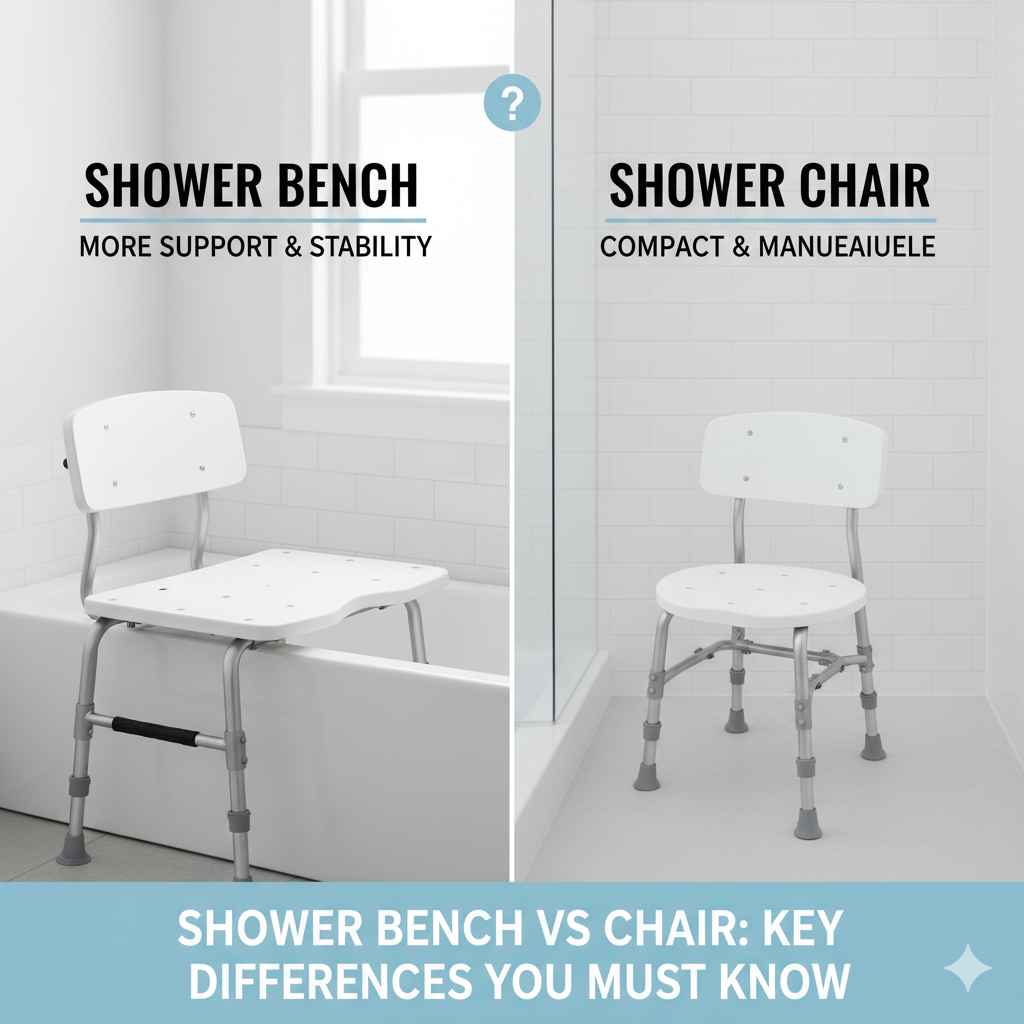
A shower bench offers a wider seating area for more movement or for a caregiver to assist. A shower chair typically has a backrest and armrests for more direct support and stability, often for individuals needing significant assistance. Both aim to improve shower safety and comfort.
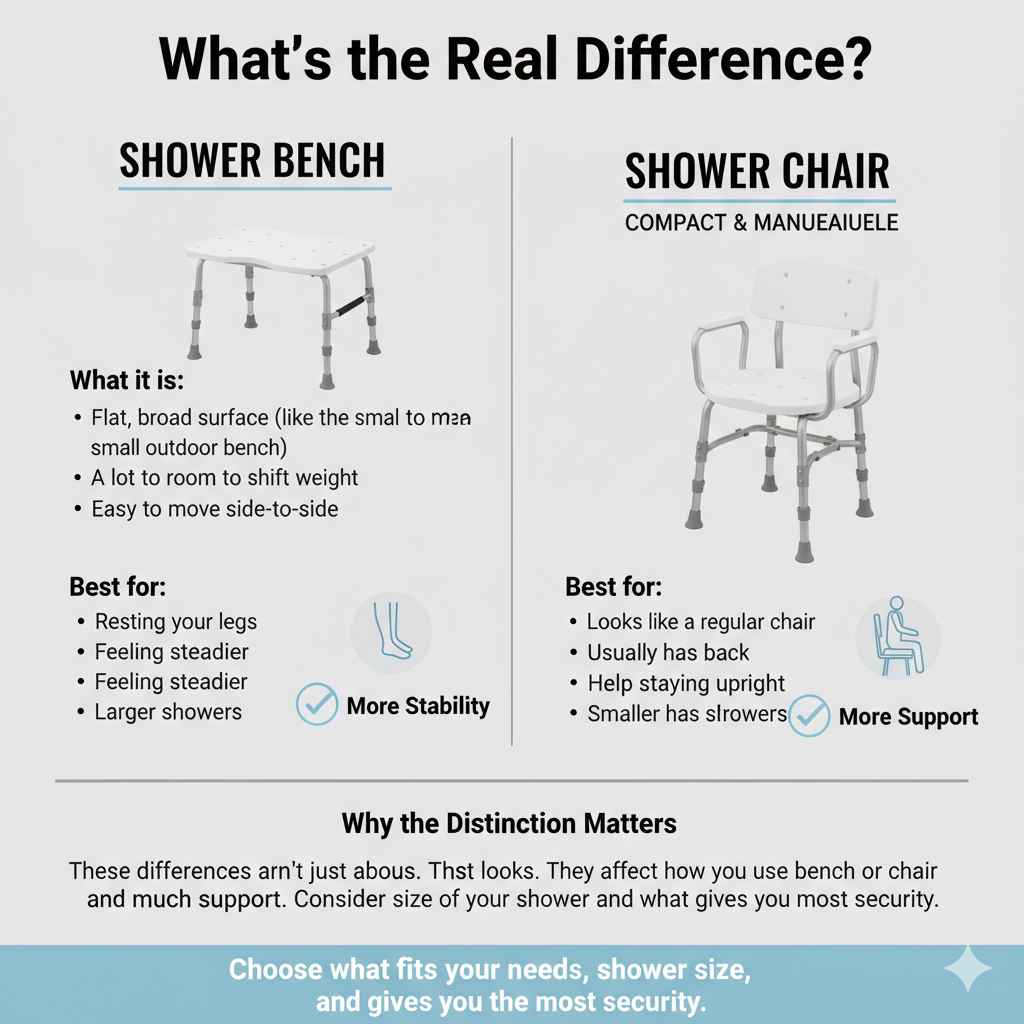
What’s the Real Difference?
At first glance, a shower bench and a shower chair might look alike. They both give you a place to sit down in your shower. This is a big help for many people.
It stops you from having to stand for long periods. It can also make you feel steadier.
But there are some key differences. Think of it like a stool versus a small chair. A shower bench is usually a flat, broad surface.
It’s like a small, sturdy bench you’d put outside. It gives you a lot of room to shift your weight. You can also easily move from one side to the other.
A shower chair, on the other hand, often looks more like a regular chair. It usually has a back. It might also have armrests.
These features give you more direct support. They help you lean back or get up more easily. This can be very important if you need a lot of help.
Why the Distinction Matters
These differences aren’t just about looks. They affect how you use the bench or chair. They also change how much support you get.
A bench might be great if you just need to rest your legs a bit. A chair might be better if you need help staying upright.
The size of your shower is another factor. Some benches are quite wide. They might not fit in a small shower.
Chairs can also vary in size. We need to think about what fits best and what gives the most security.
Let’s break down each one more. Understanding these parts will help you pick the right one.
My Own Shower Struggle
I remember helping my aunt Sarah set up her bathroom after she had a fall. She’s always been so independent. The idea of needing something extra in her shower made her feel down.
But standing was getting too hard. Her knees would ache. She worried about slipping.
I went online and saw all these options. There were benches and chairs. Some looked like little thrones.
Others were very basic. I bought what I thought was a shower chair. It had a back and arms.
It seemed super safe. When it arrived, it was quite bulky.
When I brought it over, she looked at it. She said, “Oh, that’s… a lot.” She tried to sit on it. It was okay, but she felt a bit trapped.
The arms were too close. She couldn’t shift her weight easily. She felt like she was stuck on it.
It wasn’t the comfortable, freeing feeling we wanted. It was a bit of a letdown. That’s when I really started to dig into the details of each type.
Shower Bench: The Broad Support
Think of a shower bench as your stable platform. It gives you a wide area to sit. This means you have more space to move around.
You can slide side to side with ease.
Key Features:
- Wide Seat: Usually much wider than a chair.
- No Back or Arms: Most do not have these. Some models do offer backs.
- Versatile Use: Good for resting, shaving legs, or when a caregiver needs space to help.
- Stability: Designed to be very stable on wet surfaces.
Pros:
- Lots of room to maneuver.
- Can be easier for caregivers to assist.
- Often simpler designs, which can be less bulky.
Cons:
- Less direct back support if needed.
- No armrests for getting up.
- Can take up more floor space width-wise.
Understanding the Shower Chair
Now, let’s look at the shower chair. This is usually what people picture when they think of bathroom aids. It often has that familiar chair shape.
Its main job is to offer more structured support. The backrest is a big part of this. It lets you lean back and relax your muscles.
This is great if you get tired easily. The armrests are also super helpful. They give you something to grab onto.
This makes standing up and sitting down much safer.
Chairs can come in different styles. Some are basic, with just a seat and back. Others might have arms that flip up or down.
Some even have wheels, though those are less common for indoor showers.
Shower Chair: The Supportive Seat
A shower chair is built to offer a higher level of security. It gives you something to lean on and hold.
Key Features:
- Backrest: Provides support for your back.
- Armrests: Help you sit down and get up safely.
- Compact Size: Often narrower than benches, fitting better in smaller showers.
- Ergonomic Design: Can be shaped for comfort.
Pros:
- Excellent support for sitting and standing.
- Armrests provide an easy grip.
- Often fits well in tighter shower spaces.
Cons:
- Less room to move around on the seat.
- Might feel more confining for some.
- Caregiver assistance might be slightly harder if the chair is small.
Real-World Scenarios
Let’s think about when you might pick one over the other. It’s not just about the item itself. It’s about who is using it and how.
In real homes, we see both used every day.
Imagine a large walk-in shower. Someone might use a long, wide shower bench. This bench could run along the wall.
It gives them plenty of space to wash. They can even stand up and sit down without feeling cramped. This is great if they just need a break from standing.
Now, picture a smaller shower stall. Someone might need more direct help. A shower chair with arms would be a good choice.
They can use the arms to steady themselves. The backrest gives them a secure place to lean. It makes the whole process feel much safer for them.
What about people who have a partner or caregiver helping them? A bench can be ideal. The caregiver can sit on the bench too.
Or they can stand next to the person using the bench. They have more room to help with washing. If someone needs a lot of support getting up, a chair with sturdy armrests might be better.
The caregiver can use those arms to help lift.
Quick Scan: Bench vs. Chair
Feature | Shower Bench | Shower Chair
Seat Width | Wider | Narrower
Support Type | Broad surface, room to move | Structured back and arms
Mobility Assistance | Slide, shift weight | Hold armrests, lean back
Best For | More independence, caregiver space | Significant support needs, smaller showers
Space Needed | More width | More compact
Materials and Design Choices
The stuff these benches and chairs are made of matters. It affects how long they last. It also affects how safe they are.
Most are made from materials that don’t rust. This is key for a wet place like a shower.
You’ll often see plastic. This is common for the seats and backs. It’s easy to clean.
It also dries fast. The frames are usually metal. Aluminum is a popular choice.
It’s light but strong. Stainless steel is also used. It’s very durable.
You want to make sure the legs have rubber tips. These stop the bench or chair from sliding around. That’s a super important safety feature.
Some designs are meant to fit into corners. Others are straight. Some benches can be placed over your bathtub edge.
These are sometimes called transfer benches. They let you sit down outside the tub first. Then you slide over the edge into the tub.
This is a big help for getting in and out of a tub safely.
When you’re looking, think about the surface of the seat. Is it slippery? Does it have little holes to let water drain?
Drainage is good. It stops water from pooling. It also helps prevent mold.
Some seats have a slight contour. This can make them more comfortable to sit on.
What This Means for Your Shower
So, how do you pick? It really comes down to what you need most. Do you need a little rest, or do you need a lot of support?
This is the main question.
If you’re mostly independent, but sometimes your legs get tired during a long shower, a bench might be perfect. You get the rest without feeling restricted. You can still move around freely.
If you have balance issues or find it hard to stand for any length of time, a chair with armrests is likely a better choice. The armrests give you that crucial grip. The back offers a place to lean when you’re washing.
It’s about security and ease of use.
Think about the size of your shower. Measure it out. Make sure whatever you choose will fit.
You don’t want something that makes the shower feel cramped. It should fit well and leave enough room to move. And always check the weight capacity.
Make sure it can hold more than you need.
When is it Normal vs. Concerning?
Normal:
- Feeling more stable when sitting.
- Being able to rest your legs during a shower.
- Having an easier time getting up and down.
- The bench or chair staying firmly in place.
Concerning:
- The bench or chair wobbling or feeling unsteady.
- Slipping on the seat surface.
- Finding it hard to get up or down even with the aid.
- The item not fitting properly in your shower space.
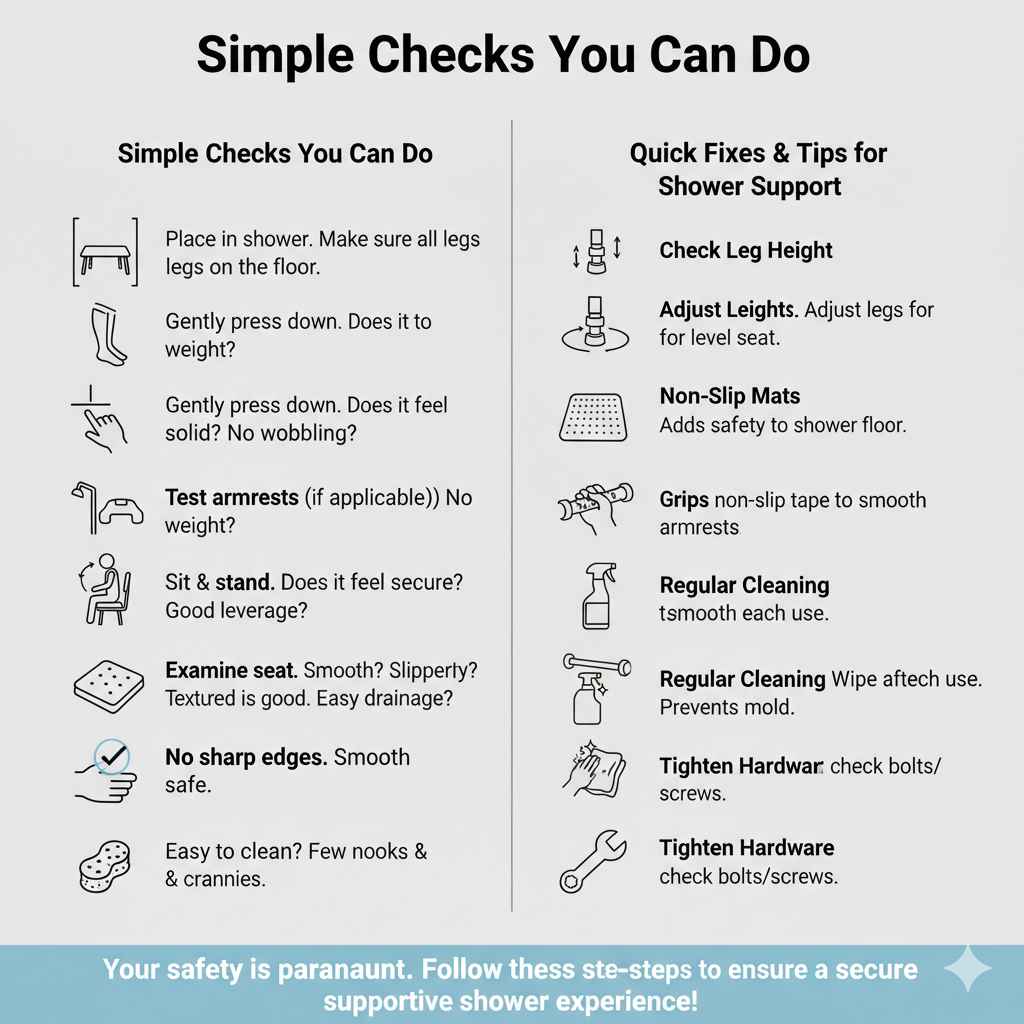
Simple Checks You Can Do
Before you buy, or as soon as you get it, do a few simple checks. This makes sure you have the safest option.
First, place the bench or chair in your shower. Make sure all the legs are on the floor. Gently press down on the seat.
Does it feel solid? Does it move at all? If it wobbles, check the leg adjustments.
Some legs can be raised or lowered.
Test the armrests if it has them. Push on them. Can they hold your weight when you push down?
They should feel very strong. Try sitting down slowly. Use the armrests to help yourself.
Then, try to stand up. Does it feel secure? Does it give you good leverage?
Look at the seat itself. Is it smooth? Does it feel slippery?
Some seats have a textured surface. That’s good. Water should be able to drain away easily.
Check for any sharp edges. Everything should be smooth and safe to touch.
Finally, consider how you’ll clean it. Most plastic and metal is easy to wipe down. But some designs have lots of nooks and crannies.
These can be harder to clean. Keeping it clean helps prevent mold and keeps it looking good.
Quick Fixes & Tips for Shower Support
Tip 1: Check Leg Height. Adjust legs so the seat is level and stable. Water should drain away from the seat.
Tip 2: Non-Slip Mats. Even with a bench or chair, a non-slip mat on the shower floor adds safety.
Tip 3: Grips. If armrests feel smooth, consider adding non-slip grip tape. This is like what cyclists use on handlebars.
Tip 4: Regular Cleaning. Wipe down your bench or chair after each use. This prevents soap scum and mold.
Tip 5: Tighten Hardware. Periodically check that all bolts and screws are tight. This maintains stability.
Frequently Asked Questions
Can I use a shower bench in a bathtub?
Yes, many shower benches are designed for use in bathtubs. Some are specifically called “transfer benches.” These sit over the edge of the tub. They allow you to sit outside the tub first, then slide over the edge into the tub.
Always ensure the bench is stable and fits your tub correctly.
How do I know if I need a shower chair or a bench?
If you need extra support to stand up and sit down, and can use armrests for help, a shower chair is often better. If you just need a place to rest your legs and want more room to move, a shower bench might be sufficient. Consider your balance and how much help you need.
Are shower chairs and benches hard to assemble?
Most shower chairs and benches are designed for easy assembly. They often require no tools or just a simple wrench. Instructions are usually clear.
If you have trouble with assembly, a friend or family member can usually help. Some stores offer assembly services.
What is the weight capacity for most shower benches and chairs?
Weight capacities vary by model. Many standard models support between 250 to 350 pounds. Heavy-duty models can support 500 pounds or more.
It is crucial to check the product specifications for the exact weight limit and choose one that is well above your needs for safety.
How do I clean a shower bench or chair?
Cleaning is usually simple. Use mild soap and warm water. A soft cloth or sponge works best.
Avoid harsh chemicals or abrasive cleaners. These can damage the material. Rinse thoroughly and dry with a clean cloth.
Regular cleaning prevents soap scum buildup and maintains hygiene.
Can a caregiver use a shower bench with a person?
Yes, a shower bench can be very helpful for caregivers. Its wide surface allows the caregiver to sit next to the person they are assisting. It also gives them more room to help with washing or transferring.
If the person needs significant help getting up, a shower chair with sturdy armrests might offer more leverage.
Wrapping Up: Your Best Choice
Deciding between a shower bench and a shower chair doesn’t have to be complicated. Think about your main needs. Do you need broad space or structured support?
Your answer points the way.
A bench gives you room. A chair gives you a sturdy handhold. Both are great tools for making your shower safer and more comfortable.
Choose the one that helps you feel most secure and independent.
Products related to this article
Sponsored / affiliate links. As an Amazon Associate I earn from qualifying purchases. I may earn additional commission from eligible campaigns.