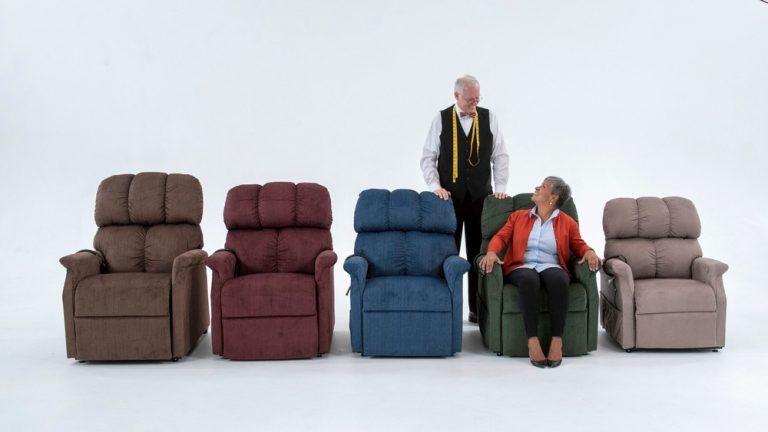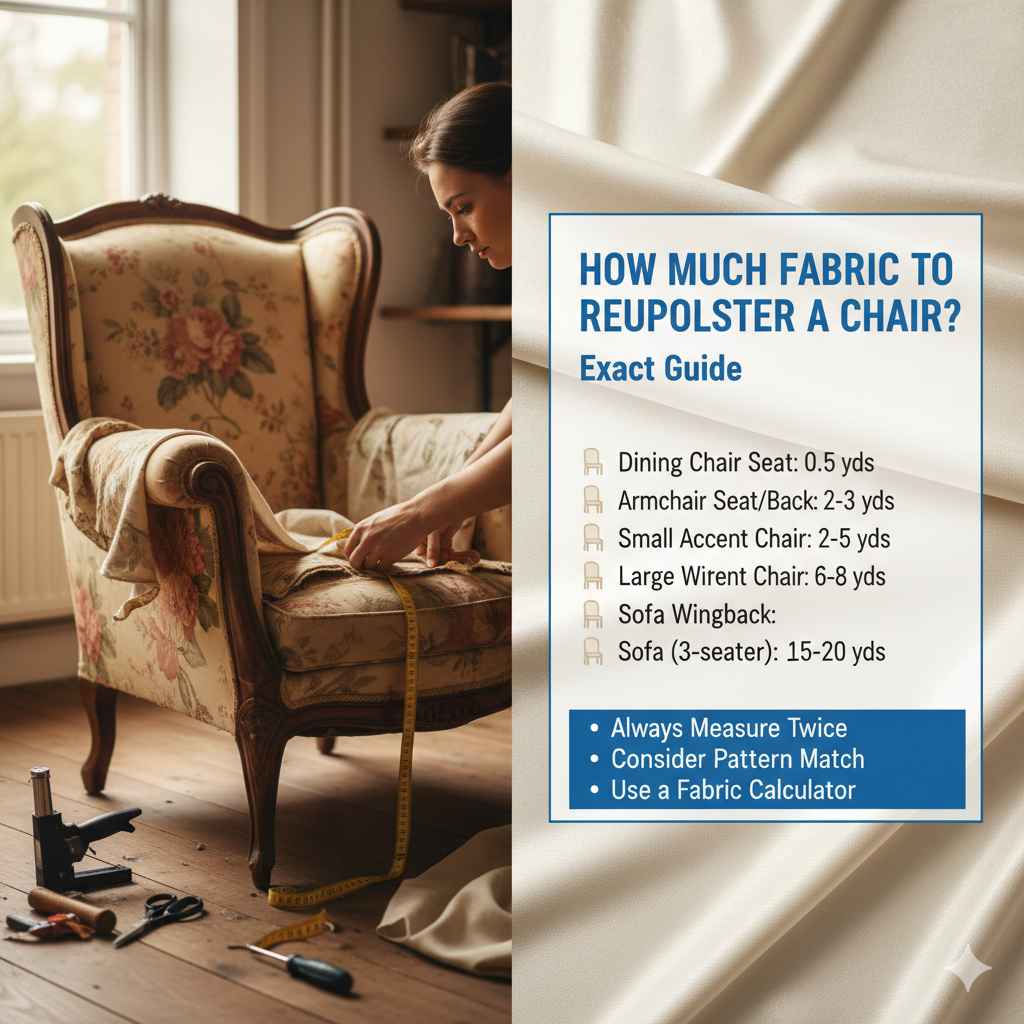
How Much Fabric To Reupholster A Chair? Exact Guide
Reupholstering a chair is a rewarding DIY project. It lets you update your home’s look. It also saves good furniture from the landfill.
For a closely related home or decor topic, Pu Leather Vs Fabric Gaming Chair gives readers a useful next step.
Knowing the right amount of fabric is key. It stops you from running out mid-project. It also stops you from buying way too much.
Fabric comes in different widths. This affects how much you need. The chair’s size and shape matter too.
Simple chairs need less fabric. Complex chairs need more. Thinking about patterns is also important.
Pattern matching uses up extra fabric. You need to line up designs. This often means buying more.
So, it’s not just about square footage. It’s about the whole picture.
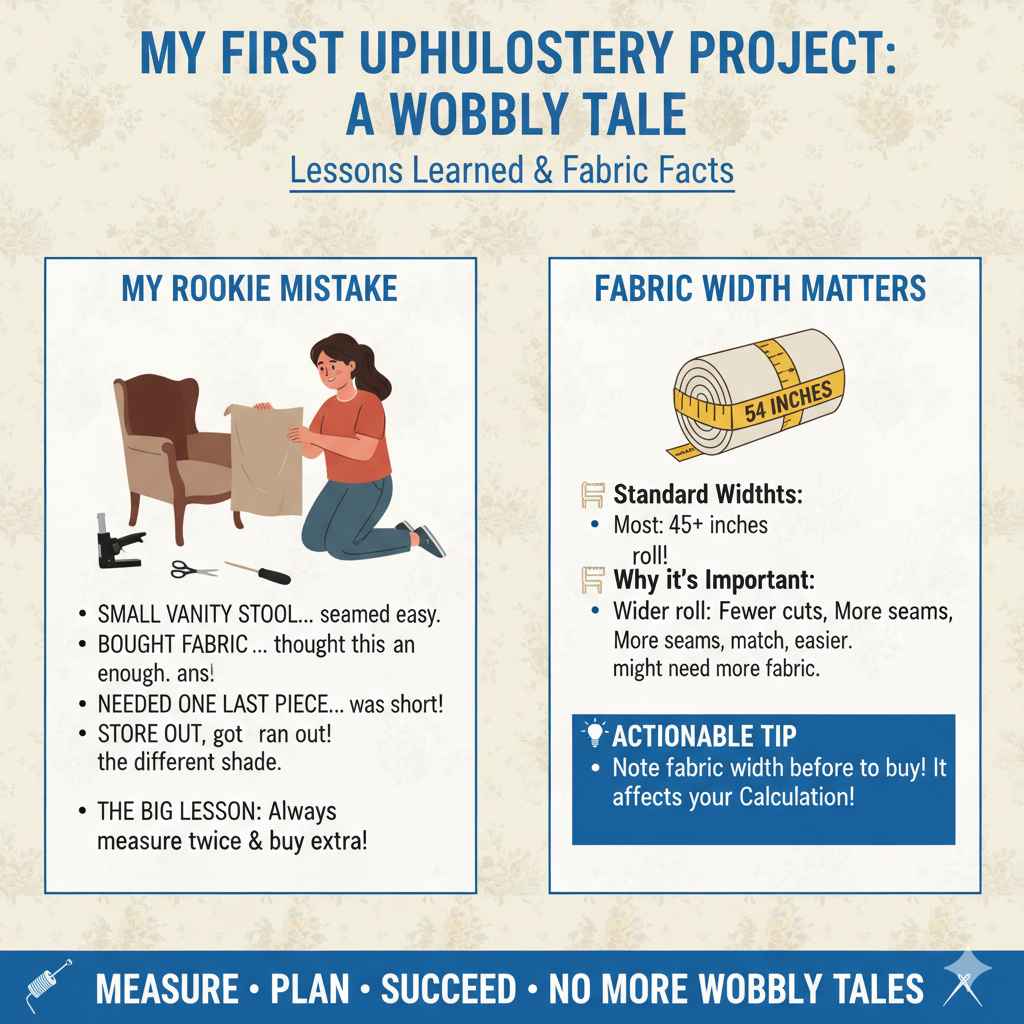
My First Upholstery Project: A Wobbly Tale
I remember my first try. It was a small vanity stool. It looked so simple online.
I watched a few videos. I felt ready. I bought what I thought was enough fabric.
It was a pretty floral print. I started cutting and pinning. Then I got to the seat cushion.
I needed one last piece. And I was just a few inches short. My heart sank.
I had to go back to the store. They were out of that exact print. I ended up with a slightly different shade.
It looked okay, but it wasn’t perfect. That mistake taught me a big lesson. Always, always measure twice and buy a little extra.
Especially with patterned fabrics. It was a frustrating evening. But it made me much more careful later on.
Fabric Width Matters
Standard Fabric Widths: Most upholstery fabric comes in widths of 54 inches. This is a common size. Some fabrics might be 45 inches or even wider.
Always check the roll width.
Why it’s Important: A wider roll means you might need fewer cuts. This can be easier and lead to less waste. A narrower roll might mean more seams.
It could also require more fabric overall.
Actionable Tip: Note the fabric width before you buy. This number will be part of your calculation.
Measuring Your Chair: The Smart Way
Getting the right measurements is not hard. You just need to be systematic. Think about all the parts of the chair that need fabric.
This includes the seat. It also includes the back. Don’t forget the arms.
If your chair has a skirt, measure that too. You also need to account for seams. And for tucking the fabric under.
Most people add a little extra for safety. A good rule is to add about 10%. This covers mistakes.
It also helps if the fabric shrinks. Even a little bit matters.
Calculating Fabric Needs: Step-by-Step
Let’s break down how to measure your chair. You will need a tape measure. You might also need a friend to help.
Some parts are easier with two people.
1. Measure the Seat
Measure the length and width of the seat. Go from edge to edge. Write these numbers down.
Add a few inches to each for tucking. For example, if your seat is 20 inches by 20 inches, you might measure 23 inches by 23 inches. This accounts for going over the edges.
2. Measure the Back
Measure the height and width of the chair back. Measure from the top to the bottom. Then measure across the widest part.
Again, add a few inches for tucking or seams. If the back has a separate cushion, measure that piece too.
3. Measure the Arms
Measure the length of each arm. Go from the front to the back. Measure the width of the arm.
Also measure the height. Sometimes arms are padded. You need fabric for the top and the sides.
Add inches for wrapping around.
4. Measure the Skirt (If Applicable)
If your chair has a skirt that goes around the bottom, measure its length. Measure its height. This is usually a long strip of fabric.
Add a few inches for seams.
5. Consider Other Parts
Think about any other fabric pieces. This might be piping. It might be decorative trim.
You will need small amounts for these. Don’t forget them.
Putting It All Together: The Calculation
Now you have all your measurements. You need to figure out the total fabric needed. It’s best to measure in yards.
Most fabric stores sell fabric by the yard. A yard is 36 inches.
Simple Chair Example
Let’s say you have a simple dining chair. Your measurements (with tucking added) are:
- Seat: 23 inches x 23 inches (needs 2 pieces, one for top, one for bottom)
- Back: 20 inches x 18 inches (needs 1 piece)
- Arms: 15 inches x 6 inches each (needs 2 pieces)
Calculation for Seat: You need two pieces of 23″ x 23″. That’s 46 inches total in length for one side, or 46″ x 23″ if laid out. But you can often get both sides from one width of fabric if it’s 54″ wide.
You would need 23 inches of length from the roll.
Calculation for Back: You need one piece of 20″ x 18″. This easily fits within a 54″ width. You’ll need 18 inches of length.
Calculation for Arms: You need two pieces of 15″ x 6″. That’s 30 inches total length for both. You’ll need 6 inches of length.
Total Length Needed (Roughly): 23 inches (seat) + 18 inches (back) + 6 inches (arms) = 47 inches.
Convert to Yards: 47 inches is about 1.3 yards. Since you can’t buy 1.3 yards, you’d round up. You might buy 1.5 or 2 yards to be safe.
Especially if you’re new to this.
Quick Scan: Measuring Tips
- Tool: Use a flexible tape measure.
- Add Extra: Always add 3-6 inches to each dimension.
- Paper First: Draw your chair and note measurements on paper.
- Double Check: Measure each part twice.
The Pattern Puzzle: Extra Fabric Needed
Pattern matching is where things get tricky. If your fabric has a large design, you need to be smart. You want the pattern to look good on the finished chair.
This means the same part of the pattern should appear on similar spots. For example, the center of a flower should be in the same place on the seat cushion and the back cushion.
How Patterns Affect Fabric Needs: Larger patterns require more fabric. You might need to buy an extra half-yard or even a full yard. This depends on the pattern repeat.
The pattern repeat is how often the design repeats itself. Check the fabric details for this. It’s usually stated in inches.
Matching on Multiple Pieces: When you cut pieces for the seat and back, you need to line them up. You might have to cut one piece, then shift the fabric to get the next part of the pattern right. This uses more length from the roll.
Always buy more fabric than you think you need. It’s better to have leftovers than not enough.
Fabric Width vs. Chair Dimensions
The width of your fabric roll is very important. Let’s say you have a chair that is 24 inches wide and 24 inches deep for the seat. And the back is also 24 inches wide.
The arms are 8 inches wide.
Scenario 1: 54-inch wide fabric
For the seat (24″ x 24″), you can get both the top and bottom from one width. You’d need about 24 inches of length from the roll for the seat. For the back (24″ wide), you can cut it from the remaining width.
For the arms, you can cut these from scraps.
Scenario 2: 45-inch wide fabric
For the seat (24″ x 24″), you might need two separate pieces from the width. This means you’d use more length. You might need 24 inches for the top and another 24 inches for the bottom, laid out side-by-side.
This would take up 48 inches of length if cut carefully. For the back, you can get that from the width. Arms might also need more careful cutting.
Key Takeaway: Always consider fabric width. A wider fabric can often save you money and fabric. It simplifies cuts.
Contrast: Yardage Estimates
Myth: “I just need to measure the chair and add a few inches.”
Reality: This is a start, but it ignores fabric width, pattern repeat, and the chair’s complexity. Always account for these factors.
Myth: “I can use any fabric scraps left over for another project.”
Reality: While true for small scraps, large pieces needed for upholstery are hard to match later. It’s best to plan for the chair first.
Common Chair Types and Their Fabric Needs
Different chairs have different shapes. This affects how much fabric you need.
Dining Chairs
These are usually smaller. They often have a separate seat cushion. Sometimes the back is also separate.
Fabric needs are generally low. For a standard dining chair, 1 to 2 yards is often enough. This assumes a standard 54-inch width.
If it has a skirt, you might need a bit more.
Armchairs
These are bigger. They have arms, a seat, and a back. Some have skirts.
You will need more fabric. For a small armchair, 3 to 4 yards might be needed. For a large, overstuffed armchair, you could need 5 to 7 yards or even more.
This is especially true if the arms are very padded.
Wingback Chairs
These are complex. They have wings that stick out. These wings are large pieces of fabric.
Wingback chairs usually require the most fabric. Expect to need 5 to 7 yards. Sometimes even 8 yards for larger ones.
Ottomans and Footstools
These are generally smaller. They are often square or round. Measure the top and sides.
Don’t forget the bottom if it’s also upholstered. For a medium-sized ottoman, 1 to 2 yards is often enough. Larger ones might need 2 to 3 yards.
Stacked Micro-Sections: Chair Fabric Estimates
Small Dining Chair: 1-2 yards
Accent Chair: 3-4 yards
Armchair (Standard): 3-5 yards
Wingback Chair: 5-7 yards
Ottoman (Medium): 1-2 yards
Note: These are estimates. Always measure your specific chair and fabric width.
Factors That Increase Fabric Needs
Besides the chair’s shape, other things use up fabric.
High-Low Pile Fabrics
Some fabrics have a raised pile. Think of velvet or corduroy. These can look different when brushed one way versus the other.
You must cut them all in the same direction. This means you might not be able to place pieces efficiently. You might need more fabric to ensure all pieces face the same way.
Directional Prints
Some prints have a clear top and bottom. Like images of animals or people. You must orient these correctly.
This limits how you can lay out your pattern. You might need more fabric than a non-directional print.
Fabric Shrinkage
Some natural fibers like cotton or linen can shrink. This happens when they get wet. Or when they are exposed to heat.
Washing fabric before you use it can help. But it’s still a good idea to buy a little extra. About 10% more is wise.
First-Time Upholsterers
If you’re new to this, you might make mistakes. You might cut a piece wrong. Or you might not use the fabric efficiently.
It’s smart to buy a bit extra. You’ll feel more relaxed if you have a buffer. This extra fabric can also be used for a pillow later.
The Role of Fabric Width in Yardage Calculation
Let’s talk more about width. Imagine you need a piece of fabric that is 20 inches by 40 inches. Your fabric is 54 inches wide.
Layout Option 1: You can cut the 40-inch length from the roll. The 20-inch width fits easily within the 54-inch width. You use 40 inches of length.
Layout Option 2: If you needed two pieces that were 20 inches by 20 inches, you could cut them side-by-side from the 54-inch width. This would only take 20 inches of length from the roll.
Now, imagine you need a piece that is 60 inches by 30 inches. Your fabric is 54 inches wide. You cannot cut the 60-inch dimension from the 54-inch width.
You would have to piece it together. This is not ideal for upholstery. It creates seams.
It also uses more fabric. You’d need to cut the 60-inch length. Then you’d need another strip to add the extra 6 inches.
This makes the calculation harder. It’s best to use fabric widths that can accommodate your largest single piece.
Split Insight Panel: Fabric Calculation Key Points
Measurement Unit: Use inches for your chair parts. Convert to yards at the end.
Add Allowance: Always add 10% for tucking, seams, and potential mistakes.
Fabric Width Impact: A 54-inch width is usually more efficient than a 45-inch width.
Pattern Repeat: Factor in extra fabric for aligning large patterns.
Calculating Fabric Yardage: A Formula Approach
While visual layout is best, a formula can help. This is a simplified guide. Professional upholsterers use complex methods.
But for DIY, this works.
Step 1: Measure Key Areas
Measure the widest and longest parts of these sections:
- Seat (Length x Width)
- Back (Height x Width)
- Arms (Length x Width, x 2 if symmetrical)
- Skirt (Length x Height)
Add 4 inches to each measurement for tucking and seams.
Step 2: Calculate Area of Each Piece (Approximate)
For each part, multiply the adjusted Length x Width.
Example: Seat = (20+4) x (20+4) = 24 x 24 inches.
Step 3: Total Square Inches
Add up the approximate square inches for all parts.
Seat: 24 x 24 = 576 sq in
Back: (30+4) x (20+4) = 34 x 24 = 816 sq in
Arms: 2 x (18+4) x (8+4) = 2 x 22 x 12 = 528 sq in
Total = 576 + 816 + 528 = 1920 sq in
Step 4: Divide by Fabric Width
Let’s say your fabric is 54 inches wide. You need to figure out how many inches of length you need.
Total inches needed = Total square inches / Fabric width
Total inches = 1920 sq in / 54 inches = 35.5 inches.
This is a very rough estimate. It doesn’t account for pattern layout. It doesn’t account for non-rectangular shapes.
Step 5: Convert to Yards and Add for Safety
35.5 inches is about 1 yard. But this is too close. You MUST add more.
For a simple chair, I’d buy at least 2 yards. For a complex chair or with patterns, 3 yards would be safer.
A Better Guideline: Add up the longest dimension of each major piece. Then multiply by the number of those pieces. For a dining chair, the longest part might be the seat depth.
If it’s 20 inches deep, and you need 2 seats (top and bottom), that’s 40 inches. Add another 10 inches for the back. That’s 50 inches.
Which is about 1.5 yards. But again, buy more.
My Experience with Fabric Calculators
I’ve used online fabric calculators. They are helpful. But they are not perfect.
They often assume a standard chair shape. They might not account for complex curves. Or very thick padding.
I always use a calculator as a starting point. Then I do my own measurements. I also add an extra 10-15% just to be safe.
Especially if I’m unsure. I learned this after a DIY ottoman project. I thought I had enough.
But the cording I added used up more. I had to make a second trip to the store. It was annoying.
Now, I always buy extra. It saves headaches.
Observational Flow: Buying Fabric
- Measure Chair: Get all dimensions.
- Check Fabric Width: Note the width of your chosen fabric.
- Consider Pattern: Large or directional patterns need more fabric.
- Calculate Rough Yardage: Use a guide or online tool.
- Add Safety Margin: Add 10-20% extra for errors or shrinkage.
- Purchase: Buy slightly more than you think you need.
- Save Remnants: Keep good-sized scraps for future small projects.
When Less Fabric is More (But Still Risky)
There are times when you might get away with less fabric. This is usually for very simple, small items. Or if you are extremely skilled at layout and cutting.
For example, a simple stool with no skirt. Or a chair with a very thin profile.
Skills Matter: If you’ve upholstered many chairs, you’re good at spotting how to use every inch. You can nest pieces together. You can make tricky cuts work.
But for most DIYers, this is not the case.
Using a Single Fabric: If you’re using one fabric for the entire chair, it’s easier. If you’re using a main fabric and a contrasting fabric for piping or a skirt, you need to calculate each separately. This adds complexity.
The Risk: The biggest risk is running out. This can happen if your measurements are off. Or if the fabric width is smaller than you thought.
Or if you miscalculated the pattern repeat. Running out means a trip back to the store. And possibly a color match that isn’t quite right.
This can ruin the look.
Real-World Scenarios: What Experts Do
Professional upholsterers have tricks. They work with fabric every day. They know how it drapes and stretches.
They also know how to minimize waste.
Layout Planning
Before cutting, they lay the fabric out. They place the largest pattern pieces first. They plan the cuts to make sure patterns align.
They also try to place seams where they won’t be as noticeable. Often, on the back or underside of the chair.
Using Scraps Wisely
Leftover fabric from large pieces can be used for smaller parts. Like piping. Or buttons.
Or small accent pillows. They are masters of using every last bit. This comes from years of practice.
Understanding Fabric Properties
They know how different fabrics behave. A stretchy knit will behave differently than a stiff canvas. This affects how much you need and how you cut it.
They might buy less of a very wide fabric if it’s a complex pattern.
My Observation: I once watched a pro reupholster a sofa. They had a large floral fabric. They spent a good 30 minutes just laying out the fabric and marking cuts before touching scissors.
They were incredibly efficient. They used every inch of a large roll. But they had bought an extra yard just in case.
What This Means for Your Project
So, what’s the practical advice? Don’t guess. Measure carefully.
Consider your fabric’s width and pattern. And always, always add extra.
When is Your Measurement Enough?
If you have a very simple chair. Like a small ottoman. And your fabric has no pattern.
And it’s a standard 54-inch width. And you are very confident in your measurements. You might be able to use the exact calculated amount.
But even then, a little extra is wise.
When Should You Worry?
You should worry if:
- Your chair is large or complex.
- Your fabric has a big, directional pattern.
- Your fabric has a short pattern repeat.
- You are using a narrower fabric (e.g., 45 inches).
- You are a beginner upholsterer.
- You are using a fabric that might shrink.
In these cases, buy at least 10-20% more fabric than your initial calculation.
Simple Checks Before You Buy
Before heading to the store:
- Measure twice, cut once. This applies to your fabric needs too!
- Draw it out: Sketch your chair parts on paper and note dimensions.
- Check fabric details: Look for width and pattern repeat.
- Ask the store: Fabric store staff can often offer advice on yardage.
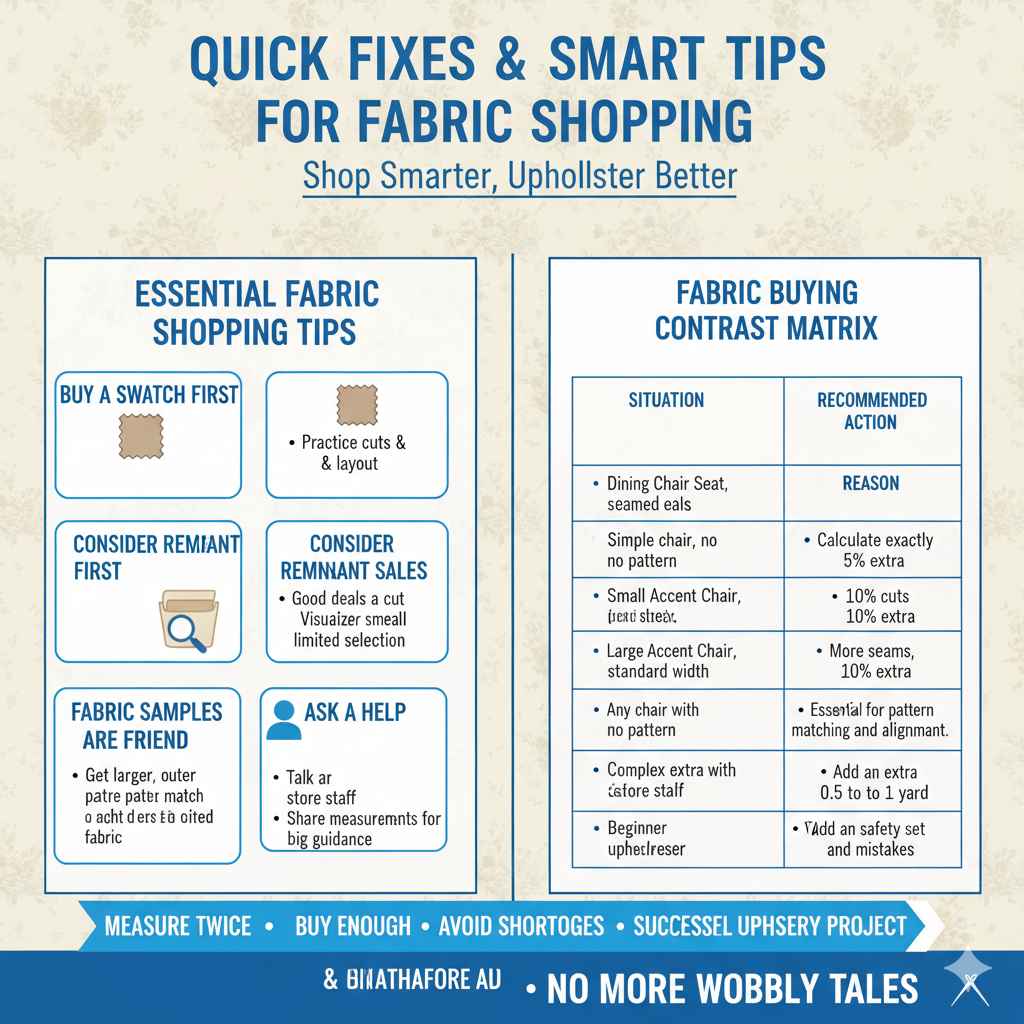
Quick Fixes & Tips for Fabric Shopping
Getting the fabric amount right is about smart shopping.
Buy a Swatch First
If you can, buy a small swatch of your fabric. You can use this to practice cuts. Or to see how it lays out on a small part of your chair.
It helps you visualize the pattern repeat.
Consider Remnant Sales
Sometimes fabric stores have remnant bins. These are cut pieces of fabric. You might find the exact amount you need for a small project.
But this is rare for larger chairs. And the selection is limited.
Fabric Samples Are Your Friend
Many online fabric stores offer samples. Get a larger sample if possible. This can help you plan your cuts before you commit to a large purchase.
Don’t Be Afraid to Ask for Help
At the fabric store, talk to the staff. Tell them what you’re making. Give them your chair measurements.
They often have a good idea of how much fabric you’ll need. Especially for standard furniture types.
Contrast Matrix: Buying Fabric
| Situation | Recommended Action | Reason |
|---|---|---|
| Simple chair, no pattern, standard width | Calculate exactly + 5% extra | Minimal risk of waste or running short. |
| Complex chair, no pattern, standard width | Calculate exactly + 10% extra | Accounts for more complex cuts and tucking. |
| Any chair with a pattern | Calculate exactly + 15-20% extra | Essential for pattern matching and alignment. |
| Beginner upholsterer | Add an extra 0.5 to 1 yard | Provides a safety net for mistakes and learning. |
Frequently Asked Questions
How do I calculate fabric for a chair with a skirt?
Measure the total length around the bottom of the chair where the skirt attaches. Then measure the desired drop (height) of the skirt. Add a few inches for seams.
If the skirt is gathered, you might need to double or triple the length measurement. For example, a 60-inch circumference skirt that drops 12 inches would need about 60 inches x 12 inches of fabric, plus seam allowance. But if gathered, you’d need fabric for perhaps 120-180 inches of width.
Can I use less fabric if my chair has a very small pattern?
Yes, if the pattern is very small and does not need to be matched precisely. For instance, a tiny dot or a subtle texture might not require careful alignment. In such cases, you can follow the basic measurements more closely.
However, always add a small buffer (like 5-10%) just in case you make a cutting error.
What if my fabric width is less than my chair’s widest point?
This is a challenge. You’ll need to piece the fabric together. This means cutting strips and sewing them.
For upholstery, this isn’t ideal as seams can be weak or visible. You should try to find fabric with a wider width. If you must piece, plan your seams carefully.
Make sure they are in less visible areas. You will likely need more fabric than a simple calculation suggests because of the extra cutting and piecing involved.
How much fabric do I need for piping or cording?
Piping usually requires a long, thin strip of fabric. Measure the total length of the seams where you want piping. Then, add about 10% extra for curves and corners.
This strip will be cut lengthwise. You then fold it and sew it to a cording (like a thick string). The amount needed is usually small, maybe 1/4 to 1/2 yard, depending on the chair size.
Is it better to buy too much fabric or too little?
It is almost always better to buy too much fabric. Running out of fabric mid-project is incredibly frustrating. You might not be able to find the exact same dye lot or pattern later.
Having extra fabric means you can complete your project without stress. You can also use leftover fabric for smaller items like throw pillows or pouches.
How do I account for the thickness of my chair’s padding?
The thickness of the padding is usually accounted for in the ‘tuck’ allowance you add. When you measure the surface area, you add extra inches to wrap the fabric around the edges and under the seat or back. This extra material allows you to pull the fabric taut over the thickest padding.
If your padding is extremely thick, add a little more to your tuck allowance (e.g., an extra inch or two).
Conclusion: Measure Twice, Cut Once, Buy Extra!
Figuring out how much fabric you need for a chair is a skill. It gets easier with practice. The key is careful measurement and planning.
Always think about fabric width. Consider your pattern. And when in doubt, buy a little extra.
It’s a small investment for a stress-free project. You’ll end up with a beautifully updated chair. And maybe some handy fabric scraps too.
Happy upholstering!
Products related to this article
Sponsored / affiliate links. As an Amazon Associate I earn from qualifying purchases. I may earn additional commission from eligible campaigns.
 Ezprotekt 24 Pcs Clear Chair Leg Floor Protectors for Hardwood Floors, Floor Protectors for Chairs, Felt Furniture Pads Covers, Chair Leg Socks Bar Stool Leg Floor Protectors Caps (M Fit: 0.86"-1.02")
 Ezprotekt 24 Pcs Small Black Silicone Chair Leg Floor Protectors for Hardwood Floor, Chair Leg Caps Cover, Felt Furniture Protectors Pads, Bar Stool Leg Protector Round (S Fit: 0.6" to 0.75", 15-19mm)