Bookshelf vs Bookshelves: Singular or Plural Explained
A bookshelf is one storage unit; bookshelves means two or more units, or it can describe the individual shelf levels inside a single tall piece. Ask a furniture store for bookshelves when you only need one and you may end up quoted for a whole set, so getting the term right saves confusion when shopping. This guide covers the singular versus plural distinction, the anatomy of a shelf, and when to use each term.
For a closely related home or decor topic, Smart Under Bed Storage Solutions is a useful next step. For a related decorating choice, Small Living Room Ideas can help readers compare style and placement.
Understanding the Core Difference: Singular vs. Plural
When dealing with storage for books, the terms “bookshelf” and “bookshelves” boil down to a simple count. Think of it like the difference between a “tire” and “tires” on your vehicle. If you are talking about one unit, you use the singular form. If you are talking about more than one, you use the plural form. It really is that straightforward!
What is a Bookshelf? (The Singular Unit)
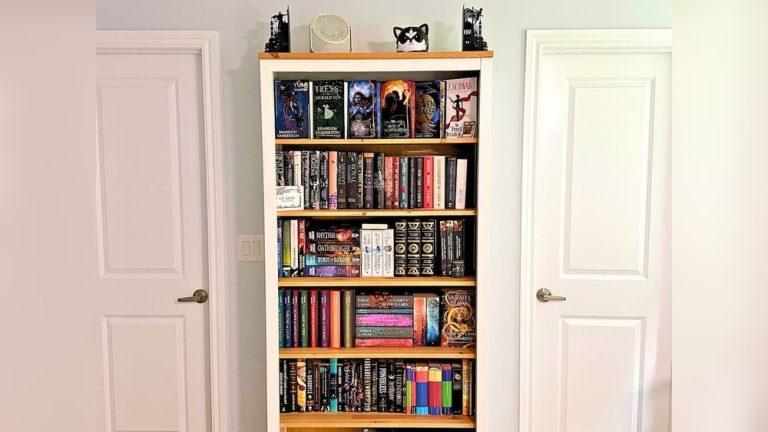
A “bookshelf” (singular) is a single piece of furniture designed specifically to hold books. It typically looks like a vertical frame with several horizontal surfaces, or shelves, built into it. This is the unit you might buy at a big-box store or order online when you only need one piece to organize a small collection.
Think of a bookshelf as a standalone item. If you point to one unit standing against a wall, you are pointing to a bookshelf.
- Function: To store and display books vertically.
- Structure: One complete, self-contained piece of furniture.
- Example Sentence: “I need to buy one new bookshelf for my office this weekend.”
What are Bookshelves? (The Plural Term)
The term “bookshelves” (plural) has two main uses, both involving more than one. First, it refers to two or more of those individual furniture pieces lined up together. Second, it can refer to the individual horizontal planks inside a single large unit.
Let’s look at the two main uses of the plural form:
- Multiple Units: If you have three matching standalone units sitting side-by-side, you have three bookshelves.
- Internal Shelves: In a single tall unit that has five levels for books, those five levels are called the bookshelves of that unit.
This second use is very common. If someone asks you how many shelves are in your display case, you tell them the number of bookshelves it contains, even if the entire structure is just one piece of furniture.

Best Bookshelf Pick
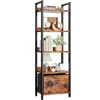
Furologee 5 Tier Bookshelf with Drawer Tall Narrow – $42.99
A single bookshelf unit with 5 individual shelves, matching this guide's point that one bookshelf can itself contain several shelves.
- Best for: A single bookshelf that still offers multiple shelf levels
- Why we picked it: One freestanding unit with 5 shelves shows the guide's second definition of bookshelves, the individual shelves inside one piece
- Main drawback: Narrow footprint holds fewer books per shelf than a wider unit
Compare more bookshelves and bookcases
 Option 1 NUMENN Bookshelf 5 Tier Freestanding Shelving Unit – $50.99
|
 Option 2 TVU 5 Tier Wood Book Shelf 47 Inch Wide Large – $144.98
|
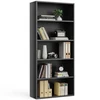 Option 3 Sweetcrispy Tall Bookshelf Storage Organizer – $49.99
|
As an Amazon Associate we earn from qualifying purchases.
Breaking Down the Anatomy: Shelf vs. Shelves
To truly master this, we need to look closer at the fundamental component: the shelf (singular) versus shelves (plural). This clarifies things whether we are talking about a single unit or a whole library wall featuring multiple units.
The Shelf (Singular Component)
A “shelf” is just one flat, horizontal surface. It is the part that actually supports the weight of the items—whether they are books, tools, or spare tires in your garage.
When assembling furniture, instructions often refer to installing “Shelf A” or “Shelf B.” This is the specific, load-bearing plank.
The Shelves (Plural Components)
Collectively, when you have multiple such surfaces, they become “shelves.”
Imagine you are helping a friend move, and they have a rolling tool chest. They might say, “Can you grab the wrench off the middle shelf?” If they have three drawers, they might say, “I put the big tools on the bottom two shelves.”
In the context of book storage, if you have a unit with four horizontal planks, you have one bookshelf containing four shelves.
Table Comparison: Bookshelf vs. Bookcases
Often, people confuse “bookshelf” with “bookcase.” While related, they have subtle differences in common usage. A bookcase is generally a taller, often enclosed unit, sometimes with doors. A bookshelf is often simpler and more open. Here is a quick comparison to clear up the terms used when discussing these storage solutions:
| Term | Quantity Implied | Common Structure | Example Use |
|---|---|---|---|
| Bookshelf | One single unit | Open, typically lighter duty | “I need a small bookshelf for my nightstand.” |
| Bookshelves | Two or more units OR the internal supports of one unit | Varies (can be many small units or multiple levels) | “The library has miles of bookshelves.” |
| Bookcase | One single unit | Often taller, sometimes enclosed with glass or solid doors | We bought a large oak bookcase for the living room.” |
Practical Application: Shopping for Storage
When you are out shopping, using the correct term ensures you get what you need without confusion. Think about your inventory before you head to the home goods store or start browsing online.
When to Use “Bookshelf”
Use the singular term when your need is small or specific to one item. This is helpful when you are budgeting for individual needs.
- You have space for exactly one more three-foot-tall unit.
- You are describing a small, specialized storage piece, like a narrow spice rack converted into a single source for cookbooks.
- When asking a salesperson for “a bookshelf,” they will show you individual units you can purchase one at a time.
When to Use “Bookshelves”
Use the plural when talking about capacity, multiple items, or the internal layout.
- You are looking to fill an entire wall with storage solutions, requiring several matching units.
- You are describing a large, built-in organizational system (like a wall of custom storage).
- You are discussing the capacity of a single, very tall unit: “This unit has five adjustable bookshelves.”
Building Your Own Storage: A Simple Guide (Where Plurals Matter)
Sometimes, you want to save money and build your own storage shelves. When you build, the distinction between the final unit (“bookshelf”) and the components (“shelves”) becomes very clear, much like choosing the right gauge wire for a car sound system.
Here are the basic steps for an easy, freestanding shelf, illustrating the singular vs. plural:
- Gather Materials: You will need two side panels (the vertical supports) and several horizontal planks (these will become your shelves).
- Determine Placement: Decide how many levels you want. If you want four levels of storage, you need four horizontal planks.
- Mark the Sides: Using a level (a vital tool for any DIY project—check out guides on using a NIST guide on precise measurement for tips on accuracy), mark where each shelf will sit on the inside of both side panels.
- Install Shelf Supports: Drill holes or install pins/brackets for the shelves to rest on.
- Assemble the Shelves: Place the main horizontal planks onto the supports, securing them according to your plan. You now have several shelves installed within the frame.
- Final Unit Check: Once all components are secured and the unit stands upright, you have successfully assembled one bookshelf capable of holding many books across its many shelves.
Deep Dive: When Context Changes the Word
In everyday conversation, people sometimes use the terms interchangeably, which is where the real confusion comes from. However, for clarity, understanding context is key.
Context 1: The Built-In Unit
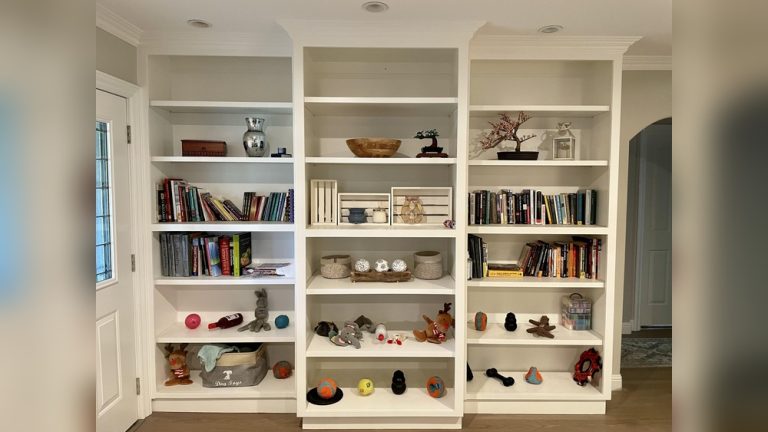
Imagine shelving built directly into the wall studs of a room. This is often called “built-in shelving.” Even though it’s one structure, virtually everyone refers to the individual horizontal surfaces as shelves. If you are describing the whole feature, you might say, “We love the built-in bookshelves along the entire back wall.” Here, the plural applies to the multitude of flat surfaces creating the large storage system.
Context 2: Describing Inventory
If you are a librarian or a reseller, you often need to count your inventory. You would never say, “We received 20 bookshelf today.” You would say, “We ordered twenty new bookshelves.” This is grammatically straightforward counting: one item versus many items.
Conversely, if you are looking at one tall unit you just unpacked, you might say, “How many bookshelves does this model have?” meaning, “How many horizontal layers can I load up with books?”
Why This Matters for Your Wallet and Space
Knowing the difference isn’t just about grammar; it helps you shop smarter and maximize storage. If you only need one piece, searching for “bookshelf” will filter out large, expensive “bookcases” or multi-unit sets.
When Buying Singularly
If you search for a “bookshelf,” you are looking for a cost-effective, single solution. This is usually what someone needs for a dorm room or small apartment corner.
When Buying in Bulk or Planning Large Spaces
If your goal is to create a home library wall, search terms like “modular bookshelves” or “set of three bookshelves” will yield better results, often showing package deals that save you money compared to buying three individual units. Similarly, knowing you need to purchase 12 individual shelves to complete your custom build prevents you from ordering an entire frame by mistake.
For reliability and construction standards, always look for products made with sturdy materials. A common issue with large storage systems is the potential for bowing under heavy loads. For safety and longevity, understanding the weight rating per shelf is critical. You can find useful information on structural loads from resources like university engineering departments that often publish material science guides.
Handling Irregular Storage Units
What about those odd, fun shapes, like ladder shelves or corner units? Do the rules still apply?
Yes, they do. Context remains king.
- Ladder Shelf: A ladder shelf is still considered a single bookshelf, even though its shelves might taper in width as they go up. It’s one unit.
- Corner Unit: If you buy one specialized unit designed to fit into a 90-degree corner, that is one bookshelf.
- Multiple Corners: If you buy two of those corner units to wrap around a room, you now have two bookshelves.
The fundamental rule holds: bookshelf = one item; bookshelves = more than one item OR the multiple horizontal surfaces within one item.

Frequently Asked Questions (FAQ)
Q1: If I have a tall unit with 6 levels, do I own one bookshelf or six bookshelves?
You own one bookshelf structure, which contains six shelves (plural). When talking about the unit as a whole object, “bookshelf” is correct. When counting the horizontal supports inside, “six shelves” is correct.
Q2: Can I use the word “bookcase” instead of “bookshelf”?
Yes, often you can, but “bookcase” usually implies a taller, more substantial, and sometimes closed unit (with doors). A “bookshelf” tends to be a simpler, more open structure. They overlap significantly in meaning!
Q3: If I’m searching online, which term should I use to find everything?
If you want the broadest selection, search for “bookshelves” (plural). This term often pulls up listings for single units, multi-unit sets, and sometimes even built-in plans, making it a better umbrella search term.
Q4: Is there a strict grammatical rule that separates these words?
The rule is standard English pluralization. “-f” at the end of a noun changes to “-ves” for the plural form (like leaf/leaves). For furniture, bookshelf becomes bookshelves when you have more than one.
Q5: If one shelf breaks, do I need to replace the whole bookshelf?
Not necessarily! If only the horizontal plank breaks, you only need to find a replacement “shelf” that fits the dimensions of your existing bookshelf. Many units sell replacement planks individually.
Q6: Does “bookshelf” refer to a floating shelf holding books?
Yes, a single floating unit designed to hold books is accurately called a “floating bookshelf.” If you install three of them above your desk, you have installed three floating bookshelves.
Conclusion: Confidence in Your Cataloging
Navigating terminology, whether it’s automotive parts or furniture names, should never slow you down. As we’ve seen, the difference between bookshelf and bookshelves is a simple headcount. One bookshelf is one unit; bookshelves are multiple units or the multiple horizontal surfaces within one unit. That’s it! You now have the clear knowledge to ask for exactly what you need, whether you are browsing a hardware store for a single sturdy piece or planning a massive home library that requires dozens of individual units and countless supporting shelves.
Armed with this simple distinction, you can confidently shop for storage, organize your space much more effectively, and ensure your growing collection of literature has a safe, reliable, and well-labeled home. Go ahead and get those manuals sorted—you’re now an expert in library organization terminology!
Products related to this article
Sponsored / affiliate links. As an Amazon Associate I earn from qualifying purchases. I may earn additional commission from eligible campaigns.