How To Remove Wood Smell From A Dresser Fast
That new furniture smell can be lovely. But sometimes, it’s not so lovely. You get a beautiful dresser.

Mission Control
Mission Control 32 oz Sauna Wood Cleaner…
- STOPS THE STALE SAUNA SMELL - Sweat and body oils build up on cedar, hemlock, and pine, then come back as that musty towel smell e…
- WON'T RUIN YOUR SAUNA - Cleans the wood without stripping the natural finish or leaving residue that bakes off on the next session…
- MADE FOR SAUNA WOOD - Most untreated sauna wood, including cedar, hemlock, and pine. Benches, slat walls, backrests, headrests, an…
As an Amazon Associate I earn from qualifying purchases.
For a related storage or furniture fix, How To Remove Nail Polish From A Wood Dresser Safely helps readers compare the next practical option.
Then you notice a strong wood smell. It fills up your room. You try opening windows.
It helps a little. But the smell sticks around. It’s frustrating, right?
You want to enjoy your new piece. You don’t want it to smell like a lumberyard. Or worse, like something musty.
This guide will help. We’ll walk through easy ways. You can get that wood smell gone.
Fast.
To remove wood smell from a dresser quickly, start by airing out the piece. Use natural absorbers like baking soda or activated charcoal. Wipe down surfaces with a vinegar-water solution.
Ensure good ventilation. For persistent odors, consider leaving dryer sheets or coffee grounds inside.
Understanding That Wood Smell
Why does wood smell? Wood is a natural material. It holds moisture and oils.
It can also have resins. These things give wood its natural scent. Sometimes, new wood has a stronger smell.
This can happen from how it’s treated. Or how it was stored. It might be from the wood itself.
Or from glues and finishes used. Sometimes, a smell means moisture is trapped. This can lead to mold.
That is not good for your dresser. Or for your health.
The type of wood matters too. Pine and cedar are known for strong scents. These scents are usually pleasant.
But they can be too much for some people. Other woods might have a milder smell. Or no smell at all.
The smell can also change over time. It might fade on its own. But often, you need to help it along.
We want your dresser to be a nice addition. Not a scent challenge.

My Own Dresser Smell Saga
I remember buying a beautiful oak dresser. It was a secondhand find. The shape was perfect for my bedroom.
I was so excited to bring it home. As soon as I put it in the room, I noticed it. A strong, musty smell.
It wasn’t rotten, but it was potent. It made my eyes water a little. My first thought was, “Oh no!” I panicked slightly.
I imagined my clothes smelling like this. I opened all the windows in the house. I even put a fan on it.
It felt like a losing battle for days.
I tried spraying it with air freshener. That just made it worse. It mixed with the wood smell.
It was a weird, chemical-floral-wood mix. Not good. Then I remembered what my grandma used to do.
She kept things fresh. She would use natural things. That gave me an idea.
I went to the store. I bought baking soda and white vinegar. I felt a little hopeful.
It was a small step. But it was better than just spraying things.
Quick Smells & Solutions
Problem: New Wood Smell
This is common. It’s often from the wood or finishes.
Problem: Musty or Damp Smell
This can mean moisture is trapped. Check for leaks or poor air flow.
Problem: Chemical Smell
This might be from glues or sealants. It needs good ventilation.
Airing It Out Is Step One
The simplest step is often the best. Let your dresser breathe. Open up the drawers.
Take them out if you can. Put the dresser in a well-ventilated area. This could be a garage.
Or a porch. If you can’t move it, open all windows. Turn on fans.
Aim the fans towards the dresser. Or to push air out of the room. Good air flow is key.
It helps the trapped odors escape. This is the first thing to try. It works for many smells.
Fresh air is like magic. It doesn’t add new smells. It just removes the old ones.
Try to do this for a few days. If the smell is very strong, this might not be enough. But it’s a great start.
It’s like giving your dresser a shower of fresh air. Make sure the weather is dry. Damp air can make smells worse.
Or cause new problems like mold.
Ventilation Best Practices
Open All Doors & Drawers
This allows air to reach all parts of the dresser.
Use Fans
Direct fans to create air movement and exchange.
Choose Dry Weather
Avoid airing out furniture in damp or humid conditions.
Location Matters
A garage or covered porch is ideal if possible.
Baking Soda: The Odor Absorber
Baking soda is a miracle worker. It absorbs odors. It doesn’t just cover them up.
It traps them. This is great for wood smells. You can use it in a few ways.
First, open boxes or bowls of baking soda. Place them inside the drawers. Put some on the shelves too.
Leave the drawers closed. Let the baking soda work. Check it every few days.
You might need to replace it. If the smell is still there, use more baking soda.
Another trick is to sprinkle baking soda directly on a cloth. You can then place the cloth inside. This gives it more contact.
Just be sure to vacuum or wipe it up later. You don’t want baking soda residue. It can be messy.
For strong smells, you might need a lot. Use several bowls. Put them in every drawer and compartment.
This gives it the best chance.
Vinegar: Nature’s Cleaner
White vinegar is another champion. It cleans and deodorizes. Mix equal parts white vinegar and water.
Use a clean cloth. Dampen the cloth with the solution. Wipe down all the inside surfaces.
Do this for drawers and shelves. Wipe the back of the dresser too. If you can reach it.
Don’t soak the wood. You want it damp, not wet. After wiping, let it air dry completely.
The vinegar smell will go away. It takes the wood smell with it.
Vinegar is acidic. It breaks down odor molecules. It’s a natural disinfectant too.
This is good for any lingering funk. Make sure to wipe the surfaces. Don’t leave puddles.
You don’t want to damage the wood. Use a soft cloth. It won’t scratch the finish.
After it dries, you can do a second wipe. Or leave it open to air out more.
Vinegar Solution Recipe
What You Need
- 1 cup White Vinegar
- 1 cup Water
- Clean Cloths
How to Mix
Combine vinegar and water in a bowl or spray bottle. Stir or shake well. Use a cloth to apply.
Wring out the cloth first.
Activated Charcoal for Serious Odors
Activated charcoal is very effective. It’s used in water filters. It traps impurities.
It does the same for smells. You can buy charcoal odor absorbers. Or make your own.
Put charcoal briquettes (without lighter fluid!) in a bowl. Or use activated charcoal powder in sachets. Place these inside the dresser.
Like with baking soda, it needs time. Leave them there for a few days. Or even a week for tough smells.
Charcoal has a huge surface area. This is what lets it trap so much. It’s like a sponge for smells.
You can find activated charcoal at pet stores. Or online. It’s a bit more potent than baking soda.
So, it’s good for stubborn smells. Ensure you use activated charcoal. Not just regular charcoal.
It needs to be purified. Make sure it’s not dusty. It can stain surfaces if it’s too fine.
Charcoal Absorber Tips
Use Activated Charcoal
Ensure it’s the right type for odor absorption.
Placement is Key
Put it in drawers, shelves, and inside the cabinet.
Patience Required
Allow several days for charcoal to work its magic.
Avoid Dust
If using loose charcoal, place it in containers or sachets.
Coffee Grounds: A Scented Solution
Coffee grounds can also absorb smells. They have a strong scent of their own. This can help mask other odors.
But they also absorb. Use dry coffee grounds. Place them in bowls or open containers.
Put these inside the dresser drawers. Close the drawers. Let them sit for a few days.
Then, remove the coffee grounds. You might need to vacuum any loose bits. This method works well.
But it can leave a coffee smell. If you don’t like coffee, this might not be for you.
It’s a bit of a trade-off. You
Dryer Sheets or Sachets
This is a quick fix. It’s more about masking. But it can help.
Place a few dryer sheets inside the dresser. Or in the drawers. Close them up.
Leave them for a few days. The scent from the dryer sheets can fill the space. It can make the wood smell less noticeable.
This is a good option if the smell is mild. Or if you need a fast solution. It’s not as good for deep, strong odors.
You can also make sachets. Fill small cloth bags with dried herbs. Like lavender or mint.
Or even potpourri. These can also help. They add a nice scent.
And can push out the wood smell. This is a nice touch for your clothes too. It’s like giving your dresser a makeover.
Inside and out.
Natural Sachet Ideas
Lavender
Known for its calming scent. Great for bedrooms.
Mint
Refreshing and clean smelling. Good for closets.
Cedar Chips
Adds a natural wood scent. Also deters moths.
Rosemary
A fresh, herbal scent. Can help with stuffiness.
Sunlight’s Role
Sunlight can also help. UV rays can break down odor molecules. Place the dresser in direct sunlight.
If possible. Open the drawers while it’s in the sun. This can speed up the deodorizing process.
Be careful with painted or delicate finishes. Too much sun can cause fading. Or damage the finish.
Use caution. Especially if the dresser is antique.
For most solid wood dressers, a few hours in the sun can be beneficial. It’s another natural way to freshen things up. It works best on dry days.
Just like airing out. Combine sunlight with other methods. It can make them more effective.
Think of it as an extra boost.
Cleaning the Wood Itself
Sometimes, the smell is on the surface. Or in the pores of the wood. A good cleaning can help.
Use a wood cleaner designed for furniture. Or the vinegar-water solution we talked about. Wipe down all exterior surfaces too.
Pay attention to edges and corners. That’s where smells can hide. After cleaning, wipe dry.
Then let it air out again.
Avoid harsh chemicals. They can damage the wood. Or leave their own strong smells.
Stick to gentle, natural cleaners. Or products made for your specific wood type. If you’re unsure, test on an inconspicuous spot.
Like the bottom or back. Always wipe with the grain of the wood. This helps prevent scratches.
And it looks better.
When the Smell is Deeply Ingrained
What if the smell is really tough? It won’t go away with these tips. You might need more.
Sometimes, a professional wood sealer can help. This seals the smell inside the wood. It creates a barrier.
This is a more permanent fix. But it changes the surface. You might not want that.
It’s a last resort.
Another option is to lightly sand the interior. Then apply a clear sealant. This is a DIY job.
But it needs care. Sanding creates dust. And you need to seal it well.
This is for the inside surfaces. Where the smell is strongest. Always wear a mask when sanding.
And ventilate the area well. Check the sealant instructions. Some need special application.
DIY Sealing Steps
Preparation
Clean the area thoroughly. Remove all dust and debris.
Sanding (Optional)
Lightly sand the interior wood. Use fine-grit sandpaper.
Dust Removal
Wipe away all sanding dust with a tack cloth.
Application
Apply a thin, even coat of clear wood sealant.
Drying
Allow to dry completely as per product instructions. Ventilate well.
What This Means For You
Knowing how to remove wood smell is useful. It means you can buy furniture with confidence. Even if it has a strong smell.
You know you can fix it. It means your home can smell fresh. Not like a factory floor.
Or a damp basement. It gives you control over your environment.
It’s about making your home a place you love. Where everything feels right. A dresser that smells good is a happy dresser.
And a happy home. Don’t let a strong wood smell ruin your new furniture. You have the tools now.
You can tackle it. It might take a little time. But the result is worth it.
When to Worry About the Smell
Most wood smells are normal. Especially with new or unfinished wood. But some smells are red flags.
A strong mold or mildew smell is bad. It means there’s excess moisture. This can damage the wood.
It can also be bad for your health. Look for visible signs of mold. Or water stains.
If you see these, address them fast. You might need to dry the wood out. Or even replace parts of it.
A very strong chemical smell can also be concerning. If it doesn’t fade with airing. It might be from unsafe chemicals.
Check if the furniture meets safety standards. Look for certifications. If in doubt, contact the manufacturer.
Or a furniture expert. For most situations, though, the smell is just part of the wood. It’s temporary.
Smell Check Guide
Normal Smell
Woody, resinous, faint chemical notes. Fades with time and airing.
Concerning Smell
Moldy, musty, strong chemical odor that persists. May indicate damage or issues.
Action for Normal Smell
Use absorbers, ventilation, and cleaning methods.
Action for Concerning Smell
Dry out the area, check for leaks, consult experts if needed.
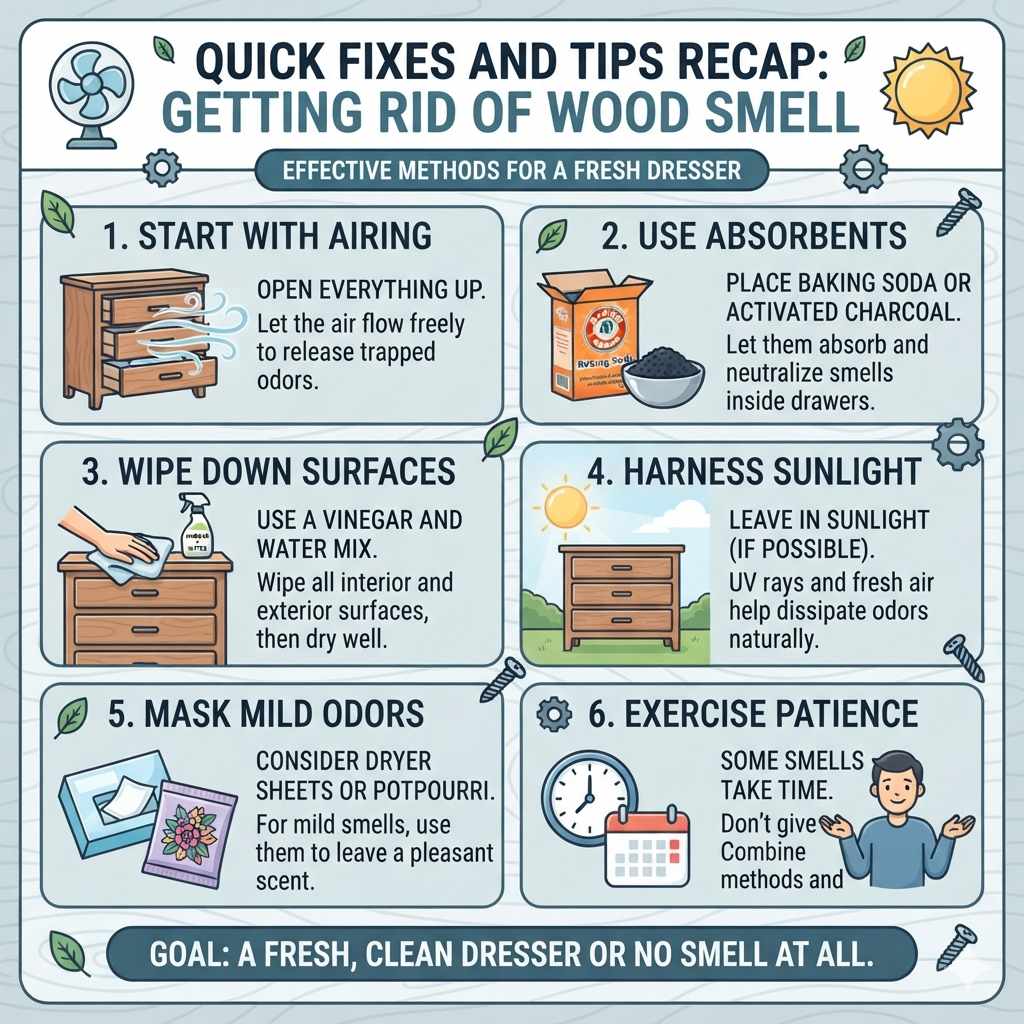
Quick Fixes and Tips Recap
Here’s a quick look at the best ways. To get rid of wood smell fast. Start with airing.
Open everything up. Let the air flow. Use baking soda.
Or activated charcoal. Place them inside the dresser. Let them absorb the smells.
Wipe down surfaces. Use a vinegar and water mix. Make sure to dry everything well.
Sunlight can help too. If the smell is mild, dryer sheets can mask it.
Remember patience. Some smells take time. Don’t give up after one day.
Keep trying different methods. Or combine them. You’ll find what works best for your dresser.
The goal is a fresh, clean smell. Or no smell at all. Just the beauty of the wood.
Frequently Asked Questions
How long does it take for a dresser to stop smelling like wood?
It varies a lot. Some new dressers lose their strong smell in a few days. Others might take a few weeks.
If you use the methods above, it can speed things up. Often, you can get a good result in 2-3 days with consistent effort.
Can I use essential oils to remove wood smell?
Yes, you can use essential oils. But use them carefully. A few drops on a cotton ball placed inside a drawer can help.
Lavender or lemon are good choices. They add a nice scent. But they might mask more than they remove.
They are best used after the main odor is gone.
Is the smell of a new wooden dresser harmful?
Usually, no. The smell comes from natural wood compounds and finishes. These are generally safe.
However, a very strong, persistent chemical smell could be a concern. Always ensure good ventilation. If you have respiratory issues, be extra cautious.
What if the smell is like old, damp wood?
This often means there’s been moisture. Or a potential for mold. Try airing it out very well.
Use baking soda or charcoal. If it persists, check for leaks or water damage. You might need to dry the wood thoroughly.
Can I paint over a smelly dresser?
Yes, but it’s better to remove the smell first. If you paint over it, the smell might seep through the paint. Especially if it’s a strong odor.
Or it could affect how the paint adheres. Try deodorizing methods before painting.
Is it okay to put clothes in a dresser that still smells a little?
It depends on how strong the smell is. And if you have sensitive skin. For mild residual smells, your clothes might pick it up.
But it will likely fade. If the smell is strong, it’s best to wait. Until the dresser is fully deodorized.
Or line the drawers with paper liners.
Conclusion
That strong wood smell from your dresser doesn’t have to stick around. With a few simple, natural tricks, you can refresh it. Airing it out, using baking soda, or a vinegar solution are great starts.
They are easy and safe. Give these methods a try. You’ll likely see great results.
Enjoy your fresh-smelling furniture!
Related pick: Check today's price on Amazon
Products related to this article
Sponsored / affiliate links. As an Amazon Associate I earn from qualifying purchases. I may earn additional commission from eligible campaigns.