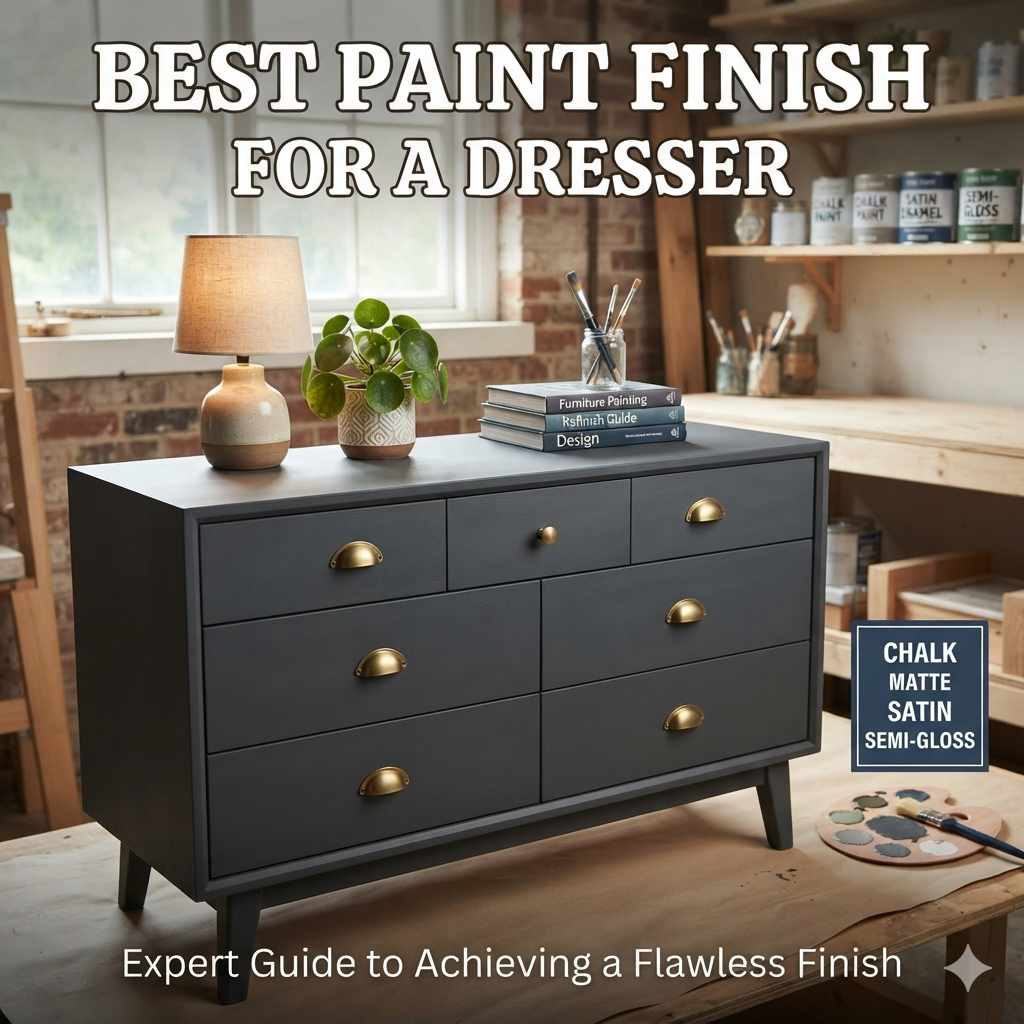
Best Paint Finish For A Dresser: Expert Guide
Picking the right paint finish for your dresser can feel like a puzzle. You want it to look good, sure. But you also need it to stand up to daily life. If you haven’t settled on a style yet, our guide to types of dressers by name can help narrow it down first.

Meuvcol
Furniture Paint for Wood & Cabinets –…
- ✅ Multi-Surface Furniture Paint – No Sanding Required: Upgrade old furniture with ease! This furniture paint applies directly to w…
- ✅ Safe Water-Based Cabinet Paint – Low Odor, Family Friendly:Formulated as a water-based cabinet paint, this low-VOC, low-odor pai…
- ✅ Durable Matte Finish – Long-Lasting Black Paint For Wood:Our advanced wood paint forms a high-density matte finish that resists…
As an Amazon Associate I earn from qualifying purchases.
For a closely related home or decor topic, What to Do with Ceiling After Removing Skylights: 5 Tips gives readers a useful next step.
For a related storage or furniture fix, How To Build A Dresser: Proven Success helps readers compare the next practical option.
For a closely related home or decor topic, Studio Monitors Vs Bookshelf Speakers: Essential gives readers a useful next step.
For a related storage or furniture fix, How To Refinish A Dresser With Chalk Paint Like A helps readers compare the next practical option.
For a related storage or furniture fix, How To Get The Iron Dresser In Animal Crossing helps readers compare the next practical option.
Things get bumped. Dust settles. Maybe kids touch it.
This guide breaks down the best paint finishes for dressers. We’ll help you find the perfect match for your style and needs. Let’s make your dresser look amazing and last for years.
The best paint finish for a dresser balances beauty with toughness. For high-traffic areas and easy cleaning, semi-gloss or satin are top choices. For a softer, more classic look, eggshell is great.
Matte finishes offer a modern, velvety feel but need more care. Consider how you use the dresser when picking your finish.
Understanding Paint Finishes: More Than Just Shine
Paint finishes are all about how much light they bounce back. This shine level affects both the look and how tough the paint is. It’s not just about how pretty it is.
It’s also about how it holds up. Think of it like clothing. Some fabrics look fancy but stain easily.
Others are tough but a bit plain. Paint finishes work in a similar way for your furniture.
Different finishes hide imperfections differently. They also feel different to the touch. Knowing these details helps you choose wisely.
It means your painted dresser will be exactly what you dreamed of. And it will stay that way with simple care. Let’s look at the main types you’ll see.
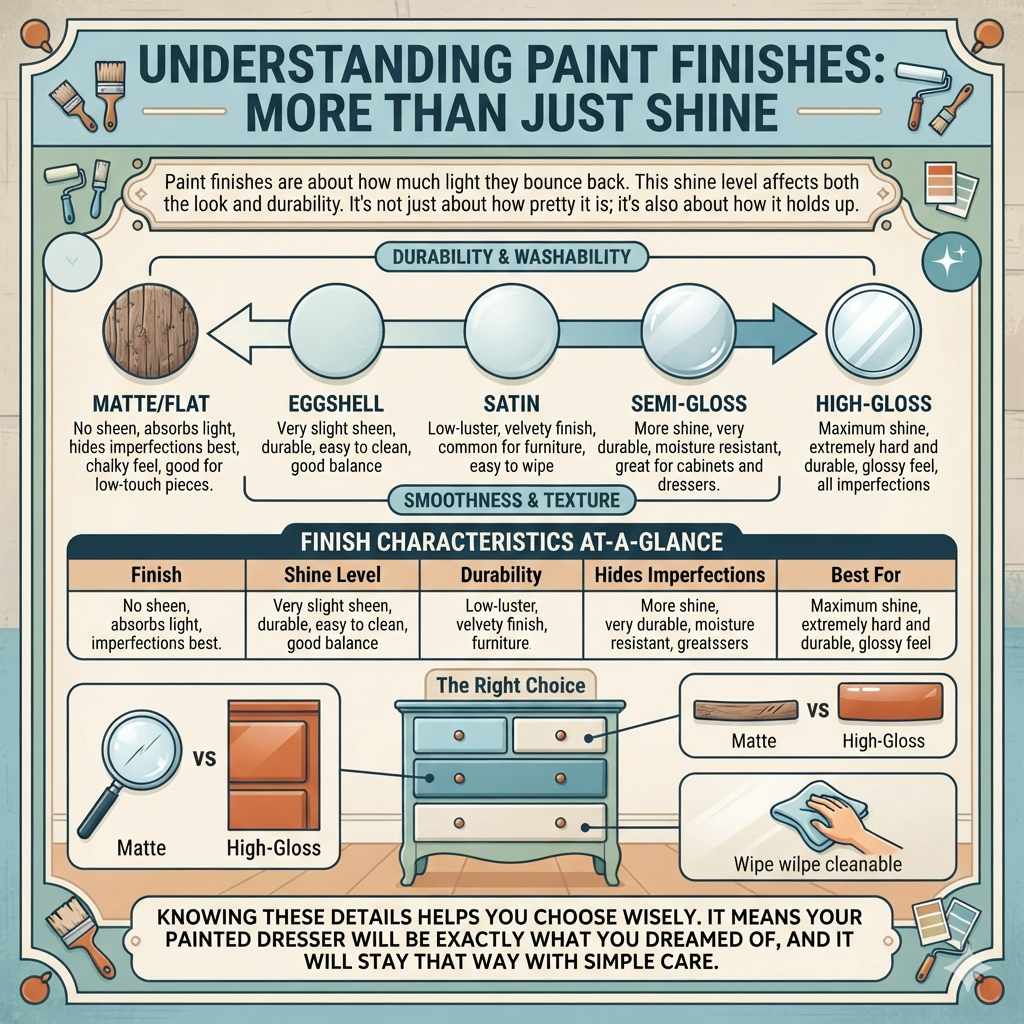
The Main Players: Gloss, Satin, Eggshell, and Matte
When you shop for paint, you’ll see these terms a lot. They describe the sheen or shininess of the paint. Each one has its own pros and cons.
This is where the real decision begins. Each has a role to play on a dresser.
Glossy Finishes: The High Shine Heroes
Glossy paints reflect a lot of light. They are very shiny. Think of a brand-new car or a high-end kitchen cabinet.
This finish is super durable. It’s also very easy to clean. Spills and smudges wipe right off.
This makes it a popular choice for things that get a lot of use.
For a dresser, gloss can give a very modern or even dramatic look. It stands out. It can make a simple design look very chic.
However, the high shine shows every little bump and flaw on the surface. If your dresser isn’t perfectly smooth, the gloss will highlight that. This means you need a very smooth surface before you paint.
There are different levels of gloss. High-gloss is the shiniest. Semi-gloss is a bit less intense but still quite shiny.
Full-gloss is often used on trim or doors. Semi-gloss is more common for furniture like dressers because it’s still very practical.
Satin Finishes: The Happy Medium
Satin paint is a bit softer than gloss. It has a gentle sheen, like the surface of satin fabric. It’s not fully matte, but it’s not super shiny either.
This makes it a great balance for dressers. It offers good durability and is relatively easy to clean. You can wipe it down without much trouble.
Satin hides minor surface imperfections better than gloss. This is a big plus for furniture that might have small dents or dings from use. It gives a smooth, elegant look.
It’s a very versatile finish. It works well in many different room styles. Most people find the satin finish pleasing to the eye.
It’s often considered the go-to for furniture. It offers a nice look without being too flashy. It’s also tough enough for drawer fronts and tops.
These parts of a dresser often get more contact. The satin finish provides a good layer of protection. It doesn’t scream for attention but adds a touch of class.
Eggshell Finishes: Soft and Subtle
Eggshell paint has a very low sheen. It’s named for the smooth, subtle look of a robin’s egg. It’s less shiny than satin.
This finish offers a softer appearance. It hides surface flaws quite well. This makes it a good choice if your dresser isn’t in perfect condition.
You get a nice, smooth look without a lot of shine.
Eggshell is more durable than matte paint. You can wipe it down. But it’s not as scrubbable as satin or gloss.
So, if you have messy kids or pets, you might want to think twice. For a bedroom dresser that isn’t in a high-traffic zone, it can be a lovely choice. It adds warmth and depth to the color.
The look is subtle and inviting. It doesn’t reflect much light. This can make a room feel cozier.
It’s a classic finish that never goes out of style. It’s perfect for a more traditional or relaxed decor. It offers a sophisticated, understated beauty.
Matte Finishes: The Velvety Touch
Matte paint has almost no shine at all. It has a flat, velvety look. This is very modern and stylish.
It hides surface imperfections the best. If your dresser has a lot of texture or flaws, matte paint can make them disappear. It gives a rich, deep color.
However, matte finishes are the least durable. They are harder to clean. Wiping them can sometimes remove the paint or leave marks.
You usually need special cleaners for matte surfaces. For a dresser, this means it’s best for places where it won’t get touched much. Think of a dresser in a guest room.
Or perhaps one that is more for display.
The appeal of matte is its sophisticated, modern look. It absorbs light. This can make colors look deeper and more intense.
It’s a choice for those who want a statement piece. But it requires more careful handling and cleaning. It’s a finish that prioritizes looks over extreme durability.
Matte vs. Low-Lustre: What’s the Difference?
People often confuse matte and flat finishes. Flat paint has zero sheen. Matte paint has a very slight sheen, almost imperceptible.
It’s a touch less porous than flat. This makes matte paint slightly more durable and easier to clean than true flat finishes. For furniture, matte is often preferred over flat due to this slight edge in washability.
Real-World Dresser Use: What Gets Touched Most?
When you think about a dresser, not every part is used the same. Some areas take more of a beating. Others are just looked at.
Understanding this helps you pick the right finish for the right part. It’s smart planning for a lasting piece.
The top of the dresser is a landing zone. Keys, mail, decorative items – they all sit there. This surface needs to be tough and easy to wipe clean.
The drawer fronts get opened and closed. Hands touch them. Sometimes with dirt or grime.
The sides might get bumped by passing traffic.
Consider a dresser in a child’s room. It will likely get more wear and tear. A dresser in a formal bedroom might see less direct handling.
This context is key to choosing a finish that will serve you well. It’s not a one-size-fits-all situation.
Key Dresser Areas and Finish Needs
- Top Surface: High contact. Needs durability and washability.
- Drawer Fronts: Frequent touch points. Requires a smooth, cleanable finish.
- Sides: Potential for bumps. A finish that hides minor scuffs is good.
- Legs/Base: Less contact, but can still get kicked or brushed.
My Own Dresser Disaster (and What I Learned)
I remember painting my first dresser. It was a beautiful old oak piece. I wanted it to look modern.
So, I picked a deep navy blue. I chose a beautiful, rich matte finish. I loved how it looked.
It was so smooth and velvety. It felt like a designer piece. I put it in my bedroom and admired it daily.
Then life happened. My cat decided the top was the perfect place for a nap. He often sleeps near windows, and he brings in a bit of dust.
I tried to wipe it off with a damp cloth. Big mistake. The matte finish smudged.
It looked awful. I felt a pang of panic. Then, I tried to dust it.
The dust just seemed to stick to it.
I eventually had to repaint the top. I learned that day that beauty has its price. For a piece that you want to be practical and easy to care for, matte isn’t always the best bet.
I ended up using a satin finish on the second go. It was still a lovely deep blue, but I could finally clean it without fear. It taught me to think about use, not just looks.
The Role of Primer: The Unsung Hero
Before you even pick your finish, you need to think about the primer. Primer is like the foundation of a house. It prepares the surface for the paint.
It helps the paint stick better. It also helps create a uniform color. This is especially true if you are painting a dark dresser a light color, or vice versa.
A good primer seals the wood. It blocks stains from coming through. This is important for older furniture.
Sometimes old wood can bleed tannins. A stain-blocking primer stops that. It also creates a smooth canvas for your finish.
This helps your final coat look its best, no matter the sheen.
For furniture painting, especially with a less durable finish like matte, a good primer is vital. It gives your paint something solid to grip. This makes your final paint job last longer.
Don’t skip this step. It’s a small effort for a big payoff in the end. It ensures your paint adheres well and lasts.
Primer Types for Dressers
- Oil-Based: Great for stain blocking and adhesion. Good for raw wood or problematic surfaces. Requires mineral spirits for cleanup.
- Water-Based (Latex/Acrylic): Easier cleanup with soap and water. Dries faster. Good for most general furniture painting.
- Shellac-Based: Excellent for blocking tough stains like smoke or pet odors. Dries very fast.
Always use a primer designed for furniture or cabinetry. This ensures the best adhesion.
Environmental Factors: Climate and Humidity
The place where you live can actually impact your paint finish. In humid areas, paint can take longer to dry. It can also be more prone to issues like mildew.
In very dry climates, paint might dry too fast. This can lead to brush strokes or an uneven finish.
For humid regions, choose a paint that is formulated to resist moisture. Many interior paints now have good moisture resistance. For very dry areas, you might need to work in smaller sections.
Or use a paint with a slower drying time. Sometimes adding a paint extender can help.
The humidity can also affect how durable the paint is over time. A finish that is less resistant to moisture might not hold up as well in a damp basement, for example. Consider where the dresser will live.
Is it in a steamy bathroom? Is it in a dry attic room? This context matters for the paint’s lifespan.
Choosing Based on Your Lifestyle
Your daily life is a huge factor. Are you someone who keeps things neat and tidy? Or do you have a busy household with kids and pets running around?
Be honest with yourself about your habits. This will guide your finish choice.
Busy Household with Kids/Pets: You need durability and washability. This points towards semi-gloss or a good quality satin. These finishes can handle frequent cleaning.
They resist scuffs and smudges better. They are forgiving of little hands and paws.
Neat and Tidy Household: If you have a calm environment, you have more freedom. You can opt for eggshell for a softer look. Or even matte if you are very careful.
These finishes offer a different aesthetic. They can make a piece feel more refined or cozy.
High-Traffic Areas: A dresser in a hallway or entryway needs to be robust. The top surface, especially, needs to withstand daily use. Semi-gloss or satin are the safest bets here.
They offer the best blend of looks and resilience.
Lifestyle Matchmaker: Which Finish is For You?
| Lifestyle | Recommended Finish | Why? |
| Busy, Kids & Pets | Semi-Gloss / Satin | Durable, Easy to clean, Resists scuffs |
| Calm, Tidy Home | Eggshell / Satin | Softer look, Hides flaws well, Good balance |
| Design Focused, Low Traffic | Matte / Eggshell | Modern look, Deep color, Hides imperfections best |
| High Traffic / Entryway | Semi-Gloss / Satin | Maximum durability, Washability is key |
The “Why” Behind the Finish: Aesthetics and Mood
Beyond practical concerns, finishes set a mood. They influence how a dresser looks and feels in your room. It’s about the overall vibe you want to create.
Each finish brings its own personality to the piece and the space.
A high-gloss finish can make a dresser look very sleek and modern. It can feel almost like a piece of art. It reflects light, making a room feel brighter.
This can be great for smaller spaces. It can also give a very luxurious feel.
Satin and eggshell finishes offer a more classic and understated elegance. They feel warm and inviting. They don’t overpower a room.
They blend in beautifully. They give a sense of calm and sophistication. These are often chosen for a more traditional or transitional style.
Matte finishes bring a contemporary, soft, and luxurious feel. They are perfect for achieving that designer look. They make colors appear deep and rich.
This can create a cozy, enveloping atmosphere. They feel very tactile and inviting to the eye.
When to Consider a Top Coat or Sealer
For some finishes, especially matte or eggshell, you might want extra protection. A clear top coat or sealer can add a layer of defense. This can make the paint more durable and easier to clean.
It’s like putting a shield over your painted surface.
You can get top coats in different sheens. A matte top coat will maintain the flat look. A satin top coat will add a slight sheen.
This is a great way to boost the performance of a less durable paint. It helps prevent scratches and wear. It can also make cleaning much easier.
It’s particularly useful for dresser tops. Or for drawer fronts that get a lot of handling. Always make sure the top coat is compatible with your paint type.
Water-based paints usually need water-based top coats. Oil-based paints usually need oil-based top coats.
Top Coat Wisdom
- Adds Protection: Increases scratch and wear resistance.
- Enhances Cleanability: Makes surfaces easier to wipe down.
- Maintains Finish: Choose a top coat sheen that matches your desired look (matte, satin, etc.).
- Compatibility is Key: Ensure it works with your base paint.
Many furniture paints already contain these protective qualities. Check your paint can! Some are formulated for durability from the start.
Surface Preparation: The Foundation of a Great Finish
No matter which finish you choose, your prep work is crucial. A flawless paint job starts with a flawless surface. This means cleaning, sanding, and priming correctly.
This is where many DIY projects stumble. But it’s also the easiest place to ensure success.
First, clean the dresser thoroughly. Remove all dust, grime, and old wax or polish. A good degreaser cleaner is often needed.
Then, lightly sand the entire surface. This creates a rougher texture. This helps the primer and paint stick.
For glossy finishes, sanding is extra important. It helps break up the shine.
After sanding, wipe away all the dust. A tack cloth is excellent for this. Then, apply your primer.
Let it dry completely. You might need a second coat of primer. Especially if you’re covering a dark color.
Finally, lightly sand the primer. This creates a super smooth base. Then wipe it clean again.
Now, your dresser is ready for paint.
Prep Checklist for Painting Dressers
- Clean: Remove all dirt, grease, and old finishes.
- Sand: Lightly sand all surfaces to create adhesion.
- Wipe Dust: Use a tack cloth or damp cloth.
- Prime: Apply one or two coats of quality primer.
- Sand Again: Lightly sand the primer for smoothness.
- Wipe Dust: Remove all sanding dust.
Applying the Paint: Techniques for a Smooth Finish
How you apply the paint matters. Brushes, rollers, or sprayers all give different results. For a dresser, a combination of a high-quality brush and a foam roller is often best.
Use a good synthetic brush for detailed areas like corners, edges, and trim. Use a small foam roller for large, flat surfaces like the top and sides. Rollers give a smoother, more even coat than brushes on large areas.
This helps reduce brush strokes.
Apply paint in thin, even coats. It’s better to do two or three thin coats than one thick one. Let each coat dry completely before applying the next.
This ensures the best adhesion and a smooth finish. For high-gloss or satin finishes, you want to avoid applying too much paint. This can lead to drips and an uneven sheen.
If you’re using a spray paint for furniture, practice on scrap wood first. Spraying gives a very smooth, factory-like finish. But it requires good ventilation and technique.
It’s a great option for intricate details or a very modern look.
Common Pitfalls to Avoid
When painting a dresser, several common mistakes can ruin your hard work. Being aware of these can save you a lot of frustration. Many of them tie back to preparation or application.
Skipping Primer: As we’ve seen, primer is essential. Not using it can lead to poor adhesion, show-through, and a shorter lifespan for your paint job. It’s a common shortcut that never pays off.
Rushing the Prep: Not cleaning or sanding properly means your paint won’t stick well. You’ll get peeling or chipping. It’s the most frequent cause of paint failure on furniture.
Applying Paint Too Thickly: This leads to drips, uneven coverage, and longer drying times. It can also make the finish look lumpy. Thin, even coats are always the way to go.
Not Letting Coats Dry: Painting over wet paint can cause problems. It can lift previous layers, create a gummy texture, and prevent proper curing. Patience is key.
Using the Wrong Tools: Cheap brushes and rollers can leave streaks and fuzz. Invest in good quality tools for a better finish. Especially for the final top coats.
Quick Fixes for Paint Problems
- Drips: Gently sand them smooth when dry. Touch up with a thin coat.
- Brush Strokes: Lightly sand and apply another thin coat. Or try a different application method.
- Uneven Sheen: This can be tricky. Sometimes a consistent top coat can even it out. If it’s bad, you might need to repaint.
- Scuffs on Matte: Clean very gently with a damp cloth. For tougher marks, consider a specialized cleaner or a very light scuff and touch-up.
Long-Term Care for Your Painted Dresser
Once your dresser is painted and looking great, caring for it properly will keep it that way. The finish you choose will dictate the level of care needed.
For glossy and satin finishes, regular dusting with a soft cloth is usually enough. For tougher spots, use a damp cloth with a little mild soap. Avoid abrasive cleaners.
They can scratch the surface.
Eggshell finishes are similar. Dust regularly. For marks, use a damp cloth.
Be a bit gentler than with satin. Avoid harsh scrubbing.
Matte finishes require the most care. Dust gently. For cleaning, use a very slightly damp cloth.
Test any cleaner in an inconspicuous spot first. Avoid getting the surface too wet. This finish is beautiful but delicate.
Always use coasters for drinks. Try to avoid placing hot items directly on the surface. Protect the top from direct sunlight if possible.
This can fade the paint over time. With thoughtful care, your painted dresser will stay beautiful for years.
When is a Matte Finish Worth the Risk?
I get asked this a lot. People love the look of matte. They see it in magazines and on Pinterest.
They want that soft, sophisticated feel. And it can be totally worth it! The key is knowing where it works best.
Matte finishes are perfect for pieces that are more decorative. Or for dressers that are in low-traffic areas. Think about a dresser in a formal dining room.
Or a bedroom dresser that doesn’t get a lot of daily use. Maybe it’s mostly for clothes that aren’t worn every day.
If you have young children or pets that are hard on furniture, matte might not be your best friend. But if your home is calm, and you’re careful, the aesthetic benefits are huge. It gives a depth and richness that other finishes can’t quite match.
It feels luxurious.
Also, consider painting the interior of drawers with a more durable finish. The outside can be matte. But the inside needs to handle being opened and closed.
A simple satin or even an interior wood paint works well there.
Are All “Satin” Paints the Same?
No, not really. Paint brands can vary. What one brand calls satin, another might call eggshell.
Or even semi-gloss. It’s important to look at the sheen level. Most paint cans will give you a description or a visual guide.
Generally, the order of shininess goes like this: Matte (least shiny) -> Eggshell -> Satin -> Semi-Gloss -> High-Gloss (most shiny).
Some brands offer “low-sheen satin” or “high-sheen satin.” These variations can make a difference. Always check the can. If you’re unsure, get a sample pot and test it.
See how it looks in your lighting. See how it feels to touch.
Consider the overall style. A very subtle satin might be perfect for a traditional look. A slightly more pronounced satin might fit a transitional style better.
Don’t be afraid to experiment with samples. It’s the best way to know for sure.
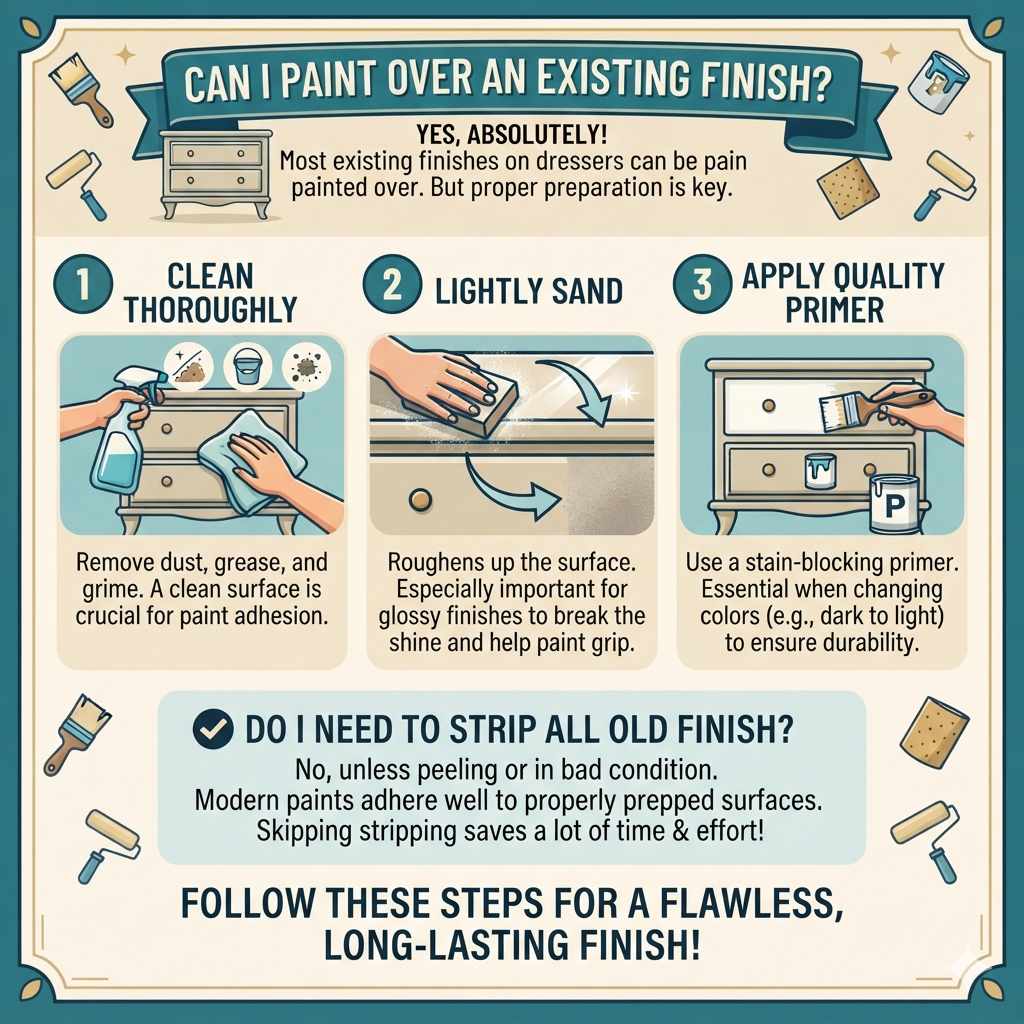
Can I Paint Over an Existing Finish?
Yes, absolutely! Most existing finishes on dressers can be painted over. But proper preparation is key.
You can’t just slap new paint on old paint or varnish.
First, clean the surface thoroughly. Then, lightly sand it. This roughens up the surface.
It helps the new paint adhere. If the old finish is very glossy, you need to sand it well. This breaks up that slick shine.
You want the new paint to grip.
After sanding and cleaning, apply a good quality primer. A stain-blocking primer is often a good idea. Especially if you’re going from a dark finish to a light color.
Or if the old finish is dark and you want to go light. The primer acts as a bridge. It ensures your new paint job lasts.
You don’t necessarily need to strip all the old paint or varnish. Unless it’s peeling or in very bad condition. Most modern paints and primers are designed to adhere well to properly prepped surfaces.
Skipping the stripping saves a lot of time and effort.
FAQ: Your Top Questions Answered
What is the most durable paint finish for a dresser?
The most durable paint finishes for a dresser are typically semi-gloss and high-gloss. They are harder and more resistant to scratches and wear. They are also the easiest to clean.
However, they show imperfections more readily.
Which finish is best for hiding imperfections on a dresser?
Matte finishes are the best at hiding imperfections. They absorb light and have no sheen, so bumps, dents, and scratches are less noticeable. Eggshell is also good at hiding flaws, followed by satin.
Glossy finishes highlight every surface flaw.
Can I mix finishes on the same dresser?
Yes, you can mix finishes! Many people choose a more durable finish like satin or semi-gloss for the top and drawer fronts. Then, they use a matte or eggshell finish on the sides or legs for contrast.
This allows you to balance durability with aesthetics.
How do I choose between satin and eggshell for my dresser?
Choose satin if you want a bit more durability and washability. It has a gentle sheen and is a good all-around choice. Choose eggshell if you prefer a softer, more subtle look and are less concerned about heavy-duty cleaning.
Eggshell hides flaws very well and has less sheen than satin.
Do I need to use a special paint for furniture?
While you can use regular interior paint, specialized furniture paints or cabinet paints are often recommended. These paints are formulated for better durability, adhesion, and a smoother finish on high-contact surfaces like furniture. They often have built-in primers or offer superior hardness.
How long does painted furniture take to cure?
Most painted furniture will be dry to the touch within a few hours. However, it takes much longer for the paint to fully cure and reach its maximum hardness and durability. This can take anywhere from 7 to 30 days, depending on the paint type and environmental conditions.
Avoid heavy use and harsh cleaning during this curing period.
Wrapping Up Your Dresser Finish Decision
Choosing the best paint finish for your dresser is all about balance. It’s about how it looks, how it feels, and how it performs in your home. Think about your lifestyle.
Consider the dresser’s location and how much it will be used. Don’t forget about surface preparation and good application techniques.
Whether you go for a high-shine gloss, a versatile satin, a soft eggshell, or a modern matte, the right finish will transform your dresser. It will make it a beautiful and functional piece that you’ll love for years to come. Take your time, enjoy the process, and create something truly special.
Related pick: Check today's price on Amazon
Products related to this article
Sponsored / affiliate links. As an Amazon Associate I earn from qualifying purchases. I may earn additional commission from eligible campaigns.

![Furniture Wax - 100% Natural Sealant for Chalk Furniture Paint or Raw Wood, Light Protection, Easy To Apply, No Odor, Eco-Friendly - 7 Color Choices - Antiquing [Brown] (8 oz)](https://m.media-amazon.com/images/I/41ZNmSTmwhL._SL500_.jpg)