How to Get Smell Out of a Dresser: 4-Step Fix
Get musty smell out of a dresser by emptying it completely, wiping every surface with a vinegar or baking soda solution, and airing it out in direct sunlight for a few hours. Skip the airing-out step and the smell just relocates into your clean clothes instead of leaving the wood. This 4-step fix covers the deep clean, natural cleaners, airing out, and odor-absorption tricks for stubborn cases like mildew or old cigarette smoke.
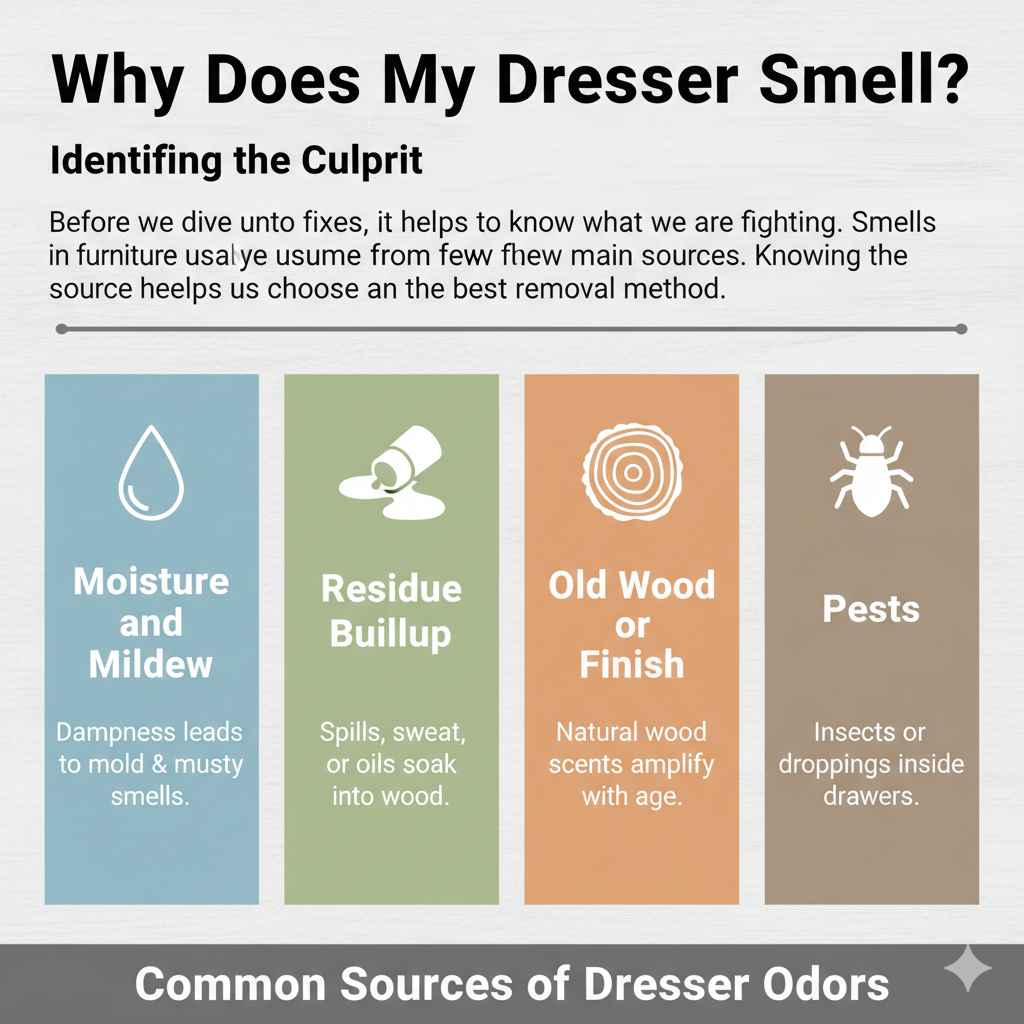
Why Does My Dresser Smell? Identifying the Culprit
Before we dive into the fixes, it helps to know what we are fighting. Smells in furniture usually come from a few main sources. Knowing the source helps us choose the best removal method — for a deeper breakdown of each cause, see why clothes in a dresser smell.
Common Sources of Dresser Odors
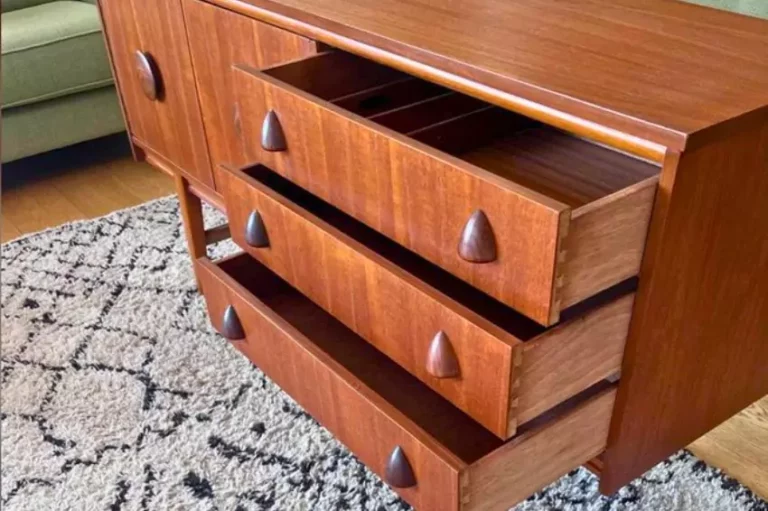
The material of your dresser—wood, particle board, or laminate—plays a role in how it holds smells.
- Moisture and Mildew: This is the most frequent cause. If the dresser was stored in a basement, garage, or damp room, moisture seeped into the wood pores, causing mildew or mold growth. This leads to that classic musty smell.
- Residue Buildup: Spills (like perfume or spilled drinks), sweat, or oils from clothing can soak into the wood finish or drawer liner over time.
- Old Wood or Finish: Older dressers, especially those made from solid wood like cedar or pine, naturally have strong scents that can become amplified over time, sometimes mingling with mustiness.
- Pests: Although less common, small pests or droppings inside the drawer cavity can cause lingering, unpleasant odors — see how to keep roaches out of dresser drawers if this is the culprit.
Best Dresser Deodorizer Pick
Ever Bamboo Drawer Deodorizer & Dehumidifier – $9.99
Bamboo charcoal packs sized to sit right inside a drawer – the same odor-absorption principle as Step 4’s activated charcoal trick, without measuring loose charcoal.
- Best for: Ongoing odor control after the deep clean removes the initial smell
- Why we picked it: Matches this guide’s Step 4 charcoal odor-absorption tactic, pre-packaged for drawers
- Main drawback: Needs recharging in sunlight every few months to keep working
Compare more dresser odor fixes
 Option 1 Moso Natural Air Purifying Bag 200g – $12.95
|
 Option 2 Amazon Basics Fragrance-Free Gel Odor Eliminator – $4.84
|
 Option 3 Cedar Essence Cedar Drawer Liners – $15.00
|
As an Amazon Associate we earn from qualifying purchases.
Step 1: The Essential Deep Clean and Emptying
No matter the smell, the first step is always a complete reset. You cannot deodorize something that is still dirty. Think of this like changing the oil in your car; it’s the necessary first maintenance step!
Gather Your Cleaning Arsenal (The Easy Way)
You likely already have everything you need in your kitchen or laundry room.
- Empty trash can or bucket for old items.
- Soft cloths or microfiber towels.
- Vacuum cleaner with a crevice tool.
- Distilled white vinegar.
- Baking soda (the ultimate deodorizer).
- Warm water.
The Tear-Down Process
Follow these steps to fully expose all surfaces:
- Empty Everything Out: Remove every single item from the dresser. Be thorough—check corners and behind hardware.
- Remove Drawers: If possible, take the drawers completely out of the frame. This allows you to clean the inside of the drawer box and the dresser frame rails separately. It’s much easier this way!
- Inspect for Damage: While empty, look closely at the wood or particle board. If you see obvious signs of black mold (not just dust), you may need a stronger cleaning agent like a mild bleach solution (use gloves and ventilation!) before deodorizing.
- Vacuum Thoroughly: Use the crevice tool on your vacuum to suck up dust, lint, and debris from every corner of the dresser frame and the inside of each drawer. Pay special attention to the tracks or slides where dust loves to hide.
Step 2: The Natural Cleaning Powerhouses (Vinegar & Baking Soda)
Wood needs gentle handling. Harsh chemicals can damage the finish or make the smell worse by reacting with trapped odors. Vinegar and baking soda neutralize odors naturally.
The Vinegar Wipe-Down
White vinegar is fantastic because it kills mold spores and bacteria that cause bad smells, but it evaporates cleanly without leaving its own strong scent behind (once dry).
Safety Tip: Always test any cleaning solution on an inconspicuous area first, like the very back edge of the bottom drawer.
- Mix Your Solution: In a bucket, mix equal parts distilled white vinegar and warm water (a 1:1 ratio).
- Wipe Down: Dip a soft cloth into the solution and wring it out until it is damp, not soaking wet. Wipe down every interior surface of the drawers and the corresponding dresser frame cavity.
- Let It Sit (Briefly): Allow the vinegar solution to sit on the surfaces for about 5 to 10 minutes. This gives the acidity time to work on odor-causing residues.
- Wipe Dry: Use a fresh, dry cloth to wipe down all surfaces thoroughly. You want to remove any remaining moisture.
The Baking Soda Power Scrub
Baking soda (sodium bicarbonate) is a champion absorber. It doesn’t just mask odors; it chemically reacts with them to neutralize them.
- Make a Paste: Mix a few tablespoons of baking soda with just enough water to create a thick paste, similar to toothpaste consistency.
- Apply to Stubborn Spots: Gently rub this paste onto areas where the smell seems strongest, like stains or damp-looking spots inside the drawer.
- Let it Dry: Allow the paste to dry completely, which might take a few hours. As it dries, it pulls odors out of the wood.
- Vacuum Clean: Once totally dry, vacuum up all the baking soda residue thoroughly.
Step 3: The Airing Out (Crucial for Wood Furniture)
Wood is porous, meaning it traps air and moisture. If you clean it but trap the moisture inside, the smell will return. Air circulation is non-negotiable for eliminating trapped odors.
Sunlight: Nature’s Deodorizer
Sunlight and fresh air are fantastic, inexpensive tools for furniture restoration. UV rays help sanitize and dry out wood fibers.
- Find a Safe Spot: Move the dresser (or just the drawers) to a sunny, well-ventilated area, like a covered porch or near an open window.
- Maximize Airflow: Place the drawers so they are fully open. If possible, prop them up slightly so air can move underneath them as well.
- Let the Sun Shine: Leave the pieces airing out for at least 24 to 48 hours. If it’s sunny, direct sunlight is great, but monitor very old or delicate antique pieces, as intense, direct sun can sometimes fade certain finishes. A warm, breezy day works wonders.
If you cannot move the whole dresser, open all the windows in the room, open all the drawers wide, and place a fan running directly into the dresser cavities for several hours each day.
Step 4: Odor Absorption Tactics for Deep Smells
If, after cleaning and airing, a faint, residual odor remains (often the case with serious mildew or smoke damage), you need an absorber to pull the remaining molecules out of the wood pores.
The Best Natural Absorbers for Furniture
These materials work by having a huge surface area that traps odor molecules.
| Absorber Material | How to Use It | Notes for Success |
|---|---|---|
| Activated Charcoal (Unscented) | Place several open bags or bowls of charcoal inside each drawer. | This is the most effective option, often used in professional remediation. Find it at pet stores (aquarium section) or hardware stores. |
| Dry Coffee Grounds | Spread dry, unused grounds thinly on paper plates and place them in the drawers. | Excellent for strong, lingering odors. Warning: The drawer might smell faintly like coffee for a few days after removal. |
| Newspaper | Crumple up sheets of newspaper and tightly pack them into the empty drawers. | The ink and paper pulp absorb some moisture and odor. Leave overnight or for several days. |
| Cat Litter (Unscented Clay) | Place a shallow layer in an open, disposable container inside the drawer. | Very effective for absorbing dampness and mildew smells quickly. |
The Absorption Process
These materials need time to work. Do not rush this step!
- Seal the Drawers: Once you have placed your chosen absorber material inside the empty drawers (use multiple methods if the smell is severe), close the drawers completely.
- Wait Patiently: Leave the absorbers in place for a minimum of 3 to 7 days. For severe smells, leave them for up to two weeks.
- Check and Repeat: After the initial waiting period, remove the absorber material and smell the drawer. If the odor is weaker but still present, replace the material with fresh supplies and repeat the waiting period.
Specialized Fixes for Specific Smells
Sometimes the smell isn’t just general mustiness; it’s something specific, like smoke or strong perfume, that has embedded itself deep into the wood grain.
Dealing with Smoke Odors (Fire or Cigarette)
Smoke particles adhere tenaciously to wood surfaces.
- Use TSP (If Safe): For very heavy smoke damage, look into a commercial cleaner like Trisodium Phosphate (TSP), following EPA guidelines for safe use and disposal as recommended by the EPA for cleaning surfaces. This is a powerful degreaser that captures soot.
- Odor Sealer Finish: If the wood is unfinished or you plan to refinish it anyway, a coat of shellac-based primer (like Zinsser BIN) acts as a seal, locking the smoke odors into the wood so they cannot off-gas. This is a more advanced step but highly effective for persistent smoke damage.
- Vinegar Steam: If you can safely steam the drawers (using a handheld steamer, keeping the nozzle at a safe distance to avoid soaking the wood), the heat can help release smoke compounds that the vinegar wash missed.
Tackling Mildew and Damp Smells in Wood
Mildew is a living organism, so killing it is key.
- Hydrogen Peroxide: For areas where you suspect visible mold, a 3% hydrogen peroxide solution (applied directly, allowed to bubble/sit for 10 minutes, then wiped clean) is a great non-chlorine bleach alternative to kill spores deep in the grain.
- Borax Treatment: Borax powder mixed with water can be used similarly to baking soda paste, but it is a more potent mildew inhibitor. Ensure you vacuum every speck up afterward.
Final Touches: Keeping Smells From Returning
Once your dresser is clean and fresh, you want to maintain that state. Prevention is always easier than repair!
Protecting the Interior Surfaces
If you are storing items that tend to hold moisture or strong scents (like sportswear or wool sweaters), consider adding a barrier.
- Drawer Liners: Use cedar liners, heavy waxed paper, or scented drawer liners. These create a physical barrier between your clothes and the wood.
- Cedar Blocks: Cedar naturally repels pests and has a refreshing scent. Place a few cedar blocks or shavings in the corners of the drawers. The scent fades over time, but you can easily sand them lightly to reactivate the aroma.
- Ventilation: If the dresser is against a solid wall in a humid room, pull it out an inch or two to allow slight airflow behind it, preventing moisture buildup against the back panel.
What to Avoid Putting Back In
Do not immediately put strongly scented items back into the newly cleaned dresser.
- Clean all clothing items that go into the dresser before storing them.
- Allow the dresser to breathe with the drawers slightly ajar for a day after putting clothes back in.
- Avoid placing damp items (even slightly damp from the dryer) directly into closed drawers.
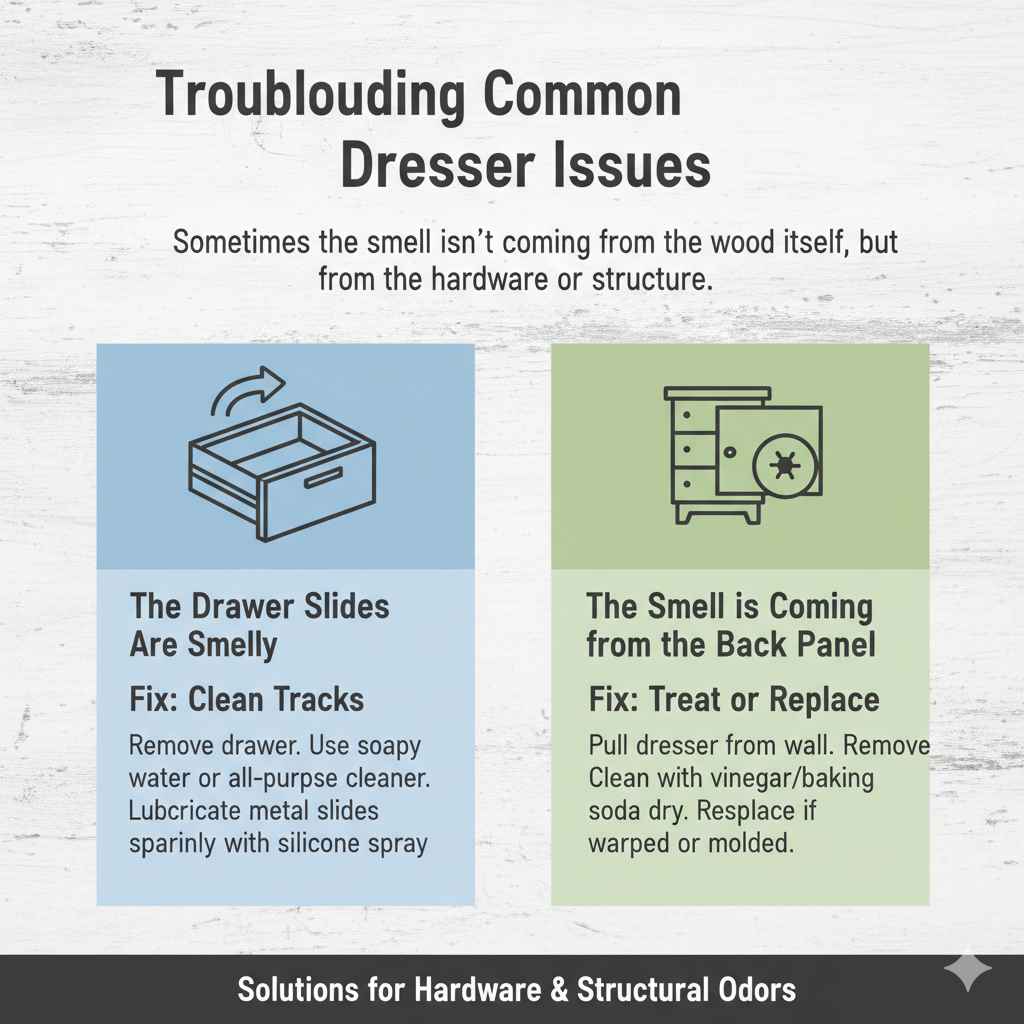
Troubleshooting Common Dresser Issues
Sometimes the smell isn’t coming from the wood itself, but from the hardware or structure.
The Drawer Slides Are Smelly
If the smell is strongest when you pull the drawer out, the tracks might be the issue, especially on older metal or wood slides where grease or dust has built up.
Fix: Remove the drawer. Clean the tracks thoroughly with a mild soapy water solution or an all-purpose cleaner. Wipe down the corresponding rails on the drawer itself. If the slides are metal, a tiny amount of silicone spray lubricant (used sparingly) can help them move smoothly and prevent metal-on-wood friction smells.
The Smell is Coming from the Back Panel
If you suspect the back panel (often thin particle board) is the source, it means it absorbed humidity from the wall behind it.
Fix: Carefully pull the dresser away from the wall. If possible, remove the back panel (usually nailed or screwed on). Treat that panel with the vinegar or baking soda treatment outlined above, ensuring it dries completely before reattaching it. If the panel is warped or significantly molded, replacement is the best long-term solution.
Frequently Asked Questions (FAQ) for Dresser Deodorizing
Q1: Can I use bleach to clean a smelly wooden dresser?
A: It is best to avoid chlorine bleach on natural wood, as it can strip the color and potentially damage the finish. Stick to white vinegar or a specialized wood cleaner for surface cleaning. Only use bleach if you confirm the presence of black mold and are prepared to rinse and dry immediately.
Q2: How long does it take for baking soda to absorb odors?
A: Baking soda works best when given ample time. For best results, leave a layer of dry baking soda or a baking soda paste on the affected area for at least 12 to 24 hours before vacuuming it up.
Q3: Is it okay to put the dresser drawers outside in the sun?
A: Yes, fresh air and sunlight are excellent deodorizers for furniture! Just avoid leaving them out overnight or during rain. If the sun is extremely intense, try to keep the drawers in bright shade to prevent fading the wood finish.
Q4: I cleaned everything, but my clothes still smell musty after a week. What now?
A: This means the odor molecules are still trapped in the wood pores. Move immediately to Step 4 and use a powerful absorber like activated charcoal inside the closed drawers for at least one week. Airing out the clothing itself also helps break the cycle.
Q5: What is the fastest way to get rid of the vinegar smell after cleaning?
A: The vinegar smell goes away as it dries. To speed this up, open all windows and use a fan pointed directly into the drawers. Once dry, the sharp vinegar scent will completely dissipate, leaving a neutral wood base.
Q6: Should I use scented oils like lemon or lavender instead of plain vinegar?
A: Essential oils can be used after you have cleaned and neutralized the odor. They are great for masking and adding a pleasant scent, but they won’t actually remove the underlying mold or mildew causing the original bad smell. Use them as a final, optional step.
Conclusion: Enjoying Your Fresh, Odor-Free Furniture
Tackling a smelly dresser might seem like a big job, but as you’ve seen, it boils down to a few simple, effective techniques: deep cleaning, natural neutralizing agents, and plenty of fresh air. You are in complete control of this fix! By thoroughly emptying, wiping down with vinegar and baking soda, and giving the wood time to breathe in the sun or with charcoal absorbers, you have successfully removed the source of the odor.
Now that your dresser is neutralized and refreshed, you can confidently store your wardrobe inside, knowing your favorite shirts and sweaters will stay smelling clean. Remember these steps for any piece of wooden furniture that starts developing a funk—a little proactive maintenance goes a long way in keeping your home smelling great! Keep up the great DIY work; you’ve got this!
Products related to this article
Sponsored / affiliate links. As an Amazon Associate I earn from qualifying purchases. I may earn additional commission from eligible campaigns.