How to Replace Metal Drawer Slides in a Dresser
Replace metal drawer slides by first identifying the slide type, then measuring length, height, and mounting pattern. If the hardware is sound, remount it. If the bearings, rollers, or tracks are bent or missing, replace the full pair. The wrong slide leaves the drawer crooked, sticky, or unsafe, and it can damage the dresser box. Manufacturer installation guides consistently stress matching the slide type and keeping both members level, parallel, and square; that alignment is what prevents bind and premature wear. This guide shows how to diagnose the failure, match replacement slides, and decide between remounting, swapping the pair, or rebuilding the drawer.
What you’ll need

- Screwdriver or drill-driver
- Phillips and flathead bits
- Tape measure
- Small square
- Pencil
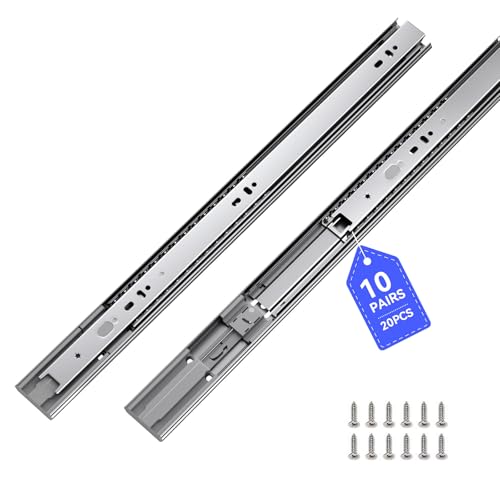
- Replacement drawer slides that match the old type
- Wood filler or wooden plugs for stripped holes
- Short screws that fit the slide holes
- Lubricant made for drawer slides
- Flashlight
Measurements to have on hand
- Slide length
- Mounted side
- Extension type
- Hole spacing
- Whether the drawer box is square
How do you tell which type of drawer slide you have?
Start by identifying the slide type before you remove a screw. Side-mount slides typically fasten to the drawer sides and cabinet walls. Center-mount slides typically run under the drawer center line. Ball-bearing slides often have a metal track and may include a release tab. Soft-close slides often have latches or clips underneath and need a gentler release. The slides most often replaced in the field are bent side-mount rails, worn ball-bearing carriers, and soft-close mechanisms with broken release tabs, so checking the style first avoids buying the wrong hardware.
Side-mount slides
Side-mount slides are common on modern furniture and are usually visible when the drawer is open. They sit on both sides of the drawer and cabinet opening. Check for a release lever or tab on each side before you pull the drawer free. If the slide is bent, the drawer may drag on one side. A bent rail usually shows a kink, twist, or roller path that no longer sits straight; a racked drawer box usually shows one corner out of square even when the slide itself is straight.
Center-mount slides
Center-mount slides can be harder to diagnose because much of the hardware sits below the drawer. They may need screws or brackets removed before the drawer comes out. Check the center rail under the drawer bottom and inside the cabinet floor. If the drawer wobbles from front to back, the center support may be loose or worn. In a center-mount setup, uneven wear often shows up as side-to-side play at the front with the rear still tracking straight.
Ball-bearing and soft-close slides
Ball-bearing slides move on metal bearings and often use release tabs on each side. Soft-close slides often have latches or clips underneath, so forcing the drawer can break the mechanism. If the drawer stops partway out and then resists, look for the release point instead of pulling harder. That matters when you need the same hardware back in place. For these slides, a common field tolerance problem is a left-right mismatch of only about 1/16 in to 1/8 in in height or setback, which can be enough to make the carriage drag or self-close unevenly.
How do you remove a dresser drawer with metal slides?
Remove the drawer by extending it fully, finding the release method, and supporting its weight before you free it. Metal slides can be side-mount, center-mount, ball-bearing, or soft-close, and each uses a different release point. Miss the latch or tab, and you can bend the rail or break the stop. Safety guidance from hardware manufacturers is consistent here: support the drawer before release, keep fingers clear of pinch points, and do not force a jammed slide past its stop.
Check for release levers or tabs
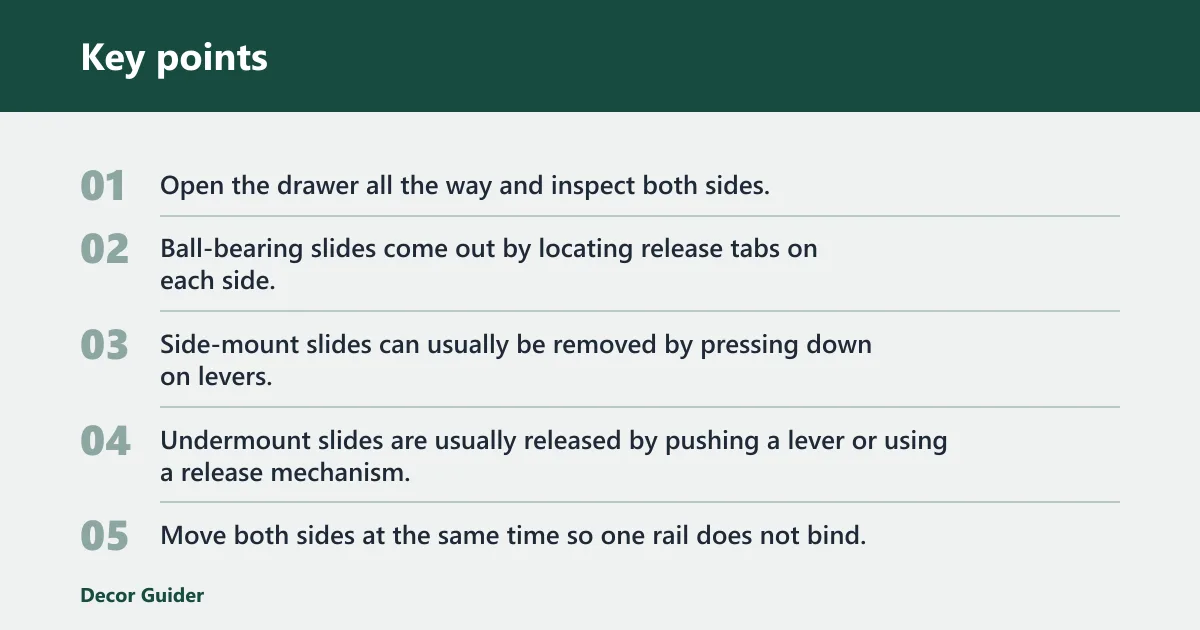
Open the drawer all the way and inspect both sides. Ball-bearing slides come out by locating release tabs on each side. Side-mount slides can usually be removed by pressing down on levers. Undermount slides are usually released by pushing a lever or using a release mechanism. Move both sides at the same time so one rail does not bind. If the drawer only releases on one side, that side is usually the one that is out of alignment or loaded more heavily.
Support the drawer before pulling it free
Keep one hand under the drawer front while you work the release. That helps balance the weight before removal and reduces the chance of the drawer dropping when the slides separate. If the drawer is heavy, pull it out in a controlled line rather than at an angle. Say your drawer sticks on the right side only; that usually means the right slide is out of alignment or bent, so do not yank the left side harder. A quick way to tell bent rails from a racked drawer box is to remove the drawer and sight down the rail: a bent rail will show a visible wave or kink, while a racked box will sit out of square even when the slides are straight.
Watch for drawer stops
Drawer stops prevent drawers from falling out. They can be plastic tabs or small wood pieces, and some also keep the drawer from going too far in. If the drawer stops at the end and will not come free, inspect the stop before forcing it. A common first-timer mistake is pulling harder after the stop engages, which can snap the slide or tear out mounting screws. When the stop is intact but the drawer still will not release, the issue is usually the latch geometry, not extra pulling force.
How do you replace metal drawer slides?
Replace the slides by removing the damaged pair, matching the new hardware to the old layout, and mounting both sides in the same position. If the slide body is straight and the holes still hold well, remounting may be enough. If the rail is bent, the bearings are missing, or the release parts are broken, swap the full pair.
- Pull the drawer out and release it from the cabinet.
- Remove the damaged slide pair from the drawer and cabinet.
- Measure the old slide length, hole spacing, and extension type.
- Check left and right orientation before buying replacements.
- Install the new slides at the same height and setback.
- Slide the drawer in halfway, then confirm both rails engage evenly.
- Adjust one side at a time if the drawer rubs or tilts.
- Retighten the screws after a final test run.
If that didn’t work, try this next
If the drawer still binds after a correct swap, check the cabinet opening and the drawer box itself. Look for square sides and a sagging bottom. A bent rail can also stop smooth movement even when the replacement part matches. Picture a 14-inch slide on one side and a 16-inch slide on the other: the drawer may install, but it will never travel evenly. The same problem happens when one slide sits 1/8 in higher than the other or when the drawer box is racked enough that the front corner hits the cabinet face before the opposite rail engages.
When to repair instead of replace
Tighten loose screws first if the slide is otherwise straight. If the screw holes are stripped, plug them and re-drill before reinstalling. If the rail is bent, the release tab is missing, or the rollers no longer track correctly, replacement is usually the better fix. Keep the cabinet hardware in place only when the drawer box is still sound. If the drawer box is square and the problem is only side-to-side misalignment, a reset and remount is usually enough.
Drawer slide decision table
| Symptom | Likely cause | Best fix |
|---|---|---|
| Loose screws | Fasteners backed out from repeated use | Tighten screws, then refill worn holes if needed |
| Bent rail | Impact or side load on the slide | Replace the slide pair |
| Missing release tab | Latch or clip broke during removal | Replace the slide pair |
| Stripped mounting holes | Screws no longer bite into the wood | Fill holes, redrill, and remount |
| Drawer falling out | Stop is missing or release point failed | Add or repair the stop, then test retention |
| Drawer binding on one side | One slide sits out of line | Reset alignment and confirm both sides sit level |
| Mismatched slide length | Replacement does not match the original hardware | Buy the correct length and remount both sides |
Compatibility and troubleshooting matrix
| Slide type | Release method | Common symptom | What it usually means | Best next step |
|---|---|---|---|---|
| Side-mount ball-bearing | Press-down or lift-up tabs on both sides | Drawer stops halfway out | One tab is not fully released or the rails are out of parallel | Support the drawer, release both tabs evenly, then check level and setback |
| Side-mount friction | No tab; drawer lifts off the rail after full extension | Drawer rubs on one front corner | Drawer box is racked or one slide is mounted higher | Measure diagonals, reset the high side, and square the box |
| Center-mount | Rear catch or center release under the drawer | Drawer wobbles front to back | Center rail or cabinet floor support is loose | Tighten the center fasteners and confirm the support bracket is seated |
| Soft-close undermount | Underside clips or levers | Drawer slams or will not close fully | Damper or catch is damaged, or the slide is not seated | Verify the clips engaged, then replace the mechanism if the closer fails |
| Full-extension ball-bearing | Dual release tabs, usually at the drawer members | One side pulls free and the other sticks | Side-to-side height mismatch or bent inner member | Remove, inspect for a kink, and reinstall with both rails parallel |
Measurement checklist before buying
| What to record | What to check |
|---|---|
| Slide length | Measure the old slide from end to end |
| Mounted side | Confirm left, right, or center position |
| Extension type | Note whether the drawer is partial or full-extension |
| Hole spacing | Measure the screw pattern before shopping |
| Drawer box square | Check both diagonals for a twisted box |
How do you know if you should replace the slides or the whole drawer box?
Replace the drawer box when the sides, back, or bottom have failed and the cabinet and slides can stay in place. That is often the better choice when the hardware is good but the box is split, sagging, or no longer square. If the box is solid and the slide is the only damaged part, replace the slide pair instead.
When a drawer box replacement makes sense
A replacement drawer box keeps the cabinet and slides in place. That matters when the drawer front is worth saving but the box has broken joints or a failed bottom. Match the opening, the slide type, and the bottom groove before you order or build a new box, and verify the current shop specifications directly rather than relying on a generic price list. In practice, a new box is the right call when the existing one is visibly racked, the corners are split, or the bottom panel has sagged enough to change the slide angle.
Prevent repeat problems
Before reinstalling, make sure both slides sit at the same height and the drawer box stays square. A crooked box forces the rails to work against each other, which can wear the release points and mounting screws. If the drawer is heavy, keep the load centered after repair so the slides do not take extra side stress. A useful field check is to compare the front-to-back diagonals of the box; if they differ by more than about 1/8 in, reset the box before remounting the slides.
Common mistakes
Most replacement problems come from mismatched hardware or rushed alignment. If you skip the slide type check, the new part may fit the opening but not the release method. If one side is mounted higher than the other, the drawer will rub, catch, or fall out of line.
- Mixing side-mount, center-mount, ball-bearing, and soft-close parts.
- Buying the wrong slide length or extension type.
- Installing one slide higher than the other.
- Ignoring stripped holes before reinstalling screws.
- Replacing slides when the drawer box is sagging.
- Forcing a drawer past a stop instead of finding the release.
Frequently asked questions
How do I repair dresser drawer slides?
Start with the least invasive fix: tighten loose screws, clean the tracks, and add slide lubricant. If the drawer still drags, inspect for bent rails, missing tabs, or stripped holes. If the slide body is damaged or the movement stays uneven, replace the full pair instead of patching one side.
How do I fix dresser drawer slides that keep falling out?
Check whether a drawer stop is missing or broken, because stops can be plastic tabs or small wood pieces. Reinstall or replace the stop, then verify that the release lever still locks in place. If the stop is intact but the drawer still drops free, the slide type may be mismatched.
How do I install dresser drawer slides correctly?
Mount both slides at the same height, same setback, and same orientation. Use the old screw holes only if they still hold firmly. Pull the drawer in partway, check that both rails meet evenly, and make a final adjustment before fully tightening the screws. Uneven mounting is the main cause of rubbing. Most manufacturers also call for the cabinet side and drawer member to be parallel from front to back; even a small height or setback mismatch can create bind.
Products related to this article
Sponsored / affiliate links. As an Amazon Associate I earn from qualifying purchases. I may earn additional commission from eligible campaigns.