Dresser Drawers Sticking: Common Causes and Fixes
Sticky dresser drawers usually point to one of four problems: a swollen wood drawer, misaligned slides, a loose runner, or debris packed into the track. Start where the drawer binds, and fix the simplest cause first. If you ignore it, runners wear faster, drawer joints split, and the drawer can jam harder to open or close. This guide shows how to identify the failure pattern, match it to the slide type, and choose the fastest repair.
What you’ll need


- Phillips and flathead screwdriver
- Vacuum with brush attachment or a dry microfiber cloth
- Flashlight
- Paste wax, paraffin candle, or a white candle
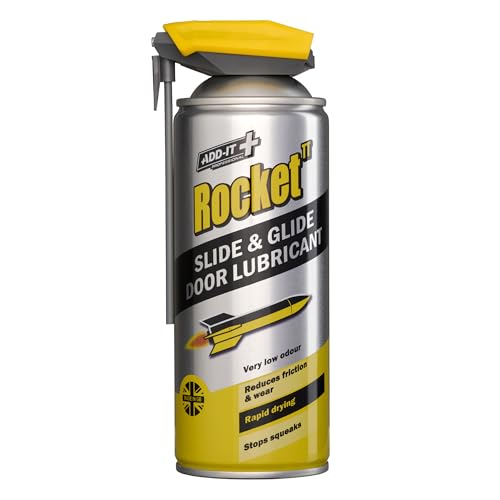
- Silicone-based lubricant for metal slides
- Optional: fine sandpaper or a sanding block for wood runners
- Optional: replacement slide pair matched by length
- Optional: replacement clips or soft-close damper cartridge
- Level for side-mount slide alignment
- Small wood stop block, 3/4 x 3/4 inch and 1 inch long, if a drawer needs a stop
Sticky drawer fix matrix
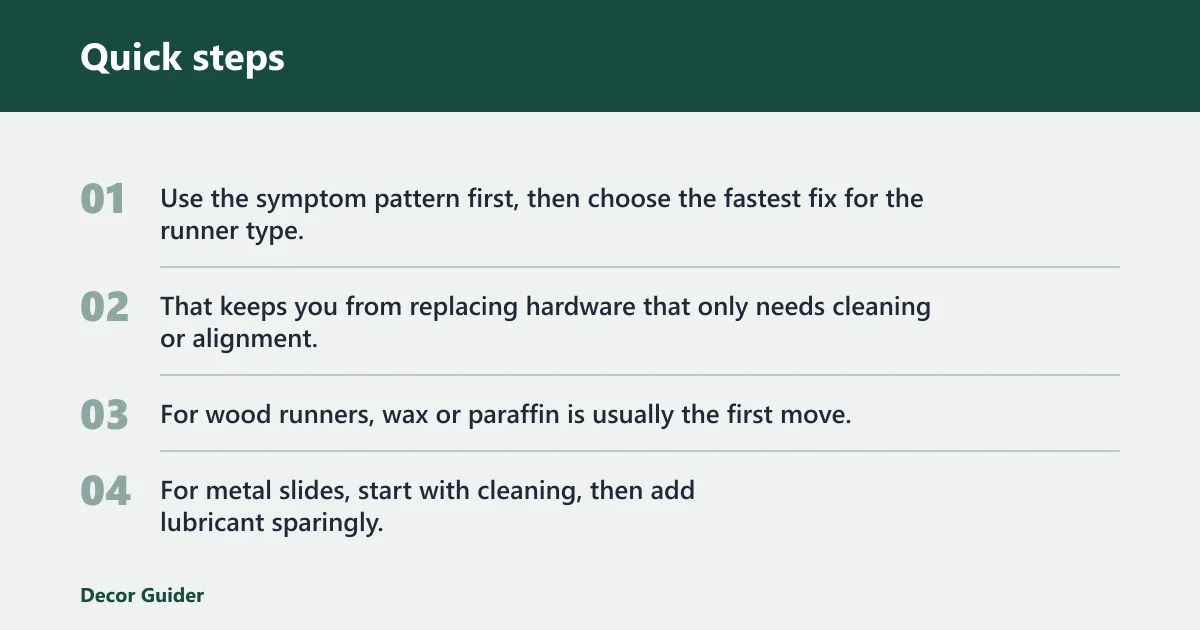
Use the symptom pattern first, then choose the fastest fix for the runner type. That keeps you from replacing hardware that only needs cleaning or alignment. For wood runners, wax or paraffin is usually the first move. For metal slides, start with cleaning, then add lubricant sparingly.
| Symptom pattern | Likely cause | Fastest fix | Action type |
|---|---|---|---|
| Front-only drag | Loose front screw, drawer front out of square, or one runner sitting high | Tighten the front mounting screws and check the drawer face for even gaps | Realign |
| Mid-travel stick | Crumbs, dust, and grit on the slide rails or a bent slide member | Remove the grit, then inspect the rail for a kink or twist | Clean |
| Seasonal swelling | Humidity swelling wood sides or bottom runners | Wax the bearing surfaces; sand only the high spots lightly if needed | Wax or sand |
| Loaded-only binding | Overloaded drawer, weak slide, or sagging support | Remove weight, tighten the cabinet mount, and test again | Realign |
| Drawer falls out | No stop block, failed stop, or disconnected slide | Reinstall the stop or add a wood stop block on the cabinet side wall | Replace or realign |
| Soft-close failure | Damper cartridge worn or front clip not engaged | Check clip engagement and replace the damper if it will not catch | Replace |
| One-side bind | One slide mounted higher, one rail sagging, or one side packed with debris | Compare both sides, clean the tight side, and reset the higher mount | Clean or realign |
| Rear-only rub | Back corner contact, rear stop interference, or a drawer box that is out of square | Mark the rub point, then sand the high spot or reset the rear clearance | Sand or realign |
| Skewed face gaps | Drawer box rack, uneven side gap, or a rail shifted out of square | Measure the face gaps, compare diagonals, and realign the mount | Realign |
| Intermittent soft-close catch | Loose front clip, weak damper, or a drawer that does not reach the catch point consistently | Confirm engagement, then replace the clip or cartridge if the catch stays inconsistent | Replace or realign |
| Rattle plus drag | Loose screws, worn bearings, or stripped mounting holes | Tighten fasteners; if holes are stripped, repair the mount or replace the slide | Realign or replace |
| Laminate edge scrape | Swollen laminate edge or chipped side panel | Trim the swollen edge lightly and retest the fit | Sand |
How do you identify the slide type?
Identify the runner before you touch the fix. Wood-on-wood runners have plain wood contact points and no metal bearings. Metal side-mount slides sit on both cabinet sides and often use rollers or ball bearings. Undermount slides sit hidden under the drawer box and usually include adjustment points for height, lateral position, and depth.
Wood-on-wood runners
Look for bare wood on the drawer sides, bottom runners, and cabinet guides. If the drawer slides without hardware and may have no track system at all, that points to a wood runner setup. These drawers often respond best to wax, paraffin, or soap.
Metal side-mount slides
Look for metal rails fixed to the cabinet sides and drawer box. Newer drawers may have a release lever or tab that must be pressed or lifted to remove the drawer. The lever can sit on the slide or under the drawer, and the exact location varies by hardware type.
Undermount slides
Check under the drawer box for hidden hardware. Undermount slides usually depend on a front clip engagement and have height, lateral, and depth adjustments. Soft-close units also use a damper cartridge that can fail even when the slide itself is straight.
Why does the drawer stick?
The most common causes are debris, loose screws, misalignment, humidity swelling, and bent hardware. A drawer that suddenly drags often changed shape, shifted out of square, or picked up grit in the rail. The fastest clue is where the drag starts: front, middle, or full travel.
Dust, crumbs, and debris
Crumbs, dust, and small bits of grit on the slide rails are a common cause of sticking. Clean the rails first, because lubricant over dirt only hides the problem for a short time. This matters most on metal slides, where bearings need a clear path.
Loose screws and misalignment
Loose runner screws let one side sit lower than the other. That creates a rub point and a crooked pull. A drawer that sticks on one side usually needs a level check, not a stronger pull.
Humidity swelling and warped parts
Humidity swelling the wood is a common cause of a sticking drawer. That is why summer often brings sudden drag, especially on older dressers with wood runners or unfinished wood sides. Laminate edges can swell too, and they often bind at the front opening first.
Bent, worn, or damaged hardware
Another common cause is a misaligned or bent drawer slide. Worn bearings, cracked clips, stripped mounting holes, or a bent rail can all create repeat sticking after cleaning. If the same spot binds after alignment, the hardware may be past adjustment.
How do you fix the drawer?
Start by removing the drawer safely, then clean, realign, and test before reaching for replacement parts. Many repairs are quick: the guide says the fix can take about 15 minutes to a few hours. Save replacement for hardware that stays bent, stripped, or broken.
Remove the drawer and inspect the path
- Open the drawer fully and look for a release lever or latch.
- Press or lift the lever if the slide has one, then pull the drawer straight out.
- Vacuum or wipe the rails, sides, and contact points until the debris is gone.
Check alignment and isolate the rub point
- Tighten loose screws and reset the slide position; use a level on side-mount slides.
- Measure the face gaps on both sides so you can spot a skewed drawer front.
- Compare the rail height left vs right, and check the drawer diagonals to see whether the box is racked.
- Mark rub points with chalk or pencil, then retest to confirm where contact begins.
Apply the right fix for the runner type
- For wood runners, rub wax, paraffin, or soap on the inside frame, rail, and drawer sides.
- If wood still rubs, sand only the high spots lightly, then retest after each pass.
- For metal rails, apply silicone lubricant sparingly after cleaning.
- If the drawer still binds, inspect for bent rails, stripped holes, broken clips, or a failed damper.
Test loaded and unloaded
Test the drawer empty first, then with its usual load. A drawer that glides empty but binds when full usually points to sag, a weak rail pair, or a mount that shifts under weight. If both tests fail in the same spot, contamination or a bent member is more likely than load alone.
Say your dresser drawer sticks only at the front edge after a humid week. That pattern usually points to wood swelling or a front screw that has shifted. A thin coat of wax on the drawer sides and rail, then a recheck after each pass, is usually more useful than forcing the drawer closed.
Suppose a side-mount drawer slides well when empty but binds when books are inside. That points to load-related misalignment or a weak rail pair. Remove some weight, level the slides, and confirm that both mounting screws bite into solid material before buying replacements.
Use the same decision path below when the drawer still binds after cleaning and alignment checks. It consolidates the common failure patterns into one path: start with the symptom, confirm the likely cause, and choose the fastest fix before replacing hardware.
Common mistakes
Most repeat problems come from treating every sticky drawer the same. Fix the cause, not just the symptom. If a drawer only binds on one side, a squeeze of lubricant on the wrong rail will not solve a crooked mount.
- Forcing the drawer closed, which can split the drawer front or bend the rail further.
- Using WD-40 on drawer rails instead of cleaning first and choosing the right product.
- Applying silicone lubricant to wood runners when wax is the better first choice.
- Skipping the level check on side-mount slides.
- Ignoring stripped mounting holes, which let the slide drift out of line again.
- Replacing hardware before checking for a loose screw, dirt, or seasonal swelling.
A common first-timer mistake is to add lubricant to a dirty metal slide and then close the drawer a few times. That often smears grit deeper into the rail. Clean first, then use a sparing amount of silicone lubricant only on metal slides.
When should you replace drawer slides instead of repairing them?
Replace the slide pair when cleaning, tightening, and alignment checks do not remove the bind, or when the metal is bent, the bearings are worn out, or the mounting holes no longer hold. Replacement slide pairs are commonly sold by length and are often priced around $5–$20 per pair.
Undermount systems need replacement when the front clip will not engage or the soft-close damper cartridge no longer catches. Wood runners are different: they usually need wax, paraffin, or light sanding before they need part replacement. If the drawer falls out, add a stop block on the cabinet side wall or replace the stop feature.
Replace only after the basic checks fail
If the same drawer keeps binding after you clean the track, compare the rail height left vs right, measure the face gaps, and check for rack with diagonal measurements. When the hardware still binds in the same place after those checks, replacement is usually the more reliable path.
Frequently asked questions
Why do my dresser drawers stick all of a sudden?
Sudden sticking usually points to a new change rather than long-term wear: humidity swelling, a loose screw, fresh debris in the rail, or a slide shifting out of level. Start with the side that binds, remove the drawer, and inspect the runner type before you buy parts.
How do I fix a dresser drawer that sticks in summer?
Summer sticking is often a wood-swell problem. Remove the drawer, rub wax on the inside frame, rail, and drawer sides, then retest. If the rub mark stays in one spot, sand that high area lightly and stop as soon as the drawer glides freely.
What can I use to make wooden dresser drawers slide better?
Paste wax, a paraffin candle, or a white candle are the usual low-friction choices for wood runners. Rub the wax on the drawer sides and cabinet guides, not just one surface. Soap can work too, but wax usually lasts better and leaves less residue.
How do I remove a dresser drawer with side slides?
Pull the drawer fully open, look for a release lever or latch, and press or lift it before pulling the drawer free. Some slides place the lever on the rail, while others hide it under the drawer. If there is no lever, the drawer may simply lift off the track.
Should I use wax, soap, or lubricant on sticky drawers?
Use wax or soap on wood runners, and use silicone-based lubricant on metal slides after cleaning. Do not mix the two on the same surface. WD-40 is not the right first choice for drawer rails, especially when the problem is dirt or misalignment.
How do I tell if the drawer slide is bent or misaligned?
A bent slide usually drags at the same point even after cleaning and screw tightening. A misaligned slide often creates side-only drag, front gaps that differ, or a drawer that sits higher on one side. Use a level on side-mount slides and compare both rails visually.
Products related to this article
Sponsored / affiliate links. As an Amazon Associate I earn from qualifying purchases. I may earn additional commission from eligible campaigns.