How to Keep a Dresser From Scratching Hardwood Floors
Match the protector to the dresser base. Use felt or UHMW pads for short sliding, rubber or silicone cups for fixed legs, and a furniture slider or blanket for moves. Using the wrong pad can leave black scuffs, dent the finish, or make the dresser wobble. This guide shows how to choose the right pad, cap, glide, rug, or temporary moving support by base type and movement.
Why dressers damage hardwood floors


What you’ll need
- Felt furniture pads for clean, flat legs
- Rubber or silicone leg caps for added grip
- Furniture glides for low-friction movement
- Area rug or runner with a floor-safe underside
- Moving pads or a quarter-inch Masonite sheet for temporary protection
- Microfiber cloth
- Vacuum with a hard-floor attachment
How do I keep a dresser from scratching hardwood floors?
Start with clean legs and a clean floor, then choose a protector that matches how the dresser sits and moves. Hardwood floor finish can scratch from grit, pressure points, and sliding legs, so the best fix spreads load, stops drag, and stays put without trapping dirt.
- Vacuum the floor and wipe the exact spot where the dresser sits.
- Inspect each dresser leg for chips, cracks, missing feet, or uneven wear.
- Pick felt pads for flat, stable legs; use caps when grip or uneven-floor contact matters.
- Check the dresser base for center support and load points before adding any pad.
- Set the dresser down and test for wobble. If it rocks, adjust the leg contact before you finish.
Felt floor protectors are recommended on the bottom of each leg, and experts recommend felt pads under furniture legs on day one. That matters because furniture legs can leave imprints and scratches on hardwood floors when pressure is concentrated in one spot.
What should you put under dresser legs on hardwood?
Use felt pads under clean, flat dresser legs when the dresser stays in place. Use rubber or silicone caps when you need more grip or the floor is slightly uneven. For a dresser that needs to slide now and then, furniture glides can help reduce scraping while still keeping movement controlled.
Area rugs or runners work best as a buffer in bedrooms and entry paths, but only when they have a floor-safe underside. They add a layer between the dresser and the floor, which helps in high-traffic areas where dust and grit are more likely to travel under furniture.
How do you prep the dresser and floor?
Clean first, then attach. Dust and grit cause abrasion, and daily sweeping is recommended to keep debris from scratching floors. A protector placed over grit can press it into the finish and do the opposite of what you want.
- Remove the dresser if possible, or shift it enough to clean under each foot.
- Vacuum the floor and the underside edge of the dresser.
- Wipe each leg base dry so adhesive pads bond properly.
- Check each leg for uneven pressure points and replace any damaged foot.
- Press the chosen pad or cap on squarely, then wait before loading the dresser.
Say your dresser has four straight wooden legs and one leg is slightly shorter. A short leg can carry more force, so a felt pad may compress faster on that corner and the dresser may rock. In that case, leveling the leg contact matters more than adding a thicker pad.
Can you move a dresser on hardwood with sliders?
Yes, for short-distance repositioning. Furniture glides can help move heavy furniture with less scraping, but temporary protection works better when you need to shift a dresser across the room. For moving furniture, a quarter-inch Masonite sheet is described as the best option, and moving pads add a buffer between weight and floor.
- Clear the path and remove loose rugs, cords, and small debris.
- Lift one side just enough to place moving pads or a quarter-inch Masonite sheet under the base.
- Move the dresser slowly and keep it level so one corner does not dig in.
- Remove the temporary protection once the dresser is in place.
- Check the floor for new scuffs before setting the dresser fully back down.
If that did not work, try a wider Masonite piece or move the dresser in shorter steps. A common first-timer mistake is dragging one corner while turning, which concentrates weight and can mark the finish even when pads are under the other legs.
Choose the right protector for the base
Dresser base type changes the answer. Straight legs, bun feet, plinth bases, and heavy low-profile dressers all distribute weight differently, so the best protector for one can fail on another. The wrong match can slide, compress, trap moisture, or make cleaning harder around the dresser.
Straight legs
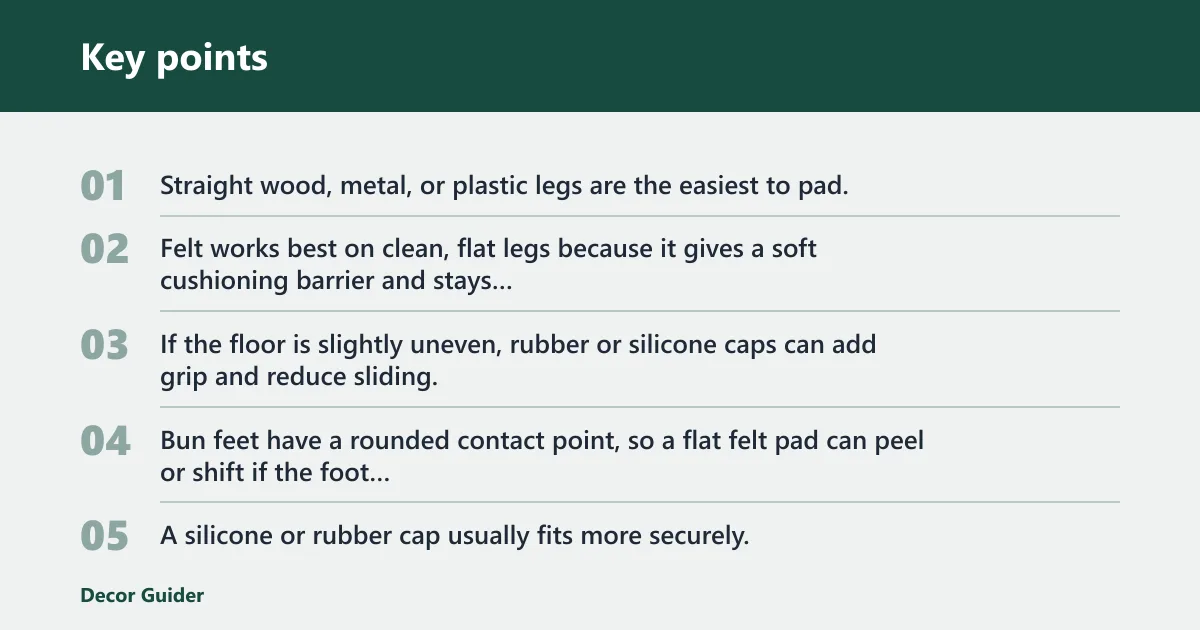
Straight wood, metal, or plastic legs are the easiest to pad. Felt works best on clean, flat legs because it gives a soft cushioning barrier and stays low profile. If the floor is slightly uneven, rubber or silicone caps can add grip and reduce sliding.
Bun feet
Bun feet have a rounded contact point, so a flat felt pad can peel or shift if the foot is curved or glossy. A silicone or rubber cap usually fits more securely. If you need the dresser to stay in one spot, choose the protector that grips the foot rather than one that depends only on adhesive.
Plinth base
A plinth base spreads weight along a wider footprint, so you often need a furniture glide strip or a protective runner rather than four small pads alone. This base style can be harder to clean under, so use a protector that does not trap dust at the edges or create a hidden drag point.
Heavy low-profile dresser
A heavy low-profile dresser puts more load on each contact area, which makes compression failure more likely. Use glides for repositioning and choose a protector that can handle weight without flattening into a hard edge. If the dresser shifts on its own, prioritize grip over low friction.
Suppose a low dresser in a bedroom sits on a plinth base and gets nudged every time drawers open. A rug alone may reduce scuffing, but if the base drags on the same spot, the floor still sees pressure and grit. A glide plus a floor-safe runner is a better match.
Dresser protection decision table
| Dresser base type | Best protector type | Installation notes | Failure risks | Replacement timing |
|---|---|---|---|---|
| Straight legs | Felt furniture pads | Use on clean, flat legs with dry adhesive contact | Pad compression, adhesive failure, dirt trapped under the pad | Replace when the felt is thin, torn, or peeling |
| Bun feet | Rubber or silicone leg caps | Choose a cap that fits snugly over the foot and sits evenly | Cap slip, moisture trapping, uneven seating | Replace when the cap loosens, cracks, or stops gripping |
| Plinth base | Furniture glides or a floor-safe runner | Support the full contact edge; keep the underside clean | Edge drag, grit buildup, hard-to-clean corners | Replace when the glide edge wears flat or the runner backing fails |
| Heavy low-profile dresser | Wide glides or temporary moving pads | Use load-rated support and keep the dresser level during repositioning | Compression, sudden sliding, finish dents at load points | Inspect monthly; replace at first sign of flattening or scuffing |
Common mistakes
Using worn or dirty pads is the fastest way to bring scratches back. If the adhesive side picks up dust, it will hold less firmly and can shift under load.
Skipping floor cleaning before installation leaves grit under the dresser. That grit can be dragged across the finish every time the furniture moves a fraction of an inch.
Choosing the wrong protector for the leg shape creates new problems. A flat felt pad on a rounded bun foot can slide off, while a tight cap on a square leg can rock if the fit is wrong.
Letting grit build up under the dresser matters even when the furniture does not move. Regular removal keeps abrasive particles from acting like sandpaper under pressure points.
Dragging the dresser without temporary protection is a common mistake during room changes. Use moving pads or Masonite for short-distance moves, then remove them after the dresser is placed.
Frequently asked questions
Are felt pads or rubber pads better under a dresser?
Felt pads are better for smooth, fixed placement on clean, flat legs. Rubber or silicone caps are better when you need grip, stability, or help on uneven floors. Pick the one that matches the dresser’s movement, because a felt pad can slide and a cap can trap moisture if the fit is poor.
Can I use furniture sliders to move a dresser on hardwood?
Yes, for short moves or repositioning. Furniture glides can reduce scraping, and a quarter-inch Masonite sheet is described as the best option for moving furniture over hardwood. Keep the dresser level, move slowly, and remove the temporary support once the dresser is in place again.
How do I stop a heavy dresser from shifting on wood floors?
Use rubber or silicone caps for grip, then check that each leg is carrying weight evenly. If the dresser still shifts, the load may be off-center or one leg may be shorter. A floor-safe runner can help in bedroom traffic lanes, but it should not replace a stable base fit.
Do dresser legs need pads on day one?
Yes. Experts recommend felt pads under furniture legs on day one, before the dresser starts moving across dust and grit. That first layer of protection matters because hardwood is softer than many homeowners think and can scratch easily, especially at pressure points and along sliding edges.
Products related to this article
Sponsored / affiliate links. As an Amazon Associate I earn from qualifying purchases. I may earn additional commission from eligible campaigns.