What Is the Best Way to Clean a Wood Dresser?
For a finished wood dresser, start with a dry microfiber cloth, then use a barely damp cloth with diluted Murphy’s Oil Soap for grime, mineral spirits for sticky residue on a tested, finished spot, and petroleum jelly or mayonnaise for water rings on sealed surfaces. Too much liquid or the wrong cleaner can cloud the finish, swell the wood, or leave a permanent mark. Follow the product label directions for Murphy’s Oil Soap, and treat any polish or refinisher as optional rather than routine. This guide gives you a finish-first decision tree for cleaning safely, plus the right steps for dullness, residue, and water rings. For general furniture-care principles, see guidance from the National Park Service, Murphy’s own label directions, and conservation-style advice that emphasizes testing small areas before using stronger solvents.
What finish are you cleaning?
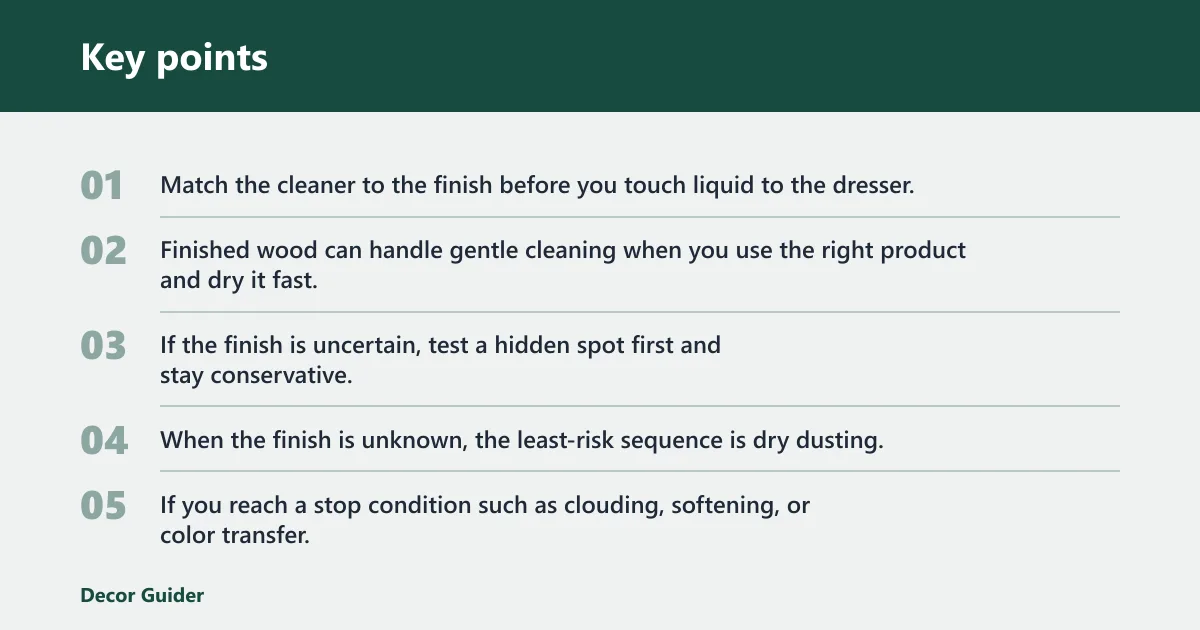

Match the cleaner to the finish before you touch liquid to the dresser. Finished wood can handle gentle cleaning when you use the right product and dry it fast, but bare wood, waxed finishes, and mixed-material drawers need a different approach or no liquid at all. If the finish is uncertain, test a hidden spot first and stay conservative. When the finish is unknown, the least-risk sequence is dry dusting, then a barely damp cloth, then a targeted spot treatment only if the first step fails. If you reach a stop condition such as clouding, softening, or color transfer, stop cleaning and reassess.
Finished wood versus bare wood
Finished wood has a protective top layer, such as lacquer or polyurethane, that keeps moisture on the surface longer. Bare wood tends to absorb liquid quickly and may swell, stain, or darken. If the dresser looks unfinished, rough, or porous, stop at dry dusting and use a refinisher only if repair is the goal.
Sealed lacquer or polyurethane
These are commonly considered among the safest finishes for routine cleaning. A lightly damp microfiber or soft cotton cloth with a diluted wood-safe cleaner is often a starting point, followed by immediate drying. Keep water out of seams, edges, and veneer joints. Conservation guidance for finished wood furniture generally recommends minimal moisture, quick drying, and testing in an inconspicuous area before using stronger cleaners.
Waxed or specialty finishes
Waxed finishes can react badly to soap and mineral spirits. Use the mildest possible touch, test a hidden spot, and avoid repeated wet wiping. If the surface turns hazy or grabs the cloth, stop and switch to dry care or a refinisher. Specialty finishes are the most likely to have label-specific care rules, so product guidance matters more here than a one-size-fits-all cleaner.
Veneer and laminate-look edges
Many dressers have veneer fronts or laminate-look side panels. Those edges chip and lift more easily than solid wood. Keep the cloth barely damp, never soak seams, and do not assume a cleaner that works on solid hardwood is safe on every panel. For adjacent care guidance, see veneer furniture care and how to identify wood finishes before you commit to a liquid cleaner.
What you’ll need
- 2 clean rags
- Microfiber or soft cotton cloths
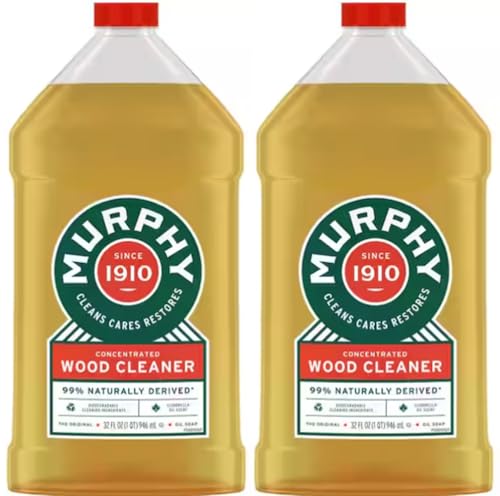
- Murphy’s Oil Soap and the label directions
- Warm water
- Mineral spirits for stubborn residue
- Howard Restore-A-Finish for restoring sheen and concealing minor scratches, if needed
- Old English Wood Furniture Polish as an alternative to restore sheen
- Petroleum jelly or mayonnaise for water rings
- Bar Keepers Friend for suitable metal hardware only
- Old toothbrush for hardware cleaning
How do you clean a wood dresser?
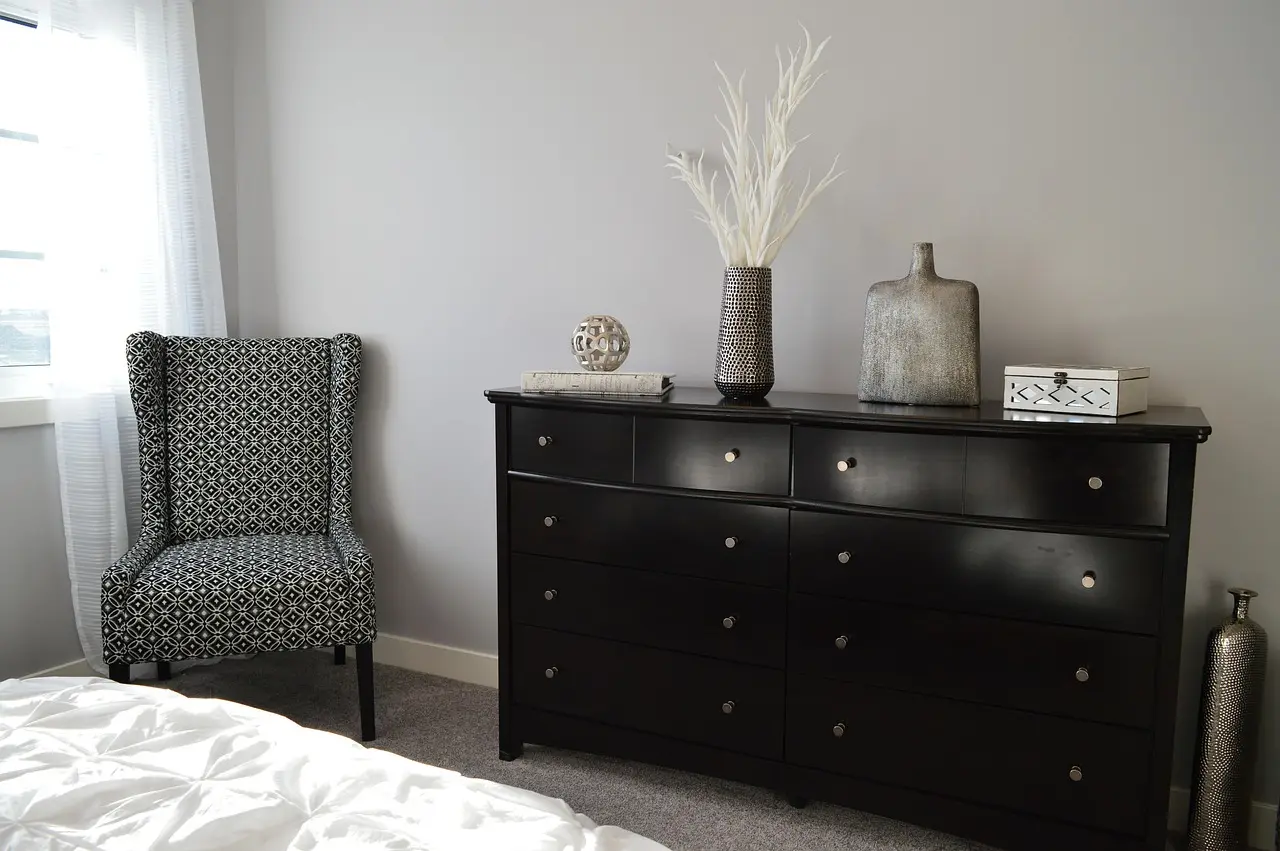
Dust first, then clean with a lightly damp cloth and a finish-safe cleaner, then dry right away. For most finished dressers, Murphy’s Oil Soap mixed at 1/2 cup per gallon of warm water is the starting point, but always check the label and test an inconspicuous area first. Stop if the finish turns cloudy or tacky. That “stop” point matters as much as the cleaner itself: if the surface changes sheen, feels gummy, or transfers color to the cloth, don’t keep scrubbing.
- Dust the dresser with a dry microfiber or soft cotton cloth.
- Mix Murphy’s Oil Soap at 1/2 cup per gallon of warm water, then test a hidden spot.
- Wipe one section with the damp cloth, not a wet one.
- Follow immediately with a second clean rag to dry the surface.
- Apply polish only if the finish still looks dull after cleaning.
Why the two-cloth method matters
One cloth lifts grime. The second cloth removes moisture before it can sit on the finish. That matters most on dresser tops, drawer fronts, and edges near handles where liquid can creep into joints. Use gentle pressure, not scrubbing. This approach also lines up with general conservation advice for finished furniture: remove soil first, then get the surface dry before deciding whether any restorative product is needed.
Wood dresser finish decision table

Use this table as a least-risk ladder: start with the mildest option, move up only if the problem remains, and stop if the finish changes texture, color, or sheen. For veneer, unknown finishes, or antique pieces, treat every step as more conservative than you would on a modern sealed dresser.
| Finish or problem | Safest cleaner | Dwell time | Tools | What not to use | When to stop and call a refinisher |
|---|---|---|---|---|---|
| Sealed lacquer/poly | Murphy’s Oil Soap diluted to 1/2 cup per gallon of warm water | Wipe and dry right away | Microfiber or soft cotton cloth, 2 clean rags | Soaking water, abrasive pads, unknown spray cleaners | If the finish clouds, softens, or stays sticky after drying |
| Waxed finish | Dry dusting first; very light spot test only if needed | Minimal contact | Soft cotton cloth | Heavy soap mix, mineral spirits, repeated wet wiping | If the wax turns cloudy or uneven, or the surface grabs the cloth |
| Sticky residue buildup | Murphy’s Oil Soap first; mineral spirits on a damp microfiber cloth for stubborn spots | Short contact, then wipe dry | Microfiber cloth, soft cotton cloth | Scouring pads, excess rubbing, soaking the area | If the residue remains after light rubbing or the finish softens |
| Water-ring damage | Petroleum jelly or mayonnaise | Overnight up to 24 hours | Soft cloth for removal and drying | Heat, sanding, strong solvents, aggressive scrubbing | If the mark does not improve after repeat treatment |
How do you remove sticky residue?
Start with a mild cleaner, then move to mineral spirits only if the residue remains. A damp microfiber cloth lets you work on sticky spots without flooding the finish, and light rubbing is enough for stubborn buildup. If the surface turns soft, cloudy, or tacky, stop and reassess. Mineral spirits are best kept to a localized spot on a finished surface, not used as a general wipe-down product.
- Wipe the area with diluted Murphy’s Oil Soap and dry it fully.
- If residue remains, dampen a microfiber cloth with mineral spirits.
- Rub lightly on the stuck patch only.
- Wipe the area with a clean dry rag.
- Stop if the finish changes texture or color.
Say your dresser has a sticky ring under a lamp on the top panel. Try the soap mix first. If the spot stays tacky, treat only that patch with mineral spirits and keep the cloth moving so you do not overwork the finish. If the finish is lacquered, veneered, or unknown, treat that as a warning to go slower, not faster.
How do you remove water rings?
Water rings and water spots on sealed wood can often be eased with petroleum jelly or mayonnaise left overnight up to 24 hours. Wipe it off, check the mark, and repeat if needed. If the ring is still visible after careful repeat treatment, the finish may need repair rather than cleaning. Evidence for home remedies is mixed, so the safest claim is that they sometimes help on sealed finishes, especially when the moisture has affected the surface layer rather than the wood itself.
- Apply a thin layer of petroleum jelly or mayonnaise to the ring.
- Leave it in place overnight, or up to 24 hours.
- Wipe the area clean with a soft cloth.
- Dry the surface completely.
- Repeat once if the mark is still there.
If that didn’t work, try this next
If the ring stays after repeat treatment, do not sand it or scrub harder. At that point, the mark may sit in the finish itself. A refinisher can separate a surface stain from finish damage and decide whether the top layer needs repair. For antique or unknown finishes, this is the point to stop entirely rather than escalate at home.
How often should you deep clean it?
Dust the dresser regularly and do a deeper clean about every couple of years. Weekly light wiping helps in bedrooms with more dust or humidity, but liquid cleaners are not needed every week for a dresser that only gathers normal dust. The goal is to prevent buildup before it turns sticky or dull. That cadence matches common furniture-care advice: routine dusting, spot cleaning as needed, and occasional deeper cleaning when grime or skin oils start to accumulate.
- Dust weekly with a dry microfiber cloth.
- Wipe fingerprints or spots only when they appear.
- Do a deeper clean every couple of years.
- Keep the dresser out of long direct sunlight, which can fade wood finishes.
Picture a bedroom dresser near a window where sun hits the top corner each afternoon. The finish can fade faster there, so a shade or blind helps prevent uneven color before cleaning becomes a repair problem. If you see recurring grime in that area, spot-clean it rather than turning the whole dresser into a weekly wet-cleaning project.
Common mistakes
Most damage comes from too much liquid, the wrong cleaner, or too much rubbing. Finished wood is forgiving only when you keep the process light and controlled. If a cleaner changes the sheen, stop right away. The same caution applies to hardware: plated, lacquered, or otherwise delicate metal finishes can be damaged by abrasive cleaners or repeated scrubbing, so test first and keep the cleaner off surrounding wood.
- Over-wetting the surface and letting liquid sit in seams.
- Skipping the inconspicuous spot test.
- Using mineral spirits on large areas instead of a stubborn spot.
- Using Bar Keepers Friend on unknown hardware finishes.
- Ignoring cloudy, sticky, or dull changes after cleaning.
Hardware cleaning
Clean grimy hardware separately, and only if the metal type can handle it. Bar Keepers Friend and an old toothbrush can work on suitable metal hardware, but rinse and dry it fully afterward. Avoid using it on plated, lacquered, brass, or delicate hardware unless the manufacturer says it is safe. Hardware makers and restoration guidance generally warn that plated or coated finishes can scratch, haze, or lose their top layer if you treat them like bare metal.
Frequently asked questions
What is the best way to clean a wood dresser?
For a finished dresser, use a dry microfiber cloth first, then a lightly damp cloth with diluted Murphy’s Oil Soap at 1/2 cup per gallon of warm water. Dry immediately with a second clean rag. If the finish still looks dull, use Howard Restore-A-Finish, which is preferred over a routine polish step.
What is the best way to clean wood furniture each week?
Weekly care should stay light: dust with a microfiber or soft cotton cloth, then spot-wipe only if you see fingerprints or residue. Save liquid cleaning for buildup, and keep the dresser away from long direct sunlight. That routine reduces the need for deeper cleaning later.
What is the best thing to clean wood furniture?
A microfiber or soft cotton cloth is the best starting point because it lifts dust without scratching and can dry the surface after cleaning. For grime on finished wood, use diluted Murphy’s Oil Soap. For stubborn residue, use mineral spirits on a damp microfiber cloth and wipe dry right away.
What is the best way to clean and polish wood furniture?
Clean first, then decide whether polishing is needed. If the finish looks dull after washing and drying, Howard Restore-A-Finish is the preferred product; Old English Wood Furniture Polish is the alternative. Do not use either as a weekly cleaner, and keep them off unfinished or uncertain surfaces. On many dressers, a polish is unnecessary unless you are trying to improve appearance rather than remove dirt.
How do you clean a wood dresser without damaging the finish?
Identify the finish, test a hidden area, and use as little liquid as possible. For sealed wood, work with diluted Murphy’s Oil Soap, a barely damp cloth, and immediate drying. Do not soak edges, do not scrub hard, and stop at once if the finish clouds or softens. If the dresser is veneered or antique, treat any finish change as a reason to stop earlier.
What should you use on sticky residue on wood furniture?
Use Murphy’s Oil Soap first, then mineral spirits only on stubborn spots. Apply the spirits with a damp microfiber cloth and rub lightly. If the residue remains or the finish changes, stop. That is a sign the surface may need repair instead of more cleaning.
How do you remove water rings from a wood dresser?
Use petroleum jelly or mayonnaise, leave it on overnight up to 24 hours, then wipe it clean and dry the surface. Repeat if needed. If the ring stays after careful repeat treatment, the mark may be in the finish, and a refinisher is the next step.
How often should you deep clean wood furniture?
Give wood furniture a regular cleaning every couple of years, with dusting in between. Bedrooms with more dust or humidity may need more frequent spot wiping, but full liquid cleaning is still occasional. The aim is to prevent grime from building up until the surface looks sticky or dull.
What is the best way to clean antique wood furniture?
Treat antique wood more cautiously than modern finished furniture. If the finish is old, waxed, or uncertain, start with dry dusting and a hidden spot test only. Avoid aggressive cleaners and do not use water-heavy methods unless the surface is clearly sealed and stable. Antique pieces often need conservation-minded care, so if the finish is flaking, crazed, or fragile, stop at dusting and consult a professional before using liquid.
What is the best way to clean outdoor wood furniture?
Outdoor wood furniture faces weathering, so its care is different from a bedroom dresser. Check the manufacturer’s guidance for the finish, then use a cleaner made for outdoor use if the piece is sealed. Do not assume Murphy’s Oil Soap or furniture polish is the right choice for exposed exterior wood. Because outdoor finishes vary widely, the safest first step is to confirm the coating and use the least aggressive cleaner the maker recommends.
Products related to this article
Sponsored / affiliate links. As an Amazon Associate I earn from qualifying purchases. I may earn additional commission from eligible campaigns.