Can You Put a Dresser in a Bathroom?
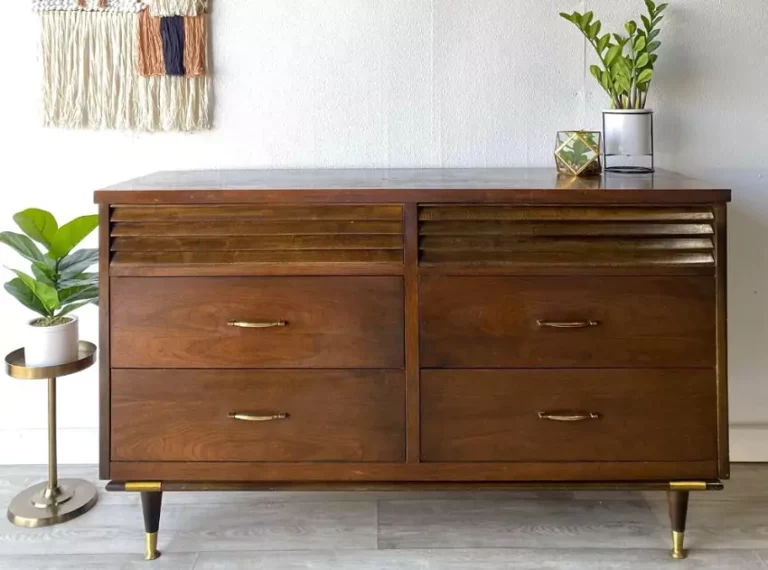
Yes, but only in the right spot and only with enough moisture protection. A dresser can work in a dry bathroom area with steady airflow, while direct splash, persistent steam, and damp floors make it a poor fit. In practice, the line between “works fine” and “fails fast” depends on placement, material, finish quality, and ventilation.
When a dresser works and when it should stay out
When a dresser can work
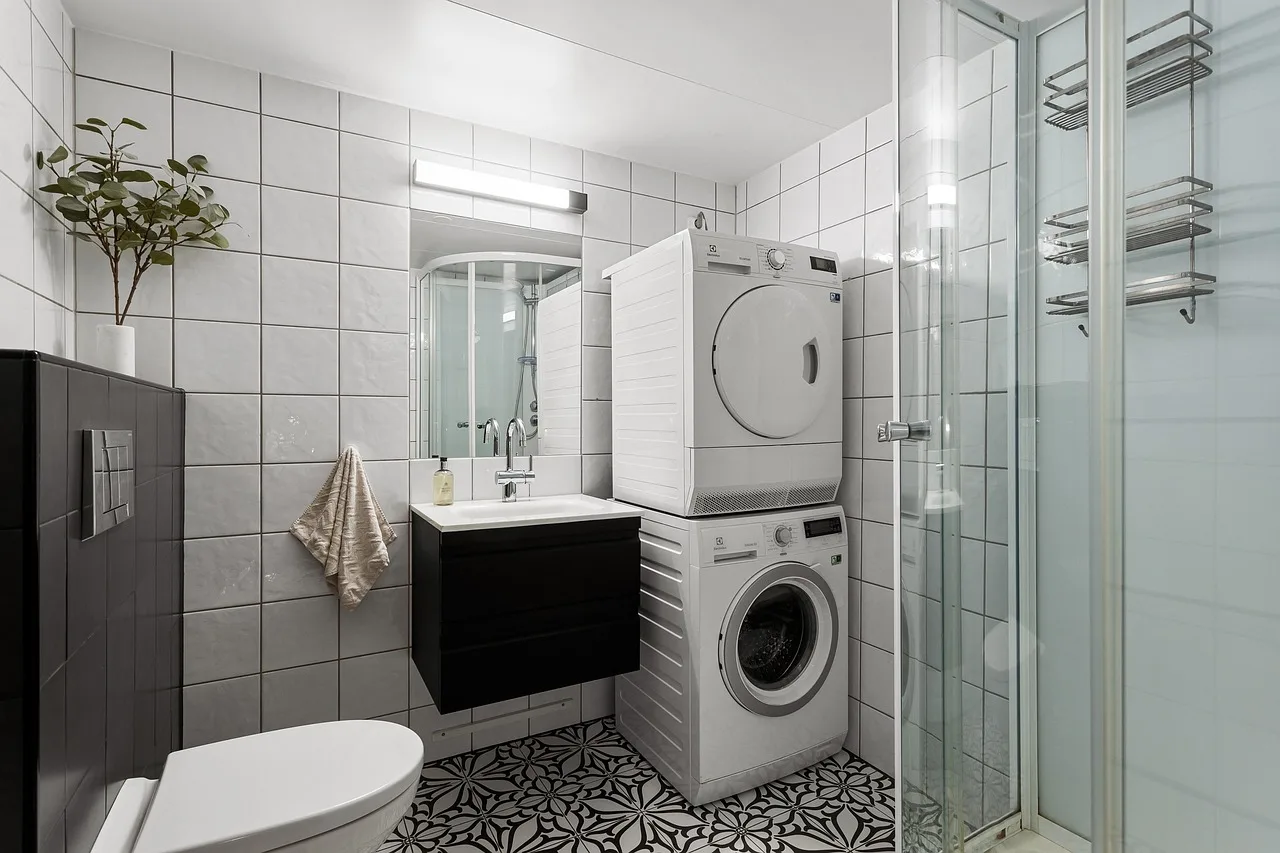
A dresser can work as temporary bathroom furniture in a dry corner, especially in a half bath or a larger primary bath with a good exhaust fan and no recurring puddles. The safest setup is away from the shower curtain, tub edge, and sink splash zone, with space behind and below the piece for air movement. Bathroom moisture is most damaging when it lingers, which is why ventilation matters so much in wet rooms.
Placement matters as much as material. A floor-standing dresser near the door usually faces less steam than one beside a shower enclosure, while a wall-mounted piece avoids wet floor contact but is a poor fit unless it was built for that load and anchored correctly.
When it should stay out
Keep a dresser out of the room if shower steam lingers, the fan is weak or absent, or water regularly collects on the floor near the base. That combination drives moisture into joints, drawer bottoms, and back panels, then finishes start to fail and metal parts corrode. In a bathroom, corrosion risk rises quickly when humidity stays high and metal hardware is exposed to repeated wetting.
If the room has a tub-shower combo, a sink that splashes outward, or a habit of leaving wet towels on nearby surfaces, the dresser is exposed more often than most furniture can tolerate. In that case, a purpose-built vanity is the safer choice.
Why bathroom moisture damages furniture
Bathroom moisture damages furniture because wood-based parts absorb water vapor and liquid splash at different speeds. Humidity can make boards swell, joints loosen, veneer lift, and finishes soften or crack; hardware can rust, and repeated wetting near the base can wick upward through end grain and drawer parts. Building and wood-products guidance consistently treats ventilation, sealed surfaces, and fast dry-out as the main defenses against this kind of damage.
Condensation and daily shower exposure
Showers create warm, wet air that condenses on cooler surfaces, especially around mirrors, walls, and furniture close to the tub or shower. A fan that runs long enough after bathing lowers that load; without it, a dresser may see the same daily moisture cycle again and again. Bathroom ventilation guidance from home-improvement and building authorities generally emphasizes exhausting humid air after bathing rather than letting it sit in the room.
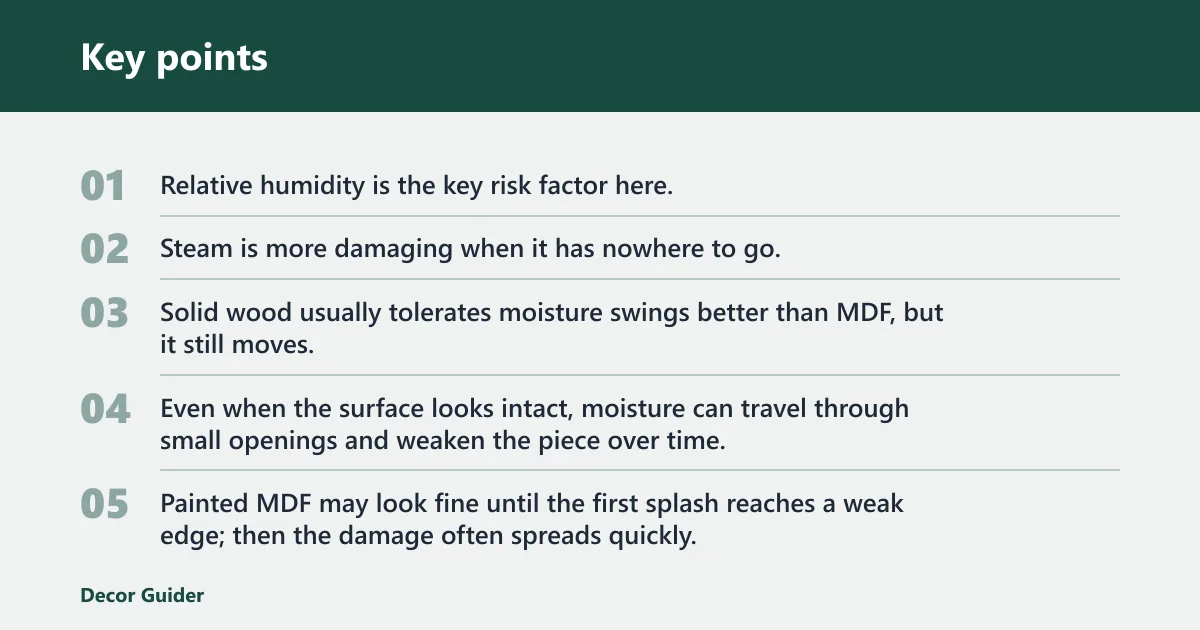
Relative humidity is the key risk factor here. The higher and longer the humidity stays elevated, the more likely wood moves, adhesives weaken, and painted edges start to show damage. Steam is more damaging when it has nowhere to go.
Swelling, finish failure, and hardware corrosion
Solid wood usually tolerates moisture swings better than MDF, but it still moves. Doors can stick, drawer fronts can rub, and the top can cup or crack if the finish does not fully seal exposed surfaces, including edges, underside, and backs. Even when the surface looks intact, moisture can travel through small openings and weaken the piece over time.
MDF fails differently. It swells fast when water gets through a chip, seam, or unfinished edge, and once the core expands it rarely returns to shape. Painted MDF may look fine until the first splash reaches a weak edge; then the damage often spreads quickly.
Which dresser materials hold up best?
Solid wood dressers usually perform better than MDF in a damp bathroom, but only if the finish is sound and the piece is kept out of direct splash zones. MDF is the least forgiving when water reaches the core, while laminate and painted surfaces can delay damage if edges, seams, and bottoms are protected. Material choice matters most when the dresser sits near a sink, tub, or shower.
Solid wood dressers
Solid wood can handle humidity movement better than many engineered boards, but species sensitivity still matters. Open-pored or highly movement-prone woods may react more to repeated steam cycles, and older pieces with failing joints can shift faster than a tight, newer frame.
For a solid wood dresser, edge sealing and underside protection are the key upgrades. A durable film finish on the top is not enough if the bottom rails, drawer undersides, and back panel are left exposed to moisture from the room or floor. Wood-products guidance generally treats every exposed edge as a weak point in damp spaces.
MDF and laminated dressers
MDF dressers are a short-term option at best in a bathroom with light use and strong ventilation. Their main failure mode is swelling at edges, screw holes, and any cut surface, and the damage tends to be worse near sinks, tubs, and damp floors.
Laminated MDF can resist light splashes longer than painted MDF, but a chipped laminate edge gives water a direct path to the core. For long-term bathroom use, MDF is a weak choice unless the room stays dry and the piece is fully protected.
Painted and veneered surfaces
Painted dressers can do well if the paint system is complete and durable, with attention to corners and backs. Veneer helps appearance, but veneer edges can lift when moisture gets underneath, especially near drawer pulls, corners, and the lower front edge.
In both cases, the coating matters more than the label. A thin decorative finish is not the same as a moisture barrier, and a small breach can let steam work into the substrate over time. Coating systems that fully cover edges and the underside offer more protection than a finish applied only to the visible face.
Bathroom dresser risk matrix
This matrix helps you judge whether a dresser belongs in a bathroom as temporary furniture or whether it should be treated as a full vanity project. Score the room by material, ventilation, and placement zone, then choose the lowest-risk option that fits the space. A quick read of the zone and score can tell you whether the dresser belongs in the dry zone, the sink splash zone, or the tub/shower zone.
| Dresser material | Bathroom conditions | Safe or unsafe use case | Main failure risk | Recommended protection steps |
|---|---|---|---|---|
| Solid wood with intact finish | Good exhaust fan, window backup, low splash, 18+ inches from tub or shower | Safer for temporary placement | Slow swelling, finish dulling, hardware corrosion | Seal top, sides, back, and underside; use 2 coats of polyurethane or 3 thin coats of lacquer or paint; keep 6 to 12 inches of wall clearance |
| Solid wood with worn finish | Moderate humidity, sink splash nearby, occasional puddling | Use only with upgrades | Joint movement, stain damage, drawer binding | Refinish before placement; add edge sealing, silicone at splash-prone seams, and corrosion-resistant hardware |
| MDF with laminate surface | Light use, strong fan, no floor moisture, away from shower zone | Borderline short-term use | Edge swell, chipped laminate, screw-hole failure | Seal all cut edges; protect the bottom; avoid direct spray; dry spills at once |
| MDF painted or raw | Typical family bathroom, shower steam, frequent splashes | Unsafe for routine use | Rapid swelling and surface breakdown | Do not place near tub or shower; choose bathroom-grade plywood or a real vanity instead |
| Veneered wood or laminate over plywood | Good ventilation, no recurring puddles, medium distance from sink | Usable with care | Veneer lift at edges, finish failure at seams | Seal seams, protect underside, and use stainless or other corrosion-resistant hardware |
How to score the risk quickly
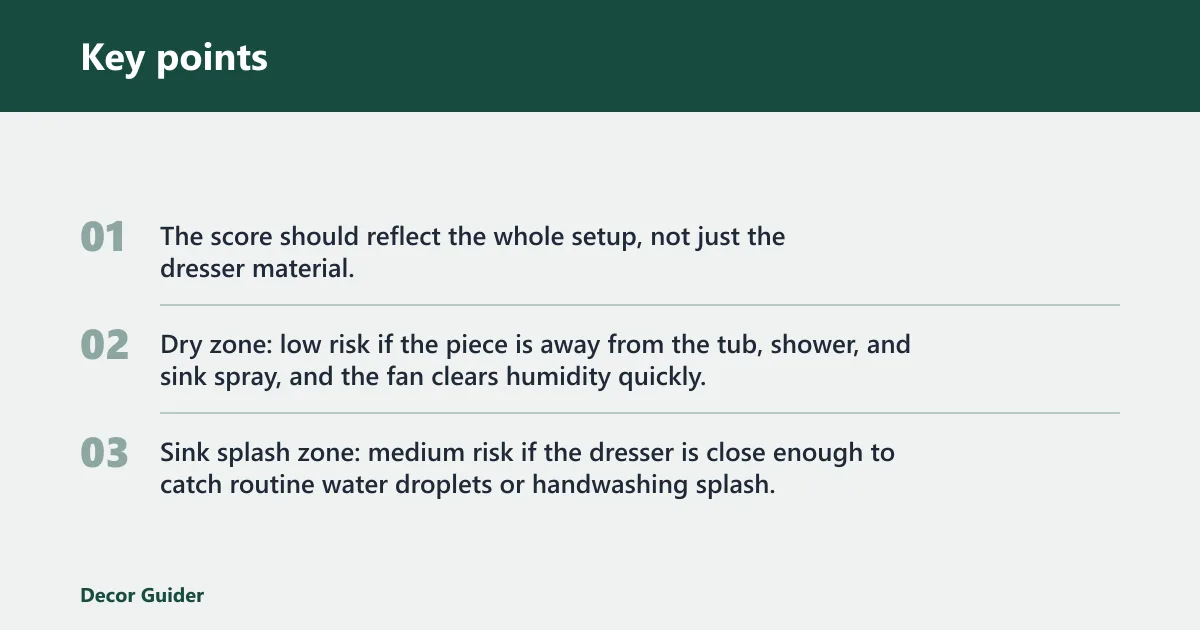
Use a simple low, medium, or high score. Low risk means the dresser sits in a dry zone, far from splash, with strong ventilation; medium risk means it is near the sink splash zone or has only partial sealing; high risk means it sits in the tub/shower zone or in a room that stays damp. The score should reflect the whole setup, not just the dresser material.
Dry zone: low risk if the piece is away from the tub, shower, and sink spray, and the fan clears humidity quickly.
Sink splash zone: medium risk if the dresser is close enough to catch routine water droplets or handwashing splash.
Tub/shower zone: high risk if the dresser is beside the shower curtain, tub edge, or any area that sees regular steam and spray.
How to protect a dresser from moisture
Protection works only when you address the whole piece, not just the top. Seal the finish, protect the underside, keep hardware corrosion-resistant, and manage room humidity with a fan or window airflow; otherwise, a dresser near a bathroom will still age fast. The most effective protection is a combination of sealed surfaces and lower exposure, not one coating alone.
-
Seal every exposed surface. Use a moisture-resistant finish on the top, sides, back, and underside. A common approach is about 2 coats of polyurethane or 3 thin coats of lacquer or paint, with enough cure time before the dresser goes into the room.
-
Protect edges and cut lines. Pay special attention to raw edges, drawer openings, and any drilled holes. Those spots absorb moisture first, so edge sealing matters more than the decorative face.
-
Upgrade vulnerable hardware. Choose stainless or other corrosion-resistant pulls, fasteners, and hinges when possible. Bathroom humidity can rust plated parts faster than expected, especially on drawers used daily.
-
Raise or isolate the base. Keep the dresser off recurring puddles and away from mop water or shower runoff. If the floor stays damp, use a waterproof barrier under the feet and maintain wall clearance for airflow.
-
Check ventilation after showers. Run an exhaust fan sized for the room and leave it on after bathing long enough to clear visible steam. If there is no fan, a window can help, but only when it creates cross-ventilation.
Checklist for non-conversion placement:
- Confirm the dresser sits in the dry zone, not the sink splash zone or tub/shower zone.
- Make sure the room has a working exhaust fan or reliable cross-ventilation.
- Check that the finish covers the top, sides, back, underside, and edges.
- Keep the base away from puddles, mop water, and shower runoff.
- Choose corrosion-resistant hardware if the room stays humid.
Say your 36-inch dresser sits about 8 feet from the shower in a powder room with a strong fan and no tub. That setup is far less risky than the same dresser beside a tub-shower combo, because splash frequency and steam exposure are both lower.
Suppose a painted MDF chest sits about 2 feet from a shower curtain in a room where the fan is rarely used. The first failure is often edge swelling at the lower drawer front, followed by finish lift and a sticky drawer fit, even if the top still looks fine.
Can you use a dresser as a bathroom vanity?
Yes, but only if you convert it for plumbing and water exposure instead of treating it like ordinary furniture. A vanity conversion needs sink clearance, countertop depth, waterproofing around openings, and hardware changes that can handle daily splash and cleaning. Unlike simple placement in a dry zone, conversion is a build project that must be planned around plumbing and moisture from the start.
Plumbing clearance and sink fit
The dresser must leave room for the drain, trap, and supply lines without crushing drawers or weakening the frame. A top drawer often needs to be removed or cut back, and the rear panel may need an opening that lines up with the wall plumbing.
The sink mount type changes the work. A vessel sink is easier to fit on some dressers, while an undermount or inset sink usually requires more precise countertop support and cutout work.
Countertop depth and waterproofing
A dresser used as a vanity needs a countertop deep enough to overhang the cabinet and protect the top from standing water. Waterproofing around the sink opening and along the back edge is essential, because unfinished wood near the basin will fail faster than the rest of the piece.
Use silicone caulk in splash zones and seal every cut edge before the sink goes in. If the surface is laminate, confirm that the seams and holes are sealed, since water can travel under a lifted edge and reach the core.
Cost buckets for conversion
Hidden costs often sit in the sink, countertop, plumbing, sealing, and hardware. These buckets are broad estimates, not quotes, but they show why a dresser conversion can move well beyond the price of the dresser itself.
| Item | Typical cost bucket | What it covers |
|---|---|---|
| Sink | Low to moderate | Basin, drain assembly, and mounting style |
| Countertop | Moderate to high | Custom cut top, sink opening, finish edge work |
| Plumbing | Moderate | Trap, supply lines, fittings, and drain alignment |
| Sealing | Low to moderate | Primer, waterproof finish, caulk, and edge sealant |
| Hardware | Low to moderate | Corrosion-resistant pulls, hinges, and fasteners |
Checklist for vanity conversion
- Measure the plumbing location before cutting the back or drawer space.
- Choose a sink style that fits the frame and countertop depth.
- Seal all raw edges, holes, and cut lines before installation.
- Use corrosion-resistant hardware and waterproof caulk at splash points.
- Verify that the base and back panel can handle daily cleaning and moisture.
Frequently asked questions
Can you put a wood dresser in a bathroom?
Yes, if the room has good ventilation, low splash exposure, and the dresser has a durable finish on every exposed surface. Solid wood tolerates humidity swings better than MDF, but it still needs edge sealing and protection at the base and back.
Can you put a wardrobe in a bathroom?
A wardrobe can go in a bathroom only in a very dry, well-ventilated space where it stays far from the shower and tub. Large cabinet volume does not solve moisture problems, and tall pieces can still absorb steam through unfinished backs or edges.
Can you use a chest of drawers as a bathroom vanity?
Yes, but a chest of drawers needs plumbing clearance, a sealed top, and a sink setup that fits the frame. If drawers sit too close to the trap or the back panel is left open without waterproofing, the piece will fail faster than a true vanity.
What happens if you put a dresser in a humid bathroom?
Over time, humidity can swell wood fibers, loosen joints, lift veneer, dull finishes, and rust metal parts. The first signs are usually sticky drawers, soft edges, and a musty smell near the base or back of the piece.
Can you put wood furniture in a bathroom?
Yes, but the piece should sit in a low-splash zone with steady airflow and a finish that covers all exposed surfaces. Bathroom-grade plywood, marine plywood, and well-sealed solid wood handle the setting better than raw MDF or unfinished veneer.
Products related to this article
Sponsored / affiliate links. As an Amazon Associate I earn from qualifying purchases. I may earn additional commission from eligible campaigns.